

Consumer Insights
Uncover trends and behaviors shaping consumer choices today
Procurement Insights
Optimize your sourcing strategy with key market data
Industry Stats
Stay ahead with the latest trends and market analysis.
Cutaneous T-cell lymphomas (CTCL) are rare, skin-predominant non-Hodgkin lymphomas characterized by malignant T-cell infiltration of the skin, with mycosis fungoides representing the most common subtype. As reported by recent European epidemiological evidence (2025), CTCL has an incidence of approximately 0.3 cases per 100,000 patient-years across Europe. According to the cutaneous T-cell lymphoma pipeline analysis by Expert Market Research, the therapeutic pipeline is steadily expanding, driven by persistent unmet clinical needs and advances in immunology and targeted drug development. Emerging treatment approaches include monoclonal antibodies, antibody–drug conjugates, immune modulators, and novel targeted therapies.
Major companies involved in cutaneous T cell lymphoma pipeline analysis include Soligenix, Domain Therapeutics SA, Boston Immune Technologies and Therapeutics, and others.
Leading drugs currently in the pipeline include Hypericin, BITR2101, DT-7012, and others.
The cutaneous T-cell lymphoma is primarily driven by high unmet treatment need in relapsed and refractory patients, increasing disease awareness, and the advancement of targeted and immunotherapy-based treatment options.
The Cutaneous T-cell Lymphoma Pipeline Analysis Report by Expert Market Research gives comprehensive insights into cutaneous T-cell lymphoma (CTCL) therapeutics currently undergoing clinical trials. It covers various aspects related to the details of each of these drugs under development for cutaneous T-cell lymphoma (CTCL). The cutaneous T-cell lymphoma (CTCL) report assessment includes the analysis of over 100 pipeline drugs and 50+ companies. The cutaneous T-cell lymphoma (CTCL) pipeline landscape will include an analysis based on efficacy and safety measure outcomes published for the trials, including their adverse effects on patients suffering from the condition, and alignment with cutaneous T-cell lymphoma (CTCL) treatment guidelines to ensure optimal care practices.
The assessment part will include a detailed analysis of each drug, drug class, clinical studies, phase type, drug type, route of administration, and ongoing product development activities related to cutaneous T-cell lymphoma (CTCL).
Read more about this report - Request a Free Sample
CTCL is a rare non-Hodgkin lymphoma caused by malignant T-cell proliferation leading to skin-homing lymphocyte infiltration, cytokine dysregulation, and tumor microenvironment immune escape. Disease progression is associated with chronic inflammation, immune evasion pathways, and genetic mutations affecting T-cell signaling. Current treatment strategies include skin-directed therapy, systemic immunotherapy, immune checkpoint inhibitors, targeted biologics, and emerging cell-based therapies, aiming to improve lesion clearance, reduce pruritus, and enhance survival outcomes. Denileukin diftitox-cxdl (Lymphir) is a recombinant fusion protein targeting interleukin-2 receptors on malignant T-cells, approved by the FDA in August 2024 for relapsed or refractory Cutaneous T-cell Lymphoma. It demonstrated a 36.2% objective response rate in Phase 3 trials, offering a novel targeted systemic treatment option.
According to Soligenix, cutaneous T-cell lymphoma (CTCL) is a rare subset of non-hodgkin lymphoma, accounting for nearly 4% of over 1.7 million cases in the United States and Europe. It affects approximately 31,000 individuals in the United States with nearly 3,200 new cases annually, and around 38,000 individuals in Europe with about 3,800 new cases annually, based on SEER and ECIS data. As per Chalid Assaf et al., 2023, incidence ranged from 3.65 to 3.92 per 100,000, with a six-year prevalence of 27.35–43.58 per 100,000. The patient population was predominantly male, highlighting a steady disease burden.
This section of the report covers the analysis of cutaneous T cell lymphoma drug candidates based on several segmentations including:
By Phase
The pipeline assessment report covers 50+ drug analyses based on phase:
By Drug Class
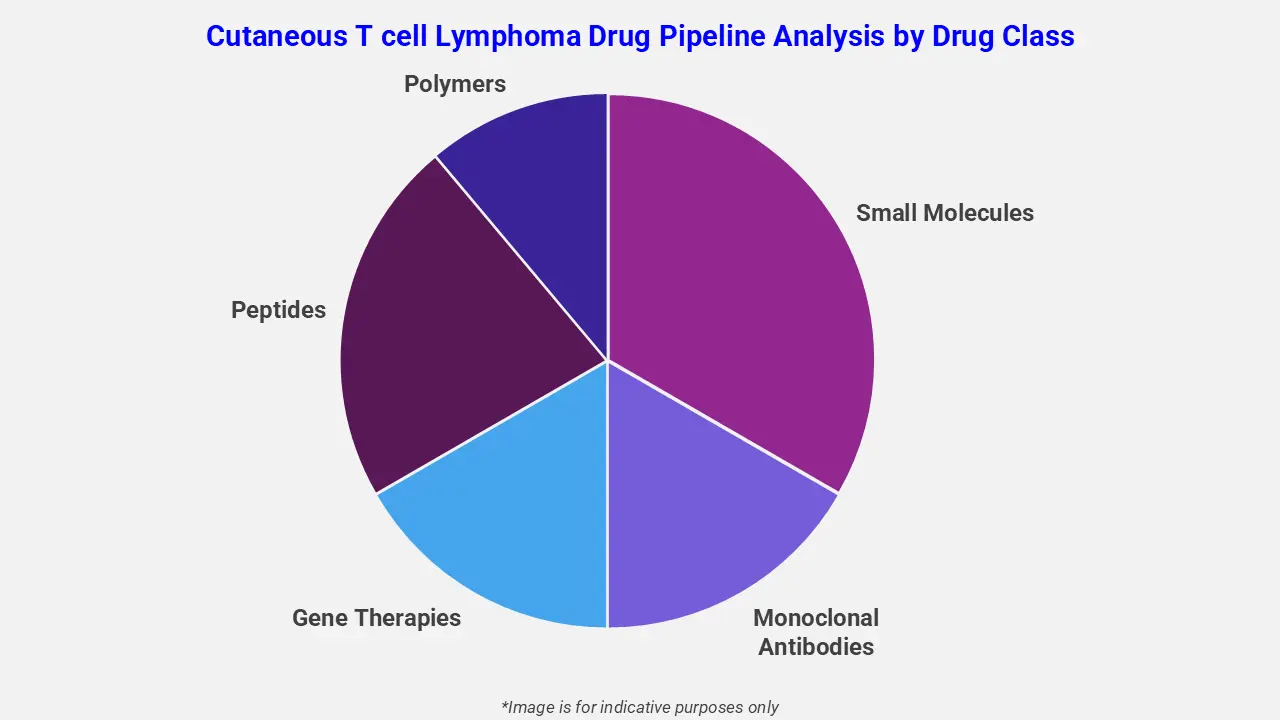
The cutaneous T cell lymphoma pipeline analysis report covers 50+ drug analyses based on drug classes:
By Route of Administration
The pipeline assessment report covers 50+ drug analyses based on the route of administration:
The report covers phase I, phase II, phase III, phase IV, and early-phase drugs. The coverage includes an in-depth analysis of each drug across these phases. According to EMR analysis, phase II, with 47%, covers a major share of the total cutaneous T cell lymphoma clinical trials. It is followed by phase I at 46% and phase III at 4%. This strong mid-stage concentration indicates robust clinical progression, supporting accelerated development, improved therapeutic options, and positive market expansion through innovation and late-stage validation.
The drug molecule categories covered under the cutaneous T cell lymphoma pipeline analysis include small molecules, monoclonal antibodies, gene therapies, peptides, and polymers. The cutaneous T cell lymphoma report provides a comparative analysis of the drug classes for each drug in various phases of clinical trials for cutaneous T cell lymphoma. Targeted therapies, including monoclonal antibodies and kinase inhibitors, are emerging as key drug class segments. For instance, lacutamab, a first-in-class anti-KIR3DL2 monoclonal antibody, is being evaluated in Phase 3 TELLOMAK 3 trials for Sézary syndrome and mycosis fungoides. Moreover, novel biologics aims to improve response rates and address high unmet clinical needs in relapsed and refractory cutaneous T-cell lymphoma patients.
The EMR report for the cutaneous T cell lymphoma pipeline covers the profile of key companies involved in clinical trials and their drugs under development. It provides a detailed cutaneous T cell lymphoma therapeutic assessment, analyzing the competitive dynamics of the clinical trial landscape. Below is the list of a few players involved in cutaneous T cell lymphoma clinical trials:
This section covers the detailed analysis of each drug under multiple phases, including phase I, phase II, phase III, phase IV, and emerging drugs for cutaneous T cell lymphoma. It includes product description, trial ID, study type, drug class, mode of administration, and recruitment status of cutaneous T cell lymphoma drug candidates.
HyBryte™ (Hypericin Sodium Gel) is a topical photosensitizing drug being administered by Soligenix in a Phase 3 confirmatory study for cutaneous T-cell lymphoma (CTCL). The study examines whether twice-weekly application of 0.25% hypericin gel, followed by visible-light activation, induces lesion reduction in patch/plaque mycosis fungoides patients. The drug functions as a photoactive agent generating cytotoxic reactive oxygen species upon light exposure, targeting malignant T-cells locally. The trial is being sponsored by Soligenix and is evaluating efficacy and safety over 18 weeks, with estimated completion in October 2026. It is being applied topically and assessed against a placebo under double-blind conditions.
BITR2101 is a monoclonal antibody therapy sponsored by Boston Immune Technologies and Therapeutics, which is being administered through intravenous infusion every three weeks in a Phase 1, first-in-human, dose-escalation study. The drug functions by targeting and inhibiting Tumor Necrosis Factor Receptor 2 (TNFR2), a key signaling molecule that supports lymphoma cell survival, proliferation, and immune evasion in cutaneous T cell lymphoma. The study examines safety, tolerability, pharmacokinetics, and preliminary anti-tumor activity in relapsed or refractory non-hodgkin lymphoma patients. It is currently not yet recruiting and is expected to be completed by February 2027.
DT-7012, a Domain Therapeutics anti-CCR8 monoclonal antibody, is being developed as an intravenous immunotherapy for relapsed or refractory cutaneous T-cell lymphomas, including mycosis fungoides and Sézary syndrome. Sponsored by Assistance Publique–Hôpitaux de Paris, this Phase 1 first-in-human, multicenter, open-label, dose-escalation study is examining safety, tolerability, pharmacokinetics, and preliminary anti-tumor efficacy. The drug is targeting CCR8-expressing regulatory T cells and is mediating tumor cell depletion through ADCC and ADCP, thereby reshaping the tumor microenvironment. Study completion is expected in August 2028 and is ongoing.
*Please note that this is only a partial list; the complete list of drugs will be available in the full report.*
The Cutaneous T-cell Lymphoma (CTCL) Pipeline Analysis Report provides a strategic overview of the latest and future landscape of treatments for cutaneous T cell lymphoma. It provides necessary information for making informed investment decisions along with research, development, and strategic planning efforts. The stakeholders will benefit from the essential insights into cutaneous T cell lymphoma collaborations, regulatory environments, and potential growth opportunities.


Upto 15% Off
USD
$1999 $1799
$3099 $2789
$4599 $3909
$5999 $5099


*While we strive to always give you current and accurate information, the numbers depicted on the website are indicative and may differ from the actual numbers in the main report. At Expert Market Research, we aim to bring you the latest insights and trends in the market. Using our analyses and forecasts, stakeholders can understand the market dynamics, navigate challenges, and capitalize on opportunities to make data-driven strategic decisions.*
Explore our key highlights of the report and gain a concise overview of key findings, trends, and actionable insights that will empower your strategic decisions.
|
Scope of the Report |
Details |
|
Drug Pipeline by Clinical Trial Phase |
|
|
Route of Administration |
|
|
Drug Classes |
|
|
Leading Sponsors Covered |
|
|
Geographies Covered |
|
Mini Report
One User
USD 1,999
USD 1,799
tax inclusive*
Single User License
One User
USD 3,099
USD 2,789
tax inclusive*
Five User License
Five User
USD 4,599
USD 3,909
tax inclusive*
Corporate License
Unlimited Users
USD 5,999
USD 5,099
tax inclusive*
*Please note that the prices mentioned below are starting prices for each bundle type. Kindly contact our team for further details.*
Flash Bundle
Small Business Bundle
Growth Bundle
Enterprise Bundle
*Please note that the prices mentioned below are starting prices for each bundle type. Kindly contact our team for further details.*
Flash Bundle
Number of Reports: 3
20%
tax inclusive*
Small Business Bundle
Number of Reports: 5
25%
tax inclusive*
Growth Bundle
Number of Reports: 8
30%
tax inclusive*
Enterprise Bundle
Number of Reports: 10
35%
tax inclusive*
How To Order

Select License Type
Choose the right license for your needs and access rights.

Click on ‘Buy Now’
Add the report to your cart with one click and proceed to register.

Select Mode of Payment
Choose a payment option for a secure checkout. You will be redirected accordingly.
Strategic Solutions for Informed Decision-Making
Gain insights to stay ahead and seize opportunities.

Get insights & trends for a competitive edge.

Track prices with detailed trend reports.

Analyse trade data for supply chain insights.

Leverage cost reports for smart savings

Enhance supply chain with partnerships.

Connect For More Information
Our expert team of analysts will offer full support and resolve any queries regarding the report, before and after the purchase.
Our expert team of analysts will offer full support and resolve any queries regarding the report, before and after the purchase.
We employ meticulous research methods, blending advanced analytics and expert insights to deliver accurate, actionable industry intelligence, staying ahead of competitors.
Our skilled analysts offer unparalleled competitive advantage with detailed insights on current and emerging markets, ensuring your strategic edge.
We offer an in-depth yet simplified presentation of industry insights and analysis to meet your specific requirements effectively.




