

Consumer Insights
Uncover trends and behaviors shaping consumer choices today
Procurement Insights
Optimize your sourcing strategy with key market data
Industry Stats
Stay ahead with the latest trends and market analysis.
Prediabetes is a metabolic condition characterized by elevated blood glucose levels that are higher than normal but not yet high enough for a diagnosis of type 2 diabetes, reflecting underlying insulin resistance and impaired glucose regulation and significantly increasing the risk of progression to diabetes and cardiovascular complications. As per the Centers for Disease Control and Prevention (2021), an estimated 97.6 million adults aged 18 years or older in the United States had prediabetes, highlighting a substantial public health burden. According to the prediabetes pipeline analysis by Expert Market Research, the prevention and intervention pipeline is steadily expanding, driven by the high unmet need for early-stage disease management and growing awareness of long-term metabolic risks.
Major companies involved in the prediabetes pipeline analysis include AstraZeneca, Sanofi, and others.
Leading drugs currently in the pipeline include Bromocriptine, relacorilant, and others.
The widespread and growing burden of prediabetes is a key driver accelerating demand for early diagnosis, preventive interventions, and innovation across the prediabetes management pipeline.
The Prediabetes Pipeline Analysis Report by Expert Market Research gives comprehensive insights into prediabetes therapeutics currently undergoing clinical trials. It covers various aspects related to the details of each of these drugs under development for prediabetes. The prediabetes report assessment includes the analysis of over 100 pipeline drugs and 50+ companies. The prediabetes pipeline landscape will include an analysis based on efficacy and safety measure outcomes published for the trials, including their adverse effects on patients suffering from the condition, and alignment with prediabetes treatment guidelines to ensure optimal care practices.
The assessment part will include a detailed analysis of each drug, drug class, clinical studies, phase type, drug type, route of administration, and ongoing product development activities related to prediabetes.
Read more about this report - Request a Free Sample
Prediabetes is a metabolic condition characterized by impaired glucose regulation that increases the risk of progression to type 2 diabetes and associated cardiovascular and metabolic complications. It reflects underlying insulin resistance and β-cell dysfunction, often driven by excess weight, sedentary lifestyle, genetic predisposition, and aging. Although frequently asymptomatic, prediabetes represents a critical window for intervention, as timely management can delay or prevent disease progression and reduce long-term health burden.
Prediabetes treatment focuses on early risk identification and comprehensive management aimed at restoring metabolic balance. Current approaches emphasize lifestyle modification, including dietary changes, weight reduction, and increased physical activity, alongside structured prevention programs and regular glycemic monitoring. Ongoing research continues to explore pharmacological and digital health strategies to support high-risk individuals, highlighting a growing shift toward proactive, preventive care models to curb the rising burden of dysglycemia.
Prediabetes represents a significant and growing public health burden worldwide due to its strong association with progression to type 2 diabetes and cardiovascular complications. In the United States, the Centers for Disease Control and Prevention reports that 97.6 million adults aged 18 years or older were living with prediabetes in 2021, accounting for around 38 percent of the adult population, highlighting widespread metabolic risk. This high prevalence reflects sedentary lifestyles, dietary patterns, and rising obesity rates. Similarly, large scale population studies in China indicate that approximately 35 to 38 percent of adults have prediabetes, demonstrating a substantial burden of impaired glucose regulation. Together, these data underscore the urgent need for early detection, lifestyle intervention, and population level prevention strategies.
This section of the report covers the analysis of prediabetes drug candidates based on several segmentations, including:
By Phase
The pipeline assessment report covers 50+ drug analyses based on phase:
By Drug Class
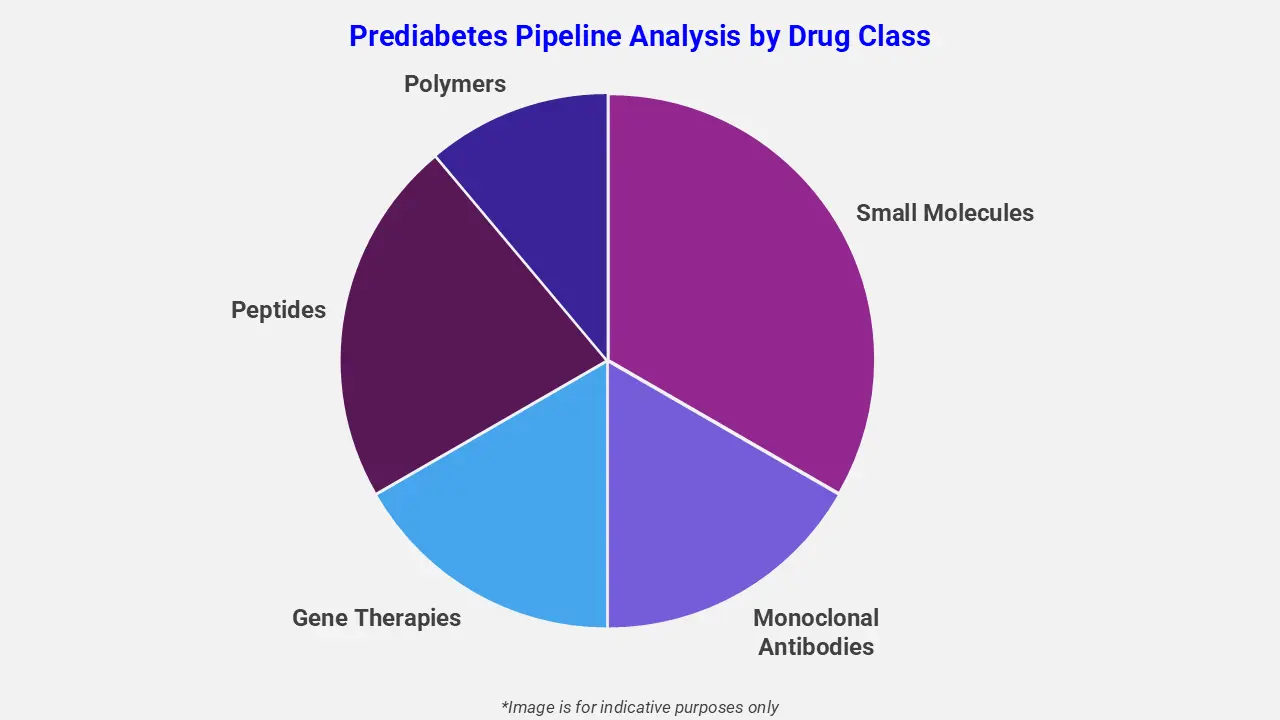
The prediabetes pipeline analysis report covers 50+ drug analyses based on drug classes:
By Route of Administration
The pipeline assessment report covers 50+ drug analyses based on the route of administration:
The report covers phase I, phase II, phase III, phase IV, and early-phase drugs. The coverage includes an in-depth analysis of each drug across these phases. According to EMR analysis, phase II, with 40%, covers a major share of the total prediabetes clinical trials. It is followed by phase IV at 34% and other phases. Overall, this phase-wise distribution highlights a strong emphasis on mid- to late-stage clinical development, reflecting sustained efforts to advance promising prediabetes therapies toward regulatory approval and real-world application.
The drug molecule categories covered under the prediabetes pipeline analysis include small molecules, monoclonal antibodies, gene therapies, polymers, and peptides. The prediabetes report provides a comparative analysis of the drug classes for each drug in various phases of clinical trials for prediabetes. For example, bromocriptine represents a small-molecule drug in the prediabetes pipeline. It is a centrally acting dopamine D2 receptor agonist that modulates hypothalamic dopamine activity to improve insulin sensitivity and glucose regulation, highlighting the continued importance of small molecules in early metabolic intervention strategies.
The EMR report for the prediabetes pipeline covers the profile of key companies involved in clinical trials and their drugs under development. It provides a detailed prediabetes therapeutic assessment, analyzing the competitive dynamics of the clinical trial landscape. Below is the list of a few players involved in prediabetes clinical trials:
This section covers the detailed analysis of each drug under multiple phases, including phase I, phase II, phase III, phase IV, and emerging drugs for prediabetes. It includes product description, trial ID, study type, drug class, mode of administration, and recruitment status of prediabetes drug candidates.
Bromocriptine is being evaluated by the VA Pittsburgh Healthcare System in a Phase IV interventional study for patients with schizophrenia and prediabetes. The trial, not yet recruiting and expected to be completed by July 2026, is assessing bromocriptine’s ability to improve metabolic parameters while maintaining safety in this high-risk population. Bromocriptine is a dopamine D2 receptor agonist that acts centrally to regulate hypothalamic dopamine activity, thereby improving insulin sensitivity, reducing hepatic glucose production, and enhancing glycemic control, supporting its potential role in prediabetes management.
Relacorilant is being evaluated by Corcept Therapeutics in a Phase II interventional extension study to assess the long-term safety of continued treatment in patients with Cushing syndrome. The study is currently active but not recruiting and is expected to be completed in December 2025. Relacorilant acts as a selective glucocorticoid receptor (GR) modulator, blocking the effects of excess cortisol at the receptor level without antagonizing the progesterone receptor. By inhibiting cortisol-mediated GR signaling, the drug aims to alleviate the metabolic, cardiovascular, and systemic complications of hypercortisolism while maintaining improved tolerability during prolonged use, supporting its role in long-term management of Cushing syndrome.
Alpelisib is being evaluated by Columbia University, University of California, Berkeley, and Stanford University in a Phase I interventional study investigating human models of selective insulin resistance in insulin resistance, prediabetic state, overweight/obesity, and non-alcoholic fatty liver disease. The study is currently recruiting and is expected to complete between May and December 2026. Alpelisib is a selective phosphatidylinositol-3-kinase (PI3K) α inhibitor that interferes with PI3K-mediated insulin signaling, leading to impaired glucose uptake and induced insulin resistance, which allows researchers to model and study mechanisms of selective insulin resistance in humans.
*Please note that this is only a partial list; the complete list of drugs will be available in the full report.*
The Prediabetes Pipeline Analysis Report provides a strategic overview of the latest and future landscape of treatments for prediabetes. It provides necessary information for making informed investment decisions along with research, development, and strategic planning efforts. The stakeholders will benefit from the essential insights into psrediabetes collaborations, regulatory environments, and potential growth opportunities.


Upto 15% Off
USD
$1999 $1799
$3099 $2789
$4599 $3909
$5999 $5099


*While we strive to always give you current and accurate information, the numbers depicted on the website are indicative and may differ from the actual numbers in the main report. At Expert Market Research, we aim to bring you the latest insights and trends in the market. Using our analyses and forecasts, stakeholders can understand the market dynamics, navigate challenges, and capitalize on opportunities to make data-driven strategic decisions.*
Explore our key highlights of the report and gain a concise overview of key findings, trends, and actionable insights that will empower your strategic decisions.
|
Scope of the Report |
Details |
|
Drug Pipeline by Clinical Trial Phase |
|
|
Route of Administration |
|
|
Drug Classes |
|
|
Leading Sponsors Covered |
|
|
Geographies Covered |
|
Mini Report
One User
USD 1,999
USD 1,799
tax inclusive*
Single User License
One User
USD 3,099
USD 2,789
tax inclusive*
Five User License
Five User
USD 4,599
USD 3,909
tax inclusive*
Corporate License
Unlimited Users
USD 5,999
USD 5,099
tax inclusive*
*Please note that the prices mentioned below are starting prices for each bundle type. Kindly contact our team for further details.*
Flash Bundle
Small Business Bundle
Growth Bundle
Enterprise Bundle
*Please note that the prices mentioned below are starting prices for each bundle type. Kindly contact our team for further details.*
Flash Bundle
Number of Reports: 3
20%
tax inclusive*
Small Business Bundle
Number of Reports: 5
25%
tax inclusive*
Growth Bundle
Number of Reports: 8
30%
tax inclusive*
Enterprise Bundle
Number of Reports: 10
35%
tax inclusive*
How To Order

Select License Type
Choose the right license for your needs and access rights.

Click on ‘Buy Now’
Add the report to your cart with one click and proceed to register.

Select Mode of Payment
Choose a payment option for a secure checkout. You will be redirected accordingly.
Strategic Solutions for Informed Decision-Making
Gain insights to stay ahead and seize opportunities.

Get insights & trends for a competitive edge.

Track prices with detailed trend reports.

Analyse trade data for supply chain insights.

Leverage cost reports for smart savings

Enhance supply chain with partnerships.

Connect For More Information
Our expert team of analysts will offer full support and resolve any queries regarding the report, before and after the purchase.
Our expert team of analysts will offer full support and resolve any queries regarding the report, before and after the purchase.
We employ meticulous research methods, blending advanced analytics and expert insights to deliver accurate, actionable industry intelligence, staying ahead of competitors.
Our skilled analysts offer unparalleled competitive advantage with detailed insights on current and emerging markets, ensuring your strategic edge.
We offer an in-depth yet simplified presentation of industry insights and analysis to meet your specific requirements effectively.




