Consumer Insights
Uncover trends and behaviors shaping consumer choices today
Procurement Insights
Optimize your sourcing strategy with key market data
Industry Stats
Stay ahead with the latest trends and market analysis.
Alcohol use disorder (AUD) is a chronic, relapsing disorder marked by impaired control over alcohol use, craving, tolerance, withdrawal, and continued drinking despite adverse consequences. In the United States, the 2024 NSDUH estimated that 27.1 million adults aged 18 years and older (10.3%) had AUD in the preceding year. According to alcohol use disorder (AUD) epidemiology forecast by Expert Market Research (EMR), AUD remains an important therapeutic area because of the continuing requirement for pharmacological relapse prevention, withdrawal management, behavioral interventions, and improved treatment access. Contemporary evidence continues to identify alcohol-related disorders as a major contributor to preventable morbidity and mortality worldwide.
Base Year
Historical Period
Forecast Period
Read more about this report - Request a Free Sample
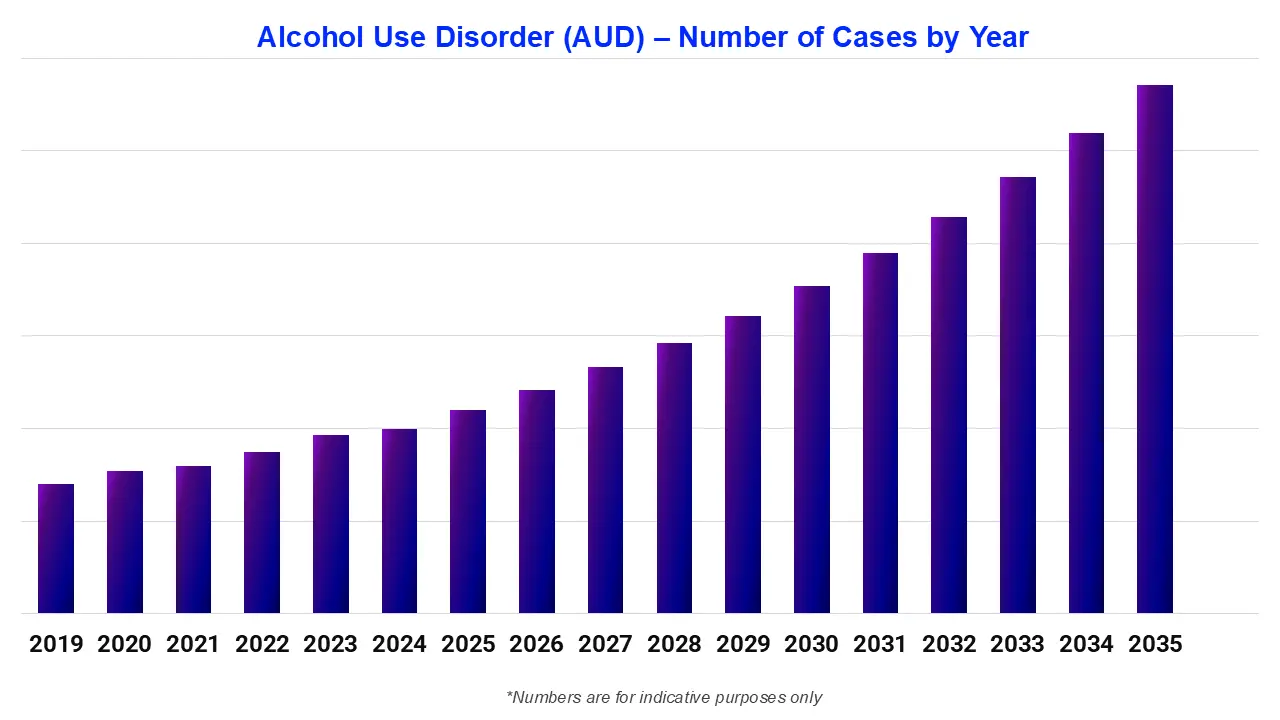
Expert Market Research's “Alcohol Use Disorder (AUD) Epidemiology Forecast Report 2026-2035” offers comprehensive information on the prevalence and demographics of Alcohol Use Disorder (AUD). It projects the future incidence and prevalence rates of Alcohol Use Disorder (AUD) cases across various populations. The study covers age, gender, and type as major determinants of the Alcohol Use Disorder (AUD) population. The report highlights patterns in the prevalence of Alcohol Use Disorder (AUD) over time and projects future trends based on multiple variables.
The report provides a comprehensive overview of the disease, as well as historical and projected data on the epidemiology of Alcohol Use Disorder (AUD) in the 8 major markets.
Regions Covered
AUD develops through interactions between genetic susceptibility, neurobiological adaptations to repeated alcohol exposure, environmental conditions, psychological factors, and patterns of alcohol availability and consumption. Chronic alcohol exposure alters inhibitory and excitatory neurotransmission, reward pathways, stress responses, and executive-control mechanisms. Clinical manifestations range from recurrent heavy drinking and unsuccessful attempts to reduce consumption to severe dependence with tolerance and withdrawal. Depression, anxiety, trauma-related disorders, other substance-use disorders, liver disease, cardiovascular disease, and alcohol-related neurological complications frequently coexist and can influence prognosis and treatment response.
|
Parameter |
Insight |
|
Largest Patient Pool |
United States |
|
Fastest Growing Region |
Japan |
|
High-Risk Population |
Individuals with sustained heavy or binge drinking, previous AUD, family history of alcohol dependence, psychiatric comorbidity, trauma exposure, socioeconomic disadvantage, and polysubstance use are at elevated risk. Young adults are particularly vulnerable to hazardous drinking and subsequent development of persistent alcohol-related disorders. |
|
Key Diagnostic Method |
AUD is diagnosed clinically using DSM-5 criteria based on impaired control, social impairment, risky use, tolerance, and withdrawal. Screening instruments such as AUDIT and AUDIT-C are useful for identifying hazardous drinking and probable AUD but should be followed by diagnostic assessment. |
|
Major Risk Factor |
Repeated high-volume or frequent alcohol exposure is the principal modifiable risk factor. Genetic vulnerability, early initiation of drinking, family history, psychiatric disorders, trauma, social disadvantage, alcohol availability, and exposure to environments promoting heavy episodic drinking further increase risk. |
|
Major gap in the market |
Major gaps include low treatment uptake, delayed recognition, stigma, inadequate screening in primary care, limited access to evidence-based pharmacotherapy, insufficient withdrawal-management capacity, fragmented psychiatric and addiction services, and poor continuity of care following detoxification or relapse. |
The Alcohol Use Disorder (AUD) epidemiology division offers information on the patient pool from history to the present as well as the projected trend for each of the 8 major markets. Expert Market Research provides both current and predicted trends for the Alcohol Use Disorder (AUD) epidemiology scenario by examining a wide range of studies. Additionally, the report covers the diagnosed patient pool for Alcohol Use Disorder (AUD) and their trends. The data is broken down into specific categories, such as total prevalent cases in males and females, and total diagnosed cases across different age groups and patient pools.
|
Epidemiology Segment |
Key Insights |
|
Diagnosed Prevalent Cases of the Disease |
In the United States, the 2024 NSDUH estimated 27.9 million people aged 12 years or older had past-year AUD, corresponding to 9.7% of this population. Among adults aged 18 years or older, 27.1 million people, or 10.3%, had AUD. Globally, a 2025 analysis of GBD data reported a continuing substantial burden of AUD, although age-standardized prevalence has declined over the long term. |
|
Gender-Specific Cases of the Disease |
In the 2024 U.S. NSDUH, 16.4 million men aged 18 years or older had past-year AUD, corresponding to 12.9% of adult men, compared with 10.7 million women, or 8.0% of adult women. The persistent male predominance is accompanied by increasing recognition of alcohol-related harms among women, particularly where heavy episodic drinking and psychiatric comorbidity coexist. |
|
Age-Specific Cases of the Disease |
AUD occurs throughout adulthood but is particularly important among younger and middle-aged populations. The 2024 U.S. survey identified 27.1 million adults with past-year AUD. Young adults aged 18-25 years remain an important high-risk group because binge drinking, early exposure, and repeated high-intensity alcohol use increase the likelihood of progression toward persistent alcohol-related disorder. |
|
Ethnicity-Wise Cases of the Disease |
U.S. 2024 data demonstrate meaningful differences across racial and ethnic groups. Among adults aged 18 years or older, AUD prevalence was 11.4% among adults reporting two or more races, 10.9% among White adults, 10.4% among Black or African American adults, 10.0% among Hispanic or Latino adults, 11.3% among American Indian or Alaska Native adults, and 5.9% among Asian adults. |
|
Mortality and Survival Analysis of the Disease |
AUD substantially increases premature mortality through alcohol poisoning, liver disease, cardiovascular disease, cancers, neurological complications, injuries, suicide, and other causes. A 2024 WHO report estimated that alcohol consumption was responsible for approximately 2.6 million deaths globally in 2019, demonstrating the magnitude of alcohol-related mortality. AUD-associated mortality is particularly elevated when dependence coexists with advanced liver disease or other substance use. |
|
Disease Type |
Prevalence |
|
Mild AUD |
Among individuals aged 12 years and older with past-year AUD, 57.6% were classified as having mild AUD in the 2025 NSDUH. This category involves 2–3 DSM-5 symptoms, including impaired control, craving, or continued alcohol use despite consequences. |
|
Moderate AUD |
The 2025 NSDUH reported that 21.7% of people aged 12 years and older with past-year AUD had moderate AUD. This severity level is defined by 4–5 DSM-5 symptoms and may involve impaired control, social or occupational consequences, craving, tolerance, or withdrawal. |
|
Severe AUD |
Severe cases accounted for 20.7% of people aged 12 years and older with past-year AUD in the 2025 NSDUH. Severe AUD involves 6 or more DSM-5 symptoms and is associated with substantial impairment, including tolerance, withdrawal, persistent alcohol use, and serious health or psychosocial consequences. |
|
Alcohol Dependence-Dominant Phenotype |
Alcohol dependence is not a separate DSM-5 AUD category; however, dependence features such as tolerance and withdrawal remain clinically important. The 2025 NSDUH classification shows that severe AUD accounted for 20.7% of people with past-year AUD, highlighting the substantial proportion experiencing multiple AUD symptoms and potentially requiring more intensive treatment. |
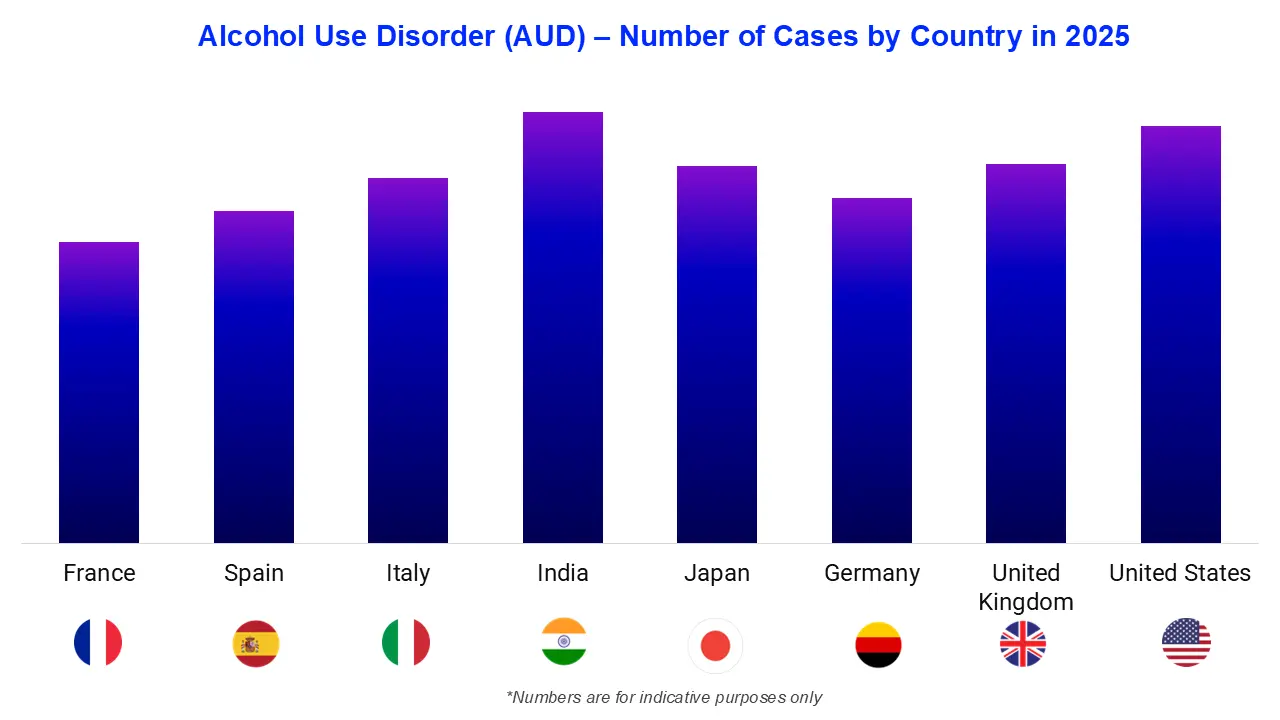
Read more about this report - Request a Free Sample
The Alcohol Use Disorder (AUD) epidemiology data and findings for the United States, Germany, Spain, Italy, France, the United Kingdom, Japan, and India are also provided in the epidemiology section.
|
Country |
Key Insights |
|
United States |
The 2024 NSDUH estimated that 27.1 million adults aged 18 years or older, or 10.3% of adults, had past-year AUD. The burden was 12.9% among adult men and 8.0% among adult women. By race and ethnicity, prevalence ranged from 5.9% among Asian adults to 11.4% among adults reporting two or more races. |
|
Germany |
The 2024 Epidemiological Survey of Substance Abuse included 7,534 adults aged 18–64 years. Alcohol was the most commonly used psychoactive substance, with 68.6% reporting use during the preceding 30 days. The estimated prevalence of alcohol dependence was 4.2%, while alcohol abuse was 3.3%, demonstrating a substantial current burden of clinically significant alcohol-related problems. |
|
France |
A representative 2024 French survey of 5,000 adults classified alcohol consumption using AUDIT. Among respondents, 7.2% met the survey definition of AUD, while 14.9% had hazardous drinking. The findings demonstrate that a substantial proportion of French adults remain at risk despite declining consumption in some population groups and increasing public-health attention to lower-risk drinking. |
|
Italy |
A representative Italian prospective cohort followed adults from 2020 through 2023 using AUDIT-C. The prevalence of at-risk alcohol consumption was approximately 30.0% after the pandemic period, compared with 26.4% before the pandemic. This is a hazardous-drinking proxy rather than a direct AUD prevalence estimate, but it indicates a substantial population requiring screening and early intervention. |
|
Spain |
A 2025 analysis of national EDADES survey data found that 6.5% of Spaniards aged 15-64 years had risky alcohol consumption in 2022. Because this represents hazardous consumption rather than confirmed AUD, it should not be substituted for AUD prevalence. The study nevertheless demonstrates substantial ongoing exposure to alcohol-related risk within the Spanish adult population. |
|
United Kingdom |
England's latest official alcohol-dependence estimates, updated in 2024, estimated 608,416 adults with alcohol dependence in 2019-2020, equivalent to approximately 13.8 per 1,000 adults. The latest national treatment statistics continue to demonstrate substantial demand for alcohol-related treatment. Because the dependence estimate is based on older underlying surveillance, it should not be interpreted as a 2024 prevalence measurement. |
|
Japan |
A 2024 multicentre Japanese primary-care study of 1,388 adults aged 20-74 years found that 22% screened positive for hazardous drinking or suspected alcohol dependence. The study demonstrates a substantial hidden burden in routine medical settings and found that concern from healthcare professionals was not consistently reported even among patients with elevated AUDIT scores. |
|
India |
Contemporary Indian reviews continue to identify AUD as one of the country's major substance-use disorders. A 2024 review reported that major Indian epidemiological surveys conducted during the preceding decade indicated approximately 5% problematic alcohol use, while another 2024 analysis reported that roughly one in twelve people in India had an AUD. These estimates arise from heterogeneous studies and should not be treated as a single nationally representative prevalence figure. |
The epidemiology of AUD remains substantially underestimated because screening, diagnosis, treatment enrollment, and population-survey estimates capture different stages of the disease spectrum. The 2025 global analysis of alcohol-use-disorder burden reported a worldwide decline in age-standardized AUD prevalence from 1,698 per 100,000 in 1990 to 1,335 per 100,000 in 2021, but substantial cross-country inequalities persist. Contemporary studies also demonstrate considerable unmet need: hazardous drinking can remain undetected in primary care, while stigma, limited specialist capacity, fragmented services, and poor treatment initiation contribute to persistent disease. Alcohol-associated liver disease further amplifies the clinical burden, with AUD representing a major risk population for progressive liver injury.
Management of AUD involves behavioral treatment, pharmacotherapy, withdrawal management when indicated, and continuing relapse-prevention care. Evidence-based pharmacological options include naltrexone and acamprosate, while disulfiram can be considered for selected patients where supervised adherence and a clear abstinence objective are appropriate. Psychosocial approaches include motivational interviewing, cognitive behavioral therapy, mutual-support interventions, contingency-based approaches, and structured relapse-prevention programs. Severe physiological dependence requires medically supervised withdrawal because abrupt cessation can result in seizures, delirium, and other potentially life-threatening complications. Current treatment strategies increasingly emphasize early screening, integrated management of psychiatric and medical comorbidities, pharmacotherapy alongside behavioral interventions, and long-term continuity of care rather than detoxification alone.


Upto 15% Off
USD
$2699 $2429
$4299 $3869
$5799 $4949
$6999 $5949


*While we strive to always give you current and accurate information, the numbers depicted on the website are indicative and may differ from the actual numbers in the main report. At Expert Market Research, we aim to bring you the latest insights and trends in the market. Using our analyses and forecasts, stakeholders can understand the market dynamics, navigate challenges, and capitalize on opportunities to make data-driven strategic decisions.*
Explore our key highlights of the report and gain a concise overview of key findings, trends, and actionable insights that will empower your strategic decisions.
|
Report Features |
Details |
|
Base Year |
2025 |
|
Historical Period |
2019-2025 |
|
Forecast Period |
2026-2035 |
|
Epidemiology Statistics Provided |
|
|
Segmentation Provided |
|
|
Geographies Covered |
|
Datasheet
One User
USD 2,699
USD 2,429
tax inclusive*
Single User License
One User
USD 4,299
USD 3,869
tax inclusive*
Five User License
Five User
USD 5,799
USD 4,949
tax inclusive*
Corporate License
Unlimited Users
USD 6,999
USD 5,949
tax inclusive*
*Please note that the prices mentioned below are starting prices for each bundle type. Kindly contact our team for further details.*
Flash Bundle
Small Business Bundle
Growth Bundle
Enterprise Bundle
*Please note that the prices mentioned below are starting prices for each bundle type. Kindly contact our team for further details.*
Flash Bundle
Number of Reports: 3
20%
tax inclusive*
Small Business Bundle
Number of Reports: 5
25%
tax inclusive*
Growth Bundle
Number of Reports: 8
30%
tax inclusive*
Enterprise Bundle
Number of Reports: 10
35%
tax inclusive*
How To Order

Select License Type
Choose the right license for your needs and access rights.

Click on ‘Buy Now’
Add the report to your cart with one click and proceed to register.

Select Mode of Payment
Choose a payment option for a secure checkout. You will be redirected accordingly.
Strategic Solutions for Informed Decision-Making
Gain insights to stay ahead and seize opportunities.
Get insights & trends for a competitive edge.
Track prices with detailed trend reports.
Analyse trade data for supply chain insights.

Leverage cost reports for smart savings
Enhance supply chain with partnerships.
Connect For More Information
Our expert team of analysts will offer full support and resolve any queries regarding the report, before and after the purchase.
Our expert team of analysts will offer full support and resolve any queries regarding the report, before and after the purchase.
We employ meticulous research methods, blending advanced analytics and expert insights to deliver accurate, actionable industry intelligence, staying ahead of competitors.
Our skilled analysts offer unparalleled competitive advantage with detailed insights on current and emerging markets, ensuring your strategic edge.
We offer an in-depth yet simplified presentation of industry insights and analysis to meet your specific requirements effectively.