

Consumer Insights
Uncover trends and behaviors shaping consumer choices today
Procurement Insights
Optimize your sourcing strategy with key market data
Industry Stats
Stay ahead with the latest trends and market analysis.
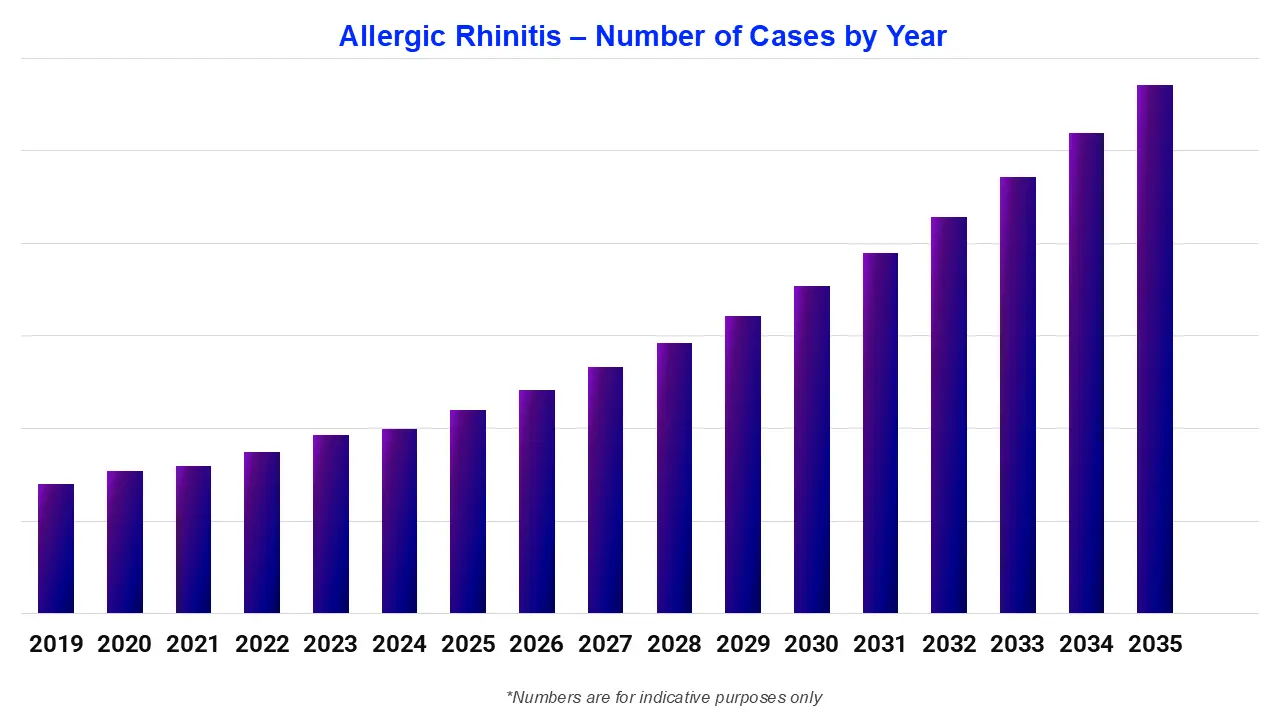
Allergic rhinitis is an inflammatory condition of the nasal mucosa characterized by sneezing, rhinorrhea, nasal congestion, itching, and nasal obstruction. According to Dr. Ramchandra et al. (2025), allergic rhinitis affects approximately 10–25% of the global population, making it one of the most common allergic disorders worldwide. According to the allergic rhinitis epidemiology forecast by Expert Market Research, the disease burden continues to rise across major markets, driven by increasing allergen exposure and environmental risk factors.
Base Year
Historical Period
Forecast Period
Read more about this report - Request a Free Sample
Expert Market Research's “Allergic Rhinitis Epidemiology Forecast Report 2026-2035” offers comprehensive information on the prevalence and demographics of allergic rhinitis. It projects the future incidence and prevalence rates of allergic rhinitis cases across various populations. The study covers age, gender, and type as major determinants of the Allergic Rhinitis population. The report highlights patterns in the prevalence of allergic rhinitis over time and projects future trends based on multiple variables.
The report provides a comprehensive overview of the disease, as well as historical and projected data on the epidemiology of allergic rhinitis in the 8 major markets.
Regions Covered
Allergic rhinitis is a chronic inflammatory disorder of the nasal mucosa triggered by immunoglobulin E-mediated reactions to environmental allergens. Common symptoms include sneezing, rhinorrhea, nasal congestion, itching, and nasal obstruction, often accompanied by fatigue, headaches, cognitive impairment, and sleep disturbances. According to Dr. Ramchandra et al. (2025), allergic rhinitis affects approximately 10–25% of the global population. The World Health Organization and allergic rhinitis and its Impact on Asthma classify the condition as seasonal or perennial, and further categorize it based on symptom duration and severity. Nasal inflammation is a key characteristic of disease progression.
| Parameter | Insight |
| Largest Patient Pool | United States |
| Fastest Growing Region | India |
| High-Risk Population | Adolescents & Adults |
| Key Diagnostic Method | Clinical Assessment |
| Major Risk Factor | Allergen Exposure |
| Major gap in the market | Underdiagnosis |
The allergic rhinitis epidemiology division offers information on the patient pool from history to the present as well as the projected trend for each of the 8 major markets. Expert Market Research provides both current and predicted trends for the allergic rhinitis epidemiology scenario by examining a wide range of studies. Additionally, the report covers the diagnosed patient pool for allergic rhinitis and their trends. The data is broken down into specific categories, such as total prevalent cases in males and females, and total diagnosed cases across different age groups and patient pools.
| Epidemiology Segment | Key Insights |
| Diagnosed Prevalent Cases of the Disease | As per Dr. Ramchandra et al. (2025), allergic rhinitis affects approximately 10–25% of the global population. Data published by Pulmonology Advisor indicates that around 15% of the United States population, equivalent to nearly 50 million individuals, is affected. |
| Gender-Specific Cases of the Disease | Findings from Styliana Vasileiadou et al. (2025) showed a prevalence of 18.0% in boys and 13.0% in girls at 8 years of age, while prevalence reached 41.4% in girls and 34.3% in boys at 19 years. Research conducted by Victoria S. Lee et al. (2025) further demonstrated higher odds of allergic rhinitis among females. |
| Age-Specific Cases of the Disease | As reported by Styliana Vasileiadou et al. (2025), allergic rhinitis prevalence increased from 15.6% among 8-year-olds to 37.7% among 19-year-olds. Epidemiological evidence from Chii-Chii Chew et al. (2023) identified the highest prevalence among individuals aged 19–59 years and the lowest prevalence among children aged 5 years and below. |
| Ethnicity-Wise Cases of the Disease | According to Chii-Chii Chew et al. (2023), the Malay population demonstrated the highest prevalence of allergic rhinitis, followed by Indian and Chinese populations during the study period. |
| Mortality and Survival Analysis of the Disease | Allergic rhinitis primarily affects quality of life, healthcare utilization, and symptom burden. The provided data emphasizes prevalence, age distribution, and healthcare resource utilization rather than mortality outcomes. |
This section provides information on the types of allergic rhinitis, focusing on their classification and type-specific disease characteristics within the overall epidemiology framework.
| Disease Type | Prevalence |
| Seasonal Allergic Rhinitis | As reported by Shweta Akhouri et al. (2023), approximately 20% of allergic rhinitis cases are classified as seasonal or intermittent, typically associated with pollen exposure and seasonal allergen fluctuations. |
| Perennial Allergic Rhinitis | Research conducted by Shweta Akhouri et al. (2023) indicated that nearly 40% of allergic rhinitis cases are perennial or chronic, commonly linked to continuous exposure to allergens such as house dust mites. |
| Mixed Seasonal and Perennial Allergic Rhinitis | Data presented by Shweta Akhouri et al. (2023) showed that approximately 40% of patients experience both seasonal and perennial features, reflecting overlapping allergen exposure and symptom patterns. |
Read more about this report - Request a Free Sample
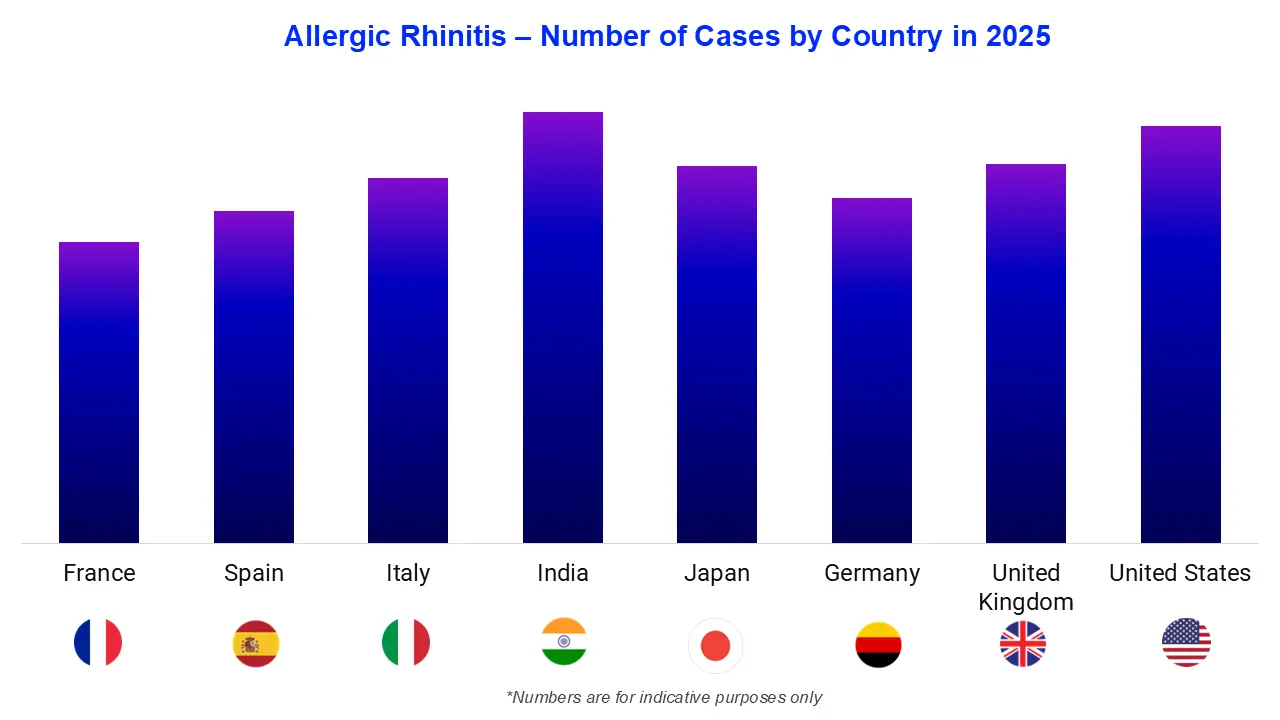
The allergic rhinitis epidemiology data and findings for the United States, Germany, Spain, Italy, France, the United Kingdom, Japan, and India are also provided in the epidemiology section.
| Country | Key Insights |
| United States | According to Pulmonology Advisor, allergic rhinitis affects approximately 15% of the United States population, equivalent to nearly 50 million individuals, highlighting a significant disease burden. |
| Germany | As per E. Hamelmann et al. (2026), atopic diseases, including allergic rhinitis, affect up to 30% of the population, with more than 2.1 million children and adolescents affected in Germany. |
| Spain | Data published by Ana Noreña-Peña et al. (2025) indicate that approximately 10–15% of the Spanish population experiences moderate-to-severe allergic rhinitis, emphasizing its public health significance. |
| Italy | Published epidemiological evidence suggests that allergic rhinitis represents a notable allergic disease burden, with both seasonal and perennial forms contributing to healthcare demand and patient management needs. |
| France | Available regional data indicate that allergic rhinitis remains an important public health concern, driven by ongoing allergen exposure and the need for long-term symptom control strategies. |
| United Kingdom | Findings from Michael Jones et al. (2025) reported prevalence rates of up to 15% among children and adolescents and up to 26% among adults, demonstrating a substantial patient population. |
| Japan | Statistics reported by Tokyo Midtown Clinic suggest that approximately 50% of the Japanese population experiences some form of allergy, while allergic rhinitis affects a considerable proportion of individuals, particularly in urban settings. |
| India | As reported by Mohan Kameswaran et al. (2026), allergic rhinitis incidence has increased substantially over the past two decades, with reported incidences ranging from 20% to 30%. |
The management of allergic rhinitis focuses on symptom control, allergen avoidance, and improving the patient's quality of life. According to Shweta Akhouri et al. (2023), treatment options include multiple therapeutic approaches, with intranasal glucocorticoids serving as first-line therapy. Additional management strategies may address associated manifestations such as allergic conjunctivitis, chronic sinusitis, and Eustachian tube dysfunction. Treatment choice is guided by symptom severity, frequency, and disease classification. Effective control of allergic symptoms can help reduce disease burden and improve daily functioning in affected individuals.
Despite the substantial burden of allergic rhinitis across the eight major markets, underdiagnosis and limited specialist referrals remain important gaps. According to Michael Jones et al. (2025), referral rates to allergists in the United Kingdom remained relatively low despite significant disease prevalence. Emerging opportunities include improved early diagnosis, enhanced patient awareness initiatives, and expanded access to specialized allergy care. Rising disease incidence in developing markets such as India and increasing prevalence among adolescents and adults create opportunities for epidemiological monitoring, targeted interventions, and optimized long-term disease management strategies.


Upto 15% Off
USD
$2699 $2429
$4299 $3869
$5799 $4949
$6999 $5949


*While we strive to always give you current and accurate information, the numbers depicted on the website are indicative and may differ from the actual numbers in the main report. At Expert Market Research, we aim to bring you the latest insights and trends in the market. Using our analyses and forecasts, stakeholders can understand the market dynamics, navigate challenges, and capitalize on opportunities to make data-driven strategic decisions.*
Explore our key highlights of the report and gain a concise overview of key findings, trends, and actionable insights that will empower your strategic decisions.
|
Report Features |
Details |
|
Base Year |
2025 |
|
Historical Period |
2019-2025 |
|
Forecast Period |
2026-2035 |
|
Epidemiology Statistics Provided |
|
|
Segmentation Provided |
|
|
Geographies Covered |
|
Datasheet
One User
USD 2,699
USD 2,429
tax inclusive*
Single User License
One User
USD 4,299
USD 3,869
tax inclusive*
Five User License
Five User
USD 5,799
USD 4,949
tax inclusive*
Corporate License
Unlimited Users
USD 6,999
USD 5,949
tax inclusive*
*Please note that the prices mentioned below are starting prices for each bundle type. Kindly contact our team for further details.*
Flash Bundle
Small Business Bundle
Growth Bundle
Enterprise Bundle
*Please note that the prices mentioned below are starting prices for each bundle type. Kindly contact our team for further details.*
Flash Bundle
Number of Reports: 3
20%
tax inclusive*
Small Business Bundle
Number of Reports: 5
25%
tax inclusive*
Growth Bundle
Number of Reports: 8
30%
tax inclusive*
Enterprise Bundle
Number of Reports: 10
35%
tax inclusive*
How To Order

Select License Type
Choose the right license for your needs and access rights.

Click on ‘Buy Now’
Add the report to your cart with one click and proceed to register.

Select Mode of Payment
Choose a payment option for a secure checkout. You will be redirected accordingly.
Strategic Solutions for Informed Decision-Making
Gain insights to stay ahead and seize opportunities.

Get insights & trends for a competitive edge.

Track prices with detailed trend reports.

Analyse trade data for supply chain insights.

Leverage cost reports for smart savings

Enhance supply chain with partnerships.

Connect For More Information
Our expert team of analysts will offer full support and resolve any queries regarding the report, before and after the purchase.
Our expert team of analysts will offer full support and resolve any queries regarding the report, before and after the purchase.
We employ meticulous research methods, blending advanced analytics and expert insights to deliver accurate, actionable industry intelligence, staying ahead of competitors.
Our skilled analysts offer unparalleled competitive advantage with detailed insights on current and emerging markets, ensuring your strategic edge.
We offer an in-depth yet simplified presentation of industry insights and analysis to meet your specific requirements effectively.




