

Consumer Insights
Uncover trends and behaviors shaping consumer choices today
Procurement Insights
Optimize your sourcing strategy with key market data
Industry Stats
Stay ahead with the latest trends and market analysis.
The Russia UAV market was valued at USD 4.10 Billion in 2025. The market is expected to grow at a CAGR of 11.80% during the forecast period of 2026–2035 to reach a value of USD 12.51 Billion by 2035. Sustained state demand and national industrial policy, the government-backed unmanned aircraft systems program, rapid import substitution and localization of components, and expanding civil and commercial applications across agriculture, energy, inspection, and logistics are collectively driving strong growth in the market.
The Russia UAV market analysis reflects a rapidly developing unmanned systems sector shaped by strong state demand, national industrial policy, and an accelerating drive toward domestic self-sufficiency. The government-backed national Unmanned Aircraft Systems program, launched to build a full domestic value chain from research and development through serial production and personnel training, is becoming a central mechanism for market growth, supported by substantial multi-year state procurement commitments.
Russia UAV market dynamics are being reshaped by import substitution, localization, and the expansion of civil and commercial applications. Sanctions and export controls have restricted access to certain foreign platforms and components, accelerating the development of domestic avionics, flight controllers, propulsion, and communication systems, though dependence on imported battery cells and sensors remains a constraint. Civil adoption is growing fastest in agriculture, energy, construction, and geospatial services, while experimental legal regimes are enabling drone delivery and logistics pilots, and a shortage of skilled operators and analysts remains a near-term limitation on fleet expansion. For example, Russian component manufacturer Technoresurs began domestic production of propellers and blades for unmanned aerial vehicles of all sizes in February 2025, described as the first such dedicated operation in the country and reflecting the broader push toward import substitution in UAV component supply chains.
Compound Annual Growth Rate
11.8%
Value in USD Billion
2026-2035
Read more about this report - REQUEST FREE SAMPLE COPY IN PDF
|
Russia UAV Market Report Summary |
Description |
Value |
|
Base Year |
USD Billion |
2025 |
|
Historical Period |
USD Billion |
2019-2025 |
|
Forecast Period |
USD Billion |
2026-2035 |
|
Market Size 2025 |
USD Billion |
4.10 |
|
Market Size 2035 |
USD Billion |
12.51 |
|
CAGR 2019-2025 |
Percentage |
XX% |
|
CAGR 2026-2035 |
Percentage |
11.80% |
|
CAGR 2026-2035 - Market by Application |
Commercial |
15.4% |
|
CAGR 2026-2035 - Market by End Use |
Delivery and Logistics |
17.2% |
|
CAGR 2026-2035 - Market by Region |
Volga |
13.4% |
|
2025 Market Share by Application |
Military and Defense |
61.7% |
The Russia UAV market is expanding rapidly, driven by the national unmanned aircraft systems program, import substitution and localization of critical components, and growing civil applications in agriculture, energy, inspection, and logistics. Domestic manufacturing scale-up and supportive regulation are reinforcing the market's growth trajectory.
Rosaviatsia certified Ecolibri as Russia's 11th civilian UAV developer, covering eVTOL and multirotor designs carrying 20-100 kg payloads for cargo delivery and industrial monitoring. Companies can pursue similar Rosaviatsia certification for their own platforms to unlock commercial contracts ahead of slower-moving, still-uncertified competitors.
Russia's Ministry of Transport announced that from March 2026, civilian drones weighing 0.15-30 kg must transmit real-time tracking data via the state "ERA-GLONASS" system. Companies can build compliance-ready tracking modules and subscription fleet management platforms now, positioning early to capture commercial operators as the mandate takes effect.
Rosaviatsia issued Russia's first eVTOL airworthiness certificate to BAS Glory Air's OG-003, with a 75 kg takeoff weight and 300 km range. Companies can fast-track their own eVTOL certifications using this approved pathway as a template, opening access to commercial deployment ahead of less-certified rivals.
Transport of the Future unveiled an upgraded Hector S-80 agricultural drone with 40 kg payload capacity and autonomous spraying, 70% domestically localized. Companies can invest in component localisation and autonomous spraying technology to capture share in Russia's fast-growing precision agriculture drone services segment.
Russia's government-backed national Unmanned Aircraft Systems program is becoming the central mechanism for developing the domestic UAV industry, funding research and development, serial production, and personnel training, and underpinned by substantial multi-year state procurement commitments. The program is structured to move promising projects from prototype to industrial readiness, shaping long-term demand and capability across the Russia UAV market. For example, In July 2026, Russia's State Transport Leasing Company (GTLK), the sole supplier under the national program's civil procurement track, completed contracting for the full volume of drones under the 2026 State Civil Procurement Program, 342 drones worth 966 million rubles, ordered by 10 government customers across six federal agencies for delivery across 48 Russian regions.
Sanctions and export controls have accelerated a broad drive to localize critical components, with domestic development of flight controllers, propulsion systems, communication links, and avionics replacing previously imported technologies. While localization is advancing quickly, dependence on imported battery cells and certain high-grade sensors remains a structural constraint, making supply chain resilience a defining priority for the Russia UAV market. For example, at the "Engineers of the Future 2026" forum in Tula in June 2026, Rostec's Rosel holding unveiled its first near-complete line of domestically produced UAV components, designed for both civilian and specialized drones. The line includes navigation modules with thermal-compensated electronic compasses and RTK-enabled centimeter-level positioning, compact high-performance flight controllers compatible with modern communication protocols, and power components including electric motors built with domestic magnets.
Civil adoption of unmanned systems is broadening rapidly across precision agriculture, powerline and infrastructure inspection, construction monitoring, mapping, cadastre, and environmental surveys. Enterprises and government agencies are increasingly using UAVs for high-precision aerial data over large and remote areas, expanding the commercial base of the Russia UAV market beyond its traditional state-driven core. For example, in February 2025, Southern Federal University's Advanced Engineering School launched an agricultural drone laboratory developing swarm technologies for precision farming, moving from a "one operator-one drone" model to multi-drone fleet management. The system uses hyperspectral imaging and computer vision to monitor up to 100 hectares per operator, targeting up to a 20% increase in crop yields, a 5% reduction in fertiliser use, and a 50% decrease in yield fluctuations.
Experimental legal regimes permitting flights in defined areas are enabling drone delivery and logistics pilots, supported by investment in drone ports, route networks, and dedicated logistics platforms. Collaboration between technology developers, retailers, and regional authorities is moving delivery use cases from trials toward early commercial deployment across the Russia UAV market. For example, In April 2026, Russia's government launched a three-year experimental legal regime for unmanned aircraft operations across Arctic regions, including Arkhangelsk, Krasnoyarsk Krai, Sakha, Yamalo-Nenets, and Chukotka, overseen by the Ministry of Economic Development. Led by Rosatom's Atomflot, the program uses deck-launched UAVs equipped with radar and optoelectronic sensors for ice reconnaissance, air cargo delivery, and aerial works along the roughly 6,000 km Northern Sea Route, targeting a minimum of 600 flights and reconnaissance coverage of 6,000 square kilometres to improve navigation efficiency and shipping safety.
Sanctions and export controls have narrowed access to certain foreign platforms and subsystems, reinforcing the shift toward domestic and allied-sourced supply and localized production. At the same time, a limited pool of certified drone pilots and trained data analysts constrains the pace of enterprise fleet expansion, positioning workforce development and training as key enablers of future growth in the Russia UAV market. For example, in June 2026, Moscow Aviation Institute launched Russia's first comprehensive engineering degree program dedicated to unmanned aircraft systems, set to begin in the 2026/2027 academic year in partnership with Rostec, Tekhnodinamika, UZGA, Smartindustriya, and TSARS.
The Expert Market Research's report titled "Russia UAV Market Report and Forecast 2026-2035" offers a detailed analysis of the market based on the following segments:
Market Breakup by Type
Key Insight: Fixed wing holds a leading share of the Russia UAV market by type, valued for long endurance and range in surveying, mapping, and monitoring over the country's vast territory, while rotary wing platforms remain important for inspection and short-range tasks that require vertical take-off and hovering. Hybrid vertical take-off and landing designs are the fastest growing type, combining the endurance of fixed wing with the flexibility of rotary systems and reducing dependence on prepared launch and recovery infrastructure. Aligning with this trend, in June 2026, KNITU-KAI patented "KhAN," a hybrid VTOL drone using fixed X-shaped wings with software-controlled thrust redistribution instead of mechanical tilting, designed for monitoring, cartography, search-and-rescue, and logistics missions.
Market Breakup by Application
Key Insight: Military and defense represent the largest application segment of the market, reflecting sustained state demand and procurement priorities that have made unmanned systems a strategic focus of national industrial policy. Commercial applications are the fastest growing segment, driven by the national Unmanned Aircraft Systems program and rising enterprise adoption across agriculture, energy, construction, and logistics, while government and law enforcement demand supports monitoring, mapping, and public safety use cases. The consumer segment is also expanding, led by educational and entry-level platforms. In March 2025, Geoscan Group unveiled the "Pioneer Mini 2," Russia's first AI-powered educational quadcopter with onboard neural processing for computer vision and autonomous flight training, backed by a new production facility targeting 50,000 units annually to meet rising demand for STEAM education and digital skills training across schools in Russia, Belarus, and Kazakhstan.
Market Breakup by Mode of Operation
Key Insight: Remotely operated systems account for the largest share of the Russia UAV market by mode of operation, remaining the mainstay across most current use cases. Semi-autonomous and fully autonomous modes are the fastest growing, supported by advances in flight-control software, navigation, and mission automation under the national unmanned systems program, which are enabling more complex mapping, inspection, and beyond-visual-line-of-sight operations.
Market Breakup by Maximum Takeoff Weight (MTOW)
Key Insight: The less than 25 kilograms class leads the Russia UAV market by unit volume, reflecting the prevalence of small platforms for surveying, monitoring, agriculture, and light logistics, while heavier classes command higher unit values. The 25 to 150 kilograms class is among the faster growing weight categories, offering a balance of payload capacity, endurance, and operational flexibility that suits a widening range of commercial and government missions. The 150 to 600 kilograms and greater than 600 kilograms classes remain smaller by volume but are gaining traction for heavy-lift logistics. In May 2025, Rostec unveiled the S-76 heavy cargo drone, with a maximum takeoff weight of 1,500 kg, a 300 kg payload capacity, and a range of up to 1,000 km with refuelling, positioned as a civilian aerial logistics solution capable of operating without prepared infrastructure to serve remote and hard-to-reach regions.
Market Breakup by End Use
Key Insight: Surveillance and reconnaissance hold the largest end use share of the Russia UAV market, underpinned by security, monitoring, and situational-awareness demand. Agriculture and delivery and logistics are among the fastest growing end uses, supported by precision farming adoption over large agricultural areas and by experimental legal regimes enabling drone delivery pilots, while inspection and monitoring and mapping and surveying provide steady commercial demand across energy, construction, and geospatial applications. Other emerging end uses, including search-and-rescue and emergency response, are gaining ground as multifunctional platforms mature. In May 2026, engineering students at Moscow Aviation Institute developed "Kukushka," a fixed-wing drone for Russia's Ministry of Emergency Situations that combines thermal-imaging search capability with mid-sized cargo delivery of up to 5 kg over an 80 km range, an integrated approach the developers noted goes beyond existing EMERCOM drones limited mainly to observation.
Market Breakup by Region
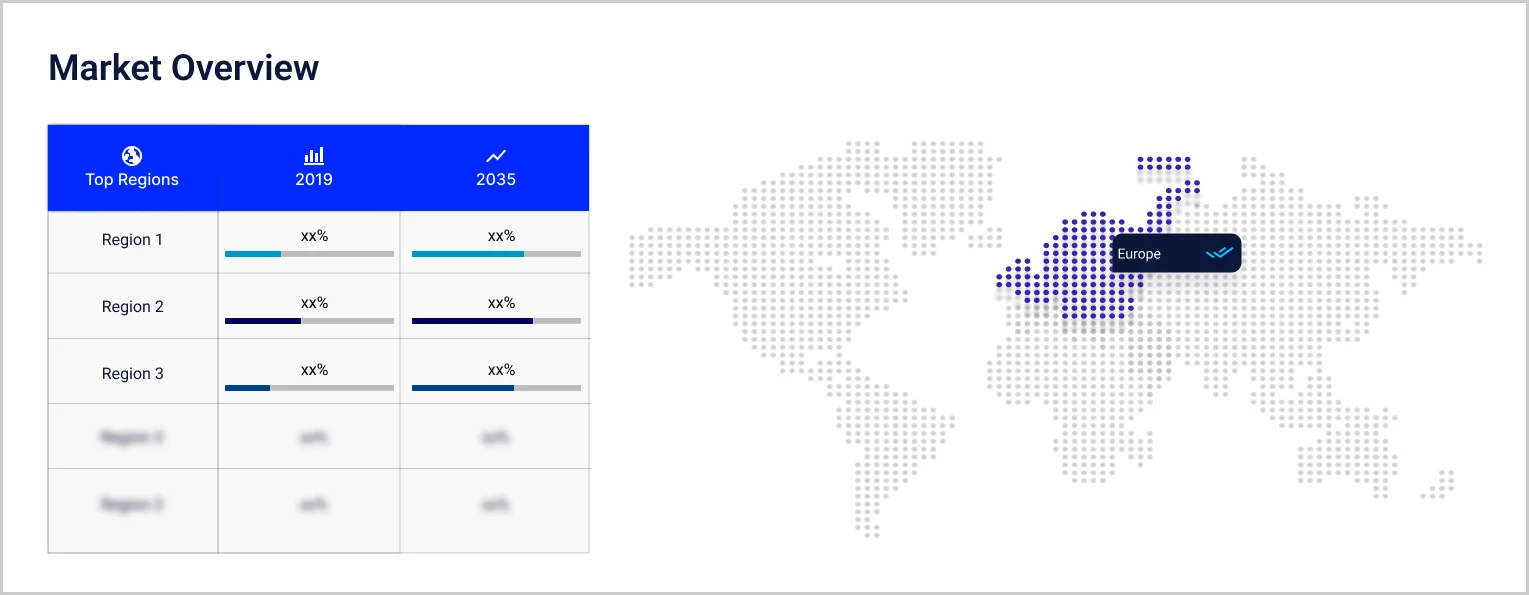
Key Insight: The Central district leads the Russia UAV market, anchored by Moscow's concentration of government demand, research and development, corporate headquarters, and system integrators. The Volga district is among the fastest growing regions, hosting a significant share of the country's unmanned systems manufacturing base and pilot logistics projects, while the Northwestern district, centered on Saint Petersburg, contributes a strong civil and educational UAV cluster and the Siberian and Far Eastern districts drive demand for long-range surveying and monitoring over remote terrain. The Southern and Ural districts are also building dedicated capacity; construction began in January 2026 on the "Technosphere" center in Krasnodar Krai, a facility integrating flight simulators, a design and programing laboratory, and an aerial survey data processing center to support precision agriculture and tourism-focused drone applications, with full completion targeted for 2028 as part of Russia's national unmanned aerial systems technology initiative.
By type, fixed wing holds the leading share of the market through superior endurance and range across long-distance surveying and monitoring missions
Fixed wing platforms hold the leading share of the Russia UAV market by type, valued for long endurance and range in surveying, mapping, and monitoring over the country's vast territory, while rotary wing systems remain important for inspection and short-range tasks requiring vertical take-off and hovering. For example, In December 2025, Russia's Ministry of Emergency Situations commissioned the Geoscan 701 Video, a fixed-wing UAV offering roughly 10 hours of endurance and 600 miles of range, for incident detection, damage assessment, search-and-rescue, and wildfire monitoring across remote terrain.
Hybrid vertical take-off and landing designs are the fastest growing type, combining the endurance of fixed wing platforms with the operational flexibility of rotary systems and reducing dependence on prepared launch and recovery infrastructure, which broadens their appeal across commercial and government missions in the market.
By application, the military and defense segment dominates the market on the strength of sustained state demand and national industrial policy priorities
Military and defense accounts for the largest revenue share within the Russia UAV market, reflecting sustained state demand and the prioritization of unmanned systems within national industrial policy. Government and law enforcement applications add further public-sector demand across monitoring, mapping, and public safety use cases, reinforcing the state-driven core of the market. In July 2026, Rosseti Lenenergo announced a 109.8 million ruble project developing AI-powered inspector drones to monitor over 52,000 km of power lines, using thermal imaging and neural-network detection to identify defects and unauthorised access in real time.
Commercial applications contribute the fastest growing share of the market, driven by the national unmanned aircraft systems program and rising enterprise adoption across agriculture, energy, construction, and logistics. Consumer demand remains comparatively modest, shaped by regulation and the availability of affordable domestic and imported platforms.
By mode of operation, remotely operated systems hold the leading share of the market on the strength of operational simplicity and compatibility with existing pilot training infrastructure
Remotely operated systems account for the largest share of the Russia UAV market by mode of operation, remaining the mainstay across most current commercial and government use cases. These platforms are favored for their operational simplicity, lower certification burden, and compatibility with existing pilot training infrastructure, making them the default choice for surveillance, inspection, and monitoring missions where a trained operator maintains direct control. Their dominance also reflects the current regulatory environment, which still requires human oversight for most civil and government flight operations, alongside the wider availability of remotely piloted platforms across price points and payload classes.
Semi-autonomous and fully autonomous modes are the fastest growing, supported by advances in flight-control software, navigation, and mission automation under the national unmanned systems program that are enabling more complex mapping, inspection, and beyond-visual-line-of-sight operations. In July 2026, Russian developer Aerospace Antenna Systems, working with the National Technology Initiative Platform, began field testing "Brain Box," the country's first integrated AI microcomputer combining a flight controller and AI processing module on a single board, compatible with cameras, LiDAR, and thermal sensors and designed for unmanned aerial, surface, and ground robotic systems.
By maximum takeoff weight, the less than 25 kilograms class holds the leading share of the market through lower costs and simpler certification requirements that support widespread adoption
The less than 25 kilograms class holds the leading share of the Russia UAV market by unit volume, reflecting the prevalence of small platforms for surveying, monitoring, agriculture, and light logistics, where lower costs and simpler certification requirements support widespread adoption. In July 2026, North Caucasus Federal University, working with Center for New Solutions and Stilsoft, completed testing of a reproducible copter-type agricultural drone platform with a 10 kg payload and 10 km range for fertilizer application and crop monitoring, with production established at the university's own facilities.
The 25 to 150 kilograms class is among the faster growing weight categories, offering a balance of payload capacity, endurance, and operational flexibility suited to a widening range of commercial and government missions, including industrial inspection, construction logistics, and mid-range agricultural spraying that smaller platforms cannot support.
By end use, the surveillance and reconnaissance category dominates the market on the strength of sustained security, monitoring, and situational-awareness demand
Surveillance and reconnaissance holds the largest end use share of the Russia UAV market, underpinned by security, monitoring, and situational-awareness demand, while inspection and monitoring and mapping and surveying provide steady commercial demand across energy, construction, and geospatial applications, reflecting UAVs' established role in data collection over large or hard-to-access areas.
Agriculture and delivery and logistics are among the fastest growing end uses, supported by precision farming adoption over large agricultural areas and by experimental legal regimes enabling drone delivery pilots. In November 2025, Russian e-commerce marketplace Wildberries, which processes over 20 million orders daily, began testing certified domestic drone deliveries between a logistics centre and pickup points in Saint Petersburg with support from the city's Transport Committee, aiming to extend the model to hard-to-reach regions across its network.
Read more about this report - REQUEST FREE SAMPLE COPY IN PDF
The Central district dominates the market on the strength of Moscow's government and industrial concentration
The Central district leads the Russia UAV market, anchored by Moscow's concentration of government demand, research and development, corporate headquarters, and system integrators. The district's dense institutional and industrial base makes it the primary arena for program coordination, procurement, and technology development across the unmanned systems sector. In February 2025, Russia's first Asian-part scientific-production drone center was opened in Tomsk, Siberia, under the national Unmanned Aviation Systems project. The 6,500 sqm facility began serial production of seven drone models (up to 200 kg payload) in March 2025, targeting 500 units monthly, backed by 2.2 billion rubles in subsidies.
The Volga district is among the fastest growing regions, hosting a significant share of the country's unmanned systems manufacturing base and pilot logistics projects. The Northwestern district, centred on Saint Petersburg, contributes a strong civil and educational UAV cluster, while the Ural, Siberian, and Far Eastern districts drive demand for long-range surveying and monitoring over remote terrain, and the Southern district supports agricultural and infrastructure applications.
|
CAGR 2026-2035 - Market by |
Region |
|
Central |
11.6% |
|
Northwestern |
12.1% |
|
Volga |
13.4% |
|
Southern |
11.2% |
|
Ural |
10.8% |
|
Siberian |
11.9% |
|
Far Eastern |
11.4% |
The market features a moderately consolidated competitive structure, led by large state-linked industrial groups and specialized domestic unmanned systems developers, alongside civil technology firms and foreign platform manufacturers whose market access has been shaped by sanctions and export controls. Russia UAV companies are competing primarily through domestic manufacturing scale, integration within larger industrial holdings, and alignment with national programs, while civil technology firms are differentiating through import substitution, localization of critical components, and expansion into civil and commercial applications.
Leading Russia UAV market players are focusing on deepening participation in the national unmanned aircraft systems program to secure long-term demand and funding certainty. Investment in domestic avionics, propulsion, and manufacturing capacity is increasingly central to competitive positioning as the market localizes, alongside expansion into civil and commercial services such as data processing and operator training. Increasing emphasis on supply-chain resilience and workforce development is also enabling companies to strengthen their competitive position while supporting long-term market growth.
Founded in 2011 and headquartered in Saint Petersburg, Russia, Geoscan is a leading developer of civil and commercial unmanned aerial systems and integrated geospatial services, spanning aerial surveying, mapping and cadastre, precision agriculture, powerline and infrastructure inspection, urban planning, and education. Its portfolio includes fixed wing survey platforms such as the Geoscan 201 and Geoscan 701, photogrammetry and laser scanning services, the Pioneer educational series, and small satellites, with products and services reaching more than 50 countries.
Founded in 2004 and headquartered in Izhevsk, Russia, ZALA Aero Group is part of the Kalashnikov Concern and designs and manufactures unmanned aerial systems for surveillance, monitoring, and inspection across security and industrial applications. ZALA benefits from scale, in-house manufacturing, and a broad portfolio spanning fixed wing and rotary platforms, giving it a prominent position among domestic UAV producers.
Headquartered in Moscow, Russia, Kronshtadt Group is a major domestic developer and manufacturer of unmanned aerial systems together with associated avionics, ground control, training, and simulation systems, and is known for larger, longer-endurance UAV platforms. Kronshtadt's scale of serial production and its integration of avionics, ground-control, and operator-training systems make it one of the most established unmanned systems manufacturers in the Russia UAV market.
Founded in 2006 and headquartered in Moscow, Russia, United Aircraft Corporation is part of the Rostec state corporation and is Russia's principal aircraft manufacturing holding, consolidating major design bureaus and producing a wide range of civil and defense aircraft, with growing involvement in unmanned systems.
Other key players in the market report include Special Technology Center (STC), Aeromax, SZ DJI Technology Co., Ltd., Autel Robotics Co., Ltd., and Parrot SA, among others.
*Please note that this is only a partial list; the complete list of key players is available in the full report. Additionally, the list of key players can be customized to better suit your needs.*
Explore the latest trends shaping the Russia UAV market 2026-2035 with our in-depth report. Gain strategic insights, future forecasts, and key market developments that can help you stay competitive. Download a free sample report or contact our team for customized consultation on the market trends 2026.


Upto 15% Off
USD
$2499 $2249
$3999 $3599
$4999 $4249
$5999 $5099


*While we strive to always give you current and accurate information, the numbers depicted on the website are indicative and may differ from the actual numbers in the main report. At Expert Market Research, we aim to bring you the latest insights and trends in the market. Using our analyses and forecasts, stakeholders can understand the market dynamics, navigate challenges, and capitalize on opportunities to make data-driven strategic decisions.*
In 2025, the Russia UAV market reached an approximate value of USD 4.10 Billion.
The market is projected to grow at a CAGR of 11.80% between 2026 and 2035.
The key players in the market include Geoscan Group, ZALA Aero Group (Kalashnikov Concern), Kronshtadt Group, United Aircraft Corporation, Special Technology Center (STC), Aeromax, SZ DJI Technology Co., Ltd., Autel Robotics Co., Ltd., and Parrot SA.
Key strategies include participation in the national unmanned aircraft systems programme, import substitution and localisation of critical components, expansion of civil and commercial applications, and development of services such as data processing and operator training.
Primary challenges include dependence on imported battery cells and certain sensors, sanctions and export controls affecting component access, certification and airspace-integration bottlenecks, and a shortage of skilled operators and data analysts.
Explore our key highlights of the report and gain a concise overview of key findings, trends, and actionable insights that will empower your strategic decisions.
|
Report Features |
Details |
|
Base Year |
2025 |
|
Historical Period |
2019-2025 |
|
Forecast Period |
2026-2035 |
|
Scope of the Report |
Historical and Forecast Trends, Industry Drivers and Constraints, Historical and Forecast Market Analysis by Segment:
|
|
Breakup by Type |
|
|
Breakup by Application |
|
|
Breakup by Mode of Operation |
|
|
Breakup by Maximum Takeoff Weight (MTOW) |
|
|
Breakup by End Use |
|
|
Breakup by Region |
|
|
Market Dynamics |
|
|
Competitive Landscape |
|
|
Companies Covered |
|
Datasheet
One User
USD 2,499
USD 2,249
tax inclusive*
Single User License
One User
USD 3,999
USD 3,599
tax inclusive*
Five User License
Five User
USD 4,999
USD 4,249
tax inclusive*
Corporate License
Unlimited Users
USD 5,999
USD 5,099
tax inclusive*
*Please note that the prices mentioned below are starting prices for each bundle type. Kindly contact our team for further details.*
Flash Bundle
Small Business Bundle
Growth Bundle
Enterprise Bundle
*Please note that the prices mentioned below are starting prices for each bundle type. Kindly contact our team for further details.*
Flash Bundle
Number of Reports: 3
20%
tax inclusive*
Small Business Bundle
Number of Reports: 5
25%
tax inclusive*
Growth Bundle
Number of Reports: 8
30%
tax inclusive*
Enterprise Bundle
Number of Reports: 10
35%
tax inclusive*
How To Order

Select License Type
Choose the right license for your needs and access rights.

Click on ‘Buy Now’
Add the report to your cart with one click and proceed to register.

Select Mode of Payment
Choose a payment option for a secure checkout. You will be redirected accordingly.
Strategic Solutions for Informed Decision-Making
Gain insights to stay ahead and seize opportunities.

Get insights & trends for a competitive edge.

Track prices with detailed trend reports.

Analyse trade data for supply chain insights.

Leverage cost reports for smart savings

Enhance supply chain with partnerships.

Connect For More Information
Our expert team of analysts will offer full support and resolve any queries regarding the report, before and after the purchase.
Our expert team of analysts will offer full support and resolve any queries regarding the report, before and after the purchase.
We employ meticulous research methods, blending advanced analytics and expert insights to deliver accurate, actionable industry intelligence, staying ahead of competitors.
Our skilled analysts offer unparalleled competitive advantage with detailed insights on current and emerging markets, ensuring your strategic edge.
We offer an in-depth yet simplified presentation of industry insights and analysis to meet your specific requirements effectively.




