

Consumer Insights
Uncover trends and behaviors shaping consumer choices today
Procurement Insights
Optimize your sourcing strategy with key market data
Industry Stats
Stay ahead with the latest trends and market analysis.
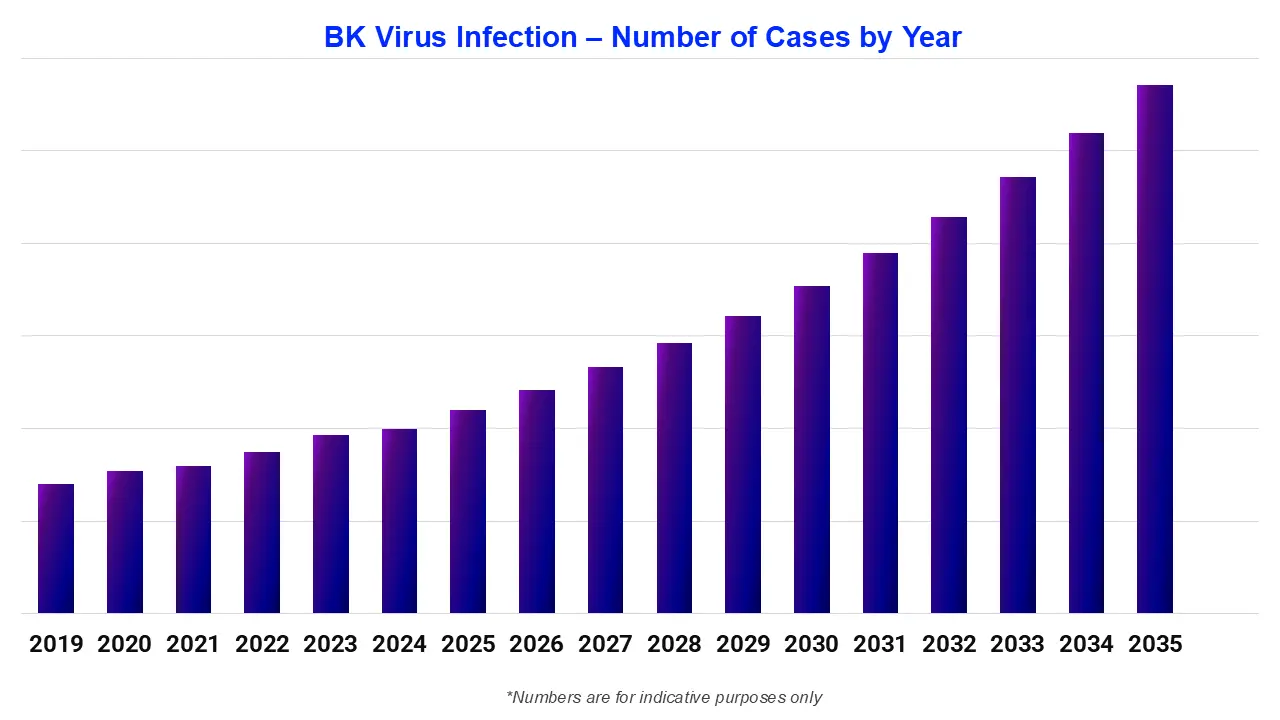
BK virus infection is an opportunistic viral disease caused by the BK polyomavirus, primarily affecting immunocompromised individuals, especially kidney transplant recipients. As per Liv Hospital, up to 90% of the global adult population has been infected with BK virus. According to Expert Market Research's BK virus infection epidemiology forecast, the increasing transplant population is expected to drive disease burden. Early viral reactivation monitoring remains essential.
Base Year
Historical Period
Forecast Period
Read more about this report - Request a Free Sample
Expert Market Research's “BK Virus Infection Epidemiology Forecast Report 2026-2035” offers comprehensive information on the prevalence and demographics of BK virus infection. It projects the future incidence and prevalence rates of BK virus infection cases across various populations. The study covers age, gender, and type as major determinants of the BK virus infection population. The report highlights patterns in the prevalence of BK virus infection over time and projects future trends based on multiple variables.
The report provides a comprehensive overview of the disease, as well as historical and projected data on the epidemiology of BK virus infection in the 8 major markets.
Regions Covered
BK virus infection is caused by the BK polyomavirus, a double-stranded DNA virus belonging to the Polyomaviridae family. Primary infection usually occurs during childhood and remains asymptomatic, after which the virus establishes lifelong latency in the kidneys and urinary tract. In immunocompromised individuals, particularly kidney and hematopoietic stem cell transplant recipients, the virus may reactivate, leading to nephropathy, hemorrhagic cystitis, or impaired graft function. The disease is generally classified based on clinical manifestations, including BK virus-associated nephropathy and hemorrhagic cystitis. Regular viral load monitoring is essential for early detection and disease management.
|
Parameter |
Insight |
|
Largest Patient Pool |
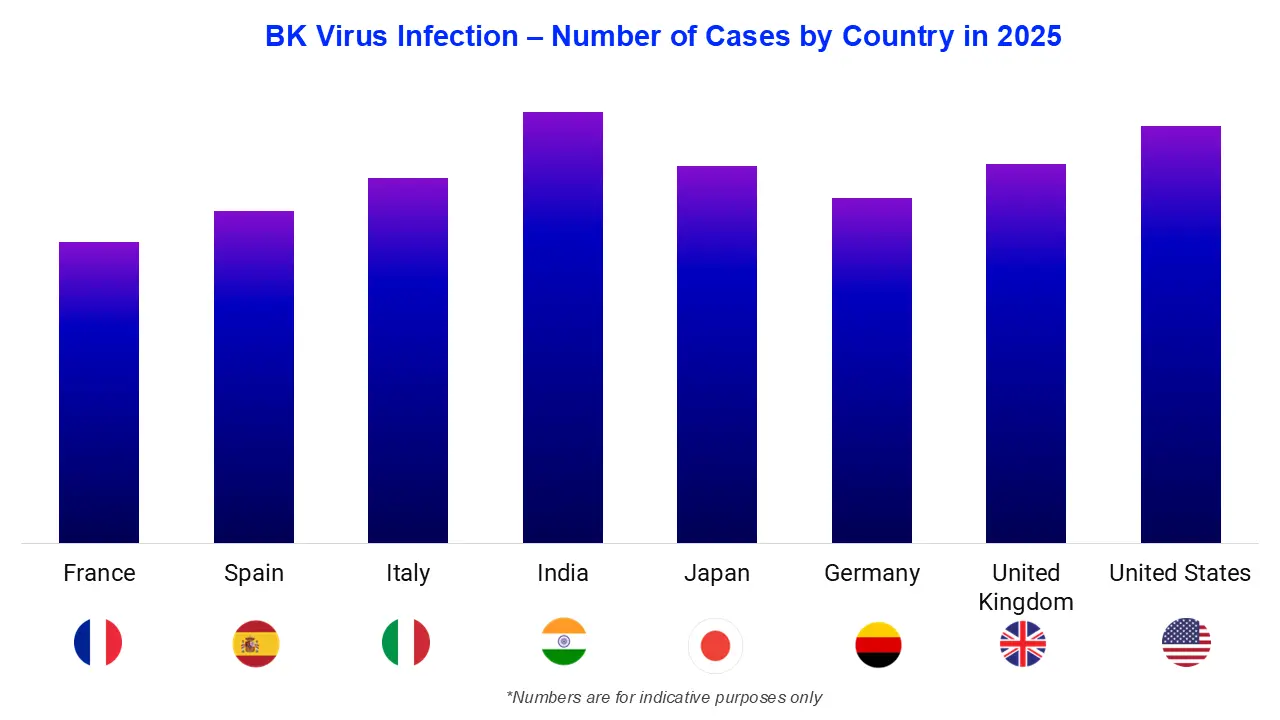
United States |
|
Fastest Growing Region |
India |
|
High-Risk Population |
Kidney transplant recipients, hematopoietic stem cell transplant recipients, and other immunocompromised individuals. |
|
Key Diagnostic Method |
Quantitative polymerase chain reaction testing for BK viral DNA. |
|
Major Risk Factor |
Long-term immunosuppressive therapy following organ transplantation. |
|
Major gap in the market |
Lack of approved targeted antiviral therapies and standardized treatment protocols. |
The BK virus infection epidemiology division offers information on the patient pool from history to the present as well as the projected trend for each of the 8 major markets. Expert Market Research provides both current and predicted trends for the BK virus infection epidemiology scenario by examining a wide range of studies. Additionally, the report covers the diagnosed patient pool for BK virus infection and their trends. The data is broken down into specific categories, such as total prevalent cases in males and females, and total diagnosed cases across different age groups and patient pools.
|
Epidemiology Segment |
Key Insights |
|
Diagnosed Prevalent Cases of the Disease |
BK virus infection demonstrates a high global prevalence, with up to 90% of adults infected worldwide. Adult seroprevalence generally ranges between 80% and 90%, reflecting widespread exposure during early life and lifelong latent infection, according to Liv Hospital, Creative Diagnostics; and Rut Mora-Buch et al. (2025). |
|
Gender-Specific Cases of the Disease |
Among kidney transplant recipients diagnosed with BK virus-associated nephropathy (BKVN), 48.5% were male, indicating a relatively balanced gender distribution within the evaluated cohort. Current evidence does not demonstrate a substantial difference in overall BK virus prevalence between males and females, according to Andrea García-Lopez et al. (2024). |
|
Age-Specific Cases of the Disease |
Primary BK virus infection typically occurs during early childhood, particularly in children four years of age or younger, while seroprevalence exceeds 90% in adulthood. In one transplant cohort, the median age at BKVN diagnosis was 50 years, as per Creative Diagnostics, Andrea García-Lopez et al. (2024) and Rut Mora-Buch et al. (2025). |
|
Ethnicity-Wise Cases of the Disease |
BK virus is distributed globally without evident seasonal or socioeconomic variation. Molecular epidemiological studies demonstrate geographic differences in circulating viral strains, with BKPyV serotype I representing 71.2% of analyzed sequences worldwide, according to Janani Durairaj et al. (2024) and Zohreh Alipour et al. (2023). |
|
Mortality and Survival Analysis of the Disease |
BK virus-associated nephropathy is associated with unfavorable transplant outcomes. One long-term study reported a 1.6% incidence, a 75.7% graft loss rate, and graft survival probabilities of 38.3% at six months and 22.3% at twelve months following diagnosis, according to Andrea García-Lopez et al. (2024). |
|
Disease Type |
Prevalence |
|
Asymptomatic (Latent) BK Virus Infection |
The majority of BK virus infections remain asymptomatic and latent throughout life. Global adult seroprevalence ranges from 80% to 90%, with infection rates exceeding 90% in adults, according to Liv Hospital; as reported by Creative Diagnostics and Rut Mora-Buch et al. (2025). |
|
BK Virus Viremia |
BK virus viremia primarily occurs in immunocompromised individuals, particularly kidney transplant recipients, and serves as an important indicator of viral reactivation requiring clinical monitoring. |
|
BK Virus-Associated Nephropathy (BKVN) |
BK virus-associated nephropathy occurs in approximately 1–10% of kidney transplant recipients. One long-term study reported an incidence of 1.6%, according to Julien Gras et al. (2023) and Andrea García-Lopez et al. (2024). |
|
BK Virus-Associated Hemorrhagic Cystitis |
BK virus-associated hemorrhagic cystitis is predominantly observed in hematopoietic stem cell transplant recipients and represents a recognized manifestation of BK virus reactivation in immunocompromised patients. |
Read more about this report - Request a Free Sample
The BK virus infection epidemiology data and findings for the United States, Germany, Spain, Italy, France, the United Kingdom, Japan, and India are also provided in the epidemiology section.
|
Country |
Key Insights |
|
United States |
BK virus infection represents an important concern among kidney transplant recipients. Global evidence indicates adult seroprevalence exceeding 80–90%, and molecular epidemiology has identified BKPyV serotype III among sequences originating from the United States, according to Janani Durairaj et al. (2024), Liv Hospital, and Rut Mora-Buch et al. (2025). |
|
Germany |
BK virus epidemiology in Germany is primarily characterized by surveillance among kidney transplant recipients, with continued monitoring aimed at the early identification of viral reactivation and the prevention of transplant-related graft complications. |
|
France |
Epidemiological investigations in France mainly focus on BK virus infection in kidney transplant recipients, supporting routine surveillance strategies to reduce the risk of BK virus-associated nephropathy and preserve graft function. |
|
Italy |
BK virus monitoring remains an integral component of post-transplant care in Italy, with epidemiological assessments primarily directed toward identifying viral reactivation and optimizing long-term graft outcomes. |
|
Spain |
Spain has contributed to the molecular epidemiology of BK virus, with BKPyV serotype III identified among reported sequence datasets, according to Janani Durairaj et al. (2024). |
|
United Kingdom |
The increasing prevalence of chronic kidney disease among older adults has contributed to a growing kidney transplant population, reinforcing the importance of BK virus surveillance following transplantation, as per Inji Alshaer et al. (2025). |
|
Japan |
Molecular epidemiological studies have identified BKPyV serotype III in Japan, while genotype IV accounted for approximately 8% of reported BKPyV isolates, according to Janani Durairaj et al. (2024) and Zohreh Alipour et al. (2023). |
|
India |
Molecular epidemiology findings indicate a BKPyV prevalence of 82.6% within transplant-related populations, underscoring the importance of ongoing viral surveillance among kidney transplant recipients, according to Ammara Kausar et al. (2026). |
The regional BK virus infection epidemiology landscape continues to face significant challenges due to limited routine screening practices, delayed diagnosis, and the absence of approved targeted antiviral therapies. Variations in transplant surveillance protocols across the United States, Europe, Japan, and India further contribute to inconsistent disease detection and reporting. Emerging opportunities include expanding standardized BK virus screening programs for transplant recipients, improving molecular diagnostic capabilities, strengthening epidemiological registries, and advancing clinical research focused on novel antiviral agents and immune-based therapies. These developments are expected to enhance disease monitoring, improve patient outcomes, and support evidence-based healthcare planning.
There is currently no approved antiviral therapy specifically indicated for BK virus infection. Management primarily focuses on reducing immunosuppressive therapy to restore antiviral immune responses while minimizing the risk of graft rejection. Supportive care, routine laboratory monitoring, and serial quantitative polymerase chain reaction testing are fundamental components of patient management. In selected cases, agents such as cidofovir, leflunomide, intravenous immunoglobulin, or fluoroquinolones have been investigated, although evidence supporting their efficacy remains limited. Continuous immunosuppression management and individualized clinical assessment are critical to optimizing treatment outcomes and preserving transplant function.


Upto 15% Off
USD
$2699 $2429
$4299 $3869
$5799 $4949
$6999 $5949


*While we strive to always give you current and accurate information, the numbers depicted on the website are indicative and may differ from the actual numbers in the main report. At Expert Market Research, we aim to bring you the latest insights and trends in the market. Using our analyses and forecasts, stakeholders can understand the market dynamics, navigate challenges, and capitalize on opportunities to make data-driven strategic decisions.*
Explore our key highlights of the report and gain a concise overview of key findings, trends, and actionable insights that will empower your strategic decisions.
|
Report Features |
Details |
|
Base Year |
2025 |
|
Historical Period |
2019-2025 |
|
Forecast Period |
2026-2035 |
|
Epidemiology Statistics Provided |
|
|
Segmentation Provided |
|
|
Geographies Covered |
|
Datasheet
One User
USD 2,699
USD 2,429
tax inclusive*
Single User License
One User
USD 4,299
USD 3,869
tax inclusive*
Five User License
Five User
USD 5,799
USD 4,949
tax inclusive*
Corporate License
Unlimited Users
USD 6,999
USD 5,949
tax inclusive*
*Please note that the prices mentioned below are starting prices for each bundle type. Kindly contact our team for further details.*
Flash Bundle
Small Business Bundle
Growth Bundle
Enterprise Bundle
*Please note that the prices mentioned below are starting prices for each bundle type. Kindly contact our team for further details.*
Flash Bundle
Number of Reports: 3
20%
tax inclusive*
Small Business Bundle
Number of Reports: 5
25%
tax inclusive*
Growth Bundle
Number of Reports: 8
30%
tax inclusive*
Enterprise Bundle
Number of Reports: 10
35%
tax inclusive*
How To Order

Select License Type
Choose the right license for your needs and access rights.

Click on ‘Buy Now’
Add the report to your cart with one click and proceed to register.

Select Mode of Payment
Choose a payment option for a secure checkout. You will be redirected accordingly.
Strategic Solutions for Informed Decision-Making
Gain insights to stay ahead and seize opportunities.

Get insights & trends for a competitive edge.

Track prices with detailed trend reports.

Analyse trade data for supply chain insights.

Leverage cost reports for smart savings

Enhance supply chain with partnerships.

Connect For More Information
Our expert team of analysts will offer full support and resolve any queries regarding the report, before and after the purchase.
Our expert team of analysts will offer full support and resolve any queries regarding the report, before and after the purchase.
We employ meticulous research methods, blending advanced analytics and expert insights to deliver accurate, actionable industry intelligence, staying ahead of competitors.
Our skilled analysts offer unparalleled competitive advantage with detailed insights on current and emerging markets, ensuring your strategic edge.
We offer an in-depth yet simplified presentation of industry insights and analysis to meet your specific requirements effectively.




