

Consumer Insights
Uncover trends and behaviors shaping consumer choices today
Procurement Insights
Optimize your sourcing strategy with key market data
Industry Stats
Stay ahead with the latest trends and market analysis.
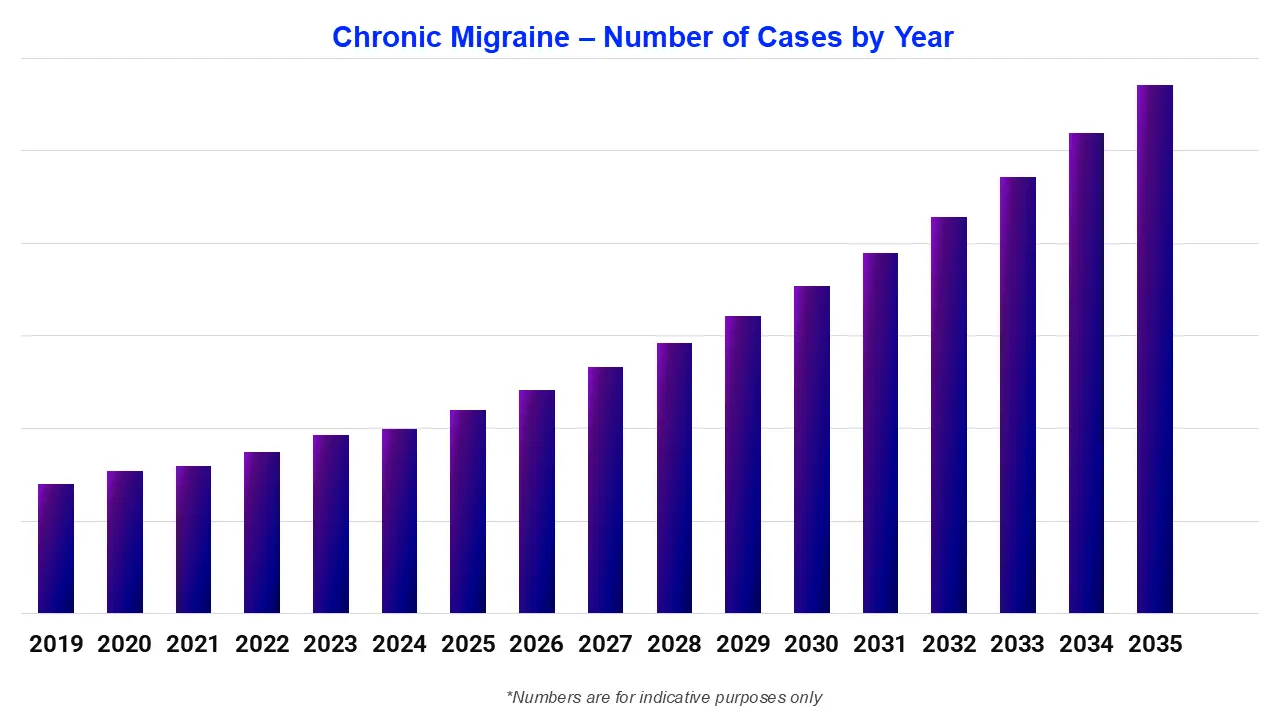
Chronic migraine is a disabling neurological disorder characterized by headaches occurring on at least 15 days per month for more than three months. According to Cohen et al. (2024), a systematic review of U.S. population-based studies found that chronic migraine prevalence was 0.91% among adults, including 1.3% among women and 0.5% among men, while prevalence among adolescents was 0.8%. As per the chronic migraine epidemiology forecast by Expert Market Research, epidemiological trends are expected to influence future disease burden and headache management.
Base Year
Historical Period
Forecast Period
Read more about this report - Request a Free Sample
Expert Market Research's “Chronic Migraine Epidemiology Forecast Report 2026-2035” offers comprehensive information on the prevalence and demographics of chronic migraine. It projects the future incidence and prevalence rates of chronic migraine cases across various populations. The study covers age, gender, and type as major determinants of the chronic migraine population. The report highlights patterns in the prevalence of chronic migraine over time and projects future trends based on multiple variables.
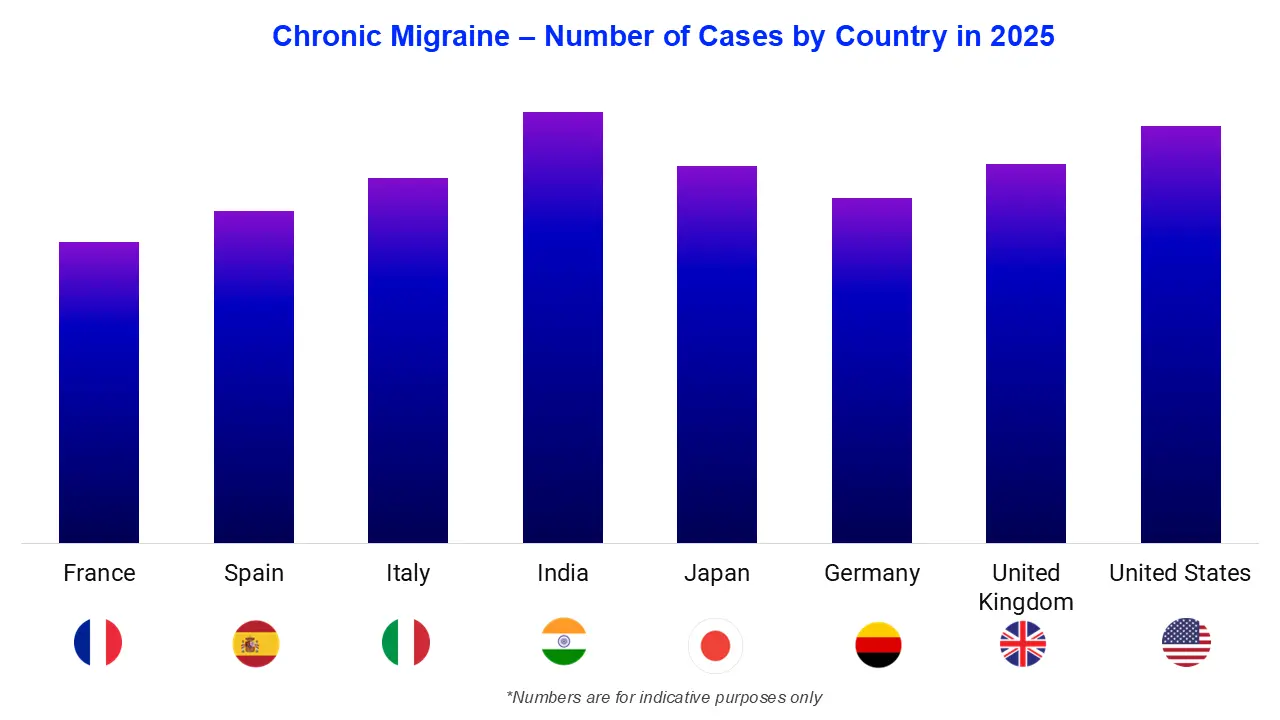
The report provides a comprehensive overview of the disease, as well as historical and projected data on the epidemiology of chronic migraine in the 8 major markets.
Regions Covered
Chronic migraine is a disabling primary headache disorder characterized by headache occurring on 15 or more days per month for more than three months, with migraine features on at least eight days per month. It generally develops from episodic migraine as headache frequency increases over time. Symptoms may include moderate-to-severe head pain, nausea, vomiting, and sensitivity to light or sound. Chronic headache may present with migraine with aura or without aura. ICHD-3 also describes forms with continuous pain and those with pain-free periods, reflecting variation in headache patterns.
|
Parameter |
Insight |
|
Largest Patient Pool |
United States |
|
Fastest Growing Country |
India |
|
High-Risk Population |
Adults with frequent or longstanding migraine, particularly women of working age |
|
Key Diagnostic Method |
Clinical assessment supported by headache history and headache diary |
|
Major Risk Factor |
High-frequency episodic migraine and medication overuse |
|
Major gap in the market |
Underdiagnosis and undertreatment |
The chronic migraine epidemiology division offers information on the patient pool from history to the present as well as the projected trend for each of the 8 major markets. Expert Market Research provides both current and predicted trends for the chronic migraine epidemiology scenario by examining a wide range of studies. Additionally, the report covers the diagnosed patient pool for chronic migraine and their trends. The data is broken down into specific categories, such as total prevalent cases in males and females, and total diagnosed cases across different age groups and patient pools.
|
Epidemiology Segment |
Key Insights |
|
Diagnosed Prevalent Cases of the Disease |
According to Clinical Pain Advisor, chronic migraine affected 1.7% globally, including 2.2% of women and 1.0% of men. As per Frontline Medical Communications Inc., chronic migraine prevalence was 0.91% among United States adults, including 1.3% of women and 0.5% of men. |
|
Gender-Specific Cases of the Disease |
According to Clinical Pain Advisor, chronic migraine prevalence was 2.2% among women compared with 1.0% among men globally. As per Frontline Medical Communications Inc., the corresponding United States adult prevalence was 1.3% among women and 0.5% among men, demonstrating a higher burden among women. |
|
Age-Specific Cases of the Disease |
According to the Herman Ostrow School Of Dentistry OF USC, migraine prevalence typically peaks during the 30s, although chronic migraine may persist or worsen among older adults. According to G. Demarquay et al. (2021), prevalence in France peaked between 35 and 39 years. |
|
Ethnicity-Wise Cases of the Disease |
According to Amaal J. Starling et al. (2025), among U.S. respondents, 61% of Hispanic, 42% of Black, and 49% of White participants reported having received a chronic migraine diagnosis. Black and Hispanic respondents were generally younger than White respondents in the study population. |
|
Mortality and Survival Analysis of the Disease |
According to Shilpi Shukla et al. (2025), migraine ranked second in years lived with disability in the Global Burden of Disease 2016 analysis, highlighting its substantial population-level burden. The provided information primarily addresses disability and prevalence rather than mortality or survival outcomes. |
Read more about this report - Request a Free Sample
The chronic migraine epidemiology data and findings for the United States, Germany, Spain, Italy, France, the United Kingdom, Japan, and India are also provided in the epidemiology section.
|
Country |
Key Insights |
|
United States |
According to Frontline Medical Communications Inc., migraine prevalence in the United States has remained relatively stable over approximately three decades, ranging from 12% to 15% overall, 17% to 19% among women, and 6% to 7% among men. Chronic migraine affected 0.91% of adults, including 1.3% of women and 0.5% of men, while prevalence among adolescents was 0.8%. |
|
Germany |
According to Andreas Domdey et al. (2026), migraine prevalence in Germany has been reported at approximately 15% among women and 6% among men. In the study population, women represented 87% of participants and men 13%, with many female participants being of childbearing age. |
|
France |
According to G. Demarquay et al. (2021), migraine prevalence in France was 14.4%, with a peak between 35 and 39 years. In this age group, approximately 30% of women and 15% of men were affected. The study also reported that 21.3% of people aged 18 years met the specified diagnostic criteria. |
|
Italy |
As per Centro Dino Ferrari ETS, migraine prevalence among adults in Italy is approximately 12%, with the condition commonly beginning before age 40 and primarily affecting young adults during their peak productive years. The source reported approximately 1.2 million affected people in Lombardy. |
|
Spain |
The epidemiological burden of chronic migraine in Spain is influenced by underdiagnosis, mental health factors, lifestyle patterns, work-related stress, and healthcare utilization. Differences in healthcare access and recognition, together with factors such as psychological well-being, sleep patterns, physical activity, and other comorbid conditions, can contribute to variations in migraine burden across the population. |
|
United Kingdom |
According to The Migraine Trust, migraine affects approximately one in seven people in the United Kingdom, with around one million people living with chronic migraine. The organization also reported differences in migraine-related disclosure concerns and perceived healthcare experiences across gender and ethnic groups. |
|
Japan |
The epidemiological burden of chronic migraine in Japan is influenced by low patient awareness, delayed healthcare-seeking, limited recognition of migraine severity, and barriers to accessing appropriate headache care. Hesitation to seek medical attention and insufficient awareness among patients and healthcare providers may contribute to persistent underrecognition and undertreatment. |
|
India |
According to Kumar et al. (2025), a cross-sectional study of 400 patients with migraine in India found that 57.3% had episodic migraine, while the remaining 42.7% had chronic migraine. The study population was predominantly female (77.3%), with a mean age of 37.2 years. The findings provide recent evidence on the distribution of chronic migraine among patients seeking migraine care in India. |
A major epidemiological gap in chronic migraine is the underdiagnosis and undertreatment of patients experiencing frequent headache days. Many individuals may remain managed primarily with acute medications despite requiring preventive treatment, while medication overuse can further complicate disease management. Emerging opportunities include improving primary-care recognition, expanding access to headache specialists, encouraging systematic use of headache diaries, and increasing awareness of preventive treatment options. Across the United States, Germany, France, Italy, Spain, the United Kingdom, Japan, and India, improved diagnosis and earlier intervention could support more appropriate disease management and reduce the cumulative burden of chronic migraine.
Chronic migraine treatment combines acute management of individual attacks with preventive therapy to reduce headache frequency and severity. Acute options may include triptans, nonsteroidal anti-inflammatory drugs, acetaminophen, and newer migraine-specific therapies when appropriate. Preventive management may include oral preventive medications, onabotulinumtoxinA, and calcitonin gene-related peptide (CGRP)-targeted therapies. Treatment also emphasizes identification and management of triggers, lifestyle modification, and appropriate use of acute medications. Medication-overuse headache should be assessed because frequent use of acute headache medicines can contribute to persistent or worsening headache frequency.


Upto 15% Off
USD
$2699 $2429
$4299 $3869
$5799 $4949
$6999 $5949


*While we strive to always give you current and accurate information, the numbers depicted on the website are indicative and may differ from the actual numbers in the main report. At Expert Market Research, we aim to bring you the latest insights and trends in the market. Using our analyses and forecasts, stakeholders can understand the market dynamics, navigate challenges, and capitalize on opportunities to make data-driven strategic decisions.*
Explore our key highlights of the report and gain a concise overview of key findings, trends, and actionable insights that will empower your strategic decisions.
|
Report Features |
Details |
|
Base Year |
2025 |
|
Historical Period |
2019-2025 |
|
Forecast Period |
2026-2035 |
|
Epidemiology Statistics Provided |
|
|
Segmentation Provided |
|
|
Geographies Covered |
|
Datasheet
One User
USD 2,699
USD 2,429
tax inclusive*
Single User License
One User
USD 4,299
USD 3,869
tax inclusive*
Five User License
Five User
USD 5,799
USD 4,949
tax inclusive*
Corporate License
Unlimited Users
USD 6,999
USD 5,949
tax inclusive*
*Please note that the prices mentioned below are starting prices for each bundle type. Kindly contact our team for further details.*
Flash Bundle
Small Business Bundle
Growth Bundle
Enterprise Bundle
*Please note that the prices mentioned below are starting prices for each bundle type. Kindly contact our team for further details.*
Flash Bundle
Number of Reports: 3
20%
tax inclusive*
Small Business Bundle
Number of Reports: 5
25%
tax inclusive*
Growth Bundle
Number of Reports: 8
30%
tax inclusive*
Enterprise Bundle
Number of Reports: 10
35%
tax inclusive*
How To Order

Select License Type
Choose the right license for your needs and access rights.

Click on ‘Buy Now’
Add the report to your cart with one click and proceed to register.

Select Mode of Payment
Choose a payment option for a secure checkout. You will be redirected accordingly.
Strategic Solutions for Informed Decision-Making
Gain insights to stay ahead and seize opportunities.

Get insights & trends for a competitive edge.

Track prices with detailed trend reports.

Analyse trade data for supply chain insights.

Leverage cost reports for smart savings

Enhance supply chain with partnerships.

Connect For More Information
Our expert team of analysts will offer full support and resolve any queries regarding the report, before and after the purchase.
Our expert team of analysts will offer full support and resolve any queries regarding the report, before and after the purchase.
We employ meticulous research methods, blending advanced analytics and expert insights to deliver accurate, actionable industry intelligence, staying ahead of competitors.
Our skilled analysts offer unparalleled competitive advantage with detailed insights on current and emerging markets, ensuring your strategic edge.
We offer an in-depth yet simplified presentation of industry insights and analysis to meet your specific requirements effectively.




