

Consumer Insights
Uncover trends and behaviors shaping consumer choices today
Procurement Insights
Optimize your sourcing strategy with key market data
Industry Stats
Stay ahead with the latest trends and market analysis.
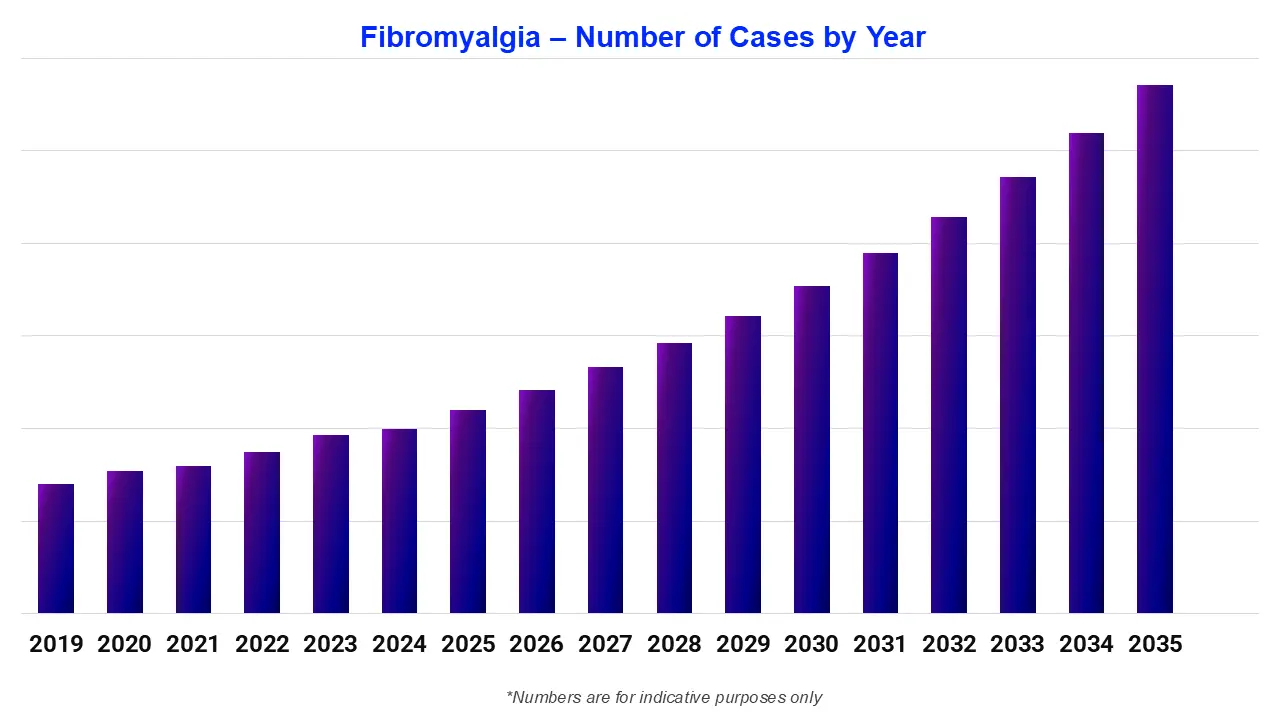
Fibromyalgia is a chronic pain disorder characterized by widespread musculoskeletal pain, fatigue, and sleep disturbances. According to Soosan Soroosh et al. (2024), fibromyalgia affects approximately 2%–8% of the global population. As per the fibromyalgia epidemiology forecast by Expert Market Research, the condition remains an important condition within the broader chronic pain landscape, supporting continued epidemiological assessment and treatment development.
Base Year
Historical Period
Forecast Period
Read more about this report - Request a Free Sample
Expert Market Research's “Fibromyalgia Epidemiology Forecast Report 2026-2035” offers comprehensive information on the prevalence and demographics of fibromyalgia. It projects the future incidence and prevalence rates of fibromyalgia cases across various populations. The study covers age, gender, and type as major determinants of the fibromyalgia population. The report highlights patterns in the prevalence of fibromyalgia over time and projects future trends based on multiple variables.
The report provides a comprehensive overview of the disease, as well as historical and projected data on the epidemiology of fibromyalgia in the 8 major markets.
Regions Covered
Fibromyalgia is a chronic disorder characterized by widespread musculoskeletal pain, fatigue, sleep disturbances, and cognitive symptoms. The condition is associated with abnormal processing of pain signals within the central nervous system, resulting in increased sensitivity to painful and non-painful stimuli. Its exact etiology remains unclear, although genetic predisposition, physical trauma, infections, and psychological stress may contribute to its development. Fibromyalgia can occur at any age but is more frequently reported among women and middle-aged adults. The disease does not have formally recognized clinical subtypes. Chronic widespread pain remains its principal clinical characteristic.
|
Parameter |
Insight |
|
Largest Patient Pool |
United States |
|
Fastest Growing Region |
India |
|
High-Risk Population |
Women and middle-aged adults |
|
Key Diagnostic Method |
Clinical assessment based on medical history, symptom evaluation, and physical examination |
|
Major Risk Factor |
Genetic predisposition, physical or emotional trauma, and psychological stress |
|
Major gap in the market |
Underdiagnosis and delayed diagnosis |
The fibromyalgia epidemiology division offers information on the patient pool from history to the present as well as the projected trend for each of the 8 major markets. Expert Market Research provides both current and predicted trends for the fibromyalgia epidemiology scenario by examining a wide range of studies. Additionally, the report covers the diagnosed patient pool for fibromyalgia and their trends. The data is broken down into specific categories, such as total prevalent cases in males and females, and total diagnosed cases across different age groups and patient pools.
|
Epidemiology Segment |
Key Insights |
|
Diagnosed Prevalent Cases of the Disease |
Fibromyalgia affects approximately 2%–8% of the global population, although prevalence varies substantially across countries because different diagnostic standards are used. Soroosh et al. (2024) reported prevalence ranging from 0.1% in Argentina to 13.4% in Saudi Arabia. |
|
Gender-Specific Cases of the Disease |
Fibromyalgia shows a strong female predominance. Kumar et al. (2023) reported a female-to-male ratio of 9:1 globally. Soroosh et al. (2024) also reported that 91% of hospitalized patients with fibromyalgia were women. |
|
Age-Specific Cases of the Disease |
Fibromyalgia can occur across different age groups, but adult populations account for most reported cases. According to Healthline Media LLC, 2024, symptoms most commonly develop between 30 and 50 years, while InformedHealth.org reported diagnosis typically between 40 and 60 years in Germany. |
|
Ethnicity-Wise Cases of the Disease |
Evaluation of fibromyalgia prevalence and disease burden across different ethnic populations, considering variations in demographic characteristics, healthcare access, diagnostic practices, and population-level differences in recognition and reporting. |
|
Mortality and Survival Analysis of the Disease |
Reported epidemiological evidence indicates substantial variation in fibromyalgia burden between populations. According to Soroosh et al. (2024), 23.8% of people in the United States experienced pain, with 40.1% receiving treatment, while European countries collectively reported 20.2% experiencing pain. |
|
Disease Type |
Prevalence |
|
Primary Fibromyalgia |
Fibromyalgia occurring without another significant underlying condition, with disease burden evaluated based on prevalence, demographic distribution, and associated symptom patterns. |
|
Secondary or Concomitant Fibromyalgia |
Fibromyalgia occurring alongside another significant medical or rheumatic condition, with epidemiological assessment considering the contribution of comorbidities to the overall disease burden. |
Read more about this report - Request a Free Sample
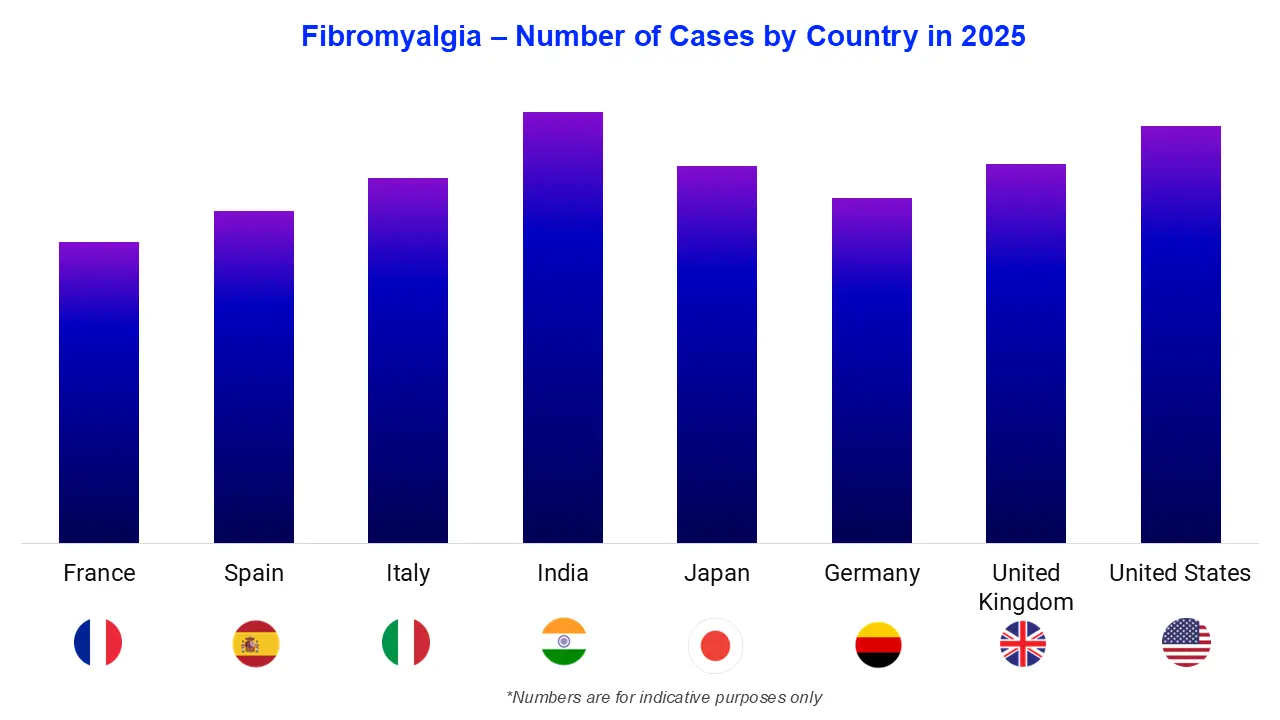
The fibromyalgia epidemiology data and findings for the United States, Germany, Spain, Italy, France, the United Kingdom, Japan, and India are also provided in the epidemiology section.
|
Country |
Key Insights |
|
United States |
According to Healthline Media LLC (2024), approximately 2% of adults in the United States have fibromyalgia. Soroosh et al. (2024) reported that 23.8% of people experienced pain, of whom 40.1% were treated, indicating a substantial reported disease burden. |
|
Germany |
As per InformedHealth.org, approximately 2% of adults in Germany have fibromyalgia. The condition is typically diagnosed between 40 and 60 years, and it is more common among women than men. |
|
France |
According to Soroosh et al. (2024), fibromyalgia prevalence in France was 1.60% among 3,081 people aged over 18 years, indicating a measurable burden among the adult population. |
|
Italy |
According to Soroosh et al. (2024), Italy was included among European countries reporting a combined 20.2% pain experience rate, with 47% of affected people receiving treatment across the referenced European group. |
|
Spain |
As per Soroosh et al. (2024), Spain was included in the European group comprising the United Kingdom, France, Germany, Italy, and Spain, where 20.2% of people experienced pain and 47% were treated. |
|
United Kingdom |
According to Maher et al. (2025), approximately 5.4% of the United Kingdom population is affected by fibromyalgia, with notably higher prevalence reported among women aged 35–45 years. |
|
Japan |
According to Soroosh et al. (2024), fibromyalgia prevalence in Japan was 2.1%, with females accounting for almost half of cases. Japan also recorded 4.4% pain reporting and 26.3% treatment, among the cited developed countries. |
|
India |
According to Kumar et al. (2023), fibromyalgia is a chronic musculoskeletal pain condition affecting predominantly females, with a reported female-to-male ratio of 9:1. The study examined demographic and clinical characteristics of the Indian fibromyalgia population. |
The regional fibromyalgia landscape presents opportunities to address persistent gaps in disease recognition, diagnosis, and comprehensive management. Underdiagnosis and delayed diagnosis remain important challenges because fibromyalgia symptoms overlap with several other chronic pain and rheumatic conditions. Greater awareness among primary care physicians and specialists could support earlier identification and appropriate referral. There is also an opportunity to expand multidisciplinary care models integrating pharmacological treatment, physical activity, psychological support, and patient education. Increasing adoption of standardized diagnostic approaches and improved patient awareness may further support earlier treatment initiation and improve long-term disease management across the covered regions.
Fibromyalgia treatment focuses on reducing symptom severity, improving physical functioning, and enhancing patients' overall quality of life. Management typically involves a combination of nonpharmacological and pharmacological interventions tailored to individual symptoms. Exercise, particularly aerobic and muscle-strengthening activities, is considered an important component of long-term management. Cognitive behavioral therapy, sleep management, stress reduction, and patient education may also provide benefits. Pharmacological treatment can include serotonin and norepinephrine reuptake inhibitors, such as duloxetine and milnacipran, and anticonvulsants such as pregabalin. Multidisciplinary management is often recommended to address the condition's complex and overlapping symptoms.


Upto 15% Off
USD
$1999 $1799
$2999 $2699
$4399 $3739
$5799 $4929


*While we strive to always give you current and accurate information, the numbers depicted on the website are indicative and may differ from the actual numbers in the main report. At Expert Market Research, we aim to bring you the latest insights and trends in the market. Using our analyses and forecasts, stakeholders can understand the market dynamics, navigate challenges, and capitalize on opportunities to make data-driven strategic decisions.*
Explore our key highlights of the report and gain a concise overview of key findings, trends, and actionable insights that will empower your strategic decisions.
|
Report Features |
Details |
|
Base Year |
2025 |
|
Historical Period |
2019-2025 |
|
Forecast Period |
2026-2035 |
|
Epidemiology Statistics Provided |
|
|
Segmentation Provided |
|
|
Geographies Covered |
|
Datasheet
One User
USD 1,999
USD 1,799
tax inclusive*
Single User License
One User
USD 2,999
USD 2,699
tax inclusive*
Five User License
Five User
USD 4,399
USD 3,739
tax inclusive*
Corporate License
Unlimited Users
USD 5,799
USD 4,929
tax inclusive*
*Please note that the prices mentioned below are starting prices for each bundle type. Kindly contact our team for further details.*
Flash Bundle
Small Business Bundle
Growth Bundle
Enterprise Bundle
*Please note that the prices mentioned below are starting prices for each bundle type. Kindly contact our team for further details.*
Flash Bundle
Number of Reports: 3
20%
tax inclusive*
Small Business Bundle
Number of Reports: 5
25%
tax inclusive*
Growth Bundle
Number of Reports: 8
30%
tax inclusive*
Enterprise Bundle
Number of Reports: 10
35%
tax inclusive*
How To Order

Select License Type
Choose the right license for your needs and access rights.

Click on ‘Buy Now’
Add the report to your cart with one click and proceed to register.

Select Mode of Payment
Choose a payment option for a secure checkout. You will be redirected accordingly.
Strategic Solutions for Informed Decision-Making
Gain insights to stay ahead and seize opportunities.

Get insights & trends for a competitive edge.

Track prices with detailed trend reports.

Analyse trade data for supply chain insights.

Leverage cost reports for smart savings

Enhance supply chain with partnerships.

Connect For More Information
Our expert team of analysts will offer full support and resolve any queries regarding the report, before and after the purchase.
Our expert team of analysts will offer full support and resolve any queries regarding the report, before and after the purchase.
We employ meticulous research methods, blending advanced analytics and expert insights to deliver accurate, actionable industry intelligence, staying ahead of competitors.
Our skilled analysts offer unparalleled competitive advantage with detailed insights on current and emerging markets, ensuring your strategic edge.
We offer an in-depth yet simplified presentation of industry insights and analysis to meet your specific requirements effectively.




