

Consumer Insights
Uncover trends and behaviors shaping consumer choices today
Procurement Insights
Optimize your sourcing strategy with key market data
Industry Stats
Stay ahead with the latest trends and market analysis.
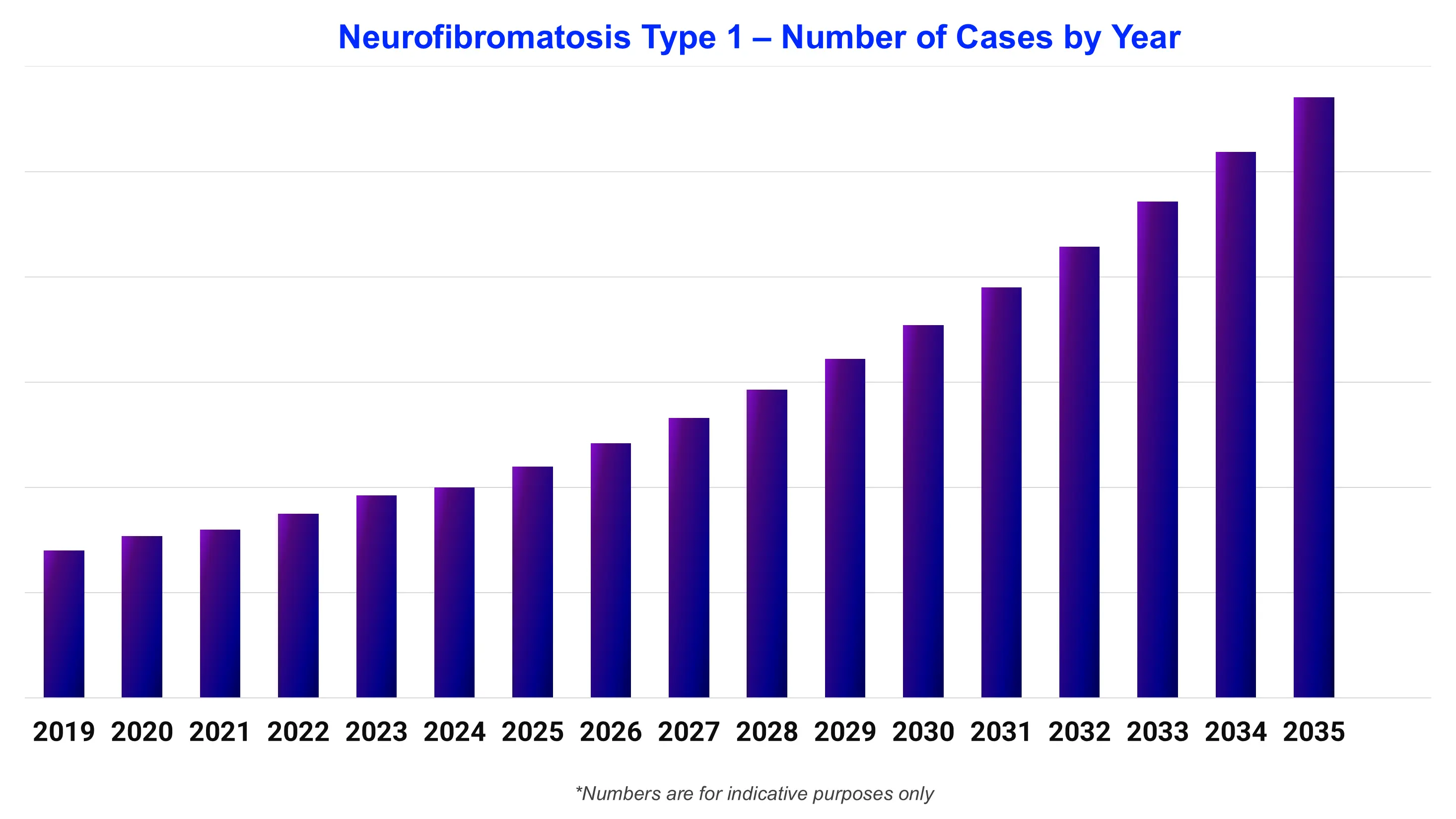
Neurofibromatosis type 1 is an autosomal dominant genetic disorder caused by pathogenic variants in the NF1 tumor-suppressor gene. NF1 occurs globally and nationally at a rate of approximately 1 in 3,000 individuals. Some global screening variations show ranges from 1 in 2,000 to 1 in 4,000 people depending on diagnostic criteria and reporting methods. According to Neurofibromatosis Type 1 Epidemiology Forecast by Expert Market Research (EMR), better registry coverage, standardized outcome reporting and longer-term treatment data would help quantify clinical need and evaluate access to emerging therapies.
Base Year
Historical Period
Forecast Period
Read more about this report - REQUEST FREE SAMPLE COPY IN PDF
Expert Market Research's “Neurofibromatosis Type 1 Epidemiology Forecast Report 2026-2035” offers comprehensive information on the prevalence and demographics of Neurofibromatosis Type 1. It projects the future incidence and prevalence rates of Neurofibromatosis Type 1 cases across various populations. The study covers age, gender, and type as major determinants of the Neurofibromatosis Type 1 population. The report highlights patterns in the prevalence of Neurofibromatosis Type 1 over time and projects future trends based on multiple variables.
The report provides a comprehensive overview of the disease, as well as historical and projected data on the epidemiology of Neurofibromatosis Type 1 in the 8 major markets.
Regions Covered
Neurofibromatosis Type 1 (NF1), also known as von Recklinghausen disease, is a common multi-system genetic neurocutaneous disorder that affects skin pigmentation and causes the growth of benign (noncancerous) and occasionally malignant tumors along the nervous system. It affects approximately 1 in 2,500 to 3,000 people worldwide, with no preference for sex, race, or ethnicity. NF1 is caused by changes or pathogenic variants in the NF1 gene located on the long arm of chromosome 17 (17q11.2).
|
Parameter |
Insight |
|
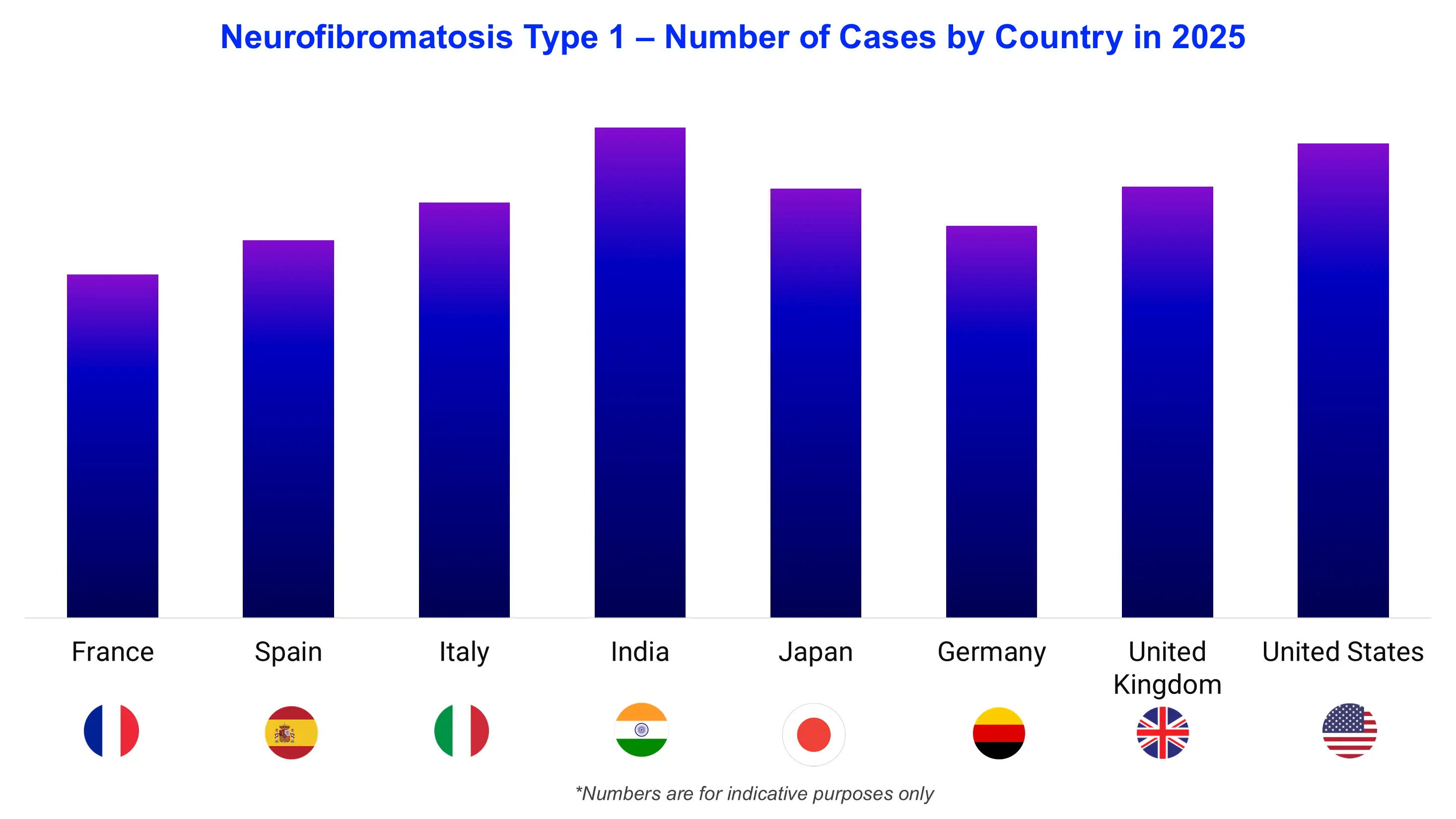
Largest Patient Pool |
India |
|
Fastest Growing Country |
United States |
|
High-Risk Population |
NF1 is a genetic condition rather than an infection acquired through a conventional environmental exposure. People with a parent carrying a pathogenic NF1 variant have an increased inherited risk, although new variants also occur. |
|
Key Diagnostic Method |
NF1 is diagnosed using established clinical criteria, supported by molecular genetic testing when needed. Assessment considers characteristic features such as multiple café-au-lait macules, axillary or inguinal freckling, neurofibromas, optic pathway glioma, specific ocular findings, characteristic bone lesions, an affected parent, or a pathogenic NF1 variant. |
|
Major Risk Factor |
The principal underlying risk factor is inheritance of a pathogenic NF1 variant from an affected parent; however, a substantial proportion of cases arise from new genetic variants. The severity and combination of manifestations vary considerably, including among members of the same family. For serious outcomes, clinically relevant risk factors include the presence and behaviour of plexiform neurofibromas, suspicious changes in tumour growth or pain, and other NF1-associated complications that warrant prompt assessment. |
|
Major gap in the market |
A major gap is the absence of comparable, recent national data on diagnosed and undiagnosed NF1 populations across all eight countries. This limits estimates of unmet need for genetic testing, specialist surveillance, surgery and targeted medicines. |
The Neurofibromatosis Type 1 epidemiology division offers information on the patient pool from history to the present as well as the projected trend for each of the 8 major markets. Expert Market Research provides both current and predicted trends for the Neurofibromatosis Type 1 epidemiology scenario by examining a wide range of studies. Additionally, the report covers the diagnosed patient pool for Neurofibromatosis Type 1 and their trends. The data is broken down into specific categories, such as total prevalent cases in males and females, and total diagnosed cases across different age groups and patient pools.
|
Epidemiology Segment |
Key Insights |
|
Diagnosed Prevalent Cases of the Disease |
Neurofibromatosis Type 1 (NF1) is one of the most common autosomal dominant genetic disorders, with a globally recognized minimum prevalence estimated between 1 in 3,000 and 1 in 4,000 individuals in the general population. The condition has an annual incidence of approximately 1 in 2,500 to 1 in 3,000 live births worldwide, affecting all genders, races, and ethnicities equally. |
|
Gender-Specific Cases of the Disease |
From a statistical standpoint, Neurofibromatosis Type 1 (NF1) affects males and females equally, with a 1:1 prevalence and incidence ratio because it is an autosomal dominant condition mapping to the non-sex chromosome 17q11.2. While the incidence of developing an OPG is relatively similar between sexes, females are twice as likely to undergo brain MRIs for visual symptoms and three times more likely to require active treatment (such as chemotherapy) for severe visual decline. |
|
Age-Specific Cases of the Disease |
Documented prevalence reaches its peak density in childhood and adolescence, often reflecting active pediatric screening, family tracking when a parent is already diagnosed, and the emergence of visible diagnostic criteria like café-au-lait spots and freckling. Maxima analyses show the highest recorded active capture rates occurring before age 15. |
|
Ethnicity-Wise Cases of the Disease |
Neurofibromatosis Type 1 (NF1) affects all ethnic backgrounds and racial groups equally, maintaining a consistent baseline global prevalence of approximately 1 in 3,000 to 1 in 4,000 individuals worldwide. Because NF1 is an autosomal dominant genetic disorder caused by mutations on the non-sex chromosome 17q11.2, it has no known biological predilection for any specific race, culture, or geographic ancestry. |
|
Mortality and Survival Analysis of the Disease |
Neurofibromatosis Type 1 (NF1) significantly impacts life expectancy, reducing the average lifespan by 8 to 20 years compared to the general population. Large-scale population reviews establish the mean age of death for individuals with NF1 between 54.4 and 61.6 years, compared to an average of 70.1 to 74 years in the general public. |
Read more about this report - REQUEST FREE SAMPLE COPY IN PDF
The Neurofibromatosis Type 1 epidemiology data and findings for the United States, Germany, Spain, Italy, France, the United Kingdom, Japan, and India are also provided in the epidemiology section.
|
Country |
Key Insights |
|
United States |
In the United States, Neurofibromatosis Type 1 (NF1) affects approximately 100,000 Americans, maintaining its position as one of the most common inherited neurogenetic syndromes nationwide. The disease conforms strictly to the global epidemiological baseline, presenting a stable domestic frequency of 1 in 3,000 to 1 in 3,500 people across the country. |
|
Germany |
In Germany, Neurofibromatosis Type 1 (NF1) affects approximately 30,000 individuals, adhering closely to the standard global birth incidence and prevalence benchmark of 1 in 2,600 to 1 in 3,000 newborns. |
|
France |
In France, Neurofibromatosis Type 1 (NF1) affects approximately 15,000 to 20,000 individuals, maintaining alignment with the standard global prevalence estimate of roughly 1 in 3,000 to 1 in 6,000 people. |
|
Italy |
In Italy, Neurofibromatosis Type 1 (NF1) affects an estimated 17,000 to 24,000 individuals, aligning closely with the globally established baseline birth incidence of 1 in 2,500 to 1 in 3,000 live births. A notable historical registry study conducted in Chieti (Abruzzi region) analyzing 21,181 young Italian male military recruits during premilitary medical evaluations documented a localized, actively screened clinical prevalence of roughly 1 in 5,735. |
|
Spain |
13,000 to 15,000 individuals are actively living with NF1 in Spain. Follows the global standard baseline of 1 in 2,500 to 1 in 3,000 live births. Among all diagnoses falling under the broader neurofibromatosis umbrella in Spain, NF1 accounts for 96% of all recorded cases (with the remainder consisting of rare NF2-related and non-NF2-related schwannomatoses). |
|
United Kingdom |
In the United Kingdom, Neurofibromatosis Type 1 (NF1) affects approximately 25,000 individuals, maintaining its status as one of the most common inherited neurocutaneous and tumor-predisposing syndromes across Britain. The disease tracks predictably with global data, exhibiting a domestic birth incidence of 1 in 2,500 to 1 in 3,300 live births and an active population prevalence calculated at roughly 1 in 4,560 individuals. |
|
Japan |
In Japan, Neurofibromatosis Type 1 (NF1) affects approximately 40,000 individuals, closely matching the globally established epidemiological frequency of 1 in 3,000 people. Within Japan's population of children aged 3 to 15 years, an estimated 4,300 children have NF1. While the majority of Japanese pediatric patients fall within the normal intelligence range (with a mean full IQ of 90.6), 6.2% present with concurrent intellectual disabilities, a rate threefold higher than the general Japanese pediatric population. |
|
India |
In India, Neurofibromatosis Type 1 (NF1) affects millions of individuals, conforming to the global estimated birth incidence of 1 in 2,500 to 3,300 live births. Population genetics literature indicates that roughly 93% of individuals of Indian origin carrying the trait manifest classical clinical symptoms, though nationwide centralized registries remain limited. |
Across the eight countries, the clearest unmet needs are more complete patient registries, timely genetic diagnosis, coordinated lifelong surveillance and equitable access to multidisciplinary care. Targeted treatment is an emerging area for symptomatic plexiform neurofibromas that cannot be adequately managed by surgery. Better reporting of patient numbers, treatment eligibility, response, adverse effects and long-term outcomes would support service planning and improve comparisons between countries. Current evidence does not support ranking the eight countries by prevalence growth.
NF1 management is individualized and focuses on surveillance, symptom control and treatment of specific complications. Surgery may be considered for selected neurofibromas, although complete resection of plexiform tumors can be difficult or carry substantial morbidity. MEK inhibitors are an important targeted-treatment development: the US FDA approved mirdametinib in February 2025 for adults and children aged two years and older with symptomatic plexiform neurofibromas not amenable to complete resection and expanded selumetinib indications in 2025 to include adults and younger pediatric patients. Regulatory indications differ by jurisdiction; eligibility, monitoring and treatment decisions require specialist assessment.


Upto 15% Off
USD
$2699 $2429
$4299 $3869
$5799 $4949
$6999 $5949


*While we strive to always give you current and accurate information, the numbers depicted on the website are indicative and may differ from the actual numbers in the main report. At Expert Market Research, we aim to bring you the latest insights and trends in the market. Using our analyses and forecasts, stakeholders can understand the market dynamics, navigate challenges, and capitalize on opportunities to make data-driven strategic decisions.*
Explore our key highlights of the report and gain a concise overview of key findings, trends, and actionable insights that will empower your strategic decisions.
|
Report Features |
Details |
|
Base Year |
2025 |
|
Historical Period |
2019-2025 |
|
Forecast Period |
2026-2035 |
|
Epidemiology Statistics Provided |
|
|
Segmentation Provided |
|
|
Geographies Covered |
|
Datasheet
One User
USD 2,699
USD 2,429
tax inclusive*
Single User License
One User
USD 4,299
USD 3,869
tax inclusive*
Five User License
Five User
USD 5,799
USD 4,949
tax inclusive*
Corporate License
Unlimited Users
USD 6,999
USD 5,949
tax inclusive*
*Please note that the prices mentioned below are starting prices for each bundle type. Kindly contact our team for further details.*
Flash Bundle
Small Business Bundle
Growth Bundle
Enterprise Bundle
*Please note that the prices mentioned below are starting prices for each bundle type. Kindly contact our team for further details.*
Flash Bundle
Number of Reports: 3
20%
tax inclusive*
Small Business Bundle
Number of Reports: 5
25%
tax inclusive*
Growth Bundle
Number of Reports: 8
30%
tax inclusive*
Enterprise Bundle
Number of Reports: 10
35%
tax inclusive*
How To Order

Select License Type
Choose the right license for your needs and access rights.

Click on ‘Buy Now’
Add the report to your cart with one click and proceed to register.

Select Mode of Payment
Choose a payment option for a secure checkout. You will be redirected accordingly.
Strategic Solutions for Informed Decision-Making
Gain insights to stay ahead and seize opportunities.

Get insights & trends for a competitive edge.

Track prices with detailed trend reports.

Analyse trade data for supply chain insights.

Leverage cost reports for smart savings

Enhance supply chain with partnerships.

Connect For More Information
Our expert team of analysts will offer full support and resolve any queries regarding the report, before and after the purchase.
Our expert team of analysts will offer full support and resolve any queries regarding the report, before and after the purchase.
We employ meticulous research methods, blending advanced analytics and expert insights to deliver accurate, actionable industry intelligence, staying ahead of competitors.
Our skilled analysts offer unparalleled competitive advantage with detailed insights on current and emerging markets, ensuring your strategic edge.
We offer an in-depth yet simplified presentation of industry insights and analysis to meet your specific requirements effectively.




