Consumer Insights
Uncover trends and behaviors shaping consumer choices today
Procurement Insights
Optimize your sourcing strategy with key market data
Industry Stats
Stay ahead with the latest trends and market analysis.
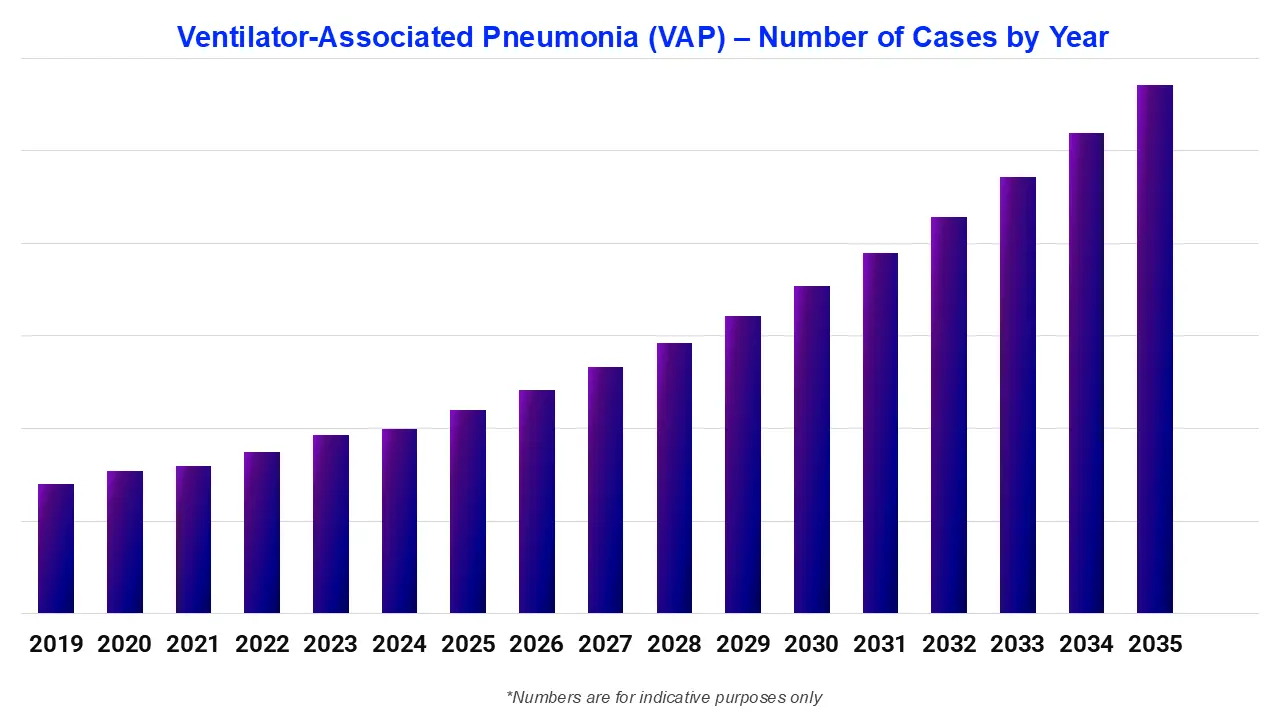
Ventilator-associated pneumonia (VAP) is a pneumonia that develops in patients receiving invasive mechanical ventilation and represents a major healthcare-associated infection in intensive care units. According to Hassan Mumtaz et al. (2023), VAP rates ranged from 7 to 43 per 1,000 ventilator days across countries globally. According to Expert Market Research's ventilator-associated pneumonia (VAP) epidemiology forecast, epidemiological trends further support monitoring of this disease burden.
Base Year
Historical Period
Forecast Period
Read more about this report - Request a Free Sample
Expert Market Research's “Ventilator-Associated Pneumonia (VAP) Epidemiology Forecast Report 2026-2035” offers comprehensive information on the prevalence and demographics of ventilator-associated pneumonia (VAP). It projects the future incidence and prevalence rates of ventilator-associated pneumonia (VAP) cases across various populations. The study covers age, gender, and type as major determinants of the ventilator-associated pneumonia (VAP) population. The report highlights patterns in the prevalence of ventilator-associated pneumonia (VAP) over time and projects future trends based on multiple variables.
The report provides a comprehensive overview of the disease, as well as historical and projected data on the epidemiology of ventilator-associated pneumonia (VAP) in the 8 major markets.
Regions Covered
Ventilator-associated pneumonia (VAP) is a hospital-acquired lung infection that develops in patients receiving invasive mechanical ventilation, generally after at least 48 hours of ventilation. It occurs when microorganisms enter the lower respiratory tract through aspiration of contaminated secretions, impaired airway defenses, or colonization around the endotracheal tube. Common causative pathogens include Staphylococcus aureus, Pseudomonas aeruginosa, and other gram-negative bacteria. VAP can be broadly described as early- or late-onset according to the timing of infection, although pathogen distribution and antimicrobial resistance patterns vary according to healthcare setting. Hospital-acquired pneumonia is closely associated with the disease.
|
Parameter |
Insight |
|
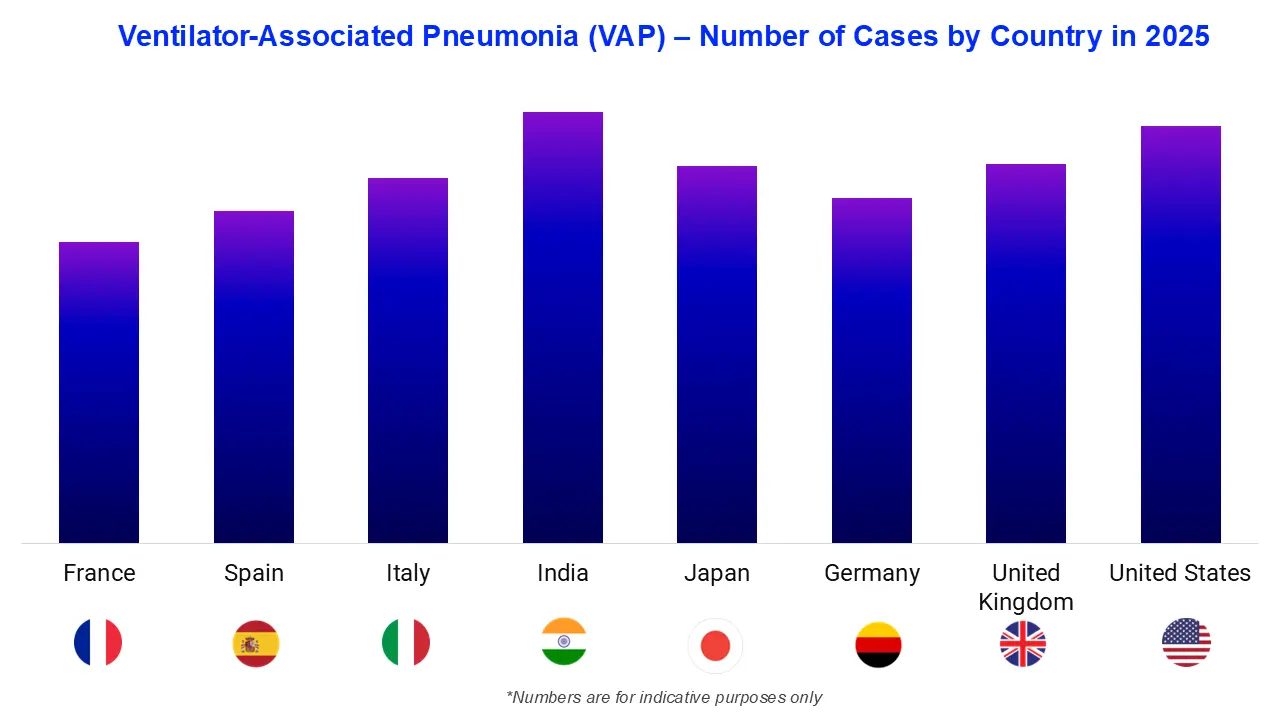
Largest Patient Pool |
United States |
|
Fastest Growing Country |
India |
|
High-Risk Population |
Critically ill patients requiring prolonged mechanical ventilation, particularly those with severe underlying illness |
|
Key Diagnostic Method |
Clinical assessment supported by chest imaging and microbiological examination of respiratory specimens |
|
Major Risk Factor |
Prolonged mechanical ventilation and endotracheal intubation |
|
Major gap in the market |
Diagnostic uncertainty, delayed pathogen identification, and increasing antimicrobial resistance |
The ventilator-associated pneumonia (VAP) epidemiology division offers information on the patient pool from history to the present as well as the projected trend for each of the 8 major markets. Expert Market Research provides both current and predicted trends for the ventilator-associated pneumonia (VAP) epidemiology scenario by examining a wide range of studies. Additionally, the report covers the diagnosed patient pool for ventilator-associated pneumonia (VAP) and their trends. The data is broken down into specific categories, such as total prevalent cases in males and females, and total diagnosed cases across different age groups and patient pools.
|
Epidemiology Segment |
Key Insights |
|
Diagnosed Prevalent Cases of the Disease |
Ventilator-associated pneumonia prevalence varies considerably across healthcare settings. According to Umang Patel et al., 2025, VAP affects 5–40% of patients receiving invasive mechanical ventilation for more than two days, with a reported worldwide incidence of 15.6%. |
|
Gender-Specific Cases of the Disease |
VAP shows a higher occurrence among male patients. According to Hassan Mumtaz et al., 2023, VAP was more common in males across the reviewed studies. Estibel Mengist Tegegne et al., 2025, reported that 57% of the study population was male. |
|
Age-Specific Cases of the Disease |
Older patients represent an important epidemiological group. According to Paulo Mergulhão et al., 2024, most VAP cases occurred among patients aged 50 years and older. Estibel Mengist Tegegne et al. (2025) identified age ≥60 years as associated with higher VAP odds. |
|
Ethnicity-Wise Cases of the Disease |
Ethnicity-wise VAP epidemiology may vary across populations because of differences in patient characteristics, healthcare practices, intensive care settings, access to care, and infection prevention practices. Ethnic and population-specific differences may therefore contribute to variation in the observed VAP burden across regions. |
|
Mortality and Survival Analysis of the Disease |
Mortality associated with VAP varies substantially across settings. According to Hassan Mumtaz et al. (2023), mortality across 13 reviewed studies ranged from 6.3% to 66.9%. In an Indian study by Kartik Natarajan et al., 2025, mortality among VAP patients was 50%. |
|
Disease Type |
Prevalence |
|
Early-Onset VAP |
Early-onset VAP develops within the first four days of mechanical ventilation. It is generally associated with antibiotic-sensitive bacteria, with no separate prevalence value provided. |
|
Late-Onset VAP |
Late-onset VAP develops from the fifth day of mechanical ventilation onward. It is generally associated with multidrug-resistant pathogens, without a separate prevalence value. |
Read more about this report - Request a Free Sample
The ventilator-associated pneumonia (VAP) epidemiology data and findings for the United States, Germany, Spain, Italy, France, the United Kingdom, Japan, and India are also provided in the epidemiology section.
|
Country |
Key Insights |
|
United States |
The United States represents one of the countries with substantial VAP epidemiological evidence in the reviewed literature. According to Umang Patel et al. (2025), VAP incidence was 13.5% in the United States. Yixuan Li et al. (2024) reported that seven included studies originated from the United States, with 54.9% of reported multidrug-resistant Pseudomonas aeruginosa VAP cases attributed to US studies. |
|
Germany |
Germany was represented among the countries included in the systematic evidence on Pseudomonas aeruginosa-associated VAP. According to Yixuan Li et al. (2024), studies included data from Germany as part of a 16-country evidence base comprising 7,951 P. aeruginosa VAP cases. The available evidence indicates that Germany contributes to the broader epidemiological assessment of VAP and antimicrobial resistance. Country-specific prevalence or incidence values were not provided in the supplied data. |
|
France |
France was among the countries with substantial representation in the reviewed VAP literature. According to Yixuan Li et al. (2024), five included studies originated from France, while 15.3% of reported multidrug-resistant Pseudomonas aeruginosa VAP cases were from French studies. The overall estimated prevalence across 11 European studies was 29.9%, although this estimate was not specific to France. |
|
Italy |
Italy was included among the countries represented in the systematic assessment of Pseudomonas aeruginosa-associated VAP. As per Yixuan Li et al. (2024), Italy was one of the 16 countries contributing evidence to the review, which identified 7,951 P. aeruginosa VAP cases. The supplied information does not provide a country-specific incidence or prevalence estimate for Italy, while the broader evidence demonstrates variation in VAP epidemiology across countries and healthcare settings. |
|
Spain |
Spain demonstrates a notable burden of multidrug-resistant Pseudomonas aeruginosa among VAP cases. According to Yixuan Li et al. (2024), Spain had the highest estimated prevalence of multidrug-resistant P. aeruginosa causing VAP among the European countries assessed, at 65.9% (95% CI: 55.7–74.8%). This estimate reflects antimicrobial resistance among P. aeruginosa VAP cases rather than overall VAP prevalence. |
|
United Kingdom |
The supplied evidence does not provide a country-specific incidence or prevalence estimate for VAP in the United Kingdom. Epidemiological assessment in the United Kingdom is relevant to the broader European VAP landscape, where incidence and prevalence vary across healthcare settings. Yixuan Li et al., 2024, reported an overall estimated prevalence of 29.9% across 11 European studies, although this value should not be interpreted as a United Kingdom-specific estimate. |
|
Japan |
Japan was represented in the international evidence base evaluating Pseudomonas aeruginosa-associated VAP. According to Yixuan Li et al. (2024), Japan was among the 16 countries represented in the reviewed studies, which collectively reported 7,951 P. aeruginosa VAP cases. The supplied information does not provide a separate Japanese incidence or prevalence estimate, but the country contributes to the broader international epidemiological evidence on VAP. |
|
India |
India has reported substantial VAP incidence in the supplied evidence. According to Kartik Natarajan et al. (2025), VAP occurred at 34.7 cases per 1,000 mechanical-ventilator days, with 21.7% of mechanically ventilated patients developing VAP and 50% mortality among VAP patients. Umang Patel et al. (2025) also reported Indian VAP incidence estimates ranging from 31% to 38%. Harendra K. Thakur et al. (2024) reported an incidence of 12.7 per 1,000 VAP days in India. |
The regional VAP landscape presents opportunities to improve early diagnosis, pathogen identification, antimicrobial selection, and infection prevention across intensive care settings. Diagnostic uncertainty remains an important challenge because clinical features may overlap with other pulmonary conditions, while conventional microbiological testing can delay pathogen-specific treatment. The increasing prevalence of antimicrobial-resistant organisms further strengthens the need for rapid diagnostic approaches and antimicrobial susceptibility testing. Opportunities also exist to strengthen standardized VAP surveillance, ventilator-care protocols, and infection-prevention practices. In India and other emerging healthcare markets, expanding intensive care capacity and improving hospital infection-control infrastructure may further support disease management.
Ventilator-associated pneumonia treatment primarily involves prompt administration of appropriate antimicrobial therapy, followed by modification of treatment according to microbiological findings and antimicrobial susceptibility results. Empiric treatment generally targets Staphylococcus aureus, Pseudomonas aeruginosa, and other gram-negative bacteria, with coverage for methicillin-resistant S. aureus considered when clinically indicated. Antipseudomonal beta-lactams, carbapenems, vancomycin, linezolid, and other antibiotics may be selected based on individual risk factors and local resistance patterns. Antimicrobial stewardship is important for optimizing therapy, supporting de-escalation when appropriate, and reducing unnecessary antibiotic exposure.


Upto 15% Off
USD
$2699 $2429
$4299 $3869
$5799 $4949
$6999 $5949


*While we strive to always give you current and accurate information, the numbers depicted on the website are indicative and may differ from the actual numbers in the main report. At Expert Market Research, we aim to bring you the latest insights and trends in the market. Using our analyses and forecasts, stakeholders can understand the market dynamics, navigate challenges, and capitalize on opportunities to make data-driven strategic decisions.*
Explore our key highlights of the report and gain a concise overview of key findings, trends, and actionable insights that will empower your strategic decisions.
|
Report Features |
Details |
|
Base Year |
2025 |
|
Historical Period |
2019-2025 |
|
Forecast Period |
2026-2035 |
|
Epidemiology Statistics Provided |
|
|
Segmentation Provided |
|
|
Geographies Covered |
|
Datasheet
One User
USD 2,699
USD 2,429
tax inclusive*
Single User License
One User
USD 4,299
USD 3,869
tax inclusive*
Five User License
Five User
USD 5,799
USD 4,949
tax inclusive*
Corporate License
Unlimited Users
USD 6,999
USD 5,949
tax inclusive*
*Please note that the prices mentioned below are starting prices for each bundle type. Kindly contact our team for further details.*
Flash Bundle
Small Business Bundle
Growth Bundle
Enterprise Bundle
*Please note that the prices mentioned below are starting prices for each bundle type. Kindly contact our team for further details.*
Flash Bundle
Number of Reports: 3
20%
tax inclusive*
Small Business Bundle
Number of Reports: 5
25%
tax inclusive*
Growth Bundle
Number of Reports: 8
30%
tax inclusive*
Enterprise Bundle
Number of Reports: 10
35%
tax inclusive*
How To Order

Select License Type
Choose the right license for your needs and access rights.

Click on ‘Buy Now’
Add the report to your cart with one click and proceed to register.

Select Mode of Payment
Choose a payment option for a secure checkout. You will be redirected accordingly.
Strategic Solutions for Informed Decision-Making
Gain insights to stay ahead and seize opportunities.
Get insights & trends for a competitive edge.
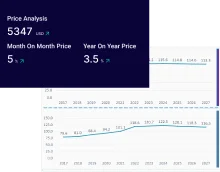
Track prices with detailed trend reports.

Analyse trade data for supply chain insights.

Leverage cost reports for smart savings
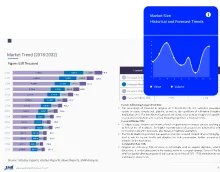
Enhance supply chain with partnerships.
Connect For More Information
Our expert team of analysts will offer full support and resolve any queries regarding the report, before and after the purchase.
Our expert team of analysts will offer full support and resolve any queries regarding the report, before and after the purchase.
We employ meticulous research methods, blending advanced analytics and expert insights to deliver accurate, actionable industry intelligence, staying ahead of competitors.
Our skilled analysts offer unparalleled competitive advantage with detailed insights on current and emerging markets, ensuring your strategic edge.
We offer an in-depth yet simplified presentation of industry insights and analysis to meet your specific requirements effectively.