Rise of Sustainable Construction Materials in the Green Building Industry
The global construction industry is experiencing a subtle but major change as sustainability is becoming the primary goal for developers, manufacturers, and infrastructure investors. The emphasis is on carbon emission reduction alongside structural strength and durability in selecting the materials by governments, corporations, and real estate developers.
The use of traditional building materials such as cement and steel comes with a heavy environmental toll. From various international climate research, it has been estimated that the cement industry alone is responsible for nearly 7-8% of global carbon dioxide emissions. Hence, construction companies and material manufacturers are making significant investments in alternatives that will enable them to achieve their environmental goals and also meet corporate ESG requirements.
For green building developers, embracing sustainable materials is not only a matter of environmental concern but also a business decision. This is because of regulations, the rising pressure of investors, and the increasing awareness of consumers.
Innovation in Low-Carbon Cement and Concrete
Among all construction materials, cement has been one of the most environmentally challenging industries. However, a few manufacturers are gearing up to triple their investment in the research and development of low-carbon alternatives that do not sacrifice structural performance but reduce emissions. Holcim, a leader in this space, with its ECOPact low, carbon concrete portfolio, states that its ECOPact product line enables a reduction in carbon emissions up to 30% compared to the production of traditional concrete. This concrete solution has already been used in large-scale infrastructure projects in Europe and North America, where developers face stricter environmental certification requirements.
In the same way, Heidelberg Materials is continuously enhancing its carbon capture-enabled cement technologies to align with its global sustainability roadmap. The company plans to develop an extensive carbon capture and storage (CCS) capacity across several of its manufacturing plants, including its facility in Brevik, Norway.
Cross-Laminated Timber and Engineered Wood Gain Momentum
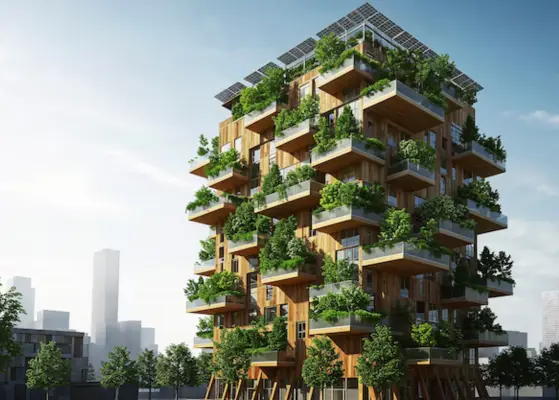
One of the most remarkable changes in sustainable construction materials is the massive popularity of engineered timber products. The demand for cross-laminated timber (CLT) and glulam constructions is reportedly increasing among architects and developers who want natural alternatives to steel and concrete.
CLT panels are made by stacking lumber boards in alternate directions and then gluing them under pressure. The final product is a set of durable structural panels which can support even the largest buildings, besides that, their carbon emissions are much less compared to traditional materials.
Corporations like Stora Enso and Binderholz have emerged as global leaders in engineered wood production. For instance, to cater to the increasing demand from commercial building projects, Stora Enso has enlarged its CLT production throughout Europe. The timber products of this company have been used in environmentally conscious designs of residential, office, and educational buildings.
Recycled Materials and Circular Construction Practices
Circular construction is turning out to be one of the main trends that are driving the creation of sustainable building materials. To move away from a full dependence on virgin resources, manufacturers are continuously raising the extent of recycled materials used in the production of construction products.
The steel industry has been one of the most progressive sectors in implementing circular manufacturing concepts. Leading steel makers like ArcelorMittal through the launch of their new product lines with increased recycled content ensure less raw material consumption and lesser energy use at the stage of production. Such recycled steel materials have become the standard in green infrastructure buildings globally.
Explore deeper insights on technologies, investments, and strategies shaping this sector Green Building Market Report.
Corporate Sustainability Strategies Driving Material Innovation
Prominent construction firms and real estate developers are driving the rapid uptake of sustainable materials. For instance, many leading property developers around the world have set ambitious carbon-reduction goals that are in line with international climate agreements.
Skanska and Turner Construction are two of the companies that are using low-carbon building materials in their major infrastructure projects. Skanska plans to be net-zero carbon in their operations by 2045 and buying sustainable materials is a major part of their plan.
In the future, sustainable building materials are anticipated to be a major focus area for the green building movement. As laws become stricter and business sustainability targets increase, the demand for low-carbon materials is expected tp rise in the housing, commercial and infrastructure sectors.











Share