Commodity Compass Newsletter Weeks 10–11, 2026
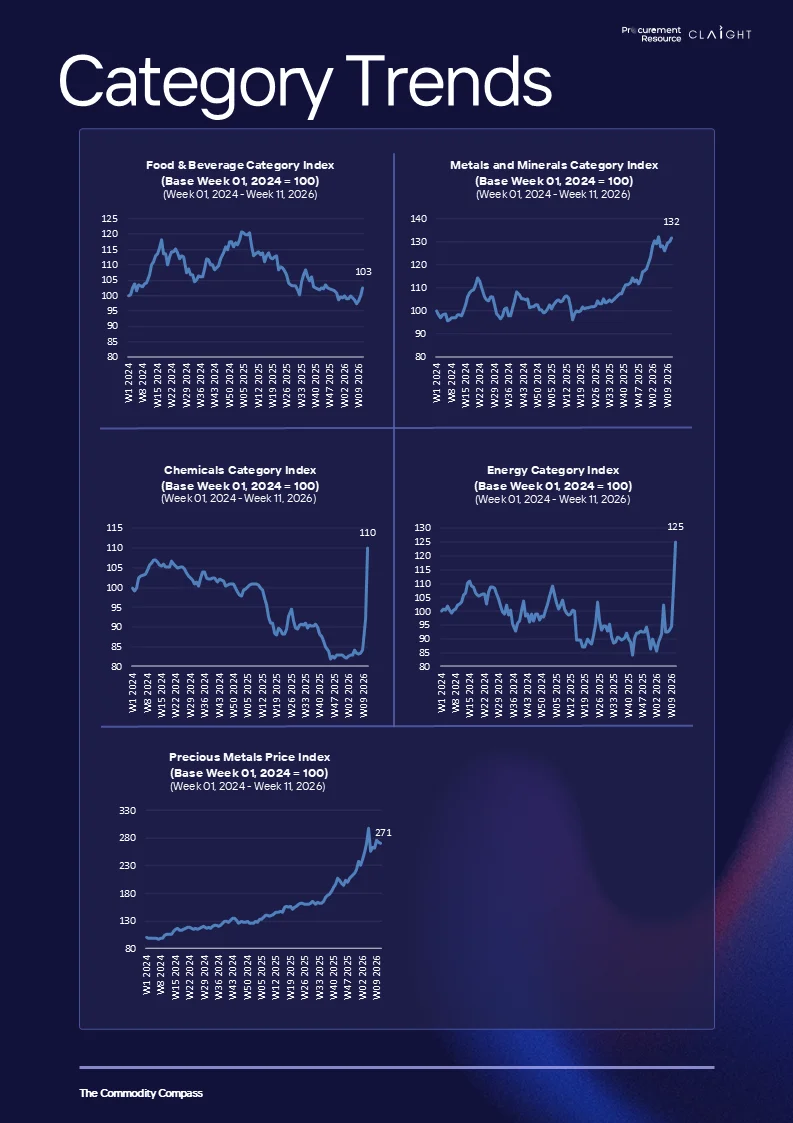
During Weeks 10 and 11 in 2026 the global commodity markets were undergoing a phase of uneven adjustment with some segments gaining traction, while others softening slightly. The demand patterns, supply-side responses, and continued adjustments in inventories in major producing regions were the principal reasons for price variation during the period.
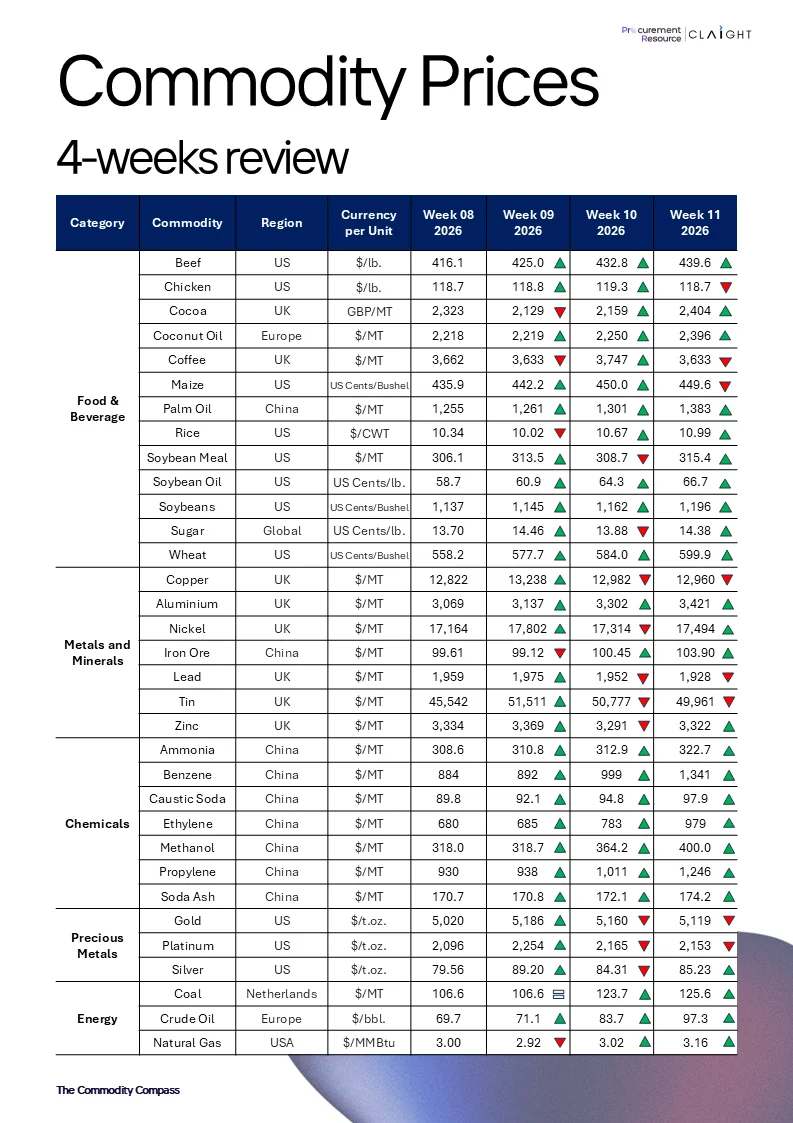
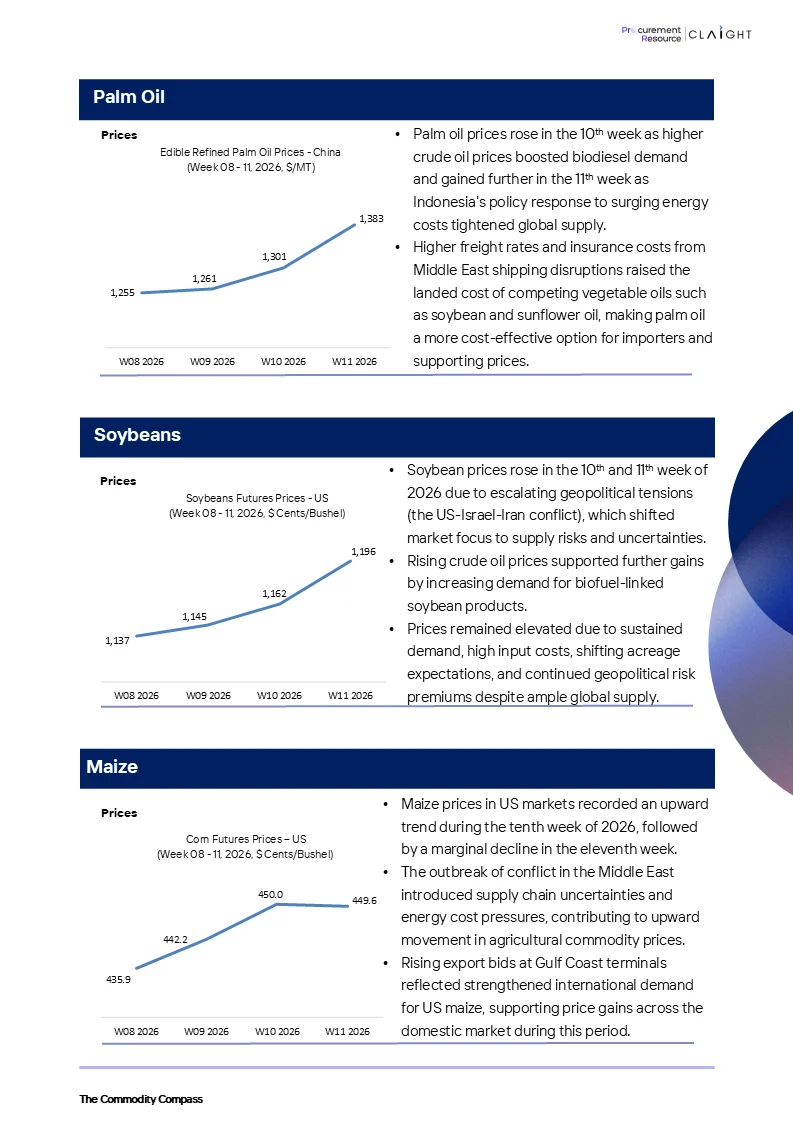
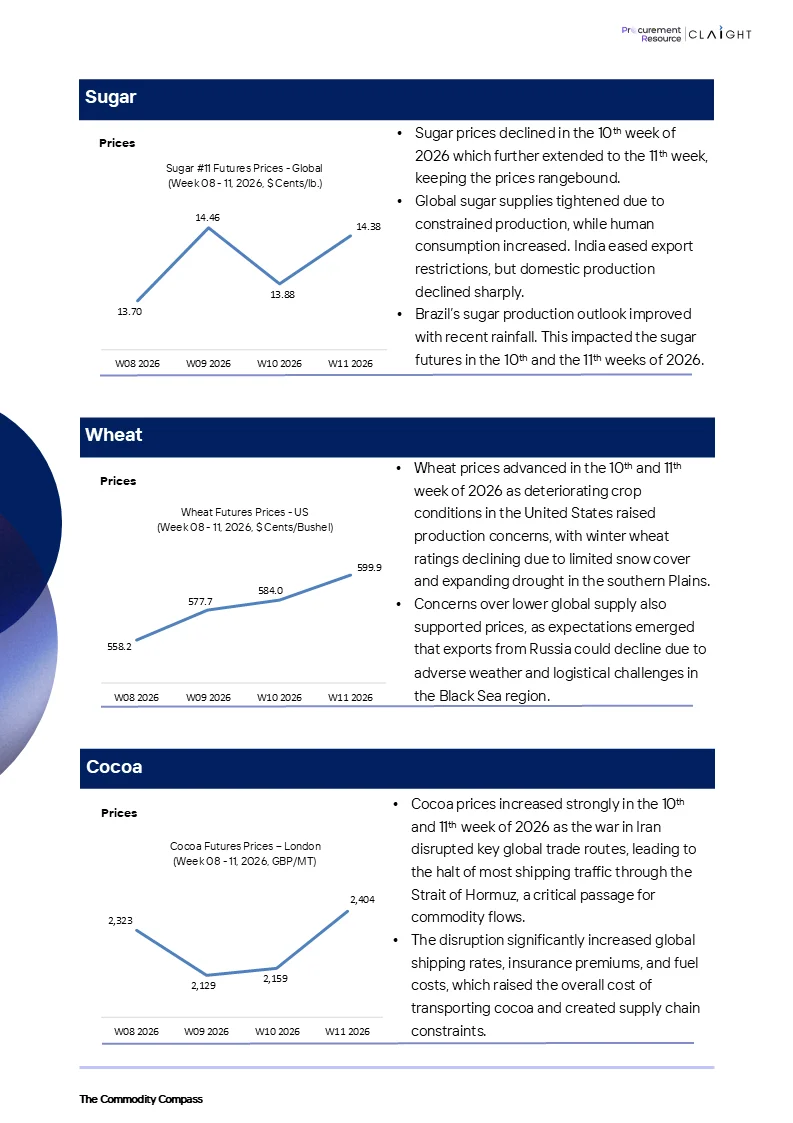
The market saw a volatility in food and beverages commodity prices. The price of US beef rose from $432.8/lb in week 10 to $439.6/lb in week 11, which could be seen as a sign of continued demand. However, there was no change in the price of US chicken, which remained more or less stable at $118.7/lb. The price of UK cocoa rose from GBP 2,159/MT to GBP 2,404/MT. This could be seen as an indication that the market is moving into recovery mode. There was also a rise in the price of European coconut oil from $2,250/MT to $2,396/MT.
Maize rates in the US depreciated from 450.0 cents per bushel to 449.6 cents per bushel. On the other hand, palm oil prices in China increased from $1,301/MT to $1,383/MT. Soybean meal prices strengthened from $308.7/MT to $315.4/MT, and soybean oil continued its upward movement from 64.3 to 66.7 cents per lb. The cost of a bushel of soybeans rose from 1,162 cents to 1,196 cents. The global sugar price rose marginally from 13.88 cents per lb to 14.38 cents per lb. Further, US wheat price appreciated from 584.0 cents per bushel to 599.9 cents per bushel. US rice prices increased from $10.67/CWT to $10.99/CWT.
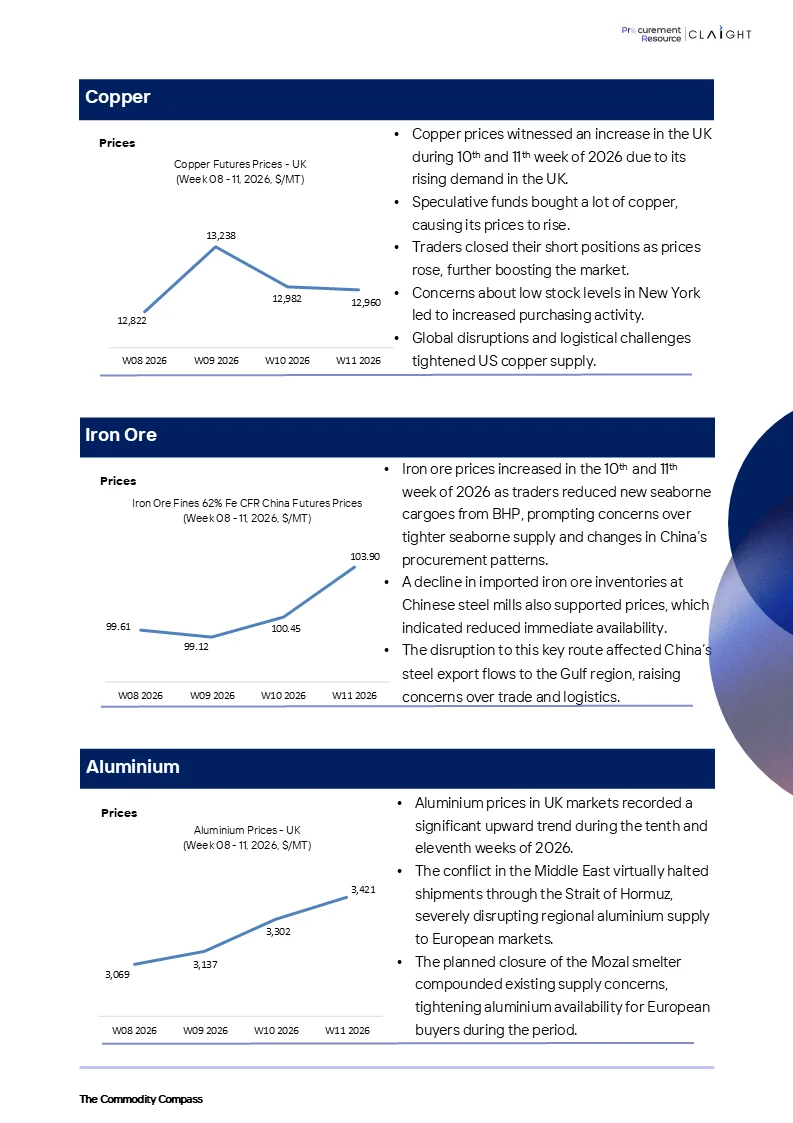
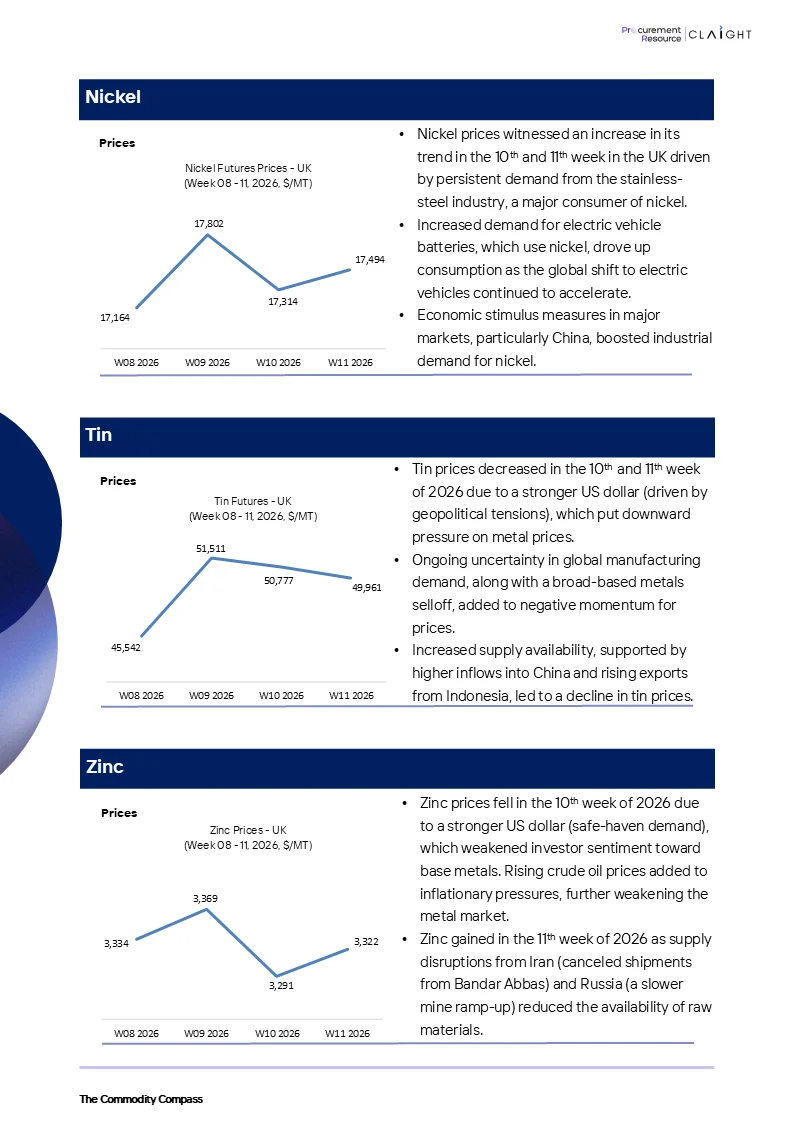
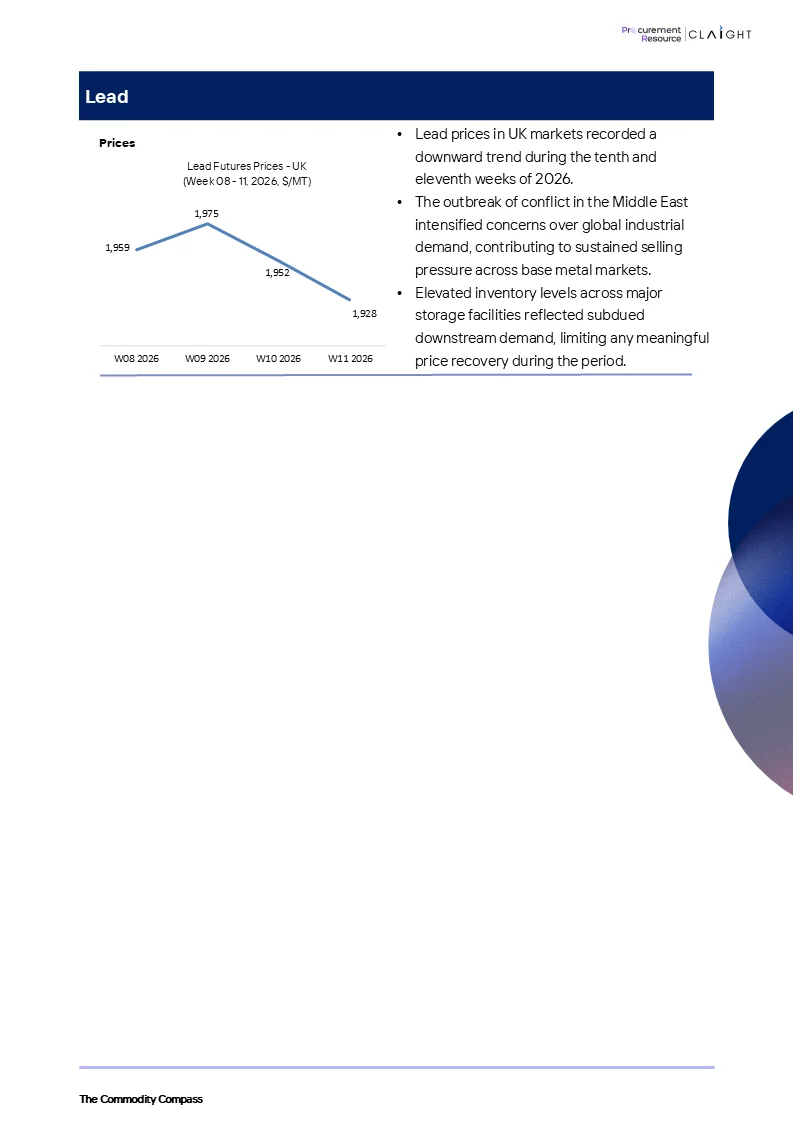
The markets of metals and minerals saw price increases. Copper prices dipped marginally to $12,960/MT from the previous price of $12,982/MT in the UK market. Aluminum prices were up from $3,302/MT to $3,421/MT while nickel prices rose from $17,314/MT to $17,494/MT. On the other hand, the price of iron ore in China raised from $100.45/MT to $103.90/MT, the price of lead fell from $1,952/MT to $1,928/. Prices of tin softened to $50,777/MT from $49.961/MT and of zinc to $3,291/MT from $3,322/MT.
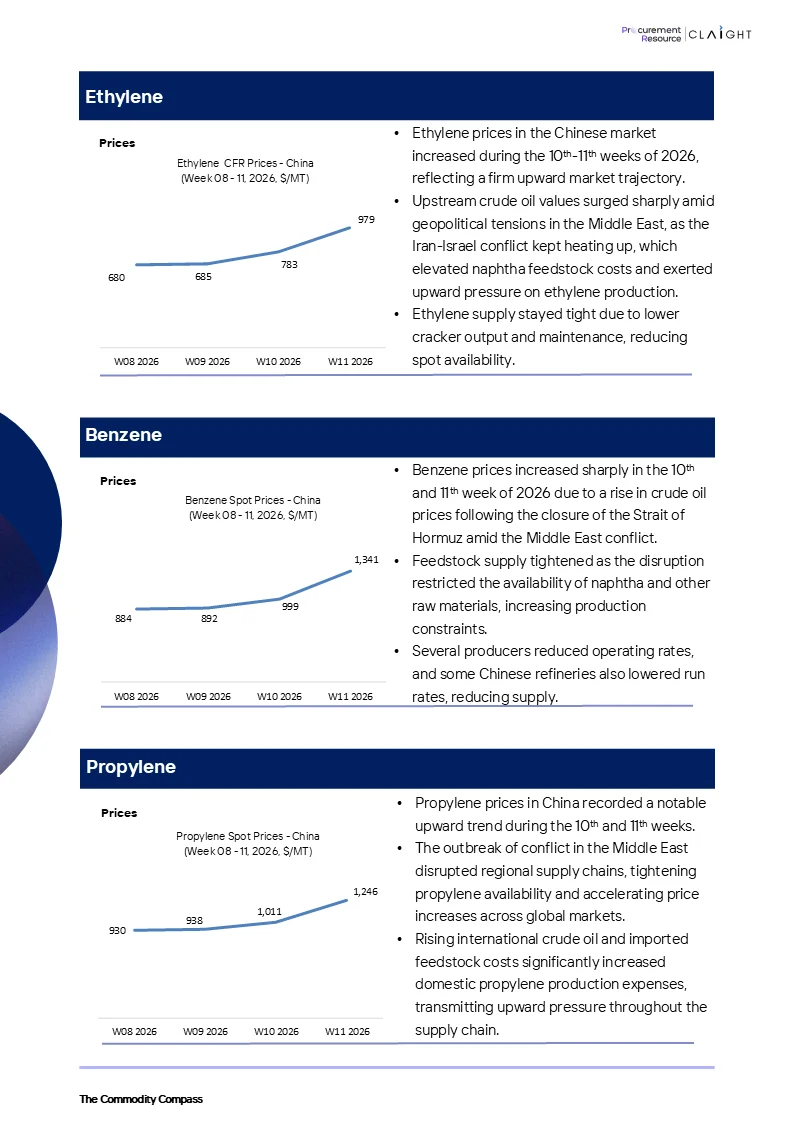
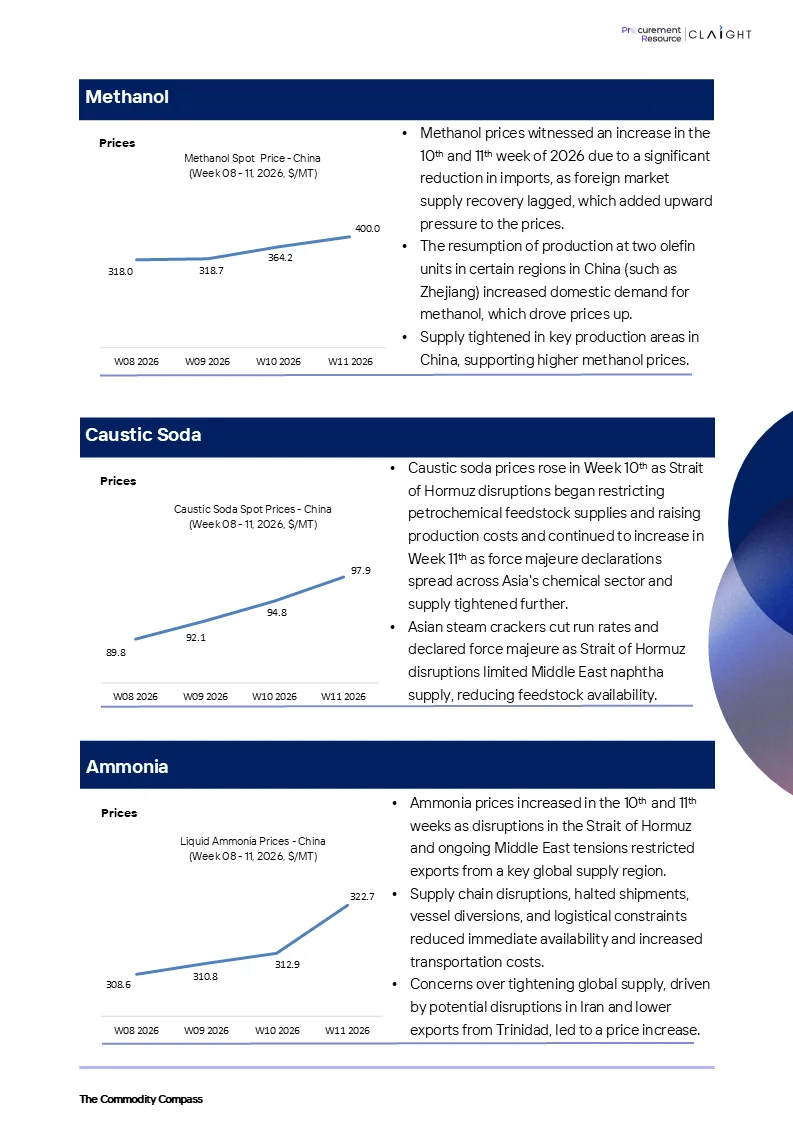
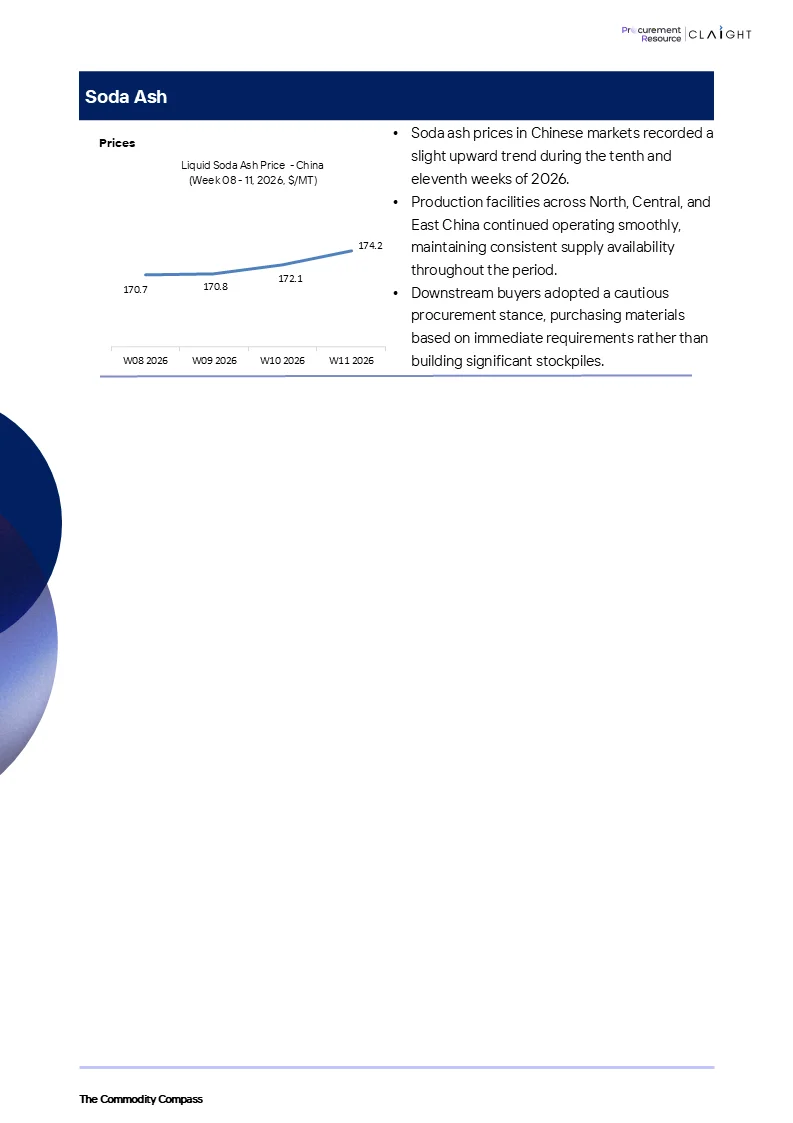
Chemical markets have been displaying a strong upward trend with a solid demand pattern in most products. China ammonia prices climbed from $312.9/MT to $322.7/MT, whereas benzene prices shot up substantially, going from $999/MT to $1,341/MT. Caustic soda price increased gradually from $94.8/MT to $97.9/MT. Ethylene witnessed a marked rise in its cost level by increasing from $783 MT to $979 MT. On the other hand, methanol cost witnessed an upward trend from $364.2/MT to $400.0/MT. In addition, propylene cost increased from $1,011/MT to $1,246/MT. Soda ash prices edged up from $172.1/MT to $174.2/MT.
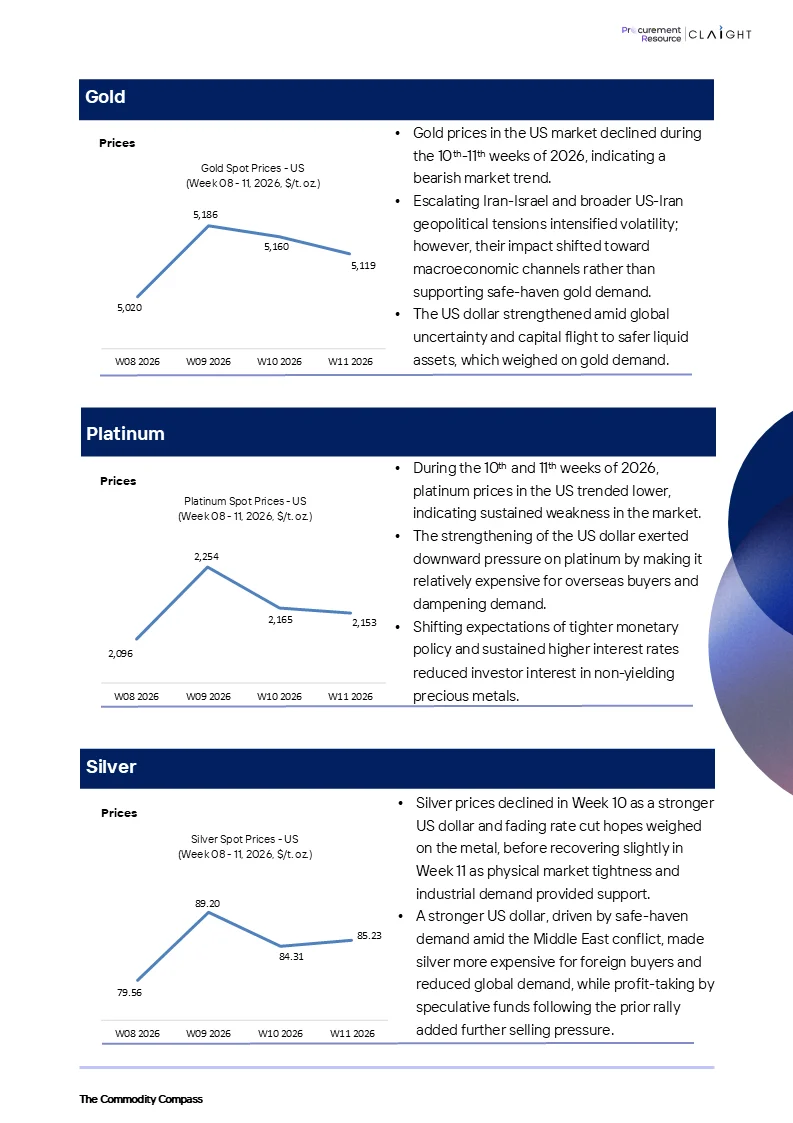
Precious metals prices were slightly more volatile but generally remained stable. Gold prices inched lower from $5,160/oz to $5,119/oz, but platinum prices went down from $2,165/oz to $2,153/oz. Silver prices went up from $84.37/oz to $85.23/oz, reflecting limited investor interest.
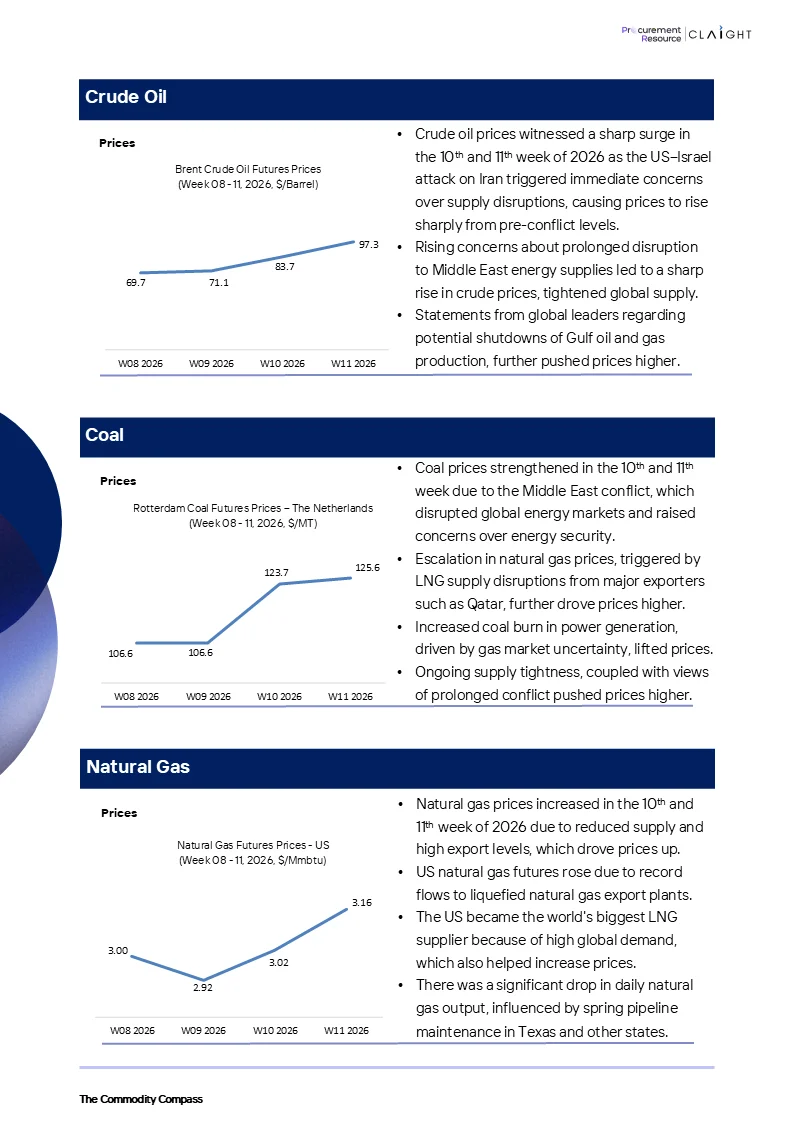
There were high performances in energy markets. Coal in the Netherlands was sold at $125.6/MT compared to $123.7/MT during Week 10. There were substantial changes in European crude oil prices which rose from $83.7/bbl to $97.3/bbl mostly because of supply side factors. In addition, prices of US natural gas went up from $3.02/MMBtu to $3.16/MMBtu, showing demand surge.
Summing up, Weeks 10-11 of 2026 demonstrated chemicals and energy making steady progress, food commodities showing a mixture of trends, and metals and precious metals displaying only selective movements, all of which are indicative of a market getting ready for changes in demand and supply.