Commodity Compass Newsletter Weeks 12–13, 2026
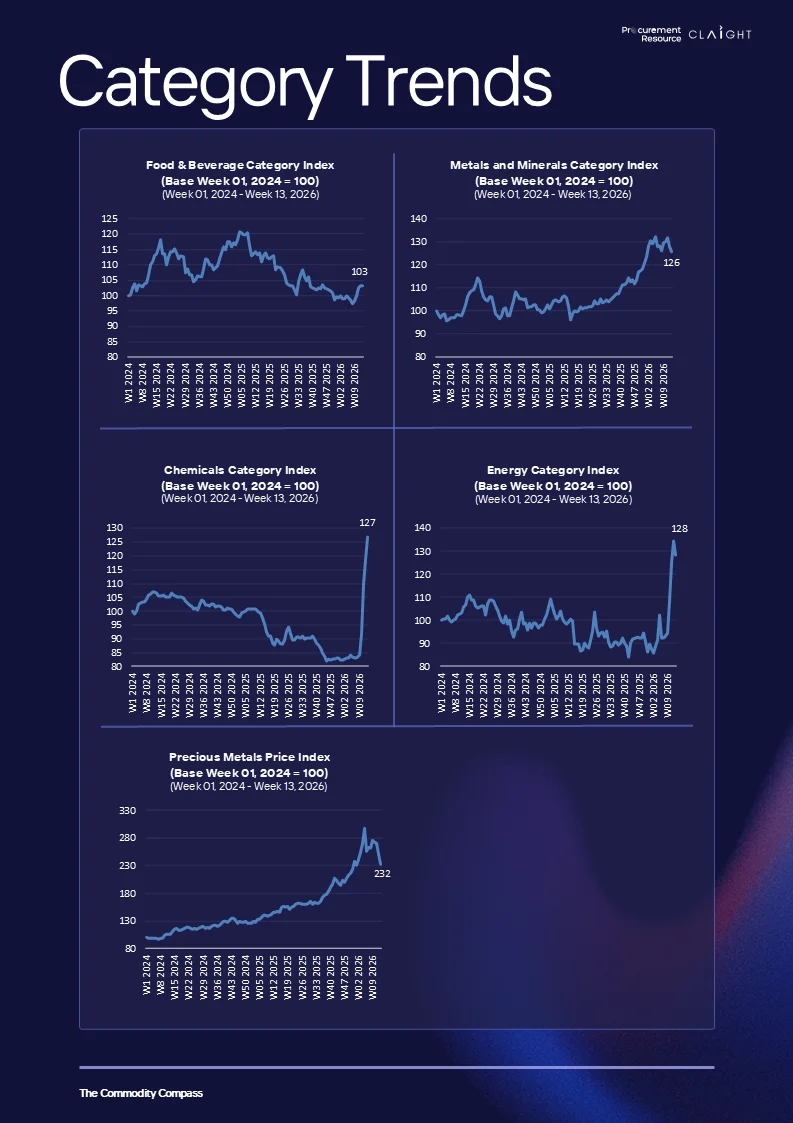
During weeks 12 and 13 of 2026, the global commodity markets exhibited varied price movements with some commodities recording gains while others underwent corrections. The activities in the markets for this period were mainly influenced by changes in industrial demands, supply-side factors, and inventory balancing in production centers.
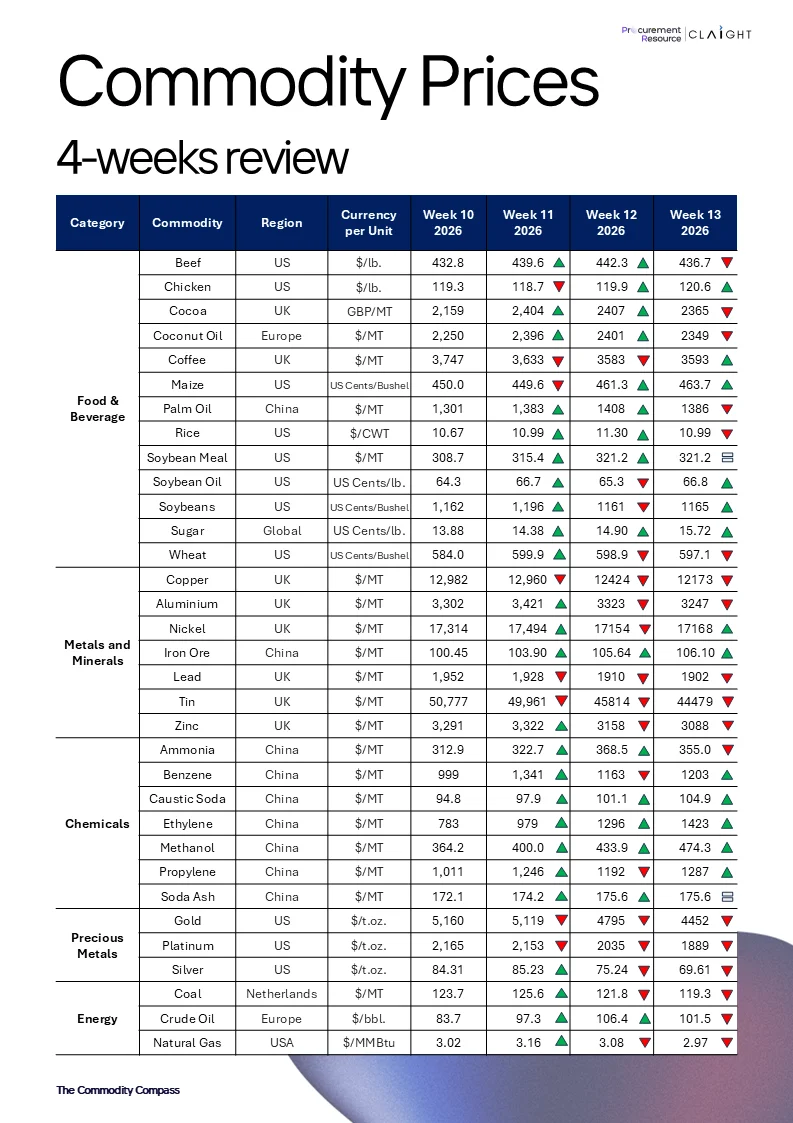
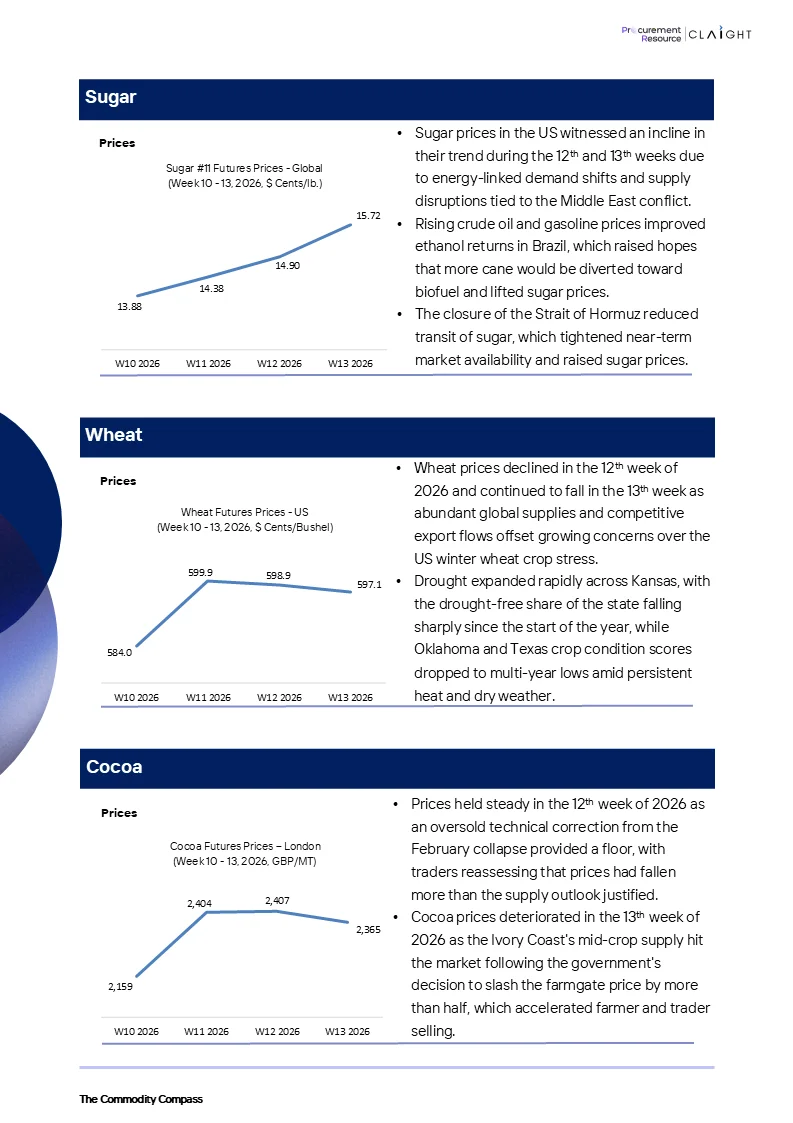
The food and beverages commodities experienced different market performances. The price of beef in the US fell from $442.3/lb in week 12 to $436.7/lb in week 13. This indicates a significant dip in terms of demand for beef in the country. Meanwhile, there was an increase in the price of chicken in the US from $119.9/lb to $120.6/lb. The prices of cocoa in the UK fell from GBP 2,407/MT to GBP 2,365/MT. Similarly, the prices of coconut oil in Europe fell from $2,401/MT to $2,349/MT. Meanwhile, UK coffee prices increased slightly from $3,583/MT to $3,593/MT.
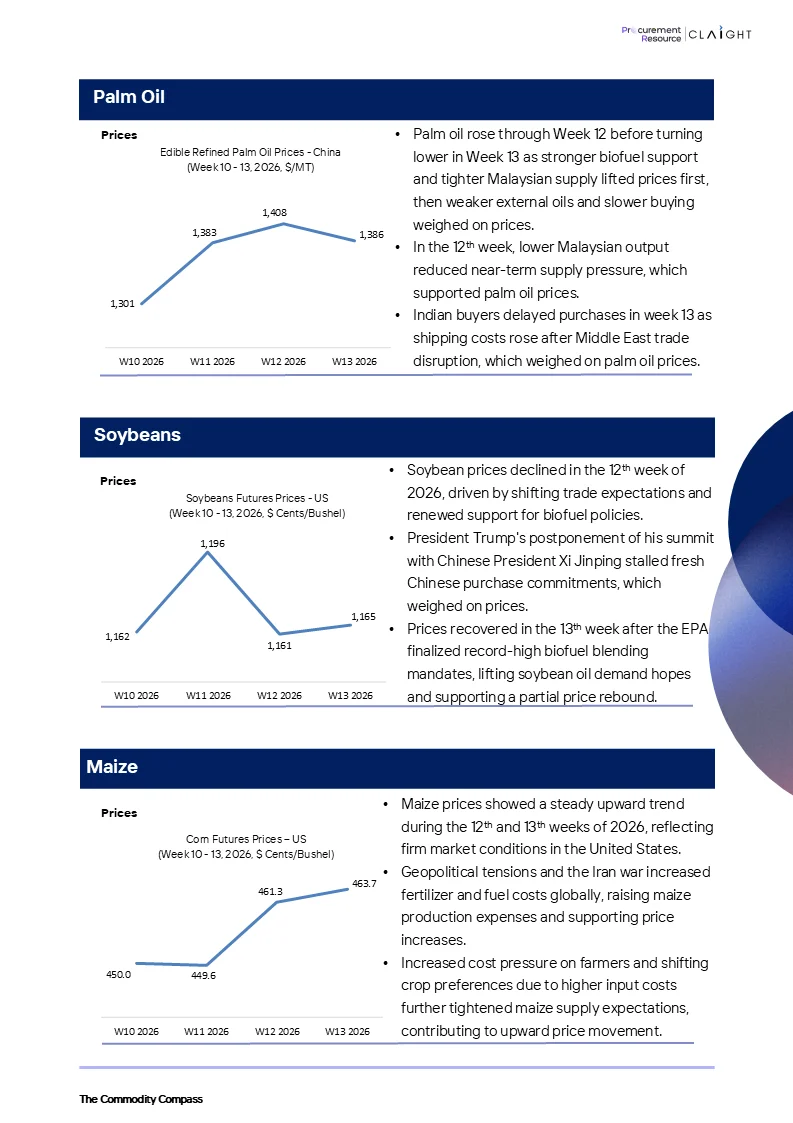
The prices of maize in the US rose from 461.3 to 463.7 cents per bushel while the prices of China palm oil decreased from $1,408/MT to $1,386/MT. The prices of rice in the US reduced from $11.30/CWT to $10.99/CWT. The prices of soybean meal were stable at $321.2/MT during both weeks. The prices of soybean oil increased from 65.3 to 66.8 cents per lb while the price of soybeans increased from 1,161 to 1,165 cents per bushel. The global sugar prices increased from 14.90 to 15.72 cents per lb while the prices of US wheat decreased from 598.9 to 597.1 cents per bushel.
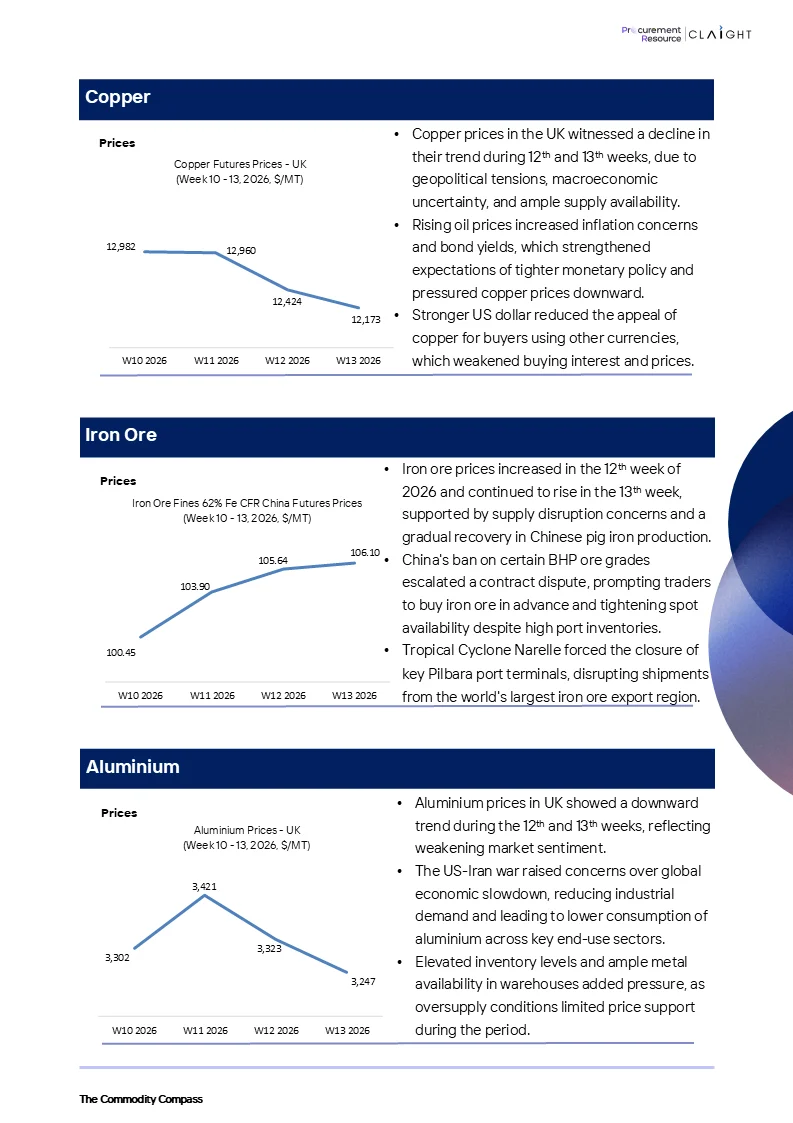
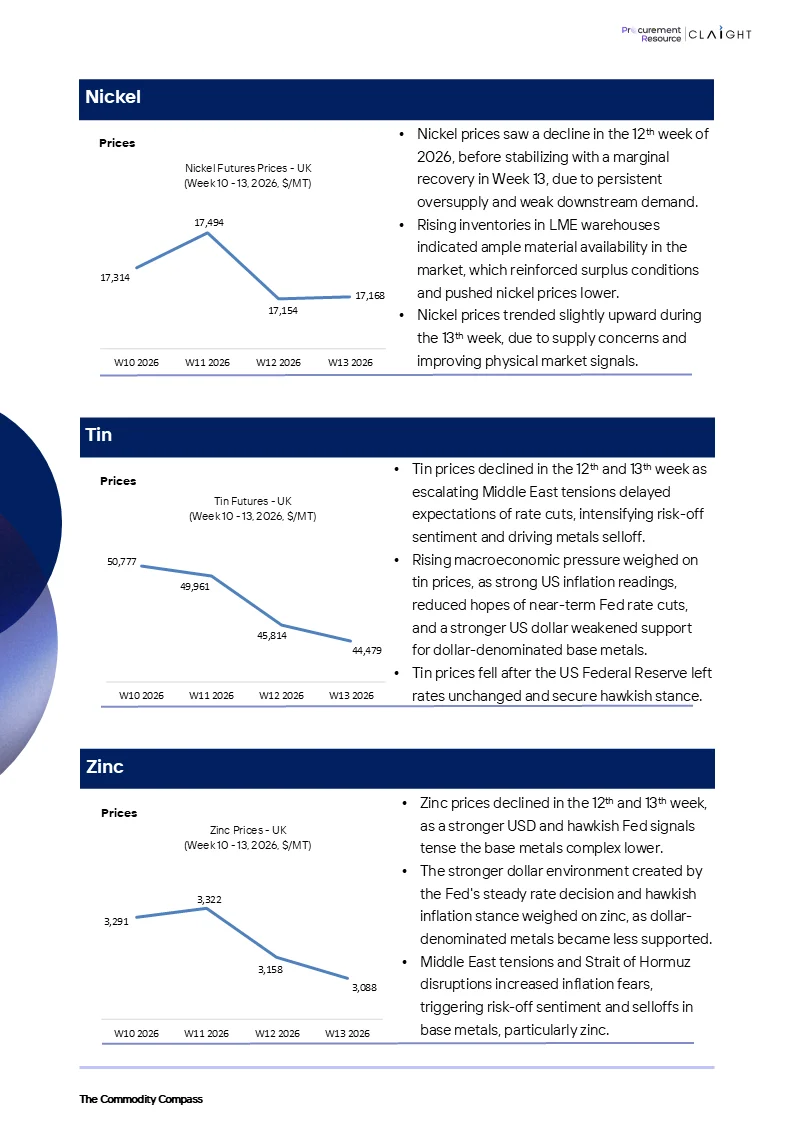
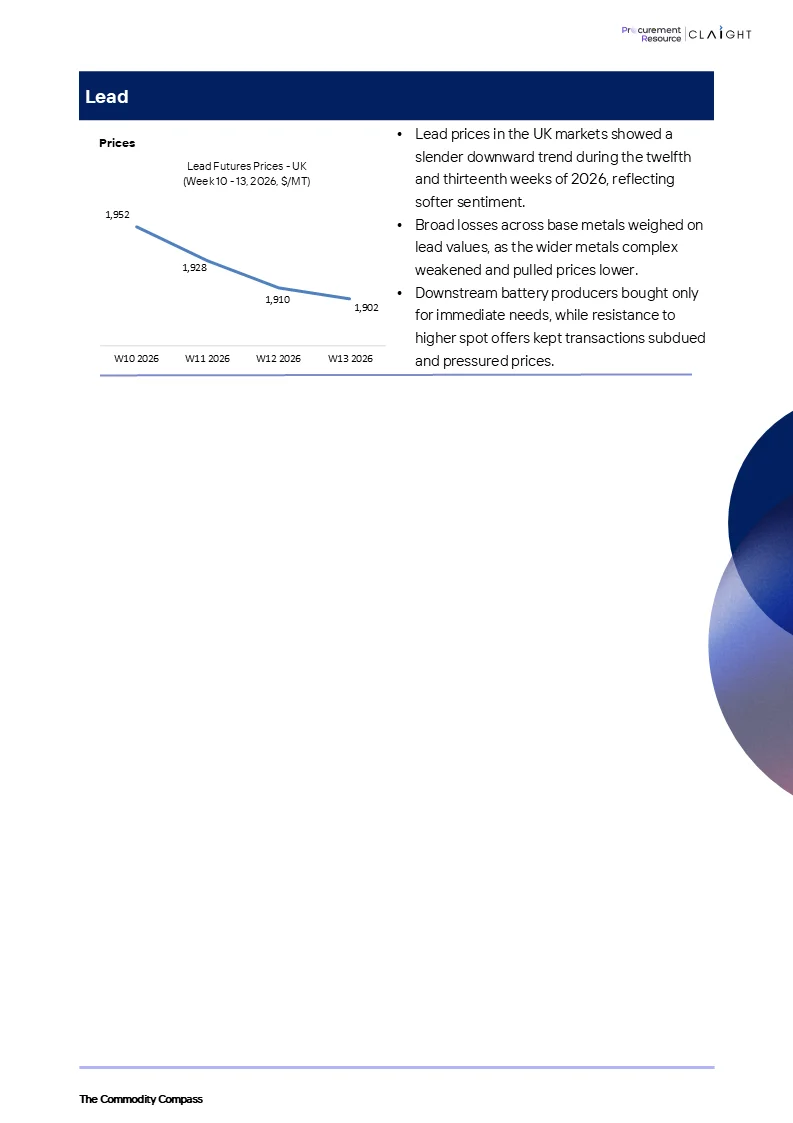
The metals and minerals underwent price changes that could be termed as corrective in nature. The prices of UK copper reduced from $12,424/MT to $12,173/MT while aluminum prices reduced from $3,323/MT to $3,247/MT. The prices of nickel increased from $17,154/MT to $17,168/MT. The iron ore prices of China have been favorable, rising from $105.64/MT to $106.10/MT. Prices of lead fell from $1,910/MT to $1,902/MT. The price of tin was also corrected, falling from $45,814/MT to $44,479/MT, while zinc prices declined from $3,158/MT to $3,088/MT.
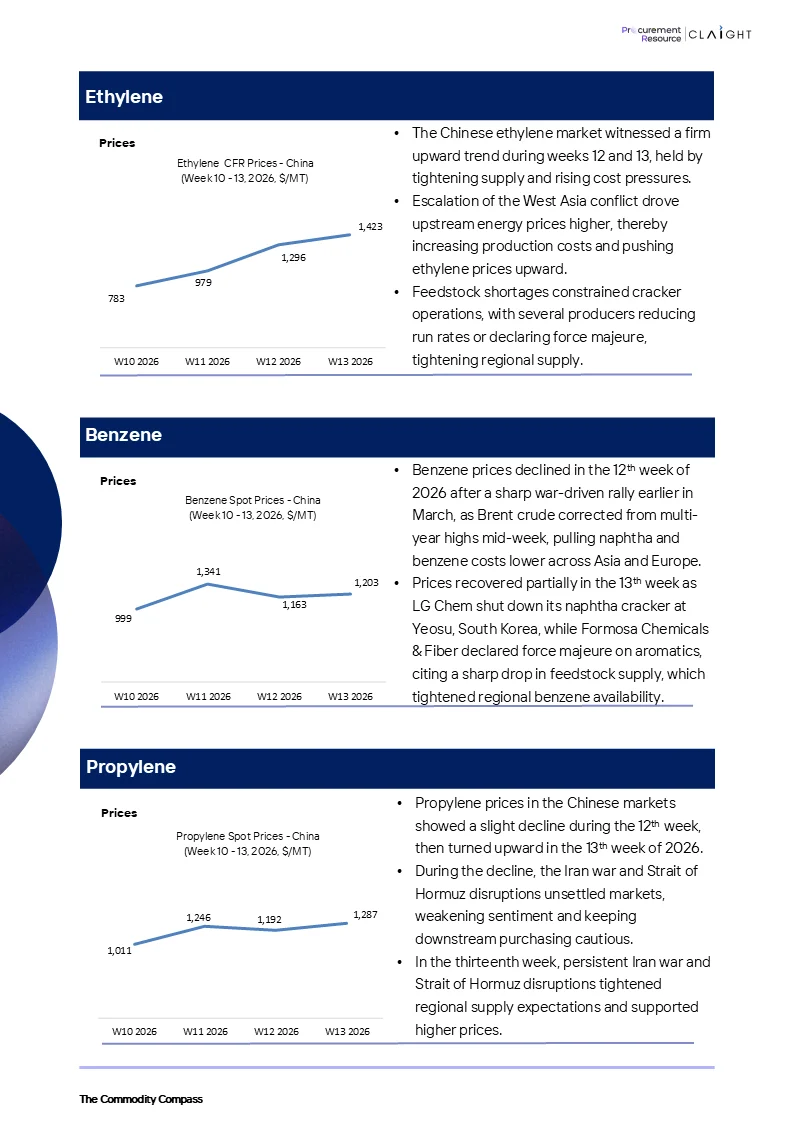
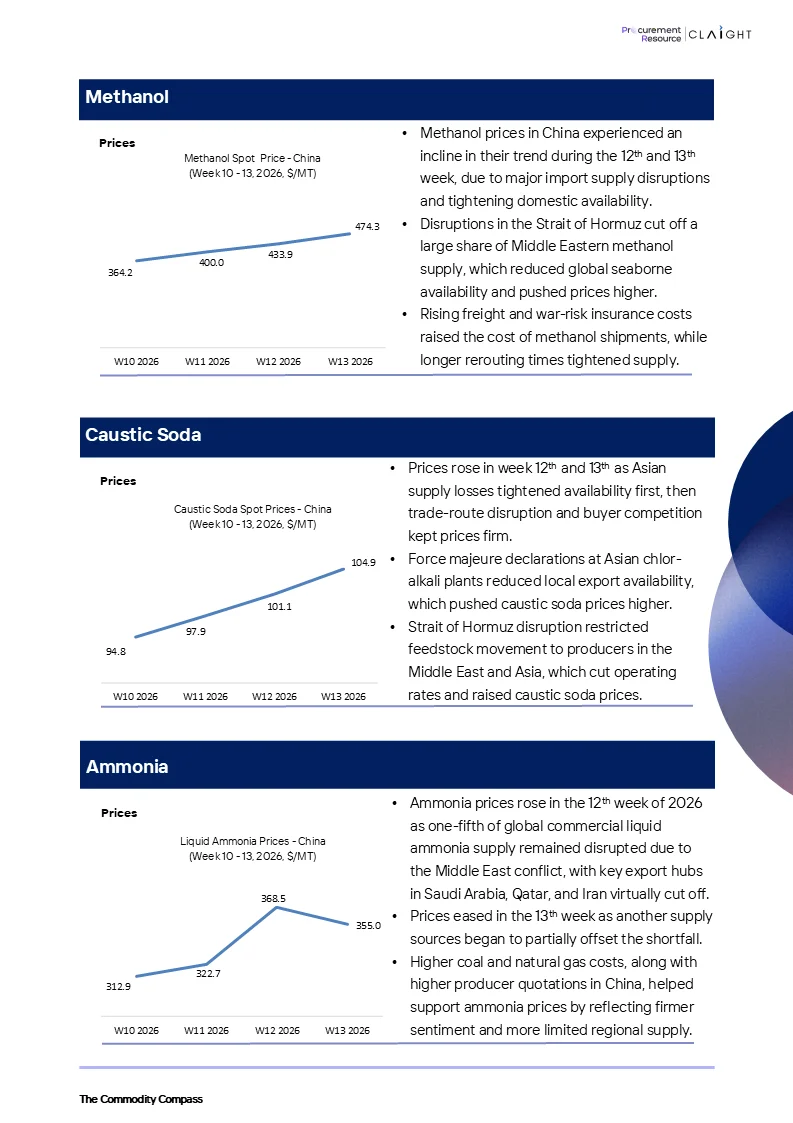
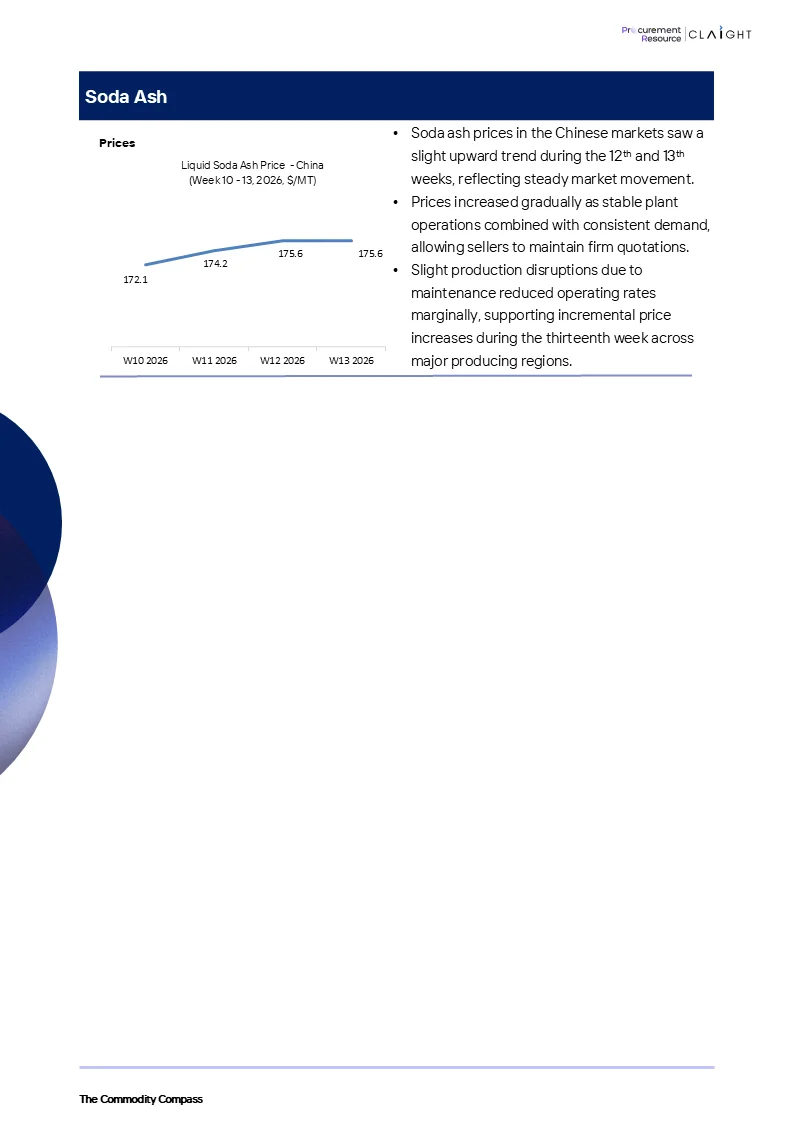
There have been varied price changes in chemical commodities. Ammonia prices in China declined from $368.5/MT to $355.0/MT. The prices of benzene recorded an increase from $1,163/MT to $1,203/MT. There was an increase in the prices of caustic soda from $101.1/MT to $104.9/MT, meanwhile there was an escalation in the prices of ethylene from $1296/MT to $1423/MT. The prices of methanol saw a drastic increase from $433.9/MT to $474.3/MT. Propylene prices rebounded from $1,192/MT to $1,287/MT, while soda ash remained stable at $175.6/MT.
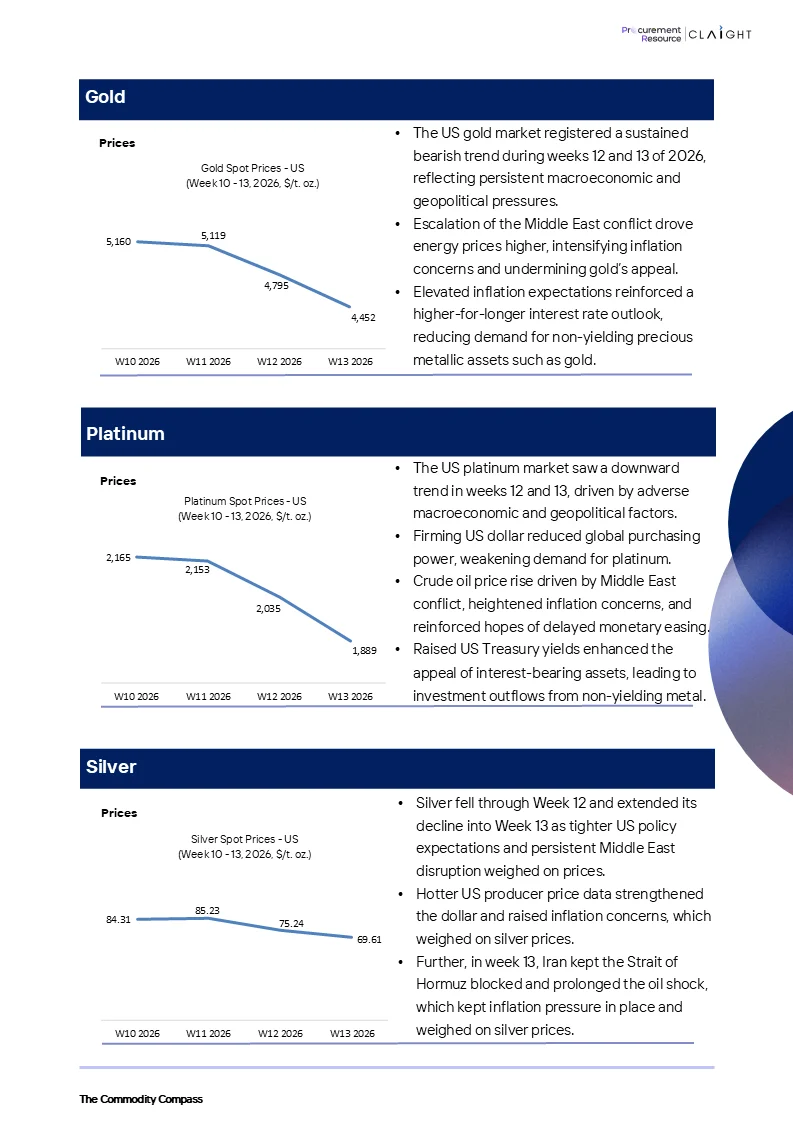
The majority of the precious metals registered downward movements during this particular period. Gold prices took a dip from $4,795/oz to $4,452/oz whereas platinum recorded a substantial decrease in its price, falling from $2,035/oz to $1,889/oz. The silver price was reduced from $75.24/oz to $69.61/oz because of weaker investor momentum.
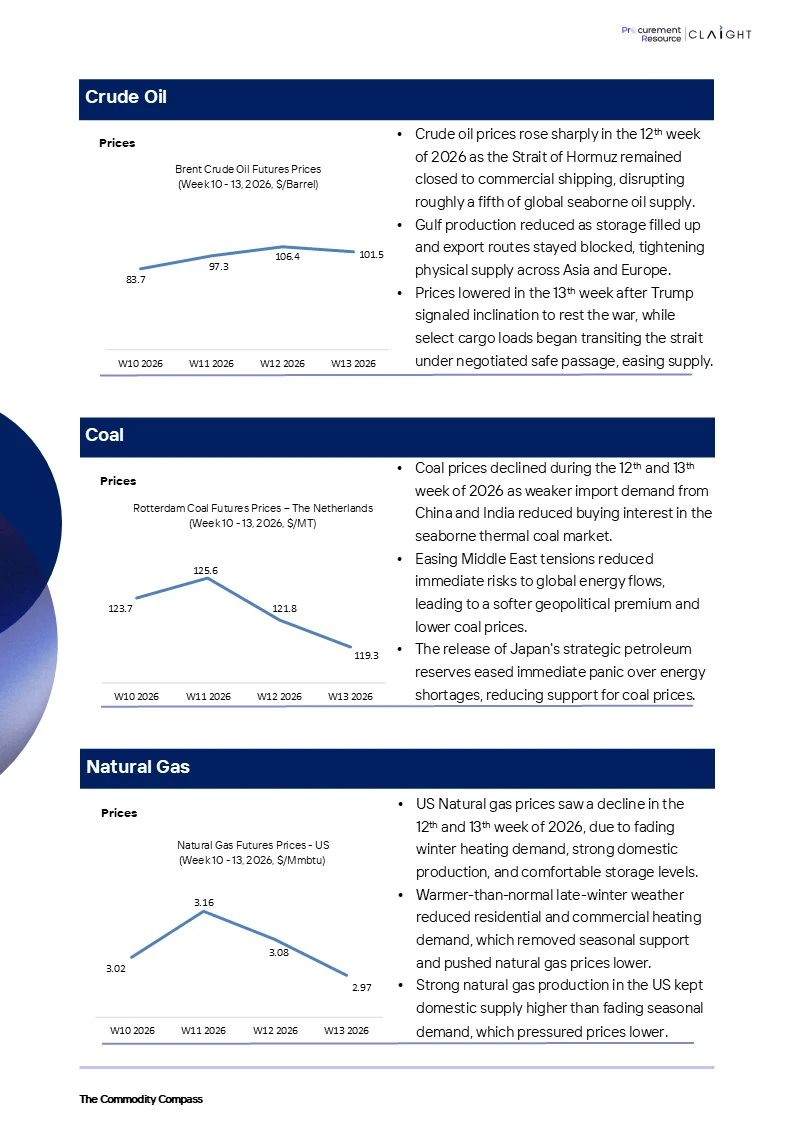
All the major commodities experienced declining prices in the energy sector. The cost of Netherlands coal fell from $121.8/MT to $119.3/MT. There was a significant drop in the prices of European Brent crude oil from $106.4/bbl to $101.5/bbl, showing a drop in supply pressures. US natural gas prices also slipped from $3.08/MMBtu to $2.97/MMBtu, due to lower demand pressures.
Overall, Weeks 12–13 in 2026 featured mixed results in the commodities market, where the food and chemical industries experienced strong performances, the metals and precious metals witnessed corrective pressure, and the energy sector observed weaking pricing trends.