

Consumer Insights
Uncover trends and behaviors shaping consumer choices today
Procurement Insights
Optimize your sourcing strategy with key market data
Industry Stats
Stay ahead with the latest trends and market analysis.
The blood-brain barrier drug delivery market was valued at USD 2.10 Billion in 2025 and is projected to reach USD 7.92 Billion by 2035, growing at a CAGR of 14.20%. Growth is supported by the rising burden of Alzheimer's disease, approval of anti-amyloid antibodies that reach the brain poorly, a pipeline of brain-targeted enzymes for lysosomal storage disorders, and clinical progress in focused ultrasound.
Patent activity spans receptor-mediated transcytosis shuttles built on the transferrin receptor, nanoparticle and liposomal carriers, focused ultrasound barrier opening, intranasal and direct brain delivery, and engineered viral capsids that cross the barrier. Commercial validation includes Japan's 2021 approval of a transferrin receptor enzyme fusion for Hunter syndrome and the 2025 start of Phase 3 trials for an Alzheimer's disease shuttle antibody, and these events have encouraged applicants to widen filings on binding domains, payloads and delivery devices.
This Blood-Brain Barrier Drug Delivery Patent Landscape Analysis Report provides a structured view of patent filing trends, leading assignees, jurisdictions, technology clusters and competitive positioning across the shuttles, carriers, devices and administration routes used to move therapeutics into the brain.
The blood-brain barrier drug delivery market is experiencing strong growth, driven by the rising burden of Alzheimer's disease and Parkinson's disease, the need for higher brain exposure of antibodies and enzymes, and clinical progress in shuttle platforms. Lecanemab gained full FDA approval in 2023 and donanemab followed in 2024, yet only a small fraction of each infused dose enters the brain, which keeps developers focused on technologies that raise that fraction.
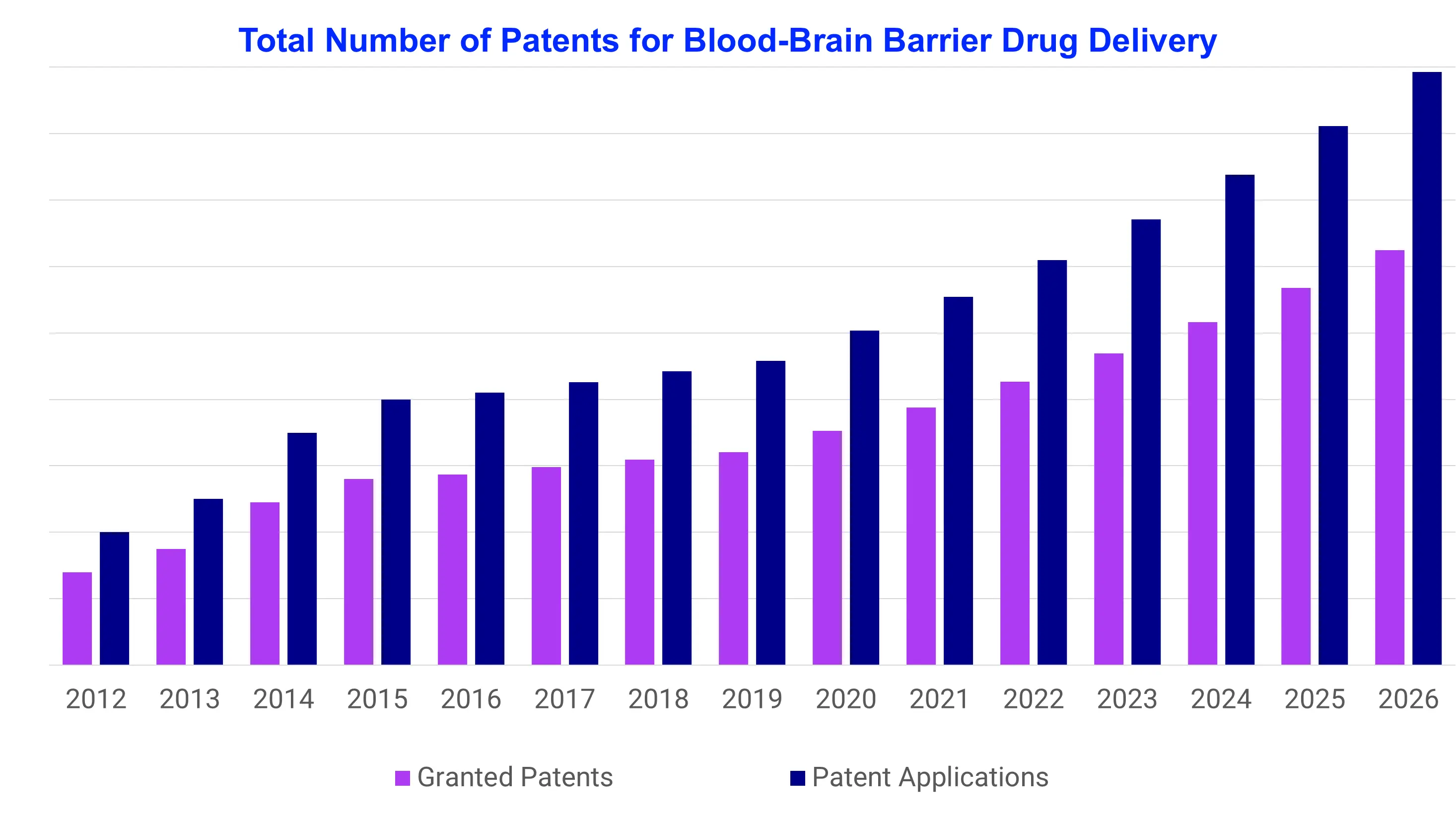
Patent activity is accelerating, with 3,000+ blood-brain barrier drug delivery patents granted in 2025, reflecting strong innovation momentum in receptor-mediated transcytosis shuttles that carry large molecules across the barrier, focused ultrasound that opens the barrier for a short window, nanoparticle and liposomal carriers for brain targeting, and intranasal and direct brain delivery routes.
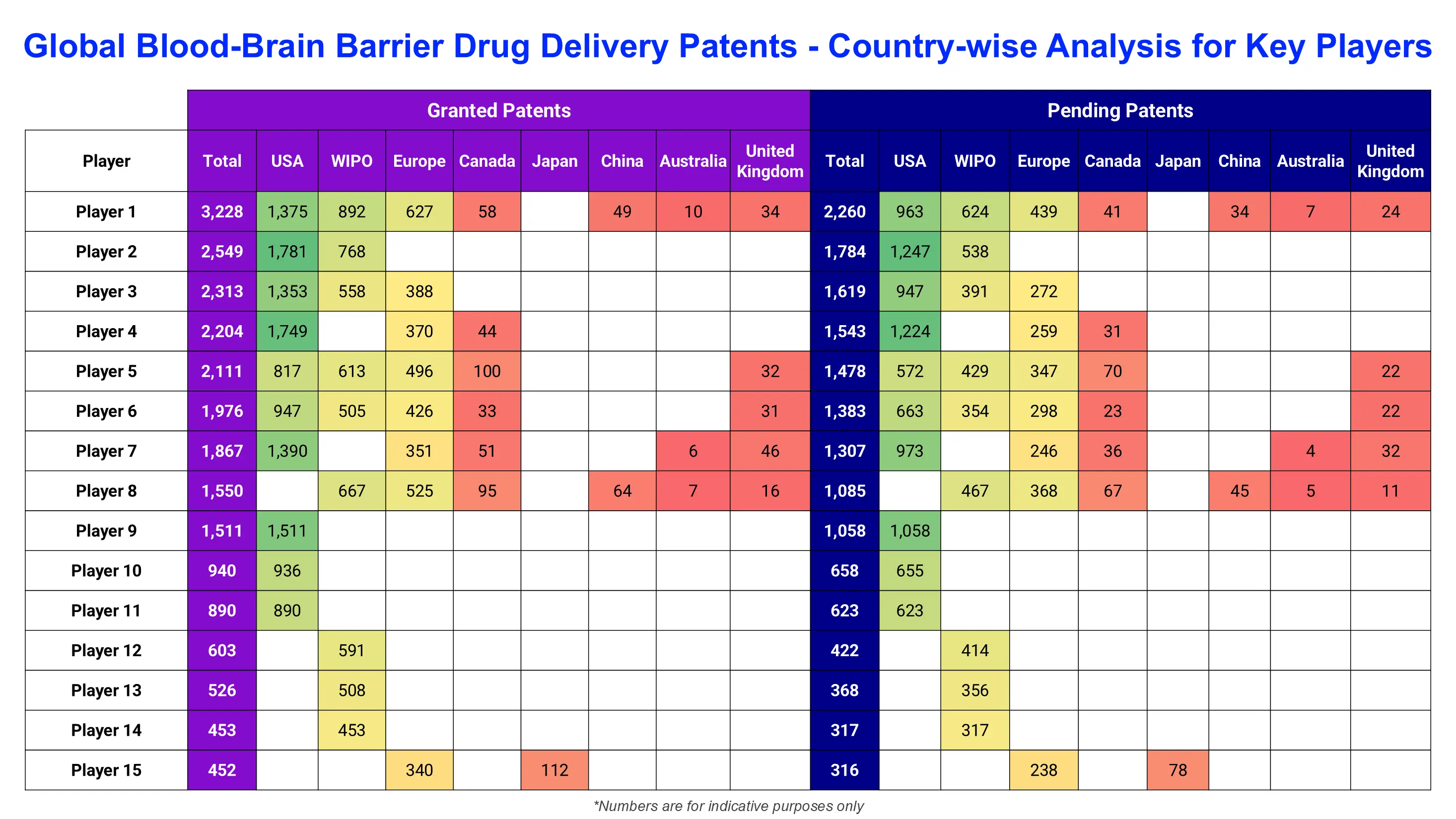
Top assignees in the blood-brain barrier drug delivery patent landscape include Roche, Denali Therapeutics, JCR Pharmaceuticals, Eli Lilly, and Biogen, with the United States, China, and Europe as the dominant patent jurisdictions.
Delivering medicines to the brain remains one of the hardest problems in drug development. The barrier formed by tightly joined endothelial cells, efflux pumps and specialised transporters protects neural tissue, but it also blocks an estimated 98% of small molecules and nearly all large molecule therapeutics. Interest has grown as antibody, enzyme and gene-based medicines for neurological disease have advanced, because these modalities need active transport to reach useful concentrations. Developers now pursue receptor-mediated transport, engineered nanocarriers, physical barrier opening with ultrasound and non-invasive routes such as the nasal cavity. Demand comes from ageing populations, rare inherited disorders and brain cancers with few treatment options, and from companies seeking better brain exposure at lower doses.
The market growth is driven by the arrival of anti-amyloid antibodies for Alzheimer's disease, since lecanemab received full FDA approval in 2023 and donanemab followed in 2024, yet only a very small fraction of each dose reaches the brain, which pushes developers toward shuttle technologies that raise brain exposure. Roche's trontinemab entered Phase 3 trials in 2025 on this logic, and Japan approved the first transferrin receptor enzyme fusion for Hunter syndrome in 2021. Dementia affects more than 55 million people worldwide, with Alzheimer's disease the most common cause, and Parkinson's disease affects over 10 million, so modest gains in delivery efficiency apply to very large patient groups.
Each figure points to a specific commercial effect. Delivery of an estimated 0.1 to 0.2 percent of a circulating antibody dose to the brain shows how much room exists for shuttle technology, because raising that fraction cuts the dose needed and the burden of infusion-related side effects. Amyloid-related imaging abnormalities seen with approved antibodies add pressure for safer exposure profiles. Hunter syndrome affects roughly 1 in 100,000 male births, and its small but well defined population supports premium pricing for therapies that treat neurological symptoms, which attracts rare disease developers. Glioblastoma carries median survival of about 15 months, and that unmet need sustains investment in focused ultrasound and nanocarriers for brain tumours.
Read more about this report - REQUEST FREE SAMPLE COPY IN PDF
Filing intensity in blood-brain barrier drug delivery follows commercial investment by large neuroscience companies and by platform biotechnology firms. Licensing deals for shuttle technology, such as the collaborations between Denali Therapeutics and several large pharmaceutical partners, have been followed by new filings on receptor binding domains, antibody formats and linkers. Interest from gene therapy developers in capsids that cross the barrier has added filings on viral vector engineering. Device makers working on focused ultrasound have filed on transducer arrays, microbubble control and treatment planning as clinical studies in Alzheimer's disease and brain tumours expanded.
More than 7,200 patent families related to blood-brain barrier drug delivery were identified across the landscape. Filing accelerated from about 2018 and peaked between roughly 2021 and 2024, as shuttle antibodies, enzyme fusions and capsid engineering moved into clinical development. Receptor-mediated transcytosis shuttles form the largest cluster, followed by nanoparticle and liposomal carriers, while focused ultrasound barrier opening and intranasal and direct brain delivery routes make up a steady second tier. Older families on prodrugs, efflux pump inhibition and intrathecal delivery remain numerous because improvements to formulation and devices continue to be filed in parallel.
Growth in diagnosed Alzheimer's disease and rare lysosomal disorders, together with the clinical push to raise brain exposure of biologics, is now visible in filings that cover shuttles, carriers and delivery devices.
This report analyses patent activity and market trends associated with blood-brain barrier drug delivery across the United States, Europe, China, Japan, South Korea, India and international filings made through the World Intellectual Property Organization (WIPO). Coverage includes shuttles, carriers, physical barrier opening and alternative administration routes that raise the concentration of therapeutics in brain tissue, drawn from national offices and regional authorities. Market context reflects use by Pharmaceutical and Biotechnology Companies, Academic and Research Institutes, Contract Research Organisations, Specialty Neurology Hospitals and Medical Device Developers, linking patent coverage to development activity.
The scope includes five delivery approaches: receptor-mediated transcytosis shuttles, nanoparticle and liposomal carriers, focused ultrasound barrier opening, intranasal and direct brain delivery, and cell-penetrating peptides and other carriers. Therapeutic modalities covered are antibodies and fusion proteins, gene and nucleic acid therapies, small molecules and enzyme replacement therapies. Neurological indications considered are Alzheimer's disease, Parkinson's disease, brain tumours, lysosomal storage disorders, and stroke and other neurological conditions, and patents are grouped by technology cluster to show where innovation concentrates.
The analysis includes patent activity from large pharmaceutical groups with neuroscience franchises, platform biotechnology firms developing shuttles, capsids and nanocarriers, and start-ups spun out of university laboratories. Academic medical centres, research institutes and clinical investigators that file on barrier biology, transport receptors and ultrasound protocols are also covered, as are contract research organisations that offer brain penetration testing. Device developers that protect transducers, intranasal devices and implantable delivery systems are included where their filings relate to blood-brain barrier drug delivery.
The report will cover the following sections in detail:
Analysis by Delivery Approach
Analysis by Therapeutic Modality
Analysis by Neurological Indication
Blood-Brain Barrier Drug Delivery Patent Filing Trend Analysis
The evolution of patent filings for blood-brain barrier drug delivery shows an early phase built on prodrugs, lipid-soluble analogues and efflux pump inhibitors, followed by liposomal and polymeric nanoparticle carriers. Antibody shuttles that exploit the transferrin receptor gained momentum through the 2010s, and the pace rose again once clinical data on brain uptake became available. Recent filings address alternative receptors, engineered binding affinity, enzyme and oligonucleotide conjugates, and capsids that cross the barrier after intravenous dosing. Annual grants of more than 3,000 patents in 2025 indicate a large base of enforceable rights and a continuing pipeline of new applications.
Patent filings increased at an estimated annual growth rate of approximately 12% between 2020 and 2024. Shuttle antibodies, enzyme fusions and capsid engineering grew fastest, supported by clinical data in Alzheimer's disease and Hunter syndrome. Focused ultrasound and intranasal delivery filings expanded at a more moderate pace, tied to device development cycles and trial timelines. Applicants also broadened claims from single molecules to platforms, since a validated transport mechanism can be reused with many payloads and is harder for competitors to design around.
Among the players with blood-brain barrier drug delivery patent families, new entrants have been identified, which can be either established companies or startups developing novel technology in the field. Some of the major companies mentioned in this report (a non-exhaustive list) are as follows:
Roche holds one of the largest portfolios in blood-brain barrier drug delivery, anchored by its Brainshuttle platform, in which an antibody module binds the transferrin receptor to carry large therapeutic proteins into the brain. The lead candidate, trontinemab, pairs an anti-amyloid antibody with the shuttle and entered Phase 3 trials in early Alzheimer's disease in 2025, building on earlier experience with gantenerumab. The intellectual property strategy layers claims on receptor binding formats, antibody engineering and fusion constructs, with Genentech filing alongside the parent group. Commercially, Roche is positioned as a neurology and diagnostics company that can link brain delivery with amyloid imaging and blood biomarkers.
Denali Therapeutics builds its portfolio around the Transport Vehicle platform, which engineers the Fc region of antibodies and enzymes to bind the transferrin receptor and cross the barrier. The most advanced candidate, tividenofusp alfa for Hunter syndrome (mucopolysaccharidosis type II), has been submitted to the FDA under the accelerated approval pathway, and further candidates target Alzheimer's disease, Parkinson's disease and other lysosomal storage disorders. Collaborations with Biogen, Takeda and Sanofi extend the platform and its small molecule programmes into larger development budgets. The intellectual property approach protects the transport vehicle architecture, enzyme and antibody fusions, and related manufacturing methods. Commercially, the company operates as a clinical-stage biotechnology firm that relies on partners for late-stage funding and scale.
Other companies include JCR Pharmaceuticals, Eli Lilly, and Biogen.
The leading assignees, Roche, Denali Therapeutics, JCR Pharmaceuticals, Eli Lilly and Biogen, hold a meaningful share of analysed patent families, indicating a moderately concentrated landscape. Roche and Denali Therapeutics protect transferrin receptor shuttle formats for antibodies and enzymes, while JCR Pharmaceuticals concentrates on its J-Brain Cargo enzyme fusions. Eli Lilly files across amyloid antibodies, gene therapy and brain delivery partnerships, and Biogen combines intrathecal oligonucleotide experience with collaborations on brain-targeted antibodies and small molecules. A long tail of universities, specialist biotechnology firms and device makers adds claims on carriers, ultrasound protocols and administration routes.
*Please note that this is only a partial list; the complete list of key players is available in the full report. Additionally, the list of key players can be customized to better suit your needs.*
The report assesses patent activity across major jurisdictions, including:
The United States is the largest single jurisdiction for blood-brain barrier drug delivery, reflecting the depth of its neuroscience biotechnology sector, large clinical trial activity and strong patent enforcement. China ranks second, driven by university groups and domestic biotechnology firms that file on nanocarriers, antibody shuttles and traditional medicine formulations aimed at the brain. Europe follows through European Patent Office filings and national validations, supported by academic centres and the research bases of large pharmaceutical groups. Japan shows concentrated activity linked to enzyme fusion technology, while South Korea and India show smaller but growing activity, and international filings under WIPO show which families applicants intend to take into several markets at once.
Read more about this report - REQUEST FREE SAMPLE COPY IN PDF
The patent landscape is segmented by the technology categories most closely associated with blood-brain barrier drug delivery, which include:
Among these, receptor-mediated transcytosis shuttles account for the largest share of recent patent activity. Applicants are filing on transferrin receptor binders, alternative receptor targets, antibody fragments with tuned affinity, and fusion formats that attach enzymes, antibodies or oligonucleotides to the shuttle module. Growth in this cluster has outpaced carrier and device filings since clinical data showed higher brain uptake of shuttle-bound proteins, and each of the five leading assignees now maintains active shuttle programmes or partnerships.
The blood-brain barrier drug delivery market is competitive, shaped by large pharmaceutical groups that need brain exposure for biologics and by platform companies that license transport technology. Competition has moved from early carrier concepts toward clinically validated shuttles, with companies seeking exclusive access to receptors and binding formats that show safe, repeatable uptake. Newer entrants in capsid engineering, ultrasound systems and nanocarriers show that no single approach has settled the field, and positions in manufacturing and payload flexibility will influence who captures licensing and product revenue.
Companies are focusing on:
Emerging innovation themes include shuttles that use receptors other than the transferrin receptor to lower the risk of red blood cell effects, capsids that deliver gene therapies after intravenous dosing, and lipid nanoparticles that carry nucleic acids to neurons. Interest is growing in focused ultrasound combined with microbubbles to deliver antibodies to brain tumours and amyloid-affected regions, and in intranasal devices that improve deposition at the olfactory region. Developers are also filing on imaging and fluid biomarkers that confirm brain exposure early in clinical development.
The patent landscape for blood-brain barrier drug delivery maps how innovation is distributed across delivery approaches, therapeutic modalities and neurological indications in more than 7,200 patent families, and it identifies the assignees and jurisdictions where protection is concentrated. Filings in shuttles, capsids and ultrasound show where capital is being directed, while mature carrier and prodrug families indicate where freedom to operate depends on expiry timelines. Together, the findings give drug developers, investors and device makers a structured view of competitive positions.
The landscape provides actionable intelligence for the following nine uses:
Patent research was conducted across major patent databases, including national and regional office records and international filings published under the Patent Cooperation Treaty. Search strategies combined Cooperative Patent Classification codes for drug delivery to the brain with keyword queries on shuttles, receptors, carriers, ultrasound, administration routes and neurological indications. Records were gathered through the latest complete publication period, and equivalent filings were consolidated into patent families so that each invention was counted once.
Screening removed duplicate families and filings with no relevance to blood-brain barrier drug delivery. Remaining records were reviewed and classified by technology cluster, delivery approach, therapeutic modality, neurological indication, assignee and jurisdiction. Assignee names were standardised so that subsidiaries and name variants were attributed to a single owner, and legal status was used to separate granted patents from pending applications.
Market analysis supported the interpretation of patent trends through review of regulatory approvals, clinical trial registrations, company disclosures and scientific publications. Patent activity was compared with trial start dates and licensing announcements to show how innovation tracks commercial interest. Findings were cross-checked across sources, and analyst estimates are described as approximate where exact counts were not available.


Upto 15% Off
USD
$2699 $2429
$4299 $3869
$5799 $4949
$6999 $5949


*While we strive to always give you current and accurate information, the numbers depicted on the website are indicative and may differ from the actual numbers in the main report. At Expert Market Research, we aim to bring you the latest insights and trends in the market. Using our analyses and forecasts, stakeholders can understand the market dynamics, navigate challenges, and capitalize on opportunities to make data-driven strategic decisions.*
EMR's Blood-Brain Barrier Drug Delivery Patent Landscape Analysis provides a comprehensive assessment of patent filings, innovation clusters, assignee portfolios, and geographic filing patterns across the blood-brain barrier drug delivery landscape. The report identifies 7,200+ patent families, evaluates leading jurisdictions including the United States, China, and Europe, and profiles the top assignees by portfolio size.
The global blood-brain barrier drug delivery market was valued at USD 2.10 Billion in 2025. The market is projected to reach USD 7.92 Billion by 2035, expanding at a CAGR of 14.20% during 2026 - 2035.
The report analyses approximately 7,200+ patent families related to blood-brain barrier drug delivery. These include filings from the United States, China, Europe, and international WIPO filings.
Key companies operating within the landscape include Roche, Denali Therapeutics, JCR Pharmaceuticals, Eli Lilly, and Biogen, among others. These organisations collectively account for a significant portion of patent activity analysed in this report.
The report evaluates patent activity across the United States, Europe, China, Japan, South Korea, India, and international WIPO filings. The United States is the largest single jurisdiction for blood-brain barrier drug delivery, with 2,900+ patents associated with it across the 7,200+ patent families analysed.
Yes. The report scope can be customised based on geography, technology segment, assignee selection, time period, or specific innovation cluster focus. Readers can contact the EMR team to scope a customised study, such as a tailored patent landscape focused on particular shuttle targets, therapeutic modalities or neurological indications in blood-brain barrier drug delivery.
Patent landscape analysis helps organisations understand innovation trends, competitive activity, technology whitespace, and IP risk across a defined domain. For blood-brain barrier drug delivery, this report supports strategic decisions in R&D prioritisation, licensing evaluation, competitive benchmarking, and market entry planning.
Explore our key highlights of the report and gain a concise overview of key findings, trends, and actionable insights that will empower your strategic decisions.
|
Scope of the Report |
Details |
|
Analysis by Delivery Approach |
|
|
Analysis by Therapeutic ModalityAnalysis by Therapeutic Modality |
|
|
Analysis by Neurological Indication |
|
|
Analysis by End User |
|
|
Key Players Mentioned |
|
|
Geographies Covered |
|
Mini Report
One User
USD 2,699
USD 2,429
tax inclusive*
Single User License
One User
USD 4,299
USD 3,869
tax inclusive*
Five User License
Five User
USD 5,799
USD 4,949
tax inclusive*
Corporate License
Unlimited Users
USD 6,999
USD 5,949
tax inclusive*
*Please note that the prices mentioned below are starting prices for each bundle type. Kindly contact our team for further details.*
Flash Bundle
Small Business Bundle
Growth Bundle
Enterprise Bundle
*Please note that the prices mentioned below are starting prices for each bundle type. Kindly contact our team for further details.*
Flash Bundle
Number of Reports: 3
20%
tax inclusive*
Small Business Bundle
Number of Reports: 5
25%
tax inclusive*
Growth Bundle
Number of Reports: 8
30%
tax inclusive*
Enterprise Bundle
Number of Reports: 10
35%
tax inclusive*
How To Order

Select License Type
Choose the right license for your needs and access rights.

Click on ‘Buy Now’
Add the report to your cart with one click and proceed to register.

Select Mode of Payment
Choose a payment option for a secure checkout. You will be redirected accordingly.
Strategic Solutions for Informed Decision-Making
Gain insights to stay ahead and seize opportunities.

Get insights & trends for a competitive edge.

Track prices with detailed trend reports.

Analyse trade data for supply chain insights.

Leverage cost reports for smart savings

Enhance supply chain with partnerships.

Connect For More Information
Our expert team of analysts will offer full support and resolve any queries regarding the report, before and after the purchase.
Our expert team of analysts will offer full support and resolve any queries regarding the report, before and after the purchase.
We employ meticulous research methods, blending advanced analytics and expert insights to deliver accurate, actionable industry intelligence, staying ahead of competitors.
Our skilled analysts offer unparalleled competitive advantage with detailed insights on current and emerging markets, ensuring your strategic edge.
We offer an in-depth yet simplified presentation of industry insights and analysis to meet your specific requirements effectively.




