

Consumer Insights
Uncover trends and behaviors shaping consumer choices today
Procurement Insights
Optimize your sourcing strategy with key market data
Industry Stats
Stay ahead with the latest trends and market analysis.
The global account reconciliation software market attained a value of USD 3.62 Billion in 2025 and is projected to expand at a CAGR of 14.40% through 2035. The market is further expected to achieve USD 13.90 Billion by 2035. Increasing audit complexity and regulator expectations are compelling enterprises to replace spreadsheet-driven reconciliations with automated platforms that deliver continuous controls, standardized evidence, and improved financial governance reliability.
The rise of real-time payments and instant settlement systems has led to an increase in the frequency of reconciliation, which has put pressure on finance teams that still use manual processes. However, the shortage of accounting talent is compelling CFOs to adopt automated reconciliation solutions that provide accuracy, control, and auditability without having to increase headcount in finance.
The account reconciliation software market is changing fast as enterprises now prefer continuous finance operations. One key product development leading to this change happened when BlackLine, in September 2023, augmented its Intercompany Hub with AI-based transaction matching and automated dispute workflows functionalities. Such trends indicate a wider change in vendor focus, as reconciliation platforms are styled to be intelligence-led control layers that bring the whole process into focus rather than being mere traditional close-cycle tools.
Moreover, operational restructuring of finance departments at various organizations keeps having an impact on the adoption of technology in their sectors. Models for shared services, regional finance centers, and the imposition of real-time reports are making the reconciliation process more complex among the various legal entities. Consequently, top-tier service providers are equipping their offerings with reconciliation features that get embedded into ERP systems like SAP S/4HANA or Oracle Fusion. In January 2024, WinSoft introduced SmartPayout, a brokerage payout reconciliation platform improving settlement accuracy and operational efficiency for financial services firms. Such a strategy centered on integration gives an edge to tightening audit controls, quickening the close process, and heightening traceability, accelerating the account reconciliation software market value.
Compound Annual Growth Rate
14.4%
Value in USD Billion
2026-2035
Truist unveiled an AI-powered receivables and reconciliation platform designed to accelerate cash application and minimize manual exceptions. Developments in the account reconciliation software market like this illustrate how AI-driven cash application and exception management are reshaping reconciliation workflows.
insightsoftware introduced an AI virtual teammate in JustPerform that automates account reconciliation, slashing reconciliation cycle times and reducing manual effort. Such trends in the account reconciliation software market encourage tech vendors to develop intelligent reconciliation assistants.
SmartStream rolled out an AI-powered reconciliation and data management solution for the insurance sector. Such technologies indicate an increasing need for industry-specific reconciliation solutions, which would give vendors a chance to differentiate themselves through verticalized automation solutions for unique data challenges in their respective sectors.
BSP Financial Group partnered with SmartStream to deploy an AI-enabled reconciliation system that automates key workflows, strengthens oversight, and accelerates dispute resolution across Papua New Guinea and the Pacific. Technology vendors can also offer tailored reconciliation automation platforms leveraging such opportunities.
Artificial intelligence is revolutionizing reconciliation software deployment within the finance enterprise stacks. Vendors are incorporating machine learning to detect unusual transactions, forecast the breaks, and even suggest corrective actions before the close deadlines. In September 2024, Oracle incorporated AI-assisted reconciliation algorithms into its Fusion Financials offering, which is aimed at detecting signs of risk much earlier in the reporting cycle. Regulatory focus on the strength of internal controls, especially from the United States regulators, is a major factor keeping the demand for proactive models of reconciliation at a high level, accelerating the account reconciliation software market value.
One significant factor that has impacted the account reconciliation software market has been the deep ERP integration, to the extent that it is considered a crucial buying criterion. Enterprises are leaning towards change management services that can be seamlessly embedded into the native ERP ecosystem rather than opting for isolated tools. In September 2024, SAP expanded the financial close functionalities within the S/4HANA platform to leverage the local ERP for capitalizing on more centralized reconciliations and one comprehensive control documentation.
Audit and compliance automation is being made a key element of difference among reconciliation software vendors. Platforms continue to provide automated evidence capture, standardized control libraries, and auditor-access dashboards, reshaping the entire account reconciliation software market dynamics. In April 2025, Trintech announced the launch of Adra Journal Entry, a new module within its Adra Suite. Regulatory authorities for audits are constantly enforcing more rigorous documentation requirements, and therefore enterprises have to undergo massive changes in their reconciliation workflows to be able to modernize them. Hence, vendors are now focusing on reconciliation software as a compliance enabler that makes audits less tedious, reduces the number of control failures, and minimizes the risk of having to rely on external advisory support.
Given that enterprises are making scalability and centralized governance their top priorities, cloud-native deployment models are becoming more popular. Reconciliation software vendors are making huge investments in security certifications and data integrity frameworks to be able to respond to the increasing concern over the protection of financial data. Microsoft’s cloud-based financial governance tool offerings illustrate the general trust in a secure accounting infrastructure. Moreover, government cloud-first procurement policies are helping to accelerate this trend in the account reconciliation software market. Vendors who focus on encryption, role-based controls, and immutable audit logs are experiencing stronger uptake from regulated sectors such as banking, insurance, and utilities. For example, in February 2026, Applied Systems announced that Stockman Insurance selected Applied Book Builder and Applied Recon to provide faster access to critical information.
Account reconciliation software is increasingly deployed as part of enterprise-wide finance transformation initiatives. Organizations are aligning reconciliation automation with digital close programs, control rationalization, and analytics modernization. Several large-scale enterprises have publicly linked reconciliation upgrades to multi-year finance operating model redesigns, creating new account reconciliation software market opportunities. In September 2025, Validata announced the launch of its AI-Powered Invoice Reconciliation solution, built on ConnectIQ platform. Public-sector financial system modernization mandates in the United States are reinforcing similar trends.
Read more about this report - REQUEST FREE SAMPLE COPY IN PDF
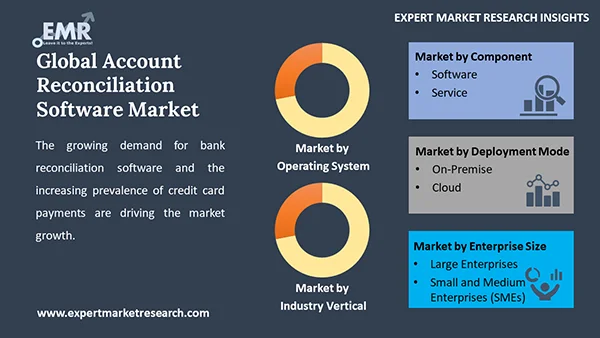
The EMR’s report titled “Global Account Reconciliation Software Market Report and Forecast 2026-2035” offers a detailed analysis of the market based on the following segments:
Market Breakup by Component
Key Insight: Software along with services together determine the extent of operations of the account reconciliation platforms. In January 2024, Aderant announced the launch of its new Matter Reconciliation module for BillBlast, legal’s fastest growing billing application. Through software, finance operations become automated, scalable, and standardized, while services make it possible for adoption, optimization, and sustained performance. Companies with complicated structures of entities depend on the flexibility of software, and, at the same time, the service capabilities help convert automation into a tangible control improvement, each playing key roles in driving the account reconciliation software market penetration.
Market Breakup by Deployment Mode
Key Insight: Deployment preferences indicate the level of risk and the maturity of the transformation process in an organization. Solutions that are on-premise, give access, control, and comfort to heavily regulated environments, whereas cloud platforms provide an opportunity for adaptability and unlimited resource acquisition. In October 2025, OneStream announced the launch of Modern Financial Close, AI-powered OneStream ESG Planning & Reporting. Enterprises gradually become hybrid in their usage, thus they keep the most sensitive reconciliations on-premises and the rest of the operational processes are moved to the cloud, accelerating overall demand in the account reconciliation software market. Providers that are able to accommodate a flexible deployment approach have a competitive advantage in catering to the varied needs of the enterprises.
Market Breakup by Enterprise Size
Key Insight: As per the account reconciliation software market report, the size of the enterprise determines the type of functionalities that are expected. Large-scale corporates usually aim at governance, scalability, and compliance whereas SMEs pay more attention to efficiency, usability, and operational continuity. It is a fact that vendors gradually create tiered offerings that solve the problems of both segments without sacrificing the control aspect. When SMEs expand their operations their reconciliation requirements will be similar to those of bigger enterprises resulting in upgrade possibilities in the long run.
Market Breakup by Operating System
Key Insight: Bank reconciliation helps control liquidity, customer reconciliation is about confirming the accuracy of revenue, and inter-company reconciliation is mainly for the integrity of group reporting. There are various other types of reconciliation that serve specific operational requirements in different finance functions, widening the account reconciliation software market scope. On the one hand, vendors who provide modular reconciliation features enable companies to target the biggest risks through automation while gradually adding more processes to their portfolio. This partitioning demonstrates that reconciliation solutions are changing into multi-functional platforms that can be used for financial control.
Market Breakup by Industry Vertical
Key Insight: Banks require accuracy and compliance, manufacturers require business continuity, retailers require transaction accuracy, and government agencies require transparency. The IT, healthcare, and utilities industries have their own set of control challenges. Companies that quickly adapt reconciliation tools to meet vertical industry needs tend to gain quicker traction and retain clients better, positively impacting the account reconciliation software market revenue growth.
Market Breakup by Region
Key Insight: Regional interplay across the account reconciliation software market scope portrays different levels of economic maturity and regulatory backdrops. North America and Europe are more inclined to governance and standardization whereas Asia Pacific and Latin America are more focused on scalability and modernization. Middle East and Africa adoption is largely the result of infrastructure investments and public sector reforms. Vendors which go for region-specific strategies will be able to sustain their market share across diverse markets.
By component, software dominates the market due to enterprise-wide automation and control standardization
Software currently dominates the account reconciliation software market as companies keep standardizing their financial controls. Top companies now increasingly depend on configurable reconciliation engines, rule-based matching logic, and automated exception workflows embedded in their finance platforms. On the contrary, vendors are turning their intelligence-led software capabilities to support continuous accounting rather than periodic close tasks. Besides that, product development is focusing on scalability, audit traceability, and ERP and treasury systems interoperability. In February 2026, Dext launched Payments, a fully integrated solution designed to allow users to manage, approve and make payments directly within the Dext platform.
On the other hand, services have become the fastest-growing component that is largely driving demand in the account reconciliation software market as enterprises want speedier deployment and operational optimization. Furthermore, advisory, implementation, and managed services align with the bundling of reconciliation platforms to meet process redesign, control mapping, and system integration. Vendors are enlarging their service portfolios to help with continuous accounting transitions, especially, for those moving away from spreadsheet-driven controls.
On-premise deployments lead adoption due to control sensitivity and compliance requirements
On-premise deployment remains the most prevalent choice among enterprises that have strict data governance and regulatory requirements. Financial institutions, government agencies, and other highly regulated sectors are the main users of on-premise reconciliation solutions as they want to maintain direct control over the financial data and who has access to the system. Vendors that cater to this segment are adding advanced configurability, internal security controls, and audit logging capabilities.
Cloud deployment is the category with the highest growth rate across the account reconciliation software market scope as enterprises continue to seek scalability, flexibility, and centralized finance governance. Cloud reconciliation platforms help finance teams that are distributed in different locations by allowing them to collaborate in real-time, having standardized controls, and audit access remotely. Vendors are focusing on secure architectures, encryption, and role-based access in order to mitigate the concerns of enterprise risk. In December 2025, Duco announced a strategic collaboration with Phoenix Group to modernize reconciliation infrastructure.
By enterprise size, large enterprises register the largest share of the market due to multi-entity complexity and audit exposure
Large enterprises account for the bigger share in the account reconciliation software market revenue as they have complex financial structures and are exposed to regulations. Such companies that have multiple entities, intercompany transactions, and global reporting requirements need to perform automated reconciliations on a large scale. They mainly look for solutions capable of providing configurable controls, centralized monitoring, and audit-ready documentation. Software suppliers focusing on large corporates typically develop deep ERP integration, advanced analytics, and governance features that aid compliance across different jurisdictions. In February 2024, Fexco Property Services selected next-generation reconciliation software specialists, Aurum Solutions, to automate their reconciliations.
Small and medium enterprises represent the most rapidly growing segment of users as the financial complexity grows alongside the business. SMEs are gradually abandoning the use of spreadsheet-based reconciliation to switch to automated platforms that minimize the need for accounting professional manual work, boosting the account reconciliation software market growth. Cloud-based solutions that are easy to configure and available through subscriptions drive demand in this category. Vendors are adapting their offerings to the needs of quicker onboarding, less administrative work, and intuitive user interfaces.
Bank reconciliation dominates usage due to transaction volume and daily control needs
Bank reconciliation continues to be the largest segment since it is the basis of daily financial accuracy. Banking reconciliation is automated to keep up with high transaction volumes, faster settlement cycles, and real-time payment frameworks. Companies depend on bank reconciliation features to detect any discrepancies in time and keep cash visibility. Suppliers focus on the depth of automation, the accuracy of matching, and the integration with treasury systems, propelling growth in the account reconciliation software market. For example, Xero's new feature, launched in December 2025, allows JAX to automatically reconcile transactions when it has a high level of confidence in the match
The inter-company reconciliation segment, which is experiencing fast growth, is the result of the expansion of multinational operations. Complex cross-entity transactions, transfer pricing issues, and the need for consolidation are reasons for automated inter-company matching. To handle disputes, eliminations, and obtain entity approvals, vendors are creating specialized workflows. This segment is becoming more important for companies operating in shared service models, where the accuracy of reconciliation has a direct effect on consolidated reporting and the results of the audit.
By industry vertical, the BFSI sector leads adoption due to regulatory scrutiny and transaction intensity
The BFSI sector is on top of the list of adopters mainly because of the strict regulatory requirements and the high frequency of transactions. Financial institutions need constant reconciliation to ensure that control integrity is maintained and that they are always ready for an audit. Vendors that supply services to BFSI focus on security, compliance mapping, and the ability to handle high-volume processing. Automated reconciliation helps in fraud detection, strengthening internal controls, and ensuring regulatory reporting consistency. This vertical is still playing a significant role in product innovation throughout the account reconciliation software market.
Government and public sector organizations now represent the fastest-growing adopters of this technology as their financial modernization initiatives are gaining pace. Agencies are moving away from legacy systems and are adopting standardized digital finance platforms. Reconciliation software is a great aid for these organizations as it helps in increasing transparency, enhancing accountability, and ensuring audit compliance in the management of public funds. Vendors who are focusing on this segment usually highlight the aspects of configurability, proper documentation, and compliance with public, sector governance frameworks. In July 2025, Australia’s Department of Finance rolled out GovAI, a secure AI platform enabling public servants to learn, experiment, and collaborate on AI-powered solutions.
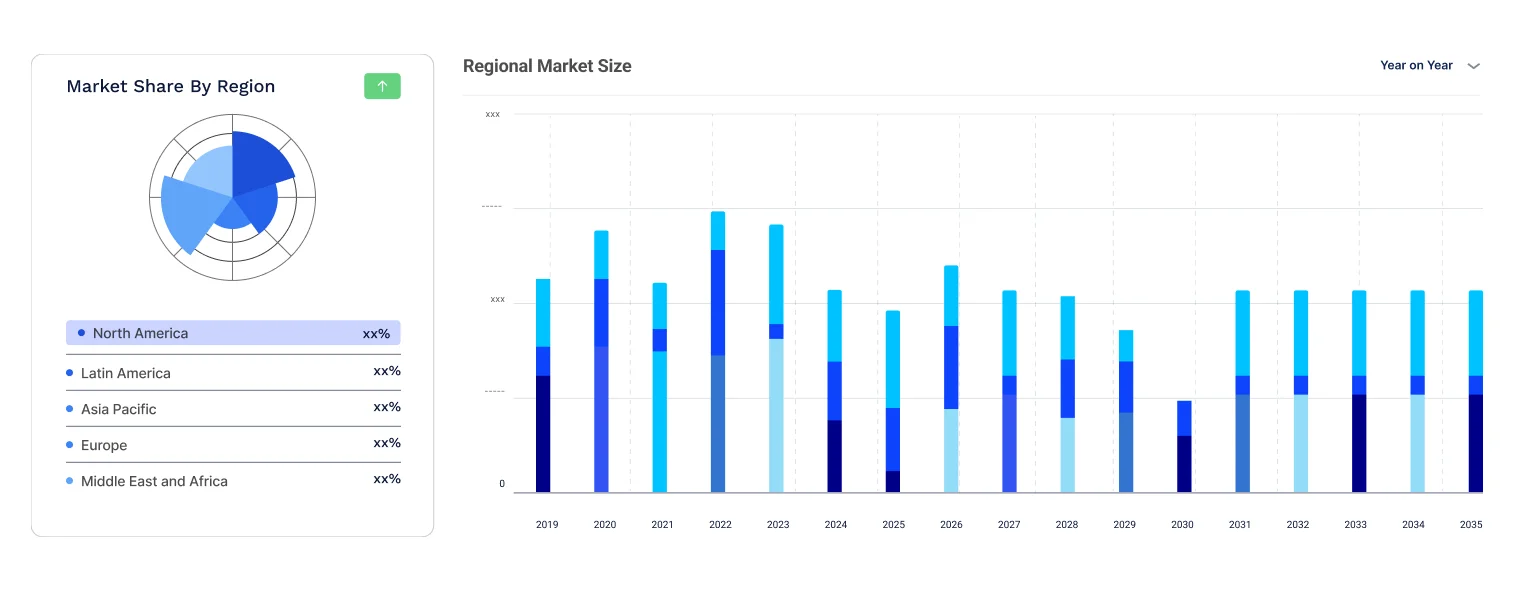
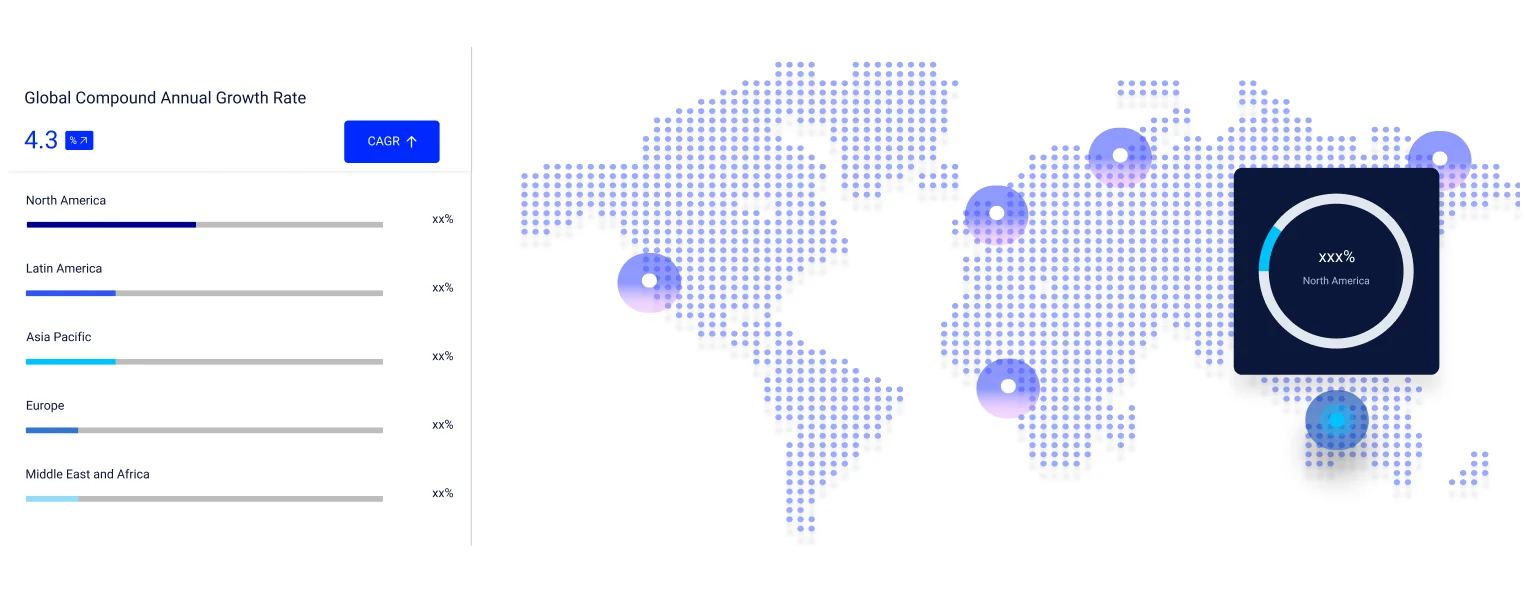
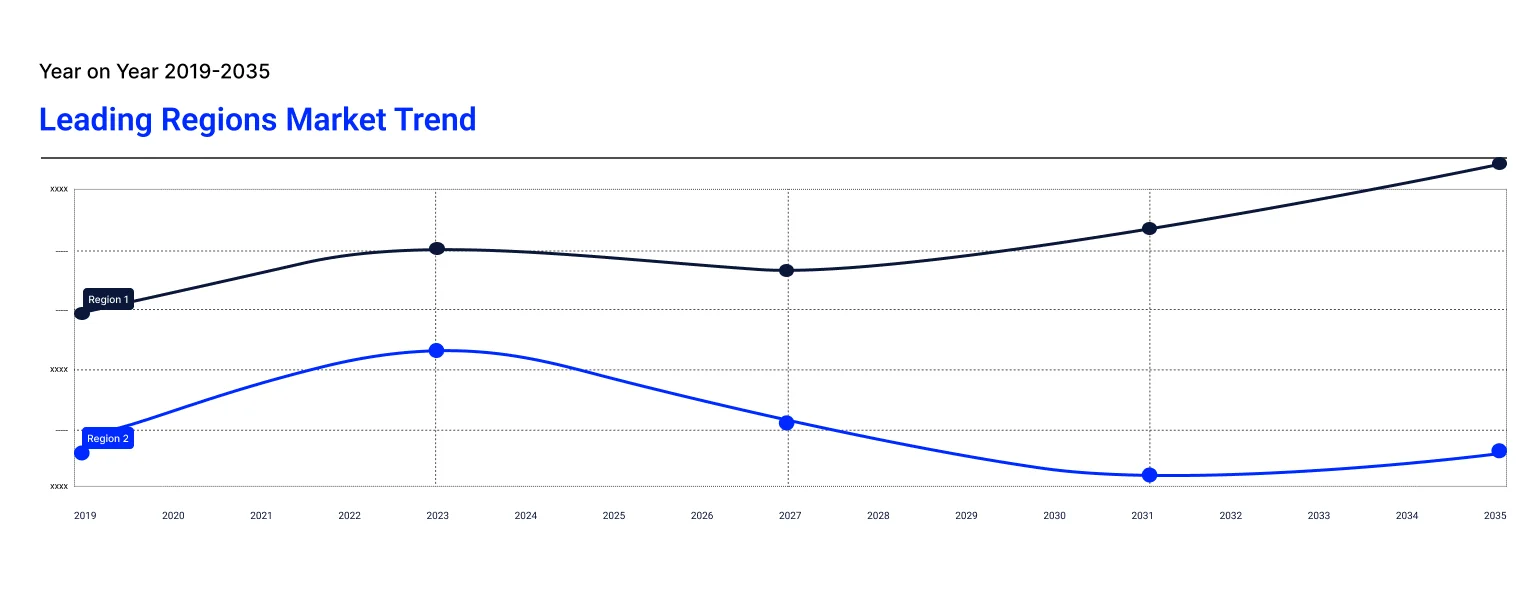
North America registers the largest share of the market revenue due to early automation and regulatory enforcement
The account reconciliation software market in North America is at the forefront of adoption because of mature finance operations coupled with a strong regulatory framework. Enterprises in this region mainly use reconciliation automation as a tool to help them through the audit process and increase efficiency of their operations. Vendors enjoy a high level of understanding of continuous accounting concepts and hence are able to make use of strong ERP penetration. It is in this region where most of the product innovations take place that eventually become global reconciliation standards.
The continuous growth of the account reconciliation software market in Asia Pacific is by companies who are rapidly increasing the scale of their operations and upgrading their finance systems. Rapid expansion of business activities after growth in the number of enterprises has made reconciliation complicated and thus giving rise to demand for automation. Vendors are customizing their platforms to fit into the regional regulatory frameworks and hence the different operational models. Both private enterprises and public-sector organizations are witnesses to the rapid speed of the adoption. In August 2025, Inside the Box unveiled Tracker, India’s first reconciliation software tailored for restaurants, automating transaction checks and financial control in hospitality.
The market is moderately consolidated, and competitors mainly vie over how automated their solutions are the depth of ERP integration and extent to which they help with compliance. Top account reconciliation software market players are paying attention to continuous accounting, AI-led exception management, and audit transparency as ways to set their products apart. There is an opportunity to help enterprises that want to move from using spreadsheets extensively for controls to standardized platforms.
Besides that, account reconciliation software companies are also going after the still largely unpenetrated public-sector and mid-market segments by offering modular deployment and service-led engagement. Strategic partnerships with ERP providers and system integrators are therefore allowing companies to broaden their market reach. Instead of focusing on marginal feature expansion, innovation is increasingly geared towards predictive controls and real-time visibility, thus determining competitive positioning in the long run.
Broadridge was established in 1962 and its main office is located in Lake Success, New York, United States. The company creates reconciliation solutions specifically for financial services firms. Broadridge has made the post-trade processing, data governance, and regulatory reporting its areas of concentration. Its platforms operate in high-volume transaction environments and thus, capital markets participants can gain through automation, transparency, and operational resilience.
BlackLine was founded in 2001 and its main office is in the United States. It offers cloud-based financial close and reconciliation automation solutions. Solutions of the company are used by mainly multinational enterprises that have global finance controls at the standardized level.
Founded in 1977 and headquartered in California, United States, Oracle integrates reconciliation capabilities within its Fusion Financials suite. The company focuses on embedding reconciliation into broader ERP workflows, enabling centralized governance, analytics, and compliance support for large enterprises.
Founded in 2008 and headquartered in the United States, ReconArt provides configurable reconciliation platforms for banks and financial institutions. The company emphasizes flexibility, high-volume processing, and rule-based automation tailored to complex financial environments.
*Please note that this is only a partial list; the complete list of key players is available in the full report. Additionally, the list of key players can be customized to better suit your needs.*
Other key players in the market include Fiserv, Inc., among others.
Unlock the latest insights with our account reconciliation software market trends 2026 report. Discover regional growth patterns, consumer preferences, and key industry players. Stay ahead of competition with trusted data and expert analysis. Download your free sample report today and drive informed decisions in the market.


Upto 15% Off
USD
$2499 $2249
$3999 $3599
$4999 $4249
$5999 $5099


*While we strive to always give you current and accurate information, the numbers depicted on the website are indicative and may differ from the actual numbers in the main report. At Expert Market Research, we aim to bring you the latest insights and trends in the market. Using our analyses and forecasts, stakeholders can understand the market dynamics, navigate challenges, and capitalize on opportunities to make data-driven strategic decisions.*
In 2025, the market reached an approximate value of USD 3.62 Billion.
The market is projected to grow at a CAGR of 14.40% between 2026 and 2035.
The market is estimated to witness a healthy growth in the forecast period of 2026-2035 to reach about USD 13.90 Billion by 2035.
Vendors are expanding AI capabilities, deepening ERP integrations, strengthening compliance features, targeting public-sector modernization, and offering modular deployment models while continuously refining reconciliation intelligence and control automation.
The key trends of the market include the integration of artificial intelligence (AI) in software and the development of innovative account reconciliation software by leading companies.
The major regions in the market are North America, Latin America, the Middle East and Africa, Europe, and the Asia Pacific.
The leading components of account reconciliation software are software and service.
The different deployment modes of account reconciliation software are on-premise and cloud.
The major enterprise sizes of account reconciliation software are large enterprises and small and medium enterprises (SMEs).
The significant operating systems of account reconciliation software are bank reconciliation, customer reconciliation, and inter-company reconciliation, among others.
The major industry verticals of account reconciliation software are BFSI, manufacturing, retail and e-commerce, healthcare, IT and telecom, energy and utilities, and government and public sector, among others.
The key players in the market include Broadridge Financial Solutions, Inc., BlackLine Inc., Oracle Corporation, ReconArt, Inc., and Fiserv, Inc., among others.
Complex ERP integrations, resistance to process change, data quality inconsistencies, and balancing automation with regulatory control requirements remain persistent challenges for enterprises implementing reconciliation software.
Explore our key highlights of the report and gain a concise overview of key findings, trends, and actionable insights that will empower your strategic decisions.
| REPORT FEATURES | DETAILS |
| Base Year | 2025 |
| Historical Period | 2019-2025 |
| Forecast Period | 2026-2035 |
| Scope of the Report |
Historical and Forecast Trends, Industry Drivers and Constraints, Historical and Forecast Market Analysis by Segment:
|
| Breakup by Component |
|
| Breakup by Deployment Mode |
|
| Breakup by Enterprise Size |
|
| Breakup by Operating System |
|
| Breakup by Industry Vertical |
|
| Breakup by Region |
|
| Market Dynamics |
|
| Competitive Landscape |
|
| Companies Covered |
|
| Report Price and Purchase Option | Explore our purchase options that are best suited to your resources and industry needs. |
| Delivery Format | Delivered as an attached PDF and Excel through email, with an option of receiving an editable PPT, according to the purchase option. |
Datasheet
One User
USD 2,499
USD 2,249
tax inclusive*
Single User License
One User
USD 3,999
USD 3,599
tax inclusive*
Five User License
Five User
USD 4,999
USD 4,249
tax inclusive*
Corporate License
Unlimited Users
USD 5,999
USD 5,099
tax inclusive*
*Please note that the prices mentioned below are starting prices for each bundle type. Kindly contact our team for further details.*
Flash Bundle
Small Business Bundle
Growth Bundle
Enterprise Bundle
*Please note that the prices mentioned below are starting prices for each bundle type. Kindly contact our team for further details.*
Flash Bundle
Number of Reports: 3
20%
tax inclusive*
Small Business Bundle
Number of Reports: 5
25%
tax inclusive*
Growth Bundle
Number of Reports: 8
30%
tax inclusive*
Enterprise Bundle
Number of Reports: 10
35%
tax inclusive*
How To Order

Select License Type
Choose the right license for your needs and access rights.

Click on ‘Buy Now’
Add the report to your cart with one click and proceed to register.

Select Mode of Payment
Choose a payment option for a secure checkout. You will be redirected accordingly.
Strategic Solutions for Informed Decision-Making
Gain insights to stay ahead and seize opportunities.

Get insights & trends for a competitive edge.

Track prices with detailed trend reports.

Analyse trade data for supply chain insights.

Leverage cost reports for smart savings

Enhance supply chain with partnerships.

Connect For More Information
Our expert team of analysts will offer full support and resolve any queries regarding the report, before and after the purchase.
Our expert team of analysts will offer full support and resolve any queries regarding the report, before and after the purchase.
We employ meticulous research methods, blending advanced analytics and expert insights to deliver accurate, actionable industry intelligence, staying ahead of competitors.
Our skilled analysts offer unparalleled competitive advantage with detailed insights on current and emerging markets, ensuring your strategic edge.
We offer an in-depth yet simplified presentation of industry insights and analysis to meet your specific requirements effectively.




