

Consumer Insights
Uncover trends and behaviors shaping consumer choices today
Procurement Insights
Optimize your sourcing strategy with key market data
Industry Stats
Stay ahead with the latest trends and market analysis.
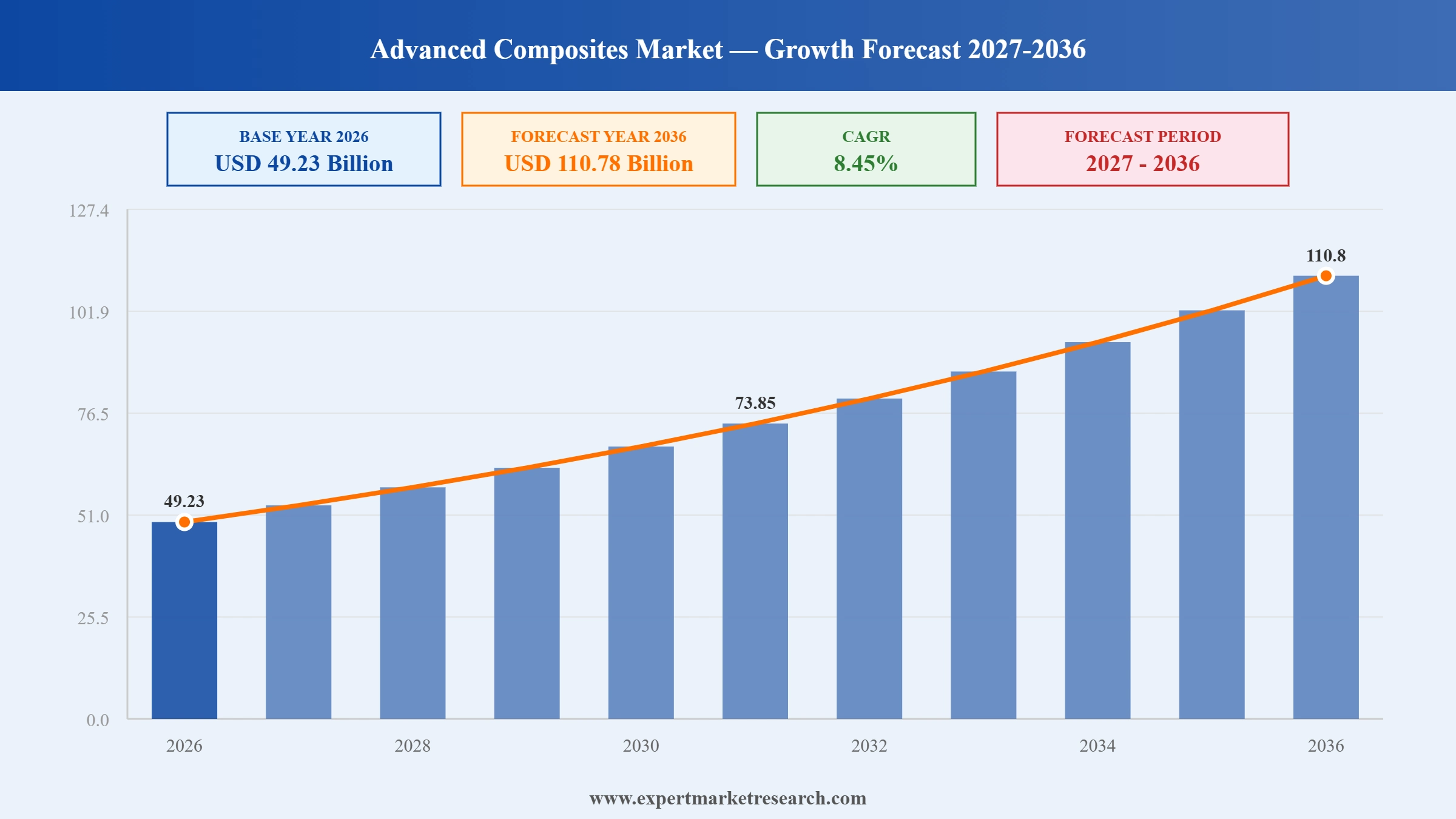
The advanced composites market was valued at USD 45.39 Billion in 2025. The market is expected to grow at a CAGR of 8.45% during the forecast period of 2026-2035 to reach a value of USD 102.15 Billion by 2035. Rising demand for lightweight, high-strength materials across aerospace, automotive, and wind energy applications, growing fleet renewal cycles, and continued migration of high-performance materials into industrial and energy applications are collectively driving market growth.
The advanced composites market is shaped by escalating demand for lightweight, high-strength materials across aerospace fleet renewal cycles, electrified mobility platforms, and renewable energy applications. North America held the largest share of the market, supported by strong aerospace and defense demand and established manufacturing infrastructure. Carbon fiber composites account for the largest share by fiber type, reflecting their superior mechanical properties and extensive adoption across aerospace, automotive, and wind energy applications.
Established composite material suppliers are reinforcing their market presence through continued capacity expansion, strategic acquisitions, and sustainability-focused partnerships rather than relying on a single growth lever. This continued pace of capacity investment is helping leading suppliers meet accelerating demand even as manufacturing complexity continues to constrain overall industry supply, with fiber manufacturers increasingly prioritizing regional production footprint expansion.
The competitive landscape remains moderately consolidated, with supply concentrated among established fiber and resin manufacturers such as Toray Industries, Hexcel, Solvay, and Teijin that maintain deep materials science expertise and long-standing aerospace and automotive OEM relationships. Participation requires sustained investment in advanced fiber production capacity, resin formulation research, and automated manufacturing processes, creating meaningful entry barriers and reinforcing the position of long-established players across aerospace, automotive, and wind energy end-use categories.
Read more about this report - REQUEST FREE SAMPLE COPY IN PDF
|
Advanced Composites Market Report Summary |
Description |
Value |
|
Base Year |
USD Billion |
2025 |
|
Historical Period |
USD Billion |
2019-2025 |
|
Forecast Period |
USD Billion |
2026-2035 |
|
Market Size 2025 |
USD Billion |
45.39 |
|
Market Size 2035 |
USD Billion |
102.15 |
|
CAGR 2019-2025 |
Percentage |
XX% |
|
CAGR 2026-2035 |
Percentage |
8.45% |
|
CAGR 2026-2035 - Market by Region |
Asia Pacific |
13% |
|
CAGR 2026-2035 - Market by Fiber Type |
Carbon Fiber |
9.3% |
|
CAGR 2026-2035 - Market by Resin Type |
Thermoplastic |
10.0% |
|
2025 Market Share by Region |
North America |
35% |
The advanced composites market is being reshaped by capacity expansion among fiber manufacturers, strategic business realignment toward core aerospace applications, and growing bio-based resin partnerships. Continued OEM supply agreements are further reshaping the competitive landscape.
Hexcel showcased its latest lightweight composite solutions at JEC World 2026 in Paris, featuring high-performance carbon fibers, prepregs, resins, and scalable thermoplastic solutions for next-generation aerospace structures within the advanced composites market. The showcase reinforced Hexcel's positioning around its lightweighting strategy for aerospace and industrial markets. Other companies can pursue similar flagship showcases to demonstrate materials innovation to key OEM customers.
Gurit announced plans to expand its Dallas, Texas facility with a new building to support anticipated growth in its subsea business, following a multi-year subsea contract secured in September 2025 and a related expansion of its Australian operations. The expansion reinforced Gurit's position as a leading supplier of structural core materials for high-performance subsea applications. Other companies in the advanced composites market can pursue similar targeted capacity expansions to support growth in specialized, high-value application segments.
Gurit secured a major new long-term supply agreement with a leading wind turbine OEM, marking the first major contract based on its OptiCore technology core kits and including volume commitments across offshore and onshore platforms in multiple regions. The agreement reinforced Gurit's global leadership in engineered core solutions for wind energy. Other companies can pursue similar long-term OEM supply agreements to secure volume commitments and strengthen their position in core structural material markets.
Hexcel divested its Neumarkt, Austria industrial composites business and closed its Welkenraedt, Belgium facility, exiting prepreg production for wind energy and marine applications. The move was part of a strategy to streamline operations and focus on core aerospace-grade carbon fiber competencies. Other companies can pursue similar portfolio streamlining to concentrate capital on higher-margin, core application segments.
Composite material suppliers are increasingly divesting lower-margin industrial applications to concentrate capital and manufacturing capacity on higher-value aerospace-grade materials. This is reshaping supplier portfolios away from broad industrial coverage toward specialized, high-performance segments. In March 2026, for example, TriMas completed the $1.45 billion divestiture of its TriMas Aerospace business to PennAero, a transaction the company described as sharpening its focus and strengthening its platform for future growth.
Major aerospace programs increasingly rely on long-term, multiyear supply agreements with established fiber and resin manufacturers to secure production capacity and pricing stability across extended aircraft development cycles. This is providing composite suppliers with more predictable, longer-duration revenue visibility. In January 2026, for example, Toray Composite Materials America and Syensqo entered a five-year global carbon fiber supply agreement covering composites and adhesives supporting Airbus commercial aircraft, defense, space, and helicopter programs.
Growing environmental concerns and regulatory pressure are motivating composite manufacturers to incorporate recycled fibers, bio-based resins, and more sustainable production processes into their material portfolios. This is broadening the range of environmentally conscious options available to OEM customers across aerospace, automotive, and industrial applications. In May 2026, for example, Teijin launched Tenax Next Circular Fiber, a recycled carbon fiber product line aimed at reducing composite waste amid tightening European and North American landfill regulations.
Growing use of composite materials in rotorcraft blades and defense helicopter programs is extending demand beyond traditional fixed-wing aerospace applications into new structural component categories. This is broadening the addressable market for carbon fiber, prepreg, and honeycomb core products. SGL Carbon has begun serial production of glass fiber textile composites for Airbus Helicopters' new H145 five-blade rotor, marking the first qualified material concept for primary structural rotor components under their ongoing framework contract.
Manufacturers are increasingly adopting automated tape laying and automated fiber placement processes to manufacture complex composite structures with greater precision and reduced material waste compared to manual layup methods. In July 2026, for example, Greene Tweed and Arrow McLaren co-engineered a redesigned lightweight anti-roll bar lever using Greene Tweed's Xycomp thermoplastic composite for the team's NTT INDYCAR SERIES race cars, illustrating how precision composite manufacturing continues to extend into performance motorsport applications. This is helping suppliers meet rising demand while managing labor costs and quality consistency. Automated fiber placement continues to gain composite market share as a preferred manufacturing process for producing complex aerospace and automotive structural components.
The Expert Market Research's report titled "Advanced Composites Market Report and Forecast 2026-2035" offers a detailed analysis of the market based on the following segments:
Market Breakup by Fiber Type
Key Insight: Carbon fiber accounts for the largest share of the advanced composites market by fiber type, reflecting its superior mechanical properties, lightweight characteristics, and extensive adoption across aerospace, automotive, and wind energy applications. Aramid fiber continues to see strong demand in protective equipment and ballistic applications given its exceptional impact resistance and thermal stability; in April 2026, for example, Arclin completed its $1.8 billion acquisition of DuPont's Aramids business, including the Kevlar and Nomex brands, significantly expanding its scale and capabilities across personal protection, defense, and aerospace applications. S-glass fiber serves cost-sensitive applications requiring good tensile strength without the premium cost of carbon fiber. Others, including hybrid and natural fiber composites, round out the category's broader materials portfolio.
Market Breakup by Resin Type
Key Insight: Thermosetting composites account for the largest share of the market by resin type, owing to their broad application in structural components across aerospace and automotive industries where high heat and moisture resistance are required. In July 2026, for example, Syensqo secured a new long-term supply agreement with Airbus covering prepregs, resin transfer molding resins, adhesives, and primers to support the manufacturer's commercial aircraft, defense, space, and helicopter programs. Thermoplastic composites are a fast-growing resin type as manufacturers increasingly value their recyclability and rapid processing capabilities within the advanced composites market relative to traditional thermoset systems. Others, including hybrid resin formulations, represent a smaller, specialized share of overall demand.
Market Breakup by End-Use Industry
Key Insight: Aerospace and defense accounts for the largest share of the market by end-use industry, driven by extensive composite integration in aircraft manufacturing and sustained demand for lightweight, high-strength structural materials. Automotive continues to see strong adoption as manufacturers pursue lightweighting strategies to improve fuel efficiency and support electrified vehicle platforms; in 2026, for example, Tesla began fitting its Cybertruck with new carbon fiber composite underbody panels as standard equipment, replacing stamped aluminum for improved durability, reduced weight, and lower cost. Wind energy represents a smaller but historically significant end-use category, though some suppliers have recently scaled back wind-specific production to concentrate capacity on higher-margin aerospace applications amid industry cost pressures. Others, including sporting goods, civil engineering, and marine applications, round out the category's broader industrial footprint.
Market Breakup by Region
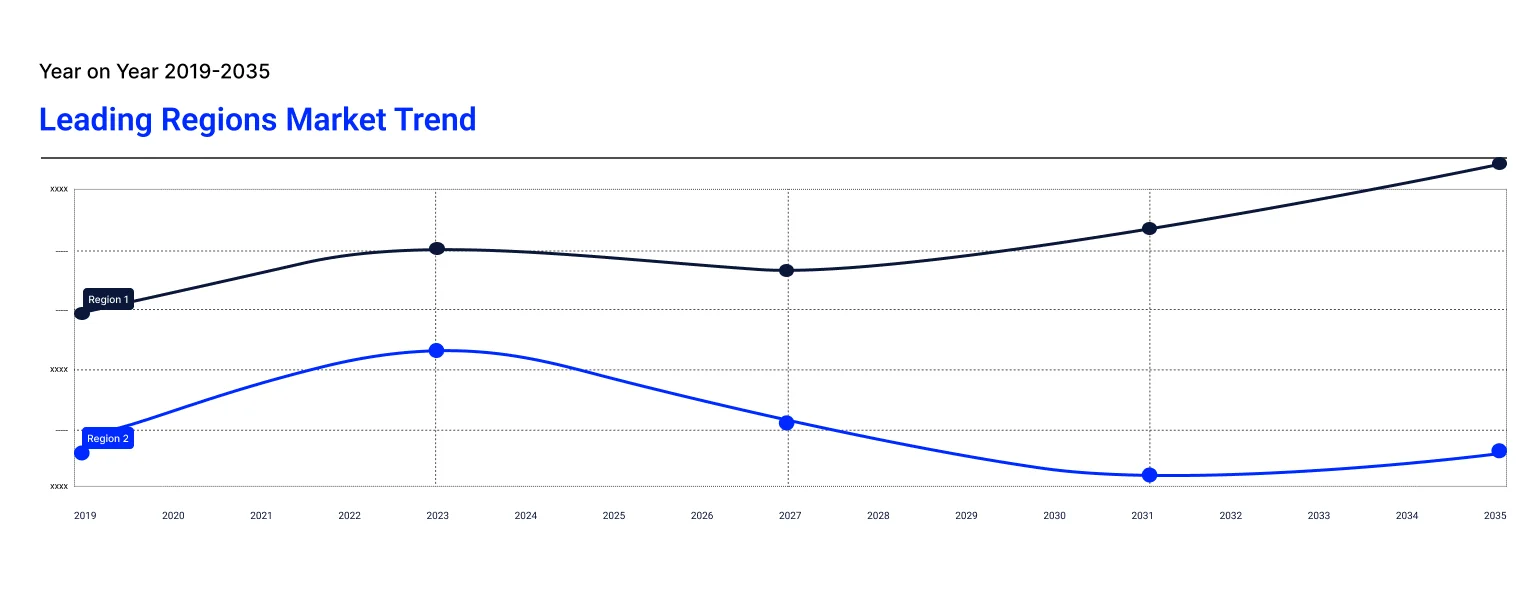
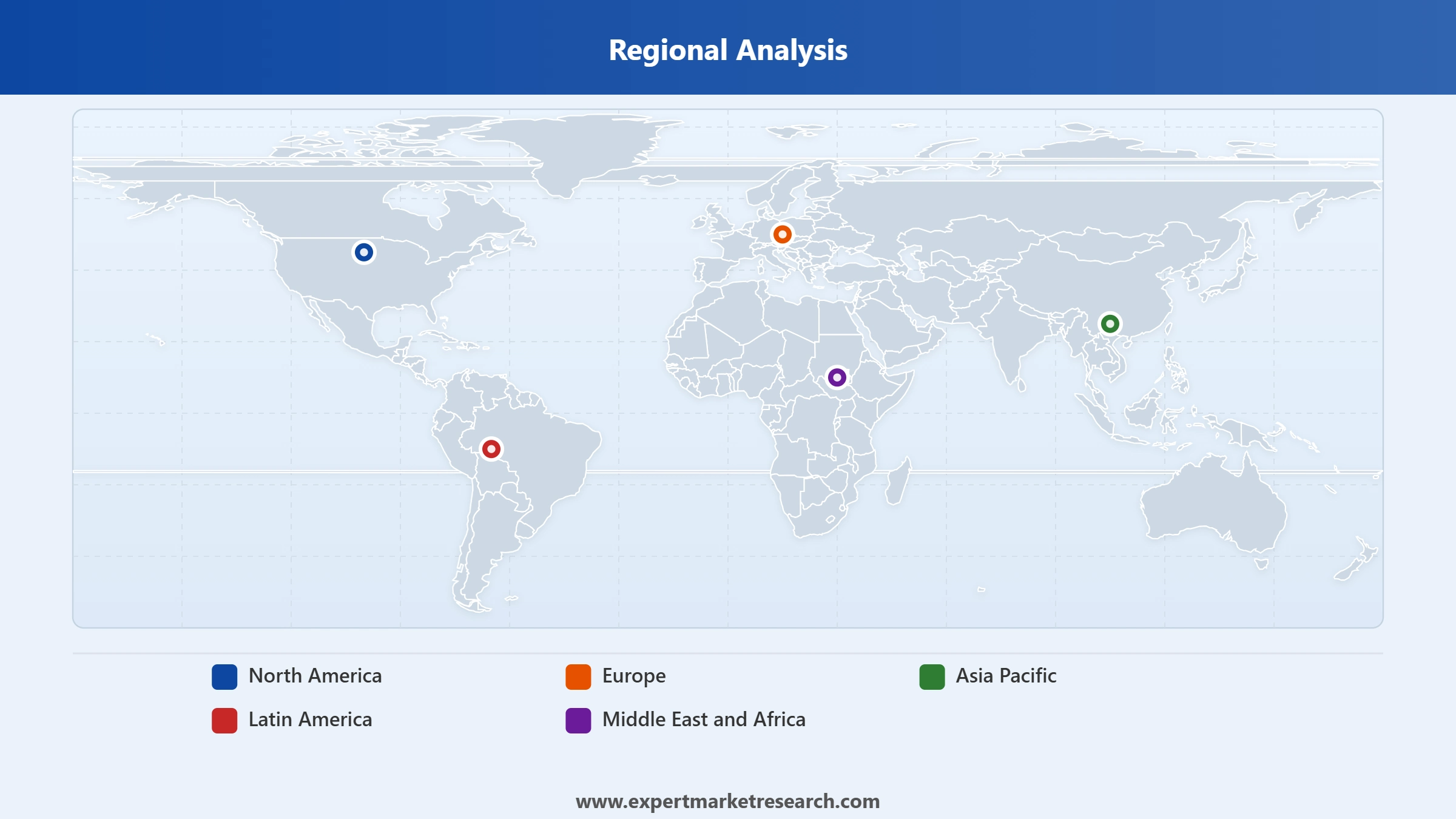
Key Insight: North America dominates the advanced composites market, supported by strong aerospace and defense demand, established manufacturing infrastructure, and the presence of leading composite material suppliers. Asia Pacific is the fastest-growing region, driven by rapid industrialization, expanding automotive production, and growing renewable energy investment across China, Japan, and India. Europe remains a significant market supported by strong aerospace manufacturing presence and stringent emission standards, while Latin America and the Middle East and Africa continue to see steadier growth tied to expanding industrial and infrastructure investment.
Read more about this report - REQUEST FREE SAMPLE COPY IN PDF
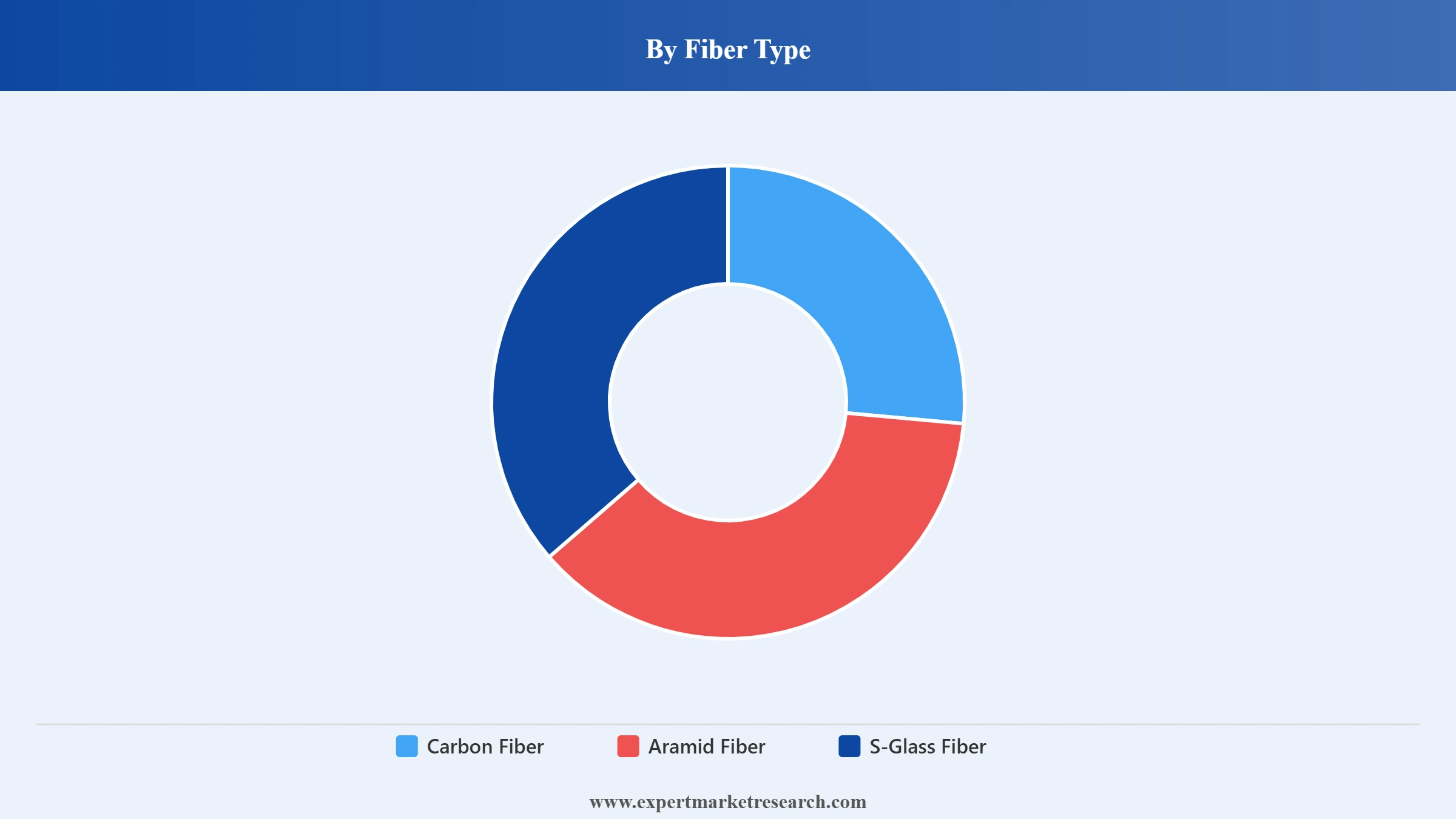
By fiber type, carbon fiber dominates the market due to its superior mechanical properties and lightweight advantages
Carbon fiber accounts for the largest share of the advanced composites market by fiber type, reflecting its superior mechanical properties, lightweight characteristics, and extensive adoption across aerospace, automotive, and wind energy applications. In December 2025, for example, Mitsubishi Chemical announced plans to strengthen its high-performance carbon fiber production capacity across existing facilities in Japan and the United States, responding to steadily expanding demand for high-end applications in the sports and leisure, aerospace, and hypercar sectors.
Read more about this report - REQUEST FREE SAMPLE COPY IN PDF
Carbon fiber is also the fastest-growing fiber type, forecast to grow at a CAGR of 9.3% over the forecast period, driven by rising aerospace fleet renewal cycles, increasing adoption of lightweight structural components across automotive and industrial applications, and continued capacity expansion among fiber producers. Growing emphasis on fuel efficiency and electrified platforms is reinforcing demand, as automakers and aircraft manufacturers prioritize weight reduction to improve performance, extend operational range, and meet stringent regulatory and sustainability requirements across end markets.
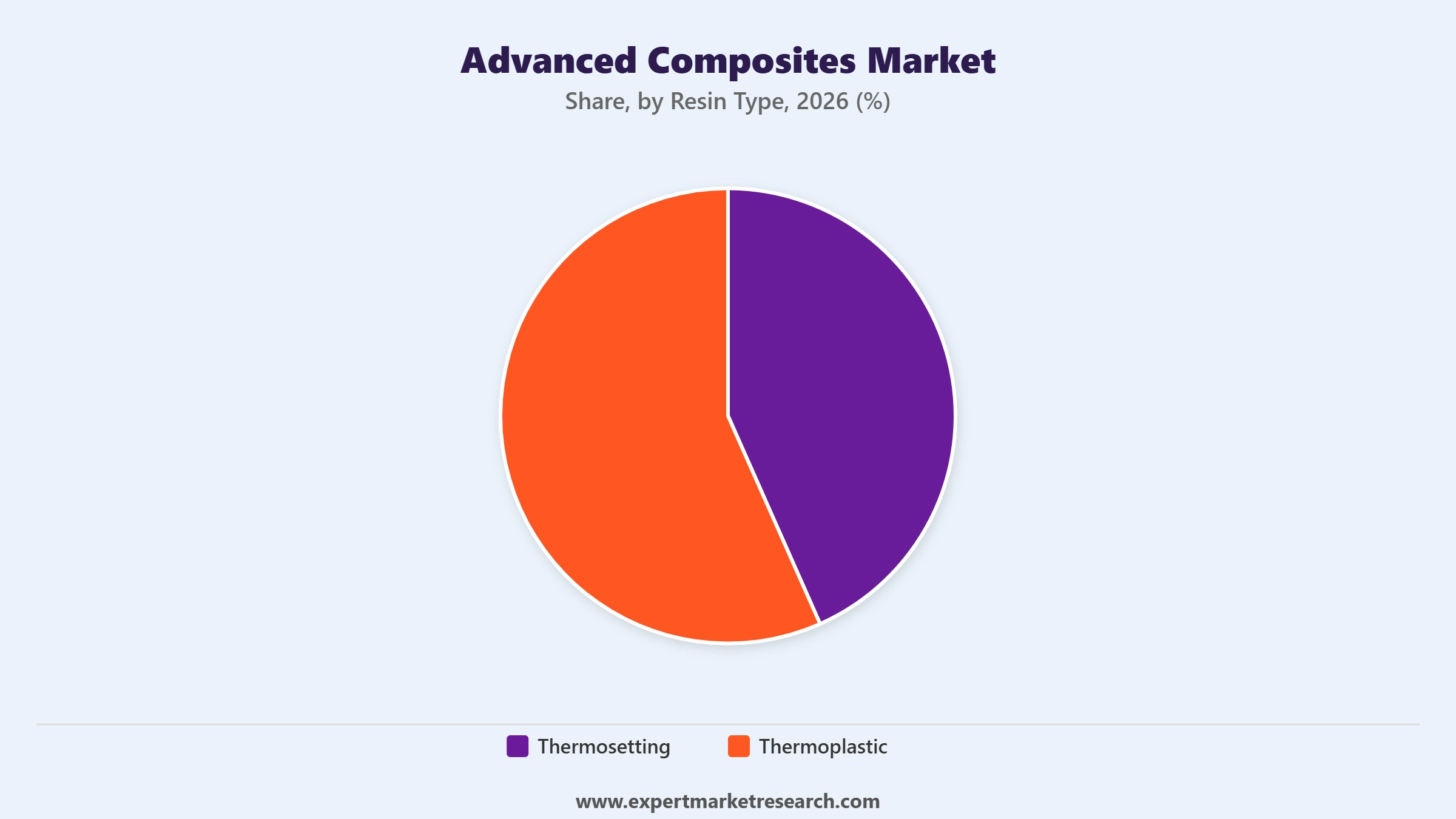
By resin type, thermosetting composites lead the market due to their broad application in structural components
Thermosetting composites account for the largest share of the market by resin type, owing to their broad application in structural components across aerospace and automotive industries where high heat and moisture resistance are required for long-term performance. Their superior dimensional stability, chemical resistance, and ability to withstand repeated thermal cycling make them the preferred choice for load-bearing and safety-critical parts. Continued investment in resin formulation research is further strengthening thermosetting composites' position, as manufacturers work to improve processing speed and reduce cycle times without compromising the mechanical and thermal performance that structural applications demand across major end-use industries.
Read more about this report - REQUEST FREE SAMPLE COPY IN PDF
Thermoplastic composites are a fast-growing resin type as manufacturers increasingly value their recyclability and rapid processing capabilities relative to traditional thermoset systems, supporting shorter production cycle times for high-volume applications. In April 2026, for example, ATC Manufacturing was awarded a $6.7 million U.S. Air Force contract, in partnership with Anduril Industries and Toray Advanced Composites, to demonstrate large-scale, stamp-formed continuous fiber thermoplastic composite structures for next-generation defense aircraft.
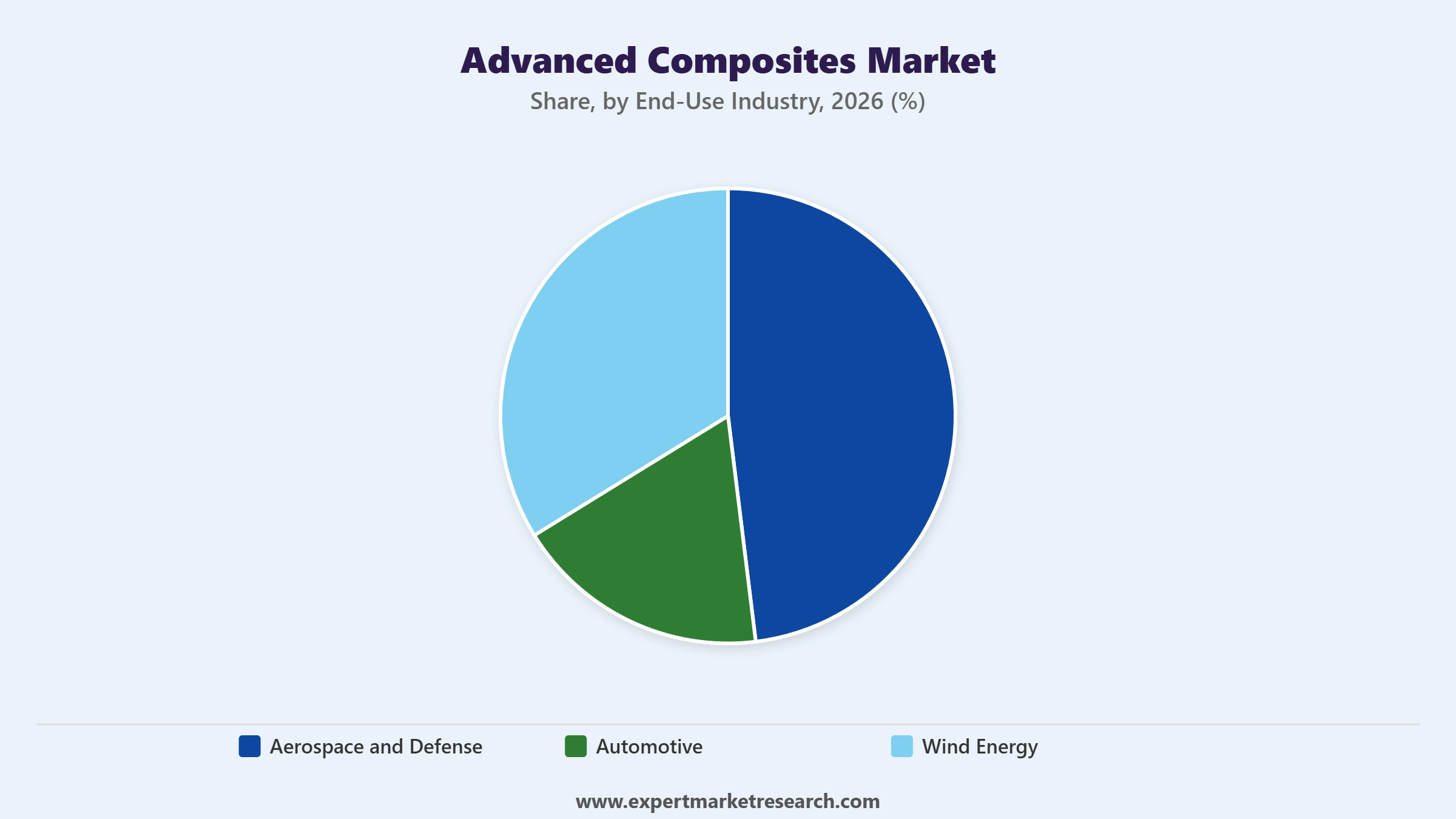
By end-use industry, aerospace and defense leads the market due to extensive composite integration in aircraft manufacturing
Aerospace and defense accounts for the largest share of the market by end-use industry, driven by extensive composite integration in aircraft manufacturing and sustained demand for lightweight, high-strength structural materials across commercial and military platforms. In July 2026, for example, Qarbon Aerospace was awarded a contract to produce composite structures supporting sustainment of the U.S. Air Force's F-22 Raptor fleet, whose airframe is approximately 25% composite by weight and includes more than 350 individual composite parts contributing to its low-observable, radar-absorbent performance.
Read more about this report - REQUEST FREE SAMPLE COPY IN PDF
Automotive is a fast-growing end-use industry as manufacturers pursue lightweighting strategies to improve fuel efficiency and support electrified vehicle platforms, extending composite adoption beyond premium and performance vehicle segments into broader production models. Rising battery weight in electric vehicles is intensifying pressure on automakers to offset mass elsewhere in the vehicle structure, making composite body panels, underbody components, and structural reinforcements increasingly attractive. Continued cost reduction in composite processing and growing availability of high-volume manufacturing techniques are further supporting this shift, enabling broader adoption across mainstream and mid-market vehicle platforms.
North America dominates the market due to strong aerospace and defense demand and established manufacturing infrastructure
North America dominates the Advanced Composites market, supported by strong aerospace and defense demand, established manufacturing infrastructure, and the presence of leading composite material suppliers. Continued fleet renewal cycles among major commercial aircraft manufacturers reinforce the region's leading position. The region's deep base of skilled engineering talent, extensive research and development investment, and long-standing relationships between fiber producers and aerospace primes further support sustained composite demand. Ongoing modernization of defense platforms and ramped-up production rates across commercial aircraft programs continue to anchor North America's position as the largest consumer of advanced composite materials worldwide.
Read more about this report - REQUEST FREE SAMPLE COPY IN PDF
Asia Pacific is the fastest-growing region, driven by rapid industrialization, expanding automotive production, and growing renewable energy investment across China, Japan, and India. In June 2026, for example, Reliance Industries confirmed at its 49th Annual General Meeting that its carbon fiber facility at Hazira, India is poised to become one of the world's largest and most advanced, supporting applications spanning wind energy, hydrogen, and defense. Rising domestic manufacturing capacity across the region continues to support above-average growth relative to more mature Western markets.
|
CAGR 2026-2035 - Market by |
Region |
|
North America |
6.5% |
|
Europe |
6.0% |
|
Asia Pacific |
13% |
|
Latin America |
9% |
|
Middle East and Africa |
8% |
The global market features a moderately consolidated competitive structure led by established fiber and resin manufacturers with deep materials science expertise. advanced composites companies like Toray Industries, Hexcel, and Solvay are competing primarily through carbon fiber production scale and aerospace OEM relationships, while Teijin and other manufacturers focus on specialty fiber applications and regional manufacturing capacity.
Leading advanced composites market players are focusing on capacity expansion, portfolio streamlining toward higher-margin applications, and bio-based material innovation to strengthen their competitive position. Increasing emphasis on automated manufacturing processes and long-term aerospace OEM supply agreements is also enabling suppliers to diversify their customer base while supporting long-term market growth.
Toray Industries, headquartered in Tokyo, Japan, and founded in 1926, is a global leader in advanced fiber and materials technology, producing carbon fiber, resins, and composite products used extensively across aerospace, automotive, and industrial applications. The company's Toray Advanced Composites subsidiary maintains manufacturing facilities across North America, Europe, and Asia supporting continuous fiber-reinforced thermoplastic composite production.
Hexcel, headquartered in Stamford, Connecticut, and founded in 1948, is the world's largest producer of aerospace carbon fiber and the leading supplier of carbon fiber to U.S. military programs. The company's portfolio spans high-performance carbon fibers, prepregs, resins, film adhesives, and honeycomb core products serving commercial aerospace, defense, and industrial customers.
Solvay, headquartered in Brussels, Belgium, and founded in 1863, is a global materials and chemicals company whose advanced composite materials business now operates under the Syensqo brand following a 2023 spin-off. The division supplies high-performance epoxy prepregs, adhesives, and composite technologies to aerospace customers including Airbus and Safran.
Teijin, headquartered in Tokyo, Japan, and founded in 1918, is a diversified materials and chemicals company supplying carbon fiber, aramid fiber, and composite products across aerospace, automotive, and industrial applications. The company's Tenax carbon fiber brand is widely used in structural composite applications requiring high strength-to-weight performance.
Other key players in the market report include SGL Carbon SE, Owens Corning, Mitsubishi Chemical Group Corporation, Gurit Holding AG, and Kordsa Teknik Tekstil A.S., among others.
*Please note that this is only a partial list; the complete list of key players is available in the full report. Additionally, the list of key players can be customized to better suit your needs.*
Explore the latest trends shaping the advanced composites market 2026-2035 with our in-depth report. Gain strategic insights, future forecasts, and key market developments that can help you stay competitive. Download a free sample report or contact our team for customized consultation on the market trends 2026.


Upto 15% Off
USD
$2499 $2249
$3999 $3599
$4999 $4249
$5999 $5099


*While we strive to always give you current and accurate information, the numbers depicted on the website are indicative and may differ from the actual numbers in the main report. At Expert Market Research, we aim to bring you the latest insights and trends in the market. Using our analyses and forecasts, stakeholders can understand the market dynamics, navigate challenges, and capitalize on opportunities to make data-driven strategic decisions.*
In 2025, the advanced composites market reached an approximate value of USD 45.39 Billion.
The market is projected to grow at a CAGR of 8.45% between 2026 and 2035.
The key players in the market include Toray Industries, Inc., Hexcel Corporation, Solvay S.A., Teijin Limited, SGL Carbon SE, Owens Corning, Mitsubishi Chemical Group Corporation, Gurit Holding AG, and Kordsa Teknik Tekstil A.S., among others.
Leading suppliers are pursuing capacity expansion, portfolio streamlining toward aerospace applications, and bio-based material innovation to strengthen market position.
Key challenges include complex manufacturing processes requiring highly skilled labor, high production costs, and quality variability across the supply chain.
Explore our key highlights of the report and gain a concise overview of key findings, trends, and actionable insights that will empower your strategic decisions.
|
Report Features |
Details |
|
Base Year |
2025 |
|
Historical Period |
2019-2025 |
|
Forecast Period |
2026-2035 |
|
Scope of the Report |
Historical and Forecast Trends, Industry Drivers and Constraints, Historical and Forecast Market Analysis by Segment:
|
|
Breakup by Fiber Type |
|
|
Breakup by Resin Type |
|
|
Breakup by End-Use Industry |
|
|
Breakup by Region |
|
|
Market Dynamics |
|
|
Competitive Landscape |
|
|
Companies Covered |
|
Datasheet
One User
USD 2,499
USD 2,249
tax inclusive*
Single User License
One User
USD 3,999
USD 3,599
tax inclusive*
Five User License
Five User
USD 4,999
USD 4,249
tax inclusive*
Corporate License
Unlimited Users
USD 5,999
USD 5,099
tax inclusive*
*Please note that the prices mentioned below are starting prices for each bundle type. Kindly contact our team for further details.*
Flash Bundle
Small Business Bundle
Growth Bundle
Enterprise Bundle
*Please note that the prices mentioned below are starting prices for each bundle type. Kindly contact our team for further details.*
Flash Bundle
Number of Reports: 3
20%
tax inclusive*
Small Business Bundle
Number of Reports: 5
25%
tax inclusive*
Growth Bundle
Number of Reports: 8
30%
tax inclusive*
Enterprise Bundle
Number of Reports: 10
35%
tax inclusive*
How To Order

Select License Type
Choose the right license for your needs and access rights.

Click on ‘Buy Now’
Add the report to your cart with one click and proceed to register.

Select Mode of Payment
Choose a payment option for a secure checkout. You will be redirected accordingly.
Strategic Solutions for Informed Decision-Making
Gain insights to stay ahead and seize opportunities.

Get insights & trends for a competitive edge.

Track prices with detailed trend reports.

Analyse trade data for supply chain insights.

Leverage cost reports for smart savings

Enhance supply chain with partnerships.

Connect For More Information
Our expert team of analysts will offer full support and resolve any queries regarding the report, before and after the purchase.
Our expert team of analysts will offer full support and resolve any queries regarding the report, before and after the purchase.
We employ meticulous research methods, blending advanced analytics and expert insights to deliver accurate, actionable industry intelligence, staying ahead of competitors.
Our skilled analysts offer unparalleled competitive advantage with detailed insights on current and emerging markets, ensuring your strategic edge.
We offer an in-depth yet simplified presentation of industry insights and analysis to meet your specific requirements effectively.




