

Consumer Insights
Uncover trends and behaviors shaping consumer choices today
Procurement Insights
Optimize your sourcing strategy with key market data
Industry Stats
Stay ahead with the latest trends and market analysis.
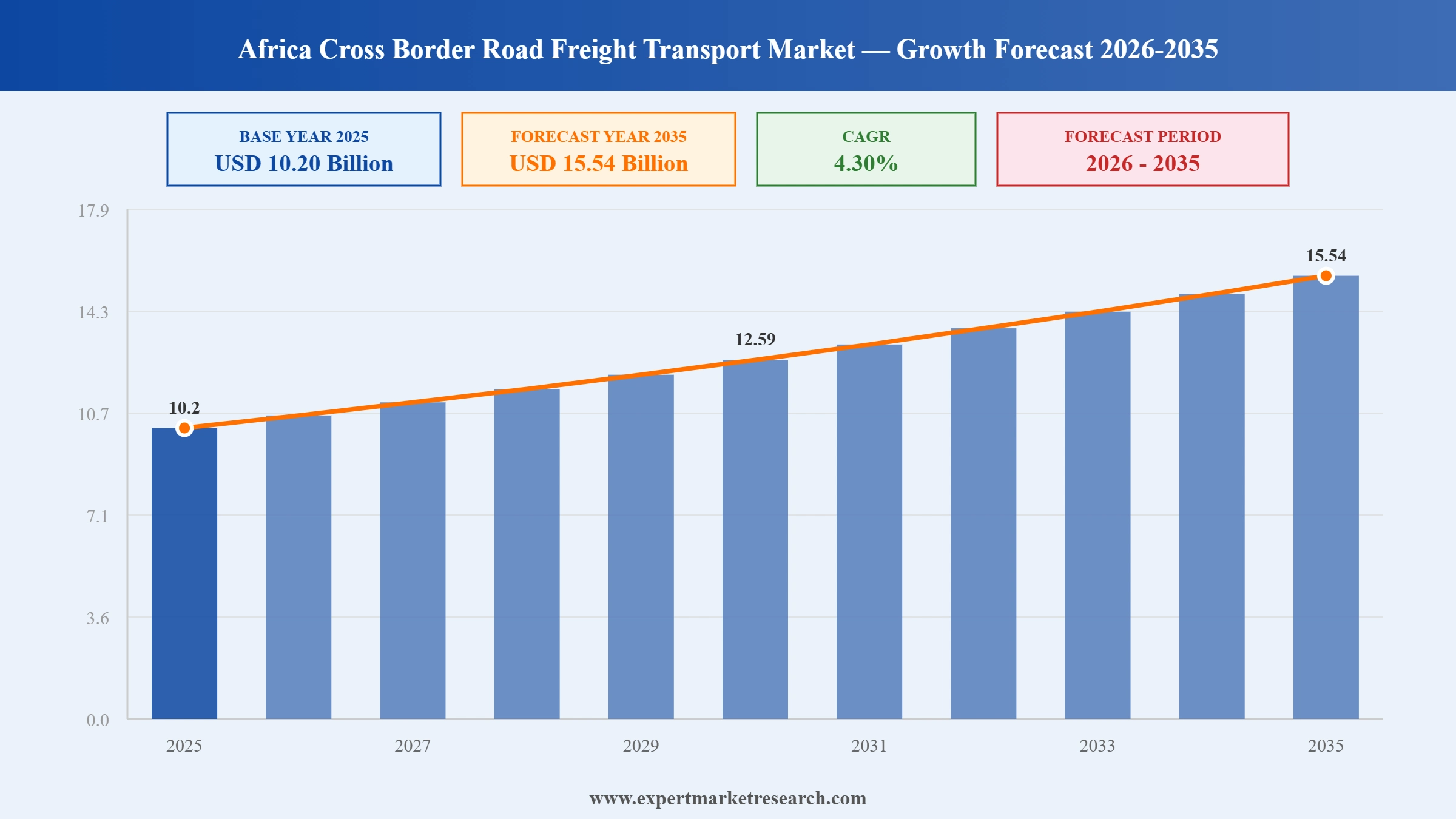
The Africa cross border road freight transport market attained a value of USD 10.20 Billion in 2025 and is projected to expand at a CAGR of 4.30% through 2035. The market is further expected to reach USD 15.54 Billion by 2035. Improving transportation infrastructure and surging intra-regional trade under the African Continental Free Trade Area are helping carriers differentiate their service portfolios and broaden cross-border corridors. Growing emphasis on digital customs clearance, corridor development, and consolidated regional networks is further encouraging established operators to expand capacity across South Africa, Egypt, Nigeria, and Algeria.
Africa cross border road freight transport refers to the movement of freight between different countries using light, medium, and heavy motor vehicles under the regulations and laws of individual African nations. Roads carry roughly 80 percent of all goods and 90 percent of passengers moved across the continent, making the sector the backbone of intra-African trade. Rising intra-regional trade under the African Continental Free Trade Area, together with improving transportation infrastructure, continues to widen the buyer base for the Africa cross border road freight transport market, even though only around 18 percent of total African trade currently occurs within the continent itself.
Demand is concentrating around carriers able to combine reliable cross-border haulage with digital visibility and customs compliance capability. In June 2026, the African Export-Import Bank published its Trade and Development Finance Brief on Africa's trade and investment landscape, highlighting that targeted infrastructure investment can support industrialisation, strengthen regional specialisation, and improve the continent's competitiveness as an investment destination. This regulation and finance driven positioning is converting rising demand for compliance-ready freight directly into expanded regional network value across the market.
Carriers across the market are converging on a common development direction, widening from standalone haulage toward integrated digital customs and multimodal corridor services. Operators are increasingly pairing road fleets with rail-linked corridor access and paperless clearance systems, allowing shippers to move cargo through a single provider rather than coordinating separately across border posts, customs brokers, and multiple hauliers. This consolidated approach is reshaping carrier selection criteria across the Africa cross border road freight transport market, favouring providers who can demonstrate digital compliance capability and multimodal reach over those offering only standalone road haulage.
Read more about this report - REQUEST FREE SAMPLE COPY IN PDF
Dangote Group signed an agreement in Beijing for over 1,000 compressed natural gas tractors and semi-trailers from BAIC FOTON, expanding its fleet across Nigeria in February 2026, building on an earlier order of roughly 4,000 CNG trucks with local assembly support. Manufacturers across the Africa cross border road freight transport market can use large fleet orders like this to lower fuel costs across the wider cross-border freight market.
Kenya Revenue Authority launched the eCUSTOMS app at the Busia One Stop Border Post on the Kenya-Uganda border in November 2025, with TradeMark Africa and the British High Commission, making customs declarations paperless for traders and transporters. Carriers across the Africa cross border road freight transport market can use such digital clearance tools to cut dwell times at busy border crossings across the wider East African region.
Ghanaian entrepreneurs Abubakar Sadick Fuseini and Suleiman Abubakar Sadique launched Swiftway in June 2025, a digital freight forwarding platform enabling Accra based SME importers to ship goods internationally without navigating brokers or hidden charges. Digital platforms across the Africa cross border road freight transport market of this kind can widen access to formal freight services for smaller shippers previously priced out of the wider market by cost.
Kuehne and Nagel acquired Morgan Cargo in February 2025, a South African perishables and reefer logistics specialist, adding 40,000 tonnes of annual airlift capacity and 20,000 TEU of refrigerated sea freight capacity across routes linking South Africa, the United Kingdom, and Kenya. Carriers can use bolt-on acquisitions like this to add cold-chain capacity faster than building it internally from scratch.
Corridor rehabilitation projects across the Africa cross border road freight transport market linking landlocked mineral producing regions to coastal ports are attracting large-scale development financing, as governments seek to reduce reliance on long-haul road transport for bulk cargo. This is reshaping network investment, prioritising rail-linked dry ports over pure road haulage expansion. In July 2026, the Lobito Corridor Railway Project reached financial close on 753 million dollars in financing from the US International Development Finance Corporation, supporting rehabilitation of the Benguela Railway linking Angola to the DRC border region.
US and international logistics-technology firms across the Africa cross border road freight transport market are increasingly acquiring controlling stakes in established local African logistics startups rather than building distribution networks from scratch, seeking immediate access to local operating knowledge. This is reshaping market entry strategy, favouring acquisition of local infrastructure over slower organic expansion. In September 2026, US logistics-tech company Pigee agreed to acquire a controlling 55 percent stake in Nigerian logistics startup ShipAfrica in a staged transaction, gaining an established operating base in West Africa's largest market and economy.
Pan-African logistics startups across the Africa cross border road freight transport market are increasingly acquiring competing or complementary regional operators to combine digital booking platforms with physical freight infrastructure, rather than building both capabilities independently. This is reshaping competitive dynamics among digital-first freight platforms across the Africa cross border road freight transport market, favouring hybrid operators over pure software players. In October 2025, Senegalese logistics company Logidoo acquired Kamtar, a Toyota Tsusho backed Ivorian road freight platform connecting over 5,000 transport operators with businesses across Cote d'Ivoire and Senegal.
Private rail logistics companies across the Africa cross border road freight transport market are raising capital to enter recently liberalised national freight rail networks, seeking to complement road haulage capacity on high-volume corridors previously restricted to state monopolies. This is reshaping multimodal planning, as shippers gain rail alternatives for bulk cargo previously moved exclusively by road. In April 2026, UAE based African Rail Co. began raising approximately 170 million dollars to purchase locomotives and wagons for operations on South Africa's newly privatised freight rail network and corridors.
Global port operators are investing directly in dedicated cold storage infrastructure near major logistics hubs, addressing a structural shortage that leaves much of Africa's food storage capacity covering less than 30 percent of annual production. This is reshaping how port operators plan services, prioritising integrated cold chain infrastructure over standalone container handling. In September 2025, DP World announced a 29-million-dollar cold storage facility within Egypt's Elsewedy Industrial Development Park, adding 25,000 pallet positions for chilled and frozen agricultural exports.
The Expert Market Research's report titled "Africa Cross Border Road Freight Transport Market Report and Forecast 2026-2035" offers a detailed analysis of the market based on the following segments:
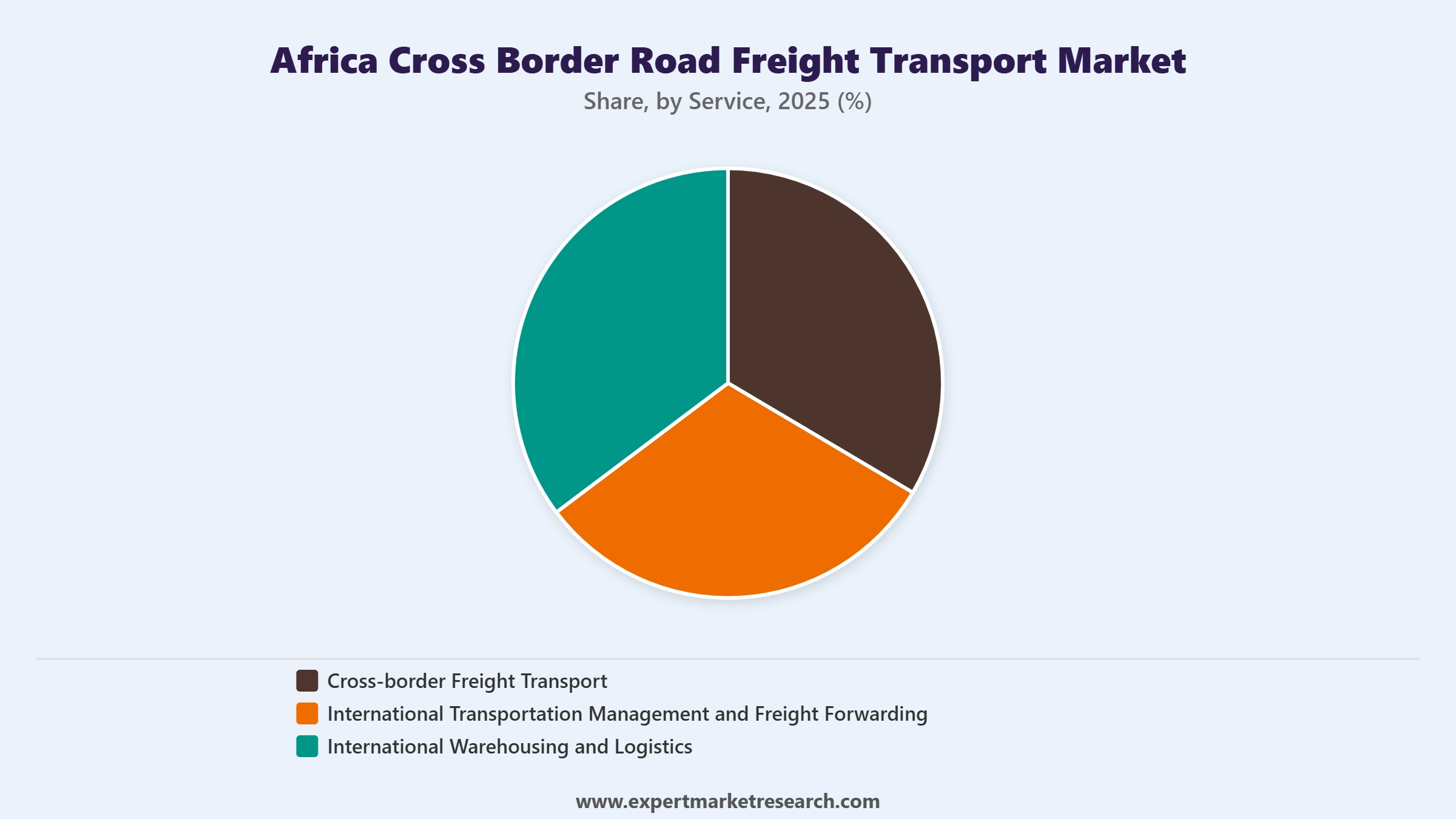
Market Breakup by Service
Key Insight: Cross-border freight transport dominates the Africa cross border road freight transport market as roads carry roughly 80 percent of all goods and 90 percent of passengers moved across the continent, making direct road haulage the default mode for most intra-African trade. International transportation management and freight forwarding is registering strong growth as forwarders increasingly bundle customs brokerage with haulage to simplify multi-country shipments. In June 2025, India's Abrao Group announced a joint venture with Rushabh Sealink to launch A&R Africa, a freight forwarding brand strengthening the India-Africa-Middle East trade corridor. International warehousing and logistics provide supporting infrastructure for both categories, as shippers increasingly require bonded storage and consolidation points near major border crossings.
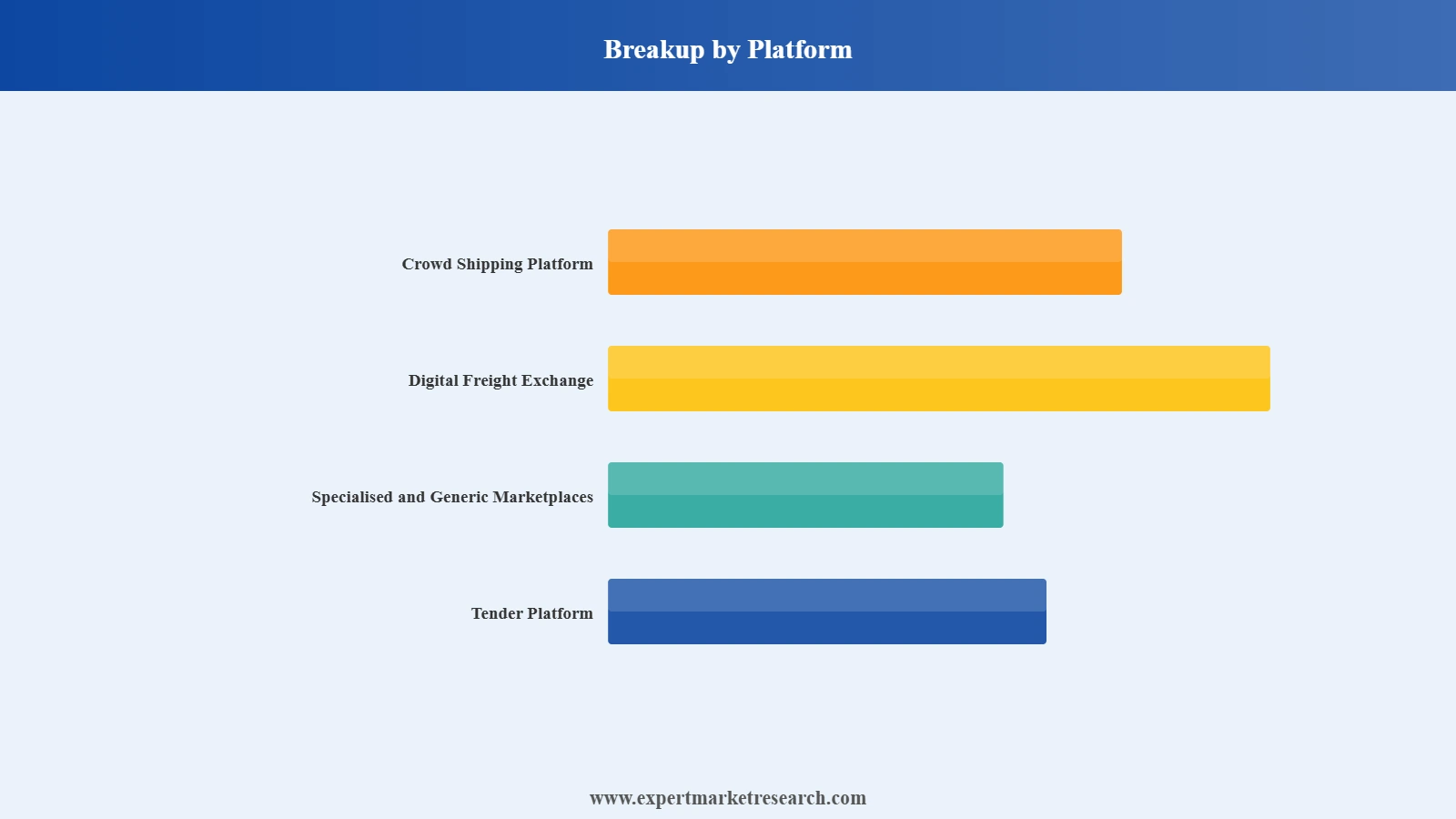
Market Breakup by Platform
Key Insight: Digital freight exchanges are the fastest-growing platform category across the Africa cross border road freight transport market as carriers race to cut border dwell times and reduce empty backhaul kilometres across major trade corridors. Specialised and generic marketplaces continue to account for meaningful volume as shippers match cargo with available capacity across fragmented regional trucking fleets, illustrated in July 2026 when Egypt's Fincart raised 2.8 million dollars to expand a platform aggregating more than 40 shipping companies into what it describes as Africa's largest integrated delivery network. Crowd shipping platforms remain a smaller but expanding category, particularly for last-mile and light cargo movements. Tender platforms support larger shippers running structured procurement processes for recurring freight lanes.
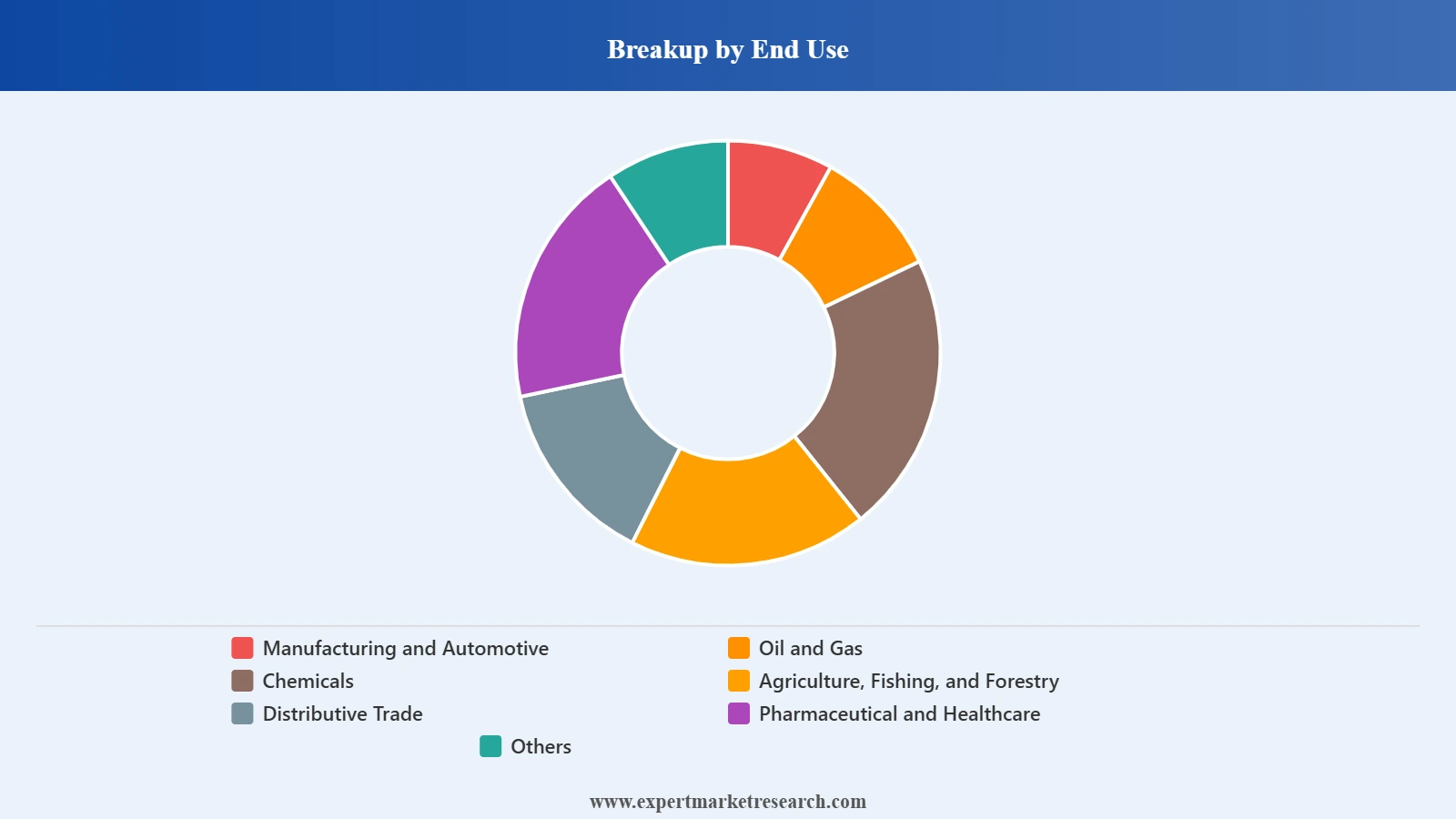
Market Breakup by End Use
Key Insight: Manufacturing and automotive is the dominant end use, as manufacturers and agri-food processors across the Africa cross border road freight transport market continue expanding their share of intra-African freight flows year over year. In June 2026, Ghana announced it will host a new Hyundai automotive assembly plant serving the West African market, expected to boost local vehicle production and lift demand for component and finished vehicle freight across the region. Distributive trade forms a substantial share of the market as retailers and wholesalers move consumer goods across regional corridors, while agriculture and forestry cargo depends on seasonal harvest cycles. Oil and gas and chemicals shipments require specialised handling, and pharmaceutical and healthcare cargo increasingly relies on temperature-controlled capacity.
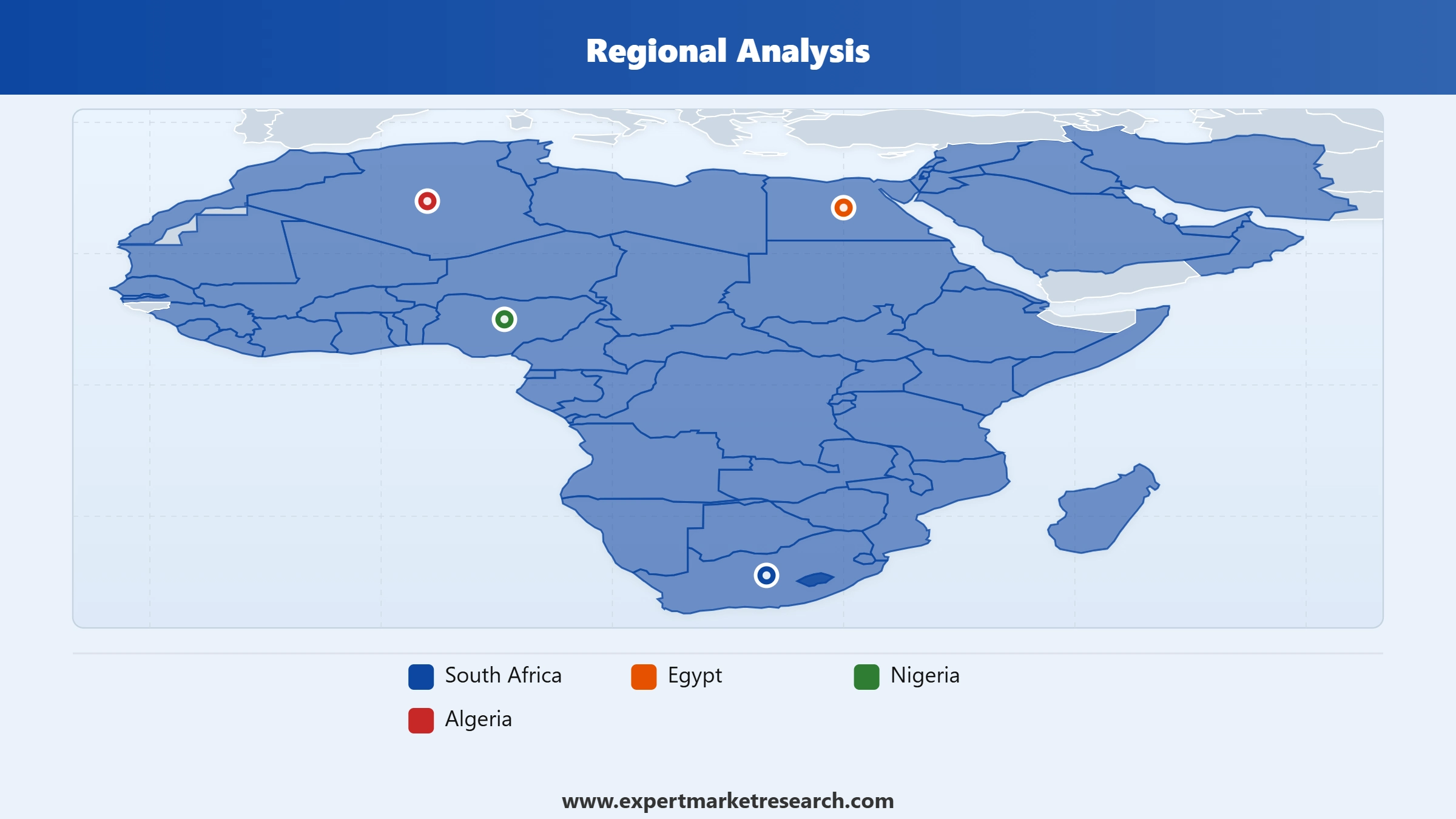
Market Breakup by Region
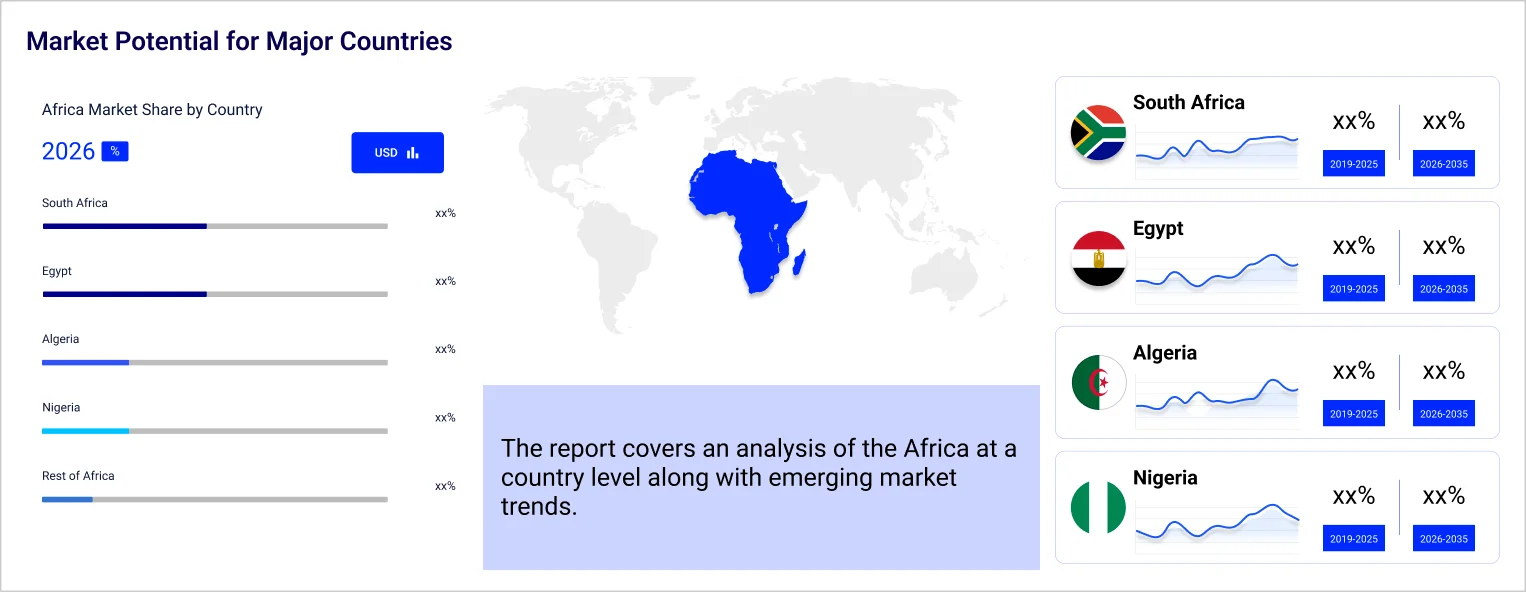
Key Insight: South Africa commands a substantial share of the Africa cross border road freight transport market, anchored by the Durban corridor and established routes into Botswana, Zimbabwe, and Mozambique. Egypt holds a significant share given its position as a Suez Canal hub connecting African and international trade routes, illustrated in November 2025 when AD Ports Group acquired a 28-million-dollar stake in Alexandria Container and Cargo Handling Company, deepening its investment in ports handling roughly 60 percent of Egypt's foreign trade. Nigeria is registering strong growth as rising logistics investment and manufacturing expansion lift demand for cross-border freight capacity. Algeria continues to develop its road freight infrastructure to support trade across North and West Africa, while other markets, including Kenya and Morocco, round out demand across the remaining corridors.
Read more about this report - REQUEST FREE SAMPLE COPY IN PDF
By service, cross-border freight transport dominates the market owing to roads carrying the vast majority of continental goods movement
Cross-border freight transport accounts for the largest service share of the Africa cross border road freight transport market owing to roads carrying roughly 80 percent of all goods and 90 percent of passengers moved across the entire African continent. In December 2025, South African rail operator Traxtion confirmed a 3.4 billion rand rolling stock investment, the largest private freight rail commitment in the country's history, comprising 46 locomotives and new wagons to expand freight capacity and ease pressure on congested road corridors nationwide.
Read more about this report - REQUEST FREE SAMPLE COPY IN PDF
International transportation management and freight forwarding is growing steadily across the Africa cross border road freight transport market as forwarders increasingly bundle customs brokerage with haulage to simplify multi-country shipments for manufacturers and distributors across the continent. Providers are responding by expanding digital documentation capability, since shippers increasingly value a single point of contact managing customs clearance across multiple border crossings rather than coordinating separate brokers at each national border along the same route, reducing paperwork delays and overall shipment cost.
By platform, digital freight exchange is the fastest-growing category as carriers race to cut border dwell times and empty backhaul kilometres
Tender platforms across the Africa cross border road freight transport market serve larger shippers running structured procurement processes for recurring freight lanes, allowing bulk exporters to secure capacity commitments ahead of seasonal harvest and production cycles. Providers serving this category continue to prioritise transparent bidding and capacity forecasting tools, since large exporters value predictable rate visibility across multi-month shipping programmes tied to agricultural export seasons across the wider West African trading region and beyond into neighbouring regional export markets.
Read more about this report - REQUEST FREE SAMPLE COPY IN PDF
Digital freight exchange is the fastest-growing platform category across the Africa cross border road freight transport market as carriers race to cut border dwell times and empty backhaul kilometres across major continental trade corridors. In March 2025, Kobo360 founder Obi Ozor bought back the Nigerian digital freight marketplace, assuming roughly 10 billion naira in debt and launching a revival plan focused on the platform's core trucking corridors after a period of major downsizing and significant staff reductions across the company.
By end use, manufacturing and automotive dominates the market owing to extensive cross-border component and finished goods distribution
Manufacturing and automotive dominates the end use segment, with manufacturers and agri-food processors across the Africa cross border road freight transport market together projected to account for roughly half of intra-African freight flows by the end of the forecast year, up from an estimated 46 percent the previous year. Shippers in this category continue to prioritise fleet capacity and route reliability, since automotive component and finished vehicle distribution depends heavily on tight production schedules across South Africa, Egypt, and Nigeria's growing assembly hubs and supplier networks.
Read more about this report - REQUEST FREE SAMPLE COPY IN PDF
Agriculture, fishing, and forestry cargo depends heavily on seasonal harvest cycles and cold-chain reliability across the wider regional market. In September 2025, Nigerian solar cold storage company Koolboks secured 11 million dollars in Series A funding and announced plans for a local assembly plant, aiming to cut import duties and shipping costs by roughly 20 percent for perishable exporters relying on cross-border cold-chain capacity and reliability.
Read more about this report - REQUEST FREE SAMPLE COPY IN PDF
South Africa leads the market through established corridor infrastructure and sustained public investment in transport and logistics
South Africa commands the largest share of the Africa cross border road freight transport market, anchored by the Durban corridor and routes connecting Johannesburg to Botswana, Zimbabwe, and Mozambique. In August 2025, South Africa's Minister of Transport granted 11 private train operating companies’ conditional access to 41 routes across six key rail corridors, a reform expected to unlock up to 100 billion rand in private rolling stock investment and add an estimated 20 million tonnes of freight annually to the network.
Nigeria and Egypt are registering strong growth in the Africa cross border road freight transport market, with Nigeria attracting 676 million dollars in logistics and transport startup investment between 2020 and 2025, the highest of any African market, while Egypt drew 409 million dollars over the same period. The 1,028-kilometre Abidjan to Lagos corridor highway has attracted over 15 billion dollars in commitments, reflecting sustained investor confidence in West African trade infrastructure and regional connectivity.
The Africa cross border road freight transport companies are becoming increasingly consolidated as major Africa cross border road freight transport companies invest in fleet expansion, digital customs capability, and corridor infrastructure to defend their network positions. Africa cross border road freight transport players are prioritising temperature-controlled capacity, paperless clearance systems, and multimodal integration to differentiate service offerings in a market where basic haulage capability is increasingly commoditised. Strategic emphasis on regional network breadth is allowing companies to serve growing East, West, and Southern African trade corridors while managing border compliance and transit reliability.
Major Africa cross border road freight transport market players are also focusing on sustainability credentials, pursuing alternative fuel fleet transitions and emissions reduction initiatives as manufacturers and mining exporters increasingly weigh carbon footprint alongside cost and reliability. Opportunities are emerging in digital freight exchange platforms and tender-based procurement tools, as well as in expanding cold-chain capacity across pharmaceutical and agricultural export corridors. Companies that successfully combine established corridor relationships with digital compliance capability and reliable regional fleet coverage are expected to strengthen their competitive position over the coming years.
Founded in 1976 and headquartered in Hedehusene, Denmark, supports the market through its Road division, one of the largest road freight networks operating across Europe and extending into African trade lanes through its global forwarding infrastructure. The company's three-division structure spanning Road, Air and Sea, and Solutions allows it to combine road haulage with warehousing and multimodal transfer capability for shippers moving cargo between African markets and global destinations. DSV continues to expand its integrated network following recent large-scale acquisitions that broadened its global freight forwarding footprint.
Founded in 1995 and headquartered in Bonn, Germany, trading through its DHL brand, supports the market through DHL Global Forwarding and DHL Supply Chain, which operate extensive freight forwarding and contract logistics networks across the continent. The company maintains a broad presence spanning express delivery, freight transportation, and supply chain management serving customers across manufacturing, healthcare, and consumer sectors. Deutsche Post continues to expand its African logistics infrastructure as part of its broader global network strategy.
Founded in 2007 and headquartered in Marseille, France, supports the market through its freight management and contract logistics services, operating as part of the CMA CGM Group since 2019. The company combines ocean, air, and road freight capability with warehousing solutions, serving manufacturing, automotive, and retail customers across international trade lanes. CEVA's integration within the broader CMA CGM shipping network provides it with combined ocean-to-road visibility for shippers moving cargo through African ports and inland corridors.
Founded in 1988 and headquartered in Johannesburg, South Africa, supports the market through its freight management and distribution operations, part of a diversified services, trading, and distribution conglomerate listed on the Johannesburg Stock Exchange. The group's extensive South African commercial footprint across automotive, industrial, and distribution sectors gives it established relationships with shippers moving freight across Southern African corridors. Bidvest continues to leverage its regional scale to support cross-border logistics for its diversified customer base.
Other key players in the market include Unitrans Supply Chain Solutions (Pty) Ltd, Cargo Carriers (Pty) Limited, Value Logistics Limited, APM Terminals BV, Biddulphs International, DPD Laser Express Logistics (Pty) Ltd, and Super Group Ltd., among others.
*Please note that this is only a partial list; the complete list of key players is available in the full report. Additionally, the list of key players can be customized to better suit your needs.*
Unlock the latest insights with our Africa cross border road freight transport market trends 2026 report. Discover regional growth patterns, platform adoption, and key industry players. Stay ahead of competition with trusted data and expert analysis. Download your free sample report today.


Upto 15% Off
USD
$2499 $2249
$3999 $3599
$4999 $4249
$5999 $5099


*While we strive to always give you current and accurate information, the numbers depicted on the website are indicative and may differ from the actual numbers in the main report. At Expert Market Research, we aim to bring you the latest insights and trends in the market. Using our analyses and forecasts, stakeholders can understand the market dynamics, navigate challenges, and capitalize on opportunities to make data-driven strategic decisions.*
The market is estimated to grow at a CAGR of 4.30% between 2026 and 2035.
Expanding digital customs and freight exchange capability, investing in alternative fuel fleets, pursuing temperature-controlled acquisitions, strengthening corridor and multimodal partnerships, and broadening SME focused digital forwarding platforms across emerging trade lanes.
The key trends in the market include reductions in mobility constraints for road transport operators and the rising FDI in the manufacturing sector.
The major countries included in the market report are South Africa, Egypt, Nigeria, and Algeria, among others.
Cross-border freight transport, international transportation management and freight forwarding, and international warehousing and logistics are the different services offered by cross border road freight transport.
Crowd shipping platform, digital freight exchange, specialised and generic marketplaces, and tender platform are the major platforms of cross border road freight transport.
The various end uses of cross border road freight transport are manufacturing and automotive, oil and gas, chemicals, agriculture, fishing, and forestry, distributive trade, and pharmaceutical and healthcare, among others.
DSV Panalpina A/S, Unitrans Supply Chain Solutions (Pty) Ltd, Deutsche Post AG, Cargo Carriers (Pty) Limited, CEVA Logistics, Value Logistics Limited, APM Terminals BV, Bidvest Group Limited, Biddulphs International, DPD Laser Express Logistics (Pty) Ltd, and Super Group Ltd., among others, are the key market players.
In 2025, the Africa cross border road freight transport market reached an approximate value of USD 10.20 Billion.
The market is anticipated to maintain steady growth and attain approximately USD 15.54 Billion by 2035.
Companies face fragmented border regulations, inconsistent customs enforcement, volatile fuel costs, and the capital intensity of expanding digital compliance and cold-chain capacity while maintaining reliable transit times across diverse national jurisdictions.
Explore our key highlights of the report and gain a concise overview of key findings, trends, and actionable insights that will empower your strategic decisions.
| REPORT FEATURES | DETAILS |
| Base Year | 2025 |
| Historical Period | 2019-2025 |
| Forecast Period | 2026-2035 |
| Scope of the Report |
Historical and Forecast Trends, Industry Drivers and Constraints, Historical and Forecast Market Analysis by Segment:
|
| Breakup by Service |
|
| Breakup by Platform |
|
| Breakup by End Use |
|
| Breakup by Region |
|
| Market Dynamics |
|
| Competitive Landscape |
|
| Companies Covered |
|
Datasheet
One User
USD 2,499
USD 2,249
tax inclusive*
Single User License
One User
USD 3,999
USD 3,599
tax inclusive*
Five User License
Five User
USD 4,999
USD 4,249
tax inclusive*
Corporate License
Unlimited Users
USD 5,999
USD 5,099
tax inclusive*
*Please note that the prices mentioned below are starting prices for each bundle type. Kindly contact our team for further details.*
Flash Bundle
Small Business Bundle
Growth Bundle
Enterprise Bundle
*Please note that the prices mentioned below are starting prices for each bundle type. Kindly contact our team for further details.*
Flash Bundle
Number of Reports: 3
20%
tax inclusive*
Small Business Bundle
Number of Reports: 5
25%
tax inclusive*
Growth Bundle
Number of Reports: 8
30%
tax inclusive*
Enterprise Bundle
Number of Reports: 10
35%
tax inclusive*
How To Order

Select License Type
Choose the right license for your needs and access rights.

Click on ‘Buy Now’
Add the report to your cart with one click and proceed to register.

Select Mode of Payment
Choose a payment option for a secure checkout. You will be redirected accordingly.
Strategic Solutions for Informed Decision-Making
Gain insights to stay ahead and seize opportunities.

Get insights & trends for a competitive edge.

Track prices with detailed trend reports.

Analyse trade data for supply chain insights.

Leverage cost reports for smart savings

Enhance supply chain with partnerships.

Connect For More Information
Our expert team of analysts will offer full support and resolve any queries regarding the report, before and after the purchase.
Our expert team of analysts will offer full support and resolve any queries regarding the report, before and after the purchase.
We employ meticulous research methods, blending advanced analytics and expert insights to deliver accurate, actionable industry intelligence, staying ahead of competitors.
Our skilled analysts offer unparalleled competitive advantage with detailed insights on current and emerging markets, ensuring your strategic edge.
We offer an in-depth yet simplified presentation of industry insights and analysis to meet your specific requirements effectively.




