

Consumer Insights
Uncover trends and behaviors shaping consumer choices today
Procurement Insights
Optimize your sourcing strategy with key market data
Industry Stats
Stay ahead with the latest trends and market analysis.
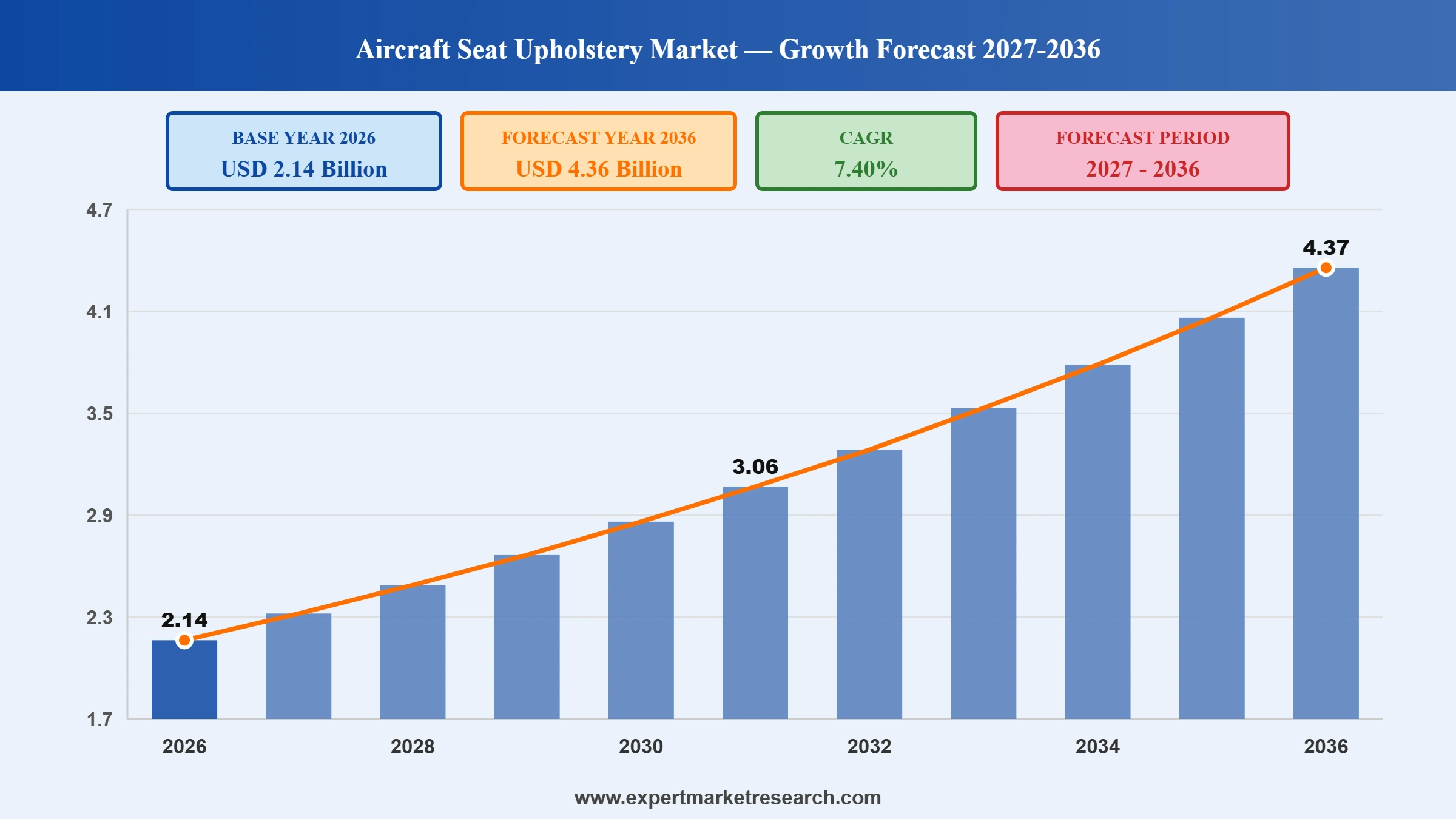
The global aircraft seat upholstery market attained a value of USD 1.99 Billion in 2025 and is projected to grow at a CAGR of 7.40% through 2035. The market is further expected to reach USD 4.06 Billion by 2035. Rising aircraft deliveries, cabin retrofit programs, and demand for durable, lightweight, and flame-resistant materials are supporting growth in the market.
Aircraft seat upholstery covers the fabrics, leather, vinyl, and finished covers fitted to passenger and crew seats in commercial, business, and general aviation aircraft. Materials must be flame resistant, durable, lightweight, and easy to clean. Covers are produced in sets for bottom cushions, backrests, headrests, armrests, and rear pockets. Demand follows new aircraft deliveries, cabin retrofits, and regular replacement cycles, and revenue comes from material sales, cut and sew manufacturing, certification services, and repeat aftermarket orders from airlines and lessors.
Business aviation adds premium demand for leather and bespoke trims. In July 2026, General Dynamics reported second quarter 2026 aerospace revenue of USD 3.525 billion, with 41 Gulfstream jets delivered and an aerospace backlog of USD 25.15 billion. Strong deliveries and a long backlog support orders for cabin materials, and owners often renew interiors during completion and refurbishment. Higher revenue and backlog point to more cabin outfitting work, and completion centers buy leather and fabric in steady volumes.
Commercial deliveries also support demand. In August 2026, first half 2026 data showed Airbus delivered 351 aircraft and Boeing delivered 307, and each new aircraft needs seat sets that include upholstery. Suppliers face strict certification, so approved material and cover designs create long relationships. Price pressure comes from low-cost carriers, while premium cabins reward custom designs and better materials. Retrofit programs also add steady demand beyond factory deliveries and keep cut and sew shops busy between new aircraft cycles.
Read more about this report - REQUEST FREE SAMPLE COPY IN PDF
The launch brought a business class offering to the market at Aircraft Interiors Expo in Hamburg. Seat makers refresh business class products to win airline orders, and each new seat design needs matching covers and trims. Upholstery suppliers across the aircraft seat upholstery market can leverage this trend by joining seat programs early, which secures line fit work as well as later refurbishment orders across fleets.
The launch was shown at Aircraft Interiors Expo in Hamburg and created for a seat maker's programme, as fabric suppliers bring fashion investigates cabins. Upholstery suppliers across the aircraft seat upholstery market can leverage this trend by co developing materials with seat makers, which secures approval, builds airline interest in fresh cabin looks, and creates repeat orders when programmes move to line fit and refurbishment.
The launch presented a 100% wool seat fabric concept colored with madder, poppy, and goldenrod using closed loop methods, with four biodegradable colors and four meta-aramid blended colors for vertical surfaces, made with a natural dye specialist. Mills across the aircraft seat upholstery market can leverage this trend by offering lower impact dyeing, which answers airline sustainability goals and customer expectations more directly and credibly.
The acquisition brought a UK maker of aircraft upholstery based in Thame, Oxfordshire, into a larger group, and was announced at Aircraft Interiors Expo. Buyers can leverage this trend by acquiring upholstery specialists, which adds cut and sew capacity and customer lists, while smaller makers find more scale and funding. Airlines also gain a wider supplier base for seat covers.
Cabin specialists across the aircraft seat upholstery market are building local production, and nearby supply is shortening retrofit lead times for airlines. In April 2025, ABC International, an Italian aircraft interior modification specialist, announced its first production plant near Naples, covering soft furnishings such as carpets, curtains, and seat covers, plus partitions and small monuments, with full operation targeted for June 2025 and EASA Part 21 subpart G approval applied for, so customers may soon receive covers from a closer source and with fewer shipping delays.
Leather suppliers across the aircraft seat upholstery market are bundling services, and airlines are gaining traceability from one provider across design, testing, and manufacturing. In January 2025, Muirhead unveiled an integrated seat cover service combining design, fit checks, certification, material production, and manufacturing, expanded its Glasgow cabin engineering team to eight people, and supports a cut and sew facility in Asia with 80 staff. Its leather lasts seven years or more, which lowers how often covers need replacement and cuts total airline interior costs over time.
Seat makers across the aircraft seat upholstery market are launching light economy seats, and low-cost carriers prefer durable covers that lower fuel use and cleaning time. In June 2026, Geven said its Eva seat will debut with Wizz Air, as reported from the Hamburg aircraft interiors show. Each new seat program requires covers, cushions, and rear pockets matched to the frame and flame rules, so upholstery suppliers can win work early with lighter fabrics, slimmer cushions, and thinner covers that suit such lighter seat frames.
Premium seat programs across the aircraft seat upholstery market are signing launch customers, and leather, wool blends, and custom trims are creating orders for high value covers. In June 2026, Collins Aerospace secured launch customers for its Helix seat, according to coverage of Aircraft Interiors Expo 2026. Suppliers that qualify materials for a new seat early may secure work through delivery and later refurbishment, since seat makers work with few approved cover suppliers, and a win can secure steady volumes for several years of production runs.
Aircraft makers are delivering steadily, and every aircraft needs complete seat sets, so delivery pace sets the rhythm of line fit orders. In September 2026, reports showed Boeing delivered 51 aircraft in August 2026, bringing deliveries to 418 for the first eight months of the year, with 787 handovers declining. Wide body programs use more premium and leather covers, while narrow body programs use durable economy covers, and delays can push cover orders back, so suppliers watch output rates closely.
The Expert Market Research's report titled "Global Aircraft Seat Upholstery Market Report and Forecast 2026-2035" offers a detailed analysis of the market based on the following segments:
Market Breakup by Aircraft Type
Narrow-body aircraft lead the aircraft type segment of the aircraft seat upholstery market, since single aisle jets make up the biggest part of fleets and deliveries. Business jets are expected to grow fastest, as owners refresh interiors with premium leather and custom trims. Wide-body and very large aircraft use many premium seats, regional transport aircraft and helicopters need smaller covers, and general aviation depends on refurbishment. Fleet size, seat count, and cabin layout set the volume of covers for each aircraft class. Aircraft age also affects refurbishment demand.
Market Breakup by Seat Type
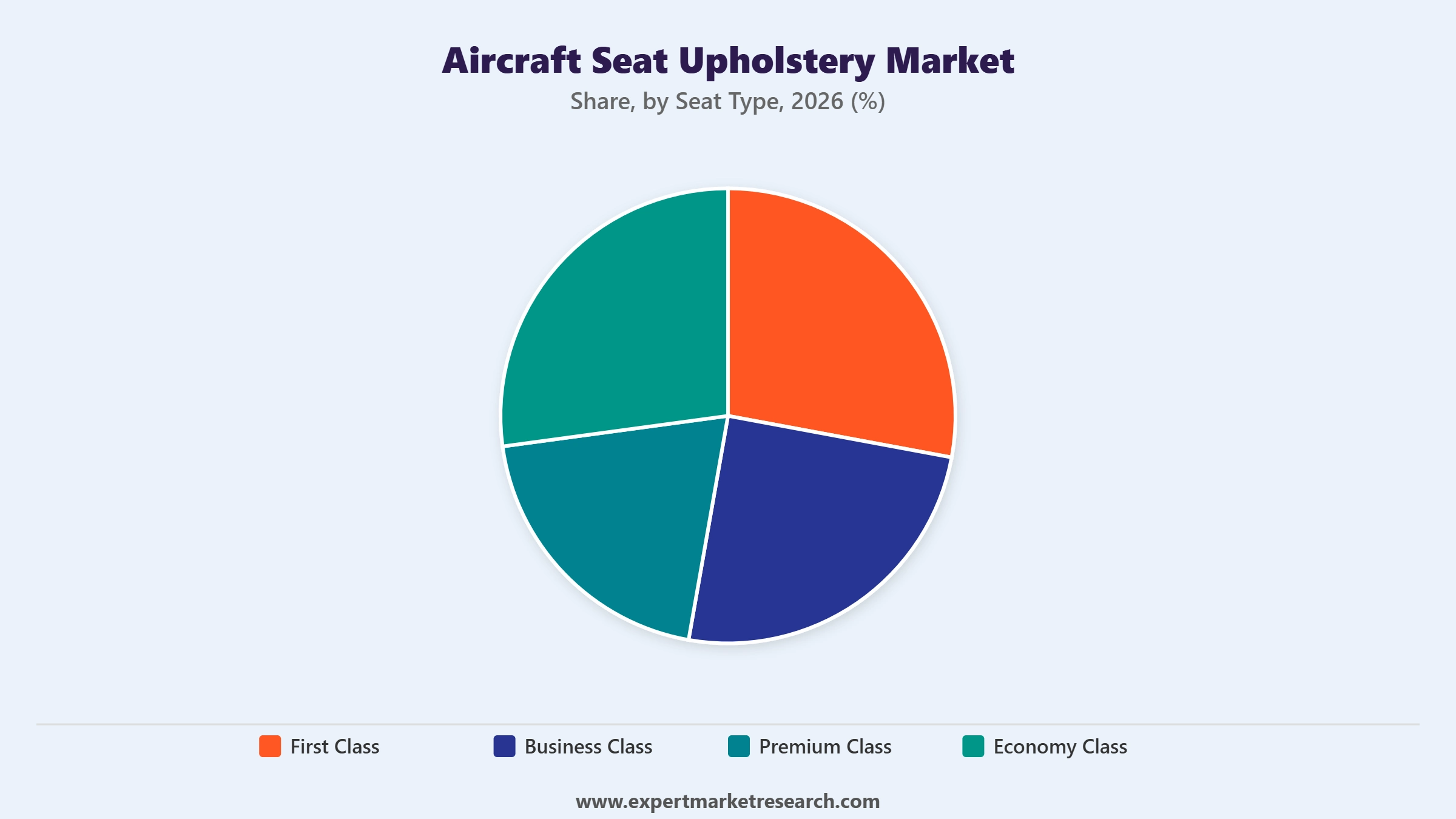
Key Insight: Economy class leads the seat type segment of the aircraft seat upholstery market, because it holds most seats on every commercial aircraft and its covers wear out quickly. Premium class is expected to grow fastest, as airlines add premium economy rows that use better fabrics and leather. First class and business class use custom materials, quilting, and leather, while economy covers favor durable, easy to clean fabrics. Wear, cleaning cycles, and brand design set replacement timing. Airline brand standards also shape color and pattern choices.
Market Breakup by Material
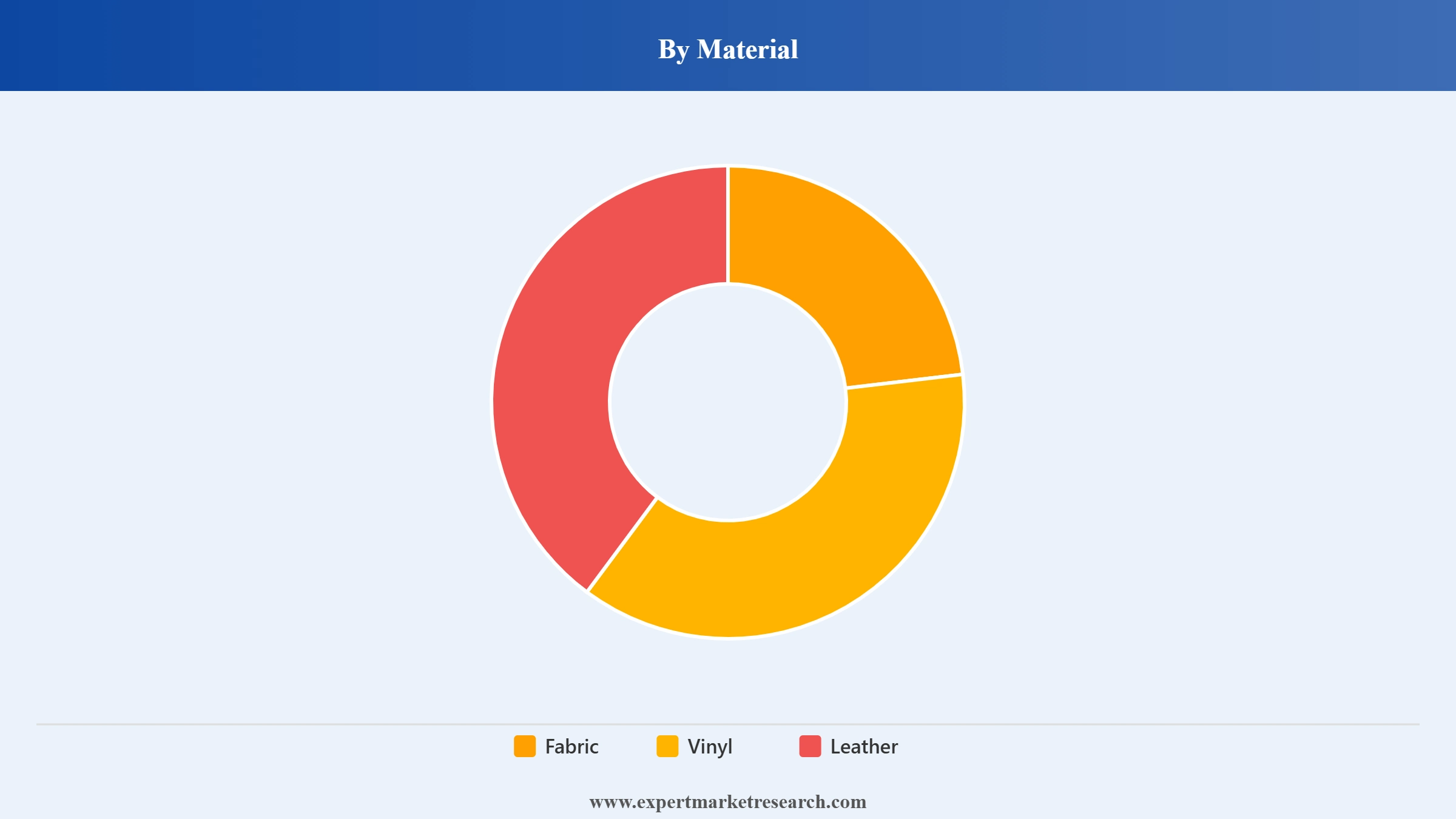
Key Insight: Fabric leads the material segment of the aircraft seat upholstery market, as wool and nylon blends, polyester, and natural fibers offer low cost, comfort, and proven flame resistance in economy and premium cabins. Leather is expected to grow fastest, as premium cabins and business jets seek durable, premium looking covers, with synthetic leather gaining where weight and animal free claims matter. Vinyl serves low-cost covers and wipes clean surfaces. Flame, smoke, abrasion, and weight limits guide each choice. Suppliers must certify each material before use.
Market Breakup by Seat Cover Type
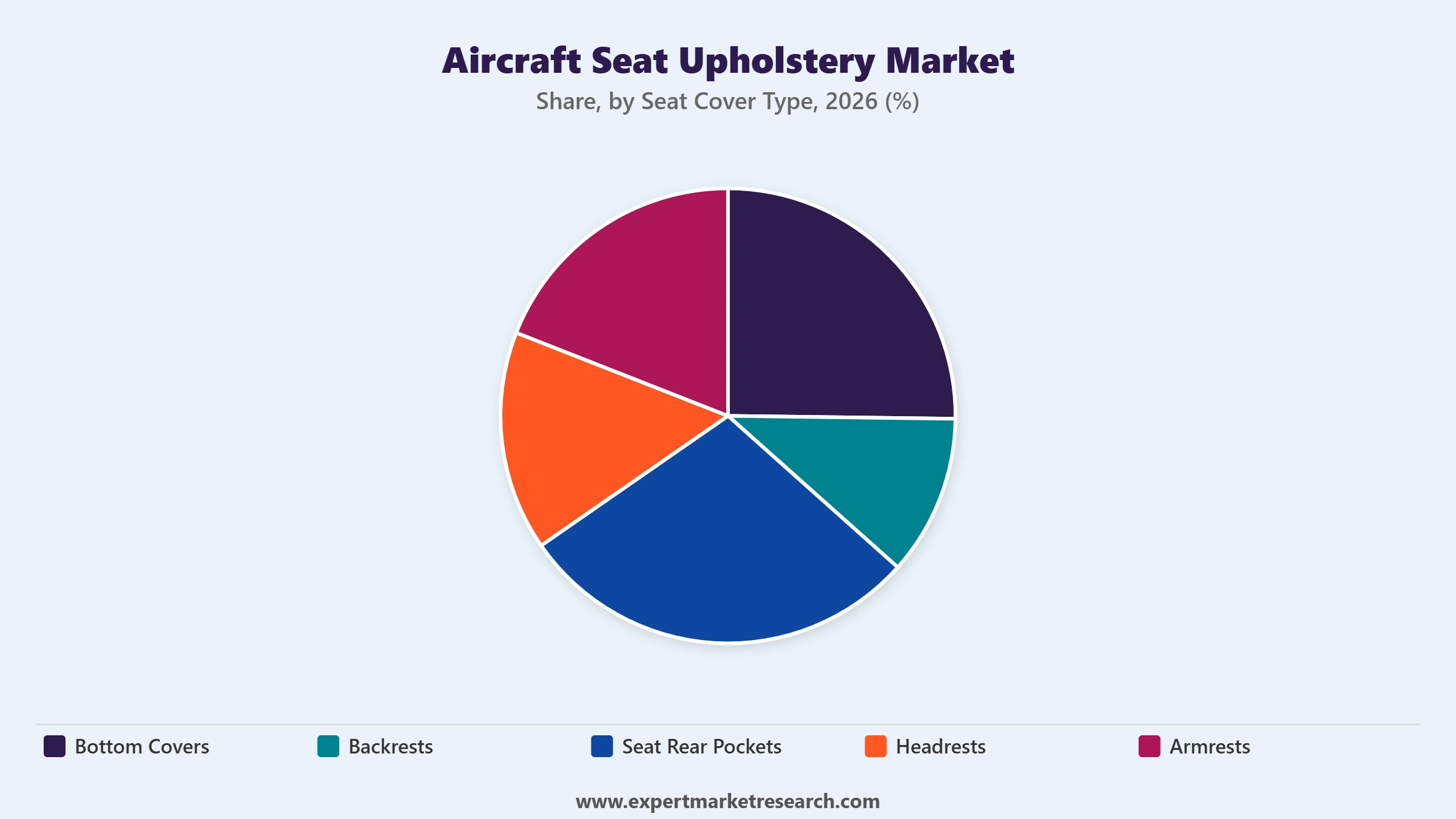
Key Insight: Bottom covers lead the seat cover type segment of the aircraft seat upholstery market, because seat cushions take the most wear and are replaced most often. Seat rear pockets are expected to grow fastest, as airlines add recycled materials, device holders, and better stitching to pockets. Backrests, headrests, and armrests follow seat count and cabin refresh cycles. Covers must fit the seat frame, resist wear, and be easy to remove, so patterns and fasteners are designed with maintenance teams. Airlines also ask for quick replacement kits.
Market Breakup by Region
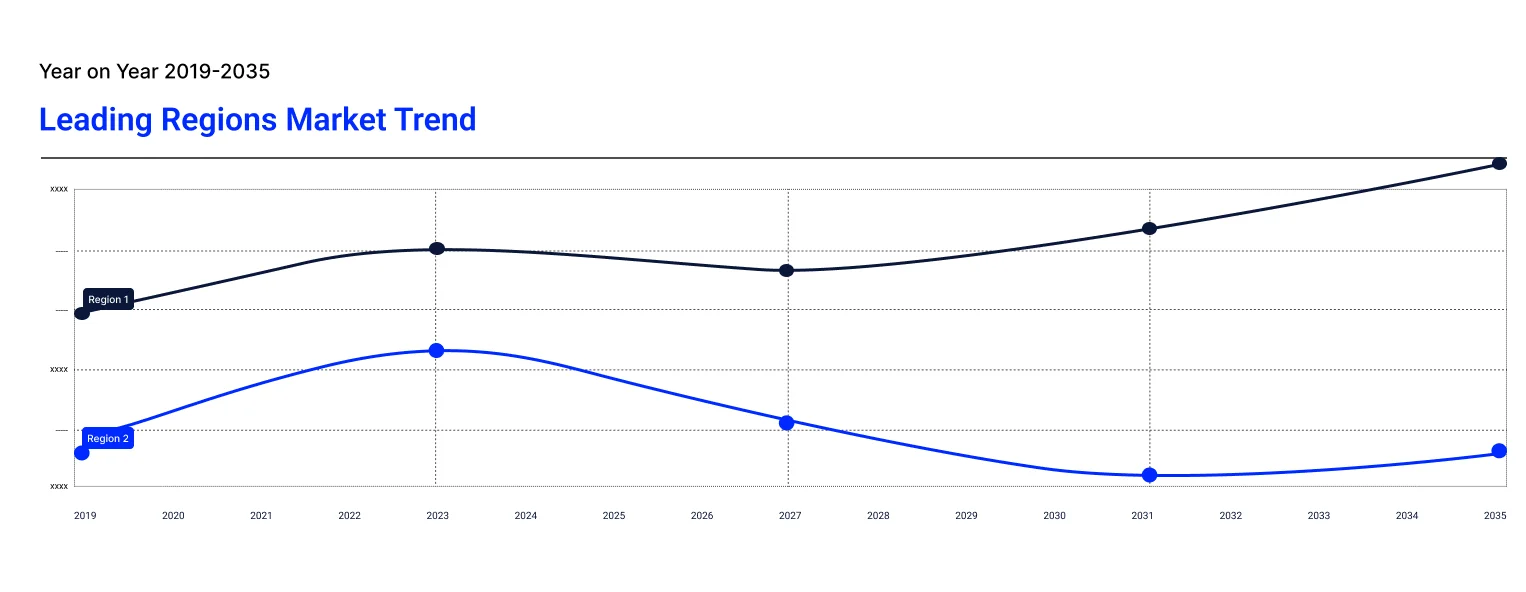
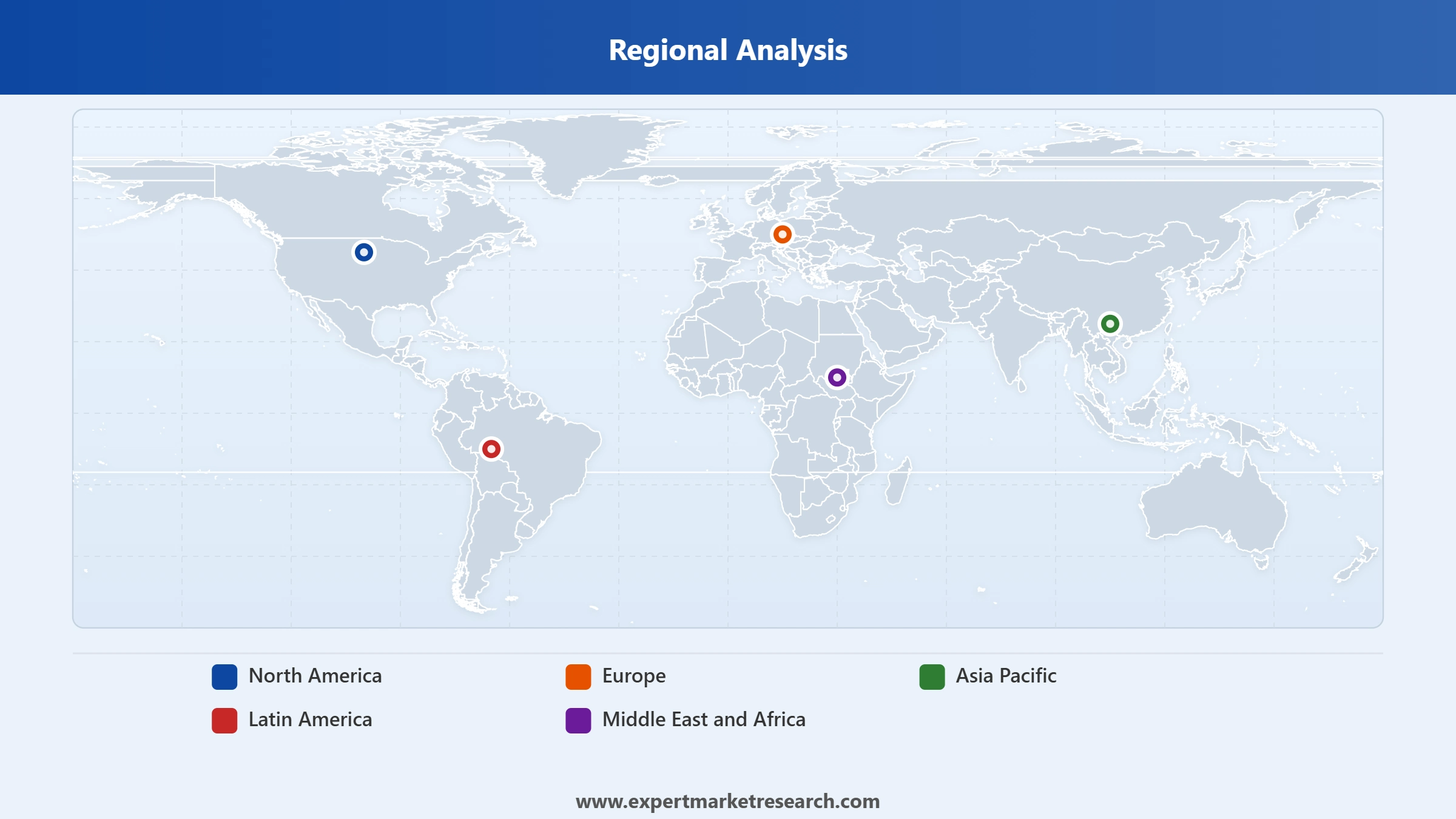
Key Insight: North America leads the regional landscape of the aircraft seat upholstery market, backed by large airline fleets, business aviation, and major aircraft and seat makers. Asia Pacific is expected to grow fastest, as carriers across South and East Asia add aircraft and refit older cabins. Europe benefits from airframers and specialist textile mills, Latin America grows with regional carriers, and Middle East and Africa gains from premium airline cabins and fleet expansion. Local certification and distribution support shape supplier choice. Fleet plans and delivery slots also play a role.
Read more about this report - REQUEST FREE SAMPLE COPY IN PDF
By aircraft type, narrow-body aircraft dominate the aircraft seat upholstery market owing to their large share of airline fleets and deliveries
Narrow-body aircraft hold the largest share of the aircraft type segment, because single aisle jets form the backbone of airline fleets and account for most deliveries. Each aircraft carries 150 to 230 seats, and short flights mean heavy use, cleaning, and regular cover replacement. Airlines order covers with seat sets for new aircraft and then reorder during refreshes. Large order volumes favor suppliers with cut and sew production and approved materials, and low-cost carriers push for light, durable designs.
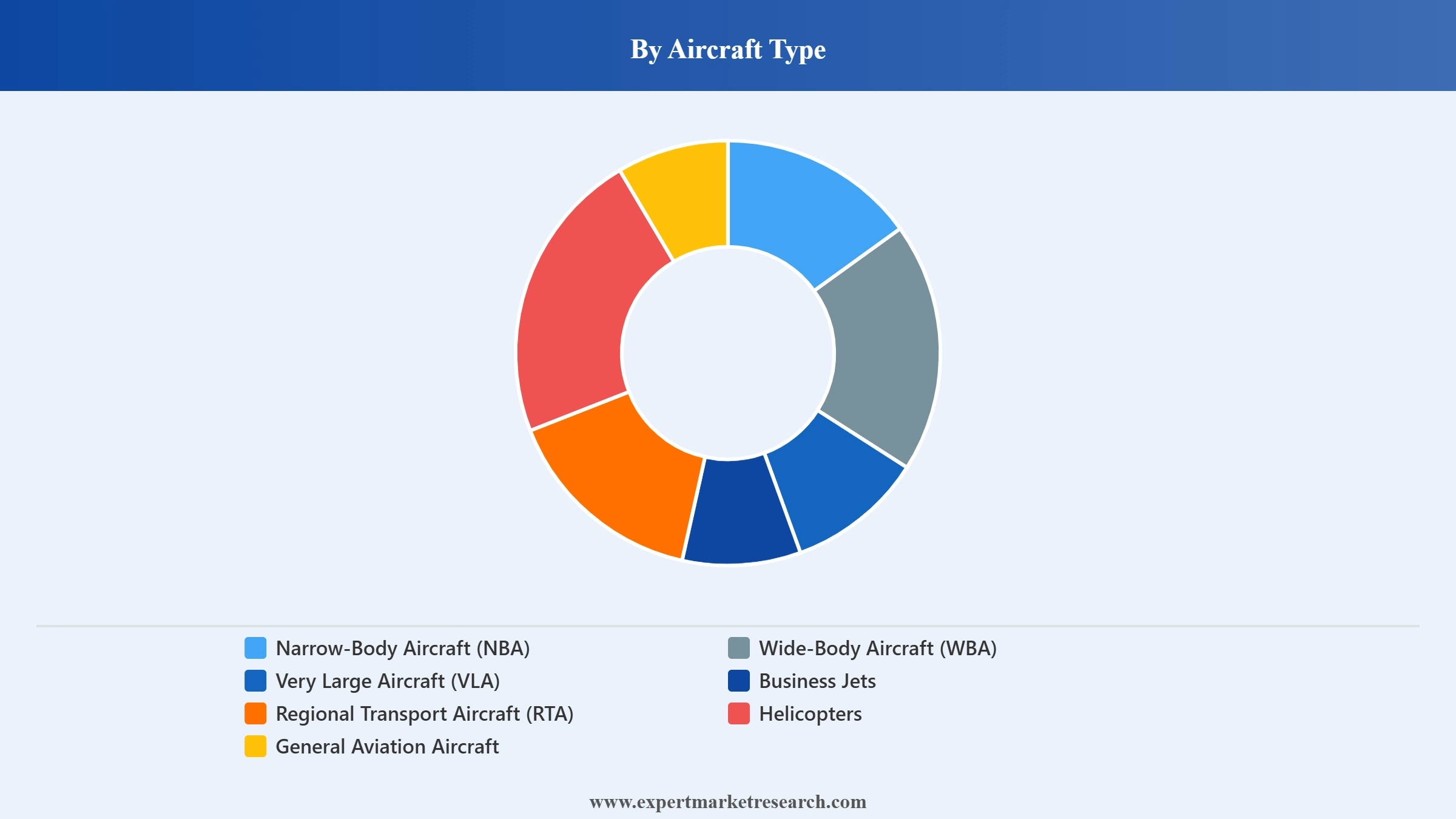
Business jets are registering the fastest growth within the aircraft type segment in the aircraft seat upholstery market, as owners renew cabins with leather, wool, and custom stitching. Strong deliveries create demand for seat covers and refurbishment. In September 2026, the General Aviation Manufacturers Association reported that business jet shipments reached 383 aircraft in the first half of 2026, up 8.2% from the same period in 2025, while total airplane billings reached USD 14.3 billion, up 15.5%. Each delivery can also create demand for premium covers.
By seat type, economy class dominates the aircraft seat upholstery market owing to its large seat count and frequent cover wear
Economy class holds the largest share of the seat type segment, because it accounts for most seats on commercial aircraft and sees the heaviest use. Covers wear out through boarding, cleaning, and spills, so airlines replace them on regular cycles. Fabrics and synthetic leathers for economy must be light, durable, easy to clean, and flame resistant. Large seat counts create volume orders, and price competition is strong, so suppliers win business through efficient production, quality, and delivery to maintenance bases.
Read more about this report - REQUEST FREE SAMPLE COPY IN PDF
Premium class is registering the fastest growth within the seat type segment in the aircraft seat upholstery market, as airlines add premium economy rows and upgrade cabins to raise yield. These seats use better fabrics, leather accents, and more detailed stitching. In April 2026, Air India reported the results of its first B787-8 cabin refresh, with 25 premium economy seats among new business, premium economy, and economy seats, and 475 meters of fabric and 167 meters of synthetic leather for the new seats in the cabin.
By material, fabric dominates the aircraft seat upholstery market owing to low cost, comfort, and proven flame resistance
Fabric holds the largest share of the material segment, because wool and nylon blends, polyester, and natural fibers provide comfort, durability, and approved flame performance at moderate cost. Economy and premium economy cabins rely on fabric covers that are light, breathable, and easy to replace. Mills offer woven and knitted designs with color options, and airlines can match brand patterns. Established suppliers hold approvals for fire, smoke, toxicity, and abrasion tests, which supports long standing contracts for repeat orders yearly.
Read more about this report - REQUEST FREE SAMPLE COPY IN PDF
Leather is registering the fastest growth within the material segment, as premium cabins and private aircraft interiors use durable covers with a premium look. Synthetic leather is gaining where weight and animal free claims matter. In October 2026, Garrett Leather previewed two new Italian made leather collections for private aviation interiors, Asti, a hand tipped leather in a pebble grain, and Soft Wovens, with three woven pattern designs, ahead of the NBAA-BACE show. Private aircraft cabins reward fine leather finishes.
By seat cover type, bottom covers dominate the aircraft seat upholstery market owing to heavy wear and frequent replacement
Bottom covers hold the largest share of the seat cover type segment, because seat cushions carry the most weight, friction, and cleaning, so they wear faster than other parts of the seat. Airlines replace bottom covers regularly, and spare sets are kept at maintenance bases. Covers must fit tightly, resist abrasion, and attach securely while staying quick to remove for service. Demand follows seat counts and fleet age, and aftermarket orders give suppliers steady repeat volumes beyond new aircraft deliveries.
Read more about this report - REQUEST FREE SAMPLE COPY IN PDF
Seat rear pockets are registering the fastest growth within the seat cover type segment, as airlines use pockets to showcase recycled materials and improve passenger convenience. In April 2026, Iberia announced a trial of RECARO R1 and R2 economy seats on an A320neo with literature pockets made from recovered ocean fishing nets, with each A320 shipset removing about two kilograms of marine waste, in a six-month trial starting in spring. Pockets are visible to every passenger, showing environmental goals.
North America commands the largest regional share of the aircraft seat upholstery market, supported by large airline fleets and business aviation
North America commands the largest regional share of the aircraft seat upholstery market, supported by large airline fleets, a strong business aviation base, and major aircraft and seat makers. Carriers refresh cabins regularly and lessors reconfigure aircraft for new operators. In August 2026, WestJet completed the cabin transformation of its remaining former Swoop and Sunwing aircraft, adding upgraded premium seating, an expanded Extended Comfort cabin, and new headrests, and planned about 14 narrow body updates in 2026 across its fleet.
Read more about this report - REQUEST FREE SAMPLE COPY IN PDF
Asia Pacific is registering the fastest growth among the regional markets, driven by fleet expansion in India, China, and ASEAN and by cabin refresh programs at carriers retrofitting older aircraft. Airlines in the region order large narrow body fleets, and new premium economy and business cabins require upgraded fabrics and leather. Local sewing and finishing shops are growing, while global suppliers use partnerships and regional bases to meet certification needs and shorten delivery times across the region over coming years.
The competitive landscape is moderately fragmented, with specialist textile mills, leather suppliers, cover makers, and cabin modification firms serving airlines, seat makers, and lessors. Established aircraft seat upholstery companies compete on certified materials, design support, delivery time, price, and aftermarket service. Large suppliers offer fabrics, leather, and finished covers, while small firms focus on custom work or repairs. Strict flame, smoke, and toxicity approvals create barriers, and long relationships with seat makers and airlines keep switching rates low.
Leading aircraft seat upholstery market players are pursuing acquisitions of cover makers, new sustainable material launches and added production sites to defend share. Several aircraft seat upholstery players are also offering integrated services that cover design, certification, manufacturing, and installation support. Investment in recycled fabrics, lighter leather, and digital patterning is rising as airlines seek cost and weight savings. Partnerships with seat makers and maintenance providers help suppliers reach line fit and retrofit projects in North America and Asia Pacific.
Founded in 1886 and headquartered in Langenthal, Switzerland, the company supplies the market through seat cover fabrics and textiles for aircraft cabins. It also serves ground transportation customers such as railways.
Founded in 1988 and headquartered in Torrington, Connecticut, United States, the company supplies the market through aircraft seat covers and related cabin products. It serves airlines and maintenance providers.
Founded in 1990 and headquartered in Winston-Salem, North Carolina, United States, the company supplies the market through aircraft upholstery fabrics and related interior products. It serves airlines, seat makers, and aircraft completion centers.
Founded in 1973 and headquartered in Columbus, Ohio, United States, the company supplies the market through seat covers and upholstery for aircraft interiors. It serves airline and aircraft maintenance customers.
Other key players in the market include ACM Aircraft Cabin Modification GmbH, among others.
*Please note that this is only a partial list; the complete list of key players is available in the full report. Additionally, the list of key players can be customized to better suit your needs.*
Unlock the latest insights with our global aircraft seat upholstery market trends 2026 report. Discover regional growth patterns, aircraft types, materials, seat covers, and key industry players. Stay ahead of competition with trusted data and expert analysis. Download your free sample report today and drive informed decisions in the market. Request a customised quote to align the findings with your own business planning.


Upto 15% Off
USD
$2499 $2249
$3999 $3599
$4999 $4249
$5999 $5099


*While we strive to always give you current and accurate information, the numbers depicted on the website are indicative and may differ from the actual numbers in the main report. At Expert Market Research, we aim to bring you the latest insights and trends in the market. Using our analyses and forecasts, stakeholders can understand the market dynamics, navigate challenges, and capitalize on opportunities to make data-driven strategic decisions.*
The market reached a value of USD 1.99 Billion in 2025.
The market is projected to grow at a CAGR of 7.40% between 2026 and 2035.
The major drivers expected to aid the market growth are rising disposable incomes, growth in air passenger traffic, and increased demand for premium aircraft seat upholstery for comfortable flying experiences.
The key market trends guiding the growth of the market include the increased investment in the research and development activities by the major players and new product launches.
The major regions in the market are North America, Latin America, the Middle East and Africa, Europe, and the Asia Pacific.
Narrow-body aircraft lead the market by aircraft type, while business jets are expected to grow fastest.
The major seat types of aircraft seat upholstery in the market include first class, business class, premium class, and economy class.
Fabric, vinyl, and leather are the significant materials of aircraft seat upholstery in the market.
The leading seat cover types available in the market include bottom covers, backrests, seat rear pockets, headrests, and armrests.
The key players in the market include Lantal Textiles Ltd., Franklin Products, Inc., ACM Aircraft Cabin Modification GmbH, Spectra Interior Products, and Tritex Corporation, among others.
North America leads the market by region, while Asia Pacific is registering the fastest growth.
The market is estimated to witness a healthy growth in the forecast period of 2026-2035 to reach about USD 4.06 Billion by 2035.
Explore our key highlights of the report and gain a concise overview of key findings, trends, and actionable insights that will empower your strategic decisions.
| REPORT FEATURES | DETAILS |
| Base Year | 2025 |
| Historical Period | 2019-2025 |
| Forecast Period | 2026-2035 |
| Scope of the Report |
Historical and Forecast Trends, Industry Drivers and Constraints, Historical and Forecast Market Analysis by Segment:
|
| Breakup by Aircraft Type |
|
| Breakup by Seat Type |
|
| Breakup by Material |
|
| Breakup by Seat Cover Type |
|
| Breakup by Region |
|
| Market Dynamics |
|
| Competitive Landscape |
|
| Companies Covered |
|
| Report Price and Purchase Option | Explore our purchase options that are best suited to your resources and industry needs. |
| Delivery Format | Delivered as an attached PDF and Excel through email, with an option of receiving an editable PPT, according to the purchase option. |
Datasheet
One User
USD 2,499
USD 2,249
tax inclusive*
Single User License
One User
USD 3,999
USD 3,599
tax inclusive*
Five User License
Five User
USD 4,999
USD 4,249
tax inclusive*
Corporate License
Unlimited Users
USD 5,999
USD 5,099
tax inclusive*
*Please note that the prices mentioned below are starting prices for each bundle type. Kindly contact our team for further details.*
Flash Bundle
Small Business Bundle
Growth Bundle
Enterprise Bundle
*Please note that the prices mentioned below are starting prices for each bundle type. Kindly contact our team for further details.*
Flash Bundle
Number of Reports: 3
20%
tax inclusive*
Small Business Bundle
Number of Reports: 5
25%
tax inclusive*
Growth Bundle
Number of Reports: 8
30%
tax inclusive*
Enterprise Bundle
Number of Reports: 10
35%
tax inclusive*
How To Order

Select License Type
Choose the right license for your needs and access rights.

Click on ‘Buy Now’
Add the report to your cart with one click and proceed to register.

Select Mode of Payment
Choose a payment option for a secure checkout. You will be redirected accordingly.
Strategic Solutions for Informed Decision-Making
Gain insights to stay ahead and seize opportunities.

Get insights & trends for a competitive edge.

Track prices with detailed trend reports.

Analyse trade data for supply chain insights.

Leverage cost reports for smart savings

Enhance supply chain with partnerships.

Connect For More Information
Our expert team of analysts will offer full support and resolve any queries regarding the report, before and after the purchase.
Our expert team of analysts will offer full support and resolve any queries regarding the report, before and after the purchase.
We employ meticulous research methods, blending advanced analytics and expert insights to deliver accurate, actionable industry intelligence, staying ahead of competitors.
Our skilled analysts offer unparalleled competitive advantage with detailed insights on current and emerging markets, ensuring your strategic edge.
We offer an in-depth yet simplified presentation of industry insights and analysis to meet your specific requirements effectively.




