

Consumer Insights
Uncover trends and behaviors shaping consumer choices today
Procurement Insights
Optimize your sourcing strategy with key market data
Industry Stats
Stay ahead with the latest trends and market analysis.
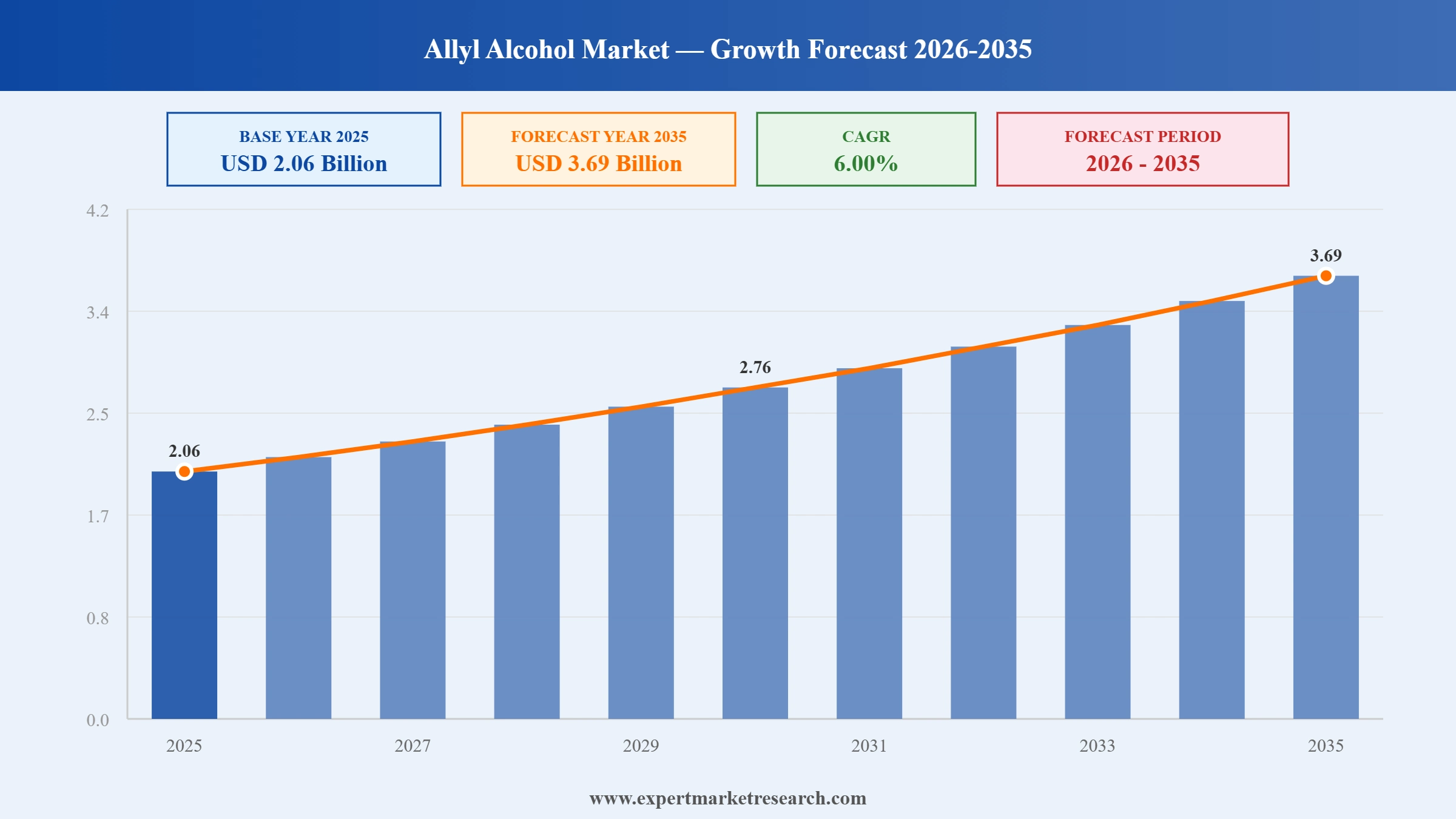
The global allyl alcohol market size was valued at USD 2.06 Billion in 2025. The industry is expected to grow at a CAGR of 6.00% during the forecast period of 2026-2035 to reach a value of USD 3.69 Billion by 2035. The market growth is attributed to the growing focus of market players on sustainable production of allyl alcohol.
Rising demand for sustainable and cost-effective chemical production is driving the growth of the global allyl alcohol market. Major chemical companies, including BASF and Dairen Chemical Corporation (DCC), are shifting from traditional propylene-based production to glycerol, a byproduct of biodiesel. This transition not only lowers manufacturing costs but also reduces greenhouse gas emissions, aligning with stricter environmental regulations and increasing consumer preference for eco-friendly products. Such strategic moves by industry leaders are directly contributing to market expansion.
Furthermore, in response to this shift, businesses like Evonik Industries and Clariant are developing next-generation catalysts, such as ZnAlO and infused zeolites, to increase the efficiency of glycerol conversion, reduce the production of coke, and increase process stability. These developments make it possible to scale up the use of bio-based allyl alcohol in industries without sacrificing yield and quality while at the same time reducing the operational costs.
The use of renewable feedstocks combined with high-performance catalysts also makes it possible to use allyl alcohol in more areas such as resins, coatings, polymers, and specialty chemicals, thus creating more demand further down the supply chain. The two factors, i.e., technological and process breakthroughs, are what enable manufacturers to fulfill industrial requirements growing at a rapid pace and still do it in a sustainable manner. The allyl alcohol market dynamics, therefore, stands to benefit from these developments not only in mature but also in emerging regions.
Read more about this report - REQUEST FREE SAMPLE COPY IN PDF
Dairen Chemical Corporation (DCC) joined forces with The LYCRA Company and Qore to create a renewable LYCRA fiber. By employing its allyl alcohol process, DCC will change QIRA, a bio-based material, into low-impact PTMEG, which will lead to a carbon footprint reduction of up to 44%. This project is a perfect example of how the use of allyl alcohol is becoming more and more popular in the production of sustainable materials, thus supporting the market expansion in green polymer applications.
Daicel Corporation and Inabata & Co., Ltd. created a new company named Novacel Co., Ltd., which was set to be operational from July 2024. The main purpose of this company was to consolidate the research, development, and sales of resin coloring and compounding. Using allyl alcohol in resin formulations, the joint venture facilities product features and extends the client base, thereby gradually increasing demand and boosting the allyl alcohol market value.
Mitsubishi Chemical Group is implementing the production of chemically recycled polycarbonate (PC) resin by obtaining methyl methacrylate (MMA) from waste acrylic resin. The company is targeting a processing capacity of 10,000 tonnes per year by 2030. The use of allyl alcohol in resin recovery is a way of supporting the circular economy initiative, which is likely to be embraced by more industries, and thus will indirectly increase the global consumption of allyl alcohol through enhanced resin production.
Mitsubishi Chemical Corporation increased the production of products such as polyvinyl alcohol resins, GOHSENX, and Nichigo G-Polymer to meet the demand for food packaging materials. This capacity expansion is done using allyl alcohol intermediates, showing their significant role in large-scale resin production. The extension is a clear indication that the packaging demand from Asia Pacific boosts the allyl alcohol market growth.
Through the use of transition metal catalysis, site-selective C-H functionalization with allyl alcohols is achieved, thus leading to the generation of versatile scaffolds for drugs and fine chemicals which is contributing to the growing demand in the allyl alcohol market. Pharmaceutical giants like Merck and Pfizer are employing this strategy to fabricate complex organic molecules in a more rapid and efficient way. Consequently, this limits the use of allyl alcohol merely as a key intermediate to progressively support a larger industrial demand as well as adoption in the high-value chemical sectors. Besides that, the technique elevates reaction efficiency and lowers waste, thereby turning allyl alcohol into an indispensable source of advanced medicinal chemistry applications.
Redox isomerization using metal complexes such as ruthenium and rhodium render allylic alcohols convertible to carbonyl compounds. This results in the production of chiral intermediates that are extremely essential for pharmaceuticals and specialty chemicals. Evonik and Johnson Matthey, for example, are high-value synthesis facilities that primarily use this method. Redox isomerization enables stereoselective processes in chemical synthesis. This capability aligns closely with industrial requirements for precision and efficiency. As a result, demand for allyl alcohol used in these reactions continues to increase. Consequently, allyl alcohol has become an integral component in fine chemical manufacturing and pharmaceutical applications, thereby contributing to the allyl alcohol market development.
Allylic alcohols serve as latent enolates in tandem reactions, where isomerization is combined with CC or Cheteroatom bond formation in a single step. Companies such as Dow Chemical and Clariant employ this method to enhance process efficiency and minimize the generation of chemical waste. The capability of forming complex molecules in a single operation propels industrial use of allyl alcohol, which in turn increases the downstream consumption and contributes to the growth of specialty chemical, pharmaceutical, and fine chemical industries.
Pharmaceutical-grade allyl alcohol is a key material in the production of drugs and is the subject of increasing attention by companies such as Sigma, Aldrich (Merck), and Tokyo Chemical Industry (TCI). These companies are responding to stricter purity requirements for API synthesis by increasing their production of ultrapure intermediates, which are necessary for medicinal chemistry and drug development. With the surging demand for high-purity intermediates, demand in allyl alcohol market is rising as it becomes a vital raw material in pharmaceutical manufacturing.
Advanced allyl alcohol grades are being tailored for the synthesis of diallyl phthalate (DAP) polymers that find use in electronics, e.g., in the manufacturing of circuit boards and insulating components. Firms like Gantrade Corporation and Dairen Chemical are dedicating resources to these high-performance applications. The pursuit of materials that are thermally stable and mechanically durable is the main reason for the growing consumption of allyl alcohol in the electronics sector, which in turn sustains market expansion and widens the scope of applications in advanced polymer systems.
The EMR’s report titled “Global Allyl Alcohol Market Report and Forecast 2026-2035” offers a detailed analysis of the market based on the following segments:
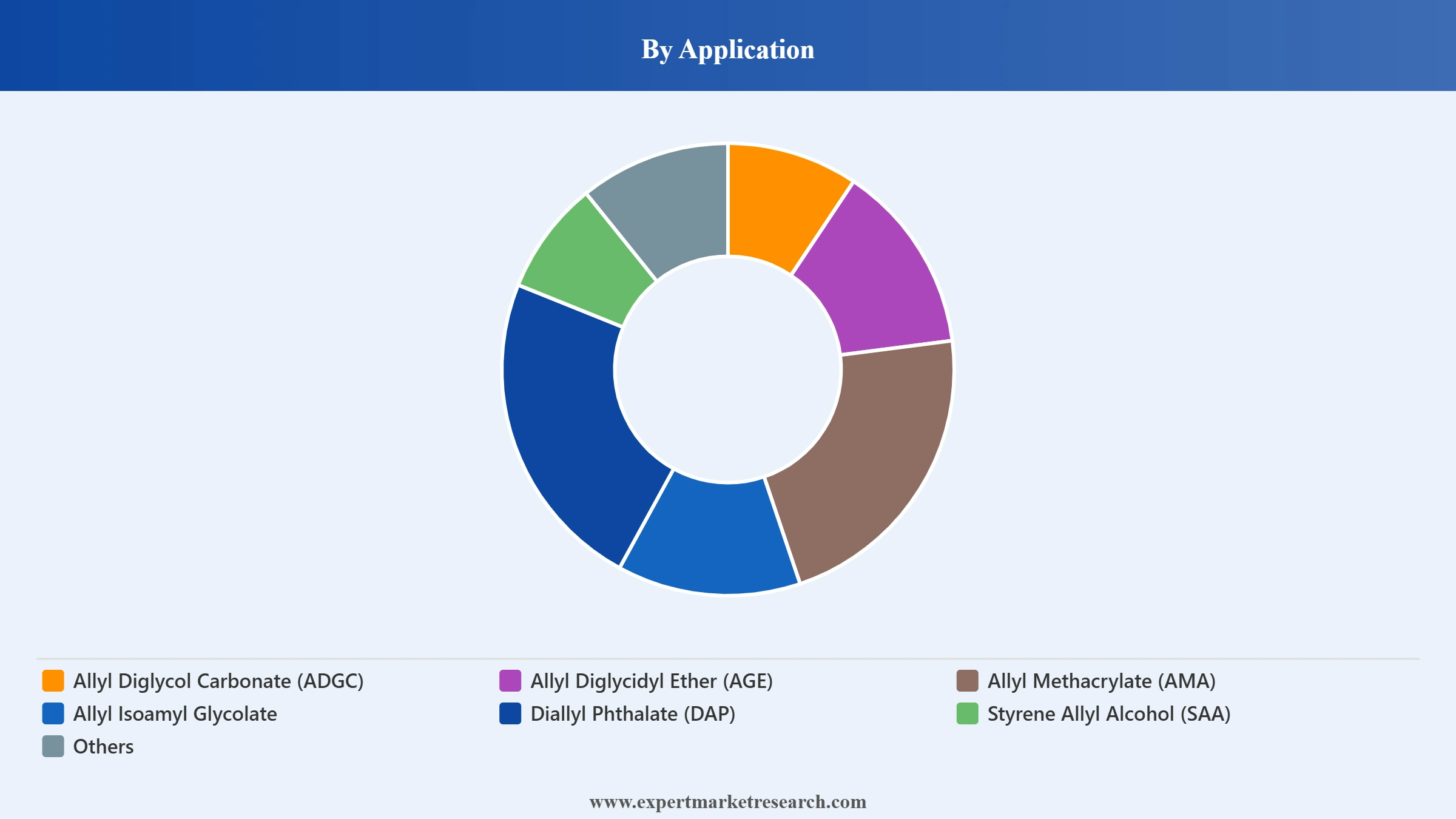
Market Breakup by Application
Key Insights: In terms of application, allyl alcohol market scope comprises allyl diglycol carbonate (ADGC) used for optical plastics, allyl diglycidyl ether (AGE) and allyl methacrylate (AMA) as polymer intermediates. Additionally, allyl isoamyl glycolate is used in fragrances and diallyl phthalate (DAP) witnesses demand for thermosetting resins. Meanwhile, styrene allyl alcohol (SAA) is being increasingly utilized in the production of coatings. The rise of the electronics, coatings, adhesives, and cosmetics industries accounts for the increased consumption of derivatives. Hence, producers like Gantrade Corporation are motivated to create innovative, high-performance formulations supporting the market growth.
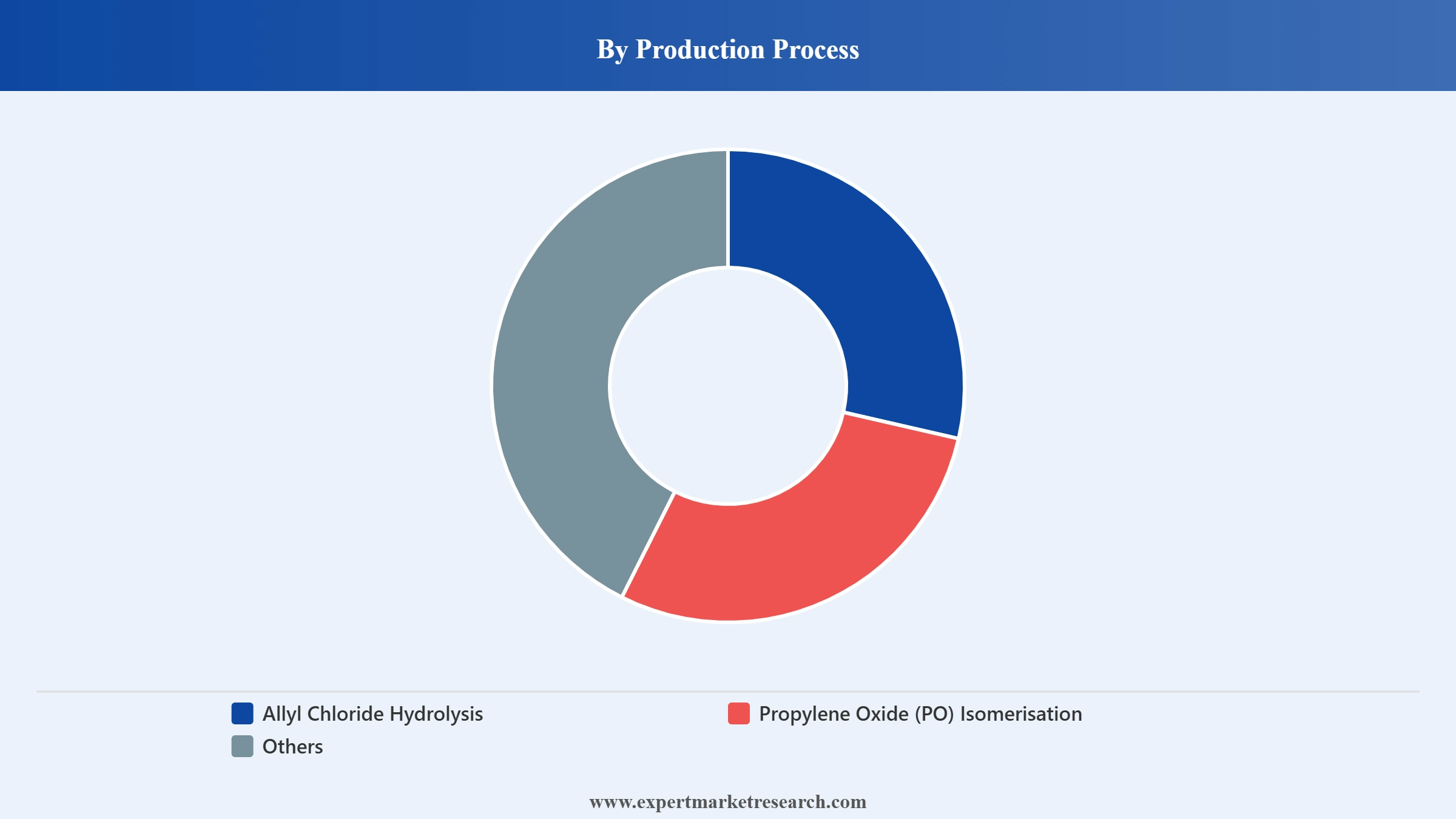
Market Breakup by Production Process
Key Insights: Allyl alcohol can be made through various method, such as allyl chloride hydrolysis, which is the traditional and the most popular method in the allyl alcohol market. On the other hand, the propylene oxide (PO) isomerization technique provides higher purity and fewer by-products. A few other routes including bio-based and hybrid catalytic methods are also gaining traction. Along with that, some companies like BASF and Evonik are highly committed to the development of sustainable processes for increasing yields and lowering energy consumption. Process innovations improve efficiency and scalability of the process while helping in meeting environmental standards. This enables wider industrial use and addresses the increasing demand for allyl alcohol in the resins, coatings, pharmaceuticals, and specialty chemicals sectors worldwide.
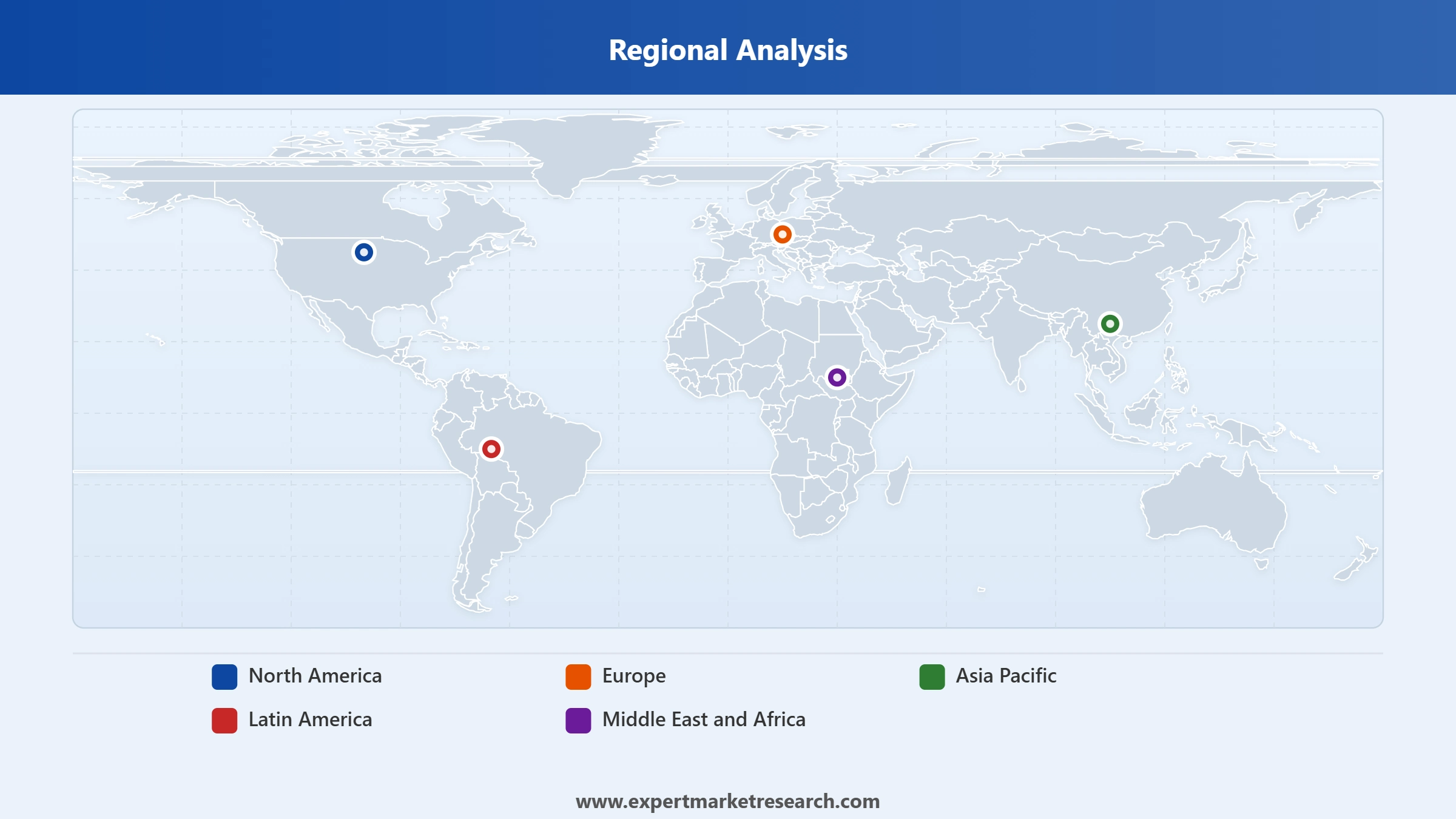
Market Breakup by Region
Key Insights: The allyl alcohol market is experiencing significant demand in North America, driven by demand for chemicals, automobiles, and electronics, as Dow and other businesses expand production. In Europe, the emphasis is on clean production and meeting regulations, as BASF and Clariant develop eco-friendly processes. The Asia Pacific region is the largest consumer, mainly because of rapid industrialization in China, India, and Japan. Latin America is gaining momentum through the needs of infrastructure and the agrochemical sector, while the Middle East and Africa are benefiting from the availability of petrochemical feedstocks and the rise of the manufacturing sector. Altogether these regional trends are backing up market growth globally.
Read more about this report - REQUEST FREE SAMPLE COPY IN PDF
By application, diallyl phthalate (DAP) shows robust growth
The diallyl phthalate (DAP) segment is attracting more attention as manufacturers respond to the demand for high-performance thermosetting resins. Companies are innovating resin formulations that enhance thermal stability and mechanical properties for automotive and electronics applications. These developments extend the segment's application scope, thus enabling it to be used in advanced materials and specialty polymers. As a result, the global allyl alcohol market experiences growth as it caters to the evolving needs of high-value end-use industries.
Read more about this report - REQUEST FREE SAMPLE COPY IN PDF
The allyl isoamyl glycolate application category contributes significantly to the market growth, which can be attributed to the booming personal care and fragrance industries globally. Thriving companies are innovating high-performance derivatives that meet consumer expectations for efficacy, sustainability, and sensory appeal. For instance, Dow introduced four new personal care ingredients at in-cosmetics Asia 2025, among which was the award-shortlisted DEXCARE CD polymer for hair care formulations. These innovations extend the application scope and thus lead to a greater use of allyl alcohol-based intermediates in cosmetics, thereby supporting market development.
By production process, propylene oxide (PO) isomerization witnesses increasing preference
The propylene oxide (PO) isomerization and associated propylene-based production pathways are essential in the allyl alcohol market for consistent product supply as the demand for downstream derivatives rises. Core propylene investments by means of advancing feedstock reliability and production flexibility are a good way to go. In March 2025, LyondellBasell made an announcement of a major propylene expansion project at its Channelview Complex, with the addition of substantial propylene capacity that facilitates broader chemical intermediate production, including propylene-derived allyl derivatives.
Read more about this report - REQUEST FREE SAMPLE COPY IN PDF
The allyl chloride hydrolysis segment represents a principal production route for allyl alcohol, enabling derivatives employed in the resin, coating, and pharmaceutical sectors. Companies are engaged in the optimization of hydrolysis technology to enhance conversion efficiency, lower the production of by-products, and satisfy the increasing demand for high-purity intermediates. As an example, large-scale chemical manufacturers commit resources to sophisticated hydrolysis plants and process upgrades to elevate production capacity and supply reliability, thereby making it possible for downstream industries to have uninterrupted access to critical allyl alcohol intermediates for various applications.
By region, North America leads the market growth
North America contributes substantially to the market revenue as United States and Canada continue to boost demand for allyl alcohol demand in the region. This is mainly driven by the chemicals, automotive, and electronics sectors. Resins, coatings, pharmaceuticals, and polymer intermediates see significant consumption; thus, manufacturers like Dow and Evonik are motivated to expand their production capacities. The implementation of more sustainable production practices and the use of advanced chemical processes are noticeably adopted in the region. These factors contribute to stable regional growth, technological leadership, and innovation in downstream applications for both industrial and specialty sectors across North America.
Europe accounts for a major share in the global allyl alcohol market attributed to growing the investment in the advanced chemical production facilities. One of the instances is the new alcoholates plant that BASF is constructing in Ludwigshafen, Germany, thus improving the production of sodium and potassium methylate for biodiesel, pharmaceutical, and agricultural applications. With this expansion, the company is reinforcing the reliability of its supply, modernizing its processes, and meeting the increasing regional and global demand. These capacity investments are only a few examples of how companies are turning to technology upgrades to support downstream chemical markets and guarantee production that is both sustainable and scalable.
Read more about this report - REQUEST FREE SAMPLE COPY IN PDF
Leading allyl alcohol market players are taking efforts to revamp production facilities and increase output to meet demand that is rising across resins, coatings, and pharmaceutical intermediates. Companies like BASF and LyondellBasell are refining hydrolysis and propylene oxide-based processes, making conversion efficiency and product quality better. These strategic moves not only make supply more stable and support the production of high-purity derivatives but also firmly raise their competitive position in the regional and global allyl alcohol industry.
Many allyl alcohol companies have shifted their focus towards product innovation and sustainable processes in order to address high-value applications. The projects involve the development of bio-based intermediates, green catalytic routes, and the production of high-purity specialty grades for the electronics, automotive, and personal care. Companies, like Dow and Mitsubishi Chemical have adopted these practices to lessen the environmental impact, broaden their product portfolio, and be in line with the regulatory and consumer-driven sustainability trends in the allyl alcohol market.
LyondellBasell, established in 2007 and headquartered in Rotterdam, Netherlands, is a leading global chemical company specializing in the production of plastics, chemicals, and refining. The company focuses on sustainable solutions and advanced polymer technologies to serve diverse industrial sectors worldwide.
Zouping Mingxing Chemical, established in 1993 with headquarters in Zouping, China, manufactures specialty chemicals and intermediates for industrial applications. The company emphasizes innovation and quality in its chemical production processes to meet growing domestic and international demand.
Dairen Chemical Corporation (DCC), established in 1992 and based in Taiwan, produces high-purity chemical intermediates, including allyl alcohol derivatives. The company invests in green processes and advanced technologies to strengthen its position in the Asia-Pacific chemical market.
Tokyo Chemical Industry, established in 1950 and headquartered in Tokyo, Japan, is a leading manufacturer and distributor of fine chemicals and reagents for research and industrial use. The company focuses on innovation, quality, and supplying chemicals for global scientific and industrial applications.
*Please note that this is only a partial list; the complete list of key players is available in the full report. Additionally, the list of key players can be customized to better suit your needs.*
Other players in the market include Thermo Fisher Scientific Inc., Merck KGaA, and RX Marine International, among others.
Explore the latest trends shaping the Global Allyl Alcohol Market 2026-2035 with our in-depth report. Gain strategic insights, future forecasts, and key market developments that can help you stay competitive. Download a free sample report or contact our team for customized consultation on global allyl alcohol market trends 2026.


Upto 15% Off
USD
$3999 $3599
$2499 $2249
$4999 $4249
$5999 $5099


*While we strive to always give you current and accurate information, the numbers depicted on the website are indicative and may differ from the actual numbers in the main report. At Expert Market Research, we aim to bring you the latest insights and trends in the market. Using our analyses and forecasts, stakeholders can understand the market dynamics, navigate challenges, and capitalize on opportunities to make data-driven strategic decisions.*
In 2025, the global allyl alcohol market reached an approximate value of USD 2.06 Billion.
The market is projected to grow at a CAGR of 6.00% between 2026 and 2035.
The market is estimated to witness healthy growth in the forecast period of 2026-2035 to reach a value of around USD 3.69 Billion by 2035.
Key strategies driving the market include capacity expansion, process optimization, product innovation for high-purity and specialty derivatives, sustainability-focused production using bio-based feedstocks, strategic partnerships, and mergers or acquisitions to strengthen regional presence and supply reliability.
The key trends of the market include sustainable production methods that support biodiversity, growth in UV-curable coatings, expanded chemical polymer applications, and innovation in catalysts to produce efficiency and long-term sustainability across different sectors.
The major regions in the market are North America, Europe, Asia Pacific, Latin America, and Middle East and Africa.
The various types considered in the market report are Allyl Diglycol Carbonate (ADGC), Allyl Diglycidyl Ether (AGE), Allyl Methacrylate (AMA), Allyl Isoamyl Glycolate, Diallyl Phthalate (DAP), Styrene Allyl Alcohol (SAA), and others.
The various allyl chloride hydrolysis, Propylene Oxide (PO) Isomerization and others.
The key players in the market include Tokyo Chemical Industry Co., Ltd.,Dairen Chemical Corporation (DCC), Zouping Mingxing Chemical Co. Ltd., LyondellBasell Industries Holdings B.V., Thermo Fisher Scientific Inc., Merck KGaA, and RX Marine International, among others.
Challenges include volatility in raw material prices, stringent environmental regulations, high energy and production costs, competition from alternative chemical routes, and supply chain disruptions affecting consistent delivery of high-purity intermediates.
Explore our key highlights of the report and gain a concise overview of key findings, trends, and actionable insights that will empower your strategic decisions.
| REPORT FEATURES | DETAILS |
| Base Year | 2025 |
| Historical Period | 2019-2025 |
| Forecast Period | 2026-2035 |
| Scope of the Report |
Historical and Forecast Trends, Industry Drivers and Constraints, Historical and Forecast Market Analysis by Segment:
|
| Breakup by Application |
|
| Breakup by Production Process |
|
| Breakup by Region |
|
| Market Dynamics |
|
| Competitive Landscape |
|
| Companies Covered |
|
| Report Price and Purchase Option | Explore our purchase options that are best suited to your resources and industry needs. |
| Delivery Format | Delivered as an attached PDF and Excel through email, with an option of receiving an editable PPT, according to the purchase option. |
Single User License
One User
USD 3,999
USD 3,599
tax inclusive*
Datasheet
One User
USD 2,499
USD 2,249
tax inclusive*
Five User License
Five User
USD 4,999
USD 4,249
tax inclusive*
Corporate License
Unlimited Users
USD 5,999
USD 5,099
tax inclusive*
*Please note that the prices mentioned below are starting prices for each bundle type. Kindly contact our team for further details.*
Flash Bundle
Small Business Bundle
Growth Bundle
Enterprise Bundle
*Please note that the prices mentioned below are starting prices for each bundle type. Kindly contact our team for further details.*
Flash Bundle
Number of Reports: 3
20%
tax inclusive*
Small Business Bundle
Number of Reports: 5
25%
tax inclusive*
Growth Bundle
Number of Reports: 8
30%
tax inclusive*
Enterprise Bundle
Number of Reports: 10
35%
tax inclusive*
How To Order

Select License Type
Choose the right license for your needs and access rights.

Click on ‘Buy Now’
Add the report to your cart with one click and proceed to register.

Select Mode of Payment
Choose a payment option for a secure checkout. You will be redirected accordingly.
Strategic Solutions for Informed Decision-Making
Gain insights to stay ahead and seize opportunities.

Get insights & trends for a competitive edge.

Track prices with detailed trend reports.

Analyse trade data for supply chain insights.

Leverage cost reports for smart savings

Enhance supply chain with partnerships.

Connect For More Information
Our expert team of analysts will offer full support and resolve any queries regarding the report, before and after the purchase.
Our expert team of analysts will offer full support and resolve any queries regarding the report, before and after the purchase.
We employ meticulous research methods, blending advanced analytics and expert insights to deliver accurate, actionable industry intelligence, staying ahead of competitors.
Our skilled analysts offer unparalleled competitive advantage with detailed insights on current and emerging markets, ensuring your strategic edge.
We offer an in-depth yet simplified presentation of industry insights and analysis to meet your specific requirements effectively.




