

Consumer Insights
Uncover trends and behaviors shaping consumer choices today
Procurement Insights
Optimize your sourcing strategy with key market data
Industry Stats
Stay ahead with the latest trends and market analysis.
The global almond flour market attained a value of USD 1325.28 Million in 2025 and is projected to expand at a CAGR of 9.20% through 2035. The market is further expected to achieve USD 3195.46 Million by 2035. Increased consumer demand for allergen-friendly, gluten-free formulations is fueling the overall almond flour consumption, as producers seek ingredients which ensure functional value alongside high-end nutrition.
One important driving factor behind the growth of the almond flour market is the increased inclusion of the product into RTE products and snacks. Moreover, expanding private labels by retail stores is leading to a larger volume of orders, while strengthening relationships with suppliers. Firms are also focusing on tracking processes and developing digital procurement solutions to secure long-term agreements with suppliers amid price volatility. The trend of partnerships between ingredient suppliers and packaged foods companies is gaining momentum.
The global almond flour market is currently undergoing significant changes owing to innovations and optimization of supply chains among major processors. In November 2025, RE-NUT launched in-shell almond flour to boost fiber, reduce waste, and improve cost-efficiency for confectionery manufacturers through scalable, zero-waste processing innovation. The development is in line with the ongoing reports on almond yield figures in California that have exceeded 2.7 billion pounds in 2025, which ensures access to adequate raw material for producers offering premium flour varieties. Such innovations contribute to the ability of manufacturers to ensure uniformity in texture for gluten-free recipes that are becoming important procurement criteria for large-scale foodservice operators.
Clean-label trends along with innovative applications of ingredients are driving the structural demand in almond flour market. With growing contract manufacturing needs in North America and Europe, manufacturers are integrating almonds into formulations of protein-rich snacks, keto-friendly desserts, and alternative coatings for dairy-based products. In October 2024, Once Again acquired Big Tree Organic Farms, expanding organic almond flour portfolio and improving supply chain efficiency by sourcing closer to California’s almond production hub. In addition, suppliers are employing micronization technologies along with cold processing approaches to retain natural nutrients in almond flours and leverage nutritional advantages. Premiumization is also becoming evident as food processors are promoting almond flour not as a replacement for other ingredients, but rather as an ingredient delivering better binding and moisture-retaining properties.

Read more about this report - REQUEST FREE SAMPLE COPY IN PDF
Breyers launched Almond Joy ice cream pint that included almonds in order to create an indulgent positioning of its product and increase global demand for almonds across categories. Therefore, ingredient processors can collaborate with frozen dessert makers to develop indulgent almond flour inclusions, capitalizing on such developments in the almond flour market.
Simple Mills introduced ROC baking mixes utilizing blends of almond flour. These product developments are geared toward functional nutrition and convenience while presenting opportunities for ingredient processors to develop almond flour blends that will suit health-focused packaged food consumers.
The Myna Snacks company introduced pizza-flavored snacks made from different types of flours, following an emerging trend towards functional flavors in snack foods that leverage diverse applications of raw materials. This provides new almond flour market opportunities for suppliers to develop unique snack food products.
Raincoast Crisps launched new products made from almond flour, focusing on using premium raw materials. These actions give companies opportunities to present almond flour as a premium base for their snack products.
There are significant improvements in the technology used by almond flour makers to produce particle sizes appropriate for various industries. Air classification and cryogenic grinding are some of the technologies being used by almond flour market players such as Borges Agricultural & Industrial Nuts to achieve uniformity of particle size, a vital parameter in the production of high-quality bakery products. Such technologies reduce oil separation and increase the shelf life of products, thus addressing a serious challenge for packed foods makers. Moreover, innovations in the EU food industry funded by governments help to improve the capacity of processors and meet quality requirements set by multinational companies. Aligning with sustainability trends, in September 2024, Divert partnered with Blue Diamond to convert almond processing byproducts into renewable energy and soil inputs, enhancing circular economy practices and reducing waste across almond ingredient supply chains.
Almond flour finds new applications beyond being used in bakery products as they are now being incorporated in alternative proteins for meat coatings and other protein bars. For instance, companies like Barry Callebaut are testing almond flour as a base for making hybrid confections and protein snacks through its research and development capabilities. This is due to approval for plant-based protein intake in various places such as the United States and Europe. Aligning with this trend in the almond flour market, in January 2026, Real Good Foods launched high-protein tortillas delivering low carbs, high fiber, and no seed oils, expanding shelf-stable offerings targeting health-focused consumers.
As far as sustainability is concerned, it is now becoming a key determinant in making decisions when purchasing almond flour products. Leading companies such as Wonderful Pistachios & Almonds have started using blockchain technology in order to trace each product back from the farms until it reaches their processing centers. This is in response to new water management regulations being enacted in the state of California, which compels almond growers to adopt an efficient approach to irrigation. The growing demand for sustainable sourcing among B2B customers is compelling the suppliers to operate in an ESG-compliant environment, redefining the almond flour market dynamics. In February 2025, Blue Diamond supported United States export legislation to boost global almond market access, improving grower profitability and strengthening international trade competitiveness for almond-based ingredient suppliers.
The growth in the number of private labels offering gluten-free and keto foods is indirectly stabilizing demand in the almond flour market. As a result, companies like Archer Daniels Midland Company are focusing on contract manufacturing in order to deliver specific ingredients for major retail chains. The support provided by government organizations to smaller and medium-sized food producers in North America is also contributing to the emergence of this trend. For example, in October 2024, Oppy partnered with Blue Diamond to expand almond distribution reach, strengthening global supply chains, and improving access to premium almond-based ingredients across retail and foodservice channels.
Mixes of almond flour and other types of flour like coconut, chickpea, or oat flour are increasingly becoming popular for commercial use because of their cost-effectiveness and flexibility. The Bob's Red Mill Natural Foods Company is currently introducing flour mixes that target commercial bakers, accelerating the overall almond flour market penetration. Research programs on improving binding capabilities and shelf life are also being carried out in an effort to enhance the use of flour blends. Government organizations and food research centers are supporting such research projects to develop other flour blends. In December 2023, Blue Diamond introduced almond-oat blended dairy alternative with lower sugar, fewer calories, and higher calcium, targeting health-focused consumers and expanding plant-based beverage innovation portfolio.
The Expert Market Research report titled “Global Almond Flour Market Report and Forecast 2026-2035” offers a detailed analysis of the market based on the following segments:
The major types of almond flour are:
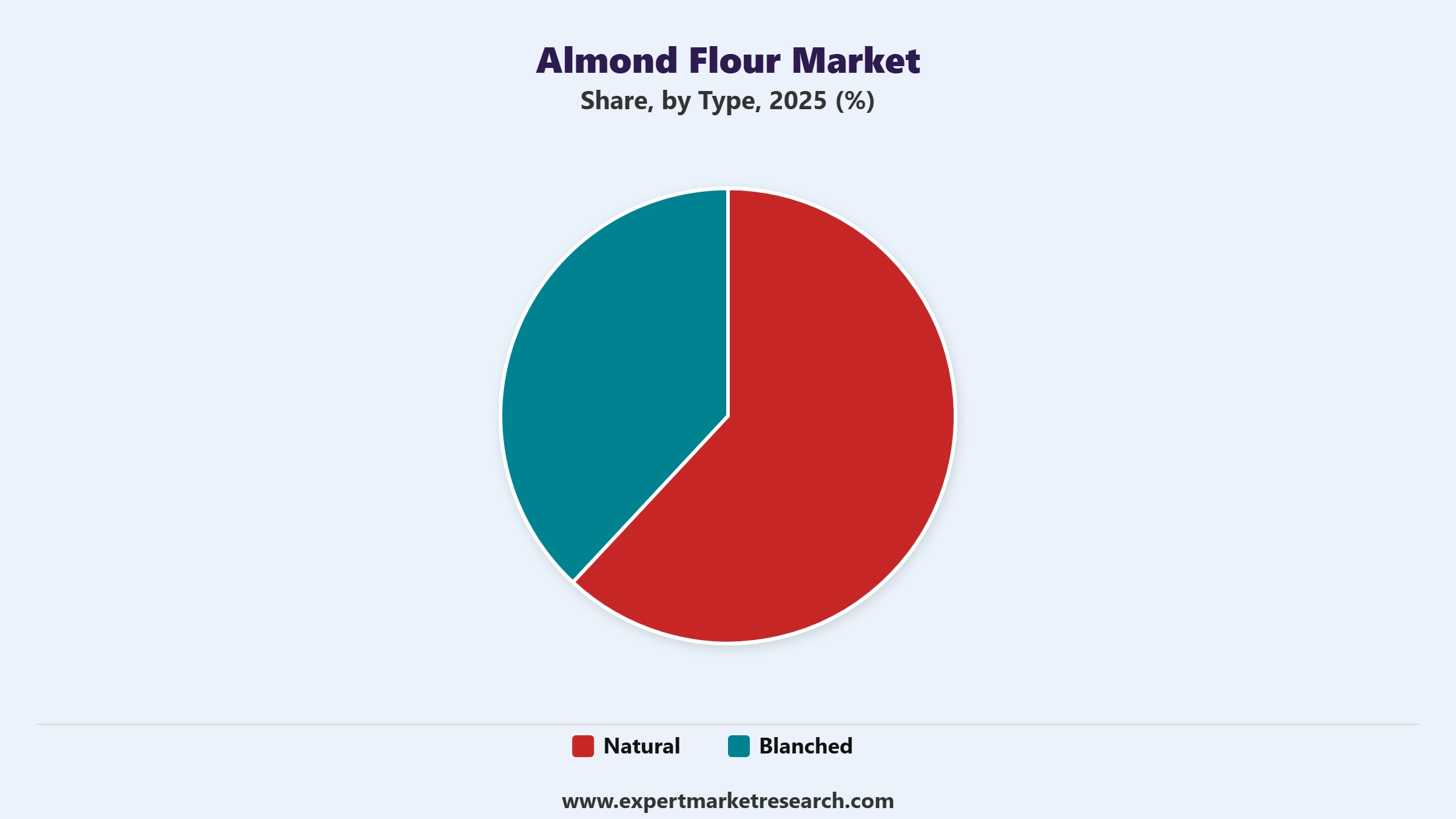
Key Insight: The blanched category registers the dominant share in the almond flour market because of its high-quality characteristics, including texture, appearance, and suitability for industrial baking. In contrast, the natural variety is growing in terms of popularity, particularly among brands that focus on fiber inclusion and unprocessed products. While blanched almond flour works well for precise industrial production, the natural variety is better suited for artisanal products or those targeted at the health-conscious consumer market. Demonstrating this shift, Danone offers vegan probiotic almond yogurts under its Light & Fit brand, offering lower sugar, added fiber, and gut-health benefits with B. lactis cultures.
The market can be broadly categorised on the basis of its applications into:
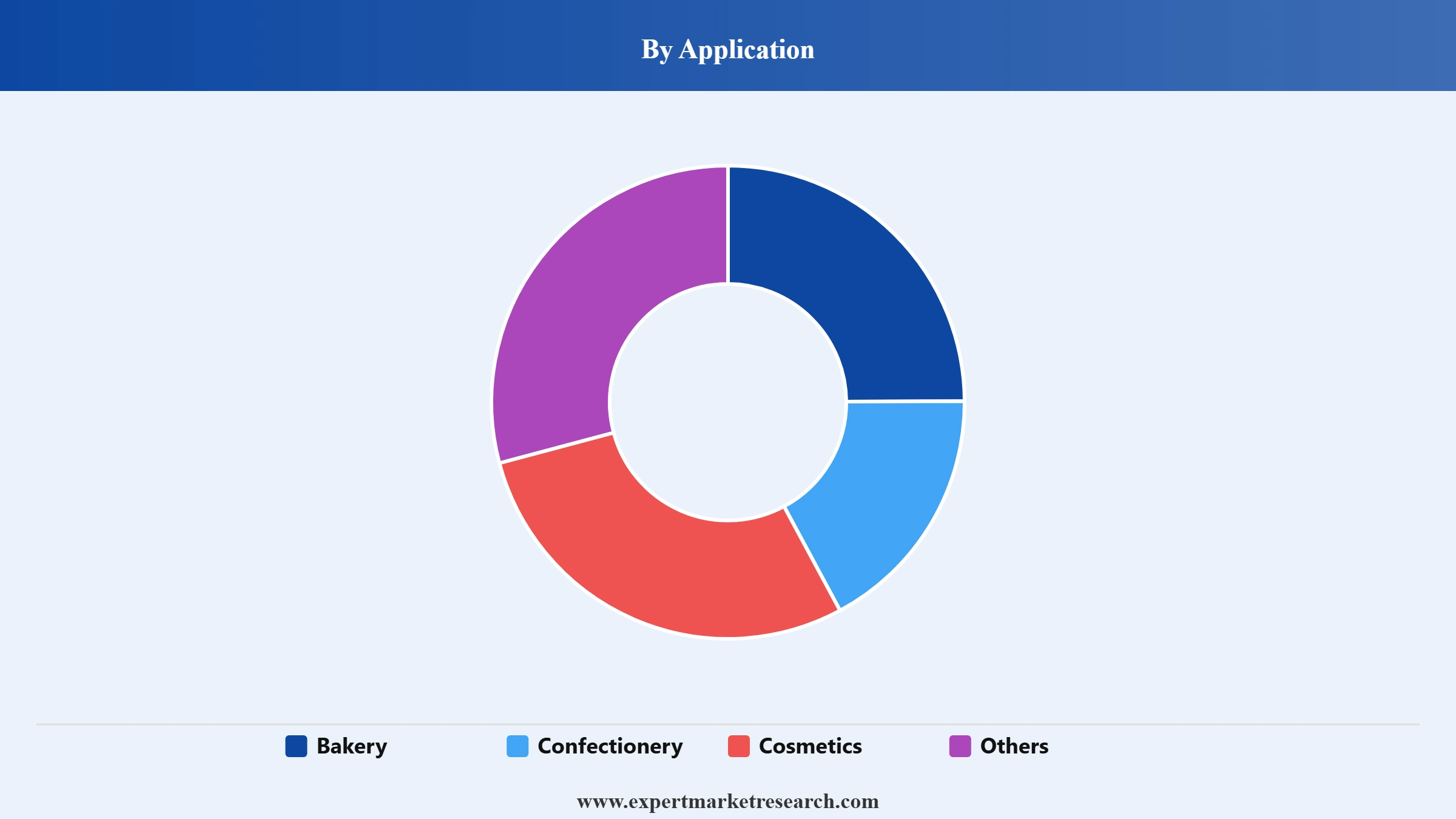
Key Insight: The primary applications for almond flour stem from its functionality in gluten-free and premium bakery products. The confectionery sector capitalizes on its flavor enhancing capabilities, whereas the cosmetics industry is viewed as a high-potential market owing to its sustainable credentials, accelerating the overall demand in the almond flour market. The coating and ready-meals industries offer considerable applications, while witnessing strong growth. Each application represents a unique usage scenario, with the bakery industry seeking scale, the cosmetics industry emphasizing naturality, and the confectionery industry focusing on flavor enhancements.
The market can be broadly categorised on the basis of its end use are:
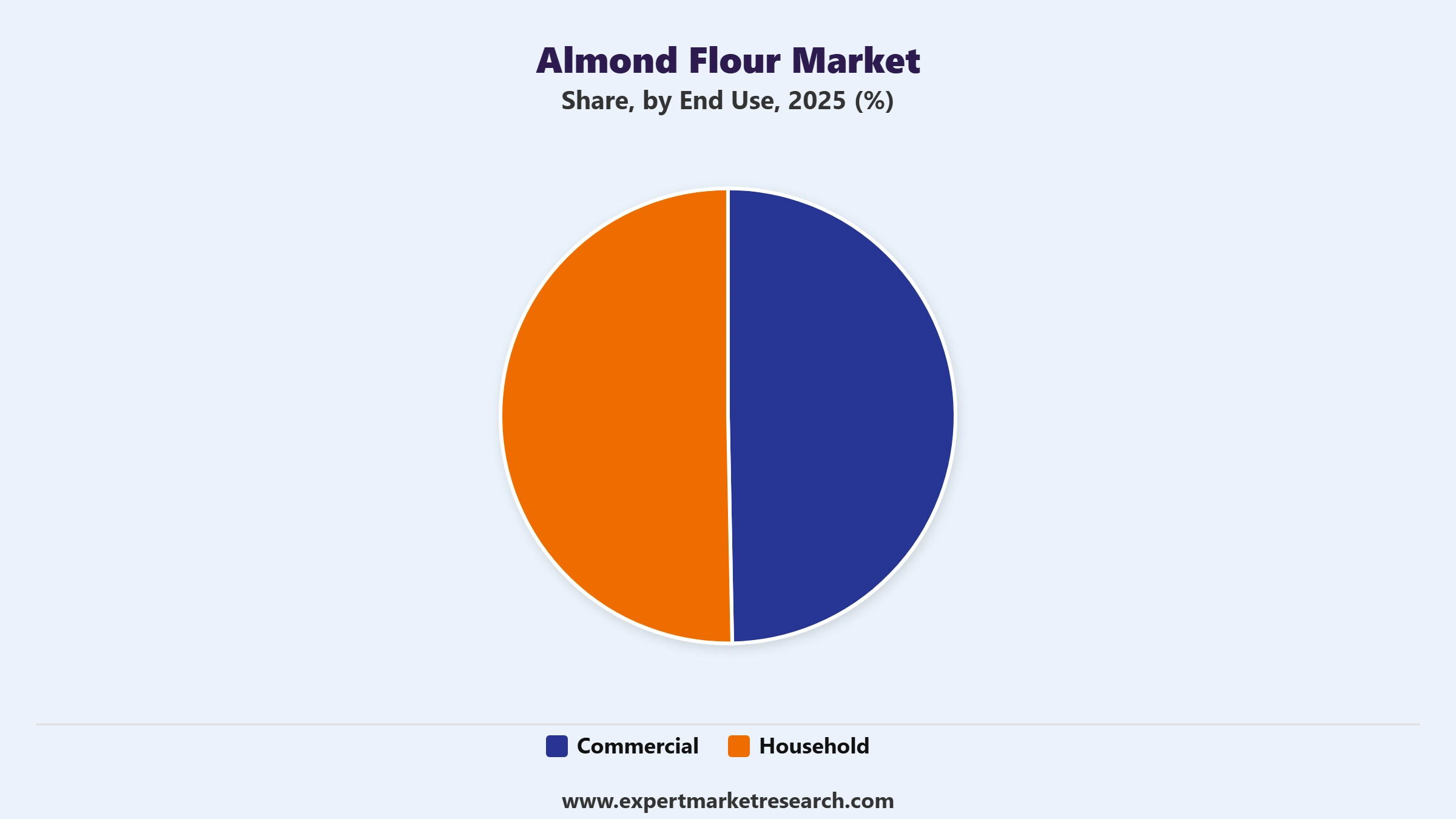
Key Insight: As per the almond flour market report, the commercial sector remains dominant because it depends on large-scale procurement, standardization, and long-term procurement agreements. The household sector, although much smaller, is expanding consistently due to the rising popularity of specialized diets and the emerging trend of baking at home. Whereas commercial consumers seek consistency and scale, the focus among households is on flexibility and health benefits. Both segments provide a balanced market structure, with industrial stability coupled with consumer-based innovation trends.
The market, on basis of distribution channel, is divided into:
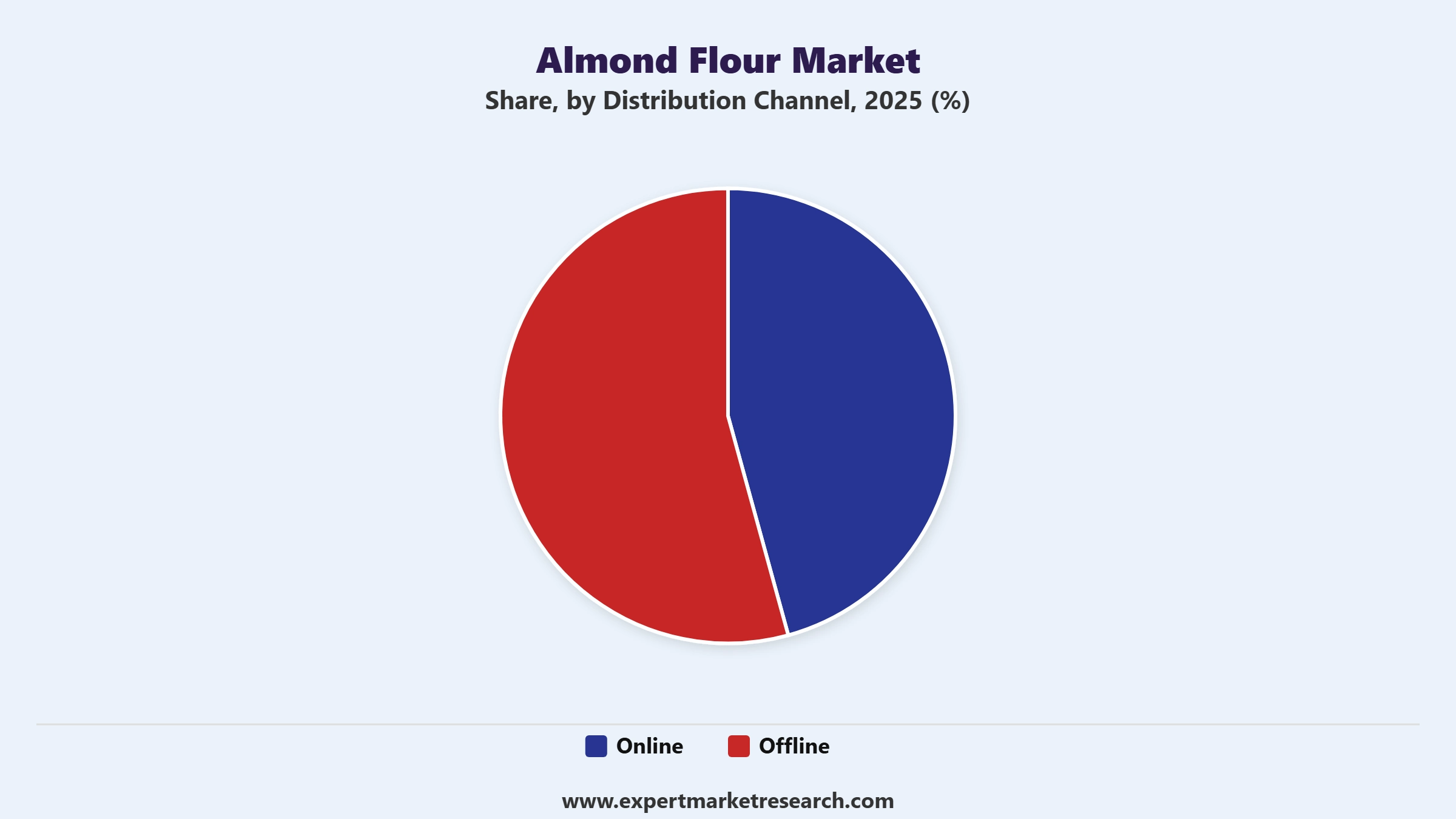
Key Insight: Offline methods dominate the almond flour market owing to their reliability, trustable relationships, and applicability in bulk purchasing. Nevertheless, online options are gaining momentum through their ability to provide flexibility, visibility, and rapid purchasing processes. Although major firms still prefer conventional purchasing methods, small-scale firms and newcomers are adopting the use of the internet for purchasing purposes.
The market can be broadly categorised on the basis of region into:
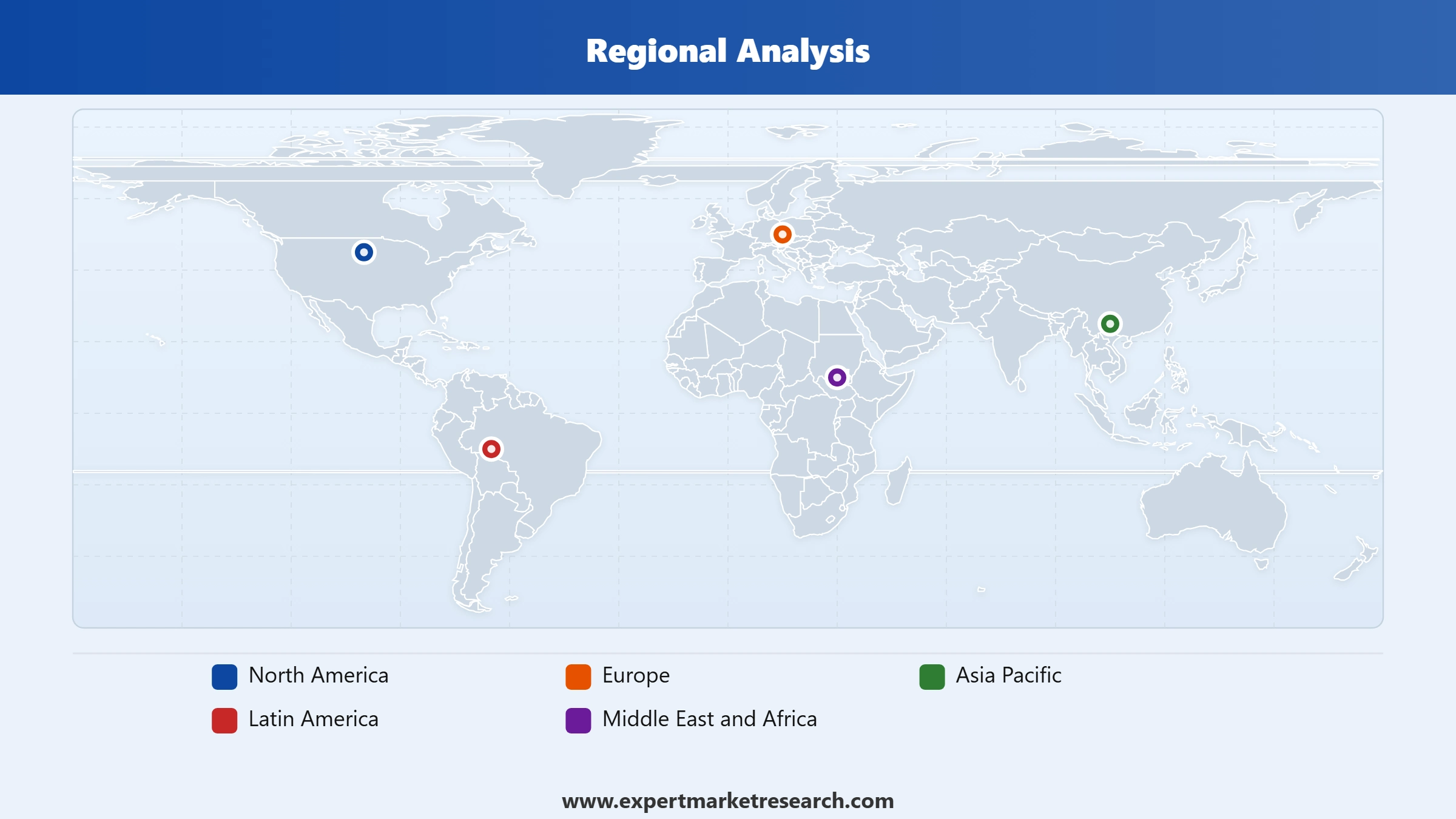
Key Insight: North America holds the leading position across the almond flour market scope owing to its robust manufacturing capabilities and well-developed infrastructure for processing. Europe ranks second with consistent demands due to the presence of high-end food products, whereas the Asia Pacific region is witnessing rapid growth owing to changing food habits. Latin America and the Middle East and Africa regions are also embracing almond flour, fueled by the growing food processing industry in these regions.

Read more about this report - REQUEST FREE SAMPLE COPY IN PDF
By type, blanched almond flour accounts for the dominant market share due to texture consistency needs
The use of blanched almond flour remains popular in bulk orders, largely due to its consistent coloration and texture that suits large-scale production needs within the baking industry. Brands such as Blue Diamond Growers are streamlining their production processes to provide consistently small particles of almond flour that help minimize rejections at mass bakery manufacturing plants. In terms of applications, blanched almond flour is used most often for premium cookies, macarons, and bread products free of gluten, boosting demand in the almond flour market. Apart from that, foodservice companies are increasingly ordering blanched almond flour because it combines well with other types of flours, thus increasing elasticity. Demonstrating the trend of circular economy, in October 2024, Treehouse California Almonds partnered with Sitos Group to build a USD 9 million biochar facility, converting almond shells into carbon-sequestering soil inputs and renewable energy, advancing circular agriculture systems.
Read more about this report - REQUEST FREE SAMPLE COPY IN PDF
Natural almond flour is observing accelerated growth pace within the almond flour market dynamics. Brands such as Olam Food Ingredients are ramping up production of skin-on almond flour for clients that want to highlight their minimally processed products. In fact, natural almond flour may be more appealing to consumers as it provides an additional source of dietary fiber and helps in producing high-fiber bars and breakfast cereals. Food developers have been using this almond variety for artisanal baking products because of its unique texture. Although it may cause consistency issues, advances in grinding technology address them effectively.
By application, the bakery segment registers the dominant share of the market driven by gluten-free product scalability needs
Bakery continues to be the biggest sector within the almond flour market scope because almond flour easily combines with gluten-free and low-carb recipes. Leading ingredient providers like Archer Daniels Midland Company collaborate with bakeries to create customized blends that offer good dough manageability and storage stability. In April 2025, Almond Board expanded masterclasses on almond butter and chocolate applications, equipping manufacturers with formulation insights to improve product innovation, texture optimization, and premium ingredient utilization strategies. Moreover, moisture retention and improved crumb are beneficial traits for the mass production of bread and cakes. At the same time, quick-service restaurants are starting to offer almond-based bakery products, creating another stable source of revenue.
Read more about this report - REQUEST FREE SAMPLE COPY IN PDF
Almond flour is gaining renewed interest from the cosmetics industry as an ingredient in exfoliating scrub formulas. Manufacturers like L'Oréal are searching for sustainable plant-based alternatives to microbeads. Due to mild abrasiveness, this flour may be used to create face washes and other skin care products that can help maintain natural health. Restrictions related to the use of plastic microbeads are also accelerating the transition. Advanced methods that make almond flour more sterile and granular enable its safe use in cosmetics. For instance, Harris Woolf offers almond protein powder and oil, offering higher protein, lower fat, and full traceability for food, beverage, and cosmetics manufacturers.
By end use, the commercial segment registers the largest share of the market due to large-scale contract manufacturing requirements globally
The commercial segment registers the largest share of the almond flour market revenue owing to large-scale food producers and service organizations. Major firms such as Barry Callebaut include almond flour in their product range comprising chocolates, confectionery items, and coatings. Bulk purchases and supply contracts characterize procurement activity. Large production capacity and steady demand from bakery and packaged food chains drive dominance of the segment globally. In January 2023, Blue Diamond introduced 360-degree campaigns across almond snacks, almond milk, and almond flour, aiming to boost plant-based adoption and expand global consumer engagement.
Read more about this report - REQUEST FREE SAMPLE COPY IN PDF
Households are increasingly using almond flour owing to the growing popularity of gluten-free and keto diets. Products from Bob's Red Mill Natural Foods are packaged in small consumer-friendly portions, with recipe suggestions included to encourage product usage and enhance customer convenience. Availability through online retail websites and social media trends also gains traction of the market by households. Volumes used by households will continue to be much less than those employed by commercial players; however, the segment offers steady incremental potential, especially within the developed markets.
By distribution channel, offline channels dominate the market due to established supplier-buyer procurement relationships
The segment of offline distribution sustains its dominance in the almond flour market since bulk deals and long-term contracts take place through offline channels. For instance, a company like Wonderful Pistachios & Almonds uses traditional offline distributors to reach large-scale food manufacturers and retailers. Physical distribution channels offer the advantage of being able to inspect product quality and agree upon tailor-made purchase terms. Moreover, local distributors can assist in making deliveries and managing stocks.
Read more about this report - REQUEST FREE SAMPLE COPY IN PDF
E-commerce is experiencing rapid growth in the almond flour market since online procurement allows companies as well as individuals to source products easily. For example, Amazon and other B2B portals are helping manufacturers to find better suppliers, acquire smaller quantities, and procure faster. E-commerce makes it easier to see transparent pricing information and availability. Manufacturers are also becoming more active in creating direct-to-business channels to reach more customers. This trend is especially helpful for small businesses looking for flexibility in purchasing. In April 2025, Nush Foods reformulated its almond yogurt portfolio by integrating fava protein, delivering 16-23g protein per pot alongside improved creaminess and flavor, targeting dairy-free consumers seeking functional, clean-label nutrition alternatives.
North America secures the leading market share due to strong almond production and processing infrastructure
North America dominates the global almond flour market due to abundant cultivation and sophisticated processing abilities. Blue Diamond Growers, for instance, takes advantage of the close vicinity to sources of raw materials, ensuring effective supply chains. Additionally, there is an established market for gluten-free products in North America that creates steady demand for almond flour. Automation of operations as well as quality control systems increase production effectiveness in this region, which is crucial for both domestic consumption and exports. Demonstrating this shift in the market, in February 2026, Blue Diamond launched almond milk line with simple ingredients, richer texture, and multiple variants, targeting clean-label demand and expanding plant-based beverage portfolio globally.
Read more about this report - REQUEST FREE SAMPLE COPY IN PDF
Asia Pacific is becoming a promising region for growth as the knowledge of gluten-free and high protein diets continues to expand among consumers. Olam Food Ingredients is actively developing its business in Asia Pacific in response to increasing demand in the bakery and snack industries. Urbanization and evolving diets encourage consumption of products made of almonds. Moreover, import-oriented supply chains increase the availability of the flour.
The global industry is witnessing intense competition as leading almond flour market players are emphasizing ultra-fine milling, specialized blending, and formulation for particular applications to satisfy modern industrial needs. For example, Blue Diamond Growers has been developing precision blanching and size grading for compatibility with automated baking machinery. Similarly, Cargill Incorporated is benefiting from its global logistics network to incorporate almond flour within its comprehensive plant-based ingredients.
There are significant opportunities in premium categories like protein bars, natural cosmetics, and mixed flours. Most of the almond flour companies are adopting traceability systems and securing long-term relationships with growers to ensure steady supply. The strategic alliance with food producers is helping suppliers develop custom products to achieve higher margins and customer loyalty.
Established in 1944 and based in Renmark, Australia, Almondco Australia Ltd. specializes in almond processing and exports through vertical integration. The company is expanding its almond flour range to cater to Asian food manufacturers by maintaining high-quality standards and grind customization capabilities. In addition, the company stresses collaboration with growers and sustainability in farming to guarantee a steady supply of raw materials.
Founded in 1865 and located in Minnesota, United States of America, Cargill Incorporated incorporates almond flour in its overall plant-based product range. The company assists major manufacturers in designing and distributing customized blends. The company's primary objective is to blend almond flour with other protein sources to formulate functional ingredients used in bakeries, snacks, and confectionery sectors.
Barney Butter is a firm that was founded in 2006, and the company has its headquarters located in California, United States. The company specializes in producing top-notch almond products. Through the company's experience in the production of almond butter, it has managed to produce highly milled almond flour for consumption.
Blue Diamond Growers is a firm that was founded in 1910, and the company has its headquarters in California, United States. The company is a leading almond cooperative that specializes in producing large-scale almond flour through advanced milling processes. The company has focused on supplying its products to bakery and snack manufacturers across Europe and North America.
Other key players in the market include Bob’s Red Mill Natural Foods, and Oleander Bio, SA, among others.
*Please note that this is only a partial list; the complete list of key players is available in the full report. Additionally, the list of key players can be customized to better suit your needs.*
Unlock the latest insights with our almond flour market trends 2026 report. Discover regional growth patterns, consumer preferences, and key industry players. Stay ahead of competition with trusted data and expert analysis. Download your free sample report today and drive informed decisions in the market.


Upto 15% Off
USD
$2499 $2249
$3999 $3599
$4999 $4249
$5999 $5099


*While we strive to always give you current and accurate information, the numbers depicted on the website are indicative and may differ from the actual numbers in the main report. At Expert Market Research, we aim to bring you the latest insights and trends in the market. Using our analyses and forecasts, stakeholders can understand the market dynamics, navigate challenges, and capitalize on opportunities to make data-driven strategic decisions.*
In 2025, the global almond flour market attained a value of nearly USD 1325.28 Million.
The market is projected to grow at a CAGR of 9.20% between 2026 and 2035.
The market is estimated to witness a healthy growth in the forecast period of 2026-2035 to reach USD 3195.46 Million by 2035.
The major market drivers include the growing interest of individuals in the heathier alternatives of foods, and rising demand from the cosmetic industry, among other factors.
The growing popularity of vegan diets, interest in healthier food supplements, and rising use of almond flour in the confectionery sector, are key trends expected to aid the market growth.
The major regions in the market are North America, Latin America, the Middle East and Africa, Europe, and the Asia Pacific.
The major types of almond flour in the market are blanched and natural.
The different applications of the almond flour in the market are bakery, confectionery, and cosmetics, among others.
The various end uses of almond flour are commercial and household.
The significant distribution channels in the market are offline and online.
The major players in the global almond flour market are Almondco Australia Ltd., Cargill Incorporated, Barney Butter, Blue Diamond Growers, Bob’s Red Mill Natural Foods, and Oleander Bio, SA, among others.
Explore our key highlights of the report and gain a concise overview of key findings, trends, and actionable insights that will empower your strategic decisions.
| REPORT FEATURES | DETAILS |
| Base Year | 2025 |
| Historical Period | 2019-2025 |
| Forecast Period | 2026-2035 |
| Scope of the Report |
Historical and Forecast Trends, Industry Drivers and Constraints, Historical and Forecast Market Analysis by Segment:
|
| Breakup by Type |
|
| Breakup by Application |
|
| Breakup by End Use |
|
| Breakup by Distribution Channel |
|
| Breakup by Region |
|
| Market Dynamics |
|
| Competitive Landscape |
|
| Companies Covered |
|
| Report Price and Purchase Option | Explore our purchase options that are best suited to your resources and industry needs. |
| Delivery Format | Delivered as an attached PDF and Excel through email, with an option of receiving an editable PPT, according to the purchase option. |
Datasheet
One User
USD 2,499
USD 2,249
tax inclusive*
Single User License
One User
USD 3,999
USD 3,599
tax inclusive*
Five User License
Five User
USD 4,999
USD 4,249
tax inclusive*
Corporate License
Unlimited Users
USD 5,999
USD 5,099
tax inclusive*
*Please note that the prices mentioned below are starting prices for each bundle type. Kindly contact our team for further details.*
Flash Bundle
Small Business Bundle
Growth Bundle
Enterprise Bundle
*Please note that the prices mentioned below are starting prices for each bundle type. Kindly contact our team for further details.*
Flash Bundle
Number of Reports: 3
20%
tax inclusive*
Small Business Bundle
Number of Reports: 5
25%
tax inclusive*
Growth Bundle
Number of Reports: 8
30%
tax inclusive*
Enterprise Bundle
Number of Reports: 10
35%
tax inclusive*
How To Order

Select License Type
Choose the right license for your needs and access rights.

Click on ‘Buy Now’
Add the report to your cart with one click and proceed to register.

Select Mode of Payment
Choose a payment option for a secure checkout. You will be redirected accordingly.
Strategic Solutions for Informed Decision-Making
Gain insights to stay ahead and seize opportunities.

Get insights & trends for a competitive edge.

Track prices with detailed trend reports.

Analyse trade data for supply chain insights.

Leverage cost reports for smart savings

Enhance supply chain with partnerships.

Connect For More Information
Our expert team of analysts will offer full support and resolve any queries regarding the report, before and after the purchase.
Our expert team of analysts will offer full support and resolve any queries regarding the report, before and after the purchase.
We employ meticulous research methods, blending advanced analytics and expert insights to deliver accurate, actionable industry intelligence, staying ahead of competitors.
Our skilled analysts offer unparalleled competitive advantage with detailed insights on current and emerging markets, ensuring your strategic edge.
We offer an in-depth yet simplified presentation of industry insights and analysis to meet your specific requirements effectively.




