

Consumer Insights
Uncover trends and behaviors shaping consumer choices today
Procurement Insights
Optimize your sourcing strategy with key market data
Industry Stats
Stay ahead with the latest trends and market analysis.
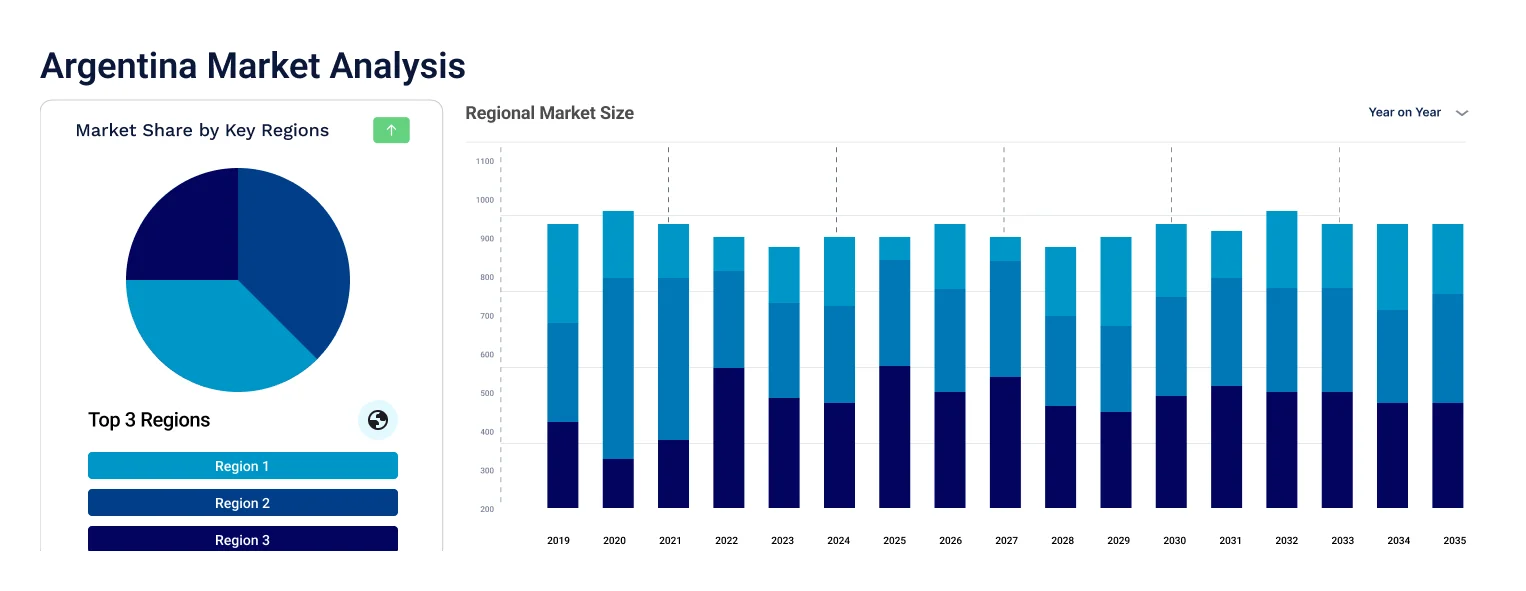
The Argentina aesthetic devices market attained a value of USD 162.70 Million in 2025 and is projected to expand at a CAGR of 8.20% through 2035. The market is further expected to achieve USD 357.82 Million by 2035. Argentina's procedure mix creates a particularly broad device-utilization opportunity. In 2024, hair removal reached 29,275 procedures, while non-surgical fat reduction accounted for 16,690 and skin tightening for 8,938. This combination allows clinics to amortize equipment across recurring hair, body-contouring, and rejuvenation applications rather than relying on a single treatment category.
A significant change in Argentina's medical-device trade environment is improving access to imported equipment. In June 2025, ANMAT removed prior import authorization requirements for Class I and II medical devices, covering approximately 70% of imported medical products. For aesthetic-device suppliers whose eligible products fall within these classes, the change can shorten administrative timelines and reduce import-related costs. This may make it easier for distributors to broaden portfolios, maintain inventory and introduce newer equipment into Argentine clinics without the previous authorization bottleneck. The measure therefore creates a more flexible commercial environment for suppliers seeking wider technology availability across the country, thereby boosting the Argentina aesthetic devices market value.
Developments in equipment technology are now heading more toward integrated platforms that consist of a combination of technologies as opposed to using one form of energy alone. This will help the one equipment solve several needs of patients without having to purchase other forms of capital equipment. The regulated aesthetic equipment market in Argentina already includes radiofrequency, fractional lasers and intense pulsed light (IPL). Manufacturers get an opportunity to integrate several technologies onto one platform thus increasing the utilization of rooms within the clinic and packaging several indications.
Procurement processes for premium aesthetics systems may also be longer as Argentina still relies on the importation of its medical technology equipment. However, the additional procedures related to the registration, documentation, and customs clearance process may add to operational difficulties. The new regulation of ANMAT in 2025 concerning low-risk devices will not necessarily free the suppliers from such difficulties. The simplified procedure applies only to Class I and Class II devices. In order to overcome this limitation, suppliers have to cooperate with licensed importers and complete all the documentation prior to delivery, keep the regulatory records and establish spare parts inventories in the region, thereby boosting the Argentina aesthetic devices market developments.
Compound Annual Growth Rate
8.2%
Value in USD Million
2026-2035
Read more about this report - Request a Free Sample
Sciton, Inc. launched Super MOXI with High Density (HD) Delivery on September 1, 2026, upgrading its MOXI laser with twin beams capable of treatments up to twice as fast and a 16W diode designed for larger treatment areas. The technology is available on the portable mJOULE and JOULE X platforms, with expanded treatment settings and ScitonStaX combinations. The launch broadens the scope of professional skin-revitalisation procedures, potentially encouraging aesthetic clinics to upgrade existing modular laser platforms and increase utilisation across multiple treatment areas.
Candela Corporation highlighted new clinical evidence for its Nordlys 1940-nm non-ablative fractional laser following publication of a human study in Scientific Reports on June 30, 2026. The split-face study involved 22 adults and examined molecular changes following three treatments, identifying changes in DNA-methylation patterns associated with skin ageing. Candela subsequently promoted the findings in August, strengthening the scientific positioning of Nordlys beyond visible skin resurfacing outcomes. Such evidence can support practitioner interest in clinically substantiated laser technologies for skin rejuvenation.
CLASSYS’ 2025 Annual Report outlines a 2026-2028 product roadmap covering dermabrasion, skin tightening, resurfacing, pigmentation treatment, next-generation HIFU and MRF technologies, alongside home-use platforms. The company reported a global installed base of 45,000 Ultraformer units, with 21,000 HIFU, 3,300 MRF and 6,500 MNRF units across its broader portfolio. The roadmap indicates a shift toward a wider multi-indication portfolio, potentially enabling distributors and clinics to source complementary technologies from a single manufacturer as treatment requirements diversify.
Venus Concept continued the international introduction of Venus NOVA during 2026 following its U.S. commercial availability from December 2025. The platform combines Adaptive Electrical Muscle Stimulation, multi-polar radiofrequency with pulsed electromagnetic fields, and Advanced VariPulse technology for non-invasive body and skin treatments. In March 2026, Venus Concept promoted the platform at Be+Well New York, including a dedicated product-focused education session covering its clinical applications. The broader rollout supports adoption of multifunctional systems combining body contouring, muscle conditioning and skin treatments, thus shaping the trends of the Argentina aesthetic devices market.
Argentina's medical-aesthetic equipment suppliers increasingly need to compete not only on treatment performance but also on registration readiness, traceability, technical documentation, and after-sales support. ANMAT's 2025 implementation of Disposition 64/25 introduced the MERCOSUR medical-device registration framework into national legislation, while ANMAT subsequently expanded its training for technical directors, co-directors, and quality personnel. The agency also emphasized surveillance of aesthetic equipment in its 2025 federal activities. For international manufacturers entering Argentina, localized regulatory capability can therefore shorten commercialization bottlenecks and improve distributor selection. Suppliers able to package devices with documentation, training, maintenance protocols, and compliant import support are better positioned to serve clinics seeking lower procurement risk.
ISAPS recorded 29,275 hair-removal procedures in Argentina in 2024, making the category one of the largest explicitly device-dependent non-surgical applications in the country's aesthetic-procedure mix. The commercial opportunity is increasingly centered on equipment capable of maintaining treatment throughput across different skin and hair characteristics. Sveltia, for example, markets triple-wavelength laser technology and describes its Dermolight platforms as systems designed to target the hair follicle with controlled energy delivery. For Argentine distributors, systems that combine hair removal with additional facial or body indications can improve equipment utilization, while clinics can potentially spread capital expenditure across several recurring treatment protocols.
In March 2026, Allergan Aesthetics reported research involving more than 12,000 consumers and highlighted increasing interest in comprehensive, multimodal aesthetic treatment planning. Its AA Signature framework specifically discussed combining injectable treatments with energy-based devices. Although the research is global rather than Argentina-specific, the equipment implication is relevant: clinics increasingly have an incentive to combine skin-quality, tightening, resurfacing, and injectable protocols. Device manufacturers can respond by developing modular systems, compatible handpieces, treatment sequencing guidance, and provider education rather than selling isolated machines. Argentine buyers can consequently prioritize platforms that support multiple indications and integrate readily into consultation-led treatment pathways.
Candela reported in June 2026 that a peer-reviewed Scientific Reports study examined the company's Nordlys non-ablative fractional laser and its relationship with molecular markers associated with skin aging. Evidence generation of this type strengthens the role of published clinical data in device selection, particularly for dermatology and plastic-surgery practices where treatment claims must be supported by credible evidence. Argentine distributors can capitalize on this trend by emphasizing peer-reviewed evidence, clinical protocols, physician education, and measurable treatment endpoints. Manufacturers with strong scientific communication can differentiate premium platforms from lower-cost alternatives where purchasing decisions are based primarily on upfront equipment price, thereby boosting the Argentina aesthetic devices market dynamics and trends.
Venus Concept's Venus NOVA was developed around a broader practice-performance approach, combining a multi-application platform with its Venus Jumpstart program for clinical education, marketing enablement, and implementation support. The company planned global rollout during 2026 after U.S. availability beginning in December 2025. This model points toward a wider B2B shift in which manufacturers compete through utilization support rather than hardware alone. Argentine clinics operating in competitive private-care environments can benefit from suppliers that provide onboarding, treatment protocols, staff training, maintenance, marketing support, and utilization analytics, thereby helping providers extract greater revenue potential from each installed platform.
The Expert Market Research’s report titled "Argentina Aesthetic Devices Market Report and Forecast 2026-2035” offers a detailed analysis of the market based on the following segments:
Market Breakup by Type
Key Insight: Energy-based and non-energy-based aesthetic devices are gaining traction through different clinical and commercial pathways. Energy-based equipment remains central to laser hair removal, skin resurfacing, RF tightening, body contouring, IPL, and related procedures. ANMAT specifically identifies radiofrequency, fractional laser, and IPL among aesthetic equipment requiring regulatory oversight, reinforcing the importance of compliant energy-device deployment. Non-energy-based systems complement these technologies through mechanical, surgical, or supportive applications, including equipment used for dermoabrasion and related treatments. CORMEDIC's Sveltia portfolio demonstrates this breadth, spanning laser, HIFU, radiofrequency, IPL, cryotherapy, suction, and electroaesthetic technologies. For distributors, portfolio breadth is increasingly important because clinics can seek suppliers capable of addressing several treatment categories rather than relying on separate vendors.
Market Breakup by Application
Key Insight: Argentina's application landscape is becoming increasingly diversified, with hair removal providing recurring utilization while resurfacing, tightening, and body-contouring technologies broaden clinic revenue streams. In 2024, ISAPS recorded 29,275 hair-removal procedures, 16,690 non-surgical fat-reduction procedures, and 8,938 non-surgical skin-tightening procedures. The survey also found that 20% of surveyed Argentine plastic surgeons reported performing non-surgical skin tightening, while 21.4% reported non-surgical fat reduction and 18.6% reported hair removal. This indicates a market where equipment suppliers can increase adoption by developing platforms that combine multiple applications and treatment protocols.
Market Breakup by End Use
Key Insight: Clinics, hospitals, and home-care settings are developing distinct purchasing requirements. Clinics represent the principal professional-use channel because aesthetic procedures frequently require trained personnel, controlled treatment environments, and regulated equipment. ANMAT states that aesthetic procedures using regulated equipment should be performed by medical personnel in authorized facilities and that equipment must have the appropriate ANMAT registration. Hospitals provide an additional channel where aesthetic technology overlaps with dermatology, plastic surgery, and reconstructive services. Home-care equipment represents a smaller but expanding opportunity as manufacturers develop lower-complexity platforms. CLASSYS' product roadmap includes at-home HIFU and dermabrasion-related development, signaling increasing interest in consumer-oriented device categories, thus driving the demand in the Argentina aesthetic devices market.
Read more about this report - Request a Free Sample
Energy-based aesthetic devices represent the dominant type, supported by Argentina’s substantial demand for procedures that commonly use laser, light, radiofrequency, ultrasound or related technologies. ISAPS recorded 29,275 hair-removal procedures, 8,938 non-surgical skin-tightening procedures, and 8,482 tattoo-removal procedures in Argentina in 2024. The breadth of these applications enables a single platform to serve multiple treatment categories, particularly in specialist aesthetic practices. Argentina also had an estimated 912 plastic surgeons, supporting a sizeable professional user base for advanced aesthetic technologies. Such developments will thus boost Argentina aesthetic devices market trends in the long run.
Non-energy-based aesthetic devices are positioned for rapid expansion as minimally invasive aesthetic procedures continue gaining importance in Argentina. ISAPS recorded 148,382 injectable procedures in 2024, with hyaluronic acid accounting for 80,165 procedures and botulinum toxin for 59,006. Although injectables are not devices themselves, their high treatment volume indicates a strong clinical ecosystem around minimally invasive aesthetics, creating opportunities for complementary non-energy technologies. Argentina's 2024 aesthetic meeting also attracted 140 plastic surgeons and 70 residents, highlighting continued professional engagement with newer aesthetic techniques.
Skin resurfacing and tightening leads the application landscape because Argentine aesthetic practices have a substantial facial-rejuvenation workload. Within ISAPS’ 2024 Argentina data, 5,654 full-field ablative procedures were recorded, indicating established demand for technologies capable of controlled skin resurfacing. The procedure category is particularly relevant to laser manufacturers because ablative systems can be used for texture improvement and rejuvenation while requiring specialised clinical expertise. This supports demand for professional-grade platforms rather than purely consumer-oriented aesthetic equipment
Body contouring and cellulite reduction offers significant expansion potential because consumers can pursue visible body-shaping outcomes without undergoing conventional surgery. Argentina recorded 16,690 non-surgical fat-reduction procedures in 2024, placing this treatment among the country’s most frequently reported non-surgical aesthetic procedures. This creates opportunities for technologies such as cryolipolysis, ultrasound and radiofrequency systems. Importantly, the category can generate repeat treatment requirements, giving clinics an opportunity to increase utilisation of installed equipment rather than relying exclusively on one-time procedures.
Clinics dominate because aesthetic devices generally require trained professionals, controlled treatment environments and appropriate patient assessment. Argentina’s specialist ecosystem supports this model- the 2024 ISAPS Argentina Aesthetic Meeting attracted 140 plastic surgeons and 70 residents, with the programme including lectures and live surgery demonstrations. Such professional activity indicates an established knowledge-sharing network around aesthetic medicine. For device suppliers, clinics therefore remain the principal setting for introducing sophisticated equipment, demonstrating treatment protocols, training operators and providing supervised procedures to patients, thereby shaping the demand in the Argentina aesthetic devices market.
Home care settings offer an emerging scalability opportunity as aesthetic technologies become smaller and easier to operate. However, Argentina-specific official statistics do not currently quantify home-use aesthetic-device growth, so a precise growth rate would be unsupported. The opportunity is instead visible through regulatory attention to product authenticity and safety. In 2025, ANMAT prohibited several aesthetic devices lacking appropriate registration or import information, reinforcing the importance of authorised products as consumer-accessible technologies expand. This regulatory environment may favour reputable manufacturers with traceable distribution and documented safety compliance.
Buenos Aires and the Autonomous City of Buenos Aires constitute the country's most significant addressable market for aesthetic-device suppliers because of their population concentration and dense concentration of specialist healthcare services. The 2022 Census recorded 17.57 million people in Buenos Aires Province and 3.12 million in CABA, together representing nearly half of the national population recorded at that time. The concentration of plastic-surgery and aesthetic medicine expertise is also reflected in Argentina's participation in international professional networks- the 2024 ISAPS Argentina Aesthetic Meeting brought together 140 plastic surgeons and 70 residents. These conditions make the Buenos Aires metropolitan market important for premium-device launches, distributor networks, training centers, and demonstration clinics, thereby directly boosting the Argentina aesthetic devices market regional growth.
Córdoba, Santa Fe, and Mendoza represent important expansion markets for manufacturers seeking geographic diversification beyond Buenos Aires. The 2022 Census recorded 3.98 million residents in Córdoba, 3.56 million in Santa Fe, and 2.01 million in Mendoza, creating substantial secondary population centers. Córdoba has an additional strategic advantage for domestic equipment supply because CORMEDIC/Sveltia operates its industrial facility there and maintains commercial infrastructure in the province and Buenos Aires. For international suppliers, regional distributors, mobile training programs, localized servicing, and inventory positioned outside the capital can improve coverage and reduce dependence on the Buenos Aires market.
Leading Argentina aesthetic devices market players are generally aiming to achieve growth and scalability by expanding their product portfolios, strengthening distribution and clinic networks, and introducing multifunctional technologies that address multiple aesthetic concerns. Companies are increasingly focusing on minimally invasive and non-invasive treatments, as these can broaden the potential patient base and increase treatment frequency. Another priority is improving device affordability and accessibility through distributor partnerships, financing models, and service support. Manufacturers are also investing in practitioner training and technical assistance to encourage safe and effective technology adoption.
Argentina aesthetic devices companies are also seeking product innovation, including energy-based platforms, laser systems, body-contouring technologies, and skin-rejuvenation solutions, which remains central to differentiation. In addition, players are seeking stronger penetration beyond major metropolitan areas, while using digital marketing and professional education to increase consumer awareness. These strategies collectively support wider clinic adoption, higher device utilisation, recurring treatment demand, and sustainable market expansion.
AbbVie Inc., established in 2013 after separating from Abbott Laboratories, is headquartered in North Chicago, Illinois, United States. In Argentina’s aesthetic market, its offerings are centred on the Allergan Aesthetics portfolio, spanning facial injectables, body contouring and skincare. Key products include BOTOX Cosmetic, JUVÉDERM dermal fillers and SKINVIVE, supporting wrinkle reduction, facial volume enhancement and skin-quality treatments. AbbVie also has aesthetics products covering body contouring and regenerative medicine, providing clinics with a broader portfolio beyond energy-based aesthetic devices.
Alma Lasers Ltd. was established in 1999 and is headquartered in Caesarea, Israel. Its portfolio relevant to aesthetic practices includes laser, light-based, radiofrequency, plasma and ultrasound technologies. Major platforms include Alma Harmony, Alma PrimeX for body contouring and skin tightening, and Soprano Titanium for hair removal. Alma also offers multi-technology systems designed for facial rejuvenation, pigmentation, vascular concerns, skin tightening and other aesthetic applications. The company maintains an international distribution network, supporting access to its technologies across global markets.
Candela Corporation was established in 1970 and is headquartered in Marlborough, Massachusetts, United States. Its aesthetic portfolio includes laser, intense pulsed light (IPL) and radiofrequency microneedling systems used for skin rejuvenation, vascular and pigmentation treatments, hair removal and resurfacing. Key platforms include PicoWay, GentleMax Pro Plus, Nordlys, Vbeam Prima and Profound. These technologies address diverse facial and body treatments and are designed for dermatologists, plastic surgeons, hospitals and medical aesthetic clinics, making Candela a significant technology supplier for international aesthetic practices.
Sciton, Inc. was established in 1997 and is headquartered in Palo Alto, California, United States. The company develops laser and light-based aesthetic systems for skin resurfacing, rejuvenation, pigmentation and vascular conditions, acne, scars, hair reduction and body treatments. Its portfolio includes JOULE, mJOULE, MOXI, HALO and other modular platforms that combine different laser technologies and treatment capabilities. Sciton also provides clinical training and support for practitioners, helping aesthetic clinics integrate its systems into professional treatment programmes.
Other key players in the Argentina aesthetic devices market include Venus Concept Inc., CORMEDIC SA (Sveltia), Merz Pharma GmbH & Co.KGaA, and CLASSYS Inc., among others.
*Please note that this is only a partial list; the complete list of key players is available in the full report. Additionally, the list of key players can be customized to better suit your needs.*
Access the latest insights into the Argentina aesthetic devices market trends 2026, competitive environment, segmentation, and emerging technology opportunities. The report provides a structured view of demand indicators, applications, end-use channels, regulatory developments, and competitive strategies supporting the Argentina aesthetic devices market forecast 2026-2035. Download the sample to evaluate the report's coverage and identify actionable opportunities for market entry, product development, distribution, and expansion.


Upto 15% Off
USD
$1999 $1799
$3099 $2789
$4599 $3909
$5999 $5099


*While we strive to always give you current and accurate information, the numbers depicted on the website are indicative and may differ from the actual numbers in the main report. At Expert Market Research, we aim to bring you the latest insights and trends in the market. Using our analyses and forecasts, stakeholders can understand the market dynamics, navigate challenges, and capitalize on opportunities to make data-driven strategic decisions.*
Explore our key highlights of the report and gain a concise overview of key findings, trends, and actionable insights that will empower your strategic decisions.
| REPORT FEATURES | DETAILS |
| Base Year | 2025 |
| Historical Period | 2019-2025 |
| Forecast Period | 2026-2035 |
| Scope of the Report |
Historical and Forecast Trends, Industry Drivers and Constraints, Historical and Forecast Market Analysis by Segment:
|
| Breakup by Type |
|
| Breakup by Application |
|
| Breakup by End Use |
|
| Market Dynamics |
|
| Supplier Landscape |
|
| Companies Covered |
|
Datasheet
One User
USD 1,999
USD 1,799
tax inclusive*
Single User License
One User
USD 3,099
USD 2,789
tax inclusive*
Five User License
Five User
USD 4,599
USD 3,909
tax inclusive*
Corporate License
Unlimited Users
USD 5,999
USD 5,099
tax inclusive*
*Please note that the prices mentioned below are starting prices for each bundle type. Kindly contact our team for further details.*
Flash Bundle
Small Business Bundle
Growth Bundle
Enterprise Bundle
*Please note that the prices mentioned below are starting prices for each bundle type. Kindly contact our team for further details.*
Flash Bundle
Number of Reports: 3
20%
tax inclusive*
Small Business Bundle
Number of Reports: 5
25%
tax inclusive*
Growth Bundle
Number of Reports: 8
30%
tax inclusive*
Enterprise Bundle
Number of Reports: 10
35%
tax inclusive*
How To Order

Select License Type
Choose the right license for your needs and access rights.

Click on ‘Buy Now’
Add the report to your cart with one click and proceed to register.

Select Mode of Payment
Choose a payment option for a secure checkout. You will be redirected accordingly.
Strategic Solutions for Informed Decision-Making
Gain insights to stay ahead and seize opportunities.

Get insights & trends for a competitive edge.

Track prices with detailed trend reports.

Analyse trade data for supply chain insights.

Leverage cost reports for smart savings

Enhance supply chain with partnerships.

Connect For More Information
Our expert team of analysts will offer full support and resolve any queries regarding the report, before and after the purchase.
Our expert team of analysts will offer full support and resolve any queries regarding the report, before and after the purchase.
We employ meticulous research methods, blending advanced analytics and expert insights to deliver accurate, actionable industry intelligence, staying ahead of competitors.
Our skilled analysts offer unparalleled competitive advantage with detailed insights on current and emerging markets, ensuring your strategic edge.
We offer an in-depth yet simplified presentation of industry insights and analysis to meet your specific requirements effectively.




