

Consumer Insights
Uncover trends and behaviors shaping consumer choices today
Procurement Insights
Optimize your sourcing strategy with key market data
Industry Stats
Stay ahead with the latest trends and market analysis.
The Australia activated carbon market attained a value of USD 188.94 Million in 2025 and is projected to expand at a CAGR of around 4.10% through 2035. The expanding population, rising mining activities and focus on sustainability are driving the market to achieve USD 282.38 Million by 2035.
Expanding population and heightened concerns about water security and quality are driving activated carbon demand in Australia in municipal and industrial water-treatment. For example, the Hydroflux Epco Australia project for a USD 150 million beverage facility in Queensland included three stainless-steel activated-carbon vessels for chlorine/taste control of process water. Activated carbon is increasingly used to remove organic contaminants, taste/odor compounds and disinfection by-product precursors in Australia.
Sustainability and ESG factors increasingly influence procurement decisions. Australian activated carbon producers are actively promoting low-carbon manufacturing and sustainable feedstocks, as shown by James Cumming and Sons’ recent expansion of their Western Sydney plant and launch of new carbon products designed for water treatment with lower emissions. These sustainability credentials become differentiators in tenders, boosting demand for “green” AC.
Compound Annual Growth Rate
4.1%
Value in USD Million
2026-2035
| Australia Activated Carbon Market Report Summary | Description | Value |
| Base Year | USD Million | 2025 |
| Historical Period | USD Million | 2019-2025 |
| Forecast Period | USD Million | 2026-2035 |
| Market Size 2025 | USD Million | 188.94 |
| Market Size 2035 | USD Million | 282.38 |
| CAGR 2019-2025 | Percentage | XX% |
| CAGR 2026-2035 | Percentage | 4.10% |
| CAGR 2026-2035 - Market by Region | Australian Capital Territory | 4.7% |
| CAGR 2026-2035 - Market by Region | Western Australia | 4.4% |
| CAGR 2026-2035 - Market by Distribution Channel | E-commerce / Online Sales | 8.6% |
| CAGR 2026-2035 - Market by End Use | Air Purification | 4.6% |
| 2025 Market Share by Region | Western Australia | 16.2% |
The Clean Energy Finance Corporation and global investor La Caisse have launched an AUD250 million agricultural platform to generate high-quality Australian Carbon Credit Units. The initiative supports sustainable land management and carbon reduction, including projects involving activated carbon applications, ensuring long-term demand and stability.
Cibus Capital launched its inaugural Australian carbon and nature-based land restoration fund to raise AUD 200–300 million. The fund focuses on generating high-quality carbon credits through sustainable land restoration projects. Corporate investors can use these credits to meet regulatory obligations, supporting both environmental sustainability and compliance with Australian carbon standards.
Qantas, alongside Rio Tinto and BHP, became a foundational investor in the Silva Carbon Origination Fund. The USD 250 million fund focuses on developing high-integrity, nature-based carbon projects across Australia, generating Australian carbon credit units to support corporate carbon offset obligations.
Breakthrough Victoria committed USD 1 million to Bygen's innovative activated carbon production process. Bygen's patented low-temperature activation technology utilizes agricultural byproducts like nut shells to produce high-performance activated carbon, offering a sustainable alternative to traditional coal-based methods.
Technological innovation continues to drive the Australia activated carbon market growth. Recent initiatives, such as Cabot Corporation’s launch of its new EVOLVE™ sustainable activated carbon range and Kureha’s expansion of its advanced carbon production facility in Japan, are setting new performance and sustainability benchmarks that impact the Australian market.
Australia produces activated carbon domestically but also relies on imports. Data show that in 2024 imports reached 11 k tons, with China supplying 39% share. Domestic producers like Bygen emphasize local sustainable raw materials. The balance of imports vs local production influences supply security, pricing and localization of manufacturing.
Expansion into the waste-to-energy sector is creating new Australia activated carbon market opportunities. In July 2024, the Kwinana Energy Recovery Facility in Western Australia officially received its first waste loads, marking the operational start of Australia’s first large-scale waste-to-energy plant. This milestone is expected to boost the demand for activated carbon in flue gas purification systems, as facilities like Kwinana adopt advanced emission control technologies to meet Australia’s stringent environmental standards.
Australia's robust mining sector is a key driver of the activated carbon market, with activated carbon used extensively for metal recovery and filtration. In October 2025, BHP announced an investment of over AUD 840 million to enhance its Olympic Dam operations in South Australia. This investment includes the installation of upgraded activated carbon columns to improve gold extraction processes, aiming to increase efficiency and reduce environmental impact.
Australia’s compliance carbon market is driving investments in lower-carbon activated carbon, as companies seek to align with stricter emissions baselines and regulatory requirements. For example, the implementation of the reformed Safeguard Mechanism has significantly increased demand for Australian carbon credit units, prompting local activated carbon producers to invest in developing lower-carbon production methods and materials to meet both compliance and sustainability goals.
The EMR’s report titled “Australia Activated Carbon Market Report and Forecast 2026-2035” offers a detailed analysis of the market based on the following segments:
Market Breakup by Source
Key Insight: In Australia, coal-based activated carbon is gaining traction due to versatility in industrial and municipal applications. A real launch example is the “Purazorb” range from James Cumming & Sons, which is an Australian‑made coal‐based activated carbon product for water & wastewater treatment, leveraging high‑temperature steam‑activation of select Australian coal. Due to this scale and economic advantage, coal‑based material is treated as the leading feedstock in Australia.
Market Breakup by Type
Key Insight: The powdered segment of the Australia activated carbon market is major revenue‑contributor, supported by increasing industrial applications and recent product developments. For instance, in 2024, Kuraray Co., Ltd. launched a new line of high-activity powdered activated carbon tailored for water treatment facilities in Australia, further boosting demand and regional market growth.
Market Breakup by Application Phase
Key Insight: In Australia, the liquid‑phase segment is driven by the country’s large municipal and industrial water‑treatment infrastructure, strong regulatory pressure for clean drinking water and wastewater, and the relative maturity of liquid‑phase product lines. A real‑life launch example is the implementation at the Cascade Water Filtration Plant in New South Wales, where a new mobile treatment system incorporating granular activated carbon was commissioned in 2024 to tackle PFAS in drinking water.
Market Breakup by End Use
Key Insight: Water treatment is adding to the Australia activated carbon market revenue due to higher requirement of adsorption media to remove organic contaminants, taste/odor issues, pesticides, PFAS and more. For example, local supplier Bygen reports trials in drinking‑water treatment where their powdered activated carbon achieved up to 50% better removal of geosmin and MIB under Aussie conditions.
Market Breakup by Distribution Channel
Key Insight: In the Australian market for activated carbon, the dominant distribution channel is direct sales, strengthened by recent industry initiatives. For example, in 2023, Calgon Carbon Corporation expanded its direct sales operations in Australia with the launch of its new Filtrasorb performance series, aimed at enhancing customer access to high-grade activated carbon solutions across industrial and environmental applications.
Market Breakup by Region
Key Insight: New South Wales (NSW) is adding to the activated carbon market share in Australia. NSW has a large industrial base, extensive municipal water‑treatment infrastructure and major population centers, driving market growth. At the Sydney Water operated Cascade Water Filtration Plant, a mobile PFAS‐treatment system was commissioned in late 2024. The system uses granular activated carbon combined with ion‑exchange resin to significantly reduce PFAS levels in drinking water
Coconut‑Shell to Drive the Market due to Rising Imports
The coconut shell activated carbon industry in Australia has strong niche usage, especially for high‑performance applications, such as drinking water, air filtration and specialty adsorption tasks. As per a review, Australia imports about 6,000 tonnes annually of coconut shell-based carbons. Firms such as James Cumming & Sons promote their coconut Shell based activated carbon as it is widely used in water treatment, air purification, gold recovery in Australia.
Wood-based activated carbon is gaining traction in Australia, driven by growing demand for sustainable and renewable raw materials across environmental and industrial applications. In 2023, Haycarb PLC introduced a new line of wood-based activated carbon products focusing on air purification and gold recovery industries, marking a notable shift toward eco-friendly alternatives in the Australian market.
Granular Activated Carbon to Gain Popularity in Australia
The granular segment of the Australia activated carbon market remains highly significant, being widely used in fixed-bed filters, air and gas phase filtration, potable water treatment, and wastewater applications. In 2024, Jacobi Carbons enhanced its presence in this segment by launching a new range of granular activated carbon products designed for advanced water purification and industrial air treatment systems in Australia, further strengthening the segment’s market importance.
In Australia, pelletized activated carbon is used for specialized gas‑phase or high‑flow systems where cylindrical or pellet geometry is preferable for low pressure‑drop and high mechanical strength. For example, manufacturers in Australia offer “Extruded Activated Carbon for H₂S and other odorous organic compounds from air streams. Due to the general usage in liquid‑phase water treatment, driven by PAC and GAC is so much higher, the pelletized form is a vital segment in the Australia activated carbon industry.
Gas Phase to Lead Market Due to Need for Odor Removal
The gas‐phase segment covers applications where activated carbon is used to adsorb gases or vapor‐phase impurities, for example VOCs, odors, air emissions, flue gases or gas‑stream purification. Australian firms provide dedicated vapor‑phase activated carbon solutions for emissions control, odor removal and gas‑treatment systems. For example, In Australia, James Cumming & Sons launched “VapourZorb™” and “Purazorb™” extruded carbons for VOC and H₂S gas‑phase removal.
Air Purification to Boost Market Expansion Due to Innovations
Air purification, including indoor air quality systems, HVAC filters, and automotive cabin filters, are favouring the Australia activated carbon market revenue. In 2024, Ingevity Corporation launched a new series of high-performance activated carbon products specifically designed for air filtration and automotive applications in the Australian market, further driving growth in this segment.
In pharmaceutical & medical sectors, activated carbon is used for solvent recovery, purification of process streams, removal of trace organics, and sometimes in medical filters or respirators. Australia’s stringent purity requirements in pharmaceuticals make this a niche but high‑value segment. Recent examples include the use of granular activated carbon in Australian biopharmaceutical facilities for cleaning process water and recovering solvents in sterile production lines.
| CAGR 2026-2035 - Market by | Distribution Channel |
| E-commerce / Online Sales | 8.6% |
| Direct Sales | 4.4% |
| Specialty Stores | XX% |
| Hypermarkets and Supermarkets | XX% |
| Others | XX% |
E‑commerce / Online Sales to Drive the Market due to Rise in Purchases
The e‐commerce / online sales segment of the Australia activated carbon market is increasingly used for smaller volume purchases by businesses, facilities integrators, and even by some domestic or commercial‑scale buyers. For instance, companies, such as Ozdingo list granular activated carbon products in multiple pack sizes (100 g to 20 kg) with Australia‑wide delivery via their online store.
Specialty stores cater to niche markets such as water‑filtration component suppliers, industrial‑gas purification resellers, air‑filtration specialists or environmental‑remediation product houses. For example, the Australian retailer WaterShop launched the Doulton Ultracarb® countertop system incorporating premium coconut‑shell based activated carbon cartridges for home‑and‑small‑business water treatment.
ACT Leads the Market with
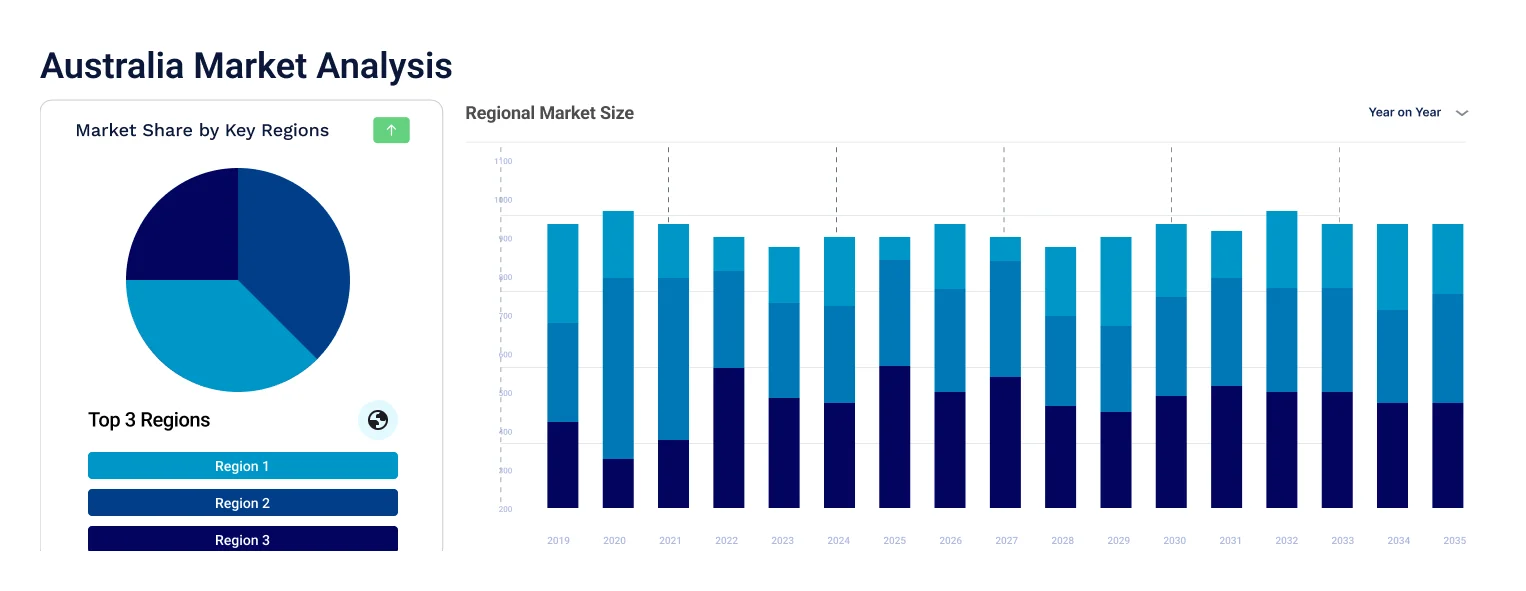
Australian Capital Territory (ACT) is the most dominant player in the Australia activated carbon market driven by its strong environmental management initiatives. The region’s demand is supported by government-backed sustainability projects and growing investments in water treatment infrastructure. In 2023, Evoqua Water Technologies launched a new activated carbon filtration system in Canberra, reinforcing the ACT’s leading position in the national market.
Victoria holds a strong second place in activated carbon, driven by its large population centers like Melbourne, a mature industrial and manufacturing base, extensive municipal water and wastewater treatment infrastructure, and stringent environmental regulations. Recent initiatives, such as Barwon Water’s 2023 upgrade of its Torquay Water Treatment Plant with granular activated carbon (GAC) for PFAS and taste‑and‑odor removal, highlight the state’s growing demand for advanced purification solutions.
Key players in the Australia activated carbon market are employing a range of strategic approaches to strengthen their position and meet growing demand. Product diversification is central, with companies offering granular, powdered, and extruded carbon to cater to water treatment, air purification, and industrial applications. Technological innovation is another key strategy, focusing on developing high-efficiency adsorption materials and advanced regeneration techniques to enhance product performance and sustainability.
Firms also prioritize strategic partnerships and collaborations with government bodies, research institutions, and end-users to expand market reach and improve product applicability. Geographic expansion within the Asia-Pacific region allows Australian players to capitalize on regional demand while mitigating domestic market saturation. Additionally, supply chain optimization ensures consistent raw material sourcing and cost-efficient production, crucial for competitiveness in price-sensitive segments. Many players also emphasize sustainability and regulatory compliance, leveraging eco-friendly production processes and certifications to appeal to environmentally conscious clients.
Established in 2008, Activated Carbon Technologies Pty Ltd is headquartered in Wellington, New Zealand. The company specializes in providing high-quality activated carbon solutions for various applications, including water treatment, air purification, and industrial processes. Their commitment to sustainability and customer satisfaction has positioned them as a trusted supplier in the industry.
Founded in 2018 and based in Melbourne, Australia, Bygen focuses on producing sustainable activated carbon from renewable agricultural and forestry by-products. The company has achieved significant milestones, including ISO 9001:2015 and ISO 14001:2015 certifications, and securing USD 3 million in CRC-P Round 17 funding to address PFAS contamination in water.
Established in 1968 and headquartered in Vadodara, India, Western Carbon & Chemicals has a legacy of pioneering carbon-based purification solutions. The company offers a range of activated carbon products tailored to industries such as water treatment, pharmaceuticals, and mining.
James Cummings Pty Ltd is an Australian company specializing in the supply and distribution of activated carbon products. While specific details about their founding year and headquarters are limited, the company is known for offering a variety of activated carbon solutions for applications in water treatment, air purification, and industrial processes.
*Please note that this is only a partial list; the complete list of key players is available in the full report. Additionally, the list of key players can be customized to better suit your needs.*
Other key players in the Australia activated carbon market report include Carbon Activated Corporation, Iluka Resources Limited, Ceycarb Australia, Camfil and others.
Download a free sample of the Australia activated carbon market report to explore detailed market dynamics, segmentation, and forecasts for 2026‑2035. Get exclusive insights on industry growth, emerging trends, product launches, and regulatory impacts. Access trusted data to make informed decisions and stay ahead in the Australia activated carbon market trends 2026. Unlock key regional and end‑use analysis to optimize strategies and identify business opportunities today.


Upto 15% Off
USD
$2499 $2249
$3999 $3599
$4999 $4249
$5999 $5099


*While we strive to always give you current and accurate information, the numbers depicted on the website are indicative and may differ from the actual numbers in the main report. At Expert Market Research, we aim to bring you the latest insights and trends in the market. Using our analyses and forecasts, stakeholders can understand the market dynamics, navigate challenges, and capitalize on opportunities to make data-driven strategic decisions.*
In 2025, the market reached an approximate value of USD 188.94 Million.
The market is projected to grow at a CAGR of 4.10% between 2026 and 2035.
The key players in the market include Activated Carbon Technologies Pty Ltd, Bygen, Western Carbon & Chemicals, James Cummings Pty Ltd., Carbon Activated Corporation, Iluka Resources Limited, Ceycarb Australia, Camfil and others.
The direct sales segment is expected to grow at 7.2% CAGR through 2035.
Key strategies driving the market include product diversification across industries, technological innovation for high-efficiency and sustainable carbon, strategic partnerships, geographic expansion, supply chain optimization, focus on regulatory compliance and eco-friendly processes, and mergers or acquisitions to consolidate market share, enhance capabilities, and enter niche applications efficiently.
Explore our key highlights of the report and gain a concise overview of key findings, trends, and actionable insights that will empower your strategic decisions.
| REPORT FEATURES | DETAILS |
| Base Year | 2025 |
| Historical Period | 2019-2025 |
| Forecast Period | 2026-2035 |
| Scope of the Report |
Historical and Forecast Trends, Industry Drivers and Constraints, Historical and Forecast Market Analysis by Segment:
|
| Breakup by Source |
|
| Breakup by Type |
|
| Breakup by Application Phase |
|
| Breakup by End Use |
|
| Breakup by Distribution Channel |
|
| Breakup by Region |
|
| Market Dynamics |
|
| Competitive Landscape |
|
| Companies Covered |
|
Datasheet
One User
USD 2,499
USD 2,249
tax inclusive*
Single User License
One User
USD 3,999
USD 3,599
tax inclusive*
Five User License
Five User
USD 4,999
USD 4,249
tax inclusive*
Corporate License
Unlimited Users
USD 5,999
USD 5,099
tax inclusive*
*Please note that the prices mentioned below are starting prices for each bundle type. Kindly contact our team for further details.*
Flash Bundle
Small Business Bundle
Growth Bundle
Enterprise Bundle
*Please note that the prices mentioned below are starting prices for each bundle type. Kindly contact our team for further details.*
Flash Bundle
Number of Reports: 3
20%
tax inclusive*
Small Business Bundle
Number of Reports: 5
25%
tax inclusive*
Growth Bundle
Number of Reports: 8
30%
tax inclusive*
Enterprise Bundle
Number of Reports: 10
35%
tax inclusive*
How To Order

Select License Type
Choose the right license for your needs and access rights.

Click on ‘Buy Now’
Add the report to your cart with one click and proceed to register.

Select Mode of Payment
Choose a payment option for a secure checkout. You will be redirected accordingly.
Strategic Solutions for Informed Decision-Making
Gain insights to stay ahead and seize opportunities.

Get insights & trends for a competitive edge.

Track prices with detailed trend reports.

Analyse trade data for supply chain insights.

Leverage cost reports for smart savings

Enhance supply chain with partnerships.

Connect For More Information
Our expert team of analysts will offer full support and resolve any queries regarding the report, before and after the purchase.
Our expert team of analysts will offer full support and resolve any queries regarding the report, before and after the purchase.
We employ meticulous research methods, blending advanced analytics and expert insights to deliver accurate, actionable industry intelligence, staying ahead of competitors.
Our skilled analysts offer unparalleled competitive advantage with detailed insights on current and emerging markets, ensuring your strategic edge.
We offer an in-depth yet simplified presentation of industry insights and analysis to meet your specific requirements effectively.




