

Consumer Insights
Uncover trends and behaviors shaping consumer choices today
Procurement Insights
Optimize your sourcing strategy with key market data
Industry Stats
Stay ahead with the latest trends and market analysis.
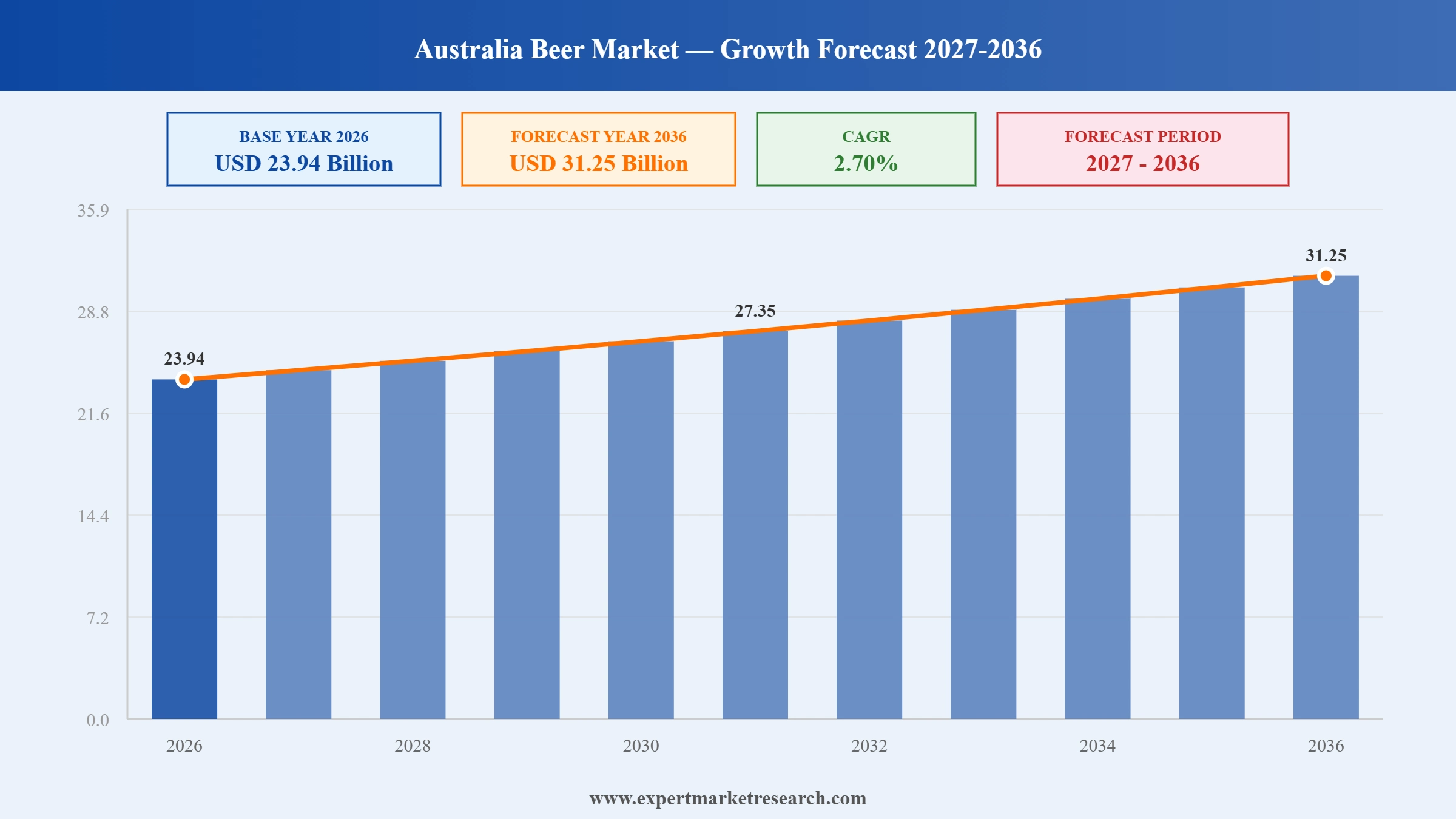
The Australia beer market attained a value of USD 23.31 Billion in 2025 and is projected to expand at a CAGR of 2.70% through 2035. The market is further expected to achieve USD 30.43 Billion by 2035, supported by continued craft beer innovation, rising premiumisation, and growing consumer moderation shifting demand toward low and mid-strength formats. Growth spans lager, stout and porter, malt, and ale types across glass, PET bottle, and metal can packaging, with brewers across New South Wales, Victoria, Queensland, and Western Australia competing on heritage brand equity, sustainable packaging, and seasonal limited-release innovation.
Sustained cultural significance and a well-established brewing infrastructure continue to anchor steady demand across the Australia beer market, as beer retains strong domestic consumption alongside growing international export recognition. Brewers are also investing in seasonal, limited-edition releases, reflecting the industry's pursuit of premium, collectible offerings that build loyal, repeat-purchasing customer bases.
The Australia beer market is witnessing further developments as heritage brewers continue their long-running seasonal release traditions with updated hop profiles. Coopers Brewery released its 2026 Vintage Ale in August 2026, the 26th edition in a series first launched in 1998, brewed to 7.5% ABV and pairing an experimental hop with a US variety to deliver mango, passionfruit, and stone fruit flavours nationally in kegs and bottles. This shift toward heritage seasonal releases with evolving flavour profiles is concentrated among established, brand-equity-rich brewers, while newer craft entrants instead compete on constant new product rotation.
In addition, established brewers are increasingly launching mid-strength variants of iconic full-strength beers, reflecting the industry's recognition that consumer moderation increasingly shapes product portfolio decisions. Cascade Brewery launched Cascade Draught 3.5% in August 2026, its first ever mid-strength beer, retaining the classic Cascade Draught flavour at one standard drink per can. Such moderation-focused product launches are reshaping competitive positioning across the wider australia beer market as brewers with established full-strength brand equity increasingly extend into lower-alcohol variants to retain health-conscious customers.
Read more about this report - REQUEST FREE SAMPLE COPY IN PDF
Brewers are increasingly pairing new product launches with dedicated on-trade celebration events to build immediate market visibility. Cascade Draught 3.5% became available on tap across Tasmania following a launch event held at Hobart's Cascade Brewery, with the keg release marking the beer's transition from can-only to full on-trade availability. Companies can leverage dedicated on-trade launch events to build regional visibility and trial before scaling wider distribution.
Established full-strength brewers are increasingly extending iconic brands into moderation-focused variants rather than launching entirely new sub-brands. Cascade Brewery launched Cascade Draught 3.5%, its first ever mid-strength beer, retaining the original's crispness and taste at one standard drink per can, reflecting a national culture shift toward moderation now representing over 30% of Australian beer sales. Companies can leverage brand-extension mid-strength variants to retain health-conscious drinkers without the cost of building entirely new brand recognition.
Heritage brewers are increasingly using annual limited-edition release traditions to sustain premium positioning and collector-style customer loyalty. Coopers Brewery released its 2026 Vintage Ale, the 26th edition since the series began in 1998, brewed to 7.5% ABV with an experimental hop paired with a US variety delivering mango, passionfruit, and stone fruit flavours, available nationally in kegs and bottles from August. Companies can leverage long-running annual seasonal release traditions to sustain premium pricing power and generate recurring collector demand.
Independent and craft-oriented brewers are continuing to capture disproportionate growth relative to mainstream beer categories as consumer demand for unique, locally produced options intensifies. Industry reporting shows the number of Australian breweries has grown from 132 to over 600 in the past 15 years, with craft-oriented producers driving innovation across sour, wheat, and pale ale styles. Companies can leverage distinctive, locally sourced ingredient positioning to capture premium pricing within the fast-growing craft segment.
Craft brewers are increasingly pairing new product launches with community-focused brewery events rather than standard retail rollouts alone. Stone & Wood launched its Northern Rivers Lager in August 2026 at a family-friendly Open Day held at its Murwillumbah brewery, drawing the local community with brewery tours, live music, and free buses from Murwillumbah and Tweed Heads. Companies can leverage hometown brewery events to build authentic community connection around new regional product launches, strengthening brand loyalty among local customers who value seeing the people and place behind the product they drink.
Craft brewers are continuing to expand lighter beer offerings as consumer interest broadens beyond traditional full-strength pale ale styles. Balter Brewing released its Light Pale Ale in August 2026, extending the Gold Coast-founded brewery's core pale ale range into a lower-calorie format aimed at consumers seeking flavour without the heavier profile of standard offerings. Companies can leverage lighter product line extensions to retain existing pale ale drinkers who are moderating their overall consumption, keeping brand loyalty intact rather than losing health-conscious customers entirely to competitors or non-alcoholic alternatives.
Health-conscious consumer preferences are prompting established brewers across the australia beer market to accelerate low and mid-strength product development. Following Cascade's August 2026 mid-strength Draught launch, competing heritage brands began evaluating similar moderation-focused brand extensions to avoid ceding share to health-conscious drinker segments. Companies can leverage rapid competitive response to a rival's moderation-focused launch to prevent early-mover advantage from translating into lasting market share gains within the fast-growing mid-strength category, a segment increasingly viewed as essential to long-term portfolio relevance rather than a niche side offering for occasional moderation-focused drinkers.
Industry reporting confirmed in March 2026 a tenfold rise in the number of independent producers over fifteen years, turning shelf space and tap handles into a genuinely contested resource. This proliferation is prompting established macro-breweries to expand craft-style sub-brand portfolios in order to compete for shelf space and on-trade tap placements against a growing pool of independent producers. Companies can leverage craft-style sub-brand development to defend retail and hospitality distribution positions that independent producers might otherwise capture through more agile, locally focused marketing.
This Expert Market Research's Report titled "Australia Beer Market Report and Forecast 2026-2035" offers a detailed analysis of the market based on the following segments:
Market Breakup by Type
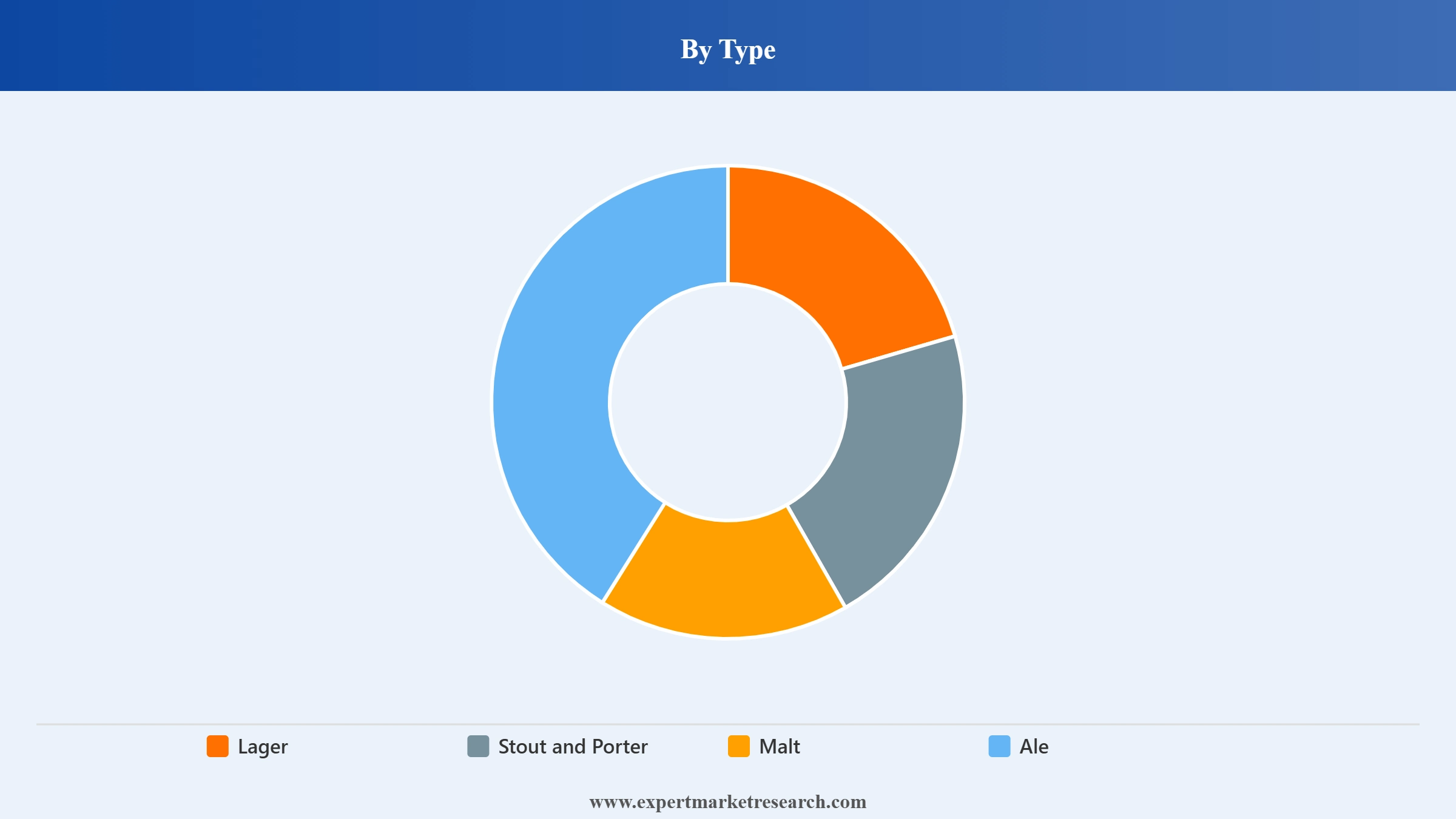
Key Insight: Ale accounts for the largest share of the market, with its wide range of flavours and styles from pale ales to IPAs making it particularly popular among craft beer enthusiasts, reinforced by Coopers Brewery's August 2026 release of its 26th annual Vintage Ale. Malt continues driving growth as a crucial ingredient contributing to flavour, aroma, and body, with high-quality local malts supporting Australian agriculture. Lager remains a mainstream staple, reinforced by Cascade's August 2026 launch of its first mid-strength Cascade Draught 3.5% variant. Stout and Porter serve consumers seeking richer, darker beer styles. Others captures smaller-volume specialty beer categories, formats that continue to attract dedicated enthusiast followings despite representing a modest share of overall category volume nationally.
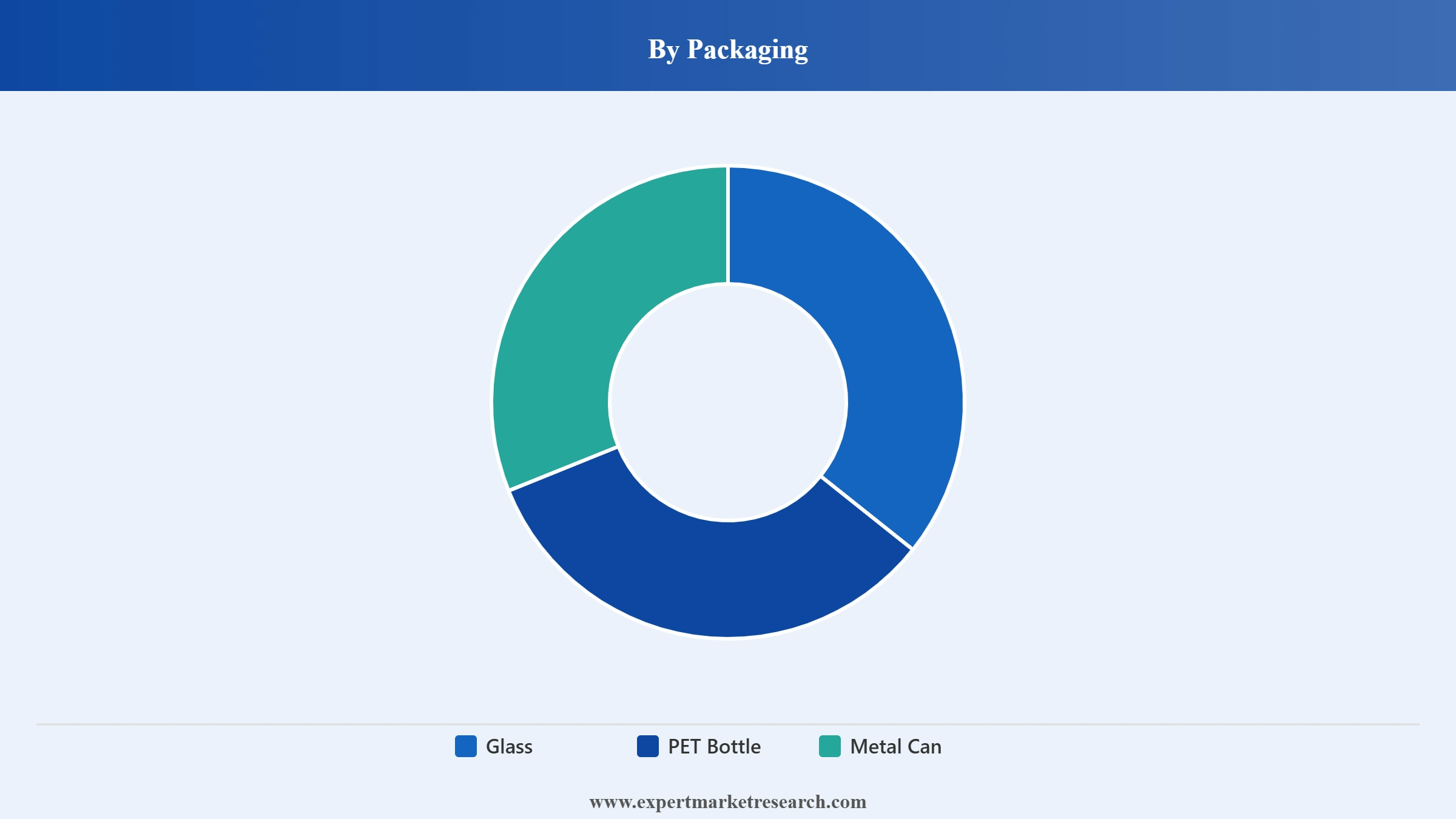
Market Breakup by Packaging
Key Insight: Metal Can accounts for the largest share of the market, reflecting the national shift toward cans over stubbies for convenience and recyclability, illustrated by Cascade's August 2026 Cascade Draught 3.5% can launch. Glass continues to serve premium and heritage-positioned releases including Coopers' annual Vintage Ale bottle range. PET Bottle serves cost-conscious, lightweight packaging applications. Others encompasses smaller-volume packaging formats including kegs for on-trade distribution, a format that remains essential for pubs and venues despite representing a small fraction of total retail packaging volume.
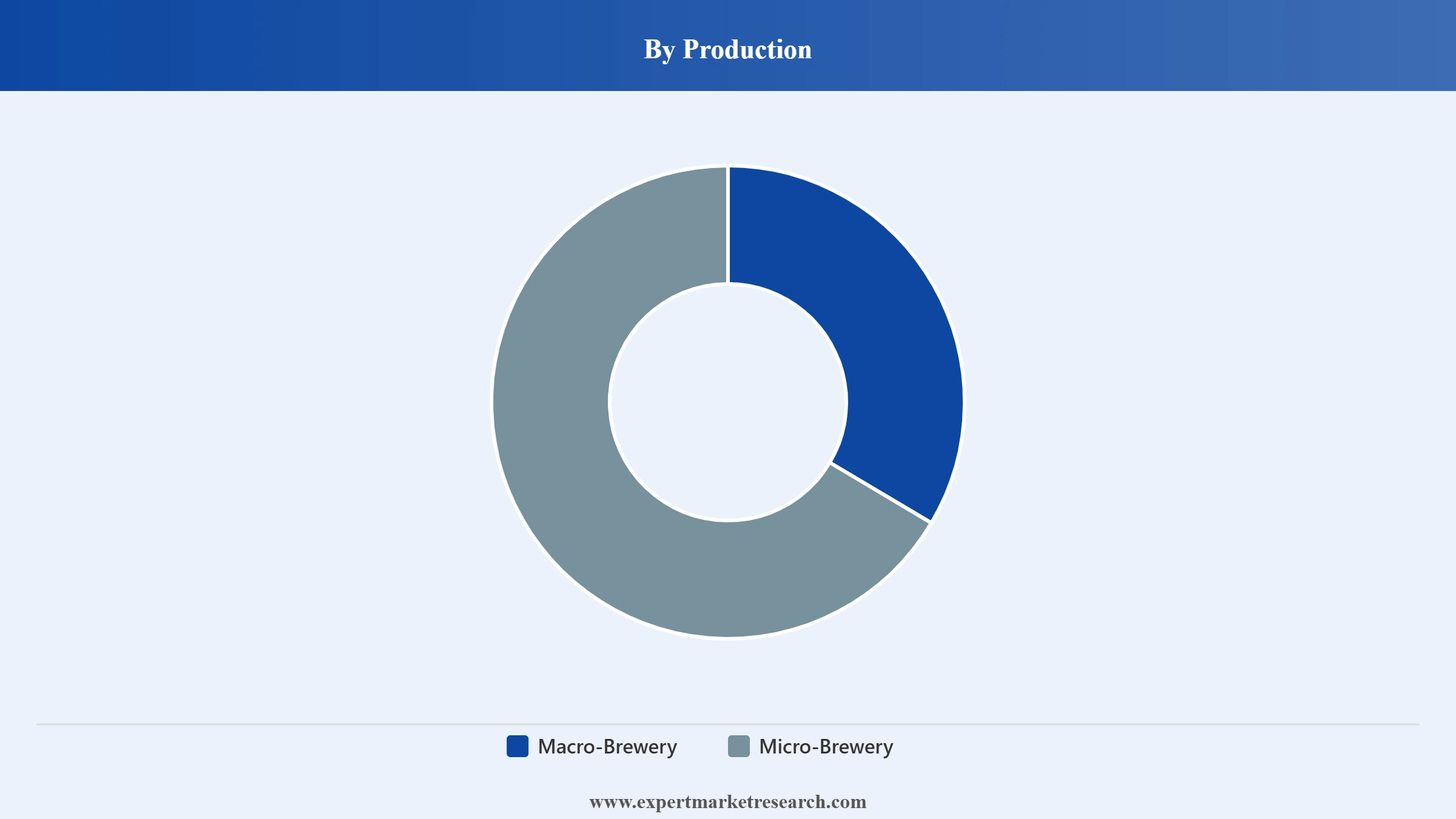
Market Breakup by Production
Key Insight: Macro-Brewery accounts for the largest share of the market, driven by large-scale, mass-produced beers at competitive prices benefiting from economies of scale, reinforced by Cascade's national Cascade Draught 3.5% rollout. Micro-Brewery is growing at a fast pace at a projected CAGR of 3.80%, as small-scale producers focused on local ingredients and sustainability continue proliferating, with the number of Australian breweries growing from 132 to over 600 in the past 15 years. Others encompasses contract brewing and hybrid production arrangements, models that allow smaller emerging brands to scale output without committing to the capital expense of dedicated brewing infrastructure.
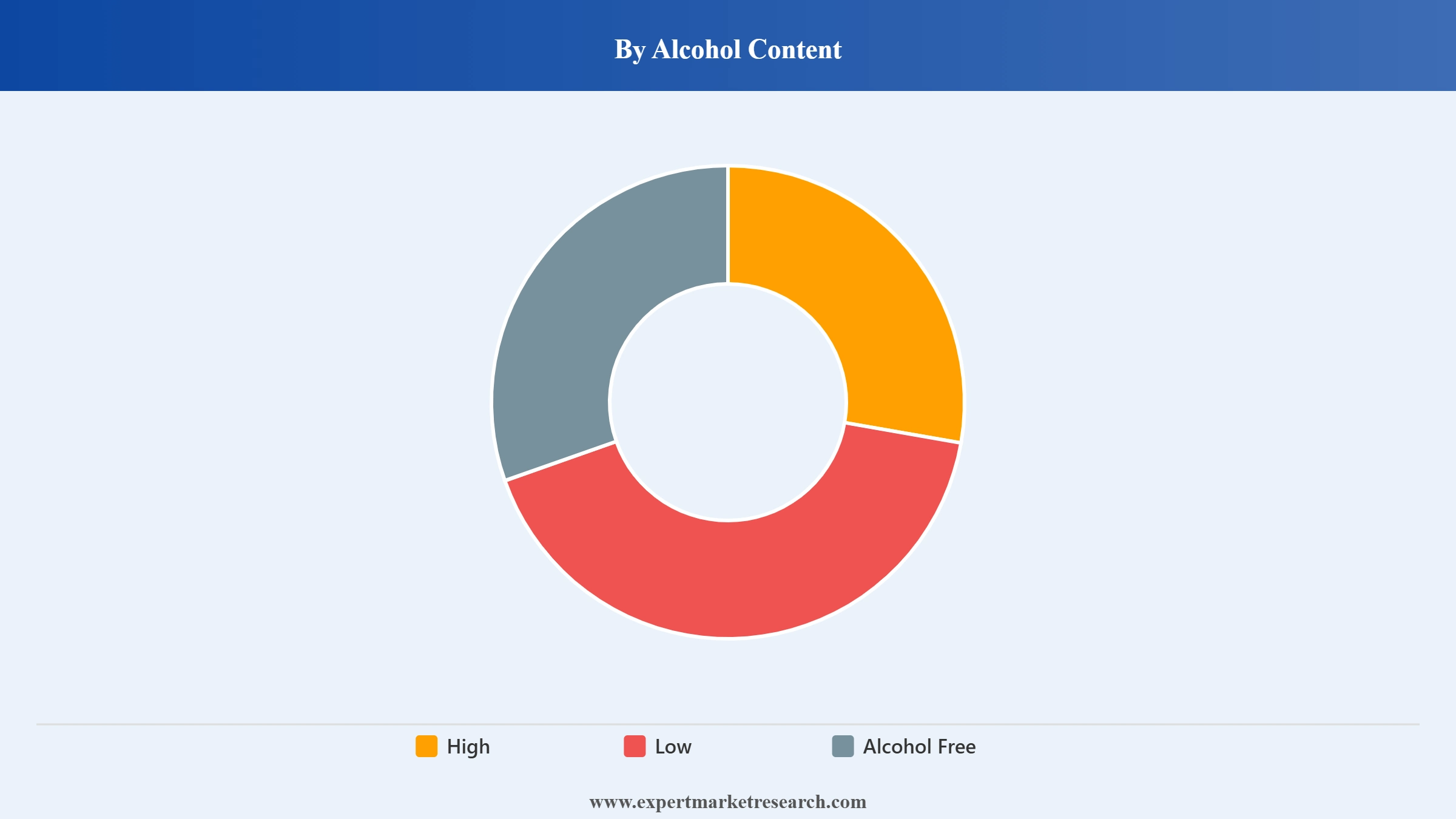
Market Breakup by Alcohol Content
Key Insight: High accounts for the largest share of the market, reinforced by Coopers Brewery's August 2026 Vintage Ale release brewed to 7.5% ABV for its premium seasonal positioning. Low is growing at a fast pace at a projected CAGR of 4.20%, illustrated by Cascade's August 2026 launch of Cascade Draught 3.5%, its first ever mid-strength beer, as more than 30% of Australian beer sales now shift toward no, low, or mid-strength formats. AlcoholFree continues expanding as health-conscious consumers seek beer-drinking occasions without alcohol content, a category brewers are increasingly supporting with dedicated production lines rather than treating it as a minor product-line afterthought.
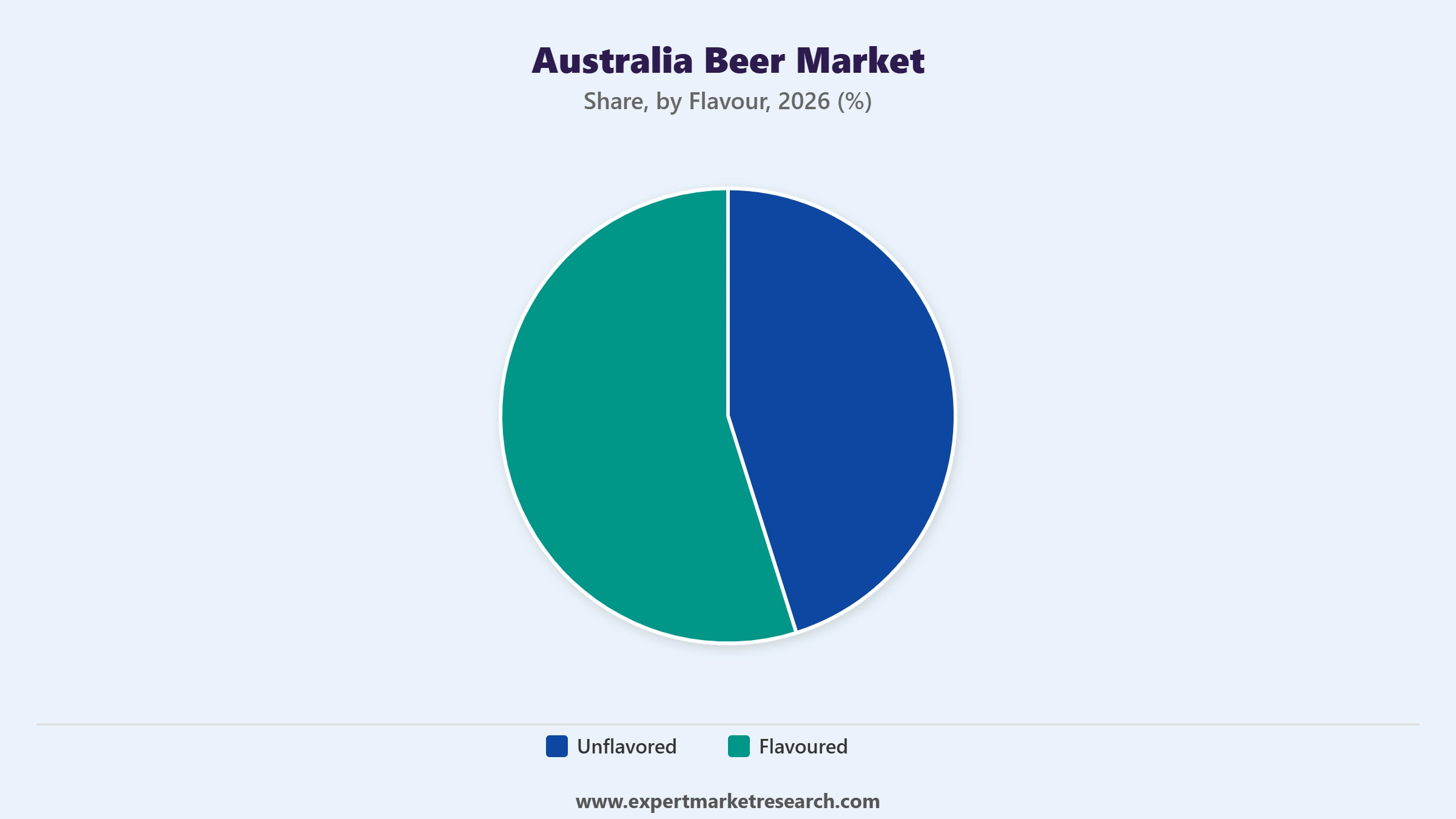
Market Breakup by Flavour
Key Insight: Unflavored accounts for the largest share of the market, with traditional taste and quality without added flavours maintaining strong consumer loyalty and offering versatility in food pairings. Flavoured continues gaining popularity as consumers increasingly seek innovative and bold alternatives, illustrated by the fruit-forward mango, passionfruit, and stone fruit notes featured in Coopers' August 2026 Vintage Ale release, a flavour direction that continues to influence seasonal releases from competing craft and heritage brewers alike.
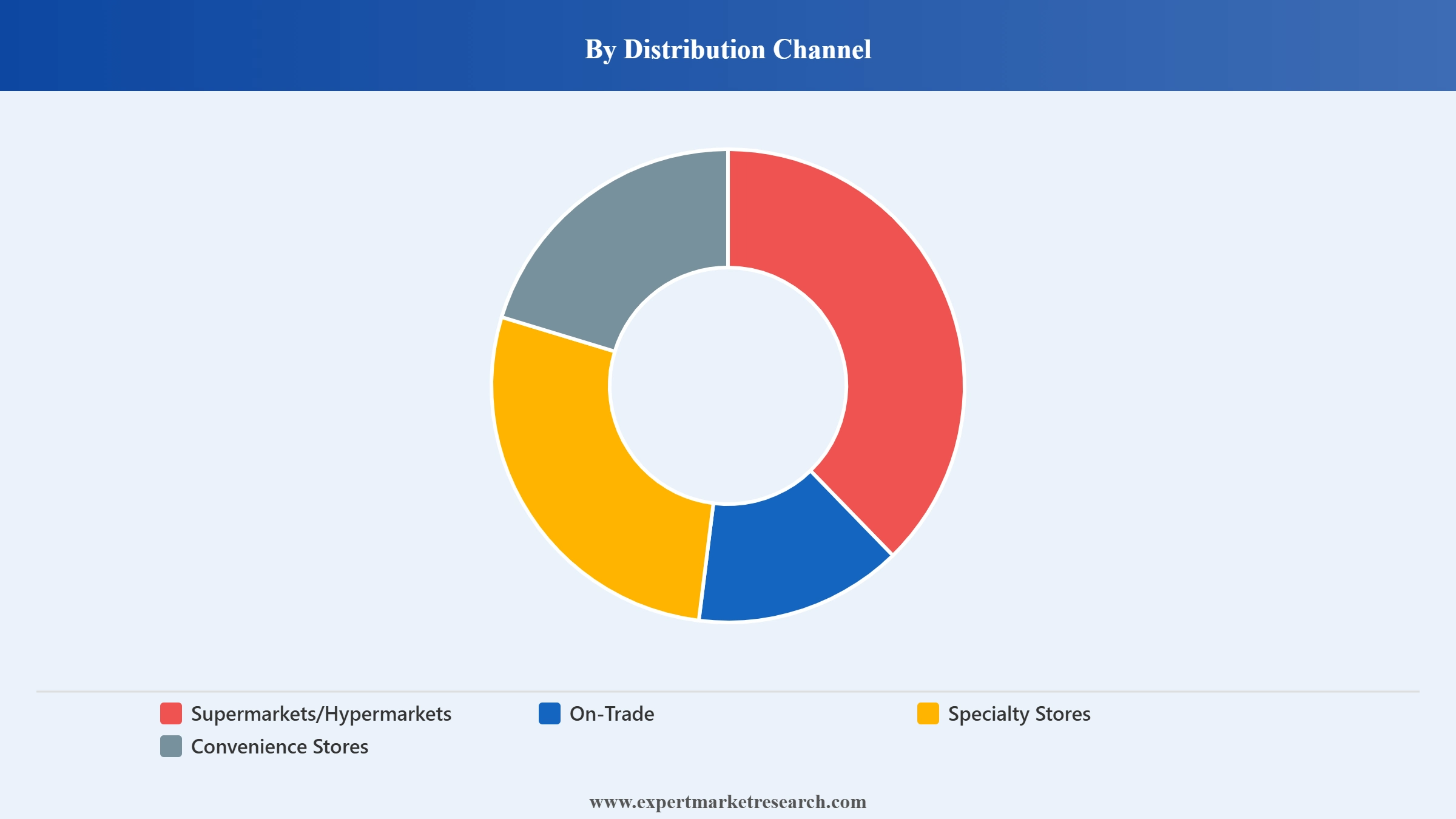
Market Breakup by Distribution Channel
Key Insight: Supermarkets/Hypermarkets accounts for the largest share of the market, offering broad accessibility and consistent national availability for mainstream and premium beer brands. On-Trade continues to represent substantial demand, reinforced by Cascade's September 2026 keg release launch event at its Hobart brewery bringing Cascade Draught 3.5% to tap across Tasmania. Specialty Stores support premium and craft brand discovery through curated selection. Convenience Stores serve smaller-format, single-purchase occasions. Other encompasses direct brewery-door and online sales channels, routes that continue growing in importance for craft producers seeking to build direct customer relationships outside traditional retail distribution.
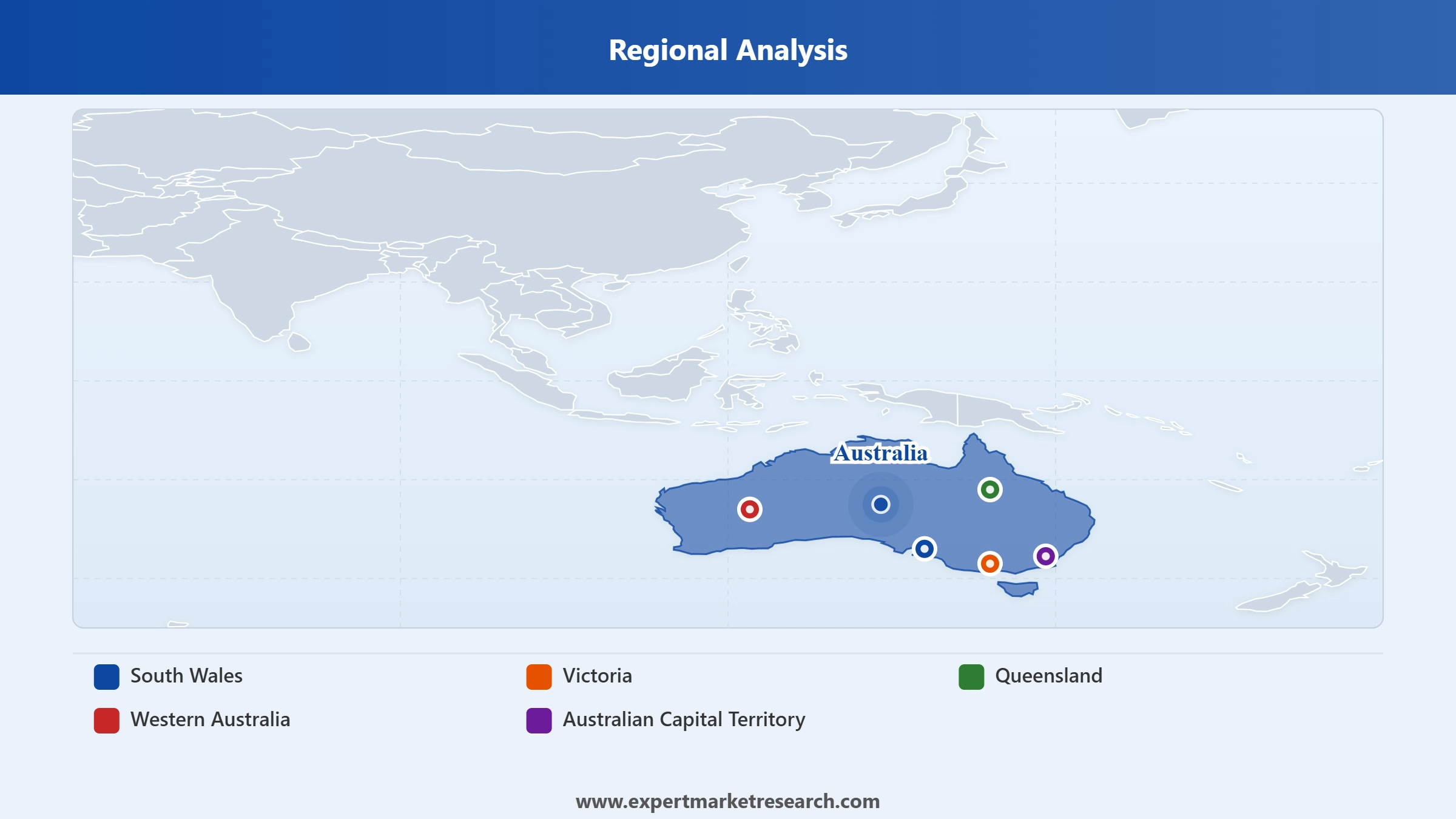
Market Breakup by Region
Key Insight: New South Wales holds the largest regional share, accounting for over 35% of Australia's total beer sales, driven by a wide-ranging consumer base and thriving craft beer scene supported by robust retail and distribution networks. Queensland shows increasing demand for craft beers along the coast, producing 19.5 million litres of beer in 2022 with craft beer sales rising 11%. Western Australia represents around 9% of national beer production, known for high-quality hops and innovation-focused breweries. Victoria continues to support substantial demand tied to its dense urban brewing and hospitality scene. Australian Capital Territory maintains steady demand tied to its concentrated population base. Others captures smaller state and territory markets including South Australia and Tasmania, home to Cascade's historic Hobart brewery, a site that continues to anchor Tasmania's brewing identity despite the state contributing a comparatively small share of total national beer sales.
Read more about this report - REQUEST FREE SAMPLE COPY IN PDF
By type, ale leads the market while malt continues driving flavour innovation
Ale holds the leading position by type, its broad range of styles from pale ales to IPAs proving especially popular with craft beer drinkers seeking variety, a breadth Balter Brewing's August 2026 Light Pale Ale release extends further into the lower-calorie end of the category, reflecting how established craft brands continue broadening their core ranges to capture moderation-minded drinkers.
This leadership is reinforced across the australia beer market by Coopers Brewery's 26th annual Vintage Ale release in August 2026, an ale-style seasonal beer that has built a loyal following since 1998, brewed to 7.5 percent ABV with an experimental hop pairing that delivers mango, passionfruit, and stone fruit notes, a formula the brewery revises annually to sustain collector interest and repeat purchasing among loyal customers.
Read more about this report - REQUEST FREE SAMPLE COPY IN PDF
Malt underpins flavour and body development across the category, supporting Australian agriculture through demand for high-quality local grain. Lager and its mainstream appeal remain central to national consumption patterns, while Stout and Porter serve drinkers seeking richer, darker styles, and Others rounds out the mix with niche specialty beers, a segment that continues to grow modestly as craft producers experiment with unconventional grain blends and fermentation techniques.
By packaging, metal can leads the market while consumers continue shifting away from stubbies
Metal Can holds the leading packaging format, reflecting the ongoing national shift toward cans over glass stubbies for convenience and recyclability, a shift Cascade's August 2026 Cascade Draught 3.5% can launch reinforced by choosing cans as the primary packaging format for its new mid-strength variant. Glass continues to anchor premium and heritage-positioned releases including Coopers' annual Vintage Ale bottle range, where packaging itself forms part of the collectible appeal.
Read more about this report - REQUEST FREE SAMPLE COPY IN PDF
PET Bottle serves cost-conscious, lightweight packaging applications where weight and breakage risk during distribution matter more than premium presentation, while Others, including kegs for on-trade distribution, remains essential for pubs and venues despite representing a small fraction of total retail packaging volume nationally.
By production, macro-brewery leads the market while micro-brewery expands through craft proliferation
Macro-Brewery output leads the category thanks to the scale efficiencies that keep mainstream beer affordable and consistently available nationwide, a scale advantage Cascade's August 2026 national Cascade Draught 3.5% rollout demonstrates through rapid multi-state distribution few independent producers could match, an advantage that continues to reinforce the scale gap between large heritage brewers and the growing pool of smaller craft competitors.
Read more about this report - REQUEST FREE SAMPLE COPY IN PDF
Micro-Brewery is expanding fastest at a projected 3.80% CAGR, propelled by the sector's growth from 132 breweries to over 600 in fifteen years as small producers lean into local ingredients and sustainability credentials, exemplified by Stone & Wood's August 2026 hometown launch of its Northern Rivers Lager in Murwillumbah, a community-focused release strategy other craft brewers increasingly emulate to build authentic regional brand identity.
By alcohol content, high leads the market while low grows fastest on the moderation trend
High-alcohol beer retains the largest share of the category, anchored by premium seasonal releases such as Coopers' 7.5% ABV Vintage Ale, released in August 2026 as the 26th edition of a tradition dating back to 1998 and prized by collectors nationwide, with secondary-market resale activity for earlier vintages continuing to underscore the release's cult following.
Read more about this report - REQUEST FREE SAMPLE COPY IN PDF
Low-alcohol formats are the fastest-growing tier at a projected 4.20% CAGR, a trajectory Cascade's August 2026 mid-strength Draught launch exemplifies as it captures a share of the 30-percent-plus slice of Australian beer sales now sitting in the no, low or mid-strength bracket, a share that continues to climb as more heritage full-strength brands introduce their own moderation-focused line extensions.
By flavour, unflavored leads the market while flavoured gains ground on bold new releases
Unflavored retains the largest share of the market, with traditional taste and quality free of added flavours maintaining strong consumer loyalty and offering the versatility in food pairings that many drinkers continue to prioritise over novelty. This loyalty keeps unflavoured styles the default choice across both everyday and premium beer purchasing occasions nationally.
Read more about this report - REQUEST FREE SAMPLE COPY IN PDF
Flavoured is gaining ground as consumers increasingly seek innovative and bold alternatives, illustrated by the fruit-forward mango, passionfruit, and stone fruit notes featured in Coopers' August 2026 Vintage Ale release, a direction that continues to influence seasonal releases from competing craft and heritage brewers seeking their own point of difference.
By distribution channel, supermarkets/hypermarkets leads the market while on-trade gains from event-led launches
Supermarkets/Hypermarkets continues to account for the largest share of the market, offering broad accessibility and consistent national availability that anchors everyday purchasing for both mainstream and premium beer brands across the country.
Read more about this report - REQUEST FREE SAMPLE COPY IN PDF
On-Trade continues to represent substantial demand, reinforced by Cascade's September 2026 keg release launch event at its Hobart brewery bringing Cascade Draught 3.5% to tap across Tasmania, while Specialty Stores support premium and craft brand discovery, Convenience Stores serve smaller-format single-purchase occasions, and Other captures direct brewery-door and online sales channels growing in importance for craft producers building direct customer relationships.
New South Wales commands the largest regional share through its diverse consumer base and thriving craft scene
New South Wales leads the country in beer sales, contributing over 35% of the national total on the strength of a wide-ranging consumer base and a thriving craft brewing scene backed by strong retail infrastructure.
Read more about this report - REQUEST FREE SAMPLE COPY IN PDF
Queensland's coastal craft beer demand continues climbing, with the state producing 19.5 million litres of beer in 2022 and craft beer sales rising 11 percent as drinkers gravitate toward lighter, tropical styles. Western Australia contributes around 9% of national beer production, its breweries known for high-quality local hops and a focus on distinctive flavour innovation. Victoria sustains substantial demand tied to its dense urban brewing and hospitality landscape. Australian Capital Territory maintains steady, population-driven consumption. Others, spanning South Australia and Tasmania, rounds out the market, with Tasmania home to Cascade's historic Hobart brewery and its newly launched mid-strength Draught variant.
The industry is fragmented, with australia beer market companies ranging from heritage macro-breweries to specialist craft producers competing across type, production, and distribution channel segments. Established players specialise in both premium alcoholic and non-alcoholic beverages, having broadened their portfolios to include soft drinks and other beverages while solidifying their Australian presence through strategic brewery acquisitions.
Competitive dynamics among australia beer players are increasingly shaped by the strength of heritage seasonal release traditions, the pace of moderation-focused product extension, and the depth of on-trade launch event capability. Brewers are investing in annual limited editions, mid-strength brand extensions, and dedicated launch celebrations to secure long-term relationships with both loyal traditional drinkers and health-conscious newer consumers.
Founded in 1862 and headquartered in Adelaide, South Australia, Coopers Brewery is one of Australia's oldest family-owned brewing companies, celebrated for its premium ales, lagers, and stouts including its iconic cloudy beer. In August 2026, the company released its 26th annual Vintage Ale, brewed to 7.5% ABV with mango, passionfruit, and stone fruit notes. Coopers' multi-generational family ownership and long-running seasonal release tradition differentiate its offering from internationally owned competitors.
Established in 1987 and headquartered in Sydney, Asahi Holdings is the Australian arm of Japan's Asahi Group, importing premium beers including Asahi Super Dry alongside owning Australian brewing assets such as Cascade Brewery. The company has significantly expanded its Australian presence through strategic acquisitions and brand growth, including investment in new canning capacity. Asahi's combination of Japanese import brands and acquired Australian heritage breweries differentiates its offering from single-origin competitors.
Founded in 1832 in Hobart, Tasmania, Cascade Brewery is one of Australia's oldest brewing establishments, known for iconic beers including Cascade Premium Lager and Cascade Pale Ale. In August 2026, the brewery launched Cascade Draught 3.5%, its first ever mid-strength beer, celebrating the keg release with an on-trade launch event in September 2026. Cascade's status as Australia's oldest brewery and its Tasmanian heritage positioning differentiate its offering from mainland-focused competitors.
Part of Kirin Holdings, Lion Beer, Spirits and Wine was founded in 2009 and is headquartered in Sydney, owning well-known beer brands including Stone & Wood Brewing Co., recognised for its craft beers and innovative approach within Australia's dynamic beer scene. The Byron Bay-founded Stone & Wood brand has built strong recognition for its Pacific Ale and craft-focused positioning. Lion's backing by Kirin Holdings' international brewing scale differentiates its offering from independently owned craft competitors.
Other key players in the Australia beer market include Emencee Pty Ltd. (Balter Brewing Company), Lion Pty Ltd, and Young Henrys, among others.
*Please note that this is only a partial list; the complete list of key players is available in the full report. Additionally, the list of key players can be customized to better suit your needs.*
Unlock the latest insights with our Australia beer market trends 2026 report. Discover regional growth patterns, type and production trends, and key industry players. Stay ahead of competition with trusted data and expert analysis. Download your free sample report today and drive informed decisions in the market.


Upto 15% Off
USD
$2499 $2249
$3999 $3599
$4999 $4249
$5999 $5099


*While we strive to always give you current and accurate information, the numbers depicted on the website are indicative and may differ from the actual numbers in the main report. At Expert Market Research, we aim to bring you the latest insights and trends in the market. Using our analyses and forecasts, stakeholders can understand the market dynamics, navigate challenges, and capitalize on opportunities to make data-driven strategic decisions.*
In 2025, the market reached an approximate value of USD 23.31 Billion.
The market is projected to grow at a CAGR of 2.70% between 2026 and 2035.
The beer market in Australia is expected to reach USD 30.43 Billion in 2035.
The beer market is categorised according to its type, which includes lager, stout and porter, malt, ale.
The key players in the market include The Cooper Group (Coopers Brewery Limited), Asahi Holdings Pty Ltd., Cascade Brewery Co., Lion Beer, Spirits and Wine PTY LTD. (Stone & Wood Brewing Co.), Emencee Pty Ltd. (Balter Brewing Company), Lion Pty Ltd, and Young Henrys, among others.
The several distribution channels include supermarkets/hypermarkets, on-trade, speciality stores, convenience stores, and others.
Australia's alcohol excise, which is adjusted biannually to align with inflation, recently saw an increase in spirits tax to USD 100 per litre, up from USD 97.90. Further hikes are anticipated as inflation rates continue to climb, prompting warnings to consumers about impending cost rises.
Beer holds a prominent position among Australia's preferred alcoholic beverages, reflecting a vibrant beer culture. The market offers a diverse selection, including lagers, ales, stouts, and craft brews, appealing to a broad spectrum of consumer tastes.
Nearly one-fifth (18.5%) of adults reported consuming over 10 drinks in the past week. Consumption rates were highest among older demographics, with approximately one-fourth (24.6%) of individuals aged 55–64 and one-fifth (21.6%) of those aged 65–74 exceeding this threshold.
Brewers face growing health-driven demand for low and non-alcoholic options, strict regulations and high excise duties raising production costs, and intensifying competition from a rapidly growing pool of craft breweries.
Sustaining heritage seasonal release traditions to build collector demand, extending iconic full-strength brands into mid-strength variants to capture moderation-focused drinkers, and hosting dedicated on-trade launch events to build regional product visibility.
Explore our key highlights of the report and gain a concise overview of key findings, trends, and actionable insights that will empower your strategic decisions.
| REPORT FEATURES | DETAILS |
| Base Year | 2025 |
| Historical Period | 2019-2025 |
| Forecast Period | 2026-2035 |
| Scope of the Report |
Historical and Forecast Trends, Industry Drivers and Constraints, Historical and Forecast Market Analysis by Segment:
|
| Breakup by Type |
|
| Breakup by Packaging |
|
| Breakup by Production |
|
| Breakup by Alcohol Content |
|
| Breakup by Flavour |
|
| Breakup by Distribution Channel |
|
| Breakup by Region |
|
| Market Dynamics |
|
| Competitive Landscape |
|
| Companies Covered |
|
Datasheet
One User
USD 2,499
USD 2,249
tax inclusive*
Single User License
One User
USD 3,999
USD 3,599
tax inclusive*
Five User License
Five User
USD 4,999
USD 4,249
tax inclusive*
Corporate License
Unlimited Users
USD 5,999
USD 5,099
tax inclusive*
*Please note that the prices mentioned below are starting prices for each bundle type. Kindly contact our team for further details.*
Flash Bundle
Small Business Bundle
Growth Bundle
Enterprise Bundle
*Please note that the prices mentioned below are starting prices for each bundle type. Kindly contact our team for further details.*
Flash Bundle
Number of Reports: 3
20%
tax inclusive*
Small Business Bundle
Number of Reports: 5
25%
tax inclusive*
Growth Bundle
Number of Reports: 8
30%
tax inclusive*
Enterprise Bundle
Number of Reports: 10
35%
tax inclusive*
How To Order

Select License Type
Choose the right license for your needs and access rights.

Click on ‘Buy Now’
Add the report to your cart with one click and proceed to register.

Select Mode of Payment
Choose a payment option for a secure checkout. You will be redirected accordingly.
Strategic Solutions for Informed Decision-Making
Gain insights to stay ahead and seize opportunities.

Get insights & trends for a competitive edge.

Track prices with detailed trend reports.

Analyse trade data for supply chain insights.

Leverage cost reports for smart savings

Enhance supply chain with partnerships.

Connect For More Information
Our expert team of analysts will offer full support and resolve any queries regarding the report, before and after the purchase.
Our expert team of analysts will offer full support and resolve any queries regarding the report, before and after the purchase.
We employ meticulous research methods, blending advanced analytics and expert insights to deliver accurate, actionable industry intelligence, staying ahead of competitors.
Our skilled analysts offer unparalleled competitive advantage with detailed insights on current and emerging markets, ensuring your strategic edge.
We offer an in-depth yet simplified presentation of industry insights and analysis to meet your specific requirements effectively.




