

Consumer Insights
Uncover trends and behaviors shaping consumer choices today
Procurement Insights
Optimize your sourcing strategy with key market data
Industry Stats
Stay ahead with the latest trends and market analysis.
The Australia connected car market attained a value of USD 1.91 Billion in 2025 and is projected to expand at a CAGR of around 15.20% through 2035. Efforts on smart city infrastructure, rapid rollout of 5G and focus on cybersecurity are driving the market to achieve USD 7.86 Billion by 2035.
Collaborations between telecommunications providers and automakers are crucial for the Australia connected car market growth. In May 2022, Intelematics, Australia’s leading connected vehicle services provider, partnered with global IoT firm Aeris to introduce the Aeris Mobility Suite (AMS) in the country to offer local automakers and distributors access to advanced connected vehicle capabilities. These alliances ensure reliable, high-speed connectivity for navigation, remote control, and infotainment. This is also vital as vehicles become more software-driven and data-dependent.
The rollout of 5G in Australia is accelerating connected car capabilities by providing ultra-fast, low-latency communication. For example, Optus and Telstra are expanding 5G coverage, enabling real-time traffic updates, enhanced streaming, and autonomous vehicle testing. This network evolution supports advanced applications such as vehicle-to-infrastructure (V2I) communication, improving road safety and traffic management. As 5G matures, connected cars will increasingly rely on it for high-definition mapping, emergency response coordination, and collaborative driving scenarios.
Compound Annual Growth Rate
15.2%
Value in USD Billion
2026-2035
| Australia Connected Car Market Report Summary | Description | Value |
| Base Year | USD Billion | 2025 |
| Historical Period | USD Billion | 2019-2025 |
| Forecast Period | USD Billion | 2026-2035 |
| Market Size 2025 | USD Billion | 1.91 |
| Market Size 2035 | USD Billion | 7.86 |
| CAGR 2019-2025 | Percentage | XX% |
| CAGR 2026-2035 | Percentage | 15.20% |
| CAGR 2026-2035 - Market by Region | Western Australia | 17.8% |
| CAGR 2026-2035 - Market by Region | Australian Capital Territory | 17.0% |
| CAGR 2026-2035 - Market by Application | Driver Assistance | 17.3% |
| CAGR 2026-2035 - Market by Network Type | 5G | 16.7% |
| 2025 Market Share by Region | Victoria | 24.7% |
Intelematics and Australian Motoring Services partnered with Mitsubishi Australia to launch new connected services for improving driver safety. The system enables automatic crash detection, emergency assistance, and real-time vehicle monitoring. These life-saving features enhance roadside support and connectivity, delivering a safer, smarter driving experience for Mitsubishi owners in Australia.
Cadillac introduced its Connected Services in Australia and New Zealand, enhancing its EV lineup with greater convenience and advanced technology. The service offers integrated navigation, voice assistance, and remote features, giving drivers a more seamless, connected driving experience tailored for local markets as Cadillac expands its premium EV presence in the region.
Telstra partnered with Honda Australia to provide connectivity for the new Accord, launching this month. The partnership powers the upgraded Honda Connect service and debuts Google Built-In features, including Google Maps and Assistant. These functions run via a Telstra SIM and are supported by Telstra’s high-speed, reliable mobile network across Australia.
Kapsch TrafficCom, in collaboration with the Queensland Department of Transport and Main Roads, won the Connected and Automated Vehicle Award. The project utilized portable Cooperative Intelligent Transport Systems (C-ITS) roadside stations to enhance safety in Australian roadworks, showcasing the potential of connected vehicle technology in infrastructure.
The Australia connected car industry focuses on personalized experiences, including customized infotainment, seat settings, and route preferences. Data from connected platforms enables adaptive services, offering tailored recommendations for destinations, music, and charging stations. For instance, Honda Australia’s integration of Google Built-In in the new Accord allows seamless syncing with users’ Google accounts, providing personalized Google Maps routes, calendar events, and entertainment suggestions.
As cars become increasingly connected, cybersecurity is a top priority. Australian automakers and service providers invest in secure communication protocols and local data storage to protect user privacy and prevent hacking. For example, Toyota integrated IoT technology into its vehicles, such as the 2020 Yaris Cross, enabling features like SOS Emergency Call, Automatic Collision Notification, and Stolen Vehicle Tracking. This integration operates via an inbuilt 3G/4G IoT communication module, connecting directly to Toyota's service centers via Telstra's network, enhancing safety without relying on external devices.
The push for sustainability influences the Australia connected car market development by reducing emissions and energy consumption. Electric and hybrid vehicles equipped with connected services optimize routes to minimize environmental impact. For example, Hyundai’s launch of the IONIQ 6 in Australia emphasized advanced connectivity and energy efficiency, showcasing how smart navigation and vehicle-to-grid technology can support emission reduction goals. Manufacturers continue to promote connected mobility solutions that align with national emissions targets and support cleaner urban environments.
Connected cars are increasingly integrated into smart city ecosystems, collaborating with intelligent traffic lights, parking systems, and public transport. Cities like Melbourne are piloting smart traffic management projects that use data from connected vehicles to optimize traffic flow and reduce emissions. In August 2025, Toyota Australia and Transurban trialed C-ITS using V2X-enabled HiLux vehicles to enhance motorway merge safety in Melbourne. This synergy between vehicles and urban infrastructure supports sustainable mobility, reduces congestion, and improves urban living conditions.
The rise of electric vehicles (EVs) is driving the connected car demand in Australia tailored to electric mobility. Volkswagen’s ID. series and Cadillac’s Lyriq offer connected features that support battery management, charging station location, and remote monitoring. Connected EVs can optimize energy usage based on driving patterns and traffic conditions, improving range and efficiency. With government incentives accelerating EV adoption, connected services become critical in addressing range anxiety and enhancing user convenience.
The EMR’s report titled “Australia Connected Car Market Report and Forecast 2026-2035” offers a detailed analysis of the market based on the following segments:
Market Breakup by Application
Key Insight: Vehicle management leads the market as fleet operators and OEMs deploy systems for tracking, diagnostics, and operational control. For example, in May 2025, Hyundai Motor India Limited launched the innovative vehicle digital passport, a connected car technology to provide Bluelink-enabled Hyundai vehicles with a digital identity using data analytics. This system enables precise tracking, real-time diagnostics, and operational oversight, enhancing fleet efficiency and vehicle maintenance.
Market Breakup by Network Type
Key Insight: In the Australia connected car market, 4G remains the most widely used due to its coverage and maturity. For example, the Toyota Australia connected‑car collaboration with KDDI and Telstra in 2020 used 4G modules to provide safety & security services. Many vehicle models launched still rely on 4G connectivity for telematics and infotainment, making it the dominant network type.
Market Breakup by Technology
Key Insight: In Australia’s connected car ecosystem, integrated refers to connectivity technologies built into the vehicle and infotainment system as standard, often via factory‑fitted modules. A real example driving this segment is Volkswagen Tiguan and its Australian rollout used an integrated infotainment‑connectivity bundle in late 2024 under the VW Connected Services platform.
Market Breakup by Sales Channel
Key Insight: The OEM channel dominates the Australia connected car market as vehicle manufacturers embed connectivity features at the point of sale. For instance, the launch of the Honda Accord in Australia featured a factory‑installed connectivity partner agreement with Telstra, offering Google Built‑In services and telemetry via Telstra’s network. OEM‑channel sales capture the largest revenues, both hardware and subscription services are built into new vehicles at delivery.
Market Breakup by Region
Key Insight: New South Wales represents one of the largest segments due to high vehicle registrations and strong urban infrastructure. According to reports, NSW had 6,154,783 registered motor vehicles in 2023, making it a major market. The strong consumer base and fleet operations in NSW mean demand for telematics, embedded services and connected features is higher than many smaller jurisdictions.
Driver Assistance to Lead the Market Due to Innovations
The driver assistance segment of the Australia connected car market comprises advanced driver assistance systems (ADAS) such as lane‑keeping assist, adaptive cruise control, emergency braking and their connected data functions. For example, the Toyota Yaris Cross launched in Australia with the “Toyota Connected Services” package, featuring SOS emergency call, automatic collision notification and stolen vehicle tracking via an in‑built IoT module rather than a smartphone.
The entertainment segment comprises connected infotainment, streaming, in‑car apps and over‑the‑air updates. A vital example is the 2024 Honda Accord launched in Australia with Google Built‑In and Telstra‑powered connectivity for navigation, entertainment and voice control. Vehicle manufacturers now see infotainment as a differentiator, with the Honda example underscoring the shift toward vehicles as digital platforms, not just transportation.
5G to Lead the Market Due to Expanding Network Infrastructure
5G is the fastest‑growing network type in the connected cars industry in Australia, driven by rollout of low‑latency, high‑bandwidth applications to enable real‑time V2X communication and over‑the‑air services. Recent network infrastructure data shows that as of January 2024, Australia had 5,082 of Telstra’s 5G sites supporting connected‑vehicle adoption. This enhanced connectivity allows automotive OEMs and telematics providers to roll out features, such as high‑definition streaming.
3G networks are playing a foundational role in connected car services in Australia, supporting voice and data connectivity for functions like telematics, emergency calls, and vehicle tracking. However, major Australian mobile network operators have been shutting down their 3G networks between late 2023 and 2024 to repurpose spectrum for faster 4G and 5G services. For example, Vodafone completed its 3G shutdown in December 2023, while Telstra and Optus followed with shutdowns by October 2024.
Embedded to Lead the Market due to Higher Reliability
The embedded segment is a dominant technology type in the Australia connected car market. Embedded connectivity offers reliability, always‑on functionality and native data modules, making it especially suited to fleet, safety and premium segments. In December 2024, Volkswagen ID. Buzz in Australia will receive the embedded GoConnect system with remote‑vehicle monitoring, trip visualization and battery status features.
Tethered connectivity denotes systems dependent on the driver’s smartphone or external device to link the car to the internet via Bluetooth or app. This drives the Australian market as OEMs prefer factory‑fit embedded solutions for safety and insurance services. As consumer expectations shift toward seamless, pre‑installed connectivity, tethered systems are becoming niche or transitional in the Australia connected car market.
Aftermarket to Drive Market Growth Due to Rise in Subscription Add‑ons
The aftermarket channel covers retrofitted connectivity devices, telematics kits, plug‑in modules and subscription add‑ons applied post vehicle purchase. While active, especially in fleet tracking or used vehicles, aftermarket connected‑car penetration is significantly less than the OEM channel. For example, Geotab launched its “Order Now” marketplace program in Australia in October 2023, enabling fleets to retrofit third‑party video telematics onto existing vehicles via a simplified ordering system.
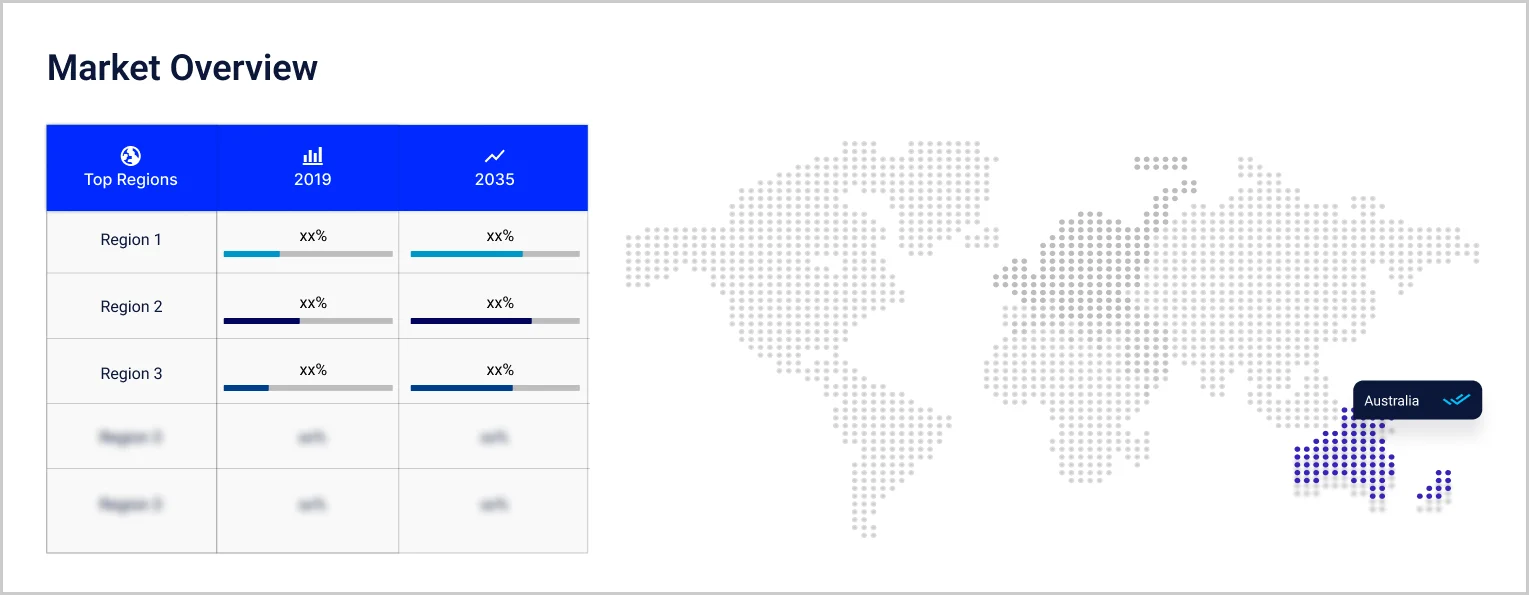
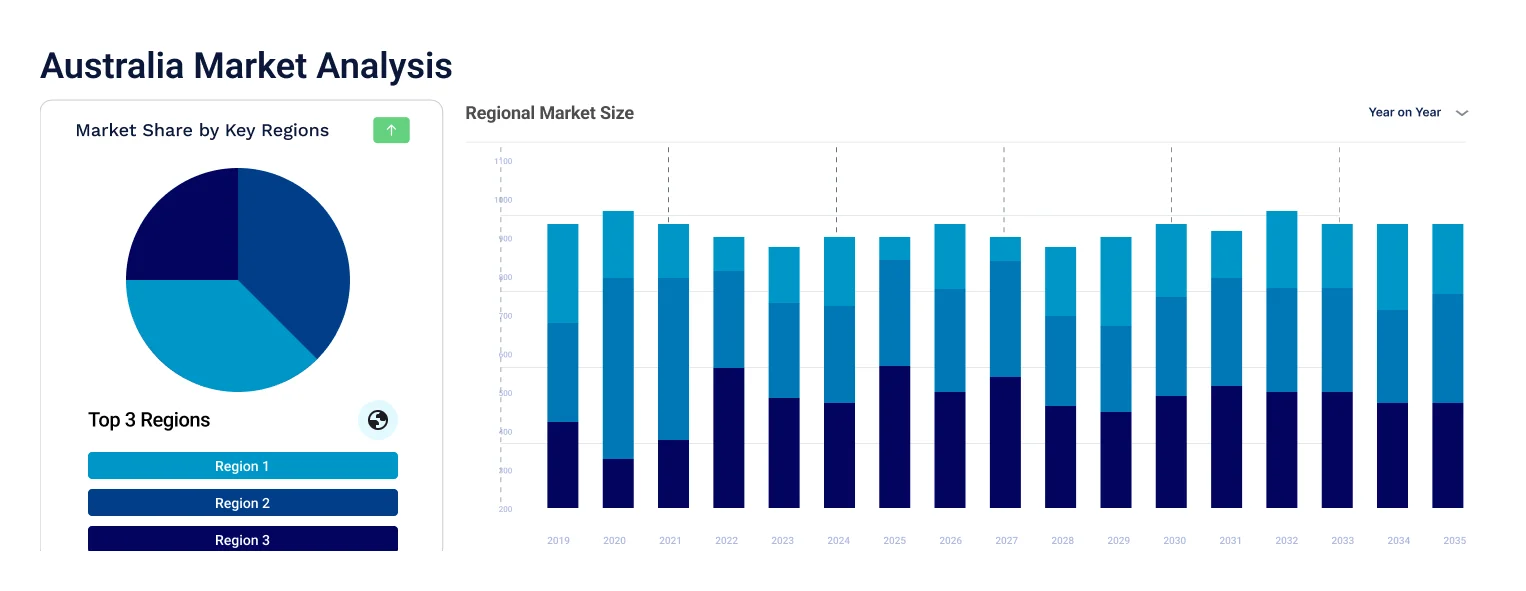
| CAGR 2026-2035 - Market by | Region |
| Western Australia | 17.8% |
| Australian Capital Territory | 17.0% |
| Victoria | 14.7% |
| New South Wales | XX% |
| Queensland | XX% |
| Others | XX% |
Western Australia Leads the Market with Robust Investments
Western Australia holds a more modest Australia connected car industry share due to its smaller vehicle population, vast remote areas, and unique infrastructure challenges. However, meaningful investments signal growing momentum. For instance, the state recently completed a 7,000‑kilometre “connected” EV highway network featuring 110 charging points across 49 locations stretching from Mundrabilla to Kununurra to support EV uptake and connected‑mobility services.
Australian Capital Territory (ACT) is influential in EV transition thanks to progressive policies and incentives. By 2023, over 20 % of new vehicle registrations in the ACT were EVs, more than double the national average. This high adoption fosters a favourable environment for connected‑car services, telemetry, and vehicle‑to‑grid technologies, reinforcing the region’s strategic role in shaping future mobility.
Players in the Australia connected car market are employing several strategies to strengthen their positions in the growing mobility ecosystem. With partnership and collaboration, telecom providers team up with automakers to deliver reliable in-car connectivity. Technology integration is another priority, with features like Google Built-In, advanced telematics, and over-the-air software updates enhancing user convenience and engagement.
Companies are driving innovation through data analytics and IoT platforms, such as the Aeris Mobility Suite, providing automakers with tools for remote diagnostics, predictive maintenance, and fleet management. Meanwhile, cybersecurity and compliance are becoming critical, with firms investing in secure cloud infrastructures and local data storage to meet Australian privacy regulations.
Founded in 1937 and headquartered in Wolfsburg, Germany, Volkswagen is one of the world’s most recognized automotive manufacturers. The company has achieved global success through innovation in vehicle design, electrification, and safety technology. Its ID. series showcases leadership in sustainable electric mobility and digital automotive transformation.
Established in 1992 and headquartered in Macquarie Park, Sydney, Optus is a leading Australian telecommunications provider. The company is recognized for expanding 5G coverage nationwide and advancing IoT connectivity. Optus continues to innovate in mobile technology, enterprise solutions, and smart connectivity for individuals, businesses, and automotive partnerships.
Established in 1975 and headquartered in Melbourne, Telstra is Australia’s largest telecommunications and technology company. It leads in 4G and 5G network development, IoT innovation, and connected vehicle solutions. Telstra’s achievements include powering smart cities, enhancing national digital infrastructure, and driving next-generation connectivity experiences.
Founded in 1969 and based in Melbourne, Honda Australia represents the global Honda Motor Company. The brand is known for its innovation in safety, hybrid powertrains, and connected car technologies. Recent achievements include launching Honda Connect and integrating Google Built-In to enhance driver convenience and vehicle intelligence.
*Please note that this is only a partial list; the complete list of key players is available in the full report. Additionally, the list of key players can be customized to better suit your needs.*
Other key players in the Australia connected car market report include SSS Holdings Pty Ltd (MobileCorp), Toyota Australia, Sibros Technologies Inc., Hyundai Motor Company, Australia Pty Limited, Netstar Australia Pty Ltd, Australian Motoring Services Pty Ltd, and others.
Download a free sample of our Australia connected car market report to explore detailed insights, key trends, and quantitative forecasts. Understand the evolving landscape, competitive strategies, and growth opportunities shaping Australia connected car market trends 2026. Get expert analysis to make informed business decisions and stay ahead in the automotive connectivity sector.


Upto 15% Off
USD
$2499 $2249
$3999 $3599
$4999 $4249
$5999 $5099


*While we strive to always give you current and accurate information, the numbers depicted on the website are indicative and may differ from the actual numbers in the main report. At Expert Market Research, we aim to bring you the latest insights and trends in the market. Using our analyses and forecasts, stakeholders can understand the market dynamics, navigate challenges, and capitalize on opportunities to make data-driven strategic decisions.*
In 2025, the market reached an approximate value of USD 1.91 Billion.
The market is projected to grow at a CAGR of 15.20% between 2026 and 2035.
The key players in the market include Volkswagen, Optus, SSS Holdings Pty Ltd (MobileCorp), Telstra, Honda Australia Pty Ltd, Toyota Australia, Sibros Technologies Inc., Hyundai Motor Company, Australia Pty Limited, Netstar Australia Pty Ltd, Australian Motoring Services Pty Ltd, and others.
Australian Capital Territory is expected to grow at 18.4% CAGR through 2035 due to progressive policies and incentives in EVs.
Key strategies driving the market include strong telecom–automaker partnerships, rapid 5G and IoT integration, and adoption of telematics for safety and efficiency. Companies focus on data analytics, cybersecurity, and personalized in-car experiences while supporting electric and autonomous vehicle growth through enhanced connectivity, digital platforms, and customer-centric mobility services.
Explore our key highlights of the report and gain a concise overview of key findings, trends, and actionable insights that will empower your strategic decisions.
| REPORT FEATURES | DETAILS |
| Base Year | 2025 |
| Historical Period | 2019-2025 |
| Forecast Period | 2026-2035 |
| Scope of the Report |
Historical and Forecast Trends, Industry Drivers and Constraints, Historical and Forecast Market Analysis by Segment:
|
| Breakup by Application |
|
| Breakup by Network Type |
|
| Breakup by Technology |
|
| Breakup by Sales Channel |
|
| Breakup by Region |
|
| Market Dynamics |
|
| Competitive Landscape |
|
| Companies Covered |
|
Datasheet
One User
USD 2,499
USD 2,249
tax inclusive*
Single User License
One User
USD 3,999
USD 3,599
tax inclusive*
Five User License
Five User
USD 4,999
USD 4,249
tax inclusive*
Corporate License
Unlimited Users
USD 5,999
USD 5,099
tax inclusive*
*Please note that the prices mentioned below are starting prices for each bundle type. Kindly contact our team for further details.*
Flash Bundle
Small Business Bundle
Growth Bundle
Enterprise Bundle
*Please note that the prices mentioned below are starting prices for each bundle type. Kindly contact our team for further details.*
Flash Bundle
Number of Reports: 3
20%
tax inclusive*
Small Business Bundle
Number of Reports: 5
25%
tax inclusive*
Growth Bundle
Number of Reports: 8
30%
tax inclusive*
Enterprise Bundle
Number of Reports: 10
35%
tax inclusive*
How To Order

Select License Type
Choose the right license for your needs and access rights.

Click on ‘Buy Now’
Add the report to your cart with one click and proceed to register.

Select Mode of Payment
Choose a payment option for a secure checkout. You will be redirected accordingly.
Strategic Solutions for Informed Decision-Making
Gain insights to stay ahead and seize opportunities.

Get insights & trends for a competitive edge.

Track prices with detailed trend reports.

Analyse trade data for supply chain insights.

Leverage cost reports for smart savings

Enhance supply chain with partnerships.

Connect For More Information
Our expert team of analysts will offer full support and resolve any queries regarding the report, before and after the purchase.
Our expert team of analysts will offer full support and resolve any queries regarding the report, before and after the purchase.
We employ meticulous research methods, blending advanced analytics and expert insights to deliver accurate, actionable industry intelligence, staying ahead of competitors.
Our skilled analysts offer unparalleled competitive advantage with detailed insights on current and emerging markets, ensuring your strategic edge.
We offer an in-depth yet simplified presentation of industry insights and analysis to meet your specific requirements effectively.




