

Consumer Insights
Uncover trends and behaviors shaping consumer choices today
Procurement Insights
Optimize your sourcing strategy with key market data
Industry Stats
Stay ahead with the latest trends and market analysis.
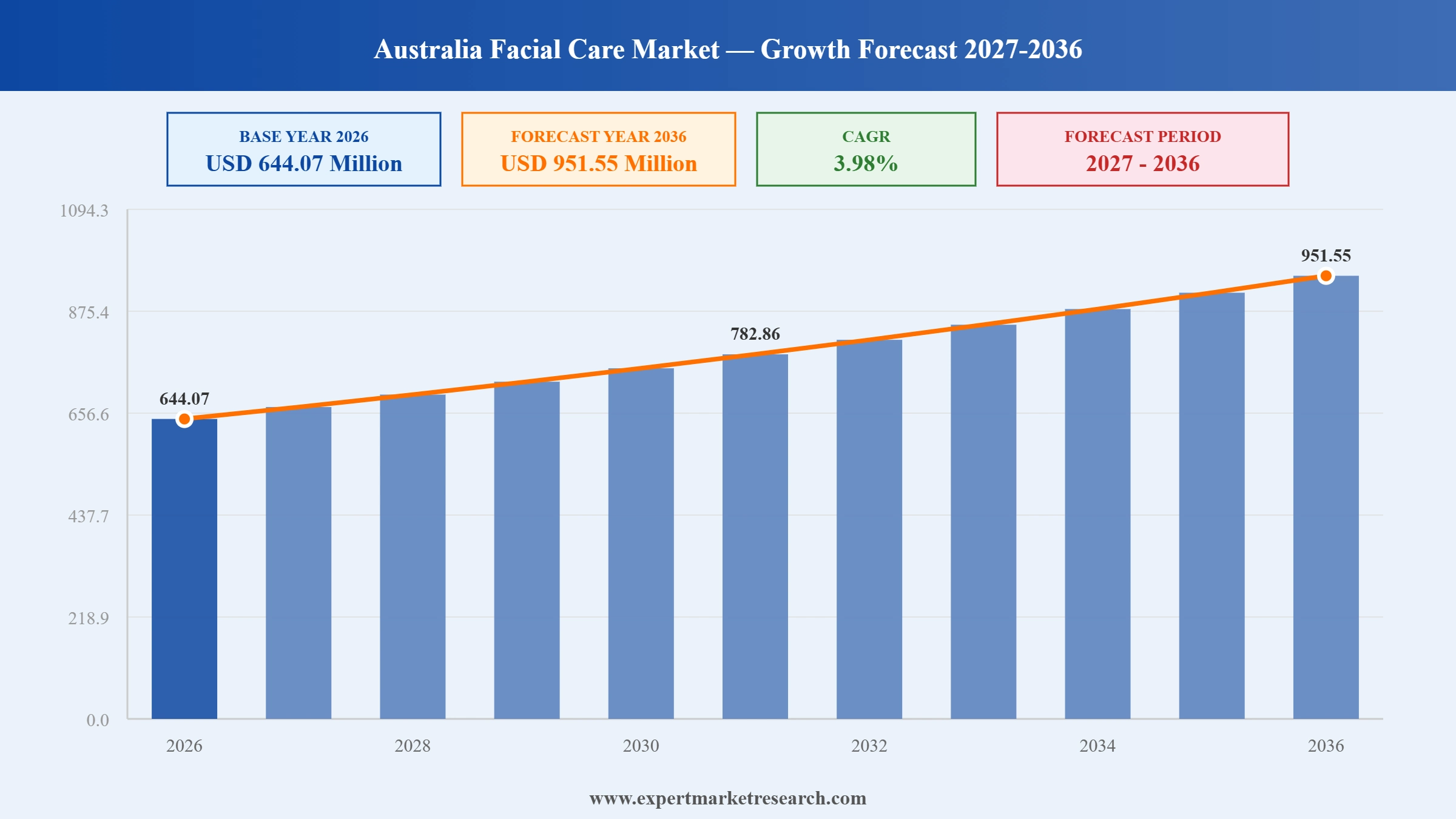
The Australia facial care market attained a value of USD 619.42 Million in 2025 and is projected to expand at a CAGR of 3.98% through 2035. The market is further expected to achieve USD 915.13 Million by 2035, driven by rising demand for natural and organic formulations, growing premium product adoption, and expanding online retail penetration. Growth spans facial cleansers, moisturisers, sun protection products, and face masks across mass and premium categories, with manufacturers across New South Wales, Victoria, Queensland, and Western Australia competing on ingredient innovation, sustainable packaging, and social media-driven brand engagement.
Rising consumer awareness of skin health and ingredient transparency continues to anchor steady demand across the Australia facial care market, as shoppers increasingly favour natural and organic formulations over conventional alternatives. Manufacturers are also investing in scientific research partnerships, reflecting the industry's pursuit of clinically credible product claims rather than marketing-led positioning alone.
The Australia facial care market is witnessing further developments as established global manufacturers channel fresh capital into skincare innovation pipelines. Beiersdorf launched a 100 million euro venture fund in April 2026 to combine internal research with external scientific entrepreneurship, accelerating development of next-generation, science-led skincare solutions. This shift toward venture-backed innovation is concentrated among manufacturers with sufficient research and development scale, while smaller specialists instead compete on niche ingredient positioning.
In addition, established manufacturers are increasingly using short-form social media content to support new product launches, reflecting the industry's recognition that platform-native marketing increasingly determines product visibility among younger consumers. Unilever launched a Vaseline body oil range in Australia in April 2026, supporting the release with a short-form vertical micro-reality series distributed across Instagram, TikTok, and YouTube Shorts. Such social-first marketing activity is reshaping competitive positioning across the wider australia facial care market as manufacturers with platform-native content capability increasingly differentiate themselves from competitors relying on traditional advertising alone.
Read more about this report - REQUEST FREE SAMPLE COPY IN PDF
Australian cosmetic ingredient regulation is tightening as chemical classification requirements grow more precise. The Australian Industrial Chemicals Introduction Scheme is implementing updated Industrial Chemicals Categorisation Guidelines from September 2026, including new entries and classification corrections that raise the compliance bar for premium, active-heavy, and cosmeceutical-positioned skincare lines. Companies can leverage early regulatory affairs investment to avoid reformulation delays as classification requirements tighten.
Established skincare manufacturers are increasingly pairing internal research with external scientific entrepreneurship to speed product development. Beiersdorf launched a 100 million euro venture fund aimed at strengthening its innovation pipeline through combined internal and external research, enabling faster development of next-generation, science-led skincare solutions. Companies can leverage venture-style innovation funding to access emerging scientific entrepreneurship without the delays of purely internal research cycles.
Consumer goods manufacturers are increasingly building entertainment-format content directly into product launch campaigns rather than relying on standard advertising. Unilever supported its Australian Vaseline body oil range launch with The Afterglow, a short-form vertical micro-reality series distributed across Instagram, TikTok, and YouTube Shorts. Companies can leverage platform-native entertainment content to build launch-period engagement among younger, social-first skincare consumers.
Premium skincare manufacturers are demonstrating that margin discipline can offset softer underlying sales growth in a more cautious consumer spending environment. Shiseido reported a profit surge in the first half of 2026 despite softer like-for-like sales performance, reflecting cost discipline and portfolio prioritisation toward higher-margin premium lines. Companies can leverage premium portfolio concentration to protect profitability even when overall category volume growth moderates.
Premium cosmetics manufacturers are increasingly investing in formal academic research partnerships to strengthen scientific credibility behind product claims. Estee Lauder Companies partnered with the University of Leeds in August 2026, working with color science expert Dr Kaida Xiao to establish more precise scientific methods for determining perceptible shade differences across its luxury and prestige complexion portfolio. Companies can leverage formal university research partnerships to substantiate technical product claims more credibly than in-house testing alone, lending independent academic weight to marketing claims that increasingly ingredient-conscious consumers might otherwise dismiss as unverified brand assertions.
Japanese skincare manufacturers are extending sensitive-skin brands into new international markets as part of a wider global expansion strategy. Kao introduced its Curel sensitive skincare brand into the Netherlands in June 2026, the latest step in an EMEA rollout that previously covered the UK, Germany, and France, tailoring distribution toward pharmacies and drugstore channels where skincare expertise and consumer trust are strongest. Companies can leverage market-by-market EMEA rollout strategies to test channel positioning before wider global brand expansion, refining pricing and distribution approach in each new territory based on lessons learned from prior market launches within the same region.
Legacy premium skincare brands are demonstrating that decades-old hero products can continue driving new customer acquisition through iterative reformulation. Groupe Clarins highlighted, in May 2026, its Double Serum franchise, now in its ninth generation after more than 40 years on the market, with one bottle sold every three seconds and the latest iteration recruiting approximately 20 percent of the brand's new customers. Companies can leverage iterative reformulation of long-running hero products to sustain new customer acquisition without the risk of launching entirely new product lines.
Colour cosmetics manufacturers are increasingly blurring the line between makeup and skincare through hybrid product formulations. Revlon relaunched its Be Unforgettable brand campaign in April 2026 alongside a reimagined PhotoReady Collection featuring skincare-inspired formulas including a Lift and Fill Skin Tint and Instant Plump Lip products designed to visibly lift, blur, and perfect. Companies can leverage skincare-inspired hybrid formulations to capture consumers seeking treatment benefits from their colour cosmetics purchases, a positioning shift that continues to blur traditional category boundaries between makeup and skincare across the wider beauty retail landscape.
This Expert Market Research Report titled "Australia Facial Care Market Report and Forecast 2026-2035" offers a detailed analysis of the market based on the following segments:
Market Breakup by Product Type
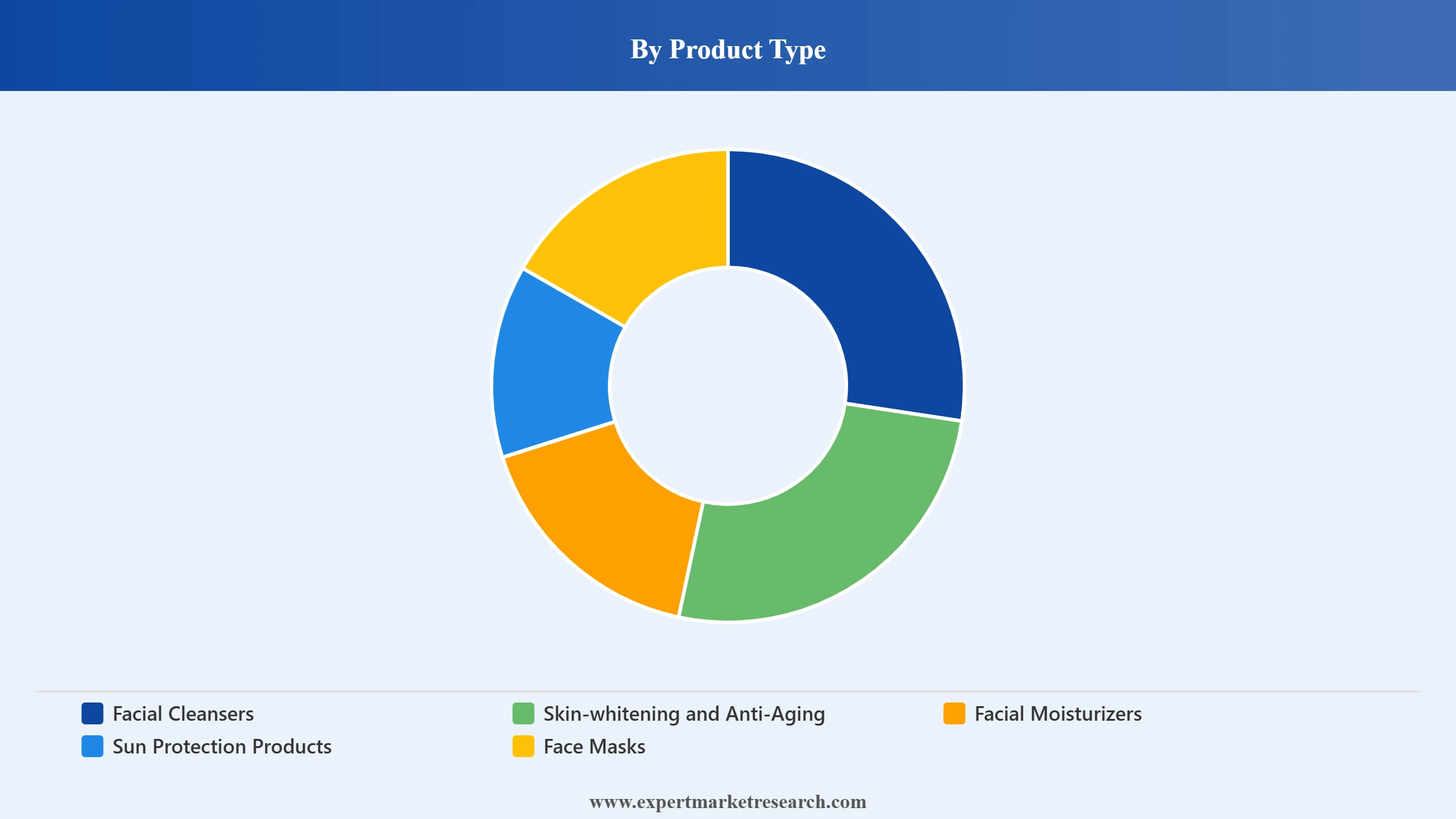
Key Insight: Facial Moisturizers leads the market, reflecting demand for hydration and skin barrier support across varied skin types. Facial Cleansers follows closely, valued for effectively removing impurities and dead skin cells while promoting a radiant complexion. Skin-whitening and Anti-Aging serves consumers seeking targeted treatment for pigmentation and visible ageing concerns. Sun Protection Products supports demand tied to Australia's high UV exposure and skin cancer awareness. Face Masks is growing at a fast pace at a projected CAGR of 4.80%, supported by rising consumer interest in targeted, treatment-style skincare routines. Others encompasses smaller-volume product categories including toners and exfoliators, formats increasingly positioned as complementary add-on steps within broader multi-product skincare routines rather than standalone purchases.
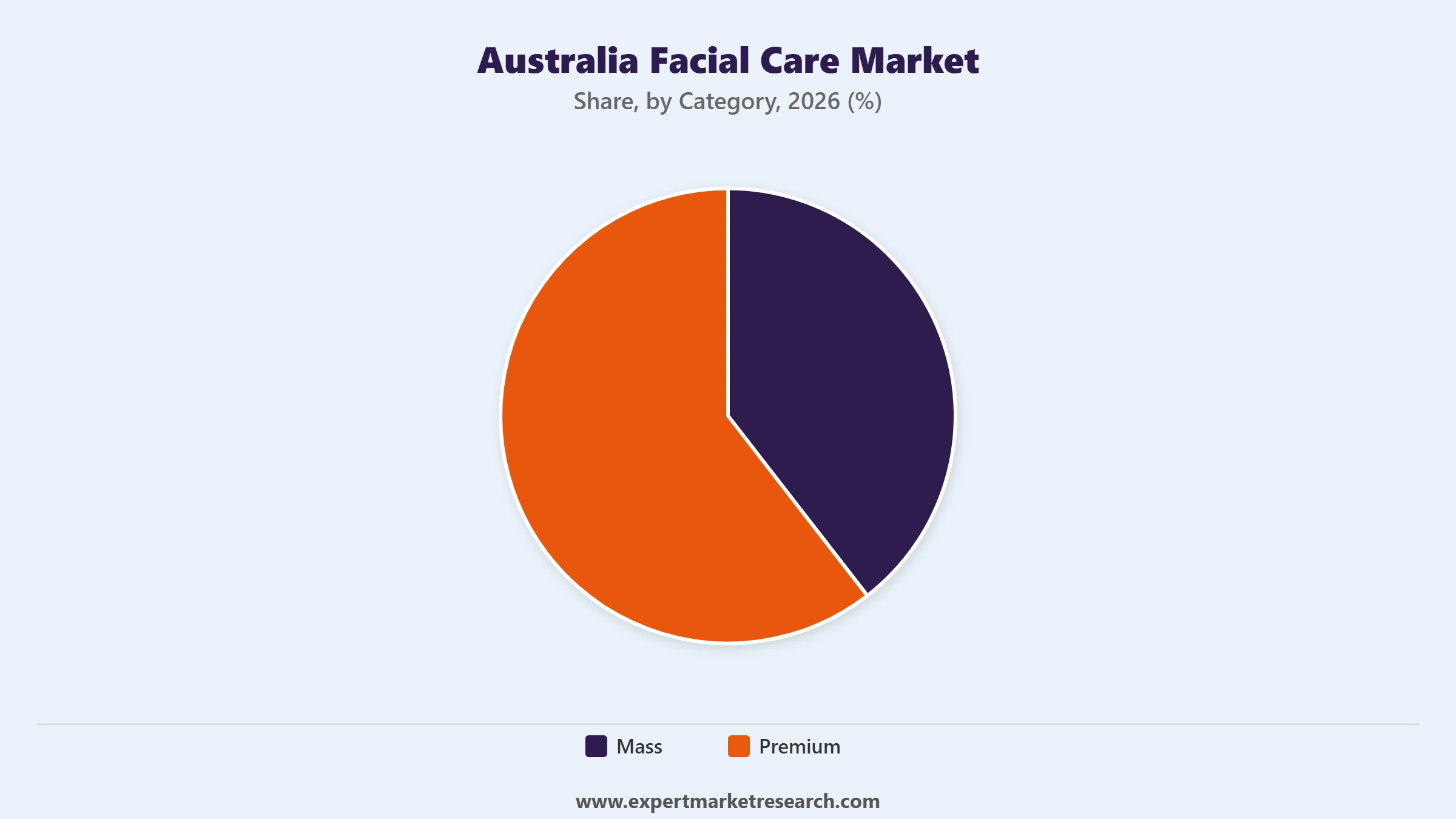
Market Breakup by Category
Key Insight: Mass accounts for the largest share of the market, reflecting its widespread availability across supermarkets and pharmacies at accessible price points. Premium is growing at a fast pace at a projected CAGR of 4.60%, illustrated by Beiersdorf's April 2026 launch of a 100 million euro venture fund aimed at accelerating next-generation, science-led skincare solutions typically positioned at premium price points, a shift that reflects consumers' growing willingness to trade up when clinical evidence and ingredient science can be clearly demonstrated to justify the price gap.
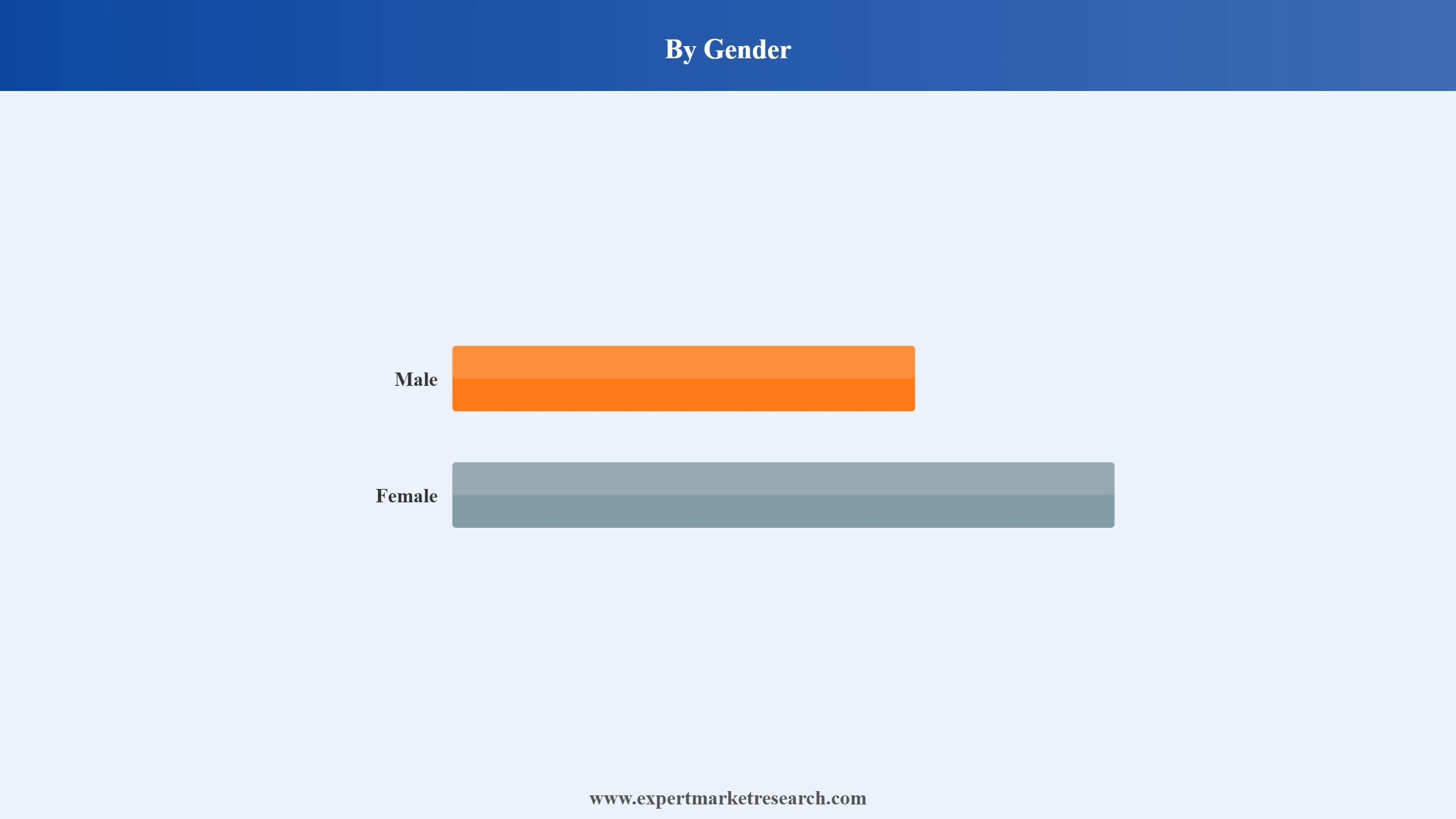
Market Breakup by Gender
Key Insight: Female accounts for the largest share of the market, reflecting established, higher-frequency facial care routine adoption across the category. Male continues to represent a growing share as grooming and skincare awareness expands among male consumers, supported by expanding product ranges tailored to male skin concerns, with simplified, multi-benefit formats increasingly designed to lower the routine-complexity barrier that has historically limited category engagement among male shoppers.
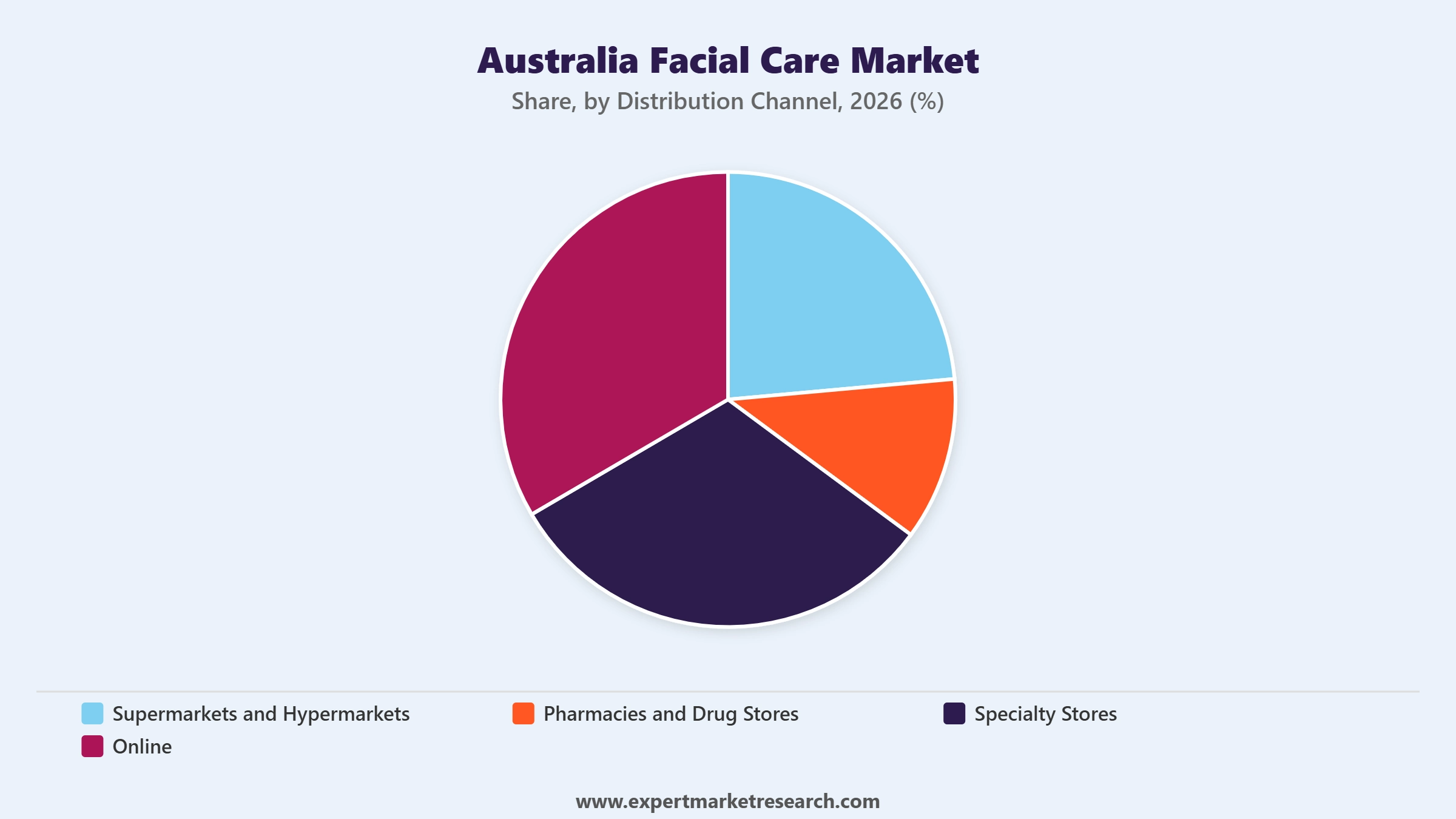
Market Breakup by Distribution Channel
Key Insight: Supermarkets and Hypermarkets accounts for the largest share of the market, reflecting the combination of product diversity, convenience, promotional strategies, brand availability, consumer trust, and educational opportunities these outlets offer. Pharmacies and Drug Stores serve consumers seeking dermatologically positioned products alongside professional guidance. Specialty Stores support premium and niche brand discovery through curated product selection. Online is growing steadily, illustrated by Unilever's April 2026 use of short-form vertical video content across Instagram, TikTok, and YouTube Shorts to support its Australian product launch. Others encompasses smaller-volume channels including direct salon and clinic sales, where professional in-person consultation continues to support premium product positioning that would be harder to justify through unattended retail channels.
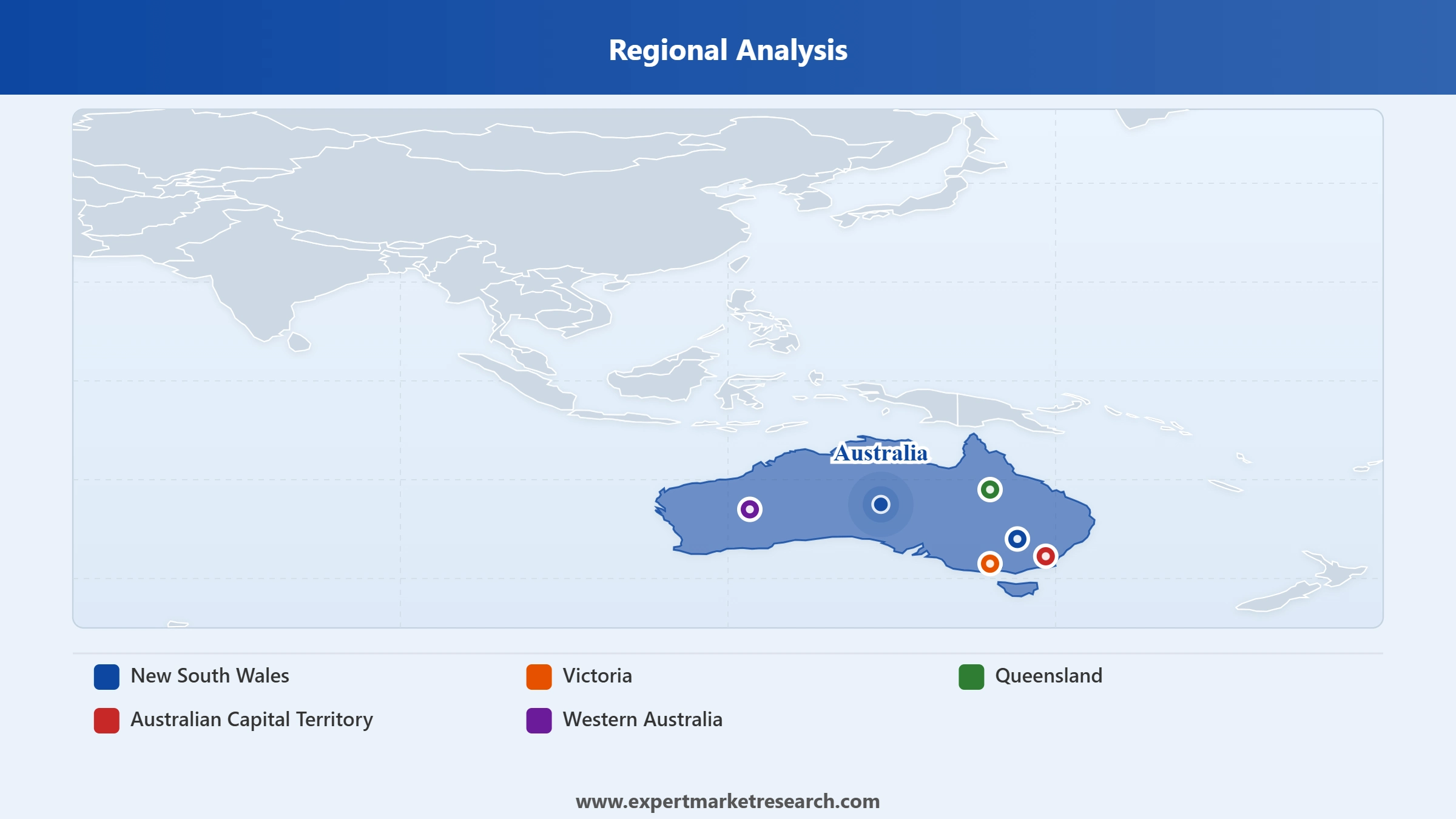
Market Breakup by Region
Key Insight: Western Australia holds the largest regional share at 16.7% and is also the fastest-growing region at a projected CAGR of 5.0%, supported by rising disposable income and expanding specialty beauty retail presence. Australian Capital Territory follows with growth of 4.7%, reflecting its concentrated, higher-income population base. Victoria continues to represent substantial demand at a projected CAGR of 4.5%, tied to its dense urban retail and specialty store presence. New South Wales serves a large population base with established distribution infrastructure. Queensland supports steady demand tied to population growth across its major population centres. Others captures smaller state and territory markets including South Australia and Tasmania, where demand growth tends to track closely with population trends and specialty retail footprint rather than any distinct regional consumption pattern.
Read more about this report - REQUEST FREE SAMPLE COPY IN PDF
By product type, facial moisturizers leads the market while face masks grows fastest given targeted skincare demand
Facial Moisturizers continues to account for the largest share of the market, reflecting sustained demand for hydration and skin barrier support tailored to dry, oily, sensitive, or combination skin types. Estee Lauder reinforced the category's scientific credibility in August 2026 through a University of Leeds research partnership aimed at more precisely measuring perceptible shade and formulation differences across its complexion portfolio, an initiative the company expects to inform product development across its broader moisturiser and foundation ranges over coming years.
Read more about this report - REQUEST FREE SAMPLE COPY IN PDF
Face Masks is growing at the fastest pace across the australia facial care market at a projected CAGR of 4.80%, as consumers increasingly seek targeted, treatment-style skincare routines beyond daily cleansing and moisturising, a shift that has encouraged manufacturers to expand short-duration, intensive-treatment formats designed for regular at-home use rather than occasional pampering, with sheet mask and clay mask formats both benefiting from this broader routine-driven demand shift.
By category, mass leads the market while premium grows fastest given rising investment in scientific innovation
Mass continues to account for the largest share of the market, reflecting its widespread availability across supermarkets and pharmacies at accessible price points for everyday consumers. Kao reinforced its mass-tier reach in June 2026, extending its Curel sensitive-skincare brand into additional international markets as part of a broader accessible-pricing expansion strategy across its global skincare portfolio, aiming to build brand recognition among value-conscious consumers before layering in higher-margin premium line extensions.
Read more about this report - REQUEST FREE SAMPLE COPY IN PDF
Premium is growing at a fast pace at a projected CAGR of 4.60%, illustrated by Beiersdorf's April 2026 launch of a 100 million euro venture fund aimed at accelerating next-generation, science-led skincare solutions typically positioned at premium price points and marketed on clinically substantiated efficacy claims, a positioning strategy that continues to differentiate premium brands from mass-market alternatives making similar functional promises without comparable supporting research.
By gender, female leads the market while male continues to expand given growing grooming awareness
Female continues to account for the largest share of the market, reflecting established, higher-frequency facial care routine adoption across the category, with multi-step regimens spanning cleansing, treatment, and moisturising products sustaining consistently higher basket sizes than single-product male purchasing patterns, a gap manufacturers continue targeting through bundled routine kits and subscription-style replenishment programmes aimed at female shoppers.
Read more about this report - REQUEST FREE SAMPLE COPY IN PDF
Male continues to represent a growing share as grooming and skincare awareness expands, supported by expanding product ranges tailored specifically to male skin concerns, including simplified all-in-one formats designed to lower the routine-complexity barrier that has historically limited category engagement among male consumers, with several brands now marketing these formats specifically around speed and simplicity rather than the multi-step positioning used for female-targeted ranges.
By distribution channel, supermarkets and hypermarkets leads the market while online grows steadily given social-first marketing
Supermarkets and Hypermarkets continues to account for the largest share of the market, reflecting the combination of product diversity, convenience, promotional strategies, and consumer trust these outlets offer, a channel Revlon reinforced in April 2026 through its relaunched Be Unforgettable campaign supporting a reimagined, mass-distributed skincare-inspired colour cosmetics range, reinforcing the retail channel's role as the primary launch platform for campaigns aimed at broad, price-sensitive consumer reach.
Read more about this report - REQUEST FREE SAMPLE COPY IN PDF
Online continues to gain ground as a growth channel, with Unilever's April 2026 short-form vertical video campaign across Instagram, TikTok, and YouTube Shorts demonstrating the platform-native marketing approach now driving e-commerce conversion among younger, social-first skincare shoppers who increasingly discover and purchase products without visiting a physical store, a behaviour shift that continues to push manufacturers toward influencer-led and short-form video-first launch strategies over traditional retail advertising.
Pharmacies and Drug Stores capture demand from shoppers who value in-store professional advice alongside dermatologically positioned formulations. Specialty Stores draw consumers seeking curated, niche brand discovery experiences, reinforced by Groupe Clarins' continued promotion in 2026 of its Double Serum franchise, now in its ninth generation, while Others accounts for smaller-volume salon and clinic-based sales, channels where professional recommendation continues to carry outsized influence over premium product purchasing decisions relative to their overall sales volume.
Western Australia commands the largest regional share while also leading growth given rising disposable income
Western Australia holds the largest regional share of the Australia facial care market at 16.7% and is also the fastest-growing region at a projected CAGR of 5.0%, supported by rising disposable income and expanding specialty beauty retail presence.
Read more about this report - REQUEST FREE SAMPLE COPY IN PDF
Australian Capital Territory posts the second-strongest growth rate at 4.7%, a pace attributable to its concentrated, higher-income population base. Victoria follows closely at 4.5%, underpinned by its dense urban retail and specialty store footprint. New South Wales contributes a large, stable revenue base thanks to its established supermarket, pharmacy, and specialty store infrastructure. Queensland rounds out steady mid-tier growth as its population centres continue expanding. Others, spanning South Australia and Tasmania, rounds out the market with smaller but consistent regional contributions.
The industry is fragmented, with australia facial care market companies ranging from diversified global consumer goods manufacturers to specialist skincare brands competing across product type, category, and distribution channel segments. Established players operate across the full product value chain, from research and formulation through manufacturing and multi-channel retail distribution for mass and premium consumers.
Competitive dynamics among australia facial care players are increasingly shaped by the pace of scientific innovation investment, the strength of social-first marketing content, and the depth of regulatory affairs capability. Manufacturers are investing in venture-backed research partnerships, platform-native launch campaigns, and premium portfolio positioning to secure long-term relationships with increasingly ingredient-conscious consumers.
Founded in 1882 and headquartered in Hamburg, Germany, with an established Australian operating presence, Beiersdorf manufactures facial care and broader skincare products under brands including Nivea and Eucerin. In April 2026, the company launched a 100 million euro venture fund to accelerate development of next-generation, science-led skincare solutions. Beiersdorf's combination of heritage skincare brands and venture-backed innovation differentiates its offering from competitors relying solely on internal research.
Founded in 1872 and headquartered in Tokyo, Japan, with an established Australian operating presence, Shiseido manufactures premium facial care and cosmetics products with a focus on scientific research-led formulations. The company reported a profit surge in the first half of 2026 despite softer like-for-like sales, reflecting disciplined portfolio management toward higher-margin premium lines. Shiseido's premium-focused portfolio concentration differentiates its offering from mass-market competitors.
Founded in 1909 and headquartered in Clichy, France, with an established Australian operating presence, L'Oréal manufactures skincare products, perfumes, and shampoos and conditioners across mass and premium price points. The company maintains an extensive facial care product portfolio spanning cleansers, moisturisers, and anti-ageing formulations. L'Oréal's scale across both mass and premium categories differentiates its offering from single-tier specialists.
Founded in 1872 and headquartered in Blackfriars, London, with an established Australian operating presence, Unilever manufactures affordable soaps, skincare, and personal care products across its diversified consumer goods portfolio. In April 2026, the company launched a Vaseline body oil range in Australia supported by short-form vertical video content across Instagram, TikTok, and YouTube Shorts. Unilever's platform-native, entertainment-format marketing approach differentiates its offering from competitors relying on traditional advertising.
Other key players in the Australia facial care market include Estee Lauder Pty. Limited, Procter & Gamble Australia Pty. Ltd., Revlon Australia Pty Ltd., Groupe Clarins (Trimex Pty Ltd.), Kao Australia Pty. Limited, and Solskin Beauty Labs Pty Ltd., among others.
*Please note that this is only a partial list; the complete list of key players is available in the full report. Additionally, the list of key players can be customized to better suit your needs.*
Unlock the latest insights with our Australia facial care market trends 2026 report. Discover regional growth patterns, product type and category trends, and key industry players. Stay ahead of competition with trusted data and expert analysis. Download your free sample report today and drive informed decisions in the market.


Upto 15% Off
USD
$2499 $2249
$3999 $3599
$4999 $4249
$5999 $5099


*While we strive to always give you current and accurate information, the numbers depicted on the website are indicative and may differ from the actual numbers in the main report. At Expert Market Research, we aim to bring you the latest insights and trends in the market. Using our analyses and forecasts, stakeholders can understand the market dynamics, navigate challenges, and capitalize on opportunities to make data-driven strategic decisions.*
In 2025, the market reached an approximate value of USD 619.42 Million.
The market is projected to grow at a CAGR of 3.98% between 2026 and 2035.
The revenue generated from the market is expected to reach USD 915.13 Million in 2035.
The market is categorised according to category into mass and premium.
The key players in the market include Beiersdorf Australia Ltd., Shiseido Australia Pty., Ltd., Estee Lauder Pty. Limited, L'Oréal Australia Pty Ltd., Procter & Gamble Australia Pty. Ltd., Revlon Australia Pty Ltd., Unilever Australia Group Pty Ltd., Groupe Clarins (Trimex Pty Ltd.), Kao Australia Pty. Limited, and Solskin Beauty Labs Pty Ltd., among others.
Based on the gender, the market is divided into male and female.
The market is broken down into New South Wales, Victoria, Queensland, Australian Capital Territory, Western Australia, and others.
Manufacturers face tightening cosmetic ingredient classification requirements under updated AICIS guidelines, intense price competition from a fragmented supplier base, and the ongoing need to substantiate product efficacy claims with credible scientific evidence.
Launching venture-backed research partnerships to accelerate scientific innovation, building platform-native short-form video content into product launch campaigns, and rebalancing portfolios toward higher-margin premium product lines.
Explore our key highlights of the report and gain a concise overview of key findings, trends, and actionable insights that will empower your strategic decisions.
| REPORT FEATURES | DETAILS |
| Base Year | 2025 |
| Historical Period | 2019-2025 |
| Forecast Period | 2026-2035 |
| Scope of the Report |
Historical and Forecast Trends, Industry Drivers and Constraints, Historical and Forecast Market Analysis by Segment:
|
| Breakup by Product Type |
|
| Breakup by Category |
|
| Breakup by Gender |
|
| Breakup by Distribution Channel |
|
| Breakup by Region |
|
| Market Dynamics |
|
| Competitive Landscape |
|
| Companies Covered |
|
Datasheet
One User
USD 2,499
USD 2,249
tax inclusive*
Single User License
One User
USD 3,999
USD 3,599
tax inclusive*
Five User License
Five User
USD 4,999
USD 4,249
tax inclusive*
Corporate License
Unlimited Users
USD 5,999
USD 5,099
tax inclusive*
*Please note that the prices mentioned below are starting prices for each bundle type. Kindly contact our team for further details.*
Flash Bundle
Small Business Bundle
Growth Bundle
Enterprise Bundle
*Please note that the prices mentioned below are starting prices for each bundle type. Kindly contact our team for further details.*
Flash Bundle
Number of Reports: 3
20%
tax inclusive*
Small Business Bundle
Number of Reports: 5
25%
tax inclusive*
Growth Bundle
Number of Reports: 8
30%
tax inclusive*
Enterprise Bundle
Number of Reports: 10
35%
tax inclusive*
How To Order

Select License Type
Choose the right license for your needs and access rights.

Click on ‘Buy Now’
Add the report to your cart with one click and proceed to register.

Select Mode of Payment
Choose a payment option for a secure checkout. You will be redirected accordingly.
Strategic Solutions for Informed Decision-Making
Gain insights to stay ahead and seize opportunities.

Get insights & trends for a competitive edge.

Track prices with detailed trend reports.

Analyse trade data for supply chain insights.

Leverage cost reports for smart savings

Enhance supply chain with partnerships.

Connect For More Information
Our expert team of analysts will offer full support and resolve any queries regarding the report, before and after the purchase.
Our expert team of analysts will offer full support and resolve any queries regarding the report, before and after the purchase.
We employ meticulous research methods, blending advanced analytics and expert insights to deliver accurate, actionable industry intelligence, staying ahead of competitors.
Our skilled analysts offer unparalleled competitive advantage with detailed insights on current and emerging markets, ensuring your strategic edge.
We offer an in-depth yet simplified presentation of industry insights and analysis to meet your specific requirements effectively.




