

Consumer Insights
Uncover trends and behaviors shaping consumer choices today
Procurement Insights
Optimize your sourcing strategy with key market data
Industry Stats
Stay ahead with the latest trends and market analysis.
The Australia forklift market attained a value of USD 2.23 Billion in 2025 and is projected to expand at a CAGR of 15.30% through 2035. The market is further expected to achieve USD 9.26 Billion by 2035. As automation expands in food logistics, buyers are increasingly adopting autonomous forklifts. Labor shortages and stricter safety compliance are also pushing vendors to bundle software, sensors, and service agreements nationwide.
Growing e-commerce fulfillment activity and infrastructure spending are driving fleet upgrades. Large-scale retailers are tightening performance requirements to raise output per aisle, while state-backed logistics parks are adding modern racking systems. Stricter emissions reporting is pushing fleets toward electric retrofits, supporting Australia forklift market growth. Buyers increasingly evaluate total cost of ownership, favoring suppliers offering battery warranties, fast chargers, and guaranteed response times.
According to the Australia forklift market analysis, in November 2024, total container output at the port of Melbourne reached 293000 TEUs, thus port equipment availability has become an increasing concern. In response, Toyota Material Handling Australia (TMHA) offers an expanded counterbalanced forklift portfolio with the 9FBMT Traigo range. This heavy-duty, dedicated electric series is offered in six, seven, and eight-ton load capacities. At the same time, suppliers are moving beyond lithium-ion solutions, targeting customers with continuous duty cycles and strict safety mandates.
Electrification is transforming product roadmaps all over the Australia forklift market. Companies like Crown Equipment Australia are intensifying their autonomous reach truck deployments in cold storage and are introducing a combination of vision systems and fleet analytics to reduce picking errors. In September 2025, Toll Group announced that the company is transitioning to an all-electric Toyota forklift fleet to cut emissions and boost safety. Companies like Jungheinrich Australia are stressing modular lithium platforms that allow the standardization of chargers and batteries across classes.
According to ABS, in Australia, sales and service income of manufacturing reached USD 135,630 million, during 2021-2022.
Further, as per ABS, manufacturing industry EBITDA saw an increase of 17.8% (USD 7.6 billion), following a 6.9% (USD 2.8 billion) increase, during 2020-2021.
According to ABS, online shopping among Australians witnessed a growing preference with e-commerce sales rising 12.6% in 2021-22.
Compound Annual Growth Rate
15.3%
Value in USD Billion
2026-2035
Japan based Nikken Corporation acquired Chadwick Forklifts, strengthening Oceania distribution reach and service capabilities supporting long term equipment growth strategy. Hence, other suppliers can pursue regional acquisitions to scale dealer networks, expand aftermarket revenues, and secure long-term industrial customers across Australia.
Jungheinrich launched value brand ANTON across Asia Pacific, targeting cost sensitive customers with standardized forklifts and simplified configurations, and modular offerings. Leveraging this trend in the Australia forklift market, competitors can develop modular forklift lines to serve price-conscious buyers without diluting premium brand portfolios.
Heli unveiled a new forklift model at its Oceania headquarters, highlighting improved ergonomics, efficiency, and localized product development, focus strategy. OEMs can localize product design and testing in Australia to better match regional operating conditions and buyer expectations.
Crown introduced electric IC forklifts up to 5.5-ton capacity, bridging combustion performance expectations with zero emission indoor capable designs applications. Such developments in the Australia forklift market encourage manufacturers to target customers transitioning from ICE fleets by offering electric models that match power and duty cycle requirements.
Demand in the Australia forklift market is shifting toward electric and hydrogen powered models as operators face emissions reporting pressure and rising diesel costs. National Electric Vehicle Strategy of the Australian Government has accelerated the availability of charging infrastructure at ports and logistics parks, thus indirectly supporting electric material handling fleets. In August 2025, Toyota Material Handling announced that the company is expanding its energy solutions portfolio with the introduction of Toyota’s new 5/35 Lithium-ion Batteries, with a view to continuous port operations. Buyers prefer bundled battery warranties, energy monitoring software, and predictable maintenance costs which not only help the OEM margin but also align with sustainability.
Due to the scarcity of available labor, piloting of automation is being replaced by scaled deployments across Australian distribution centers. In March 2025, Jungheinrich announced that they have collaborated with Toll Group to provide a customized racking solution for Toll's new 10,000 sqm temperature-controlled healthcare facility at Melbourne's Airport Business Park in Australia. Suppliers to Woolworths and Coles are demanding automation-ready forklifts in new RFPs to lessen picking errors, redefining the Australia forklift market dynamics. Autonomously operated and semi-autonomously operated forklifts increase output per square meter, thus providing operators with sufficient justification to pay a premium through tangible productivity gains and lowered risk of workplace accidents across the national network.
Mining and infrastructure activities are primarily driving the demand for high-capacity forklifts. In July 2024, Hyster Yale Australia rolled out heavy-duty electric forklifts for mining maintenance yards, aiming at reducing ventilation costs underground. These forklifts offer features such as remote diagnostics and collision avoidance, which align with the raised site safety standards, accelerating the Australia forklift market value. Long-term service agreements and local parts supply are favored by mining operators, thus allowing OEMs to have stable revenue streams outside of the cyclical equipment sales, especially within regions producing iron ore, lithium, and copper, during ongoing capital expenditure cycles.
Rapid e-commerce is mainly driving the changes in the forklifts' specifications in the warehousing and cold chain sectors in Australia. The Federal and state governments are supporting temperature-controlled logistics through food security and export programs. For example, Crown Equipment Australia offers freezer rated forklift range for automated cold storage facilities in New South Wales. There is a growing demand for narrow aisle trucks which have cold resistant batteries and operator assist systems, broadening the Australia forklift market scope. Cold chain operators are placing high priority on safety, thus manufacturers are able to upsell specialized attachments, fleet monitoring, and preventive maintenance contracts across the pharmaceutical, meat, and seafood export distribution hubs that are expanding.
Higher interest rates have prompted buyers in Australia to look for flexible forklift financing and subscription models. Equipment dealers are thus bundling leasing, servicing, and telematics in their offers. In response to these Australia forklift market trends, in November 2025, Kalmar signed an agreement with ArcelorMittal to supply 12 Kalmar medium forklift trucks, two of which are equipped with Kalmar’s second-generation lithium-ion (Li-ion) battery technology. Through subscription models, customers commit to multi-year relationships, gain fleet visibility, and the providers create a recurring revenue pattern.
The EMR’s report titled “Australia Forklift Market Report and Forecast 2026-2035” offers a detailed analysis of the market based on the following segments:
Market Breakup by Power Source
Key Insight: ICE forklifts remain critical for outdoor intensive industries that value refueling speed and rugged performance, accelerating the Australia forklift market growth. Electric forklifts are gaining traction where indoor safety, emissions accountability, and energy efficiency matter most. Buyers increasingly evaluate total lifecycle costs rather than upfront pricing. Hybrid fleet strategies are emerging, allowing operators to deploy electric units indoors while retaining ICE models for yards and regional sites. Supplier success depends on offering flexible power portfolios, battery service capabilities, and localized support rather than pushing single technology transitions across diverse industrial environments.
Market Breakup by Tonnage Capacity
Key Insight: Below 5 ton forklifts support high frequency warehouse tasks where speed and precision matter. 6to 30 ton forklifts address infrastructure and industrial handling needs that demand stability and power. Above zz ton forklifts serve niche applications such as ports and heavy manufacturing. In February 2023, Hyundai Material Handling unveiled a range of Heavy Line diesel forklift trucks, with an improved cab, EU Stage V, and HiMate telematics. Buyers align capacity selection with site layouts, load characteristics, and safety rules, redefining the Australia forklift market dynamics. Suppliers that offer scalable platforms across tonnage ranges gain advantage by simplifying fleet expansion while maintaining consistent operator experience and service support across varied industrial applications.
Market Breakup by Class
Key Insight: As per the Australia forklift market report, class 3 units dominate short cycle warehouse handling. Class 1 forklifts address heavier indoor lifting needs with electric efficiency. Class 2 forklifts serve narrow aisle environments requiring precision and class 4/5 forklifts support outdoor and industrial workloads. Buyers increasingly deploy mixed class fleets to optimize labor and space utilization. OEMs that provide cross class compatibility in controls and service programs strengthen customer retention across expanding warehouse footprints.
Market Breakup by Product Type
Key Insight: Counterbalance forklifts retain their dominance in the Australia forklift market as they provide broad utility across industries. Warehouse forklifts support specialized high-density environments. Buyers choose product types based on layout constraints and output goals. Manufacturers differentiate through attachments, digital tools, and service models. Successful suppliers align product portfolios with evolving warehouse design trends and operational efficiency targets across sectors.
Market Breakup by Application
Key Insight: Application segmentation as considered in the Australia forklift market, reflects supply chain priorities. 3PLs emphasize uptime and fleet efficiency while food and beverage manufacturers focus on temperature performance and compliance. Automotive manufacturers demand precision and sequencing and healthcare applications prioritize cleanliness and safety. OEMs tailor offerings to application specific requirements rather than generic specifications. Success depends on understanding operational workflows across end use sectors.
Market Breakup by Region
Key Insight: Regional demand in the Australia forklift market reflects economic specialization across the country. New South Wales leads through logistics density and consumption-driven warehousing. Victoria supports manufacturing and metro distribution. Queensland benefits from construction, agriculture, and trade exposure. Western Australia drives growth through mining and infrastructure activity. The Australian Capital Territory remains service oriented with limited fleet scale. Other regions contribute through regional logistics and resource handling.
By power Source, internal combustion forklifts dominate demand due to outdoor durability and refueling flexibility
Internal combustion engine forklifts (ICE forklifts) continue to be the most popular in Australia mainly because they are the ideal choice for outdoor and rugged work. Several industries like construction, mining logistics, timber handling, and depots rely on diesel and LPG forklifts for steady power and long working hours. ICE models can readily handle rough terrain, dusty yards, and isolated locations of projects where the provision of charging continues to be a challenge. In January 2023, Crown expanded lift truck portfolio with launch of IC and electric counterbalance forklifts capable of carrying up to 5.5 tons.
Electric forklifts represent the fastest-growing power source segment as Australian warehouses change over to advanced technologies. Growth in this category is mainly attributed to a greater availability of electricity in logistics parks, sustainability reporting requirements, and indoor safety measures. Lithium-ion forklifts are overtaking lead-acid ones because of quicker charging and a steadier power output, propelling demand in the Australia forklift market. Besides, electric models produce less noise and heat, which translates into better working conditions for operators in overcrowded facilities. Retail distribution centers and cold storage operators are gradually moving towards electric fleets in an effort to be in line with their emission goals and in order to lower their ventilation costs.
By tonnage capacity, below 5 ton forklifts lead volumes due to warehousing dominance
Forklifts below 5 tons represent the dominant capacity category, driven by warehouse-intensive industries. E-commerce fulfillment, retail distribution, and food logistics rely on compact forklifts optimized for palletized goods. These forklifts offer maneuverability within narrow aisles and mezzanine facilities. For example, companies like UN Forklift are offering 5.0-10.0 ton Lithium battery forklift, since December 2022. Fleet managers prefer standardized units that simplify training and spare parts stocking. OEMs focus on attachments, telematics, and safety options to differentiate offerings in this crowded space.
The 6 to 30 ton segment is rapidly expanding its share in the Australia forklift market, supported by infrastructure, mining, and renewable projects. Ports, precast manufacturing, and energy installations require higher lifting capacity for oversized loads. These forklifts integrate reinforced masts, stability controls, and advanced braking systems. Buyers favor models with telematics and condition monitoring to reduce downtime on remote sites. OEMs target this segment with premium pricing and long-term service agreements.
Class 3 forklifts account for the largest share of the market revenue due to intensive warehouse usage
Class 3 forklifts largely contribute to the Australia forklift market value due to widespread use in warehouses and distribution centers. Electric pallet trucks and walkie stackers handle high frequency short distance movement efficiently. These units are cost effective and easy to deploy across shifts. Operators value simplicity and reduced training requirements. OEMs emphasize ergonomic tillers, safety sensors, and lithium batteries to improve productivity. PALFINGER debuted its FLS truck-mounted forklift range at IAA, offering ergonomic swivel seats, electric drivetrains, and versatile mount options for urban and rough terrain operations in September 2024.
Class 1 forklifts are largely contributing to the Australia forklift market revenue as electric counterbalance models replace combustion units indoors. Growth is tied to warehouse automation and stricter indoor emissions standards. Buyers prefer Class 1 forklifts for dock operations and racked storage. OEMs integrate regenerative braking and advanced motor controls to extend battery life. These forklifts support longer operating hours with fewer interruptions. Adoption is strongest among retailers and third-party logistics providers upgrading facilities. Class one forklifts balance power and efficiency, making them a preferred choice for modern distribution centers.
By product type, counterbalance forklifts lead the market growth due to versatility across industries
Counterbalance forklifts register a substantial share of the Australia forklift market revenue because of their versatility across indoor and outdoor operations. These forklifts handle varied loads without additional support equipment. Industries favor counterbalance models for docks, yards, and general storage. Counterbalance forklifts remain foundational equipment for mixed operation sites where flexibility is critical. For example, the CLARK L25XE Series, launched in April 2025, is designed to deliver the robust performance of diesel and LPG forklifts while embracing cutting-edge, emission-free electric technology.
Warehouse forklifts are gaining rapid momentum in the Australia forklift market dynamics as storage density increases. Narrow aisle trucks, reach trucks, and order pickers support vertical expansion. Operators prioritize precision, visibility, and operator assistance features. OEMs focus on automation readiness and fleet software integration. These forklifts improve space utilization and picking accuracy. Warehouse forklifts are increasingly viewed as productivity assets rather than simple handling tools.
By application, third party logistics dominates forklift demand through warehousing concentration
Third-party logistics continues to dominate the Australia forklift market growth, supported by the rapid expansion of centralized warehousing and multi-client distribution hubs. 3PL operators typically run high-utilization fleets across extended operating hours, often under tight service-level agreements. As a result, flexibility, uptime, and predictable performance become critical purchase driving factors. Forklifts are selected based on proven reliability, national service coverage, and fast response times. Providers increasingly favor standardized models to simplify operator training, maintenance planning, and spare parts inventory. In response, OEMs actively target 3PLs with bundled fleet management software, preventive maintenance programs, and long-term service contracts.
Food and beverage is the fastest growing application as cold storage capacity expands. Forklifts must operate reliably in temperature-controlled environments. Buyers demand sealed electronics and cold resistant batteries. Hygiene compliance influences equipment selection and as a result, OEMs develop freezer rated models and specialized attachments. Growth in this category is tied to export-oriented food supply chains and retail distribution expansion. For example, in November 2025, Melba Fresh shifted from gas to Linde electric forklifts, boosting sustainability, efficiency, safety, and operator satisfaction.
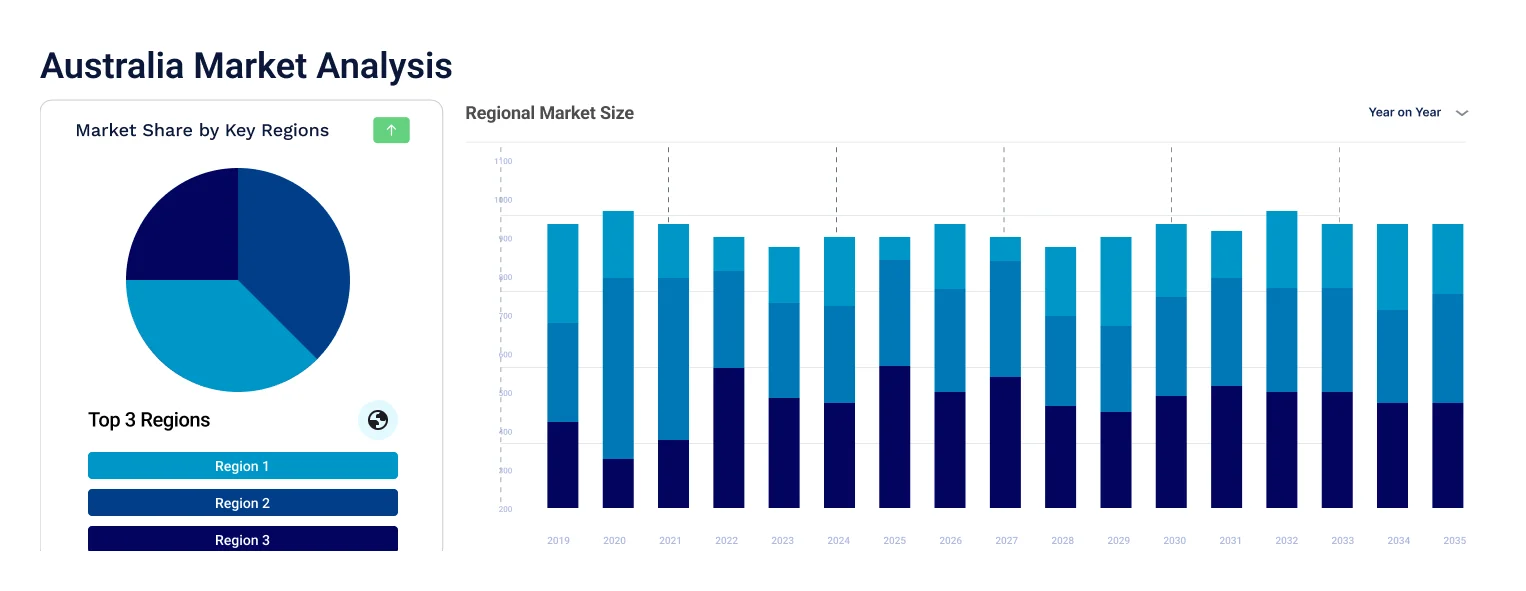
New South Wales leads forklift demand growth in Australia due to warehousing and port density
New South Wales represents the largest regional forklift market in Australia due to its concentration of logistics assets and consumption driven warehousing. Sydney anchors national distribution for retail, e-commerce, and food supply chains, creating steady fleet replacement cycles. Operators prioritize uptime, service reach, and fast parts availability. Forklifts are heavily utilized across ports, intermodal terminals, and urban fulfillment centers. OEMs treat NSW as a strategic base for launching new models and service programs. In May 2024, Adaptalift Group delivered a complete forklift and MHE fleet to IFC’s new Melbourne facility, boosting handling efficiency and layout optimization.
The Western Australia forklift market is growing rapidly due to sustained mining, energy, and port infrastructure activity. Forklifts support maintenance yards, processing facilities, and export terminals across remote locations. Buyers prioritize durability, load stability, and remote diagnostics. Service accessibility is critical, driving OEM investment in regional dealer networks. Western Australia favors higher capacity and heavy-duty forklifts, creating opportunities for premium pricing and service contracts.
Major Australia forklift market players are focusing on various lithium ion-based products, conducting pilot studies on hydrogen, and preparing automation-ready vehicle designs which will help them to secure long-term fleet contracts. Cold storage, mining logistics, and port operations are the areas where new opportunities are emerging.
OEMs are consolidating dealer networks to ensure improved parts availability across regional Australia. Software-enabled fleet monitoring is becoming a key differentiator for predictive maintenance and safety compliance. In addition, Australia forklift companies are expanding rental and subscription models to address SME capital sensitivity, improve fleet flexibility, and shorten replacement cycles across diverse end-use environments.
Established in 1925 and headquartered in Irving, Texas, United States, Caterpillar supplies forklifts through its industrial equipment portfolio. In Australia, Caterpillar focuses on rugged forklifts for construction, ports, and mining logistics. Its offerings emphasize durability, high load stability, and compatibility with harsh environments. The company leverages strong dealer relationships to provide service coverage across remote regions.
Established in 1964 and headquartered in New South Wales, Australia, Komatsu Forklift Australia focuses on reliable material handling solutions for warehousing and industrial sectors. The company emphasizes operator safety, fuel efficiency, and fleet standardization. Komatsu is expanding electric forklift offerings to align with warehouse electrification trends. Its rental and short-term fleet programs cater to construction and logistics customers with fluctuating demand.
Founded in 1948 with headquarters in South Australia, Clark Equipment Australia distributes forklifts and industrial machinery across the nation. The company serves warehousing, agriculture, and manufacturing sectors. Clark emphasizes value driven forklift models with adaptable attachments. Its strategy focuses on balancing cost efficiency with dependable service coverage.
Established in 1966 and headquartered in Sydney, Australia, Toyota Material Handling Australia leads through product breadth and innovation. The company offers electric, hydrogen, and automation ready forklifts. Toyota focuses on long term fleet partnerships, integrating telematics and predictive servicing. Its investments in alternative power solutions position it strongly within ports and high throughput warehouses.
*Please note that this is only a partial list; the complete list of key players is available in the full report. Additionally, the list of key players can be customized to better suit your needs.*
Other key players in the market include Linde Material Handling Pty Limited, HC Forklift Australia Pty Ltd., Crown Equipment Pty Ltd., Adaptalift Group, and Manitou BF S.A., among others.
Unlock the latest insights with our Australia forklift market trends 2026 report. Discover regional growth patterns, consumer preferences, and key industry players. Stay ahead of competition with trusted data and expert analysis. Download your free sample report today and drive informed decisions in the market.


Upto 15% Off
USD
$2499 $2249
$3999 $3599
$4999 $4249
$5999 $5099


*While we strive to always give you current and accurate information, the numbers depicted on the website are indicative and may differ from the actual numbers in the main report. At Expert Market Research, we aim to bring you the latest insights and trends in the market. Using our analyses and forecasts, stakeholders can understand the market dynamics, navigate challenges, and capitalize on opportunities to make data-driven strategic decisions.*
The market is projected to grow at a CAGR of 15.30% between 2026 and 2035.
The market is categorised according to product type, which includes counterbalance and warehouse.
The key players in the market include Caterpillar Inc., Komatsu Forklift Australia Pty Ltd., Clark Equipment Australia Pty Ltd., Toyota Material Handling Australia Pty Limited, Linde Material Handling Pty Limited, HC Forklift Australia Pty Ltd., Crown Equipment Pty Ltd., Adaptalift Group, and Manitou BF S.A., among others.
Based on the tonnage capacity, the market is divided into below 5 ton, 6-30 ton, and above 30 ton.
The market is broken down into New South Wales, Victoria, Queensland, Australian Capital Territory, Western Australia, and others.
In 2025, the market reached an approximate value of USD 2.23 Billion.
Rising equipment costs, uneven charging infrastructure, skilled technician shortages, regional service complexity, and customer resistance to high upfront prices challenge forklift suppliers operating across Australia’s diverse industrial environments.
Manufacturers are expanding electric portfolios, strengthening regional service networks, bundling software and financing, piloting automation, and aligning product development closely with sector specific operating conditions across Australian industries.
Explore our key highlights of the report and gain a concise overview of key findings, trends, and actionable insights that will empower your strategic decisions.
| REPORT FEATURES | DETAILS |
| Base Year | 2025 |
| Historical Period | 2019-2025 |
| Forecast Period | 2026-2035 |
| Scope of the Report |
Historical and Forecast Trends, Industry Drivers and Constraints, Historical and Forecast Market Analysis by Segment:
|
| Breakup by Power Source |
|
| Breakup by Tonnage Capacity |
|
| Breakup by Class |
|
| Breakup by Product Type |
|
| Breakup by Application |
|
| Breakup by Region |
|
| Market Dynamics |
|
| Competitive Landscape |
|
| Companies Covered |
|
Datasheet
One User
USD 2,499
USD 2,249
tax inclusive*
Single User License
One User
USD 3,999
USD 3,599
tax inclusive*
Five User License
Five User
USD 4,999
USD 4,249
tax inclusive*
Corporate License
Unlimited Users
USD 5,999
USD 5,099
tax inclusive*
*Please note that the prices mentioned below are starting prices for each bundle type. Kindly contact our team for further details.*
Flash Bundle
Small Business Bundle
Growth Bundle
Enterprise Bundle
*Please note that the prices mentioned below are starting prices for each bundle type. Kindly contact our team for further details.*
Flash Bundle
Number of Reports: 3
20%
tax inclusive*
Small Business Bundle
Number of Reports: 5
25%
tax inclusive*
Growth Bundle
Number of Reports: 8
30%
tax inclusive*
Enterprise Bundle
Number of Reports: 10
35%
tax inclusive*
How To Order

Select License Type
Choose the right license for your needs and access rights.

Click on ‘Buy Now’
Add the report to your cart with one click and proceed to register.

Select Mode of Payment
Choose a payment option for a secure checkout. You will be redirected accordingly.
Strategic Solutions for Informed Decision-Making
Gain insights to stay ahead and seize opportunities.

Get insights & trends for a competitive edge.

Track prices with detailed trend reports.

Analyse trade data for supply chain insights.

Leverage cost reports for smart savings

Enhance supply chain with partnerships.

Connect For More Information
Our expert team of analysts will offer full support and resolve any queries regarding the report, before and after the purchase.
Our expert team of analysts will offer full support and resolve any queries regarding the report, before and after the purchase.
We employ meticulous research methods, blending advanced analytics and expert insights to deliver accurate, actionable industry intelligence, staying ahead of competitors.
Our skilled analysts offer unparalleled competitive advantage with detailed insights on current and emerging markets, ensuring your strategic edge.
We offer an in-depth yet simplified presentation of industry insights and analysis to meet your specific requirements effectively.




