

Consumer Insights
Uncover trends and behaviors shaping consumer choices today
Procurement Insights
Optimize your sourcing strategy with key market data
Industry Stats
Stay ahead with the latest trends and market analysis.
The Australia gluten free foods & beverages market attained a value of USD 375.13 Million in 2025 and is projected to expand at a CAGR of 7.00% through 2035. The market is further expected to achieve USD 737.94 Million by 2035. Foodservice distributors are adopting gluten free menus as standard, driven by airline, hospital, and mining camp contracts, where simplified procurement and allergen compliance reduce operational risk and supplier churn significantly.
Product density and protein fortification are becoming core levers for shelf expansion and private label strategies. For example, in August 2021, Sanitarium Health Food Company expanded its Australia foods and beverages portfolio with a high-protein gluten free Weet-Bix variant targeting the kid's category with flexitarian and sports nutrition. The company positioned the product for pharmacy chains and premium supermarkets, focusing on repeat consumption rather than niche allergy demand. This Australia gluten free foods & beverages market trend reflects how leading brands now treat gluten free as a mainstream performance category.
The market continues to evolve as major manufacturers invest in dedicated production lines to reduce cross-contamination risk and improve operational output. Companies such as Freedom Foods and Woolworths are scaling gluten free SKUs faster than conventional free-from ranges, supported by strong unit economics and lower promotional dependency, redefining the Australia gluten free foods & beverages market dynamics. In October 2023, Arnott’s introduced gluten free Tim Tams, a gluten free version of their most popular products like Mint Slices, Tiny Teddies, Shortbread Cream and Chocolate Ripples.
Both, domestic and international players like The Kraft Heinz Company, Amy's Kitchen Inc., Conagra Brands (Pinnacle Foods), and General Mills are vying for market share.
The market is expected to continue its growth trajectory, driven by factors such as increasing consumer awareness, rising diagnosis of celiac disease and gluten sensitivity, and the growing trend of healthy eating.
The gluten-free bakery segment continues to dominate the Australia gluten free foods & beverages market share as consumers are increasingly buying crackers, biscuits, and bread. To cater to this demand, brands are launching nutritious gluten-free foods made from whole grains like lupin, chia, quinoa, teff, and buckwheat.
Compound Annual Growth Rate
7%
Value in USD Million
2026-2035
Australian-founded CocoGen launched the world’s first functional organic coconut water. Made from organic Vietnamese coconut water, it is gluten free and enhanced with targeted functional ingredients, delivering clean, natural hydration that supports energy, recovery, and overall wellbeing daily, boosting demand in the Australia gluten free foods & beverages industry.
Besa mi vino, the ready-to-drink wine brand originated in California launched in Australia with NEFT Vodka, the high-end craft spirit that contains no gluten. The Australia gluten free foods & beverages market gains momentum as Besa mi vino and NEFT Vodka enter the country, signaling rising demand for certified gluten-free alcoholic options across retail and hospitality.
Arnott's unveiled the introduction of a new upgrade for their gluten free product line in Adelaide, Australia. This reinforces the Australia gluten free foods & beverages market by improving capacity, consistency, and audit readiness for large retail and institutional supply contracts.
Warburtons launched its gluten-free range in Australia, reintroducing bakery options. The Australian entry of Warburtons expands gluten-free bakery choice, intensifying competition and validating sustained demand for high-quality gluten-free bread within mainstream grocery channels.
Dedicated gluten-free production lines are now central to winning long-term B2B contracts in Australia. Firms like Arnott’s are continuously investing in segregated allergen-free capacity to support scalable output and stricter audit expectations. This matters for hospitals, airlines, and mining camps where zero-tolerance allergen policies apply. In June 2025, Country Delight announced the launch of its all-new lactose-free Oats Beverage, marking its foray into the rapidly growing plant-based drink segment. Government-aligned food safety audits increasingly require documented segregation, accelerating the overall Australia gluten free foods & beverages market value.
Private label expansion is accelerating gluten-free category growth. For example, in January 2021, Coles helped the increasing number of Australians affected by food allergies and intolerances by awarding a grant of AUD 400,000 to a Melbourne family business dedicated to making products free from gluten, wheat and nuts. This Australia gluten free foods & beverages market development favors manufacturers that can meet strict cost targets while maintaining FSANZ-compliant labelling. For B2B suppliers, private label programs offer steadier production planning and lower promotional volatility. Manufacturers with flexible formulations and long-term ingredient contracts are better positioned to secure multi-year retail supply agreements.
The market benefits from clear regulatory definitions enforced by FSANZ. Procurement teams increasingly include these standards directly in tenders, especially across healthcare and aged-care facilities. Brands that align testing protocols with FSANZ guidance face fewer delays during supplier qualification. Coeliac Australia certification further strengthens supplier credibility in institutional channels. In July 2021, Kellogg's Australia launched new Coco Pops Gluten Free cereal, which combines gluten-free grains of puffed rice with cocoa, sustaining the overall demand in the Australia gluten free foods & beverages market.
Australian manufacturers are differentiating through local ingredient innovation. Sorghum, chickpea protein, and lentil flour are increasingly used to enhance fiber and protein content without compromising texture. Companies like Sanitarium Health Food Company are leveraging this trend in the Australia gluten free foods & beverages market with protein-forward gluten-free cereals aimed at mainstream consumers. In September 2024, Premium vodka Nemiroff launched Yakult Plus Peach that is fat-free, vegetarian-friendly, gluten-free, and has fewer calories and less sugar. Ingredient innovation also supports export positioning, as products that meet both nutrition and allergen requirements gain faster approval across multiple channels.
Australia increasingly serves as a controlled launch market for Asia-Pacific gluten-free products. Multinationals value its strict compliance environment and sophisticated retail feedback loops. In November 2023, Mary's Gone Crackers, an organic and gluten-free cracker company, announced that the company is expanding its presence at retail. For contract manufacturers, this opens co-manufacturing and private label opportunities tied to export volumes, widening the Australia gluten free foods & beverages market scope. Buyers seek partners with stable QA systems and predictable lead times. Australian producers that combine compliance, scale, and formulation expertise are securing cross-border B2B contracts, extending market impact well beyond domestic demand.
The EMR’s report titled “Australia Gluten Free Foods & Beverages Market Report and Forecast 2026-2035” offers a detailed analysis of the market based on the following segments:
Market Breakup by Type
Key Insight: As per the Australia gluten free foods & beverages market report, consumption frequency and operational simplicity drive performance. Cookies and snacks lead because they deliver volume stability and retailer confidence. Bread products and condiments follow closely, supported by household staples demand. Beverages grow at a notable rate due to easier reformulation and channel flexibility, while dairy substitutes benefit from plant-based overlap, and meat substitutes remain selective due to cost pressures. Seasonings and spreads play a supporting role, mainly in foodservice, while alcoholic beverages remain niche. For example, Kay Sake, launched in January 2025, is gluten-free, lower in alcohol (15.8% above) and free of sulphites and additives.
Market Breakup by Packaging Material
Key Insight: Packaging choices across the Australia gluten free foods & beverages market reflect cost control and brand positioning. Plastic dominates the market due to efficiency and compatibility with automated lines. Paper packaging grows popular as sustainability expectations rise across retail and institutional buyers. For example, MasterFoods launched a trial of paper-based squeeze-on packs in November 2024, and they were made available from April 2025. Metal remains limited to beverages and specialty spreads, whereas other materials serve niche formats.
Market Breakup by Form
Key Insight: Product form selection in the Australia gluten free foods & beverages market is closely tied to operational control and channel requirements. Solid formats dominate because manufacturers are familiar with batching, baking, and portioning processes. These formats support consistent quality checks and predictable shelf behavior. Liquid formats are expanding their shares much faster as beverage producers adapt gluten free claims with minimal process disruption. Liquids also suit convenience-led consumption and foodservice menus.
Market Breakup by Source
Key Insight: Plant-based sources lead within the Australia gluten free foods & beverages market dynamics because they offer reliable availability and formulation flexibility. Rice, corn, and pulse inputs simplify compliance and support clean-label positioning. Oilseeds and pulses are growing faster as brands seek protein-rich differentiation. Reports suggest that the country usually produces between 2 to 3 million tonnes of oilseed crops each year These ingredients appeal to sports nutrition and clinical buyers. Animal-based sources remain selective, mainly in dairy substitutes and processed meat alternative. Manufacturers increasingly align sourcing decisions with long-term contracts and domestic suppliers.
Market Breakup by Distribution Channel
Key Insight: Supermarkets dominate the Australia gluten free foods & beverages market because they anchor demand and dictate operational standards. Online retail grows at the fastest pace due to flexibility and data-driven selling. Specialty stores support brand credibility but limit scale, while other channels serve institutional or regional needs. In March 2025, Arnott’s expanded their Gluten Free range with Gluten Free Jatz and Gluten Free Barbecue Shapes in Australia.
Market Breakup by Region
Key Insight: According to the report, regional performance in the Australia gluten free foods & beverages market is shaped by population, infrastructure, and buyer concentration. New South Wales dominates due to scale and operational efficiency. Victoria follows closely with strong retail engagement. In February 2025, the Arnott’s Group opened a multimillion-dollar, 45,000 m2 manufacturing facility in Rowville, Victoria. Queensland is gaining momentum as demand broadens beyond urban centers. Other regions contribute to incremental growth of the market. Manufacturers align expansion strategies with logistics strength and buyer access.
Cookies and snacks account for the dominant share of market due to repeat consumption and shelf stability
Cookies and snacks hold the dominant position in the Australia gluten free foods & beverages market because they fit everyday consumption habits. Manufacturers favor this segment due to predictable demand cycles and longer shelf life. Large brands use cookies and bars to test new gluten free formulations without disrupting core production. For example, Arnott’s offers Gluten Free versions of more classic and iconic favourites including Mint Slice, Shortbread Cream and TeeVee Snacks Original. Retailers also prefer this category since it delivers steady turnover without heavy discounting.
Beverages emerge to be the fastest-growing type as gluten free positioning expands beyond solid foods. Functional drinks, smoothies, and plant-based alternatives are driving this shift. Beverage manufacturers see gluten free claims as a low-cost label upgrade. This appeals strongly to brand owners targeting convenience channels. Cafes, gyms, and healthcare facilities increasingly standardize gluten free drink menus.
Plastic packaging lead overall market growth due to cost efficiency and high-volume food processing compatibility
Plastic dominates the packaging category in the Australia gluten free foods & beverages market because it aligns with mass production needs. Manufacturers rely on plastic for lightweight handling and lower transport costs. In February 2025, Amcor collaborated with Australian bread manufacturer Tip Top Bakeries to launch bread bags containing 30% recycled plastic, using a certified mass balance approach. From a B2B view, plastic simplifies automated filling and sealing, which significantly reduces product development downtime and labor dependency.
Paper packaging observes rapid growth in the Australia gluten free foods & beverages market as brands respond to sustainability mandates. Gluten free producers are adopting coated paper and hybrid paper solutions for dry goods. This shift is strongest in premium snack and bakery lines. For B2B buyers, paper signals environmental alignment without major price escalation. Retailers increasingly demand for paper-based secondary packaging. Manufacturers use it to differentiate gluten free SKUs from conventional ranges.
Solid formats dominate the market due to manufacturing familiarity and consumer usage patterns
Solid gluten free products dominate because they align with existing food manufacturing infrastructure. Cookies, bread, snacks, and meat substitutes fall into this category. Producers adapt solid formats faster than liquids when removing gluten, while maintaining texture consistency. In July 2023, Australian pasta manufacturer Roma Foods Products introduced Pasta Roma, a “groundbreaking” gluten-free pasta. Foodservice operations rely on solid formats for standardized menus. These advantages keep solid forms central to supplier portfolios.
Liquid forms are growing quickly, driven by beverages and dairy alternatives. Gluten free claims in liquids are easier to validate and processing adjustments are minimal. This attracts beverage-focused manufacturers, boosting the Australia gluten free foods & beverages market opportunities. Liquids also suit on-the-go consumption trends. For B2B channels, liquids allow flexible placement across retail and foodservice. Shelf-ready packaging supports fast rollouts. Export handling is simpler for shelf-stable liquids. These factors accelerate adoption. As functional drinks expand, liquid gluten free formats gain momentum.
Plant sources register the largest market share due to availability and formulation flexibility
Plant-based sources dominate gluten free production in Australia. Rice, corn, pulses, and grains provide reliable gluten free bases. Manufacturers favor plant inputs for consistency and cost control. Plant sourcing supports clean-label positioning. For B2B buyers, plant-based gluten free products simplify allergen management. In May 2025, Simply Wize announced that the company is expanding its snack range with the launch of Gluten Free Churros, developed for coeliacs, the gluten intolerant, flexitarians, and consumers.
Animal-source ingredients are emerging as the fastest-growing source category in the Australia gluten free foods & beverages market, driven by rising protein-forward consumption and clean-label positioning. Dairy, eggs, and meat-based inputs enable naturally gluten-free formulations with superior nutrition, taste, and satiety. Manufacturers are leveraging whey proteins, collagen, and lactose-free dairy to upgrade bakery, snacks, and beverages.
Supermarkets occupy the largest share of the market due to volume contracts and private label expansion
Supermarkets and hypermarkets remain the primary distribution channel for Australia gluten free foods & beverages market. Large chains anchor category volumes through private label and exclusive supply agreements. For manufacturers, these channels offer forecast visibility and stable output. Shelf placement decisions directly influence factory utilization. In August 2025, Grill’d announced plans to launch a retail range of their delicious, healthy burger patties exclusively at Coles. Gluten free products perform well in weekly grocery baskets, which strengthens reorder frequency. From a B2B standpoint, supermarkets act as demand stabilizers. They also shape packaging, pricing, and compliance standards across the market.
Online retail is rapidly expanding its share in the Australia gluten free foods & beverages market as purchasing trends shifts toward planned and subscription-driven behavior. Digital platforms attract consumers seeking wider assortments and ingredient transparency. Online channels provide faster market feedback and lower listing barriers for manufacturers. This is especially valuable for emerging brands and premium formulations. Fulfillment partnerships reduce dependence on physical shelf space.
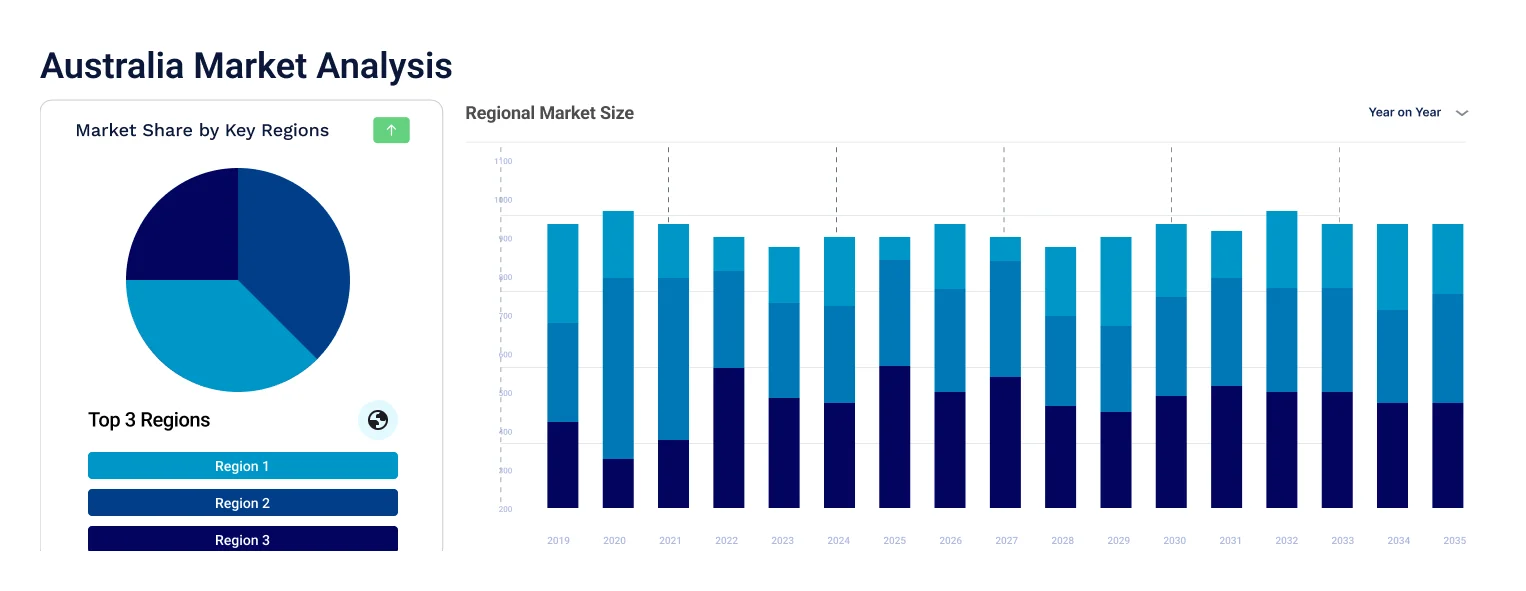
New South Wales secures the leading position in the market due to retail density and supplier concentration
New South Wales represents the largest regional market for gluten free foods & beverages market in Australia. High population density and concentrated retail infrastructure drive volume demand. Major supermarket distribution centers and foodservice buyers operate heavily within the state. For manufacturers, NSW offers efficient logistics and faster rollout opportunities. In October 2025, Botanica debuted as one of the only restaurants in Sydney offering a completely gluten-free dining experience.
Queensland is emerging as the fastest-growing regional market driven by lifestyle-oriented consumption and expanding foodservice activity. Growth in tourism, healthcare facilities, and education hubs supports gluten free menu standardization. Suppliers are increasing distribution coverage beyond metropolitan areas. For manufacturers, Queensland offers expansion without the saturation seen in NSW and Victoria. Retailers are more open to range extensions, which benefits mid-sized suppliers. Logistics investments improve cold chain and ambient distribution reach. These conditions support faster Australia gluten free foods & beverages market penetration and rising contract opportunities.
The market is increasingly shaped by brand credibility, formulation capability, and production discipline. Leading Australia gluten free foods & beverages market players are focusing on scalable gluten free platforms rather than isolated SKUs. Dedicated facilities, simplified ingredient decks, and clear allergen controls are now baseline requirements. Opportunities are strongest in value-added formats such as functional snacks, craft beverages, and export-ready private labels.
Australia gluten free foods & beverage companies that can align nutrition claims with consistent taste profiles gain faster retailer acceptance. Foodservice and institutional buyers create additional upside for suppliers with strong compliance systems. The competitive environment favors companies that invest early in process validation and category-specific innovation. Smaller brands are partnering with contract manufacturers to overcome scale limits. Larger firms are using Australia as a testing ground before regional expansion.
Founded in 2017, Simply Good Foods USA, Inc. is headquartered in Denver, United States. The company serves Australia through protein-focused gluten free snack bars and nutrition products. Its strength lies in science-backed formulations and consistent quality standards. Australian buyers value the brand’s ability to deliver gluten free products that meet sports nutrition and clinical channel requirements.
Established in 2008 and headquartered in Edinburgh, United Kingdom, Genius Foods has built a strong presence in Australia’s gluten free bakery segment. The company specializes in bread and baked goods that replicate conventional textures. Its proprietary baking processes reduce dryness, a common gluten free issue. Australian retailers stock Genius Foods to attract mainstream shoppers, not only coeliac consumers.
Two Bays Brewing Co. was founded in 2017 and is headquartered in Victoria, Australia. The company focuses exclusively on gluten free craft beer using enzyme-based brewing techniques. Its innovation lies in preserving traditional beer flavor while meeting strict gluten free thresholds. Two Bays targets pubs, specialty bottle shops, and export distributors.
Choices Gluten & Wheat Free Pty Limited was established in 2007 and is headquartered in New South Wales, Australia. The company produces a wide range of certified gluten free products, including bakery and ready meals. Its key strength is a fully dedicated gluten free facility. Australian foodservice and institutional buyers trust Choices for compliance reliability. The company focuses on long-term supply contracts rather than rapid SKU expansion.
*Please note that this is only a partial list; the complete list of key players is available in the full report. Additionally, the list of key players can be customized to better suit your needs.*
Other key players in the market include Casalare Pty Ltd., Yaffa's Kitchen Pty Ltd., Deeks Health Foods, and Not a Trace Pty Ltd., among others.
Unlock the latest insights with our Australia gluten free foods & beverages market trends 2026 report. Discover regional growth patterns, consumer preferences, and key industry players. Stay ahead of competition with trusted data and expert analysis. Download your free sample report today and drive informed decisions in the market.


Upto 15% Off
USD
$2499 $2249
$3999 $3599
$4999 $4249
$5999 $5099


*While we strive to always give you current and accurate information, the numbers depicted on the website are indicative and may differ from the actual numbers in the main report. At Expert Market Research, we aim to bring you the latest insights and trends in the market. Using our analyses and forecasts, stakeholders can understand the market dynamics, navigate challenges, and capitalize on opportunities to make data-driven strategic decisions.*
In 2025, the market reached an approximate value of USD 375.13 Million.
The market is projected to grow at a CAGR of 7.00% between 2026 and 2035.
The market is estimated to witness a healthy growth in the forecast period of 2026-2035 to reach USD 737.94 Million by 2035.
Investing in dedicated lines, strengthening supplier audits, expanding functional formulations, securing long-term ingredient contracts, and using Australia as a regional innovation base are improving competitiveness and margins.
Key trends aiding the market expansion include rising trend of gluten-free product consumption, easy availability of products in almost all grocery stores, and increasing cases of celiac diseases, and support of government laws.
Regions considered in the market are New South Wales, Victoria, Queensland, Western Australia, and Australian Capital Territory, among others.
Different sources of gluten free food & beverages are plant source, which include oilseeds and pulses, and rice and corn and animal source, including meat and dairy.
Based on type, the market segmentations include cookies and snacks, seasonings and spreads, beverages, non-alcoholic beverages, alcoholic beverages, condiments, meat/meat substitutes, bread products, dairy/dairy substitutes.
Metal, paper, plastic, and other packaging materials are considered in the report.
The key players in the market include Simply Good Foods USA, Inc., Genius Foods, Two Bays Brewing Co., Choices Gluten & Wheat Free Pty Limited, Casalare Pty Ltd., Yaffa's Kitchen Pty Ltd., Deeks Health Foods, and Not a Trace Pty Ltd., among others.
Maintaining taste parity, managing ingredient costs, preventing cross-contamination, meeting retailer audit demands, and scaling production without compromising certification remain persistent operational challenges for gluten free food and beverage manufacturers.
Explore our key highlights of the report and gain a concise overview of key findings, trends, and actionable insights that will empower your strategic decisions.
| REPORT FEATURES | DETAILS |
| Base Year | 2025 |
| Historical Period | 2019-2025 |
| Forecast Period | 2026-2035 |
| Scope of the Report |
Historical and Forecast Trends, Industry Drivers and Constraints, Historical and Forecast Market Analysis by Segment:
|
| Breakup by Type |
|
| Breakup by Packaging Material |
|
| Breakup by Form |
|
| Breakup by Source |
|
| Breakup by Distribution Channel |
|
| Breakup by Region |
|
| Market Dynamics |
|
| Competitive Landscape |
|
| Companies Covered |
|
Datasheet
One User
USD 2,499
USD 2,249
tax inclusive*
Single User License
One User
USD 3,999
USD 3,599
tax inclusive*
Five User License
Five User
USD 4,999
USD 4,249
tax inclusive*
Corporate License
Unlimited Users
USD 5,999
USD 5,099
tax inclusive*
*Please note that the prices mentioned below are starting prices for each bundle type. Kindly contact our team for further details.*
Flash Bundle
Small Business Bundle
Growth Bundle
Enterprise Bundle
*Please note that the prices mentioned below are starting prices for each bundle type. Kindly contact our team for further details.*
Flash Bundle
Number of Reports: 3
20%
tax inclusive*
Small Business Bundle
Number of Reports: 5
25%
tax inclusive*
Growth Bundle
Number of Reports: 8
30%
tax inclusive*
Enterprise Bundle
Number of Reports: 10
35%
tax inclusive*
How To Order

Select License Type
Choose the right license for your needs and access rights.

Click on ‘Buy Now’
Add the report to your cart with one click and proceed to register.

Select Mode of Payment
Choose a payment option for a secure checkout. You will be redirected accordingly.
Strategic Solutions for Informed Decision-Making
Gain insights to stay ahead and seize opportunities.

Get insights & trends for a competitive edge.

Track prices with detailed trend reports.

Analyse trade data for supply chain insights.

Leverage cost reports for smart savings

Enhance supply chain with partnerships.

Connect For More Information
Our expert team of analysts will offer full support and resolve any queries regarding the report, before and after the purchase.
Our expert team of analysts will offer full support and resolve any queries regarding the report, before and after the purchase.
We employ meticulous research methods, blending advanced analytics and expert insights to deliver accurate, actionable industry intelligence, staying ahead of competitors.
Our skilled analysts offer unparalleled competitive advantage with detailed insights on current and emerging markets, ensuring your strategic edge.
We offer an in-depth yet simplified presentation of industry insights and analysis to meet your specific requirements effectively.




