

Consumer Insights
Uncover trends and behaviors shaping consumer choices today
Procurement Insights
Optimize your sourcing strategy with key market data
Industry Stats
Stay ahead with the latest trends and market analysis.
The Australia home diagnostic testing market was valued at USD 186.40 Million in 2025 and is expected to grow at a CAGR of 4.80%, reaching USD 297.89 Million by 2035. The market growth is driven by rising chronic health conditions and a growing shift toward easy-to-use home testing solutions that support regular monitoring. Strategic collaborations and government-backed initiatives further strengthen accessibility, encouraging widespread adoption across the region.
The market is expected to grow as home-based screening becomes a routine part of health management, supported by rising chronic illnesses and wider access to digital diagnostic tools across Australia.
Increasing collaborations and government-led initiatives are likely to accelerate product availability, encouraging stronger adoption of self-testing solutions and reshaping consumer expectations in the home diagnostic testing landscape.
Ongoing advancements in test accuracy and user-friendly formats are anticipated to drive continuous innovation, encouraging more individuals to embrace at-home disease detection and proactive health management.
Compound Annual Growth Rate
4.8%
Value in USD Million
2026-2035
The market is growing steadily as more people turn to simple and accessible tools to monitor their health from home. Rising chronic conditions, along with a higher demand for privacy and faster results, are encouraging consumers to rely on self-testing solutions across areas such as diabetes, infectious diseases, pregnancy, and sexual health. Strategic collaborations and government-supported initiatives are further improving product availability and awareness. With increasing adoption of rapid home test kits, the market continues to expand, supported by diverse product offerings, wider distribution channels, and ongoing innovation across the diagnostic landscape.
Growing Burden of Chronic Conditions to Propel the Market Demand
Rising dependence on home-based health monitoring is expected to be a major growth driver in the market, as people increasingly seek convenient ways to manage long-term health needs. For example, in June 2024, the Australian Institute of Health and Welfare (AIHW) highlighted that chronic conditions are common and become even more prevalent with age, with an estimated 15.4 million Australians (61%) living with at least one long-term health issue in 2022. This expanding patient base is accelerating the shift toward accessible solutions like remote patient monitoring, supporting early detection, continuous self-care, and reduced strain on clinical services.
Strategic Collaborations to Accelerate the Australia Home Diagnostic Testing Market Value
The increasing innovative partnerships are expected to be a major growth driver in the market, as collaboration often accelerates access to advanced and user-friendly testing solutions. For example, in October 2024, the Burnet Institute partnered with Atomo Diagnostics to develop Australia’s first self-test capable of detecting active syphilis infections. This strategic move focuses on delivering faster and more accurate results outside traditional clinics, making testing far more convenient for users. Such joint efforts are strengthening the country’s shift toward reliable point-of-care diagnostics, supporting broader adoption of home-based testing tools.
The market is witnessing several emerging trends, including increasing adoption of private at-home testing, wider availability of self-test kits, and expanding access through innovative distribution models like vending-machine-based diagnostics.
Rising Shift Towards Convenient and Private Testing to Boost the Market
Increasing consumer demand for convenience and privacy is shaping new market behaviour across Australia. For instance, in December 2024, UNSW announced that an at-home test for chlamydia and gonorrhoea will soon be available in pharmacies, allowing users to screen themselves without visiting a clinic. This development highlights how consumers are now actively choosing solutions that fit into their daily routines without added stress or delay. This shift underscores a clear move toward home health testing as a mainstream option, reflecting changing attitudes and helping broaden access to essential sexual-health care.
Increasing Preference for Streamlined Testing Access to Bolster the Australia Home Diagnostic Testing Market Value
The rising preference for streamlined testing access is shaping the market’s direction, as Australians increasingly look for simple and discreet ways to manage their health. For example, in April 2025, Atomo Diagnostics announced a national expansion of its government-backed program providing free HIV self-test kits through vending machines across multiple locations. This initiative allows people to access testing quickly, without appointments or clinic visits, making the experience more approachable. Such efforts are strengthening the appeal of home testing kits, reinforcing their role in improving public health engagement across the country.
Strips Expected to Lead the Market Share by Product
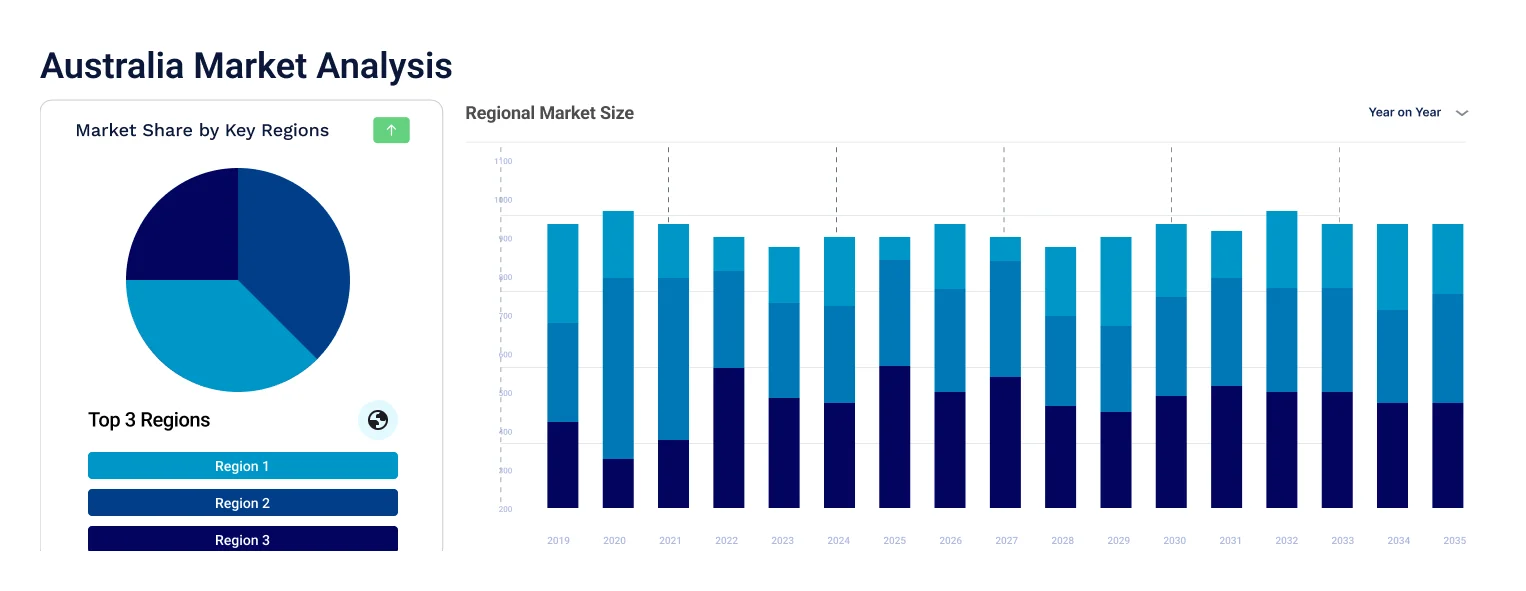
Strips are expected to lead the product segment, as they are affordable, easy to use, and widely preferred for quick at-home screening across conditions such as pregnancy, glucose monitoring, and infectious diseases. Their simple, no-equipment design makes them highly suitable for everyday users, encouraging routine self-checks. This steady uptake supports broader consumer adoption and strengthens the overall demand for rapid diagnostic tests in Australia. As more people look for straightforward ways to track their health, strips continue to gain momentum and shape market expansion. Other key segments include cassette, test panel, midstream, dip card, and many more.
The key features of the market report comprise funding and investment analysis, and strategic initiatives by the leading players. The major companies in the market are as follows:
Founded in 1897 and headquartered in Franklin Lakes, New Jersey, USA, BD is a global medical technology leader known for delivering trusted diagnostic tools worldwide. The company focuses strongly on improving testing accuracy and workflow efficiency across healthcare settings. Its extensive portfolio of sample-collection devices and testing systems plays a vital role in streamlining both lab-based and point-of-care diagnostics. BD’s continuous innovation helps expand access to reliable testing and supports the wider growth of modern diagnostic solutions.
Established in 1888 in Chicago, USA, Abbott has grown into a major healthcare company known for its broad diagnostics portfolio. The company has consistently expanded its expertise in rapid testing, molecular diagnostics, and screening solutions used across homes, clinics, and hospitals. By developing high-quality products that deliver fast and dependable results, Abbott supports timely decision-making for patients and providers. Its strong global presence and focus on innovation continue to advance the diagnostic landscape.
Founded in 1979 and headquartered in San Diego, USA, Quidel is recognized for pioneering advancements in rapid diagnostic testing. Over the years, the company has strengthened its position by introducing easy-to-use point-of-care products that support quicker disease identification. Known for its work in infectious disease testing and women’s health, Quidel provides tools that help users receive results within minutes. Its growing range of accessible solutions contributes significantly to expanding diagnostic reach beyond traditional laboratory settings.
Established in 1896 in Basel, Switzerland, Roche has evolved into one of the world’s most prominent names in pharmaceuticals and diagnostics. The company has consistently focused on integrating innovation with advanced testing technologies across its extensive product line. Its diagnostics division includes molecular testing, immunoassays, and patient self-testing tools that support precise and early disease detection. Roche’s strong commitment to research continues to shape modern diagnostics and enhance global access to reliable testing solutions.
*Please note that this is only a partial list; the complete list of key players is available in the full report. Additionally, the list of key players can be customized to better suit your needs.*
Other key players include Nova Biomedical, Acon Laboratories, Inc., ARKRAY Inc., BTNX, Inc., OraSure Technologies, Inc., and Siemens Healthcare GmbH.
The market report offers a detailed analysis of the market based on the following segments:
Market Breakup by Test Type
Market Breakup by Product
Market Breakup by Sample
Market Breakup by Age Group
Market Breakup by Distribution Channel


Upto 15% Off
USD
$1999 $1799
$3099 $2789
$4599 $3909
$5999 $5099


*While we strive to always give you current and accurate information, the numbers depicted on the website are indicative and may differ from the actual numbers in the main report. At Expert Market Research, we aim to bring you the latest insights and trends in the market. Using our analyses and forecasts, stakeholders can understand the market dynamics, navigate challenges, and capitalize on opportunities to make data-driven strategic decisions.*
Explore our key highlights of the report and gain a concise overview of key findings, trends, and actionable insights that will empower your strategic decisions.
| REPORT FEATURES | DETAILS |
| Base Year | 2025 |
| Historical Period | 2019-2025 |
| Forecast Period | 2026-2035 |
| Scope of the Report |
Historical and Forecast Trends, Industry Drivers and Constraints, Historical and Forecast Market Analysis by Segment:
|
| Breakup by Test Type |
|
| Breakup by Product |
|
| Breakup by Sample |
|
| Breakup by Age Group |
|
| Breakup by Distribution Channel |
|
| Market Dynamics |
|
| Supplier Landscape |
|
| Companies Covered |
|
Datasheet
One User
USD 1,999
USD 1,799
tax inclusive*
Single User License
One User
USD 3,099
USD 2,789
tax inclusive*
Five User License
Five User
USD 4,599
USD 3,909
tax inclusive*
Corporate License
Unlimited Users
USD 5,999
USD 5,099
tax inclusive*
*Please note that the prices mentioned below are starting prices for each bundle type. Kindly contact our team for further details.*
Flash Bundle
Small Business Bundle
Growth Bundle
Enterprise Bundle
*Please note that the prices mentioned below are starting prices for each bundle type. Kindly contact our team for further details.*
Flash Bundle
Number of Reports: 3
20%
tax inclusive*
Small Business Bundle
Number of Reports: 5
25%
tax inclusive*
Growth Bundle
Number of Reports: 8
30%
tax inclusive*
Enterprise Bundle
Number of Reports: 10
35%
tax inclusive*
How To Order

Select License Type
Choose the right license for your needs and access rights.

Click on ‘Buy Now’
Add the report to your cart with one click and proceed to register.

Select Mode of Payment
Choose a payment option for a secure checkout. You will be redirected accordingly.
Strategic Solutions for Informed Decision-Making
Gain insights to stay ahead and seize opportunities.

Get insights & trends for a competitive edge.

Track prices with detailed trend reports.

Analyse trade data for supply chain insights.

Leverage cost reports for smart savings

Enhance supply chain with partnerships.

Connect For More Information
Our expert team of analysts will offer full support and resolve any queries regarding the report, before and after the purchase.
Our expert team of analysts will offer full support and resolve any queries regarding the report, before and after the purchase.
We employ meticulous research methods, blending advanced analytics and expert insights to deliver accurate, actionable industry intelligence, staying ahead of competitors.
Our skilled analysts offer unparalleled competitive advantage with detailed insights on current and emerging markets, ensuring your strategic edge.
We offer an in-depth yet simplified presentation of industry insights and analysis to meet your specific requirements effectively.




