

Consumer Insights
Uncover trends and behaviors shaping consumer choices today
Procurement Insights
Optimize your sourcing strategy with key market data
Industry Stats
Stay ahead with the latest trends and market analysis.
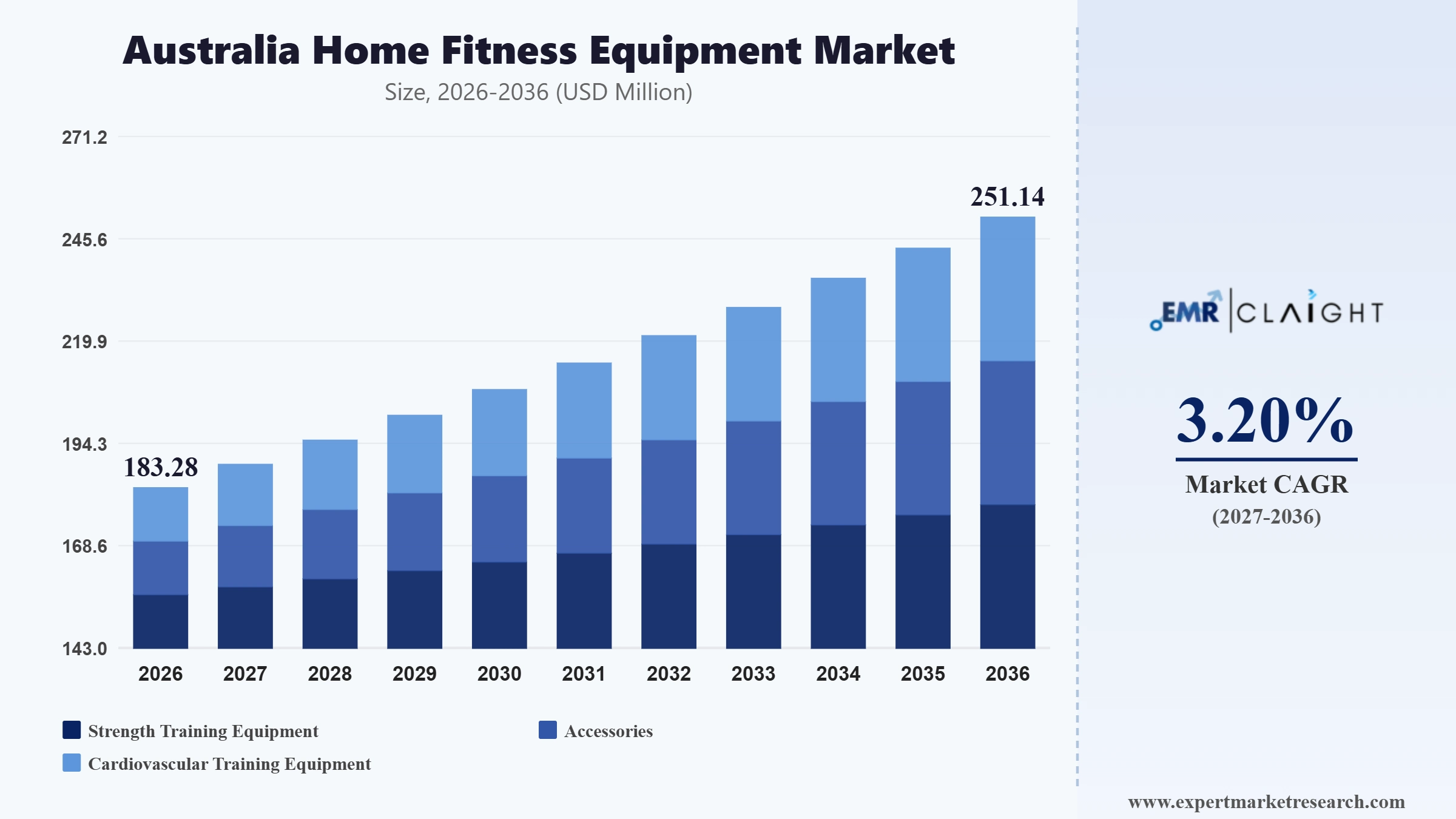
The Australia home fitness equipment market attained a value of USD 177.60 Million in 2025 and is projected to expand at a CAGR of 3.20% through 2035. The market is further expected to achieve USD 243.35 Million by 2035. The increasing popularity of flexible working hours is motivating people to purchase devices that enable brief and efficient workouts in their free time, thus creating an increased need for small and easy-to-use pieces of equipment during the weekdays.
Increased numbers of apartments are motivating manufacturers to produce foldable treadmills, compact strength stations, and adjustable kettlebells, which lower the burden of storage space, boosting the overall Australia home fitness equipment market value. On the other hand, an increasing need for measurable workout motivates manufacturers to produce equipment equipped with Bluetooth connectivity, training metrics, and guided programs, which allows brands to differentiate their equipment and provides additional ways for retailers to offer combined offers of devices and accompanying software.
According to the Australia home fitness equipment market analysis, 46% of adults and older people lack sufficient physical activities, which creates business sense in providing equipment that makes strength and cardio exercise easier. As a response, Johnson Fitness & Wellness Australia launched its first concept store in Sydney in collaboration with Decathlon in February 2025, thus establishing a retail experience that will allow buyers to try out Horizon, Matrix, and Vision equipment prior to purchasing. The development is significant for home fitness companies since high-end products are gradually becoming sold via retail experience rather than listings.
Product positioning in the Australia home fitness equipment market is moving towards compactness, adjustment features, recovery devices, and digital connection of machines. In addition, manufacturers are currently focusing on producing equipment capable of offering multiple functions without occupying an entire room for the gym. Retailers are working on developing financing, installation, maintenance, and warranties provided locally. For example, in February 2026, Fitness On Demand launched 43-inch Recovery Touchscreen, offering on-demand warm-up, stretching, mobility, yoga, and core sessions.
Read more about this report - REQUEST FREE SAMPLE COPY IN PDF
Gym Plus introduced the ICON-A that is a mini functional trainer integrating dual cables and Smith machine capabilities. Companies in the Australia home fitness equipment market have options to design multifunctional equipment integrating strength training equipment to cater to the requirements of Australians who have limited space to exercise at home.
Body Bike emphasized that over 8,000 units of indoor cycling bikes have been sold in Australia due to the constant demand for connected and studio-style cycling experience. Companies manufacturing fitness equipment can therefore incorporate indoor cycling options through connected bikes designed for home use.
Zoo Fit gyms were established by Viva Leisure in Western Australia that offered membership to cost-conscious consumers along with simple yet effective physical exercise solutions. Home fitness product companies could provide economical equipment packages as well as subscription services for consumers looking for an inexpensive way to exercise.
Life Fitness introduced Atmos cardio series in Australian hospitality industry, providing high-end cardio machines for the hospitality business. Manufacturers of equipment could design compact cardio machines suitable for hospitality business, widening the Australia home fitness equipment market scope.
Companies are introducing Bluetooth capabilities, app connectivity, performance dashboards, and guided training to transform their devices into platforms, redefining the Australia home fitness equipment market dynamics. In the 2025 collaboration with the Australian Institute of Sport, Technogym noted the use of biofeedback and AI in the performance of equipment, which demonstrates how performance data is becoming part of the design process. For suppliers, the challenge lies in transforming this ability into simpler treadmills, bikes, and strength systems that track progress without setup. As a response, in May 2026, STRONG Pilates launched CONNECT, integrating tablets, performance tracking, personalized intensity zones, and automated programming across Rowformer and Bikeformer machines.
Home gyms are being designed in a way that caters to small spaces, particularly apartment homes and multipurpose rooms, boosting growth in the Australia home fitness equipment market. Adjustable kettlebells, resistance bands, foldable treadmills, compact benches, and all-in-one functional trainers enable multiple exercises using few products. In terms of product development, the current area of focus is attachment change, adjustable resistance, and reduced noise. In November 2025, Major Fitness introduced its Heritage Series B17 all-in-one functional trainer that includes Smith machine, interchangeable pulley ratios, expandable weight stacks, and integrated attachments.
Manufacturers of cardio devices compete in terms of biomechanics, comfort, digital content, and personalized workout analysis beyond motor specifications. For example, Life Fitness Australia launched its Symbio cardio range of machines in March 2025, which is based on the concept of integration of biomechanics, multisensory experience, analytics, and personalized comfort in four machine models. The launch is evidence of a high-end strategy that allows providers to develop products of higher value for residential customers, especially treadmills, ellipticals, and cycles. This trend in the Australia home fitness equipment market provides manufacturers with more options to integrate commercial technologies into quiet and compact machines for residential use.
Home fitness manufacturers are focusing on developing foam rollers, massage products, mobility aids, and recovery devices, increasing their usage between workouts. Johnson Fitness & Wellness Australia's line features massage chairs along with treadmills, bikes, ellipticals, and strength machines. Thus, providers have the option of offering a wider selection of devices that could be used in addition to the core product to create more value without the need to take additional space on the floor. Levering such Australia home fitness equipment market trends, in March 2026, Elsewhere Pods partnered with Salt to launch modular wellness pods integrating fitness, recovery, and performance equipment.
New distribution trends are emerging whereby the combination of discovering products online is complemented by physical testing, financing, delivery, and aftersales services, boosting growth in the Australia home fitness equipment market. In January 2026, Fitness First launched a national campaign encouraging Australians to priorities everyday movement, rebuild activity habits, and make fitness more achievable. This distribution concept is meant to overcome the primary challenge that has existed among expensive home machines where consumers feel the need to check on noise levels, motion, sizes, and comfort levels before purchasing.
The Expert Market Research's report titled “Australia Home Fitness Equipment Market Report and Forecast 2026-2035” offers a detailed analysis of the market based on the following segments:
Market Breakup by Product Type
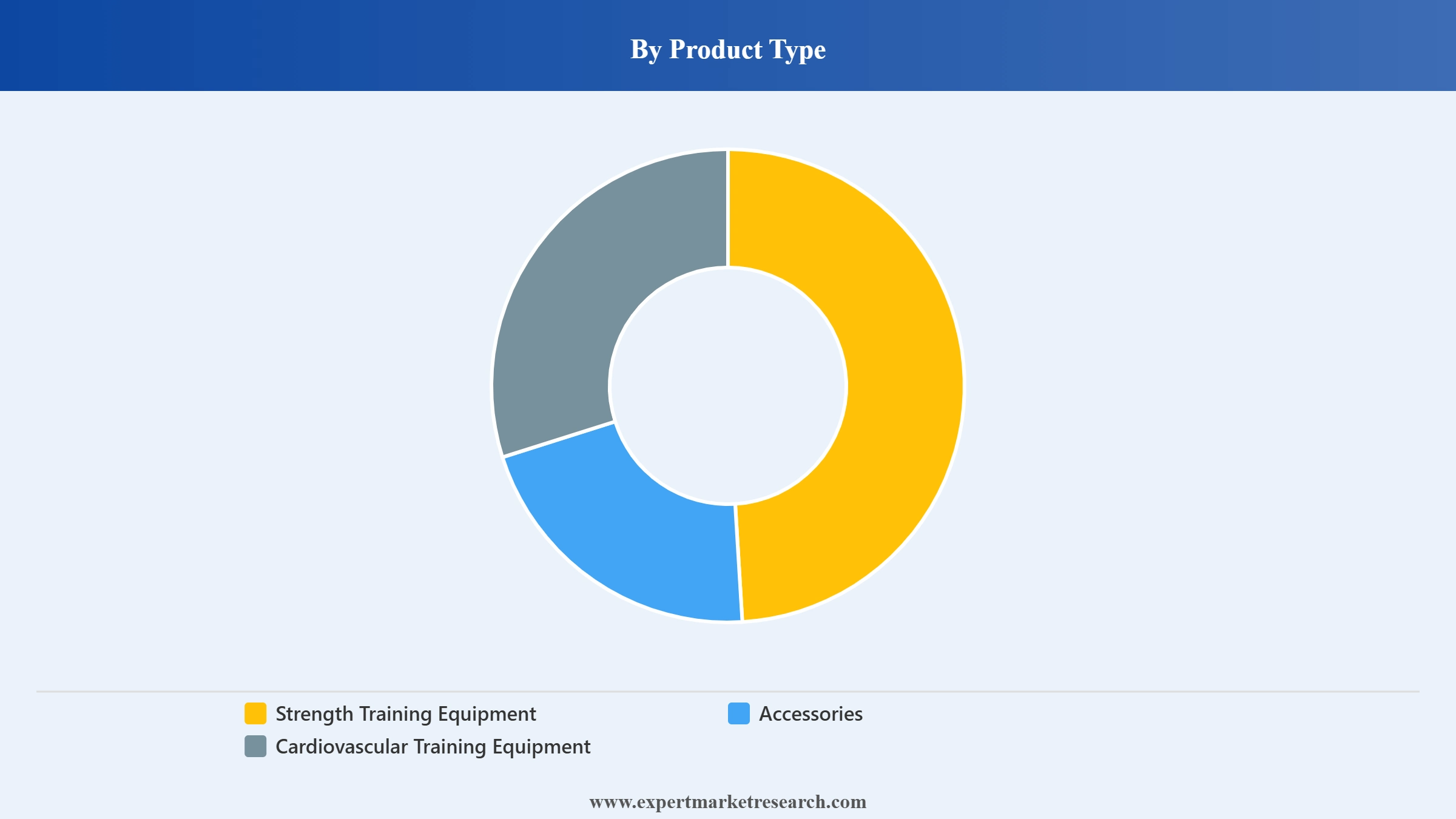
Key Insight: Strength training equipment dominates the Australia home fitness equipment market because of adjustable resistance, portable design, and muscle building workouts, while adjustable kettlebell, mini resistance bands, and ab wheel add more strength possibilities. Accessories, such as weighted jump rope and foam roller, assist in providing portability and recovery. Cardiovascular training equipment benefits from the trend of convenient conditioning, and punching bags, treadmills, and air bikes cater to various physical exercise intensities. In March 2026, Peloton launched Commercial Series bikes and treadmills engineered for high-traffic gyms, combining connected content with Precor’s industrial-grade engineering.
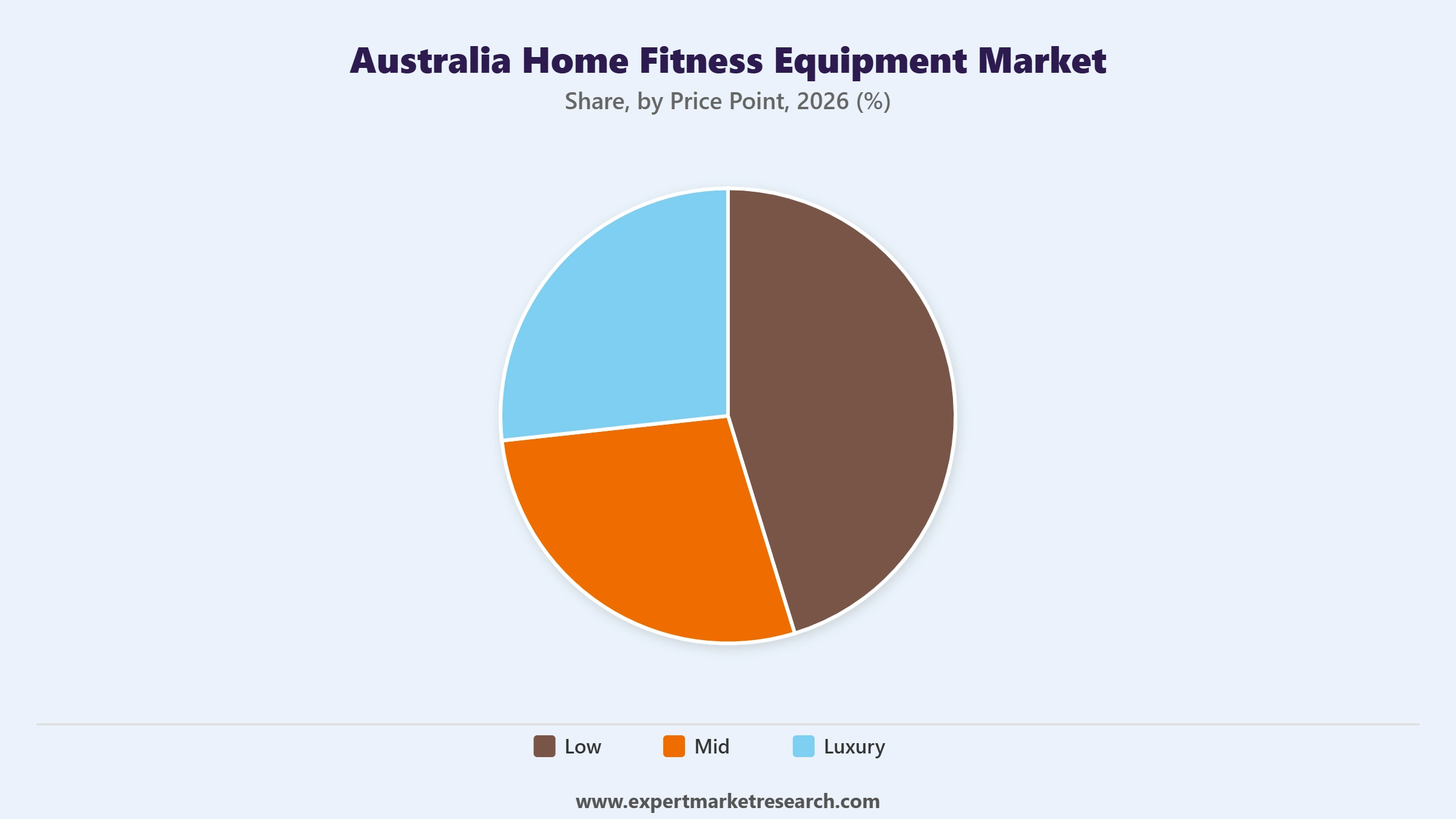
Market Breakup by Price Point
Key Insight: Price segmentation as considered in the Australia home fitness equipment market report reflects varied buying motivations. Low-priced machines attract new buyers through basic resistance machines and equipment with minimal commitment. Mid-range products offer a mix of durability, flexibility, warranty, and financing, making them ideal for larger family requirements. Luxurious equipment appeals to those looking for professionally built equipment with high-quality finish, integrated analysis tools, individual training, and recovery capabilities.
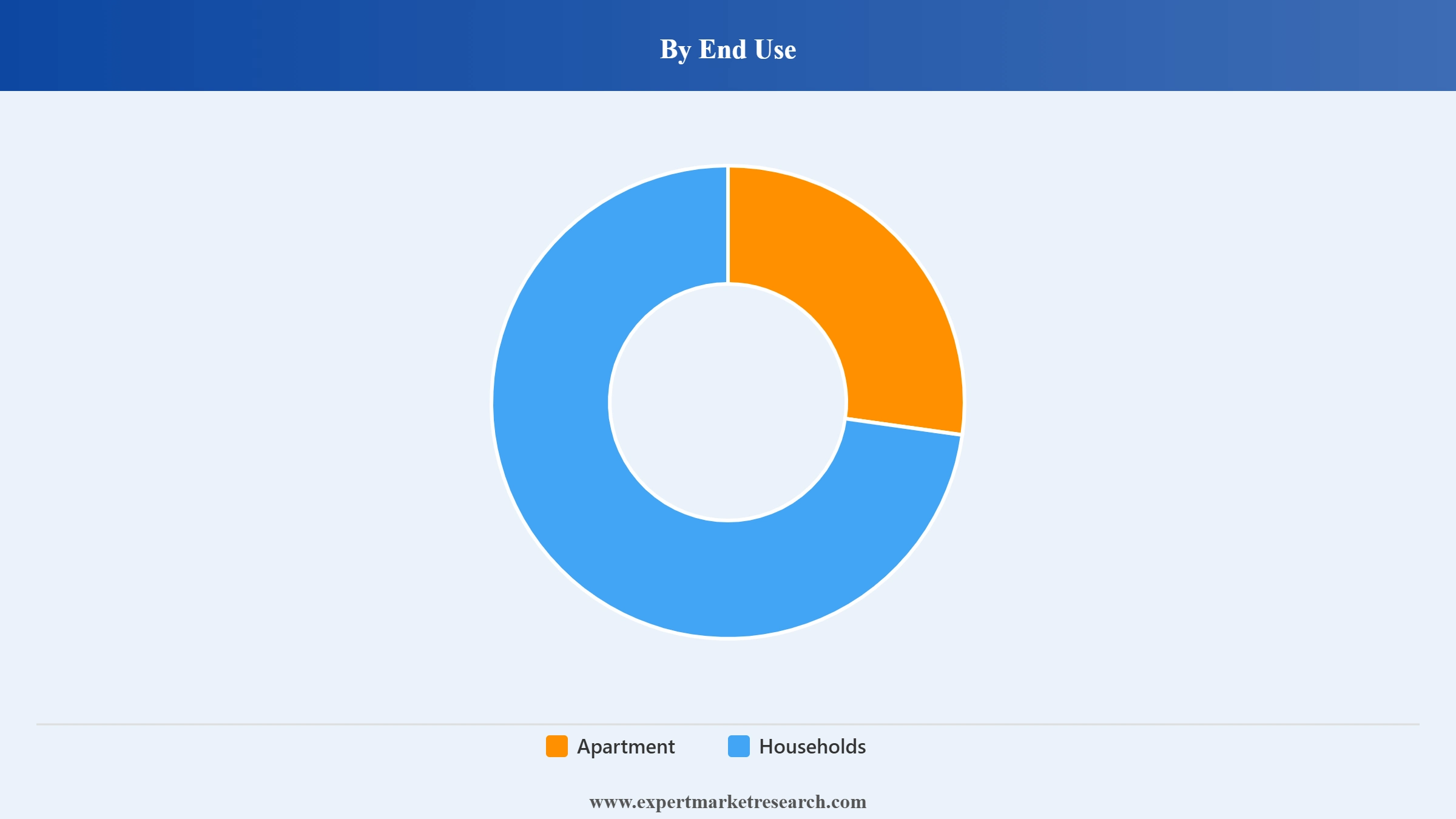
Market Breakup by End Use
Key Insight: The overall Australia home fitness equipment market dynamics are affected by the amount of space available and the household requirements. Apartments require foldable treadmills, portable strength training stations, adjustable kettlebells, and low noise equipment that can be stacked away when not in use. This is because other household members are likely to need different resistance or cardiovascular equipment for their training.
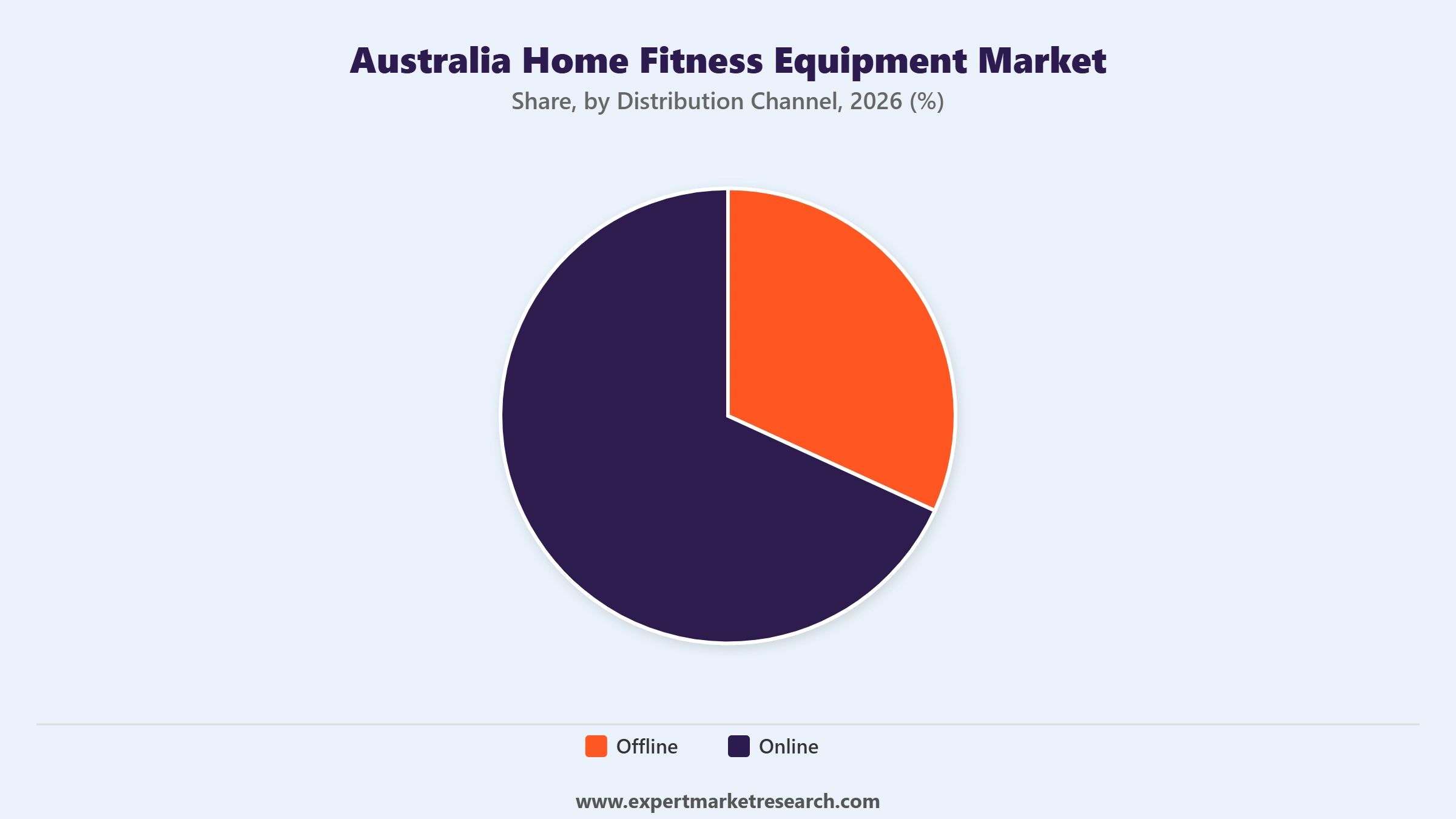
Market Breakup by Distribution Channel
Key Insight: Traditional methods of offline distribution account for a significant share in the Australia home fitness equipment market revenue helpful when testing equipment such as treadmills, weight training machines, and recovery items, whereas employees facilitate financing and installation. The online channel helps to increase the range of products, enhance their specification comparison, and makes it easier to purchase accessories and replacement parts. Manufacturers can benefit from using both channels through consistency in providing product information, inventory data, shipping agreements, and warranty procedures.
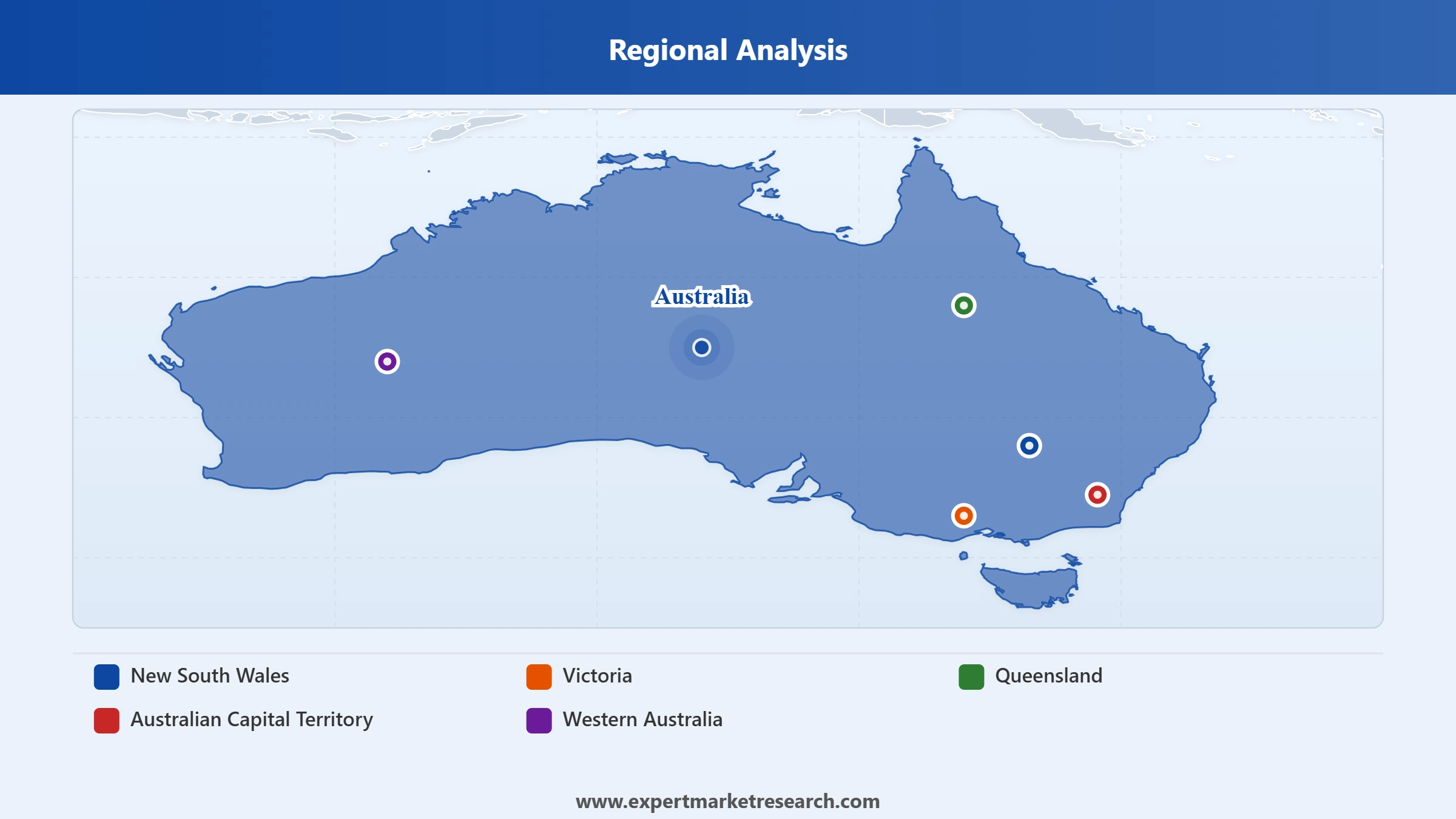
Market Breakup by Region
Key Insight: The advantages of New South Wales include its large urban customer market and retail infrastructure. Victoria has good potential in showrooms, distribution, and fitness sector activities. Queensland has potential for equipment related to physical activity and living space, and Australian Capital Territory is advantaged by performance technology visibility. The Western Australia home fitness equipment market offers reliable service coverage despite long distances.
Read more about this report - REQUEST FREE SAMPLE COPY IN PDF
By product type, strength training equipment leads the market through resistance systems for compact workouts
Strength training products hold the largest share in the Australia home fitness equipment market since adjustable resistance products and systems facilitate muscle development while occupying minimal home spaces. Manufacturers are increasing the production of multifunctional strength training products that perform multiple movements in a single machine, helping consumers avoid buying more than one machine. Adjustable kettlebells, mini resistance bands, and ab wheels constitute entry level products, whereas accessories like weighted jump ropes and foam rollers help raise basket sales. In June 2026, Life Fitness Australia launched a new Keiser website, streamlining product discovery, purchasing, support, and customer access.
Read more about this report - REQUEST FREE SAMPLE COPY IN PDF
The cardiovascular fitness equipment segment holds the highest rate of growth in the Australia home fitness equipment market as producers develop more noiseless, compact, and interesting exercising products like treadmills, air bikes, and punching bags. Treadmills are commercially viable since they solve walking and running exercises, whereas air bikes offer intense workouts without any programming. Punching bags have a hybrid fitness solution. Manufacturers are paying attention to foldable, shock-free products, better displays, and connectivity. In June 2026, Core24 Health Club became Victoria’s first facility to install Life Fitness’ premium Symbio Cardio Range equipment.
Mid-priced equipment secures the dominant market share through balanced durability, functionality, financing, and accessibility
The mid-price equipment is the largest price segment in the Australia home fitness equipment market since consumers prefer equipment with durable performance but without the need to pay more for connected functionalities. Providers are focusing on adjustable benches, kettlebells, resistance systems, and treadmills that have balance between the materials, warranty, and functionalities. The equipment allows retailers to target customers and generate more revenue through add-on services. They can improve their margins by developing standardized parts of their product lineups, offering modular attachments, and financing opportunities.
Read more about this report - REQUEST FREE SAMPLE COPY IN PDF
The luxury equipment segment observes exponential growth in the Australia home fitness equipment market is the most rapidly growing price segment as the consumers look for commercial-grade construction, connected analytics, personal training, and wellness features. The luxury equipment providers are adapting to the technologies designed for the elites to use them at home. Luxury treadmills, functional trainers, and recovery equipment may be priced if they are complemented by installation, service, extended warranty, and platform features. In April 2025, Technogym launched Reform, its first home Pilates reformer, combining sustainable materials, intuitive design, and guided workouts through its digital app.
By end use, households lead the market through shared equipment needs, varied routines, and flexibility
The household segment is leading growth in the Australia home fitness equipment market, owing to the fact that the individuals are creating gyms to meet the needs of not only themselves but also the rest of their families. Manufacturers have responded to this trend by producing adjustable resistance products, flexible cardiovascular machines, and accessory packs, minimizing the need for separate purchases. Product quality and ease of use are essential factors since the machines may be used by various individuals with diverse experience. Companies can tap into this segment through modularity in terms of product designs, spare parts, after-sale maintenance, and financing.
Read more about this report - REQUEST FREE SAMPLE COPY IN PDF
Apartment dwellers are currently the fastest-growing segment in the Australia home fitness equipment market, since space limitations prompt manufacturers to produce folding, vertical storage, and multi-purpose fitness equipment. Individuals within apartments could perform various types of exercises using compact treadmills, resistance bands, adjustable kettlebells, ab wheel machines, and compact recovery equipment without needing to have gym rooms. In October 2024, NovoFit highlighted Australia’s growing strength-training demand, emphasizing selectorized and plate-loaded machines, free weights, and specialized equipment for commercial gyms.
Offline distribution channels lead the overall demand growth through physical demonstrations, service support, financing, and installation
The offline distribution channel dominates the Australia home fitness equipment market due to the need for a physical evaluation of high-value machinery. Customers can compare cushioning, stability, noise levels, size, and ergonomics of treadmills as well as get an explanation of installation and servicing needs from the staff. It is becoming increasingly common for suppliers to employ experience-oriented retail and collaborations to build experience-based sales as exemplified by Johnson Fitness & Wellness Australia’s showroom collaboration in Sydney with Decathlon. In July 2025, Prodigy Strength launched in Australia with commercial-grade equipment and a Victorian distribution center supporting faster nationwide delivery and fulfilment.
Read more about this report - REQUEST FREE SAMPLE COPY IN PDF
Online distribution channels are growing at a fast pace across the Australia home fitness equipment market scope since customers do their shopping for specifications, comparisons, reviews, and deliveries through digital means. Suppliers can showcase a broader range of products online than in physical stores, while also making accessories and replacement parts easier to purchase. This channel is especially beneficial for targeting promotions and building relationships with manufacturers directly.
New South Wales dominates the market leveraging Sydney demand, retail infrastructure, and households
New South Wales commands the dominant share of the Australia home fitness equipment market, owing to the presence of Sydney, which offers a concentrated pool of households, consumers, retailers, and population. Compact cardio machines, strength systems, and luxury recovery products are being sought after by companies for urban households in the region. In September 2024, Xplor Technologies launched Xplor Gym, integrating access control, bookings, payments, member retention, analytics, and branded mobile apps.
Read more about this report - REQUEST FREE SAMPLE COPY IN PDF
The Australian Capital Territory emerges to be the fastest-growing region, where Canberra offers the combination of professional households and interest of institutions in performance technologies. The partnership between the Australian Institute of Sport and Technogym until 2025 and provision of equipment with feedback technology confirms the importance of this territory for the testing of training technologies. Fitness equipment suppliers could utilize these technologies in compact systems like strength stations and cardio machines.
Competition in the market focuses on engineering, service, technology, and space-saving design over broad equipment range. Australia home fitness equipment market players are focusing on innovations such as adjustable solutions, quieter cardio machines, tracking technology and recovery equipment in order to increase the value of equipment purchased per household. Cooperation with retail and distribution partners enables companies to show their customers valuable physical product prior to the purchase, while online marketing channels allow reaching a wider geographical range.
Further opportunities include transferring commercial technologies to residential equipment, development of expandable modular equipment, and better servicing of equipment in different regional markets. In addition, Australia home fitness equipment companies may leverage financing, installation services, warranty and replacement parts availability in order to make customers' life easier. Yet another opportunity lies in combining hardware with training, analysis, and recovery services without the need to purchase any complicated subscription packages.
Johnson Health Tech Australia Pty Ltd was formed in 2009 and is based in Victoria, Australia. It offers fitness equipment like Horizon, Matrix, and Vision all around the country. These range from treadmills, bikes, elliptical trainers, strength, and recovery equipment. The firm is developing experience-oriented shopping facilities, storage, servicing, finance packages, and guarantees for its customers.
Technogym Australia Pty Ltd was set up in 1983. The company is based in Australia and distributes fitness and wellness solutions. They offer consumers a broad range of equipment across cardio, strength, functional training, and platform categories. The firm's association with the Institute of Sports points out that they utilize AI-based performance feedback features in their equipment.
Monsta Pty Ltd is a company that was set up in 2014 and is based in New South Wales, Australia. The company runs enterprises such as Raw Fitness Equipment and Rhino Rubber. The company positions itself to be able to assist buyers using equipment and hard flooring materials used in strength training.
Aussie Fitness Equipment was founded in 2005 and is based in Australia. The firm provides gym equipment, accessories, and fitness products. The enterprise targets customers in a retail operation that deals with equipment. The Queensland location benefits households seeking home gym equipment, while online merchandising can help the company reach customers nationwide.
Other key players in the market include VERVE Fitness Pty Ltd., among others.
*Please note that this is only a partial list; the complete list of key players is available in the full report. Additionally, the list of key players can be customized to better suit your needs.*
Unlock the latest insights with our Australia home fitness equipment market trends 2026 report. Discover regional growth patterns, consumer preferences, and key industry players. Stay ahead of competition with trusted data and expert analysis. Download your free sample report today and drive informed decisions in the market.


Upto 15% Off
USD
$2499 $2249
$3999 $3599
$4999 $4249
$5999 $5099


*While we strive to always give you current and accurate information, the numbers depicted on the website are indicative and may differ from the actual numbers in the main report. At Expert Market Research, we aim to bring you the latest insights and trends in the market. Using our analyses and forecasts, stakeholders can understand the market dynamics, navigate challenges, and capitalize on opportunities to make data-driven strategic decisions.*
The market is projected to grow at a CAGR of 3.20% between 2026 and 2035.
Stakeholders are developing compact systems, expanding connected features, strengthening local service networks, bundling accessories, improving demonstrations, tailoring financing, refining after-sales support programs, and expanding regional delivery coverage nationally while integrating customer demand and servicing.
Key trends aiding the market expansion include emergence of subscription-based fitness services offering virtual workout classes, the integration of AI and VR technologies for immersive experiences, a focus on mental well-being through stress-relief features, focus on sustainable and eco-friendly designs, and the integration of health monitoring technologies.
Regions considered in the market are New South Wales, Victoria, Queensland, Western Australia, and Australian Capital Territory, among others.
The market can be categorised by price point into low, mid, luxury, and others.
The market can be segmented by product type into strength training equipment, which includes items like adjustable kettlebells, mini resistance bands, ab wheels, and others; accessories such as weighted jump ropes, foam rollers, and more; and cardiovascular training equipment like punching bags, treadmills, and air bikes, among others.
The key players in the market include Johnson Health Tech Australia Pty Ltd, Technogym Australia Pty Ltd, Monsta Pty Ltd, Aussie Fitness Equipment Pty Ltd, and VERVE Fitness Pty Ltd., among others.
In 2025, the market reached an approximate value of USD 177.60 Million.
Companies face high equipment costs, shipping expenses, limited home space, service gaps, online price competition, technology cycles, warranty claims, replacement-part availability, freight volatility, and rising customer service expectations nationwide.
Explore our key highlights of the report and gain a concise overview of key findings, trends, and actionable insights that will empower your strategic decisions.
| REPORT FEATURES | DETAILS |
| Base Year | 2025 |
| Historical Period | 2019-2025 |
| Forecast Period | 2026-2035 |
| Scope of the Report |
Historical and Forecast Trends, Industry Drivers and Constraints, Historical and Forecast Market Analysis by Segment:
|
| Breakup by Product Type |
|
| Breakup by Price Point |
|
| Breakup by End Use |
|
| Breakup by Distribution Channel |
|
| Breakup by Region |
|
| Market Dynamics |
|
| Competitive Landscape |
|
| Companies Covered |
|
Datasheet
One User
USD 2,499
USD 2,249
tax inclusive*
Single User License
One User
USD 3,999
USD 3,599
tax inclusive*
Five User License
Five User
USD 4,999
USD 4,249
tax inclusive*
Corporate License
Unlimited Users
USD 5,999
USD 5,099
tax inclusive*
*Please note that the prices mentioned below are starting prices for each bundle type. Kindly contact our team for further details.*
Flash Bundle
Small Business Bundle
Growth Bundle
Enterprise Bundle
*Please note that the prices mentioned below are starting prices for each bundle type. Kindly contact our team for further details.*
Flash Bundle
Number of Reports: 3
20%
tax inclusive*
Small Business Bundle
Number of Reports: 5
25%
tax inclusive*
Growth Bundle
Number of Reports: 8
30%
tax inclusive*
Enterprise Bundle
Number of Reports: 10
35%
tax inclusive*
How To Order

Select License Type
Choose the right license for your needs and access rights.

Click on ‘Buy Now’
Add the report to your cart with one click and proceed to register.

Select Mode of Payment
Choose a payment option for a secure checkout. You will be redirected accordingly.
Strategic Solutions for Informed Decision-Making
Gain insights to stay ahead and seize opportunities.

Get insights & trends for a competitive edge.

Track prices with detailed trend reports.

Analyse trade data for supply chain insights.

Leverage cost reports for smart savings

Enhance supply chain with partnerships.

Connect For More Information
Our expert team of analysts will offer full support and resolve any queries regarding the report, before and after the purchase.
Our expert team of analysts will offer full support and resolve any queries regarding the report, before and after the purchase.
We employ meticulous research methods, blending advanced analytics and expert insights to deliver accurate, actionable industry intelligence, staying ahead of competitors.
Our skilled analysts offer unparalleled competitive advantage with detailed insights on current and emerging markets, ensuring your strategic edge.
We offer an in-depth yet simplified presentation of industry insights and analysis to meet your specific requirements effectively.




