

Consumer Insights
Uncover trends and behaviors shaping consumer choices today
Procurement Insights
Optimize your sourcing strategy with key market data
Industry Stats
Stay ahead with the latest trends and market analysis.
The Australia LNG bunkering market attained a value of USD 1.30 Billion in 2025 and is projected to expand at a CAGR of 11.30% through 2035. The market is further expected to achieve USD 3.79 Billion by 2035. Growing fleets of LNG-fueled vessels and Australia’s LNG export facilities are becoming instrumental in making the industry develop flexible marine fueling infrastructure around key ports and offshore facilities.
There are two particular factors that are propelling the growth of the Australia LNG bunkering market. There is an increased need for convenient local fueling opportunities owing to increasing deployments of LNG dual-fuel vessels, especially those of the offshore support segment and bulk carriers. Secondly, the country’s already existing LNG liquefaction and logistics facilities make fuel supply easier.
The Australia LNG bunkering market is currently making strategic headway as firms transition from supplying traditional marine fuels towards offering integrated and low emissions bunkering solutions. One such example is the collaboration that is taking place in the Pilbara area between Woodside Energy and other shipping firms, in order to offer LNG-powered vessels for offshore as well as bulk maritime purposes. This trend is important since Australia exports roughly 79 million tonnes of LNG in FY2024-25, and thus there might be sufficient supply of domestic LNG to support fuel bunkering infrastructure development within the export-oriented ports. Further, in December 2025, Mitsui announced plans to boost Australian LNG output, marking its first new project there in five years and expanding production capacity.
Other than the availability of the fuel, participants in the Australia LNG bunkering market are aiming to create scalable bunkering networks as opposed to having discrete fuel supply points. The firm Viva Energy, which is in the process of growing its marine energy portfolio, is in pursuit of low-carbon fuel alternatives, and hence there is an opportunity for integrating LNG with future bio-LNG or other types of alternative fuels. Meanwhile, port operators and gas suppliers are also developing specialized storage, truck to ship transfer, as well as ship to ship bunkering services. In August 2025, AG&P LNG acquired South Australia’s LNG terminal project, targeting 2028 operations to strengthen regional energy security.
Compound Annual Growth Rate
11.3%
Value in USD Billion
2026-2035
Read more about this report - Request a Free Sample
Santos agreed to purchase an additional 3.3% stake in Papua LNG from TotalEnergies, bringing its stake to 21%, while increasing LNG production. Increased LNG production and shipping activities in the region may lead to substantial demand in the Australia LNG bunkering market.
The project by Woodside, named Scarborough LNG project, was on track for the first shipments by the end of the year 2026, despite the uncertainties in Browse LNG. Companies can seek bunkering facilities as well as ship-to-ship LNG fueling services in Western Australia.
LNG Japan contracted to provide more than 30 petajoules of Scarborough gas to Alinta Energy, becoming its first contract for domestic Australian gas. The growth of the domestic gas market can stimulate companies to create integrated LNG supply, storage, distribution, and bunkering infrastructure at Australian ports.
JERA received its first LNG cargo from the Australian Barossa Gas Project with an LNG production capacity of about 3.4 million tons per annum. Growing LNG flows between Australia and Asia can be used to create new bunkering routes, LNG transportation services, LNG fueling networks, and shipping logistics alliances, broadening the Australia LNG bunkering market scope.
Increased numbers of LNG-capable ships create better commercial incentives for the development of bunkering infrastructure in Australia. Shipowners are considering LNG dual-fuel engines for bulk carriers, offshore support vessels, and other specialty vessels traveling on predictable routes, boosting the Australia LNG bunkering market growth. For instance, Woodside Energy is involved in supporting marine operations using LNG fuels in connection with their offshore activities and showing interest in fuel supply models that are closer to production and offshore services centers. In March 2025, ANL launched Australia’s first LNG-powered container voyage, advancing maritime decarbonization and supporting its 2050 net-zero commitment. Australian Government is also contributing to this trend with updates to the National Hydrogen Strategy of 2023 that emphasizes renewable fuels and shipping decarbonization.
The already available infrastructure of the Australia LNG bunkering market can be seen by companies as a significant base for offering marine LNG supply services. As the Australian Government reported, the country is one of the largest LNG exporters and has all major liquefaction facilities located in Western Australia, Queensland, and Northern Territory. It means that companies might have the opportunity to use existing infrastructure, gas processing, cryogenic handling and storage, and shipping capabilities for their business. In September 2026, Jemena announced plans of a 400-kilometer pipeline connecting Beetaloo Basin gas with Australia’s east coast market, strengthening supply infrastructure.
Ports are becoming more aware of alternative fuel readiness in their infrastructure planning, providing opportunities in the Australia LNG bunkering market. The Port of Melbourne, along with other Australian ports, is implementing emission reduction strategies through green vessels' operations, shore power provision, and future fuels infrastructure establishment. In June 2025, Pilbara Ports launched a roadmap for Australia’s first clean fuel bunkering hub, accelerating maritime decarbonization across shipping. Moreover, the government's National Action Plan for Maritime Emissions Reduction gives additional policy directions in terms of emissions reduction within the national maritime sector and investment into technologies.
The large-scale offshore energy projects are generating a strong rationale behind the development of LNG marine fuel logistics in proximity of Australia's resource regions. Offshore energy operators need regular and predictable movement of offshore support vessels from ports to production facilities. Therefore, the provision of fuel and turnaround times is of considerable commercial importance. In August 2026, Victoria launched Australia’s first offshore wind auction, seeking 2GW capacity to power 1.5 million homes and attract investment. Such trends in the Australia LNG bunkering market give the opportunity for companies to set up LNG distribution facilities for the vessels operating nearby energy hubs.
LNG bunkering facilities are being looked at by organizations as flexible energy infrastructures rather than investments in a specific fuel. Smaller LNG facilities and mobile fueling equipment would permit suppliers to enter the market with less infrastructure investment in the beginning and meet increasing demand in the Australia LNG bunkering market. The example of Viva Energy investing in lower carbon energy and fuel infrastructures illustrates how Australian energy companies are expanding their portfolio beyond traditional oil-based products. In September 2026, TotalEnergies advanced Papua LNG toward FID, transferring operatorship to ExxonMobil while reducing its stake and project costs.
The Expert Market Research's report titled “Australia LNG Bunkering Market Report and Forecast 2026-2035” offers a detailed analysis of the market based on the following segments:
Market Breakup by Product Type
Key Insight: The product type landscape in the Australia LNG bunkering market highlights various strategies for managing the trade-off between capital expenditure and operational flexibility. The portable tanks system meets the needs of specific customers who need mobile LNG quantities and temporary fueling services. Port to ship is a solution that has advantages when there are terminals and facilities that can become part of marine fueling activities, whereas the truck ship segment deals with emerging demands at various ports. In August 2025, COSCO SHIPPING opened the Xiaomo–Australia Ro-Ro route with LNG-powered car carrier GAN JIANG KOU, carrying 1,165 BYD vehicles. Ship to ship operations are suitable for high-volume corridors with quick fueling from dedicated bunker ships.
Market Breakup by Application
Key Insight: As per the Australia LNG bunkering market report, application design is influenced by each fleet's fuel utilization rate, level of predictability of their routes, and bunkering infrastructure dedicated to them. Tanker fleets can satisfy the needs of LNG in areas where predictable trading routes exist. Efficient and voluminous bunkering is needed for the container fleets in correlation with tight port schedule, whereas bulk and cargo fleets may take advantage of LNG supplied close to export lanes. Ferries and OSVs find it convenient to rely on locally available fuel because of their repetitive routes.
Market Breakup by Region
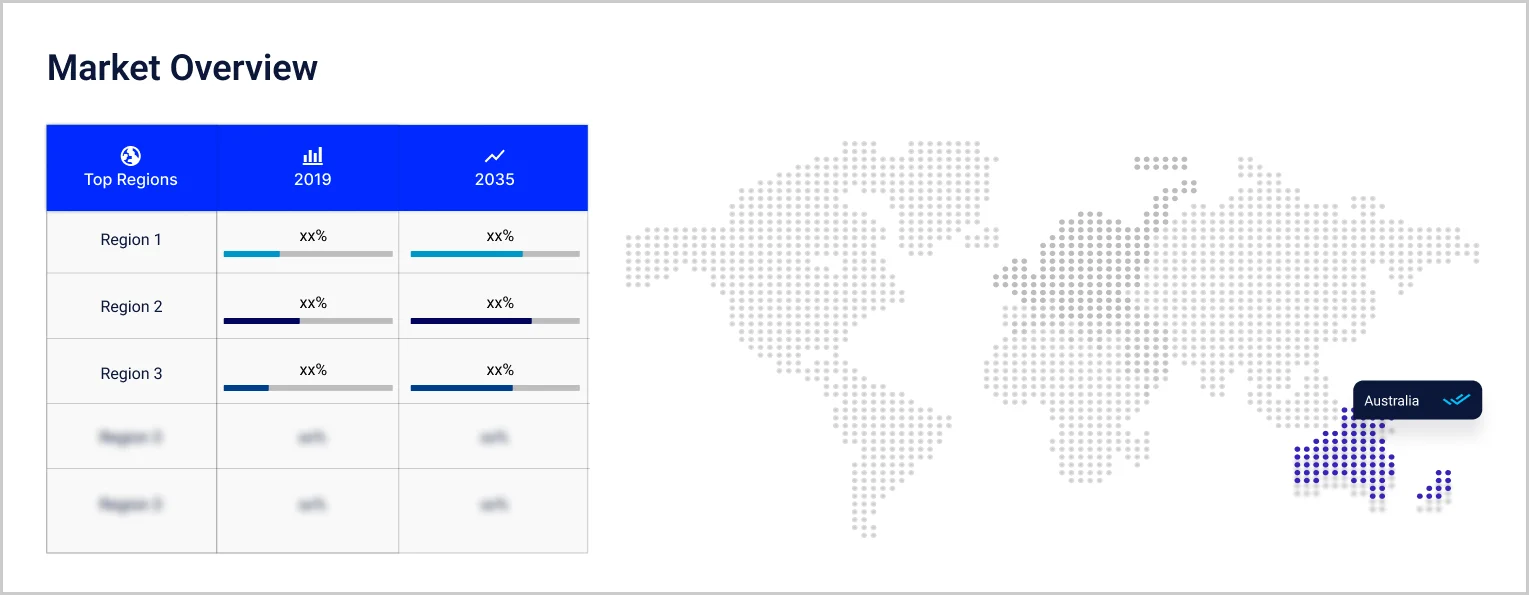
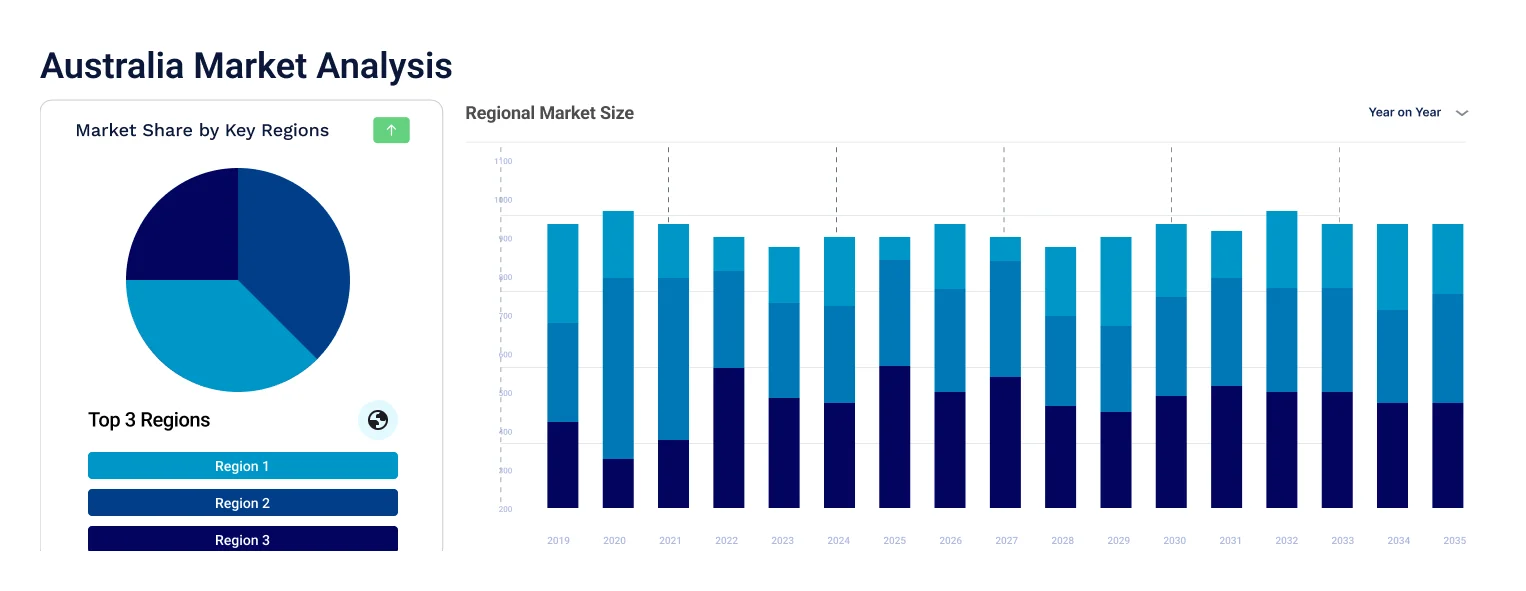
Key Insight: Australian regional market structure is affected by variations in terms of LNG availability, port operations, and fleet availability. New South Wales relies on port operations and possible demands created by coastal shipping. Victoria is favored by existing gas facilities as well as diversified commercial maritime operations. Queensland enjoys the benefits created by LNG export facilities and possibilities of coastal distribution, whereas the Australian Capital Territory lacks demand from maritime operations and relies on general influence of policies. The Western Australia LNG bunkering market is dominated by LNG production and offshore operations, whereas other regions depend on port specialization and regional shipping needs.
By product type, the port to ship category registers the largest share of the market due to efficient integration with established LNG terminals and port-side storage infrastructure
The port to ship solution is currently considered as the most popular one among all available subsegments of the Australia LNG bunkering market. The solution allows bunker providers to make use of the already available port infrastructure and have better control over the whole process of cryogenic fuel handling. At the same time, this subsegment is especially useful for ports that specialize in offshore energy supply, bulk cargo export, and regular traffic of commercial ships. In March 2025, CMA CGM’s LNG-powered newbuild became the first LNG-fueled containership to call Australian ports, advancing maritime decarbonization.
The rapid development of the truck ship subsegment in the Australia LNG bunkering market is explained by the fact that the solution allows for using flexible entry model for the LNG bunker providers and ship owners. Specialized cryogenic truck tankers can bring the fuel to ships from various ports even when the demand is not consolidated in any particular port. At the same time, this category allows companies to get accustomed to the volumes and schedules of LNG deliveries to ships. It will be especially helpful with further development of LNG dual-fuel shipping.
By application, bulk and cargo fleet accounts for the largest share of the market due to high fuel consumption and regular operations across Australia’s resource export corridors
Bulk and cargo fleet largely contributes to the Australia LNG bunkering market revenue since the country’s maritime industry is largely dependent on commodity exports through fuel-consuming ship operations. Bulk and cargo fleet ships operating from the resource and industrial ports give the suppliers of LNG chances of reaching consumers having huge fuel needs and regular bunkering schedules. It will be possible for the companies to design supply contracts based on the scheduled ship ports and long journeys. In September 2026, APSEZ announced plans to launch a dedicated empty container yard at Mundra, streamlining handling, storage, inspections, and logistics operations.
Ferry and offshore support fleet is anticipated to observe fast growth in the Australia LNG bunkering market due to the predictability of the routes and schedule port calls which make it easy for LNG suppliers to plan for the provision of fuel. Ferry and offshore operations require ships that can get regular and reliable fuel and quick turnaround at operational centers. In addition, interest in reduced emission operations increases the need for customized LNG fuel systems for ferry and offshore fleets.
Read more about this report - Request a Free Sample
Western Australia secures the leading market share due to its concentrated LNG production base, offshore energy activity, and major resource-export ports
The Western Australia LNG bunkering market boasts its ongoing dominance due to the presence of advanced LNG production along with heavy maritime traffic involved in exporting the energy and commodities produced in this region. Western Australia houses several LNG production facilities and marine facilities that can help in the development of small-scale LNG distribution and bunkering operations for companies.
Queensland can be viewed as the fastest-growing regional market in terms of its fast-developing LNG industry and presence of numerous ports on its east coast that can serve as the base for developing marine fuels. Companies have an option to consider their LNG supply options together with the available LNG processing, storage, and export facilities. In addition, the region features commodity shipping and vessel operations along the coast that may contribute to customer diversification. The development of LNG truck ship and bunkering operations at ports allow integrating industrial LNG with marine users' needs. In September 2026, APA launched the environmental assessment process for the North to East Australia Pipeline, advancing plans to connect Beetaloo gas with east coast markets.
The competition within the sector is driven by efforts to leverage the existing LNG experience within the nation and to turn it into a flexible network for fueling vessels. Australia LNG bunkering companies are focusing on small-scale LNG deliveries, cryogenic storage, truck ship technology, and bunkering ports capable of supporting offshore servicing vessels and freight ships before the development of large-scale terminals becomes necessary.
One of the strategic opportunities in the industry is associated with the creation of bunkering hubs near Western Australia’s offshore energy and export routes, which already have an experience with LNG supplies and regular flow of vessels. It is also worth mentioning that multi-fuel bunkering facilities that will be able to support bio-LNG or other clean marine fuels in the future are gaining popularity. Partnership with LNG producers, port companies, ship owners, and other parties working in the field of marine fuels is becoming essential for Australia LNG bunkering market players.
Founded in 1958 with headquarters in Australia, Gas Energy Australia is addressing the needs of the market in terms of gas supplies and energy solutions pertaining to industrial and transport applications. Given its experience in LNG handling and distribution, Gas Energy Australia is well positioned to capitalize on growing small-scale marine refueling opportunities.
Founded in 1999 with headquarters in Perth, Australia, Chevron Australia is taking advantage of its large-scale LNG production facilities to promote the growth of less emission-based energy solutions. Gorgon and Wheatstone LNG facilities ensure that Chevron Australia possesses ample gas processing experience.
Oceania Marine Energy was established in 2019 and is based in Australia. It specializes in marine energy and bunkering. This company provides customized fuel logistics and ship-specific delivery options due to its special focus on the maritime energy sector. In addition, the company also promotes flexible LNG bunkering operations and future multi-fuel facility construction.
Founded in 1954, Woodside Energy operates in Perth, Australia. Woodside Energy utilizes its extensive LNG portfolio and its offshore operations to increase the prospects within marine energy supply. The projects such as Scarborough make Western Australia a center of energy production. Woodside Energy promotes LNG-powered shipping via its gas production and marine logistics.
Other key players in the market include Wesfarmers LNG Pty Ltd., among others.
*Please note that this is only a partial list; the complete list of key players is available in the full report. Additionally, the list of key players can be customized to better suit your needs.*
Unlock the latest insights with our Australia LNG bunkering market trends 2026 report. Discover regional growth patterns, consumer preferences, and key industry players. Stay ahead of competition with trusted data and expert analysis. Download your free sample report today and drive informed decisions in the market.


Upto 15% Off
USD
$2499 $2249
$3999 $3599
$4999 $4249
$5999 $5099


*While we strive to always give you current and accurate information, the numbers depicted on the website are indicative and may differ from the actual numbers in the main report. At Expert Market Research, we aim to bring you the latest insights and trends in the market. Using our analyses and forecasts, stakeholders can understand the market dynamics, navigate challenges, and capitalize on opportunities to make data-driven strategic decisions.*
The market is projected to grow at a CAGR of 11.30% between 2026 and 2035.
The LNG bunkering market is categorised according to product type, which includes portable tanks, port-to-ship, truck ship, ship-to-ship and others.
The key players in the market include Gas Energy Australia (GEA), Chevron Australia Pty Ltd., Oceania Marine Energy, Woodside Energy Group Limited, and Wesfarmers LNG Pty Ltd., among others.
Based on the application, the market is divided into tanker fleets, container fleets, bulk and cargo fleets, ferries and OSV and others.
The market is broken down into New South Wales, Victoria, Queensland, Australian Capital Territory, Western Australia, and others.
In 2025, the market reached an approximate value of USD 1.30 Billion.
Companies are facing fragmented LNG-fueled vessel demand, high cryogenic infrastructure costs, complex safety approvals, limited dedicated bunker facilities, uncertain long-term fuel choices, and coordination challenges across ports and shipping operators.
Stakeholders are building port partnerships, developing modular LNG delivery systems, aggregating vessel demand, integrating future multi-fuel capabilities, standardizing safety practices, and targeting offshore and scheduled fleet operations.
Explore our key highlights of the report and gain a concise overview of key findings, trends, and actionable insights that will empower your strategic decisions.
| REPORT FEATURES | DETAILS |
| Base Year | 2025 |
| Historical Period | 2019-2025 |
| Forecast Period | 2026-2035 |
| Scope of the Report |
Historical and Forecast Trends, Industry Drivers and Constraints, Historical and Forecast Market Analysis by Segment:
|
| Breakup by Product Type |
|
| Breakup by Application |
|
| Breakup by Region |
|
| Market Dynamics |
|
| Competitive Landscape |
|
| Companies Covered |
|
Datasheet
One User
USD 2,499
USD 2,249
tax inclusive*
Single User License
One User
USD 3,999
USD 3,599
tax inclusive*
Five User License
Five User
USD 4,999
USD 4,249
tax inclusive*
Corporate License
Unlimited Users
USD 5,999
USD 5,099
tax inclusive*
*Please note that the prices mentioned below are starting prices for each bundle type. Kindly contact our team for further details.*
Flash Bundle
Small Business Bundle
Growth Bundle
Enterprise Bundle
*Please note that the prices mentioned below are starting prices for each bundle type. Kindly contact our team for further details.*
Flash Bundle
Number of Reports: 3
20%
tax inclusive*
Small Business Bundle
Number of Reports: 5
25%
tax inclusive*
Growth Bundle
Number of Reports: 8
30%
tax inclusive*
Enterprise Bundle
Number of Reports: 10
35%
tax inclusive*
How To Order

Select License Type
Choose the right license for your needs and access rights.

Click on ‘Buy Now’
Add the report to your cart with one click and proceed to register.

Select Mode of Payment
Choose a payment option for a secure checkout. You will be redirected accordingly.
Strategic Solutions for Informed Decision-Making
Gain insights to stay ahead and seize opportunities.

Get insights & trends for a competitive edge.

Track prices with detailed trend reports.

Analyse trade data for supply chain insights.

Leverage cost reports for smart savings

Enhance supply chain with partnerships.

Connect For More Information
Our expert team of analysts will offer full support and resolve any queries regarding the report, before and after the purchase.
Our expert team of analysts will offer full support and resolve any queries regarding the report, before and after the purchase.
We employ meticulous research methods, blending advanced analytics and expert insights to deliver accurate, actionable industry intelligence, staying ahead of competitors.
Our skilled analysts offer unparalleled competitive advantage with detailed insights on current and emerging markets, ensuring your strategic edge.
We offer an in-depth yet simplified presentation of industry insights and analysis to meet your specific requirements effectively.




