

Consumer Insights
Uncover trends and behaviors shaping consumer choices today
Procurement Insights
Optimize your sourcing strategy with key market data
Industry Stats
Stay ahead with the latest trends and market analysis.
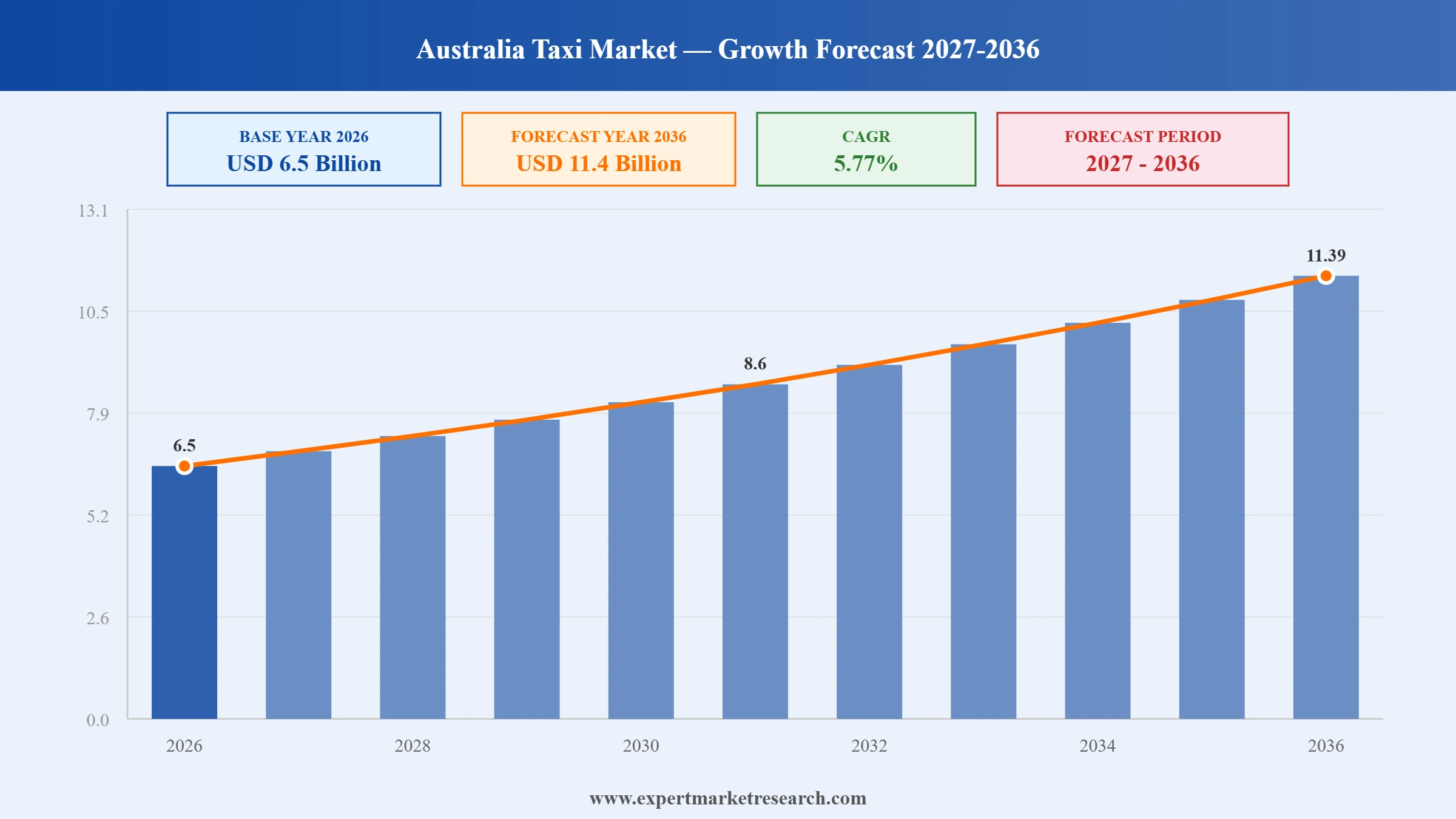
The Australia taxi market attained a value of USD 6.15 Billion in 2025 and is projected to expand at a CAGR of 5.77% through 2035. The market is further expected to achieve USD 10.78 Billion by 2035, driven by rising ride-hailing adoption, growing online booking penetration, and expanding government accessibility subsidy programmes. Growth spans ride-sharing, ride-hailing, and traditional taxi services across cars and motorcycles, with operators across New South Wales, Victoria, Queensland, and Western Australia competing on app-based booking technology, fleet accessibility, and driver network scale.
Rising urban population growth and tourism recovery continue to anchor steady demand across the Australia taxi market, as visitors and commuters increasingly rely on point-to-point transport for last-mile connectivity. Operators are also investing in premium and specialised service categories, reflecting the industry's pursuit of differentiated offerings beyond standard metered rides.
The Australia taxi market is witnessing further developments as newer entrants launch specialised service categories targeting premium customer segments. Rydo Technologies launched Australian operations focused exclusively on airport transfers and premium vehicle categories in January 2026, promising guaranteed pickup times and luxury vehicle options. This shift toward premium, specialised service launches is concentrated among technology-enabled entrants, while established fleet operators instead compete on driver network scale and metropolitan coverage depth.
In addition, state governments are expanding accessibility-focused funding programmes to support underserved passenger groups, reflecting the industry's recognition that inclusive service provision increasingly shapes public policy support for taxi operators. The New South Wales government expanded funding for wheelchair-accessible cab services in August 2025, enlarging the subsidy pool to enhance availability for National Disability Insurance Scheme participants. Such accessibility funding expansion is reshaping competitive positioning across the wider australia taxi market as operators with established wheelchair-accessible fleets increasingly benefit from expanded government subsidy support.
Read more about this report - REQUEST FREE SAMPLE COPY IN PDF
Operators are increasingly looking past the saturated Sydney-Melbourne corridor for their next wave of customer growth. Expansion plans across the sector are targeting regional centres with populations exceeding 100,000 residents, with growing market penetration visible in previously underserved areas throughout the year. Companies can leverage regional expansion to capture underserved demand ahead of competitors concentrated solely on Sydney and Melbourne.
New entrants are increasingly targeting narrow, high-margin service niches rather than competing broadly against established ride-hailing platforms. Rydo Technologies launched Australian operations focused exclusively on airport transfers and premium vehicle categories, promising guaranteed pickup times and luxury vehicle options, with early adoption showing promising growth in Sydney and Melbourne airport corridors. Companies can leverage narrow, premium-positioned service launches to build profitable niches before expanding into broader ride categories.
Established fleet operators are increasingly integrating third-party booking technology rather than building proprietary platforms from scratch. GM Cabs partnered with Rydo to route additional bookings directly to driver terminals, combining GM Cabs' established Sydney and Melbourne fleet presence with Rydo's app-based booking technology. Companies can leverage technology partnerships to add app-based booking capability without the cost of developing and maintaining proprietary platforms.
State governments are increasingly directing transport subsidy funding toward accessibility-focused fleet categories rather than general fare support. The New South Wales government enlarged its subsidy pool for wheelchair-accessible cab services, aiming to enhance availability for National Disability Insurance Scheme participants requiring specialised vehicle access. Companies can leverage accessible fleet investment to access expanding government subsidy programmes ahead of competitors with standard vehicle fleets only.
Ride-hailing platforms are increasingly removing digital payment barriers to capture riders previously excluded from app-only booking models. Uber began rolling out cash payment options nationwide in July 2026, aiming to ensure payment method is no longer a barrier to accessing reliable transport for older riders and others less comfortable with digital-only payment. Companies can leverage flexible payment options to capture demand from demographics historically underserved by app-only ride-hailing models, extending the platform's addressable market beyond the smartphone-native customer base that digital-only booking has traditionally served.
Established booking platforms are moving quickly to absorb regional coverage left behind when smaller competitors exit the market. Ingogo announced, in March 2026, its return to service in North Sydney after Manly Cabs entered administration, restoring booking availability for a coverage area that had lost local taxi service. Companies can leverage rapid coverage backfill following a competitor's exit to capture displaced customer demand before new entrants establish themselves, moving quickly to convert previously loyal Manly Cabs customers into regular Ingogo users while the memory of the disruption is still fresh.
Fleet operators integrating third-party booking platforms are extending these partnerships across a growing share of their driver terminal networks rather than running limited pilots. GM Cabs expanded its Rydo booking integration in January 2026 to route a larger share of incoming requests directly to driver terminals across its Sydney and Melbourne fleet, building on the initial partnership announced earlier in the year. Companies can leverage phased terminal rollout to validate booking integration performance before committing to fleet-wide deployment, reducing the operational risk of a full-scale technology switch by proving reliability across a growing subset of terminals first.
Fleet operators are responding to expanded accessibility subsidy pools by accelerating wheelchair-accessible vehicle orders rather than waiting for funding certainty over multiple years. Following the New South Wales government's August 2025 expansion of its wheelchair-accessible cab subsidy pool, operators across the australia taxi market began placing new accessible vehicle orders to qualify for the enlarged subsidy pool ahead of the following funding cycle, a timing decision that lets operators lock in the higher funding rate before eligibility criteria are next reviewed by the state government.
This Expert Market Research Report titled "Australia Taxi Market Report and Forecast 2026-2035" offers a detailed analysis of the market based on the following segments:
Market Breakup by Service Type
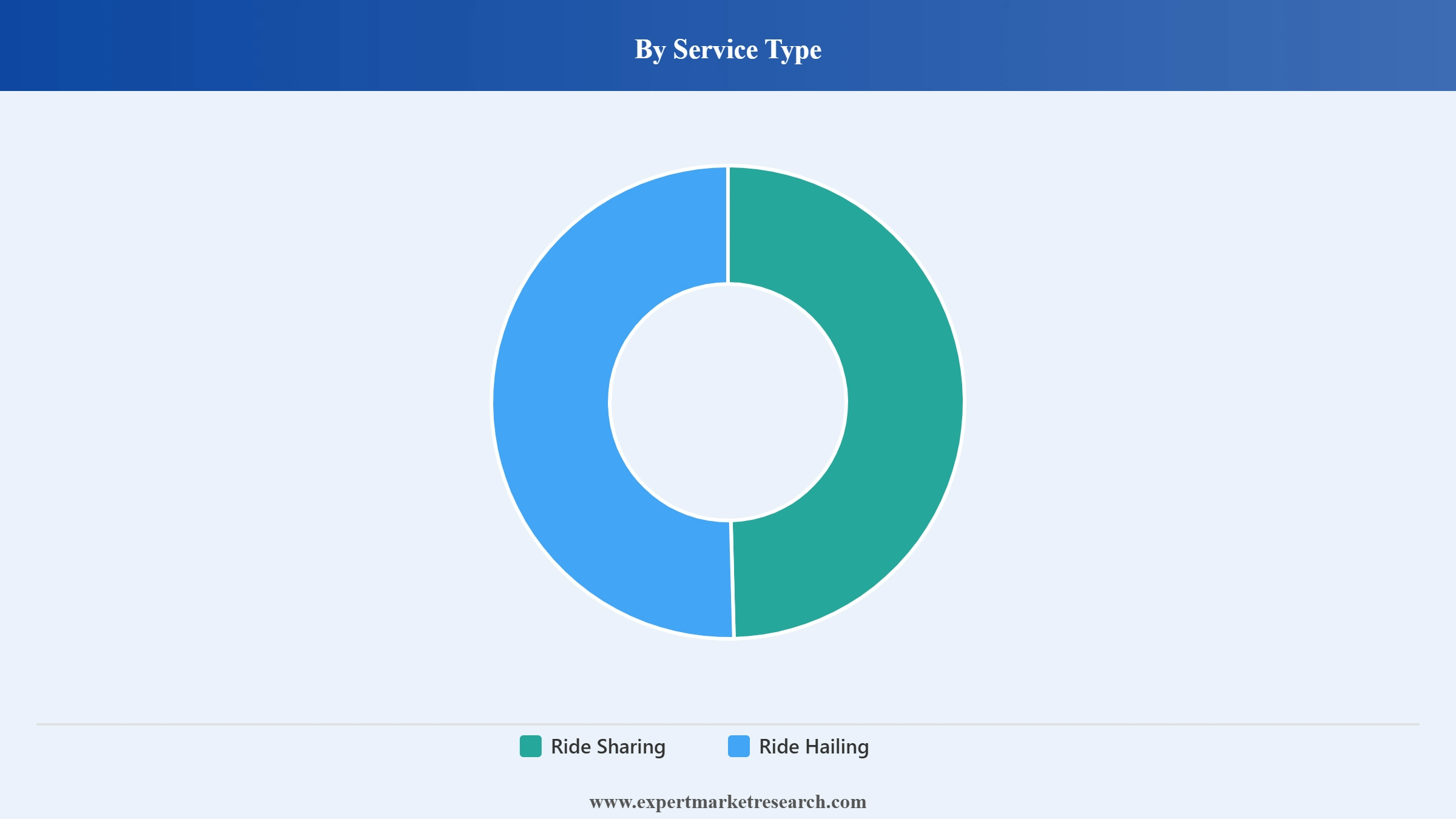
Key Insight: Ride Sharing accounts for the largest share of the market, preferred over ride-hailing for reducing traffic congestion and lowering carbon emissions while offering passengers social interaction opportunities. Ride Hailing is growing at a fast pace at a projected CAGR of 6.50%, illustrated by Rydo Technologies' January 2026 launch of a premium airport transfer service with guaranteed pickup times. Others encompasses traditional street-hail and phone-booked taxi services continuing to serve passengers without smartphone access, a segment that remains particularly important for older passengers and travellers in areas with weaker mobile connectivity.
Market Breakup by Vehicle Type
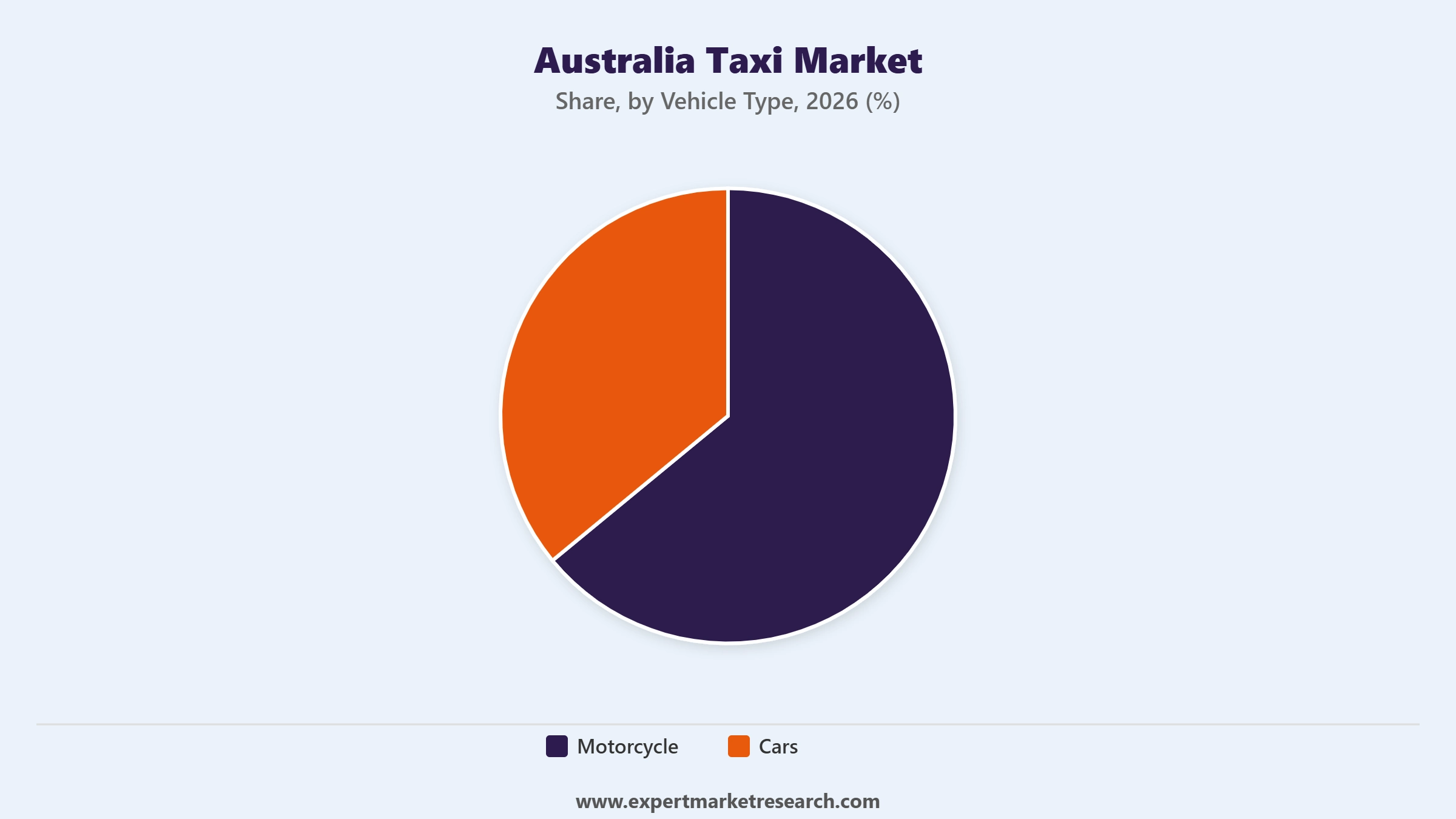
Key Insight: Cars accounts for the largest share of the market, guiding growth as passengers travel comfortably without delays from traffic congestion while enabling easier fare-sharing among multiple riders. Motorcycle serves a smaller niche tied to single-passenger, time-sensitive urban trips. Others includes specialised vehicle categories such as wheelchair-accessible vans, a category reinforced by New South Wales' August 2025 expansion of wheelchair-accessible cab funding for NDIS participants, prompting fleet operators nationwide to reassess their own accessible vehicle investment plans against similar funding opportunities.
Market Breakup by Booking Type
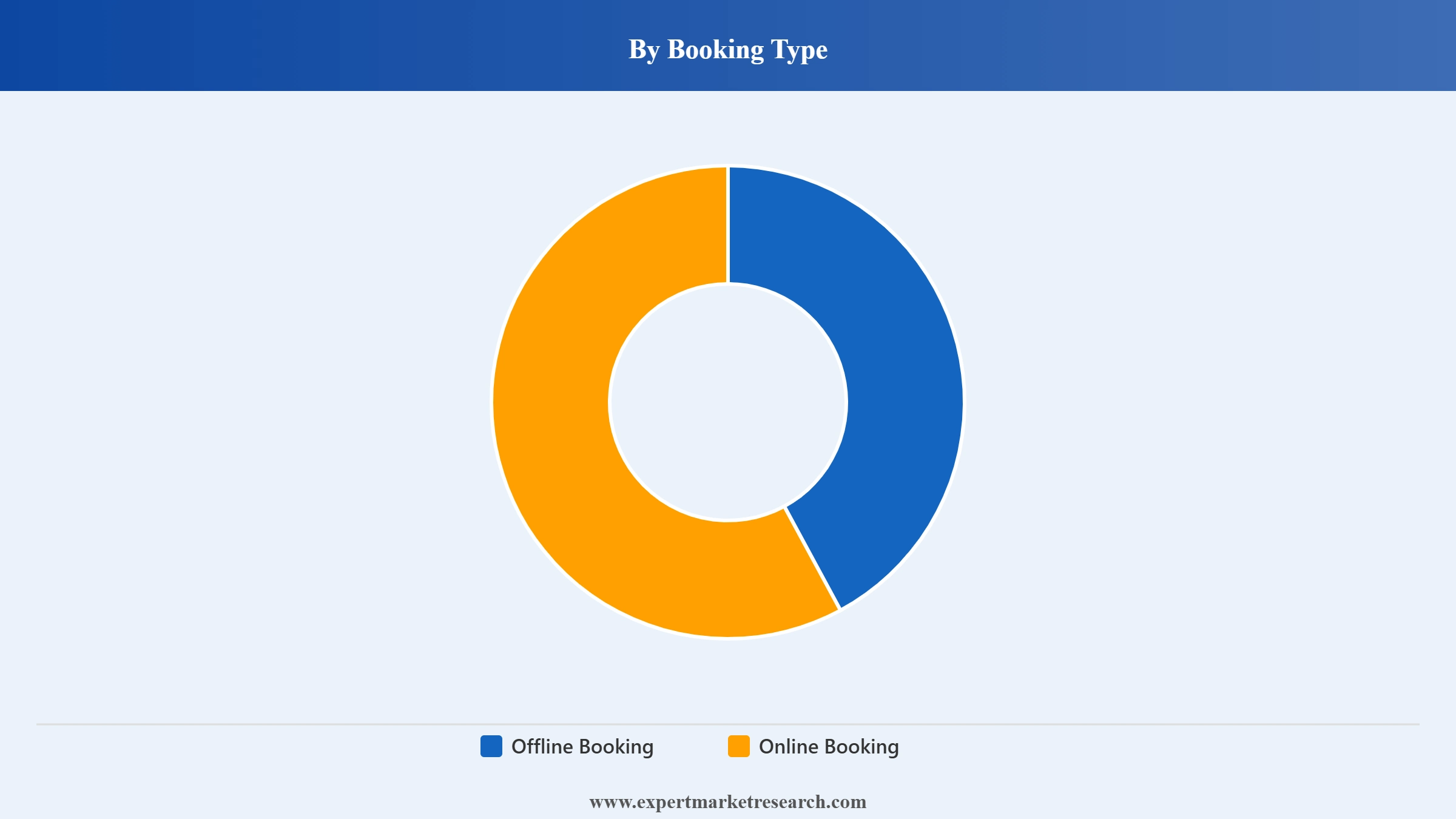
Key Insight: Online Booking accounts for the largest share of the market, holding a major position as passengers increasingly favour app-based booking that lets them book rides with the same level of safety and convenience as other ride services, and is growing at a projected CAGR of 9.20% through 2035. Offline Booking continues to represent demand among passengers preferring phone bookings or street hailing, particularly in regional areas with lower app-based platform coverage, where thinner driver networks and inconsistent mobile connectivity continue to make traditional booking methods more reliable than app-based alternatives.
Market Breakup by Region
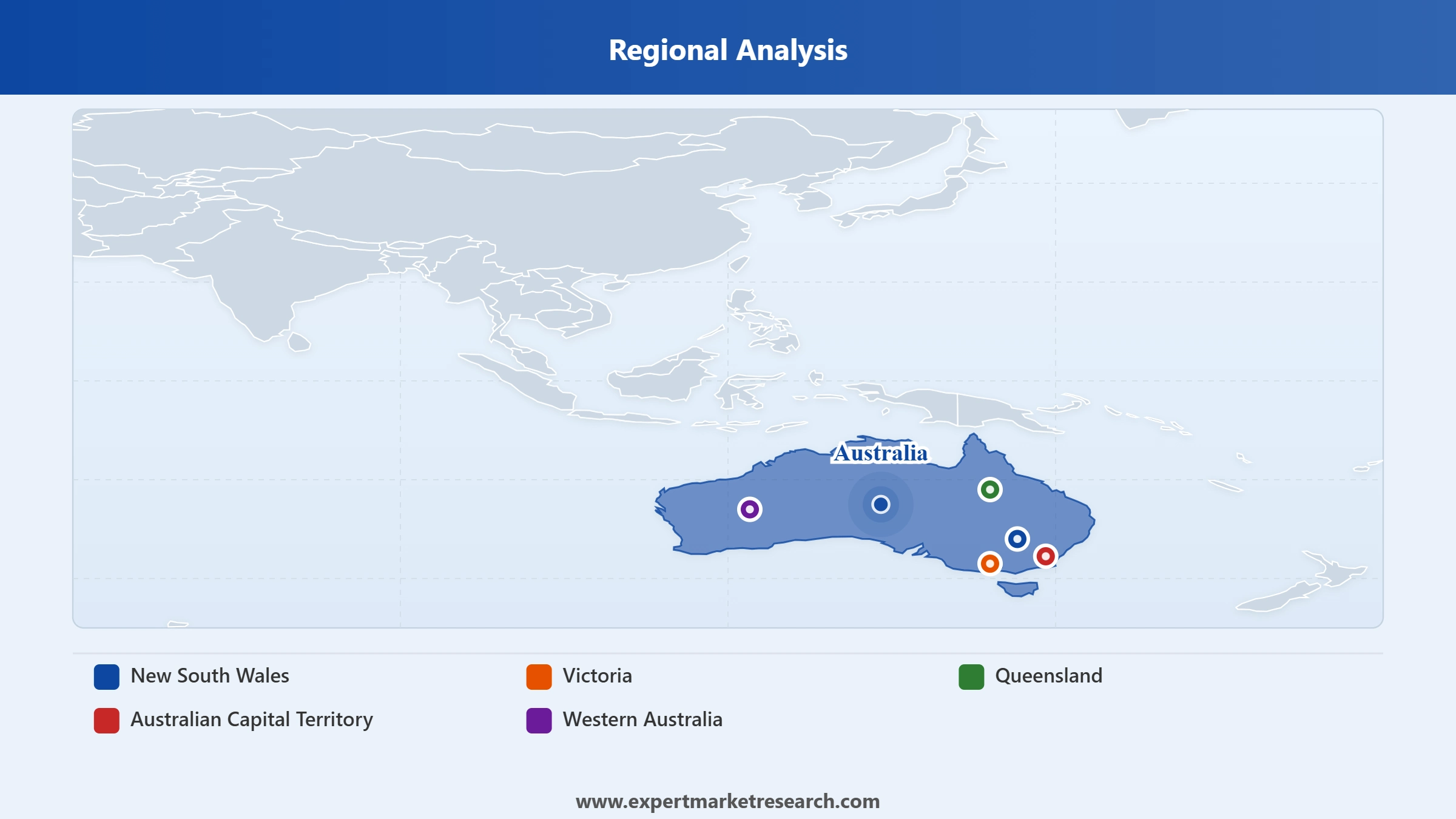
Key Insight: Western Australia holds the largest regional share at 16.2% and is also the fastest-growing region at a projected CAGR of 6.6%, supported by expanding metropolitan coverage and growing airport transfer demand. Australian Capital Territory follows with growth of 6.2%, reflecting its concentrated urban population and government travel demand. New South Wales serves a large tourism and commuter base, reinforced by its August 2025 wheelchair-accessible cab funding expansion. Victoria continues to represent substantial demand tied to its dense urban ride-hailing and taxi network. Queensland supports steady demand tied to tourism and metropolitan population growth. Others captures smaller state and territory markets including South Australia and Tasmania, where taxi demand remains closely tied to tourism seasonality and smaller, less dense metropolitan transport networks.
Read more about this report - REQUEST FREE SAMPLE COPY IN PDF
By service type, ride sharing leads the market while ride hailing grows fastest given premium service launches
Ride Sharing continues to account for the largest share of the market, preferred by passengers for reducing traffic congestion and lowering carbon emissions while offering social interaction opportunities during shared trips, a segment Ingogo's March 2026 return to North Sydney service helped stabilise after a local competitor's exit, demonstrating how quickly established booking platforms can absorb displaced demand when smaller regional operators withdraw from the market.
Read more about this report - REQUEST FREE SAMPLE COPY IN PDF
Ride Hailing is growing at the fastest pace across the australia taxi market at a projected CAGR of 6.50%, illustrated by Rydo Technologies' January 2026 launch of a premium airport transfer service promising guaranteed pickup times, with early adoption already showing promising growth across Sydney and Melbourne airport corridors, encouraging the operator to evaluate similar guaranteed-service expansions into other major domestic airport markets over the coming year.
By vehicle type, cars leads the market while others grows steadily given accessibility fleet investment
Cars continues to account for the largest share of the market, enabling passengers to travel comfortably without delays from traffic congestion while simplifying fare-sharing arrangements, reinforced by Uber's July 2026 rollout of nationwide cash payment options designed to widen car-based ride access for riders less comfortable with app-only booking, a move expected to particularly benefit older passengers and travellers unfamiliar with the platform's standard digital payment flow.
Read more about this report - REQUEST FREE SAMPLE COPY IN PDF
Others, including wheelchair-accessible vans, continues to gain share as fleet operators respond to New South Wales' August 2025 expansion of accessibility subsidy funding for NDIS participants. Motorcycle rounds out the segment with a smaller share tied to quick, single-rider trips through congested inner-city routes, a niche that continues to appeal mainly to time-pressed commuters navigating peak-hour traffic in dense metropolitan areas.
By booking type, online booking leads the market while offline booking continues to serve regional demand
Online Booking continues to hold the majority share of the market, growing at a projected CAGR of 9.20% as passengers increasingly favour app-based platforms offering the same safety standards as other ride services, illustrated by GM Cabs' expanded January 2026 integration with Rydo routing bookings directly to driver terminals, a partnership model other established fleet operators are increasingly replicating rather than building proprietary booking technology from scratch.
Read more about this report - REQUEST FREE SAMPLE COPY IN PDF
Offline Booking retains a smaller but stable base of passengers who still prefer calling ahead or hailing directly on the street, a pattern most persistent in regional areas with thinner app-based coverage, though Uber's July 2026 cash payment rollout has begun blurring the line between app-based and traditional booking preferences, giving offline-leaning passengers a way to access app-dispatched rides without adopting digital payment methods entirely.
Western Australia commands the largest regional share while also leading growth given expanding metropolitan coverage
Western Australia holds the largest regional share of the Australia taxi market at 16.2% and is also the fastest-growing region at a projected CAGR of 6.6%, supported by expanding metropolitan coverage and growing airport transfer demand.
Read more about this report - REQUEST FREE SAMPLE COPY IN PDF
Australian Capital Territory posts the second-fastest growth rate at 6.2%, a pace tied to its concentrated urban population and steady government travel demand. New South Wales contributes a substantial tourism and commuter base, reinforced by its August 2025 wheelchair-accessible cab funding expansion for NDIS participants. Victoria maintains a dense urban ride-hailing and taxi network supporting steady demand. Queensland sustains growth tied to tourism inflows and metropolitan population expansion. Others, spanning South Australia and Tasmania, rounds out the market with smaller but consistent regional contributions.
The industry is fragmented, with australia taxi market companies ranging from global ride-hailing platforms to specialist regional fleet operators competing across service type, vehicle type, and booking type segments. Established players operate across the full passenger transport value chain, from app-based booking technology through vehicle fleet management and driver network coordination.
Competitive dynamics among australia taxi players are increasingly shaped by the pace of premium service niche launches, the depth of technology partnership integration, and the strength of accessibility fleet investment. Operators are investing in app-based booking capability, guaranteed-service premium categories, and wheelchair-accessible vehicles to secure long-term relationships with diverse passenger segments.
Founded in 2009 and headquartered in San Francisco, United States, Uber operates a global ride-hailing platform providing app-based transport services across Australian metropolitan and regional centres. The company is pursuing a sustainability goal targeting zero-emission vehicle rides by 2040. Uber's super-app architecture, unifying payment and loyalty programmes across multiple service categories, differentiates its offering from single-service taxi operators.
Founded in 1976 and headquartered in Sydney, Australia, A2B Australia operates taxi booking and dispatch services through established brands including 13cabs, serving major metropolitan centres across New South Wales and Victoria. The company maintains a substantial fleet presence built on decades of traditional taxi network operation. A2B's established dispatch infrastructure and brand recognition differentiate its offering from newer app-only entrants.
Founded in 2011 and headquartered in Sydney, Australia, Ingogo provides transparent pricing, fixed fares, on-demand and scheduled bookings, and metered jobs through its taxi booking platform. The company has installed in-car cameras across its fleet to enhance passenger safety. Ingogo's fixed-fare transparency model differentiates its offering from competitors relying on dynamic surge pricing.
Founded in 2016 and headquartered in Sydney, Australia, Rydo Technologies operates a transportation app helping passengers access ride services while saving time and money. In January 2026, the company launched a premium service focused exclusively on airport transfers, while separately deepening its driver booking partnership with GM Cabs. Rydo's combination of premium niche launches and fleet operator technology partnerships differentiates its offering from single-focus competitors.
Other key players in the Australia taxi market include Gm Cabs, Taxi Apps Pty Ltd., Didi Mobility (Australia) Pty Ltd., Silver Top Taxi Pty Ltd., Black and White Cabs Pty Ltd., and Ladies Let's Roll Pty Ltd., among others.
*Please note that this is only a partial list; the complete list of key players is available in the full report. Additionally, the list of key players can be customized to better suit your needs.*
Unlock the latest insights with our Australia taxi market trends 2026 report. Discover regional growth patterns, service type and booking type trends, and key industry players. Stay ahead of competition with trusted data and expert analysis. Download your free sample report today and drive informed decisions in the market.


Upto 15% Off
USD
$2499 $2249
$3999 $3599
$4999 $4249
$5999 $5099


*While we strive to always give you current and accurate information, the numbers depicted on the website are indicative and may differ from the actual numbers in the main report. At Expert Market Research, we aim to bring you the latest insights and trends in the market. Using our analyses and forecasts, stakeholders can understand the market dynamics, navigate challenges, and capitalize on opportunities to make data-driven strategic decisions.*
In 2025, the market reached an approximate value of USD 6.15 Billion.
The market is projected to grow at a CAGR of 5.77% between 2026 and 2035.
The revenue generated from the market is expected to reach USD 10.78 Billion in 2035.
The taxi market is categorised according to service type, which includes ride-sharing, ride-hailing and others.
The key players in the market include Uber Technologies Inc., Gm Cabs, A2B Australia Limited, Ingogo Limited, Taxi Apps Pty Ltd., Rydo Technologies Pty Ltd., Didi Mobility (Australia) Pty Ltd., Silver Top Taxi Pty Ltd., Black and White Cabs Pty Ltd., and Ladies Let's Roll Pty Ltd., among others.
Based on the vehicle type, the market is divided into motorcycles, cars, and others.
The market is broken down into New South Wales, Victoria, Queensland, Australian Capital Territory, Western Australia, and others.
Operators face varying government regulations across states, intense price competition from a fragmented supplier base, and the ongoing need to balance app-based platform investment against traditional fleet operation costs.
Launching narrow, premium-positioned service niches such as airport transfers, integrating third-party booking technology rather than building proprietary platforms, and expanding wheelchair-accessible fleets to capture government subsidy funding.
Explore our key highlights of the report and gain a concise overview of key findings, trends, and actionable insights that will empower your strategic decisions.
| REPORT FEATURES | DETAILS |
| Base Year | 2025 |
| Historical Period | 2019-2025 |
| Forecast Period | 2026-2035 |
| Scope of the Report |
Historical and Forecast Trends, Industry Drivers and Constraints, Historical and Forecast Market Analysis by Segment:
|
| Breakup by Service Type |
|
| Breakup by Vehicle Type |
|
| Breakup by Booking Type |
|
| Breakup by Region |
|
| Market Dynamics |
|
| Competitive Landscape |
|
| Companies Covered |
|
Datasheet
One User
USD 2,499
USD 2,249
tax inclusive*
Single User License
One User
USD 3,999
USD 3,599
tax inclusive*
Five User License
Five User
USD 4,999
USD 4,249
tax inclusive*
Corporate License
Unlimited Users
USD 5,999
USD 5,099
tax inclusive*
*Please note that the prices mentioned below are starting prices for each bundle type. Kindly contact our team for further details.*
Flash Bundle
Small Business Bundle
Growth Bundle
Enterprise Bundle
*Please note that the prices mentioned below are starting prices for each bundle type. Kindly contact our team for further details.*
Flash Bundle
Number of Reports: 3
20%
tax inclusive*
Small Business Bundle
Number of Reports: 5
25%
tax inclusive*
Growth Bundle
Number of Reports: 8
30%
tax inclusive*
Enterprise Bundle
Number of Reports: 10
35%
tax inclusive*
How To Order

Select License Type
Choose the right license for your needs and access rights.

Click on ‘Buy Now’
Add the report to your cart with one click and proceed to register.

Select Mode of Payment
Choose a payment option for a secure checkout. You will be redirected accordingly.
Strategic Solutions for Informed Decision-Making
Gain insights to stay ahead and seize opportunities.

Get insights & trends for a competitive edge.

Track prices with detailed trend reports.

Analyse trade data for supply chain insights.

Leverage cost reports for smart savings

Enhance supply chain with partnerships.

Connect For More Information
Our expert team of analysts will offer full support and resolve any queries regarding the report, before and after the purchase.
Our expert team of analysts will offer full support and resolve any queries regarding the report, before and after the purchase.
We employ meticulous research methods, blending advanced analytics and expert insights to deliver accurate, actionable industry intelligence, staying ahead of competitors.
Our skilled analysts offer unparalleled competitive advantage with detailed insights on current and emerging markets, ensuring your strategic edge.
We offer an in-depth yet simplified presentation of industry insights and analysis to meet your specific requirements effectively.




