

Consumer Insights
Uncover trends and behaviors shaping consumer choices today
Procurement Insights
Optimize your sourcing strategy with key market data
Industry Stats
Stay ahead with the latest trends and market analysis.
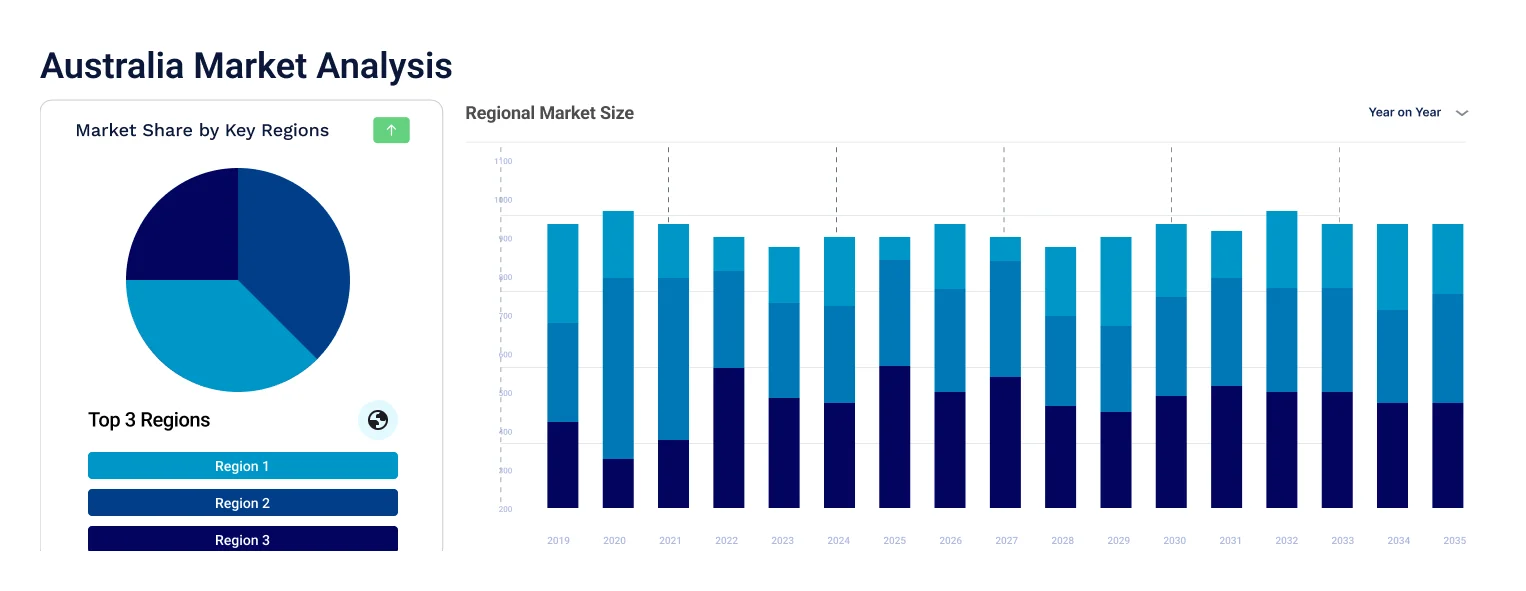
The Australia vegetable oils market attained a value of USD 675.32 Million in 2025 and is projected to expand at a CAGR of 4.70% through 2035. The market is further expected to achieve USD 1069.00 Million by 2035. Growth in the demand for high-oleic oils in quick-service restaurants is motivating processors in Australia to come up with formulations for frying which provide long fry life and dependable local sourcing of oil supplies.
The ongoing growth in demand in the Australia vegetable oils market is attributed to the need for food manufacturers to obtain oils that have functional properties such as high oleic and oxidation stability, as this enhances their frying efficiency and reduces the need to change oils often. Processors are also increasing the security of supply by building local crushing and refining facilities, which ensures that the buyers get their oils from Australia in bulk form.
Further, companies like Cargill are improving the Australia vegetable oils market value chain by investing in the upgrading of its network for crushing canola and cottonseed. It is clear that there is an increased need for locally processed oils used in food manufacturing and food services. In 2023, Cargill invested approximately AUD 100 million in the upgrading of Newcastle, Narrabri and Footscray facilities. It also crushes over 700,000 tonnes of canola, cottonseed, sunflower seed, and soybeans on its facilities located in eastern Australia, and that gives it a platform for supplying refined oils to industrial customers. Moreover, in May 2026, Cargill progressed plans for a 1.1-million-tonne annual canola crushing plant in Western Australia’s Rockingham.
Product differentiation is becoming more crucial for competition in the Australia vegetable oils market. Companies are supplying a high-oleic canola oil that is ideal for products needing a long fry life. For example, in October 2025, Australian Oilseeds announced a joint venture with Rajashri Foods to expand oilseed distribution across India’s food industry. Moreover, its line for food manufacturing includes a high-oleic sunflower oil, cottonseed oil, palm olein, coconut oil, and conventional canola oil in bulk form. It gives suppliers an opportunity to address processors who are looking for oils which have a stable performance, flexibility in formulation, and bulk ingredients supply. High-oleic canola is also gaining popularity among quick-service restaurants in Australia due to the high content of monounsaturated fats, frying performance, and local origin.
Compound Annual Growth Rate
4.7%
Value in USD Million
2026-2035
Read more about this report - REQUEST FREE SAMPLE COPY IN PDF
GrainCorp welcomed the Australian National Bioenergy Feedstock Strategy as it promotes the use of canola, tallow, and recycled cooking oil in the manufacture of low carbon fuels locally. Oil processors can get their canola oil supplies from local sources, build their processing capacity, and engage in fuel partnership opportunities due to the increasing demand for feedstocks.
Sherman Foods introduced its FORTÈ which is an Australian non-genetically modified canola frying oil with high-performance features, free from palm oil, and omega-3 benefits. Producers can develop their frying oils based on performance longevity, Australian origin, and non-GMO characteristics, boosting the Australia vegetable oils market growth.
Seasoning Mingle created three plant-based salad dressings made from avocado oil, which differs from regular processed oils in use. Vegetable oil firms can leverage added value dressing or blended dressing that features quality oils as well as clean-label positioning.
Cargill unveiled a 2.58 MW solar facility at its Newcastle crush plant, aimed at powering canola and cottonseed oil production processes via renewables. Processors in the Australia vegetable oils market can adopt renewable energy into their crushing process in order to reduce carbon emissions, among others.
The Australia vegetable oils market is being positively affected by investments in local oilseed processing capacity, specifically for canola. For example, in July 2026, LDC expanded its Saskatchewan canola crushing complex, more than doubling capacity to over two million tons annually for biofuels. The Australian Government is also investing in the growth of domestic oilseed production through agricultural research and logistical improvements aimed at boosting efficiency and reliability of production and processing. At the same time, growing demand for canola in Australia encourages oilseed processors to source more stable raw material for refined oils production. This leads to the development of bigger, integrated, and more versatile facilities capable of supplying industrial clients with specific requirements.
High-oleic vegetable oils are becoming one of the important areas for product development as food manufacturers and foodservice establishments need oils with better frying stability and longer operating life. Players in the Australia vegetable oils market such as Cargill are promoting high-oleic canola oil which has advantages in these applications. This trend is especially important in quick-service restaurants, snack products, and convenience food producers that need to run cooking operations at high temperatures. Demonstrating this trend, in June 2026, Perfat Technologies launched Perfat Soft, a sunflower-oil-based oleogel offering a high-fiber, lower-saturated-fat alternative to conventional solid fats. Additionally, government-supported agricultural research conducted by CSIRO and Grains Research and Development Corporation is helping in developing better performing oilseed varieties.
Sustainability and traceability factors are becoming increasingly important considerations in the procurement of vegetable oils in Australia with particular emphasis on the increasing number of manufacturers of food products which report to environmental organizations. In July 2026, GrainCorp and Nufarm promoted scalable oilseed feedstocks, including canola and carinata, to support Australia’s sustainable aviation fuel industry. The national agenda for innovation in agriculture by the Australian Government and agricultural research programs are improving efficiency and promoting resilient systems, redefining the Australia vegetable oils market trends. Canola seeds are receiving attention beyond food products since canola serves as a raw material for fuels with reduced carbon emissions. Therefore, vegetable oil processors are increasingly using integrated models in sourcing farmers, crushing plants, refineries, and industrial buyers to increase sustainability.
Premium and specialty vegetable oils are getting into commercial use in Australia where producers are differentiating their products by the method of processing, types of seeds used, origins, and nutrition benefits. Australian Oilseeds is increasing its range of GEO oils which are non-GMO cold pressed. The company expanded its GEO oils distribution to more than 1,000 stores of Woolworths in February 2025. Such developments in the Australia vegetable oils market show how producers are creating differentiated vegetable oils and not just commodity products for B2B clients. Such government programs for innovation in oilseed industry and regional processing also help to increase product quality.
The Australia vegetable oils market is creating another channel of demand through renewable fuels as there is greater push by policy makers to invest in domestic production of low carbon fuel sources. In June 2026, HAMR Energy, BHP, and GCMD trialed tallow-based biofuel, demonstrating lower-emission maritime fuel potential using diversified Australian feedstocks. The Australian Government Cleaner Fuels Program offers incentives to projects related to sustainable aviation fuel and renewable diesel, offering opportunities in the longer term for oilseed-based fuels. Canola oil is receiving special focus as Australian production has a ready agriculture foundation as well as processing facilities. This implies that businesses in agriculture and energy are looking at integration of oilseed supply, crushing, refining, and fuel production.
The Expert Market Research's report titled “Australia Vegetable Oils Market Report and Forecast 2026-2035” offers a detailed analysis of the market based on the following segments:
Market Breakup by Type
Key Insight: The type landscape showcases varied procurement considerations within the overall Australia vegetable oils market dynamics. The use of canola oil is supported by oilseed availability within the country as well as the fact that it is used widely in food manufacturing. Palm oil is considered important in cases where cost effectiveness and functional attributes are factors in the formulation process. The use of olive oil is for high-end purposes where taste is concerned. Sunflower oil is considered due to its neutral taste and frying stability, whereas soybean oil is important in some applications. In May 2024, Conga Foods launched new cooking oil blends, expanding its portfolio with versatile, health-focused options for Australian consumers and foodservice.
Market Breakup by Application
Key Insight: Food continues to be the primary application that is accelerating the Australia vegetable oils market expansion owing to the necessity of vegetable oils in terms of their attributes that make the process of frying, baking, sauces, snacks, and prepared foods possible. The feed application relies on oil as an energy source due to its high-energy density, which is important for feeding animals and birds. For industrial applications, oil is becoming increasingly popular as a source material for oleochemicals and biofuels. In June 2026, Green Fuels Accelerator was launched to fast-track sustainable aviation fuel adoption, supporting commercialization, investment, innovation, and industry collaboration.
Market Breakup by Region
Key Insight: The concentration of food manufacturing and distribution demand gives New South Wales an advantage over other regions, whereas food processing plants combined with canola production make Victoria attractive. Queensland contributes to the regional demand through food service, food manufacturing, and agriculture; however, weather plays a role in the presence of oilseeds. The presence of canola production and agriculture oriented at exports provides the Western Australia vegetable oils market with potential for processing development. The Australian Capital Territory is a small center of consumption due to food service and institutional demands.
Canola oil maintains strong demand from food manufacturers, bakeries, and commercial fryers
Canola oil from the others segment is the leading category across the Australia vegetable oils market scope, driven by demand from food manufacturing, baking and commercial frying segments. The domestic oilseed base of Australia provides excellent supply chain benefits to canola oil, while the processing companies have an increasing focus on high oleic, traceable and locally sourced supplies. ABARES forecasts the production of canola to be 7.7 million tons in 2025-26, which will enable crushing and refining activities. The buyers also find the use of canola for its neutral properties and versatility in dressings, spreads, baked products, and frying to be important.
Sunflower oil is the most rapidly growing type of edible oil, as it is sought after by food processors who prefer neutral tasting oils for their functional performance during frying and formulation. The demand for this oil type is growing in snacks, sauces, dressings, bakery products and food service, where the manufactures need a consistency in functional performance. Australian buyers also find this oil to diversify their procurement portfolio other than canola and imported palm-based oils.
Food applications dominate the market due to extensive vegetable oil consumption across processed foods and commercial foodservices
Food products largely contribute to the Australia vegetable oils market revenue, enabled by wide use of vegetable oils in frying, baking, sauces, dressings, spreads, snacks, and ready-meal production. Manufacturers tend to choose oil on such criteria as flavor neutrality, resistance to high temperatures, viscosity, and formulation requirements rather than price. As a result, canola oil, sunflower oil, soybean oil, and olive oil are used for different needs of processing companies operating within Australian food manufacturing industry. Oil suppliers who can ensure stable specification, traceability, flexibility of bulk deliveries, and technical support are expected to establish repeatable business with food manufacturers. In September 2025, Snack Brands Australia converted used cooking oil into chip packets, advancing circular packaging innovation and reducing reliance on virgin plastics.
The industrial sector is the fastest-growing segment across the Australia vegetable oils market scope due to increased use of vegetable oils in renewable fuels and oleochemical applications other than food manufacturing processes. Canola oil becomes more popular as agricultural raw material as Australia explores ways to produce cleaner fuels. Industrial clients tend to focus on the stability of feedstock quality, traceability, and availability of feedstock supply chains. This gives the chance to oilseed processors to integrate agriculture with crushing and refining vegetable oils and end users.
Read more about this report - REQUEST FREE SAMPLE COPY IN PDF
New South Wales accounts for the dominant share of the market due to strong food manufacturing, population concentration, and integrated distribution networks
New South Wales holds dominance in the Australia vegetable oils market with respect to the large population, diverse manufacturing base, food service industry, and large-scale oilseed crop cultivation. The New South Wales region consists of both agricultural production facilities as well as processing and distribution centers where efficient demand channels for bulk vegetable oils are created. Different types of products need reliable supplies of oil for their production. At the same time, the established logistic connections to the domestic markets allow regular procurement. In June 2026, BHP explored marine biofuel blends made from used cooking oil and animal fats, supporting lower-emission shipping fuel adoption.
Growth of the Western Australia vegetable oils market is driven by high canola production in the region, the development of value chains in agriculture and the possibilities for combining oilseed processing with both domestic and export markets. ABARES expects that Western Australia will keep producing canola. It means that processing companies would have sufficient amount of raw material for production. Investments into storage facilities, crushing, refining, and logistics may improve the regional supply chain even more.
Competition is currently based on securing the supply of raw materials, production flexibility, oil specialization, and assistance with downstream applications beyond the raw material availability. Leading Australia vegetable oil companies are focusing on domestic sourcing of oilseeds, high-oleic formulation, traceability and bulk supply of their services to food manufacturers, foodservices companies and new industrial clients.
Australia vegetable oils market players may build their competitive advantages through investment into crushing, refining, storage and transportation facilities along with the development of specific oils for frying, baking, snacks and prepared foods applications. Renewable fuels may become an area of opportunity, thus making the suppliers focus on establishing traceable feedstocks and industrial processing capacities.
Formed in 1902, the Archer-Daniels-Midland Company has its headquarters in Chicago, Illinois, United States. ADM supports the Australia vegetable oils market through its integrated origination, crushing, refining, and ingredients business. The product range of ADM includes oils of soybeans, canola, sunflowers, and other vegetables used in foods, feeds, energy, and industry applications. The company is also creating customized oil and specialty fat products, providing formulation and performance needs.
Bunge Global SA was founded in 1818, and its headquarters are located in St. Louis, Missouri, United States. The company offers services to the Australian oilseed industry through its grain and oilseed origination, processing, storing, and trading activities. Bunge processes canola and other oilseeds and offers plant oils, fats, and proteins. In addition, its Australian operations have strict canola receivals specifications.
Founded in 1865, Cargill Inc. has headquarters located in the Minneapolis, Minnesota, United States. In Australia, Cargill Inc. is enhancing its vegetable oil capability via oilseed crushing, processing and ingredients. The company has made investments in Australian oilseed facilities, offering canola, sunflower, cottonseed and other oils for use in food manufacturers and foodservice. The high oleic oil solutions that it offers enable better stability and increased oil usage in commercial frying applications.
Founded in 1851, Louis Dreyfus Company B.V. has its headquarters in Rotterdam, Netherlands. LDC runs an integrated grains and oilseeds business in Australia, sourcing canola oil as well as offering its oilseed-based products for use in the local market as well as in foreign markets. The company has an Australian network with one million metric tons of grain and oilseed storage capacity, and its canola oil range is produced through vertically integrated crushing.
Other key players in the market include Wilmar International Limited, among others.
*Please note that this is only a partial list; the complete list of key players is available in the full report. Additionally, the list of key players can be customized to better suit your needs.*
Unlock the latest insights with our Australia vegetable oils market trends 2026 report. Discover regional growth patterns, consumer preferences, and key industry players. Stay ahead of competition with trusted data and expert analysis. Download your free sample report today and drive informed decisions in the market.


Upto 15% Off
USD
$2499 $2249
$3999 $3599
$4999 $4249
$5999 $5099


*While we strive to always give you current and accurate information, the numbers depicted on the website are indicative and may differ from the actual numbers in the main report. At Expert Market Research, we aim to bring you the latest insights and trends in the market. Using our analyses and forecasts, stakeholders can understand the market dynamics, navigate challenges, and capitalize on opportunities to make data-driven strategic decisions.*
The market was valued at USD 675.32 Million in 2025.
The market is projected to grow at a CAGR of 4.70% between 2026 and 2035.
The revenue generated from the market is expected to reach USD 1069.00 Million in 2035.
The vegetable oils market is categorised according to type, which includes soybean oil, palm oil, olive oil, sunflower oil, and others.
The key players are Archer-Daniels-Midland Company, Bunge Global SA, Cargill Inc., Louis Dreyfus Company B.V. and Wilmar International Limited among others.
Based on the application, the market is divided into food, feed and industrial.
The market is broken down into New South Wales, Victoria, Queensland, Australian Capital Territory, Western Australia, and others.
Companies face volatile oilseed prices, climate-related crop variability, imported oil competition, sustainability requirements, traceability pressures, logistics costs, changing food formulations, and uncertainty surrounding renewable-fuel feedstock demand.
Stakeholders are expanding domestic crushing, developing specialty oils, strengthening farmer partnerships, improving traceability, securing renewable-fuel feedstock contracts, and tailoring formulations for high-volume food manufacturers.
Explore our key highlights of the report and gain a concise overview of key findings, trends, and actionable insights that will empower your strategic decisions.
| REPORT FEATURES | DETAILS |
| Base Year | 2025 |
| Historical Period | 2019-2025 |
| Forecast Period | 2026-2035 |
| Scope of the Report |
Historical and Forecast Trends, Industry Drivers and Constraints, Historical and Forecast Market Analysis by Segment:
|
| Breakup by Type |
|
| Breakup by Application |
|
| Breakup by Region |
|
| Market Dynamics |
|
| Competitive Landscape |
|
| Companies Covered |
|
Datasheet
One User
USD 2,499
USD 2,249
tax inclusive*
Single User License
One User
USD 3,999
USD 3,599
tax inclusive*
Five User License
Five User
USD 4,999
USD 4,249
tax inclusive*
Corporate License
Unlimited Users
USD 5,999
USD 5,099
tax inclusive*
*Please note that the prices mentioned below are starting prices for each bundle type. Kindly contact our team for further details.*
Flash Bundle
Small Business Bundle
Growth Bundle
Enterprise Bundle
*Please note that the prices mentioned below are starting prices for each bundle type. Kindly contact our team for further details.*
Flash Bundle
Number of Reports: 3
20%
tax inclusive*
Small Business Bundle
Number of Reports: 5
25%
tax inclusive*
Growth Bundle
Number of Reports: 8
30%
tax inclusive*
Enterprise Bundle
Number of Reports: 10
35%
tax inclusive*
How To Order

Select License Type
Choose the right license for your needs and access rights.

Click on ‘Buy Now’
Add the report to your cart with one click and proceed to register.

Select Mode of Payment
Choose a payment option for a secure checkout. You will be redirected accordingly.
Strategic Solutions for Informed Decision-Making
Gain insights to stay ahead and seize opportunities.

Get insights & trends for a competitive edge.

Track prices with detailed trend reports.

Analyse trade data for supply chain insights.

Leverage cost reports for smart savings

Enhance supply chain with partnerships.

Connect For More Information
Our expert team of analysts will offer full support and resolve any queries regarding the report, before and after the purchase.
Our expert team of analysts will offer full support and resolve any queries regarding the report, before and after the purchase.
We employ meticulous research methods, blending advanced analytics and expert insights to deliver accurate, actionable industry intelligence, staying ahead of competitors.
Our skilled analysts offer unparalleled competitive advantage with detailed insights on current and emerging markets, ensuring your strategic edge.
We offer an in-depth yet simplified presentation of industry insights and analysis to meet your specific requirements effectively.




