

Consumer Insights
Uncover trends and behaviors shaping consumer choices today
Procurement Insights
Optimize your sourcing strategy with key market data
Industry Stats
Stay ahead with the latest trends and market analysis.
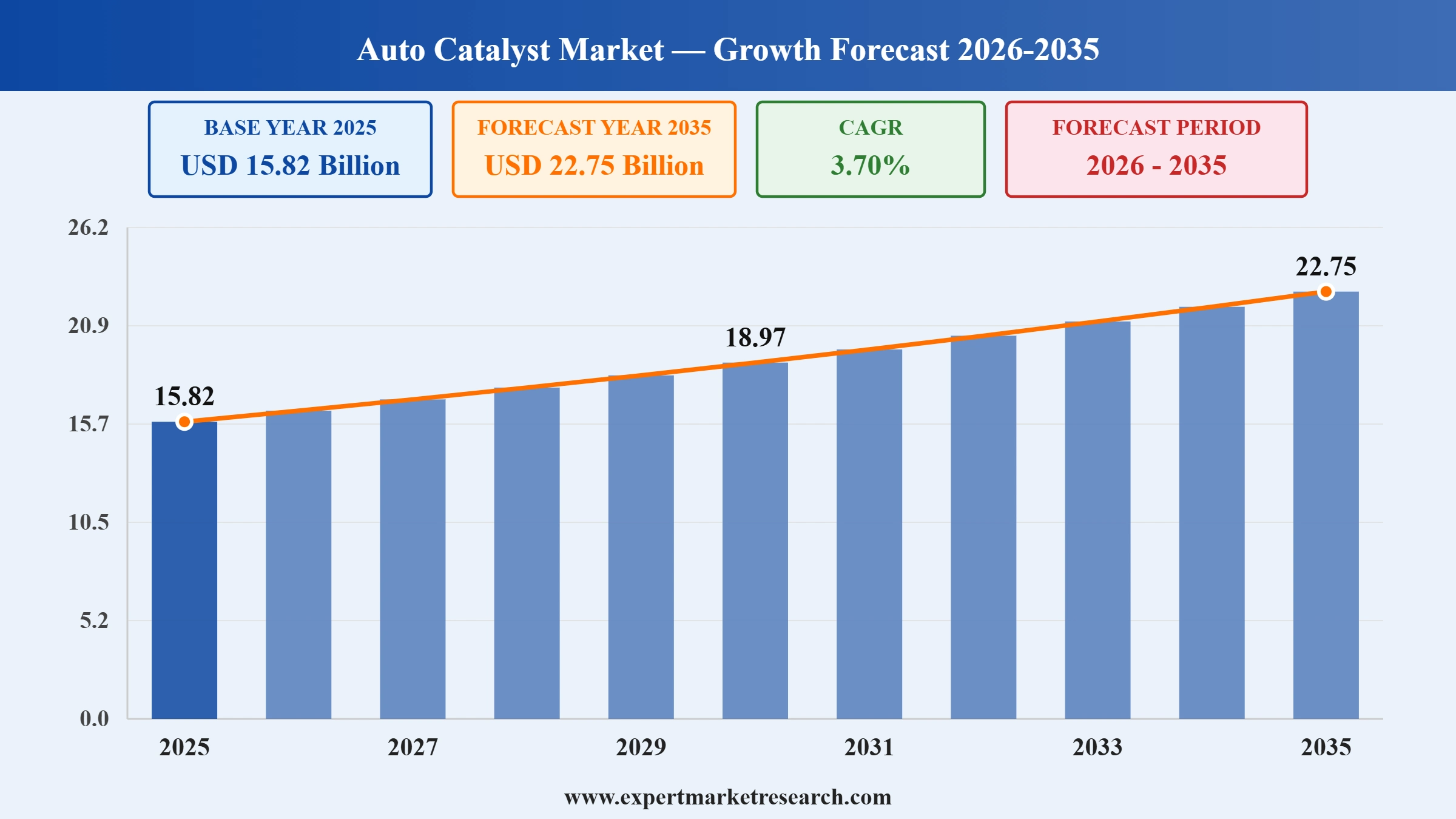
The global auto catalyst market was valued at USD 15.82 Billion in 2025. The market is expected to grow at a CAGR of 3.70% during the forecast period of 2026-2035 to reach a value of USD 22.75 Billion by 2035. The modernization of petroleum refineries and the increasing complexity of petrochemical production are major factors driving demand for advanced catalytic technologies.
Strict motor vehicle emission laws in key economies are compelling a high demand for sophisticated emission control technology. Governments are also imposing reduced concentrations of pollutants like nitrogen oxides, hydrocarbons, and carbon monoxide, thus welcoming the use of highly efficient catalytic material in the exhaust purification systems. In addition to this, new formulations of multi-component catalysts are moving towards higher conversion efficiency under different engine operating conditions, especially under modern downsizing of the engines. Such advances in technology comply with the tightening environmental expectations and maintain vehicle performance, which is contributing to the development of the auto catalyst market.
The use of catalysts is essential in hydrocracking, reforming, and fluid catalytic cracking processes to increase the reaction efficiency, optimum yield of products, and the ability to perform on heavier and non-conventional feedstock. With the constantly rising energy demand worldwide, refiners are working towards the enhancement of operations, the life cycle of catalysts, and the strict fuel quality standards.
In addition, the increased incorporation of refining and petrochemical processes is encouraging the use of high-performance catalysts capable of providing higher levels of selectivity and higher-value products, thereby offering new opportunities in the auto catalyst market. To meet these needs, catalyst producers are persistently producing new catalytic compositions that are aimed at maximizing refinery performance and enhancing processing economics. For instance, in August 2024, BASF introduced its Fourtiva fluidized catalytic cracking catalyst, which was designed to raise the yield of butylene and enhance the properties of high-octane gasoline blending components, and minimize coke during the refining stages.
Read more about this report - REQUEST FREE SAMPLE COPY IN PDF
Johnson Matthey completed its acquisition of CORMETECH, a U.S.-based manufacturer of emissions-control catalysts and catalyst products. The move will enhance the position of Johnson Matthey in the field of emissions-control technology, and increase its capacity to produce catalysts. CORMETECH, on the other hand, specializes in the provision of solutions for reducing emissions from both industrial sources and mobile sources, thus adding to the expertise of Johnson Matthey in the field of catalytic and platinum group metals. The acquisition strengthens consolidation and technical capabilities within the emissions-control catalyst supply chain, potentially expanding access to advanced catalyst technologies.
Umicore reported that its Catalysis business delivered revenues broadly in line with the previous year during the first half of 2026, while adjusted EBITDA increased 8% year-on-year. Volumes and sales of Automotive Catalysts have been fairly stable vis-à-vis H1 2025 and outperformed the overall automotive market. In addition, Umicore announced that their Catalysis strategy is continuing to work towards margin improvement within automotive catalysts as well as diversification in structurally attractive markets. The stable volume of catalysts despite lower global vehicle production clearly signals the demand for exhaust treatment systems.
Lifezone Metals announced the first production of platinum, palladium and rhodium from the U.S.-sourced spent automotive catalytic converters using its Hydromet Technology. Testing involving 1 tonne of spent autocatalyst material and 1,179 locked-cycle and pilot tests achieved recovery rates above 99% for platinum and palladium and 95% for rhodium. The company said the technology is designed to provide a lower-emission alternative to conventional smelting and refining. High PGM recovery rates support the development of more efficient recycling routes and strengthen the role of secondary materials in auto-catalyst supply, thus shaping the trends of the auto catalyst market.
BASF started operations at what it described as the world's first production plant for catalysts based on its X3D technology at Ludwigshafen, Germany. The system facilitates large-scale additive manufacturing of catalysts in customisable geometries. According to BASF, this technology has the ability to enhance active surface areas and reduce pressure drop and energy costs. It may be used in both precious and base metal catalysts as well as different support structures. Industrial-scale 3D catalyst manufacturing could accelerate customised catalyst development and improve material efficiency in advanced emissions-control applications.
The growth of hybrid vehicles is extending demand for auto catalysts even as battery-electric vehicle adoption increases. Unlike electric vehicles, hybrid cars still rely on internal combustion engines and hence continue needing exhaust after treatment equipment. However, Nornickel forecasts that automotive demand for palladium will fall by just 2%, standing at 7.4 million ounces by 2026, although a shift of consumers to hybrid cars may reduce that decline. Catalyst manufacturers are consequently developing systems capable of operating effectively across frequent engine starts, stops and changing exhaust temperatures. This is increasing demand for catalysts with rapid light-off and strong thermal durability.
Stricter real-driving emission requirements are accelerating development of catalysts that achieve high conversion efficiency during cold starts and transient driving conditions. A 2026 SAE technical paper evaluating gasoline catalyst substrates examined cell densities of up to 900 cells per square inch (cpsi) and wall thicknesses as low as 2.5 mil, compared with conventional 600 cpsi and 4.3 mil designs. These configurations are intended to improve gas contact and catalyst performance while reducing emissions during challenging operating conditions. The trend is pushing manufacturers towards thinner substrates, higher cell densities and improved washcoat formulations.
High platinum-group-metal prices are strengthening the economics of recovering PGMs from spent automotive catalysts. According to Johnson Matthey in May 2026, better PGM prices would be driving an improvement in autocatalyst recycling, while automotive recycling is forecast to make a comeback due to increased prices that would spur scrap collection of catalysts. It also anticipates that recoveries of rhodium from automotive scrap would rise to a four-year high in 2026, thus pushing the auto catalyst market growth. This is encouraging catalyst manufacturers and refiners to strengthen collection, refining and closed-loop recovery capabilities while reducing dependence on newly mined platinum, palladium and rhodium.
Volatility in PGM prices is encouraging catalyst manufacturers to optimize the mix and quantity of precious metals used in automotive after-treatment systems. The company, Johnson Matthey, expects palladium consumption to fall by 9% in 2026 due to reduced gasoline car manufacturing leading to contraction in automotive demand for the metal, where palladium might even experience a small surplus. Meanwhile, platinum continues to have a deficit. This is driving the interest in catalyst formulations which would optimize the use of platinum, palladium, and rhodium metals together. This supports greater investment in PGM thrifting, substitution and formulation optimisation.
Gasoline particulate filters (GPFs) are gaining importance as regulators place greater emphasis on ultrafine particulate emissions from gasoline direct-injection vehicles. According to Cataler, the introduction of GPFs is expected in Europe, China, and North America, and is working on systems where the filter itself acts as a three-way catalyst. However, catalyst manufacturers are working on integrating particulate filtration along with hydrocarbon, carbon monoxide, and nitrogen oxide conversion. The trend is creating opportunities for catalyst suppliers capable of combining filtration, catalytic coating and high-temperature durability within a single after-treatment platform.
The EMR’s report titled “Global Auto Catalyst Market Report and Forecast 2026-2035” offers a detailed analysis of the market based on the following segments:
Market Breakup by Application
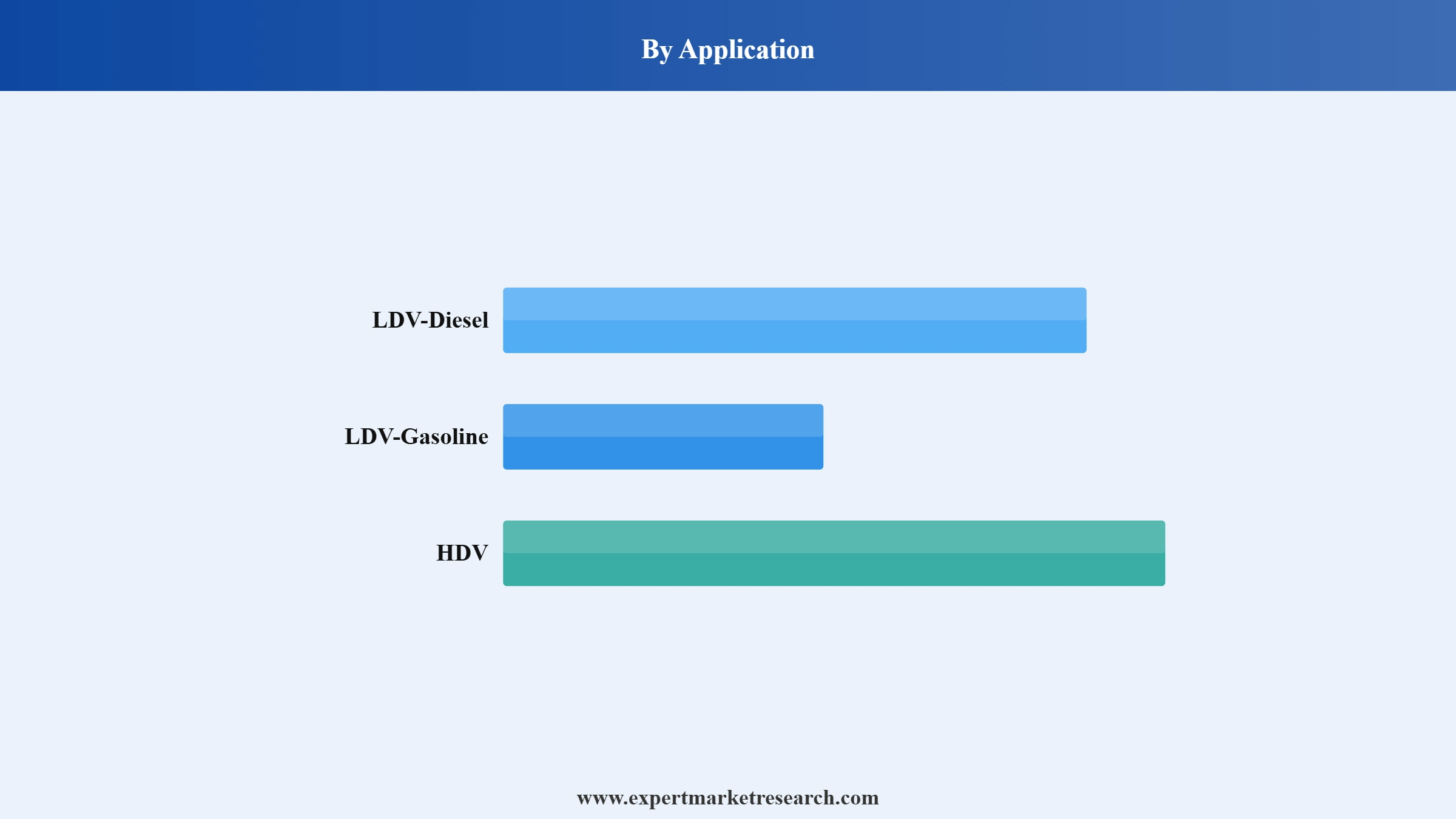
Key Insight: The auto catalyst market scope comprises LDV-Diesel, LDV-Gasoline, and HDV applications, which are guided by strict regulations and environmental requirements of emissions and performance of operations. The LDV-diesel-based catalysts are aimed at the nitrogen oxides and PM reduction, whereas the LDV-gasoline-based catalysts are aimed at the carbon monoxide and hydrocarbons reduction. High thermal stability, durability, and long service life of HDV catalysts are needed in heavy-load and long-haul service. Companies like Johnson Matthey and Umicore are working on selective catalytic reduction of diesel engines; BASF SE and Cataler Corporation are working on advanced three-way gasoline engine catalysts; and a number of players are improving the efficiency and durability of precious metals in HDV catalysts, all in support of the overall development of the market.
Market Breakup by Region
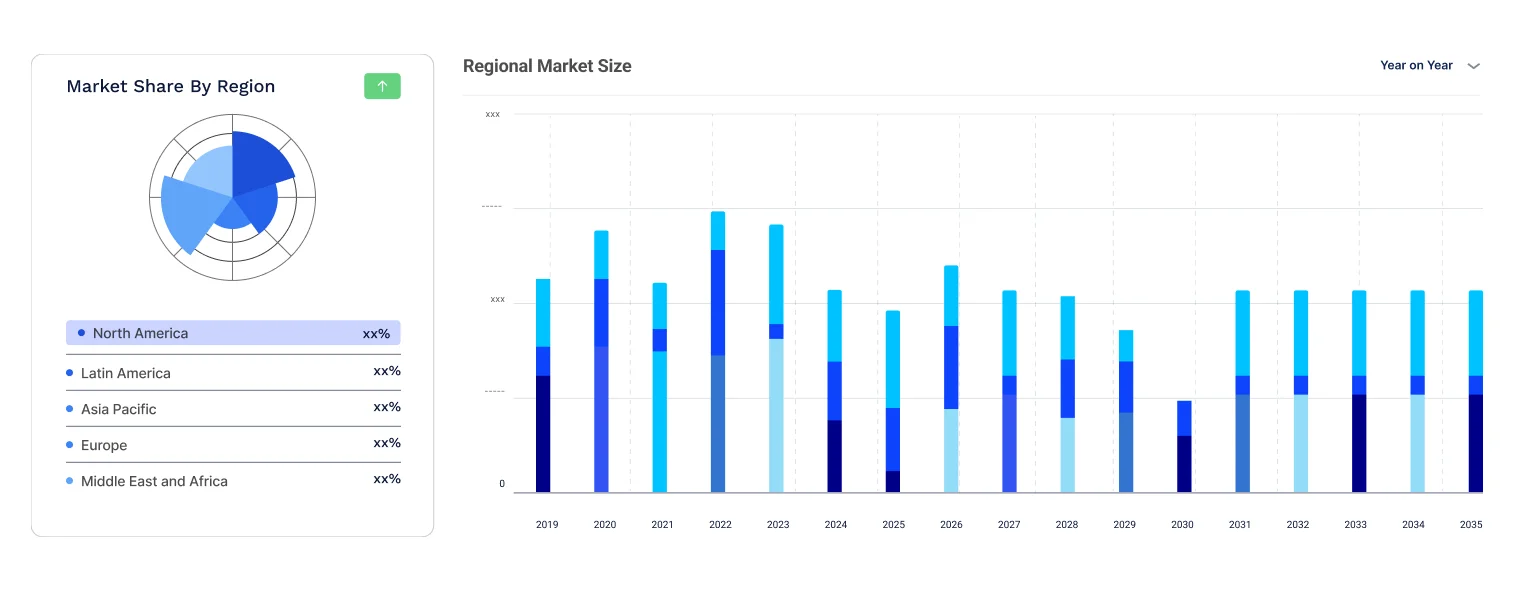
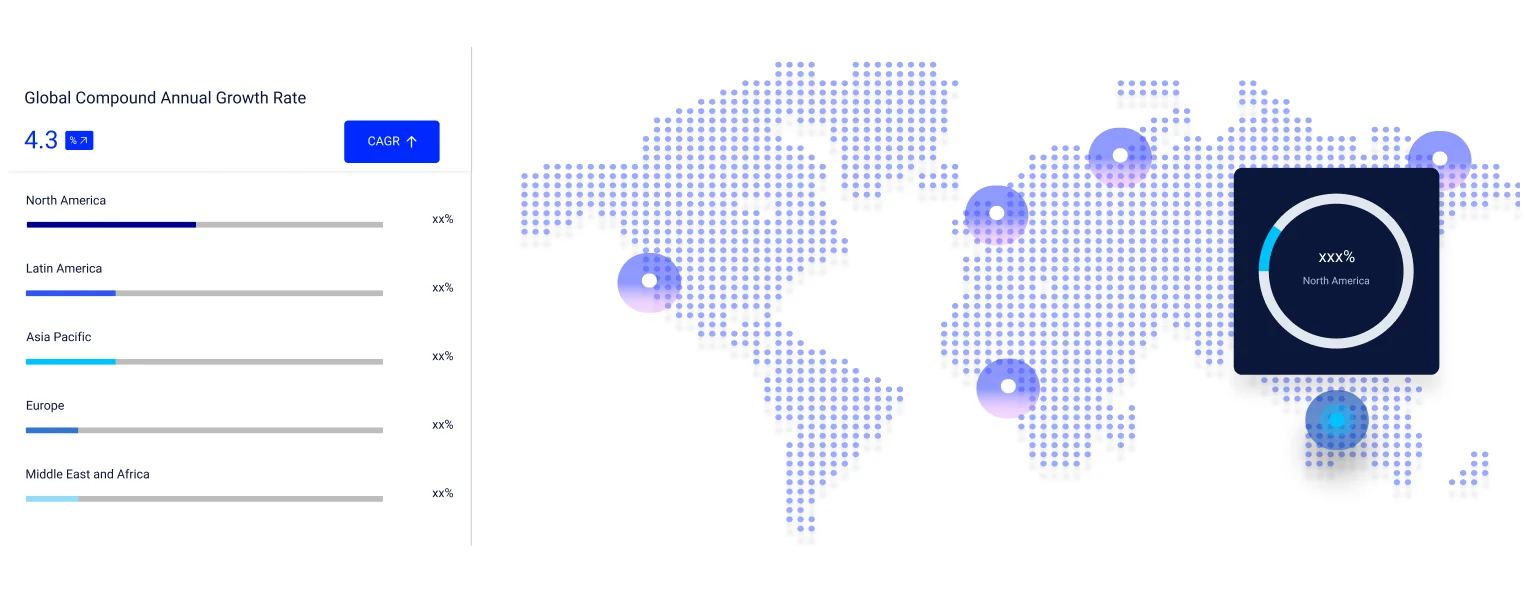
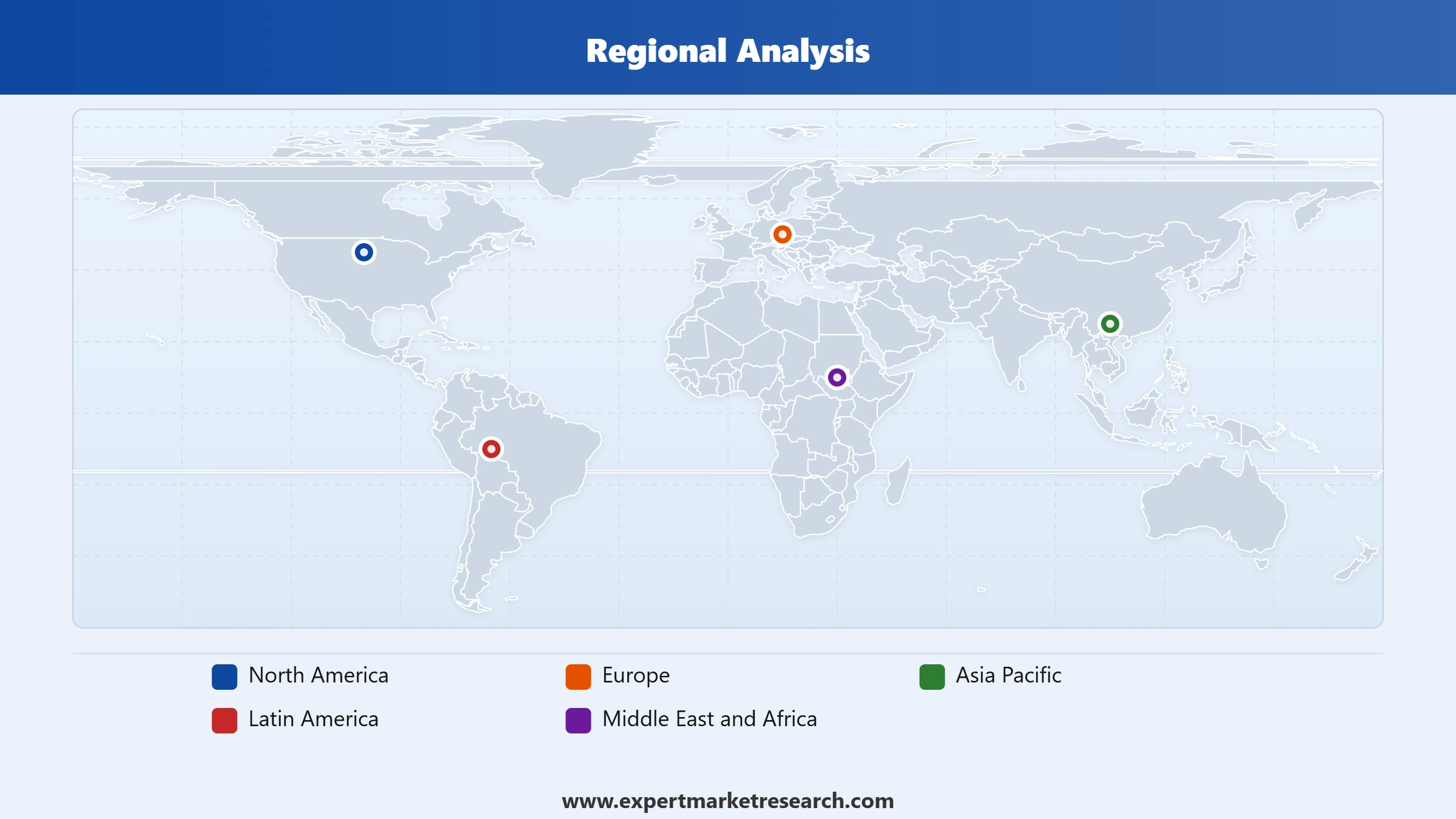
Key Insight: Regionally, the auto catalyst market landscape covers North America, Europe, Asia Pacific, Latin America, and the Middle East and Africa, which are determined by regional regulation, industrialization, and adoption of different types of vehicles. The strict adherence to emission standards and growth in hybrid and fuel-efficient automobile purchases are driving markets in North America and Europe. The Asia Pacific is also experiencing fast growth owing to increased car production, industrialization, and expanding automotive markets in China and India. The emerging markets with increased LDV and HDV demand are Latin America, the Middle East, and Africa. Companies such as BASF SE and Umicore focus on diesel and gasoline catalyst solutions in mature markets, while Evonik Industries and Cataler Corporation emphasize research and development and localized production in the Asia-Pacific region, collectively supporting long-term market growth.
Read more about this report - REQUEST FREE SAMPLE COPY IN PDF
By application, the LDV diesel category shows robust growth driven by strategic expansion and extensive research and development
The LDV diesel catalyst contributes significantly to the auto catalyst market revenue due to the increase in emission regulations and environmental standards that increase the demands of more efficient and cleaner diesel engines. Manufacturers are also looking at new technologies of catalysis that minimize nitrogen oxides and particulate matter and enhance fuel efficiency and engine operation. Localized research and development can help the company invest in high-performance diesel catalysts, and this can be achieved by investing in localized research and development that will allow the company to offer solutions to regional types of fuels and engine configurations. This, in turn, accelerates innovation and adoption of the new high-performance diesel catalysts, thereby boosting industry growth. In line with this pattern, in August 2024, BASF Catalysts India Private Limited opened a Research, Development, and Application (RD&A) laboratory in Chennai, which specializes in advanced diesel emission control catalysts.
Read more about this report - REQUEST FREE SAMPLE COPY IN PDF
In the meantime, the heavy-duty vehicle (HDV) auto catalyst market is witnessing a high growth rate due to strict emission control policies on commercial trucks and an increase in freight demand that has contributed to the consideration of sophisticated emission control technologies. The HDV catalysts should be able to provide high thermal stability, lifetime, and effective NOx and particulate reduction at extreme operating conditions. The companies are addressing these requirements through their investment in next-generation selective catalytic reduction (SCR) and diesel oxidation catalyst (DOC) technologies and the efficiency of precious metal usage.
By region, Asia Pacific dominates the market, driven by catalyst recycling and sustainable practices
The Asia Pacific auto catalyst market is developing with great momentum due to the increase in the volume of vehicles manufactured, the emission regulations, and the demand for cleaner fuels. To curb the use of virgin precious metals, manufacturers are focusing on sustainable technologies such as recycling of catalysts, local production, and optimization of supply chains. Infrastructure, technology, and efficiency of processes investments assure a consistent supply of high-quality catalytic materials, which can be used in both LDV and HDV. In line with this trend, Elemental Group inaugurated a used automotive catalytic converter recycling facility in India in February 2025 to recycle used catalytic converters, increasing its operations in the region and the availability of recycled material in the market.
Read more about this report - REQUEST FREE SAMPLE COPY IN PDF
Meanwhile, North America continues to account for a considerable share of the auto catalyst market driven by high regulatory requirements of emission control and a good base of automotive manufacturing that promotes wider implementation of new technologies for controlling emissions. According to the environmental policies, including the United States EPA Tier 3 Vehicle Emission and Fuel Standards Program, the automakers must reduce the emission of NOx, CO, and hydrocarbons significantly with the use of high-performance catalytic solutions by both light- and heavy-duty vehicles. Aligned with the growing production of hybrid and fuel-efficient vehicles, companies are investing in advanced catalyst technologies and expanding production capacities to meet evolving regulatory and performance requirements, thereby driving increased demand in the regional industry.
Major auto catalyst market players are placing more emphasis on technological development, strategic partnerships, and capacity development in their attempt to consolidate their market position. Companies are investing in research and development to create novel catalytic compositions that can improve vehicle performance and meet new emission regulations. Moreover, alliances with automotive suppliers and sustainable investment in catalyst technology are also facilitating supplier readiness to follow the move to cleaner mobility solutions, which improves the portfolio of products and increases competitiveness within automotive supply chains on a global basis.
Another trend in the market is that manufacturers are focusing on is geographical expansion, optimization of processes, and sustainable sourcing of materials to solidify long-term market positioning. With tightening emission regulations worldwide, catalyst development is increasingly focused on longer lifespans, reduced reliance on scarce precious metals, and improved recyclability. Moreover, many auto catalyst companies are proliferating production and developing production technologies to satisfy increasing demand by automotive companies.
BASF SE is a chemical multinational company operating in the auto catalyst market, that was established in 1865 and is based in Ludwigshafen, Germany. The firm comes up with new technologies of catalysts and materials utilized in automotive, refining, and chemical sectors.
Umicore S.A. is a Belgian-based company that produces materials technology and was established in 1805. It is based in Brussels, Belgium. The company primarily focuses on clean mobility, catalytic emission control systems, and sustainable materials.
Haldor Topsoe A/S is a chemical technology department that was established in 1940 and is based in Lyngby, Denmark. The company specializes in catalyst development and process technologies in refining, chemicals, and sustainable energy solutions, and holds a prominent position in the global auto catalyst market.
Cataler Corporation is a manufacturer of automotive catalysts that was established in 1967 and is based in Shizuoka, Japan. The company also comes up with emission control catalysts and automotive exhaust treatment system materials.
*Please note that this is only a partial list; the complete list of key players is available in the full report. Additionally, the list of key players can be customized to better suit your needs.*
Other key players in the market include Johnson Matthey, Corning Incorporated, Clariant Corporation, Tenneco Inc., Topsoe A/S, CDTi Advanced Materials Inc, and Cummins Inc., among others.
Explore the latest trends shaping the global auto catalyst market 2026-2035 with our in-depth report. Gain strategic insights, future forecasts, and key market developments that can help you stay competitive. Download a free sample report or contact our team for customized consultation on global auto catalyst market trends 2026.


Upto 15% Off
USD
$2499 $2249
$3999 $3599
$4999 $4249
$5999 $5099


*While we strive to always give you current and accurate information, the numbers depicted on the website are indicative and may differ from the actual numbers in the main report. At Expert Market Research, we aim to bring you the latest insights and trends in the market. Using our analyses and forecasts, stakeholders can understand the market dynamics, navigate challenges, and capitalize on opportunities to make data-driven strategic decisions.*
In 2025, the global auto catalyst market reached an approximate value of USD 15.82 Billion.
The market is projected to grow at a CAGR of 3.70% between 2026 and 2035.
The market is estimated to witness a healthy growth in the forecast period of 2026-2035, reaching around USD 22.75 Billion by 2035.
Key strategies driving the market include investments in advanced catalyst technologies, strategic partnerships with automotive manufacturers, capacity expansions, precious metal recycling initiatives, and development of catalysts supporting stricter emission standards.
Rising number of diseases owing to poor air quality, surge in demand for personal vehicles, and technological advancements in auto catalysts are the key trends of the market.
The major regional markets for auto catalysts are North America, Latin America, the Asia Pacific, Europe, and the Middle East and Africa.
The significant applications of auto catalysts include LDV-diesel, LDV-gasoline, and HDV.
The key players in the market include BASF SE, Umicore S.A., Haldor Topsoe A/S, Cataler Corporation, Johnson Matthey, Corning Incorporated, Clariant Corporation, Tenneco Inc., Topsoe A/S, CDTi Advanced Materials Inc, and Cummins Inc., among others.
The major challenges that the global auto catalyst market players face include volatility in precious metal prices, stringent regulatory compliance requirements, supply chain disruptions for critical raw materials, and the gradual transition toward electric vehicles.
Explore our key highlights of the report and gain a concise overview of key findings, trends, and actionable insights that will empower your strategic decisions.
| REPORT FEATURES | DETAILS |
| Base Year | 2025 |
| Historical Period | 2019-2025 |
| Forecast Period | 2026-2035 |
| Scope of the Report |
Historical and Forecast Trends, Industry Drivers and Constraints, Historical and Forecast Market Analysis by Segment:
|
| Breakup by Application |
|
| Breakup by Region |
|
| Market Dynamics |
|
| Competitive Landscape |
|
| Companies Covered |
|
| Report Price and Purchase Option | Explore our purchase options that are best suited to your resources and industry needs. |
| Delivery Format | Delivered as an attached PDF and Excel through email, with an option of receiving an editable PPT, according to the purchase option. |
Datasheet
One User
USD 2,499
USD 2,249
tax inclusive*
Single User License
One User
USD 3,999
USD 3,599
tax inclusive*
Five User License
Five User
USD 4,999
USD 4,249
tax inclusive*
Corporate License
Unlimited Users
USD 5,999
USD 5,099
tax inclusive*
*Please note that the prices mentioned below are starting prices for each bundle type. Kindly contact our team for further details.*
Flash Bundle
Small Business Bundle
Growth Bundle
Enterprise Bundle
*Please note that the prices mentioned below are starting prices for each bundle type. Kindly contact our team for further details.*
Flash Bundle
Number of Reports: 3
20%
tax inclusive*
Small Business Bundle
Number of Reports: 5
25%
tax inclusive*
Growth Bundle
Number of Reports: 8
30%
tax inclusive*
Enterprise Bundle
Number of Reports: 10
35%
tax inclusive*
How To Order

Select License Type
Choose the right license for your needs and access rights.

Click on ‘Buy Now’
Add the report to your cart with one click and proceed to register.

Select Mode of Payment
Choose a payment option for a secure checkout. You will be redirected accordingly.
Strategic Solutions for Informed Decision-Making
Gain insights to stay ahead and seize opportunities.

Get insights & trends for a competitive edge.

Track prices with detailed trend reports.

Analyse trade data for supply chain insights.

Leverage cost reports for smart savings

Enhance supply chain with partnerships.

Connect For More Information
Our expert team of analysts will offer full support and resolve any queries regarding the report, before and after the purchase.
Our expert team of analysts will offer full support and resolve any queries regarding the report, before and after the purchase.
We employ meticulous research methods, blending advanced analytics and expert insights to deliver accurate, actionable industry intelligence, staying ahead of competitors.
Our skilled analysts offer unparalleled competitive advantage with detailed insights on current and emerging markets, ensuring your strategic edge.
We offer an in-depth yet simplified presentation of industry insights and analysis to meet your specific requirements effectively.




