

Consumer Insights
Uncover trends and behaviors shaping consumer choices today
Procurement Insights
Optimize your sourcing strategy with key market data
Industry Stats
Stay ahead with the latest trends and market analysis.
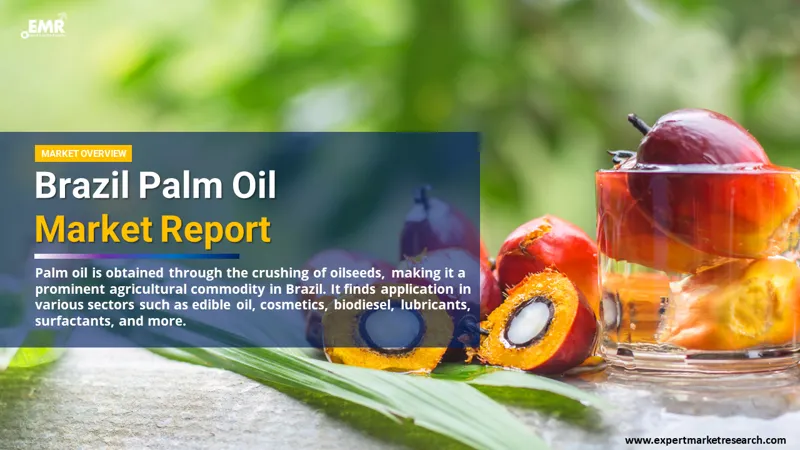
The Brazil palm oil market reached a volume of 1089.78 Kilo Tons in 2025 and is projected to expand at a CAGR of 6.00% through 2035. The market is further expected to achieve a volume of 1951.63 Kilo Tons by 2035. The expansion of the domestic refining capacity is facilitating more cooperation among food processors, cosmetics producers, and plantations in terms of sourcing.
According to USDA Foreign Agricultural Service, the April 2026 Oilseeds World Markets and Trade circular detailed firming Brazilian vegetable oil prices, with palm oil tracking global benchmarks set by Indonesian and Malaysian production. The report highlighted Brazil's continued reliance on imports to balance domestic edible oil demand, alongside steady output growth from oil-palm cultivation concentrated in Pará state.
As covered by Valor International, Brazil advanced sustainability frameworks for Amazon palm oil cultivation in March 2026, reinforcing traceability and legal-compliance requirements for downstream buyers. The federal program supports producers like Agropalma and Brasil BioFuels in maintaining NDPE-aligned supply chains, addressing reputational risk and unlocking access to certification-sensitive export markets in Europe.
An increase in institutional demand for processed foods is contributing to the Brazil palm oil market momentum. The demand for specialty fractions of palm oil for stability purposes by Brazil’s bakery industry is also increasing. Environmental monitoring, localized refining operations, and vertical integration of supply chains are further boosting export confidence and innovation.
The Brazil palm oil market is gradually witnessing modernization of the supply chain and downstream product diversification. The most significant changes involved the efforts of Agropalma in developing traceable products and refining-linked sustainability systems to sustain competitive export position under greater regulatory pressure. Despite Brazil remaining a lesser palm oil producer than Indonesia and Malaysia, Pará stands out as the country's dominant producer, accounting for almost 84% of production volume. Such dominance of one region is necessitating improvements in logistics and use of waste among processors, refiners, and suppliers of branded food products. Rather than focusing on volume of raw oil alone, companies are focusing on producing value-added products such as refined oils, specialty fats, and oleochemicals.
Trends involving structural transformation in the food processing industry, cosmetics manufacture, and demand from industrial users drive development in the Brazil palm oil market. For example, in February 2023, Palmless launched sustainable beauty oil using yeast-based Torula oil, reducing palm-driven deforestation impacts in cosmetics. Refiners are further positioning their product ranges to cater to the demand for certified and differentiated palm oil fractions required for bakery fats, confectionery blends, soaps, and personal care products. Large-scale processors are making investments to develop traceability technologies and monitoring deforestation to sustain exports as buyers become stricter with requirements regarding environmental standards.
Compound Annual Growth Rate
6%
Value in Kilo Tons
2026-2035
Read more about this report - REQUEST FREE SAMPLE COPY IN PDF
USD 1.5 billion was raised by Acelen Renewables in favor of sustainable aviation fuel manufacturing utilizing renewable feedstock integration involving palm-based renewable infrastructure in Brazil. Such developments create opportunities for firms in terms of developing more partnerships for biofuel feedstock, refining, and sustainable agricultural operations, boosting the Brazil palm oil market value.
Industry leaders in Brazil emphasized opportunities in the expansion of palm cultivation that help in promoting sustainable agriculture, renewable energy production, and agribusiness developments. Such developments encourage firms to invest in sustainable palm plantation, improved logistics, and other industrial operations in Brazil.
COFCO managed to establish commodity purchasing pacts that will enhance Brazil's palm oil exports, trade relationships in agriculture, and global supply chain expansion. Such developments create opportunities for businesses in the Brazil palm oil market to improve their export capacity, expand agricultural partnerships, and enhance palm oil distribution networks around the world.
Renewable fuel activities in Brazil came under scrutiny due to oil palm cultivation in deforested Amazonia lands associated with SAF projects. Such events encourage firms to practice transparency through sustainable planting and environmental practices in Brazil’s palm oil sector.
In the Brazil palm oil market, traceability-driven production represents an important area of future growth. Traceable production is becoming more advanced through improved satellite monitoring, plantation mapping, and sustainability certification to gain industrial-scale procurement commitments. Producers including Agropalma and other local companies are relying on traceability in production to satisfy food processing customers and cosmetics clients due to heightened demand for ESG procurement. Similarly, in November 2025, SD Guthrie promoted sustainable palm oil adoption, emphasizing climate-focused land efficiency, responsible cultivation practices, and global food security priorities. Refinement processes are easier for refineries located within close proximity of the Pará plantation ecosystem.
Companies in the Brazil palm oil market are now focusing on downstream fractionation of value-added specialty fats rather than crude oil production alone. Fractionation of fats is required by the food processors for specialized fats used in baking shortening, confection coatings, margarine formulation, and fry stability products. This trend is driven by increased development of processed food production domestically, resulting in sustained procurement demand. Companies are trying to minimize import dependency by improving refinery processes. For example, in May 2026, Yum! Brands strengthened sustainable palm oil sourcing through strategic partnerships, supporting deforestation reduction and responsible agricultural supply chains.
The market observes a growing interest in the utilization of palm oil for the development of oleochemicals and industrial manufacturing in Brazil. The demand from soap producers, surfactant, detergent, lubricant, and cosmetic industries for reliable and consistent raw material of palm origin is encouraging them to engage in backward integration of plantation, refinery, and consumer operations. The use of local sources minimizes the volatility in freight as a result of disruption in overseas shipments, widening the Brazil palm oil market scope. Storage and contract systems are improved to increase consistency. Personal care products, emulsions, and cleaners are increasingly utilizing palm derivatives. Diversification of the industry is being sought instead of a reliance solely on foods. For example, in November 2025, Brazilian palm oil producer Agropalma planned biodiesel production restart, supporting Brazil’s expanding renewable fuel and bioenergy infrastructure.
Infrastructure enhancement is an emerging trend in the Brazil palm oil market. Producers are focusing on improving their refineries and systems of storage and transport so as to minimize wastage and maximize shipment speed. Increased concentration of production in Para is leading to logistical challenges that must be overcome through modernization of handling facilities. Improved port facilities and local storage are enabling exporters to improve their responsiveness to international buyers. In May 2025, Riograndense Refinery produced Brazil’s first cellulosic-content fuels, advancing renewable refining technologies and low-emission biofuel innovation.
The Brazil palm oil market is increasingly positioning itself as a low-risk and sustainable source for international trade, particularly in markets with stringent environmental and sustainability requirements. In contrast to the highly monitored supply chain in Asia, the Brazilian industry highlights regulatory approaches to land use, plantation monitoring, and environment management. This attracts foreign processors and other buyers who seek reputational security. Aligning with this trend, in December 2024, BASF planned macauba oil procurement from Brazil, supporting sustainable alternatives reducing dependence on conventional palm oil feedstocks.
Read more about this report - REQUEST FREE SAMPLE COPY IN PDF
The Expert Market Research's report titled “Brazil Palm Oil Market Report and Forecast 2026-2035” offers a detailed analysis of the market based on the following segments:
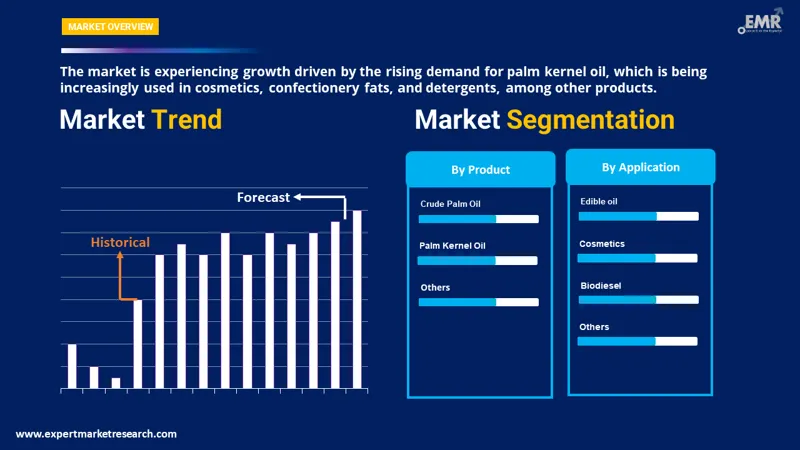
Market Breakup by Product
Key Insight: Crude palm oil continues to lead the overall Brazil palm oil market growth in terms of commercial importance due to its flexibility when it comes to refining and wide application prospects across industries. There is an increasing popularity of palm kernel oil owing to its use in specialty chemicals and cosmetics. The palm kernel cake can be used for feeding because of protein utilization and low cost. Other products include refined oils and fractions.
Market Breakup by Application
Key Insight: As per the Brazil palm oil market report, edible oil emerges to be the major application owing to the need for stability and versatility on behalf of the food industry. The cosmetics industry benefits from the emollients and texturizers. The biodiesel industry continues to be pertinent because of renewable blending and energy diversification in the industrial sector. The lubricants sector is growing because of the unique requirements of industrial lubricants that necessitate the use of plant-based materials. The surfactant segment is gaining momentum due to detergents and other chemicals manufacturing.
Read more about this report - REQUEST FREE SAMPLE COPY IN PDF
By product, crude palm oil accounts for the largest share of the market due to refining flexibility
Crude palm oil continues to be the leading subcategory in the Brazil palm oil market since it provides the base product for numerous end-use industries such as edible oils, oleochemicals, and specialty fats. The processors in Brazil prefer crude palm oil since they have greater refining versatility and economic scalability. Local refiners are also tailoring their production to produce bakery fats, frying oil, and industrial derivatives. Moreover, plantation-connected processors are becoming more efficient in extracting and storing crude palm oil, ensuring its continued importance in vertically integrated production and export-led supply chains. In August 2025, Indian buyers imported discounted palm oil cargoes from Latin America, diversifying sourcing strategies amid global surplus supplies.
Palm kernel oil continues to witness rapid growth in the Brazil palm oil market due to increased demand from end-use segments such as surfactants, cosmetics, detergents, and personal care formulations. High lauric oil content in palm kernel oil makes the product appealing from a commercial perspective owing to its chemical convertibility and value as an industrial input. Rather than processing the product broadly in commodity form, Brazil-based manufacturers are concentrating on value-added derivatives. Palm kernel oil is also useful in providing secure feedstock sources to local industry consumers.
By application, the edible oil category captures a substantial share of the market revenue due to processing demand
Edible oil is the primary application area that is generating Brazil palm oil market revenue to a significant extent, due to the fact that palm oil provides a key feedstock in food processing, frying, bakery fat, margarine production, and shelf stable packaging products. Brazilian food processors use the palm oil feedstock due to its stability, resistance to oxidation, and consistent formulation process. Refiners aim to produce differentiated fractions that ensure food grade specifications. The availability of the supply through local processing ensures strong performance in this category. Strong relationships between refiners and food producers continue to make this subcategory relevant.
The surfactant sub-segment is developing at a rapid pace owing to the increasing incorporation of palm oil-based materials into detergents, emulsifying agents, soaps, cleansers, and industrial chemicals. Palm oil-based derivatives are preferred for their consistent chemical properties and scalability in their transformation process. Industrial processors in Brazil are ensuring greater integration among refiners and chemical producers. Commercial improvements through refined material optimization and value adding processing are being developed by companies, stimulating the Brazil palm oil market penetration. In October 2025, Sasol launched an oil-based surfactant, enabling sustainable chemical solutions for cleaning and care industries.
Read more about this report - REQUEST FREE SAMPLE COPY IN PDF
Competition among players in the market is increasingly focused on vertical integration, enhanced traceability, downstream product diversification, and sustainable differentiation. Leading Brazil palm oil market players are enhancing their plantation to process management capabilities to minimize inefficiencies and enhance supply security. Refineries are concentrating more on specialty fats, oleochemicals, palm oils for foods, and industrial feedstock in place of relying merely on oil volumes.
Areas of interest for majority of the Brazil palm oil companies include certified exports, local manufacture of surfactants, and more specialized cosmetic ingredients. Environmental compliance systems, waste utilization, and logistics are other aspects of focus among firms. Collaborations with food processors, biodiesel consumers, and chemical producers assist in procurement assurance and premium branding.
Bunge Limited, which was formed in 1818 and is headquartered in Missouri, United States, helps in palm processing activities through its knowledge of bulk agricultural supplies, edible oil refinery, logistics management, and industrial ingredient supply chain. Bunge Limited focuses on integrated sourcing, refining flexibility, and oil downstream commercialization for the benefit of food processors and industrial consumers.
Formed in 1902 and located in Illinois, United States, Archer-Daniels-Midland Company uses its agribusiness processing and ingredients manufacturing strengths to cater to palm downstream industries through edible oils, specialty ingredients, industrial processing, and supply chain improvement. The company leverages bulk procurement networks and agricultural transformation systems to position itself in the market.
AGROPALMA, formed in 1982 and located in Pará, Brazil, is one of the top producers of Brazilian palms with an emphasis on tracking its plantation activities, sustainable production practices, and operations related to refining. This company is involved in providing food, industrial, and cosmetic industries with palm derivatives using both cultivation and processing processes. This company's strategic orientation involves a strong focus on environmental sustainability and high-quality palm derivatives.
Belem Bioenergia Brasil was founded in 2011 and is based in Pará, Brazil. This company has been concentrating on bioenergy-related palm ventures and cultivation of plantations as feedstock. It also offers sustainable and renewable energy sources and biomass-related opportunities for localized processing.
Other key players in the market include Denpasa – Dendê do Pará S/A., Brasil Biofuels, Agroindustrial Palmasa S/A, and Marborges Agroindústria S.A., among others.
*Please note that this is only a partial list; the complete list of key players is available in the full report. Additionally, the list of key players can be customized to better suit your needs.*
Unlock the latest insights with our Brazil palm oil market trends 2026 report. Discover regional growth patterns, consumer preferences, and key industry players. Stay ahead of competition with trusted data and expert analysis. Download your free sample report today and drive informed decisions in the market.


Upto 15% Off
USD
$2499 $2249
$3999 $3599
$4999 $4249
$5999 $5099


*While we strive to always give you current and accurate information, the numbers depicted on the website are indicative and may differ from the actual numbers in the main report. At Expert Market Research, we aim to bring you the latest insights and trends in the market. Using our analyses and forecasts, stakeholders can understand the market dynamics, navigate challenges, and capitalize on opportunities to make data-driven strategic decisions.*
In 2025, the Brazil palm oil market attained a volume of 1089.78 Kilo Tons.
The market is projected to grow at a CAGR of 6.00% during the forecast period of 2026-2035.
The major drivers of the industry, such as the growing awareness regarding its health benefits, low cost, and rising usage of the product in the food industry, are expected to aid the market growth.
The key market trend guiding the industry growth includes the rising demand for palm kernel oil owing to its increasing use in cosmetics, confectionery fats, and detergents.
The major products within the industry are crude palm oil, palm kernel oil, palm kernel cake, and palm kernel oilseed.
The application sectors for the product in the market include edible oil, cosmetics, biodiesel, lubricants and surfactants, among others.
The major players in the industry are Bunge Limited, The Archer Daniels Midland Company (ADM) [ADM (NYSE)], Agropalma, BELEM BIOENERGIA BRASIL S.A., Denpasa – Dendê do Pará S/A., Marborges Agroindústria S.A., Agroindustrial Palmasa S/A, Brasil Biofuels, Others.
Explore our key highlights of the report and gain a concise overview of key findings, trends, and actionable insights that will empower your strategic decisions.
|
REPORT FEATURES |
DETAILS |
| Base Year | 2025 |
| Historical Period | 2019-2025 |
| Forecast Period | 2026-2035 |
| Scope of the Report |
Historical and Forecast Trends, Industry Drivers and Constraints, Historical and Forecast Market Analysis by Segment:
|
| Breakup by Product |
|
| Breakup by Application |
|
| Market Dynamics |
|
| Competitive Landscape |
|
| Companies Covered |
|
| Report Price and Purchase Option | Explore our purchase options that are best suited to your resources and industry needs. |
| Delivery Format | Delivered as an attached PDF and Excel through email, with an option of receiving an editable PPT, according to the purchase option. |
Datasheet
One User
USD 2,499
USD 2,249
tax inclusive*
Single User License
One User
USD 3,999
USD 3,599
tax inclusive*
Five User License
Five User
USD 4,999
USD 4,249
tax inclusive*
Corporate License
Unlimited Users
USD 5,999
USD 5,099
tax inclusive*
*Please note that the prices mentioned below are starting prices for each bundle type. Kindly contact our team for further details.*
Flash Bundle
Small Business Bundle
Growth Bundle
Enterprise Bundle
*Please note that the prices mentioned below are starting prices for each bundle type. Kindly contact our team for further details.*
Flash Bundle
Number of Reports: 3
20%
tax inclusive*
Small Business Bundle
Number of Reports: 5
25%
tax inclusive*
Growth Bundle
Number of Reports: 8
30%
tax inclusive*
Enterprise Bundle
Number of Reports: 10
35%
tax inclusive*
How To Order

Select License Type
Choose the right license for your needs and access rights.

Click on ‘Buy Now’
Add the report to your cart with one click and proceed to register.

Select Mode of Payment
Choose a payment option for a secure checkout. You will be redirected accordingly.
Strategic Solutions for Informed Decision-Making
Gain insights to stay ahead and seize opportunities.

Get insights & trends for a competitive edge.

Track prices with detailed trend reports.

Analyse trade data for supply chain insights.

Leverage cost reports for smart savings

Enhance supply chain with partnerships.

Connect For More Information
Our expert team of analysts will offer full support and resolve any queries regarding the report, before and after the purchase.
Our expert team of analysts will offer full support and resolve any queries regarding the report, before and after the purchase.
We employ meticulous research methods, blending advanced analytics and expert insights to deliver accurate, actionable industry intelligence, staying ahead of competitors.
Our skilled analysts offer unparalleled competitive advantage with detailed insights on current and emerging markets, ensuring your strategic edge.
We offer an in-depth yet simplified presentation of industry insights and analysis to meet your specific requirements effectively.




