

Consumer Insights
Uncover trends and behaviors shaping consumer choices today
Procurement Insights
Optimize your sourcing strategy with key market data
Industry Stats
Stay ahead with the latest trends and market analysis.
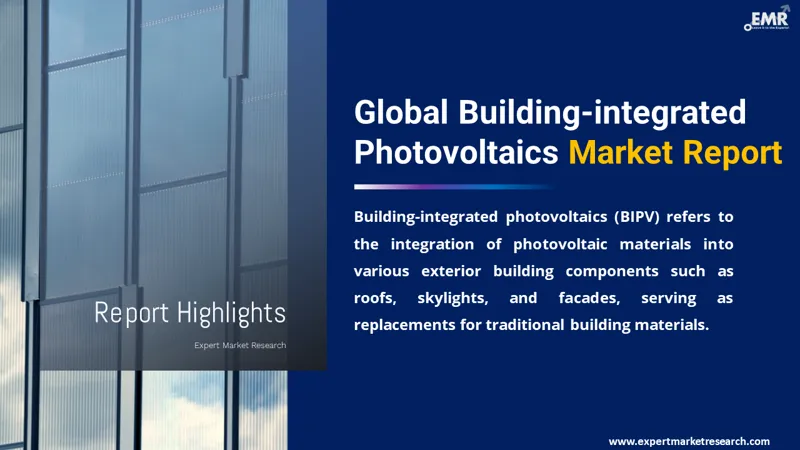
The global building-integrated photovoltaics market was valued at USD 28.85 Billion in 2025. The market is expected to grow at a CAGR of 19.20% during the forecast period of 2026-2035 to reach a value of USD 167.07 Billion by 2035. The market is witnessing strong growth driven by continuous advancements in module design that enable photovoltaic systems to function as direct substitutes for conventional construction materials.
The global building-integrated photovoltaics market is set to witness robust growth driven by the rising usage of solar technology in building components such as façades, roofs, and glass in order to enable energy production and generate electricity from the same while still preserving architectural appeal. Net-zero energy buildings are growing in popularity, as are sustainability standards, which are prompting the increased adoption of BIPVs in the construction sector. In addition, advancements in photovoltaic material efficiency and transparent solar cell technology are enabling greater energy generation capacity per unit area, thus aiding in BIPV applications in urban infrastructure.
The producers of BIPVs are focusing on designing lightweight and aesthetically flexible BIPVs that can be readily fitted into façades, roofs, and skylights without impacting the architectural appeal. This not only leads to increased electricity generation capacity per square meter but also helps to address design constraints in urban infrastructure, thereby boosting demand in the building-integrated photovoltaics market. Therefore, the scope of BIPV technology is expanding to include commercial and institutional buildings.
Moreover, advancements in cell technology including half-cut cells and N-type structures are also contributing to higher efficiencies and better performance longevity, adding to the feasibility of solar building systems. For example, 3S Swiss Solar Solutions launched the TeraSlate Half-Cell BIPV modules in October 2023. These are aimed at being incorporated into buildings’ roofs and facades and represent an improvement in solar building materials.
Compound Annual Growth Rate
19.2%
Value in USD Billion
2026-2035
Read more about this report - REQUEST FREE SAMPLE COPY IN PDF
Antaisolar introduced an integrated solar roof solution in China, promoting the application of solar roofs in buildings. The global building-integrated photovoltaics market receives positive support from such developments, compelling players to hasten the development of effective building solar roof technology.
European Energy initiated work on a 225MW agrivoltaics plant in Italy. The building-integrated photovoltaics market receives indirect support as such initiatives encourage the adoption of different solar integration approaches and compel market players to adopt various renewable energy uses.
Wacker introduced new material innovations which improve the efficiency and performance of photovoltaic products. The market is being favored through such innovation as it encourages players to improve the production of solar materials with enhanced performance capacity for use in building-integrated applications.
Microquanta successfully completed a rooftop perovskite solar project which highlights the future deployment of photovoltaic technology. Such developments encourage players to introduce innovative perovskite solutions in the building-integrated photovoltaics industry to boost efficiency.
The building-integrated photovoltaics market is witnessing strong momentum because of increased usage on a large scale that provides a proven track record of performance in actual infrastructure. Businesses and industries are implementing integrated solar systems that will help lower greenhouse gases emissions and energy expenses and provide sustainable solutions. This trend might help reduce risks associated with system integration by ensuring performance is tested across a wide range of operating conditions. Aligning with this shift, in October 2023, SP Group successfully implemented its first BIPV solution in China in the Guangdong Lingxiao plant through a 4 MWp system.
The building-integrated photovoltaics market observes significant growth owing to the use of new cell technologies by companies in developing their architectural solar solutions, which enable an increase in power generation per unit surface area. Technologies like N-type cells and TOPCon architecture allow increasing the efficiency and durability of solar installations, which is significant when using BIPV on space-limited urban structures. This trend is especially crucial for business infrastructures, in which case maximizing power generated per façade or roof square footage is essential. GCL System Integration presented its N-type TOPCon BIPV modules at PV EXPO 2023 in March 2023.
The global market is witnessing strong adoption of solar facades as architectural glass evolves from a passive building component into an active energy-generating solution. Solar glass glazing technology is being used in the design of building envelopes, incorporating insulation and aesthetics alongside energy production in a single material solution. This is making it possible for skyscrapers to produce their own energy without taking up any extra land area. In May 2023, ClearVue PV announced new versions of its insulated glazing units and solar facades, reshaping the building-integrated photovoltaics market dynamics.
The market is gaining momentum as governments, developers, and urban planners increasingly integrate renewable energy solutions into net-zero building projects and smart city developments. BIPV systems are being widely adopted in façades, roofs, and skylights to combine energy generation with architectural functionality. This building-integrated photovoltaics market trend helps to reduce carbon emissions and improve energy efficiency in urban infrastructure. Rising green building regulations and sustainability targets are further accelerating this trend. A notable example is Onyx Solar’s launch and expansion of advanced photovoltaic glass solutions for energy-efficient buildings in April 2026. Such developments support smart city projects and zero-emission infrastructure.
The global market is getting benefited from innovations made in energy management, power electronics, and automation technologies that are increasing the efficiency of solar integrated structures. The growing complexity of BIPV installations on rooftops and facades requires the use of intelligent inverters and smart controls that optimize the distribution of energy flow through the grid and energy storage systems, boosting the building-integrated photovoltaics industry growth. In May 2026, INVT showcased its latest automation and energy management innovations at its annual Goa Strategy Summit, highlighting solutions compatible with photovoltaic applications across renewable energy and industrial sectors.
Read more about this report - REQUEST FREE SAMPLE COPY IN PDF
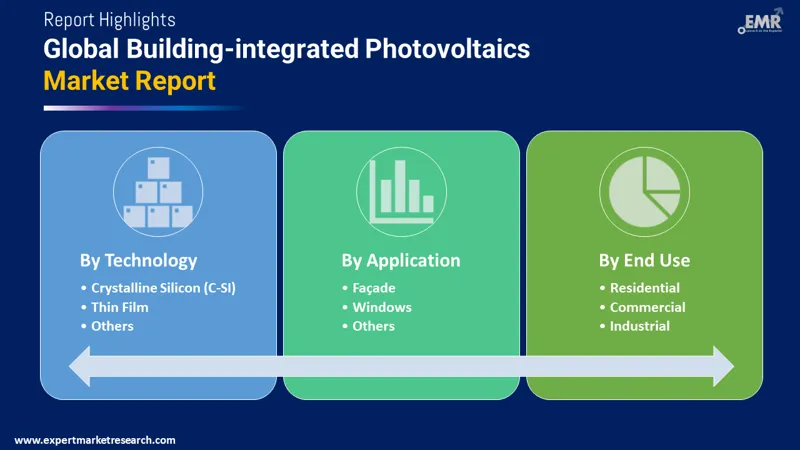
The Expert Market Research's report titled “Global Building-Integrated Photovoltaics Market Report and Forecast 2026-2035” offers a detailed analysis of the market based on the following segments:
Market Breakup by Technology
Key Insight: The main technology segments involved in the technology adoption patterns of building integrated photovoltaics include Crystalline Silicon (C-Si), Thin Film, and others, whereby the crystalline silicon technology is widely adopted owing to its superior efficiency when applied in roofing and wall-mounted modules. The thin film technology, on the other hand, is becoming increasingly favored in the production of building integrated photovoltaic systems based on the need for flexibility and low weight. On the global scale, the building-integrated photovoltaics market continues witnessing innovations from companies like Onyx Solar and AGC, which focus on producing photovoltaic glass, whereas crystalline silicon producers work towards increasing durability of building integrated photovoltaic products.
Market Breakup by Application
Key Insight: On the application side, roofs, walls, glass, façade, windows, and others emerge as the main application segments for building-integrated photovoltaics. Among them, façade and roof segments emerge to be the dominant applications since they involve large-scale exposed areas that allow for more energy production. As a response to the growing demand for aesthetic integration, glass and windows become increasingly popular among architects as elements used for installing transparent solar panels, accelerating the building-integrated photovoltaics market revenue growth.
Market Breakup by End Use
Key Insight: Residential, commercial, and industrial end-user sectors comprise the adoption categories, with commercial sectors leading the building-integrated photovoltaics industry growth because of extensive surfaces that are available to incorporate façade and rooftop PV systems. Buildings from the industrial end-user sector are incorporating BIPV because of its potential to cut costs and achieve sustainability goals, and residential demand is being fueled by solar roof advancements and aesthetic designs, owing to players such as Tesla Solar Roofs and 3S Swiss Solar. Commercial developers are also incorporating integrated PV technologies into their certified green projects.
Market Breakup by Region
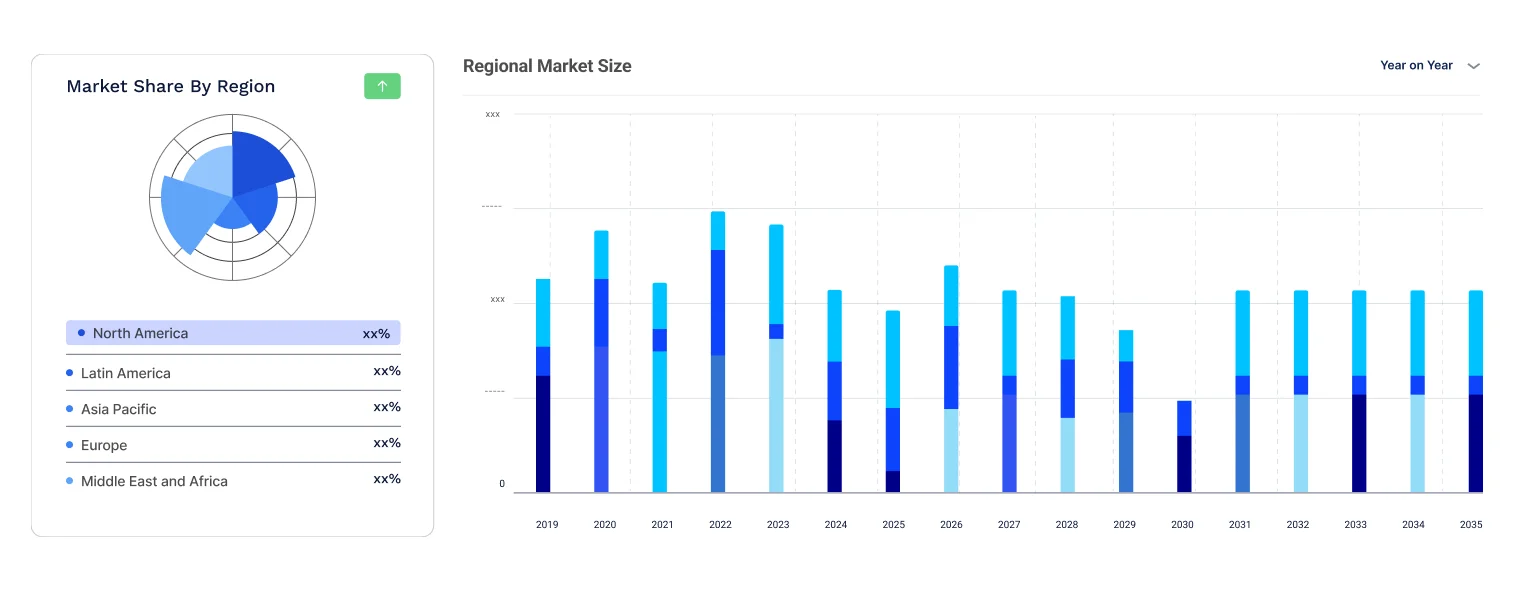
Key Insight: North America, Europe, Asia Pacific, Latin America, and Middle East and Africa observe different levels of adoption. The European building-integrated photovoltaics market dynamics is being shaped by strict zero-emission buildings guidelines and green building structures. There is rapid growth in the Asia Pacific region owing to the urbanization and development of infrastructure and smart cities in countries such as China, Japan, and South Korea, which is driving companies such as AUO to be involved in solar technology in the region. North America experiences slow but steady growth in the adoption of commercial sustainable buildings while Middle East concentrates on megaprojects supported by solar technology.
Read more about this report - REQUEST FREE SAMPLE COPY IN PDF
By technology, crystalline silicon (C-Si) is picking up pace owing to high efficiency and structural compatibility
Crystalline Silicon (C-Si) continue to dominate the building-integrated photovoltaics market as they offer efficiency, longevity, and compatibility with mainstream construction materials such as roofs and façades. Their capacity to generate higher levels of energy from smaller areas makes them the best option for use in commercial and residential areas. Innovations by companies such as Trina Solar and LONGi in developing building-grade silicon modules are strengthening the appeal of crystalline silicon (C-Si) in this market, as they focus on improving aesthetics, efficiency, and adaptability for building-integrated applications.
Thin film solar cells are also gaining popularity in the building integrated photovoltaics market as they offer advantages such as lightweight design, flexibility, and the ability to be integrated into curved or even transparent surfaces. This type of solar cell works effectively on applications like façades, skylights, and glass surfaces that silicon solar modules cannot be used for. Innovation by companies like Heliatek and First Solar are boosting thin films’ popularity in this industry. These are expected to become more useful for future developments of buildings which use innovative architectural designs for energy generating purposes.
By application, roofs show strong growth driven by the rising adoption of integrated solar roofing systems
The market observes remarkable momentum in the roofs section due to the rising trend of integrated solar roofs which are replacing traditional building material and providing power production capacity at their sites. The demand in the building-integrated photovoltaics market is fueled by the growing inclination towards net zero buildings where such roofs are considered an integral part of the structure rather than an addition. Efforts are being made by producers in the area to make installations easier and ensure long-term durability and compatibility of structures. For example, in May 2026, Antaisolar introduced a new integrated solar roof in China that provides advanced roof photovoltaics to increase building compatibility and installation efficiency.
The facades segment exhibits exponential growth in the building-integrated photovoltaics market due to the rising preference among builders for building-integrated solar façades that provide improved energy efficiency of structures without reducing their aesthetic appeal. The use of transparent and semi-transparent photovoltaic facades continues to be popular among commercial builders since they provide the advantages of insulating properties, light regulation, and power generation. Technological advancements in solar glass temperature management are enabling more structures to adopt this approach efficiently. For example, in May 2026, ClearVue obtained certification in relation to solar façade thermal management technology.
By end use, the commercial category records notable growth driven by the increasing integration of solar in sustainable buildings
The commercial category continues to dominate the market as offices, retail developments, and institutional structures which focus on sustainability and cost reduction through optimizing energy consumption, increasingly implement BIPV materials. Developers use solar technologies to meet the net-zero requirements and ESG criteria. These trends in the building-integrated photovoltaics market drive the need for integrated energy systems which incorporate generation, efficiency, and building design aspects. For example, in May 2026, DEWA launched the sustainable development project Al Sheraa, representing the rising trend towards clean energy solutions implementation within large-scale commercial buildings oriented at smart city projects.
As far as the residential sector of the global building-integrated photovoltaics market is concerned, it keeps growing in popularity among private customers due to the advantages provided by solar technology which allows generating energy while being aesthetically appealing. This sector benefits from rising electricity costs and needs to improve sustainability. Tesla’s Solar Roof, along with innovations from 3S Swiss Solar Solutions and advancements by AGC, reflects key achievements in this area of building-integrated solar technologies.

Read more about this report - REQUEST FREE SAMPLE COPY IN PDF
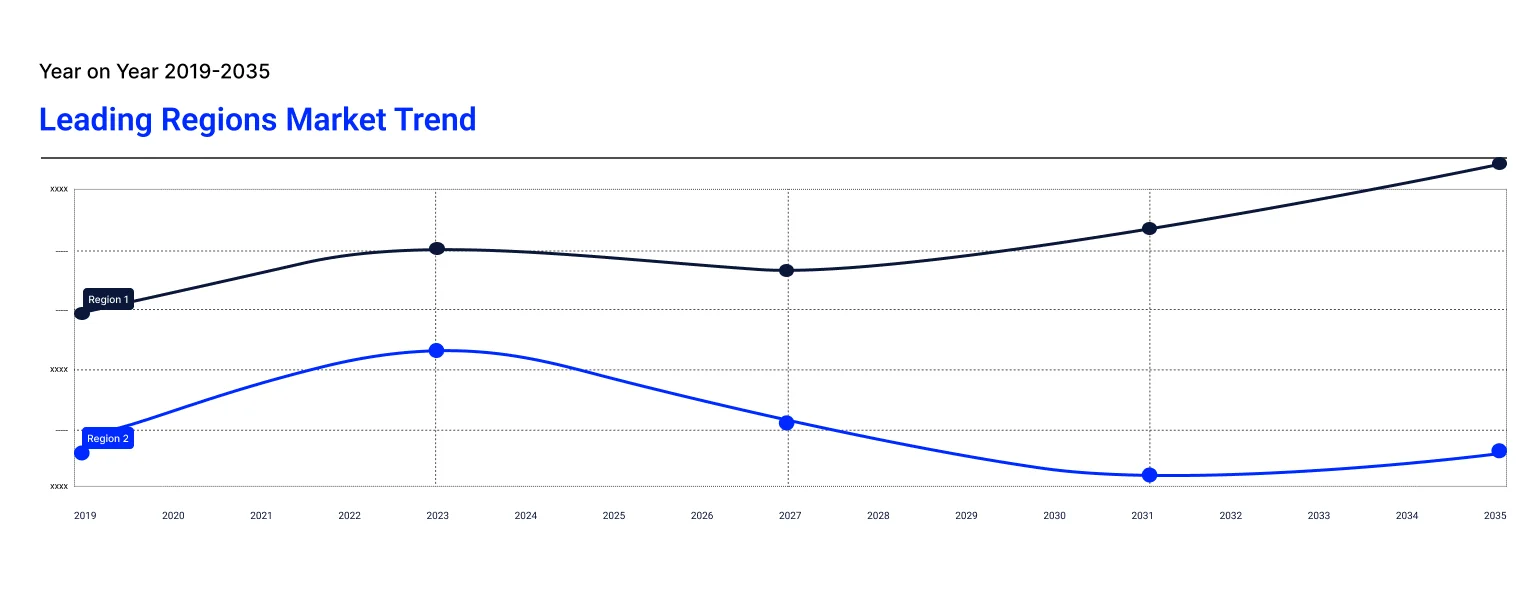
By region, Asia Pacific secures the leading position in the market owing to the accelerated renewable infrastructure expansion
Growth in the Asia Pacific building-integrated photovoltaics market is boosted by fast urbanization trends, growth in construction activity, and investments in renewable power generation in China, India, and Southeast Asian countries. Initiatives for development of sustainable and environmentally-friendly energy projects, as well as the development of smart infrastructure, stimulate the installation of integrated photovoltaic installations in office and industrial buildings. Furthermore, more hybrid renewable energy projects combining solar power generation with battery energy storage solutions are being launched in the region. For example, in May 2026, AFRY was appointed as Owner’s Engineer for a new solar PV and battery energy storage project in Thailand, supporting renewable energy integration and grid reliability.
The steady growth of the building-integrated photovoltaics market in North America is characterized by increased attention towards net zero construction, favorable clean energy regulations, and more widespread adoption of building-integrated solutions in commercial property projects. Solar facades, roofing installations, and glazing panels are becoming increasingly common among developers in order to meet environmental standards and reduce the amount of energy consumed by buildings during their operation. Leading companies like ClearVue PV and Tesla are contributing to growing adoption through the launch of solar facades and innovative solar roof products.
The market experiences continuous innovations by building-integrated photovoltaics companies that seek to enhance the aesthetically compatible nature and energy efficiency of building integrated solar materials. Companies are focusing on creating lightweight, highly transparent, and customisable photovoltaics that can be incorporated into roofing, glazing, and façades, while aligning with architectural intentions. Innovations in efficient solar cells as well as modular designs are making it possible for easier installation and greater performance stability.
Collaboration initiatives between building-integrated photovoltaics market players and construction firms, developers, and other energy solution providers are becoming common. This is driven by strong commercialization efforts, where pilot projects are being scaled into commercial installations to demonstrate practical viability, durability, and long-term performance. Additionally, strategic investment in smart energy management and grid-ready solar solutions is improving both system performance and adoptability.
AGC Glass Europe SA is an established European company that provides glass solutions for building construction purposes. It was founded in the year 1961 and operates out of its headquarters located in Brussels, Belgium. The company is primarily known for advancing energy-efficient building materials and developing photovoltaic technologies.
BELECTRIC Solar & Battery GmbH is a renewable energy company that specializes in the development and installation of large-scale solar power systems. It was founded in 2001, and its headquarters are located in Kolitzheim, Germany. The company's primary focus is to integrate solar energy and battery infrastructure.
Heliatek GmbH is a well-known solar technology company that provides innovative organic photovoltaics. It was founded in 2006 and operates out of its headquarters in Dresden, Germany. Heliatek GmbH offers building-integration friendly thin-film solar films suitable for use in architectural constructions.
Carmanah Technologies Corporation is a clean energy company that provides sustainable energy infrastructure solutions for buildings. It was founded in 1996 and operates from its Canadian headquarter in Victoria. The company develops autonomous energy systems that can be utilized in building infrastructures.
Other key players in the market include Greatcell Energy Pty Ltd., Hanergy Holding Group Limited, and Ertex Solartechnik GmbH, among others.
*Please note that this is only a partial list; the complete list of key players is available in the full report. Additionally, the list of key players can be customized to better suit your needs.*
Explore the latest trends shaping the global building-Integrated photovoltaics market 2026-2035 with our in-depth report. Gain strategic insights, future forecasts, and key market developments that can help you stay competitive. Download a free sample report or contact our team for customized consultation on building-integrated photovoltaics market trends 2026.


Upto 15% Off
USD
$2499 $2249
$3999 $3599
$4999 $4249
$5999 $5099


*While we strive to always give you current and accurate information, the numbers depicted on the website are indicative and may differ from the actual numbers in the main report. At Expert Market Research, we aim to bring you the latest insights and trends in the market. Using our analyses and forecasts, stakeholders can understand the market dynamics, navigate challenges, and capitalize on opportunities to make data-driven strategic decisions.*
In 2025, the global building-integrated photovoltaics market attained a value of nearly USD 28.85 Billion.
The market is projected to grow at a CAGR of 19.20% between 2026 and 2035.
The major drivers of the market include the increase in the number of business firms and companies adopting solar solutions and the increased adoption of green buildings.
Improved technology for the installation of BIPV systems in business facilities is a key trend propelling the growth of the market.
The major regions in the market are North America, Latin America, the Middle East and Africa, Europe, and the Asia Pacific.
The various technologies of building-integrated photovoltaics considered in the market report are crystalline silicon (C-SI) and thin films, among others.
The significant application segments in the market are roofs, walls, glass, façade, and windows, among others.
The major end use segments of building-integrated photovoltaics in the market include industrial, commercial, and residential.
The major market players are AGC Glass Europe SA, BELECTRIC Solar & Battery GmbH, Heliatek GmbH, Carmanah Technologies Corporation, Greatcell Energy Pty Ltd., Hanergy Holding Group Limited, and Ertex Solartechnik GmbH, among others.
Explore our key highlights of the report and gain a concise overview of key findings, trends, and actionable insights that will empower your strategic decisions.
| REPORT FEATURES | DETAILS |
| Base Year | 2025 |
| Historical Period | 2019-2025 |
| Forecast Period | 2026-2035 |
| Scope of the Report |
Historical and Forecast Trends, Industry Drivers and Constraints, Historical and Forecast Market Analysis by Segment:
|
| Breakup by Technology |
|
| Breakup by Application |
|
| Breakup by End Use |
|
| Breakup by Region |
|
| Market Dynamics |
|
| Competitive Landscape |
|
| Companies Covered |
|
| Report Price and Purchase Option | Explore our purchase options that are best suited to your resources and industry needs. |
| Delivery Format | Delivered as an attached PDF and Excel through email, with an option of receiving an editable PPT, according to the purchase option. |
Datasheet
One User
USD 2,499
USD 2,249
tax inclusive*
Single User License
One User
USD 3,999
USD 3,599
tax inclusive*
Five User License
Five User
USD 4,999
USD 4,249
tax inclusive*
Corporate License
Unlimited Users
USD 5,999
USD 5,099
tax inclusive*
*Please note that the prices mentioned below are starting prices for each bundle type. Kindly contact our team for further details.*
Flash Bundle
Small Business Bundle
Growth Bundle
Enterprise Bundle
*Please note that the prices mentioned below are starting prices for each bundle type. Kindly contact our team for further details.*
Flash Bundle
Number of Reports: 3
20%
tax inclusive*
Small Business Bundle
Number of Reports: 5
25%
tax inclusive*
Growth Bundle
Number of Reports: 8
30%
tax inclusive*
Enterprise Bundle
Number of Reports: 10
35%
tax inclusive*
How To Order

Select License Type
Choose the right license for your needs and access rights.

Click on ‘Buy Now’
Add the report to your cart with one click and proceed to register.

Select Mode of Payment
Choose a payment option for a secure checkout. You will be redirected accordingly.
Strategic Solutions for Informed Decision-Making
Gain insights to stay ahead and seize opportunities.

Get insights & trends for a competitive edge.

Track prices with detailed trend reports.

Analyse trade data for supply chain insights.

Leverage cost reports for smart savings

Enhance supply chain with partnerships.

Connect For More Information
Our expert team of analysts will offer full support and resolve any queries regarding the report, before and after the purchase.
Our expert team of analysts will offer full support and resolve any queries regarding the report, before and after the purchase.
We employ meticulous research methods, blending advanced analytics and expert insights to deliver accurate, actionable industry intelligence, staying ahead of competitors.
Our skilled analysts offer unparalleled competitive advantage with detailed insights on current and emerging markets, ensuring your strategic edge.
We offer an in-depth yet simplified presentation of industry insights and analysis to meet your specific requirements effectively.




