

Consumer Insights
Uncover trends and behaviors shaping consumer choices today
Procurement Insights
Optimize your sourcing strategy with key market data
Industry Stats
Stay ahead with the latest trends and market analysis.
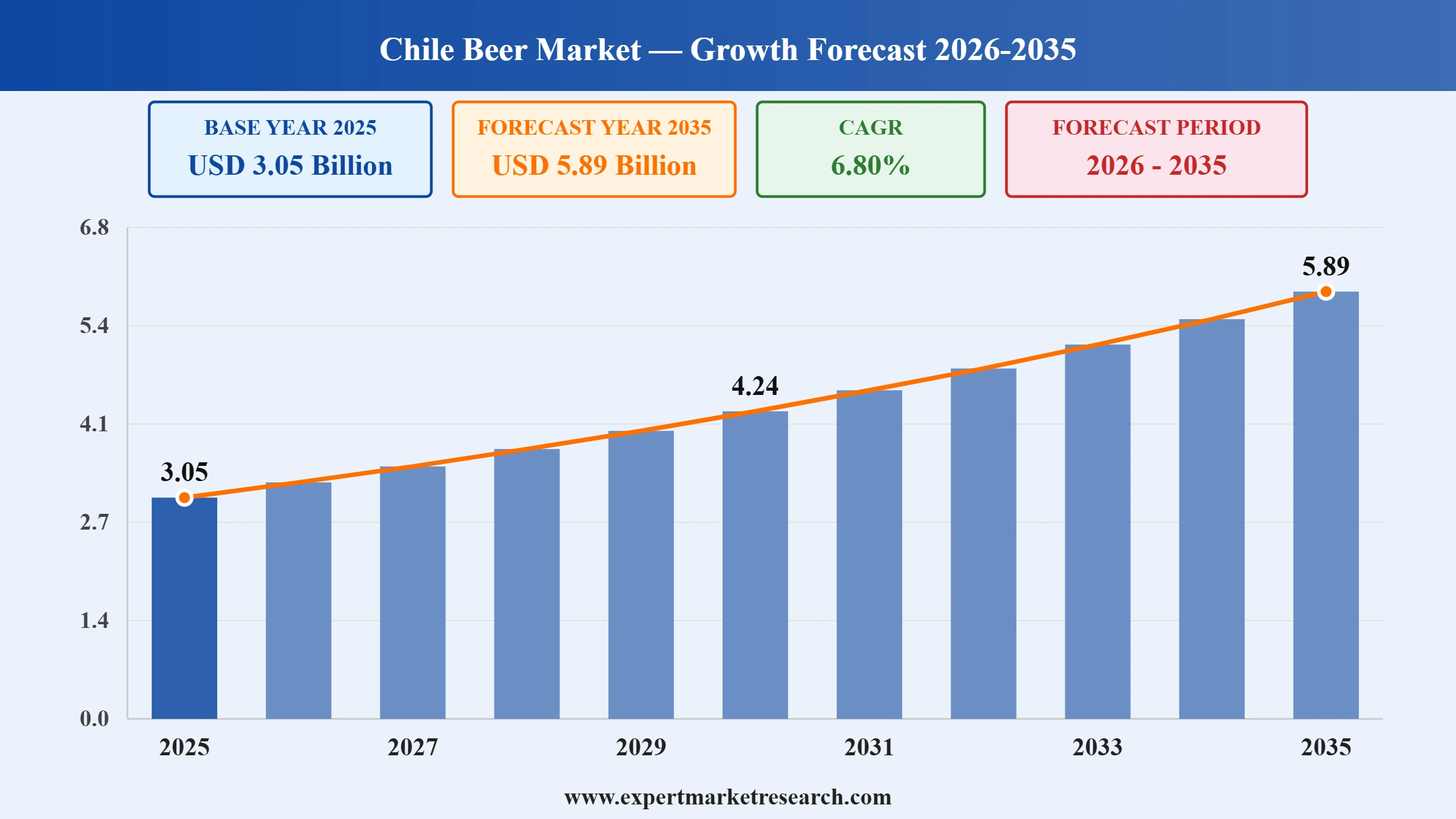
The Chile beer market reached USD 3.05 Billion in 2025 and is projected to expand at a 6.80% CAGR to reach USD 5.89 Billion by 2035. Beer is the third most consumed beverage in Chile, with annual per-capita consumption of approximately 46 litres second only to wine within the alcoholic beverages category.
The market is shaped by two structural forces. The first is a mature mainstream lager segment, dominated by Compañía Cervecerías Unidas (CCU) and Anheuser-Busch InBev, which together hold an estimated 85% of total volume. Flagship brands such as Cristal, Escudo, and Royal Guard anchor everyday consumption across on-trade and off-trade channels. The second is a rapidly expanding craft beer ecosystem centred around Valdivia Chile's recognised craft beer capital where Kunstmann, Kross, Guayacán, and a wave of micro-breweries have pushed premium and speciality variants into mainstream supermarket shelves and modern HoReCa outlets.
Sustainability is reshaping production. Several Chilean breweries most notably Guayacán, Latin America's first B Corp-certified brewery have adopted solar PV systems, glass-bottle reuse programmes, and circular packaging models to comply with Chile's Extended Producer Responsibility (REP) Law and reduce energy intensity per hectolitre.
As per the Chile beer market analysis, the industry is on a steady upward trajectory through the forecast window. Volume growth is concentrated in premium, flavoured, and low-alcohol formats, while value growth is being lifted by premiumisation, craft adoption, and rising on-trade tariffs in restaurants, bars, and hotels.
In 2021, the per capita beer consumption in Chile reached 61.1 litres, indicating a 13% increase compared to the previous year.
Beer is one of the most popular alcoholic beverages globally, and increasing demand for premium alcoholic beverages in Chile favours the market growth.
As of 2020, Chile ranked 36th out of 181 countries in terms of per capita beer consumption.
Read more about this report - REQUEST FREE SAMPLE COPY IN PDF
Rising Craft Beer Culture in Chile
Chile's craft beer movement has matured from a niche hobbyist scene into a structured industry. Valdivia, in the Los Ríos region, is recognised as the country's craft beer capital, anchored by Cervecería Kunstmann's brewing heritage. Newer entrants such as Kross, Guayacán, Beer +56, Hathor, and Tübinger have built national distribution and modern e-commerce footprints. Craft variants now command meaningful shelf space in retail chains like Jumbo, Líder, and Tottus, supported by rising consumer interest in IPAs, stouts, and Belgian-style ales.
Increasing Disposable Income and Premiumisation
Chile has one of Latin America's highest GDP per capita levels, and rising urban middle-class incomes are fuelling a clear premiumisation trend across alcoholic beverages. Consumers are trading up from standard lagers to premium imports (Heineken, Corona, Stella Artois) and domestic craft brews. Premium and super-premium SKUs are growing materially faster than the standard lager category, reshaping product mix and pricing power for both global and local brewers.
Read more about this report - REQUEST FREE SAMPLE COPY IN PDF
Sustainability Initiatives by Local Breweries
Sustainability has become a competitive differentiator in the Chilean beer market. Guayacán became Latin America's first B Corp-certified brewery in 2017. CCU and other large producers have installed solar PV systems, deployed water-recovery technologies, and committed to circular glass-bottle reuse under Chile's Extended Producer Responsibility (REP) Law. These initiatives lower per-hectolitre energy costs, strengthen brand equity with younger ESG-conscious consumers, and reduce regulatory risk.
Surge in Flavoured and Speciality Beer
Flavoured beers fruit-infused lagers, citrus-forward IPAs, and seasonal spice-based brews are one of the fastest-growing sub-segments. Chilean breweries are using local botanicals (murta, maqui, Patagonian hops) to differentiate from imported flavoured offerings. Major producers have expanded their flavoured SKUs alongside their core lager portfolios, while craft brewers continue to innovate with limited-edition seasonal releases.
Read more about this report - REQUEST FREE SAMPLE COPY IN PDF
Adoption of PV Solar Power in Brewing
Several Chilean and Latin American breweries have installed photovoltaic (PV) panels at their manufacturing facilities to reduce reliance on grid electricity and lower carbon emissions. Chile's high solar irradiation in northern and central regions makes on-site solar particularly cost-effective. This trend supports both ESG reporting requirements and operational cost reduction in an environment of rising electricity tariffs.
Glass Bottle Reuse and Circular Packaging
Returnable glass bottles continue to dominate Chile's beer packaging mix, supported by a well-established deposit-and-return infrastructure. Manufacturers are increasingly investing in lightweight glass, recycled-content PET, and aluminium can formats to meet REP Law obligations. The shift toward circular packaging is also opening opportunities for local glass and aluminium suppliers to deepen partnerships with brewers.
Read more about this report - REQUEST FREE SAMPLE COPY IN PDF
Competition from Wine and Pisco
Wine remains Chile's most consumed alcoholic beverage by volume, and pisco - particularly when served as the iconic pisco sour - retains a strong cultural foothold. Both categories compete directly with beer for share of throat, especially in the mid-to-upper income demographic. Wine producers' aggressive marketing in modern off-trade channels, combined with pisco's strength in HoReCa, places structural pressure on beer category growth.
Alcohol Taxation and Regulatory Framework
Chile applies an Additional Tax on Alcoholic Beverages of approximately 20.5% on beer, layered on top of the standard 19% VAT. The Ley de Alcoholes No. 19,925 governs production, sale, distribution, and advertising of alcoholic beverages, while the Instituto de Salud Pública (ISP Chile) regulates product registration and labelling. Together, these frameworks create a higher cost-to-serve relative to non-alcoholic beverages and constrain pricing flexibility for both domestic and imported brands.
Read more about this report - REQUEST FREE SAMPLE COPY IN PDF
"Chile Beer Market Report and Forecast 2026-2035" offers a detailed analysis of the market based on the following segments:
Market Breakup by Product Type
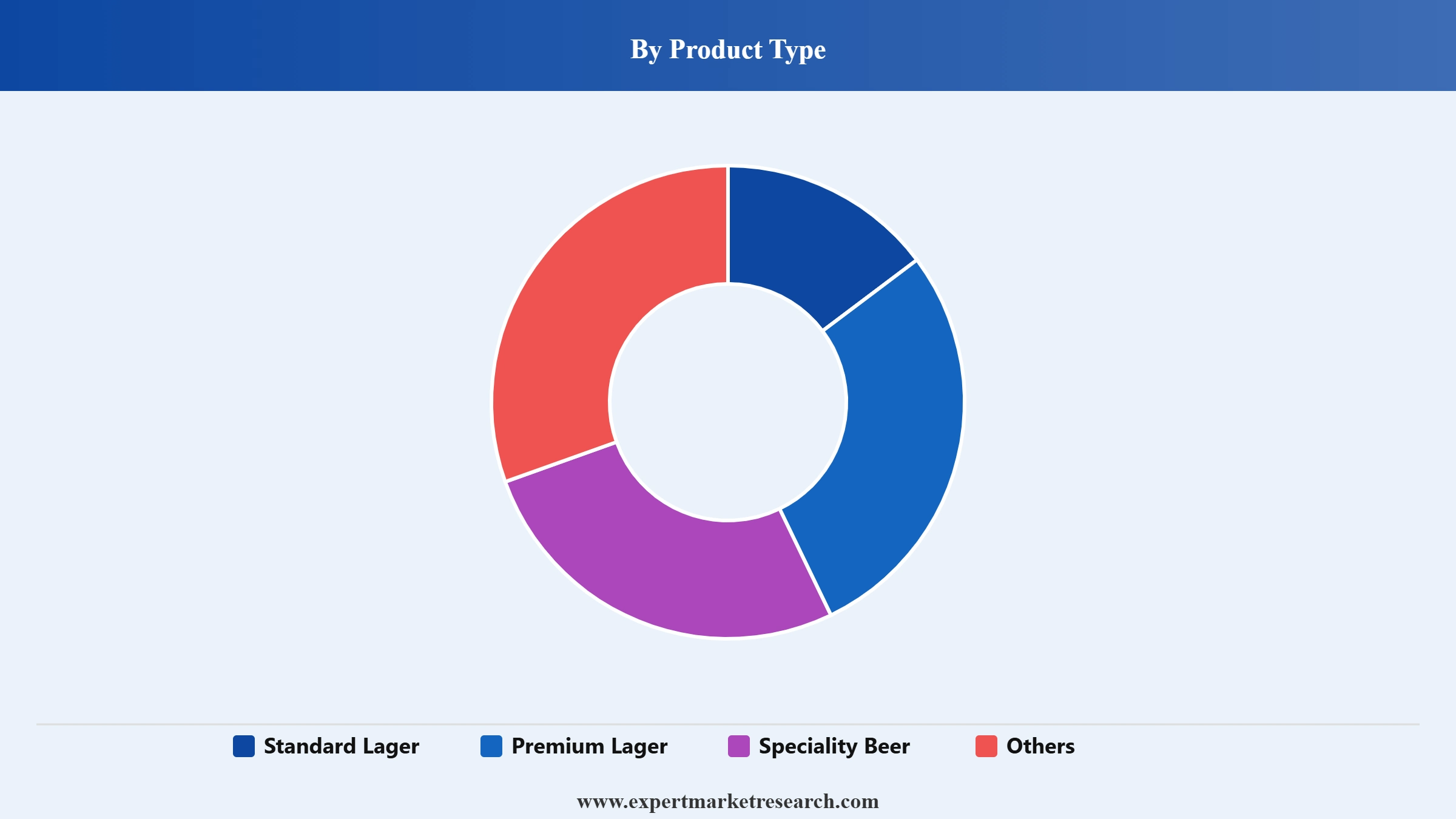
Standard Lager dominates Chilean beer consumption, anchored by mass-market brands like Cristal, Escudo, and Royal Guard. Premium Lager is growing faster, driven by import brands and domestic premium SKUs. Speciality Beer (craft, IPA, stout, fruit-infused) is the fastest-growing segment in percentage terms, supported by Valdivia's craft cluster and rising consumer adventurousness.
Market Breakup by Packaging
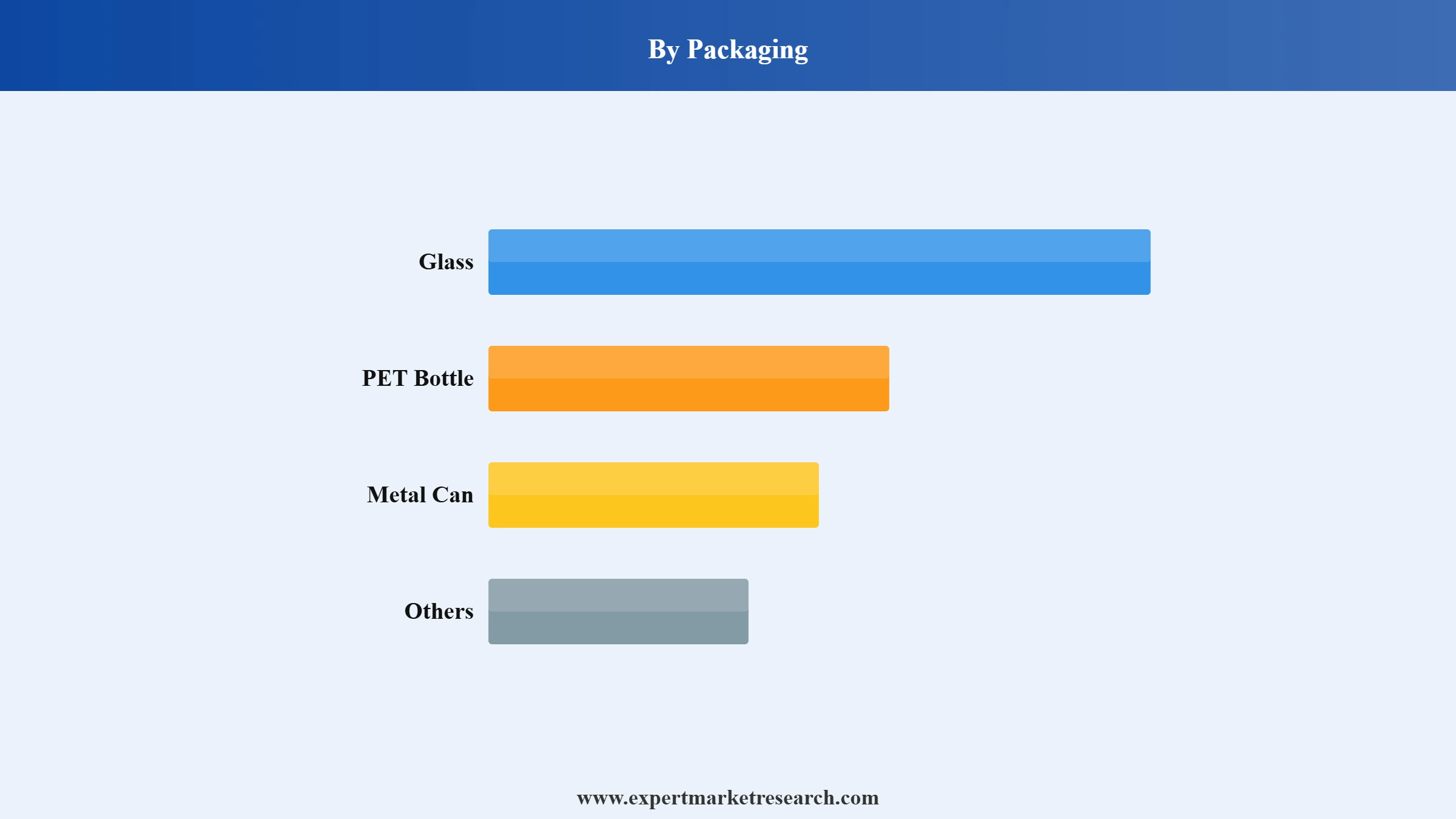
Returnable glass bottles remain the volume leader due to Chile's deposit infrastructure and strong on-trade preference. PET bottles serve large-format off-trade purchases, while metal cans are gaining share rapidly in convenience and modern off-trade channels, particularly for premium and craft variants.
Market Breakup by Production
Macro-breweries (CCU, AB InBev) account for the majority of volume, while micro-breweries concentrated in Los Ríos, Los Lagos, and Metropolitan regions drive premium value and innovation. Independent micro-brewery counts have risen sharply over the past decade.
Market Breakup by Alcohol Content
High-alcohol beers (above 5% ABV) lead in volume, but low-alcohol and alcohol-free variants are the fastest-growing sub-segments, driven by health awareness, stricter drink-driving enforcement, and the global zero-proof trend.
Market Breakup by Flavour
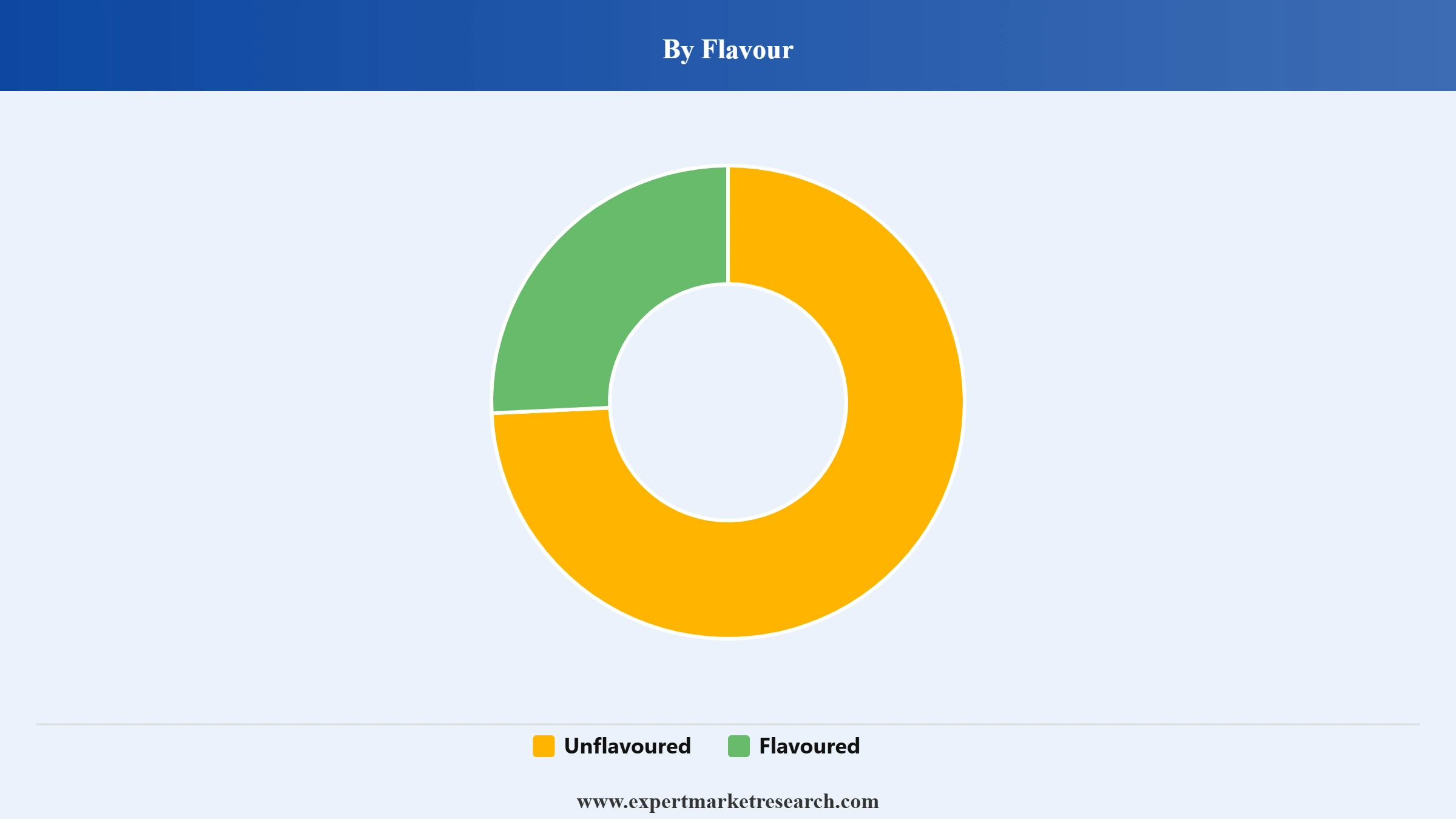
Unflavoured (traditional lager and ale) holds the dominant share, while flavoured beer including fruit, citrus, and botanical infusions is expanding meaningfully on the back of younger consumer adoption.
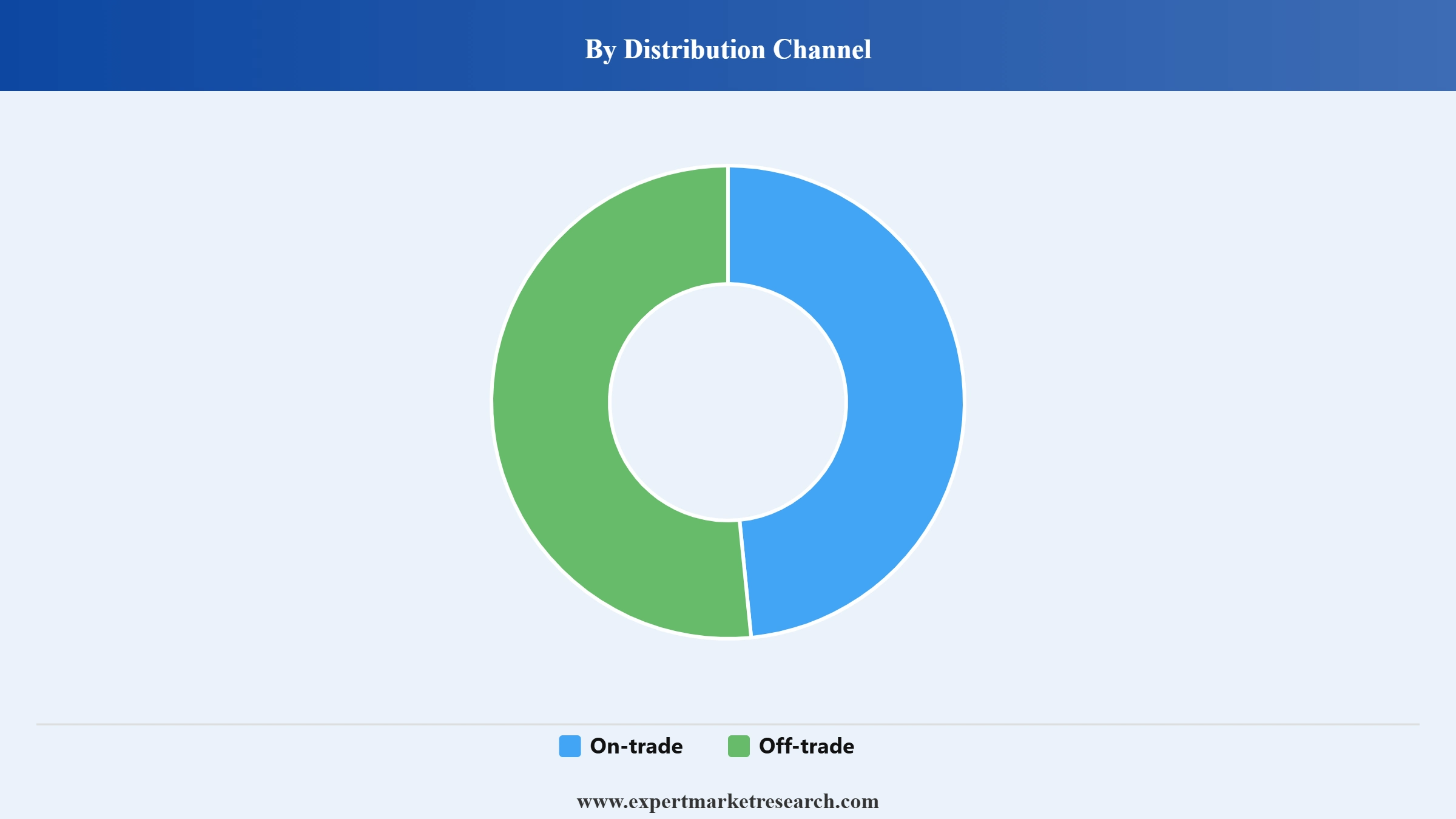
Market Breakup by Distribution Channel
Off-trade (supermarkets, hypermarkets, convenience, and e-commerce) accounts for the majority of volume, while on-trade (bars, restaurants, hotels) drives premium pricing and brand-building.
Read more about this report - REQUEST FREE SAMPLE COPY IN PDF
The market participants are placing a greater emphasis on producing innovative and sustainable beer options, often adding seasonal creations to increase their profitability.


Upto 15% Off
USD
$2499 $2249
$3999 $3599
$4999 $4249
$5999 $5099


*While we strive to always give you current and accurate information, the numbers depicted on the website are indicative and may differ from the actual numbers in the main report. At Expert Market Research, we aim to bring you the latest insights and trends in the market. Using our analyses and forecasts, stakeholders can understand the market dynamics, navigate challenges, and capitalize on opportunities to make data-driven strategic decisions.*
In 2025, the market reached an approximate value of USD 3.05 Billion.
The market is projected to grow at a CAGR of 6.80% between 2026 and 2035.
The market is estimated to witness a healthy growth during 2026-2035 to reach around USD 5.89 Billion by 2035.
The major market drivers are the growing demand for alcoholic beverages, rising disposable incomes, and the growing popularity of flavoured beer.
The key trends in the market include the growing appeal of beer among both young individuals and adults, the rising demand for premium category beers, and the increasing adoption of sustainable brewing methods by manufacturers.
The major product types in the market are standard lager, premium lager, and speciality beer, among others.
The different packaging options are glass, PET bottles, and metal cans, among others.
The major players in the market are Compañía Cervecerías Unidas SA, Anheuser-Busch InBev SA/NV, Kross, Cerveceria Kunstmann, Cervecería Austral, Cervecería y Maltería Quilmes S.A.I.C.A. and G (Quilmes), Carlsberg Breweries A/S, Diageo plc, Sierra Nevada Brewing Co., and United Breweries Limited, among others.
Explore our key highlights of the report and gain a concise overview of key findings, trends, and actionable insights that will empower your strategic decisions.
| REPORT FEATURES | DETAILS |
| Base Year | 2025 |
| Historical Period | 2019-2025 |
| Forecast Period | 2026-2035 |
| Scope of the Report |
Historical and Forecast Trends, Industry Drivers and Constraints, Historical and Forecast Market Analysis by Segment:
|
| Breakup by Product Type |
|
| Breakup by Packaging |
|
| Breakup by Production |
|
| Breakup by Alcohol Content |
|
| Breakup by Flavour |
|
| Breakup by Distribution Channel |
|
| Market Dynamics |
|
| Competitive Landscape |
|
| Companies Covered |
|
Datasheet
One User
USD 2,499
USD 2,249
tax inclusive*
Single User License
One User
USD 3,999
USD 3,599
tax inclusive*
Five User License
Five User
USD 4,999
USD 4,249
tax inclusive*
Corporate License
Unlimited Users
USD 5,999
USD 5,099
tax inclusive*
*Please note that the prices mentioned below are starting prices for each bundle type. Kindly contact our team for further details.*
Flash Bundle
Small Business Bundle
Growth Bundle
Enterprise Bundle
*Please note that the prices mentioned below are starting prices for each bundle type. Kindly contact our team for further details.*
Flash Bundle
Number of Reports: 3
20%
tax inclusive*
Small Business Bundle
Number of Reports: 5
25%
tax inclusive*
Growth Bundle
Number of Reports: 8
30%
tax inclusive*
Enterprise Bundle
Number of Reports: 10
35%
tax inclusive*
How To Order

Select License Type
Choose the right license for your needs and access rights.

Click on ‘Buy Now’
Add the report to your cart with one click and proceed to register.

Select Mode of Payment
Choose a payment option for a secure checkout. You will be redirected accordingly.
Strategic Solutions for Informed Decision-Making
Gain insights to stay ahead and seize opportunities.

Get insights & trends for a competitive edge.

Track prices with detailed trend reports.

Analyse trade data for supply chain insights.

Leverage cost reports for smart savings

Enhance supply chain with partnerships.

Connect For More Information
Our expert team of analysts will offer full support and resolve any queries regarding the report, before and after the purchase.
Our expert team of analysts will offer full support and resolve any queries regarding the report, before and after the purchase.
We employ meticulous research methods, blending advanced analytics and expert insights to deliver accurate, actionable industry intelligence, staying ahead of competitors.
Our skilled analysts offer unparalleled competitive advantage with detailed insights on current and emerging markets, ensuring your strategic edge.
We offer an in-depth yet simplified presentation of industry insights and analysis to meet your specific requirements effectively.




