

Consumer Insights
Uncover trends and behaviors shaping consumer choices today
Procurement Insights
Optimize your sourcing strategy with key market data
Industry Stats
Stay ahead with the latest trends and market analysis.
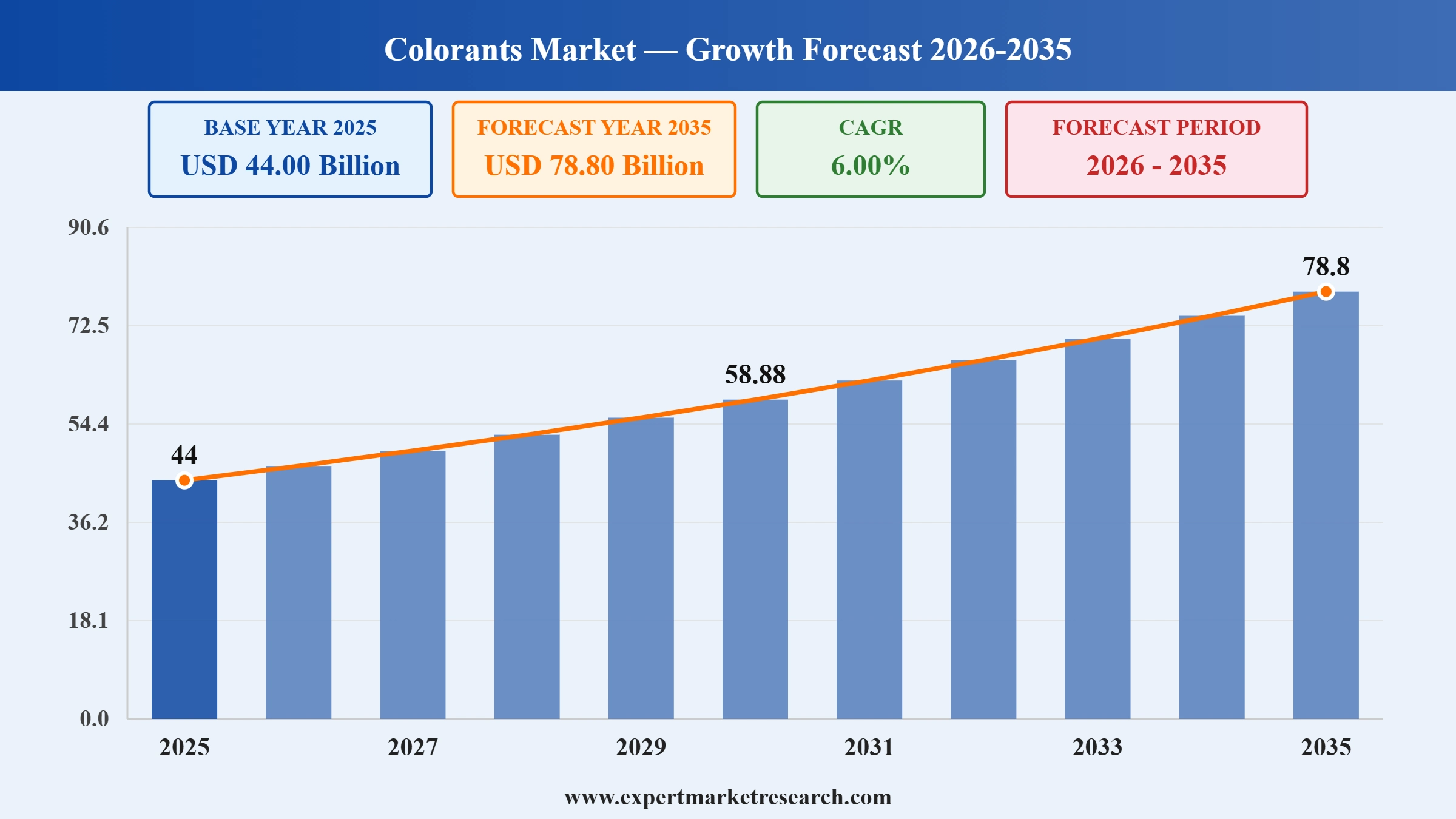
The global colorants market attained a value of USD 44.00 Billion in 2025 and is projected to expand at a CAGR of 6.00% through 2035. The market is further expected to achieve USD 78.80 Billion by 2035. Increased requirement for high-performance pigments in paints and coatings for automobiles and industries is leading suppliers to enhance production, increase durability, and produce colorants that offer better aesthetic value in difficult processing conditions.
The automotive industry is increasing the demand for high-chroma pigments that offer good quality finish and style differentiation, whereas the packaging industry is looking for colorants that are suitable in terms of safety and recyclable materials, thereby boosting the colorants market value. Cosmetics companies, on the other hand, are preferring effect pigments that offer a combination of aesthetics, regulatory approval, vegan nature, and multifunctionality, which is compelling pigment suppliers to manufacture special products.
Sun Chemical, in November 2025, increased its focus on high-performance pigments through increased production of perylene pigments at Ludwigshafen, Germany up to 200 metric tons of finished products and intermediates, boosting growth in the colorants market. This trend is geared towards ensuring supply stability of color chemistries applied in coatings and industries. Manufacturers are also optimizing perylene red and black production, reflecting customers’ growing demand for consistent purity, performance, availability, and color quality.
Product development in the colorants industry is focusing more on specialized and effect pigments that address formulae issues rather than giving color. In July 2025, Sun Chemicals also launched Chione Electric Scarlet SR90D and Chione Electric Sienna SC90D which are metallic effect pigments that are suitable for use in cosmetic formulations. These are accepted as safe color additives in skin, body and sun care. The pigments are non-staining, non-bleeding, and UV-stable, enabling vegan and carmine-free formulations.
Read more about this report - REQUEST FREE SAMPLE COPY IN PDF
Phytolon successfully raised USD 23.6 million towards scaling fermentation-based natural food colors, beginning with beetroot red, due to increasing needs for synthetic dye substitutes. Manufacturers can make precision-fermented colors, which provide clean-label alternatives for food and drink producers, boosting growth in the colorants market.
Phytolon and Ginkgo Bioworks were able to triple the production efficiency for natural food colors, making them more commercially attractive for use in different food products. Businesses can utilize artificial intelligence technologies for strain optimization and fermentation to reduce natural pigment cost.
Holland Colors introduced the Holcopearl and Holcoprill solid colorants, which have decreased milling, cleaning, and processing needs while increasing batch consistency and production efficiency. Companies in the colorants market are able to formulate process-efficient solids that will decrease energy usage, production times, and manufacturing costs for coating manufacturers.
Avient introduced biocompatible PEEK pre-colored compounds for medical use that feature color stability along with heat resistance, chemical resistance, and repeatable sterilization capabilities. Colorant firms can focus on specialized medical polymers that feature pre-colored products for equipment manufacturing companies.
Natural colors are becoming strategically significant as food, drink, cosmetic and personal care producers redesign formulations according to more natural ingredients profiles. In May 2025, the USFDA authorized three natural-sourced color additives such as Galdieria extract blue, butterfly pea flower extract, and calcium phosphate. According to the colorants market, as much as 40% of the United States food industry has promised voluntary phase-out of petroleum-sourced dyes, stimulating suppliers to expand technologies of extraction, stabilization, and usage of natural colors. In January 2026, Octarine Bio raised USD 5.8 million to commercialize precision-fermented, fossil-free pigments for food, textiles, cosmetics, printing, plastics, and packaging.
Pigment producers are increasingly focusing on the development of products which combine visual characteristics with heat stability, durability, dispersion properties, and other functions useful for industrial applications. For example, in September 2025, Sun Chemical launched new products for plastics such as FASTOGEN Super Red BBF and Spectrasense Black 0089 FK. Such products can be used in injection molding, solar heat management, laser welding and LiDAR-detectable automotive parts, thereby driving demand in the colorants market.
Higher standards of chemical safety encourage pigment and colorant companies to develop their formulas based on safer chemistry, reduced contamination, and environmental performance. The Safer Choice criteria for colorants developed by the United States EPA were updated in August 2025 with a special focus on inherent health and environmental safety features of the chemical components. Moreover, regulatory requirements also affect paint and coating formulation through certain restrictions on substances such as formaldehyde and synthetic polymer microparticles. Aligning with such trends in the colorants market, in August 2026, WK Kellogg announced plans to eliminate artificial colors and BHT from cereals and packaging, accelerating demand for natural colorant alternatives.
Innovations related to colorants increasingly feature functional properties allowing producers to meet new demands in areas like electric mobility, recycling, construction materials, and smart plastics. For example, in July 2025, FDA approved gardenia genipin blue for beverages and confectionery, expanding natural alternatives to synthetic food dyes, boosting the overall colorants market value. Such pigments are intended for solar heat management, automotive applications, laser welding, and LiDAR-detectable materials. This kind of development is especially relevant as plastic manufacturers currently require materials providing visual appearance and smart capabilities at the same time.
The colorants market observes an increasing trend among pigments used in specialty effects where they are increasingly becoming one of the main sources of innovation due to the need to enhance visual differentiation without necessarily sacrificing efficiency in formulations. For example, in July 2025, Prodalim launched VivaPro and NaturaPro natural colors using plant-based sources, supporting clean-label, sustainable applications across food and beverage categories.
The Expert Market Research's report titled “Colorants Market Report and Forecast 2026-2035” offers a detailed analysis of the market based on the following segments:
Market Breakup by Color
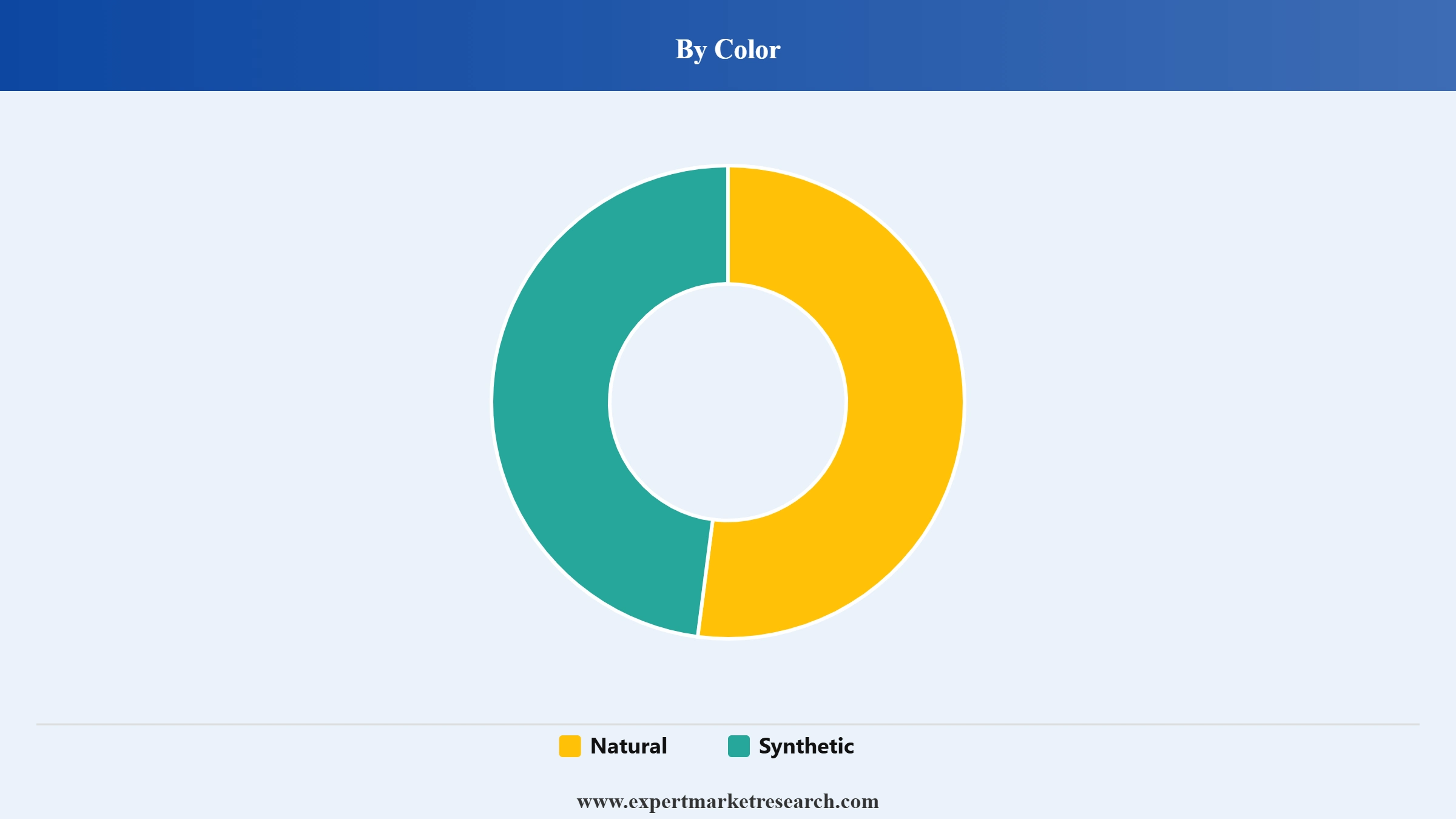
Key Insight: According to the colorants market report, synthetic colorants continue to dominate since industries prefer products that maintain color consistency, color strength, processing stability, and easy accessibility whereas natural colorants grow at a higher pace because of demand in food, beverages, cosmetics, and nutraceutical industries for cleaner ingredients labeling. Suppliers of natural products continue to develop better performance and stability properties and thus are solving processing problems and opening up more formulation possibilities. Meanwhile, suppliers of synthetic colorants continue to concentrate on safety, dispersion, migration, and regulatory compliance of their products.
Market Breakup by Composition
Key Insight: Organic dyes take the lead across the colorants market dynamics due to their wide spectrum of colors, high intensity and compatibility with textile, plastic, coating, ink and specialty packaging applications. Inorganic dyes are growing at a quicker rate in situations where properties like durability, opacity, heat resistance, weathering and cost effectiveness matter more. Organic dye manufacturers are trying to achieve better dispersion, higher purity, less migration tendency, and improved heat stability due to harsher processing conditions. Inorganic dye manufacturers are trying to improve the purity and reliability of outdoor performance for building products, industrial coating, concrete, ceramics, and plastic applications. In August 2026, OXERRA announced strategic investment to expand CICP production capacity, strengthening reliable pigment supply, and supporting sustainable coatings applications.
Market Breakup by Form
Key Insight: Pigments continue to hold relevance owing to their insolubility, durability, opacity, and performance characteristics. Dyes continue to enjoy significant demand in the colorants market where there is a need for water solubility and fiber affinity, especially in textiles as well as certain food and paper applications. Color concentrates are useful in assisting processors to dose and shade colors efficiently, whereas masterbatches are growing rapidly through automated plastics processing and need better dispersion. Formulations are being developed by suppliers which incorporate color along with UV stabilization, anti-microbial characteristics, processing aides, or recycled polymers among others.
Market Breakup by Application
Key Insight: By applications, textiles continue to be positioned at the forefront across the colorants market scope since mills use colorants in large volumes in the production of garments, interior textiles, industrial textiles, and man-made fibers, where consumers look for color fastness, wash fastness, shade uniformity, and efficiency in processing. There is also rapid growth in automotive applications due to demands for pigments in coating exterior paint, interior plastic components, and other special electric vehicle components. Food and beverage applications are concerned about stable coloration of their products, while paper and printing applications need precise control of optical properties and processability.
Market Breakup by Region
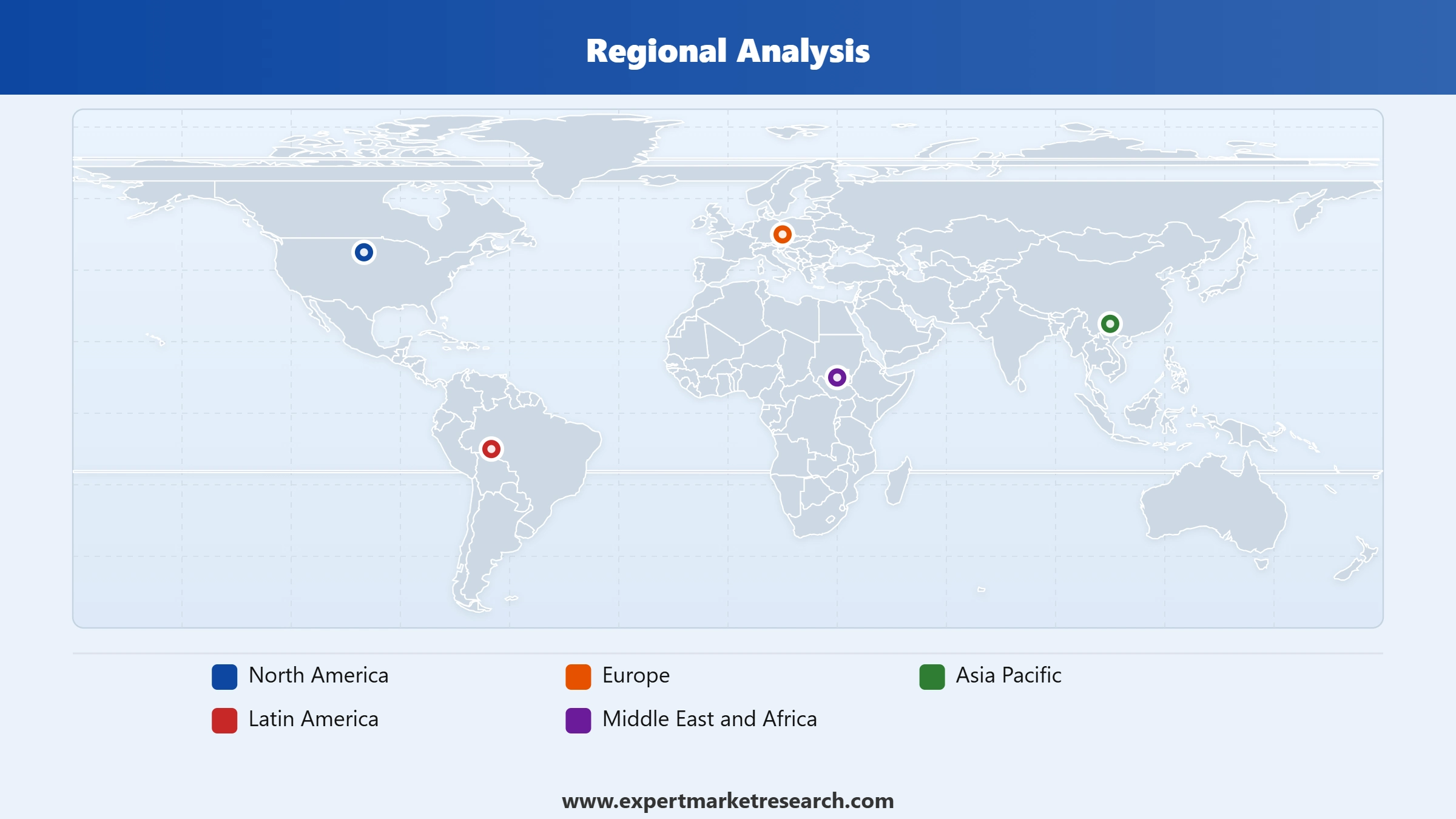
Key Insight: Regional demand dynamics in the colorants market indicate that Asia Pacific takes the lead owing to its strong textile, plastic, packaging, automotive, electronic, and chemicals industry which creates diverse needs for colorants. North America focuses on specialty pigments, regulations, coatings, and formulations while Europe emphasizes sustainable chemistry and sustainability. Latin America finds support in packaging, construction, food processing, and automotive manufacturing industries while Middle East and Africa's demand is associated with construction, coatings, packaging, and consumer goods.
Read more about this report - REQUEST FREE SAMPLE COPY IN PDF
By color, synthetic colorants lead the market due to consistent performance and broad availability
The segment for synthetic colorants continues to hold dominance in the colorants market due to the need for exact shade matching, tint strength, processing resistance, and predictability from industrial manufacturers. The textile mills, plastics fabricators, coating manufacturers and print shops depend on synthetic chemistry, whereby the performance qualities of heat resistance, chemical resistance, light fastness and migration affect the production processes. Suppliers are enhancing pigment particle size, dispersion and purity of the colorants in order to meet automated formulation requirements and end-use specifications.
Read more about this report - REQUEST FREE SAMPLE COPY IN PDF
Natural colorants are gaining importance among the food and beverages, cosmetic, and nutraceutical manufacturers as they seek recognizable and plant-based products, boosting demand in the colorants market. Natural colorant demand is being driven by reformulation initiatives which look to have cleaner ingredient declarations, a botanical advantage, and reduced dependency on synthetic ingredients made from petroleum. Suppliers are developing improved extraction processes, light fastness, and heat resistance in order to overcome processing problems associated with natural colors. In March 2026, Sensient began expanding its St. Louis facility, investing up to USD 250 million to support America’s shift from synthetic dyes.
By composition, organic colorants generate substantial demand due to vivid shades and formulation versatility
Organic colorants emerge to be the leading segment within colorant chemistry composition due to the ability of the molecular structure to offer vibrant coloration, shade variation, and applicability for valuable applications. Organic pigments and dyes find application in the textile, plastics, coatings, inks, and specialized packaging industries as producers look to differentiate products through the use of colorant chemistry with vibrancy and formulation capabilities. Producers are seeking to enhance dispersion, weathering, migration, and thermal stability properties of organic colorants to make the chemistries applicable under more rigorous process conditions. In April 2026, Green Science Alliance developed silica-composite fluorescent colorants offering improved weather, light, heat, and chemical resistance for industrial applications.
Inorganic colorants are rapidly expanding their share in the colorants market owing to their durability, opacity, heat resistance, and economic efficiency. Inorganic colorants are especially popular within the segments of construction materials, industrial coatings, plastics, ceramics, and concrete. These colorants survive ultraviolet radiation and weathering, among other tough conditions, which make them valuable for many applications. Suppliers are creating cleaner grades of the inorganic colorants that are more dispersible with low impurities for easy adherence to process conditions and requirements.
By form, pigments account for the leading position of the market due to durability, opacity, and demanding high-performance requirements
Pigments largely contribute to the colorants market revenue as manufacturers seek insolubility, opacity, durability and resistance to processing. The coating, plastic, ink, and automotive manufacturers rely on pigments because of their properties to guarantee the constant coloration of the product during processing and product lifetime. Producers are currently working to optimize particle size, dispersion, weather resistance and heat resistance of pigments for particular applications. Besides, manufacturers have an opportunity to create high-chroma and effect colors without any loss of performance properties. Application versatility and resistance to the external influences ensure good B2B procurement of the pigment form segment.
Masterbatch is the fastest growing form segment because of the demand of the plastics processors in clean and consistent color dosing, accelerating the colorants market opportunities. Masterbatch is the concentrated color formulation that simplifies the process of color dosing, improves dispersion, prevents material losses, and allows creating shades during extrusion, injection molding, and blow molding. Producers are creating the masterbatch that is specially developed for recycled polymers, engineering plastics, packaging film, automotive parts, and consumer goods. The possibility to mix color and other additives ensures additional benefits for converters. In May 2024, Cabot launched ISCC PLUS-certified circular black masterbatches using recycled polymers, supporting sustainable automotive plastics applications.
Textile applications lead the market due to dyeing volumes and performance requirements
Textile continues to be the leading application since dyeing and finishing involve massive quantities of colorants for clothing items, home textiles, technical textiles, and industrial textiles. Mills are focusing on color fastness, shortened time cycles, reduced water usage, and fixation since customers are now setting stricter sustainability parameters, boosting demand in the colorants market. Producers are meeting the demand through developing colorants with high concentration levels, higher affinity with fibers, and chemistries that can be used in automatic dosing systems. Another reason for the demand is the change in colors during each season and performance of sportswear, protective textiles, and synthetic fibers that are affected by wash, light, and perspiration resistance. In November 2025, Textilcolor launched a Pyroshell collaboration, advancing innovative textile dyeing solutions with enhanced sustainability and performance.
Automotive is the fastest-growing application as manufacturers need colorants that can offer flexibility in styling, durability, heat resistance, and performance in addition to weather resistance. There are more pigments formulated for exterior coating, plastics inside cars, under-the-hood applications, and high-tech polymers that need to withstand tough environments, propelling growth in the colorants market. The manufacture of electric vehicles adds more plastics and coatings for batteries, sensors, and lighter weight components. Hence, suppliers are now concentrating on high-performance pigments, infrared properties, laser tolerance, and stability in dispersion.
Read more about this report - REQUEST FREE SAMPLE COPY IN PDF
Asia Pacific clocks in the largest share of the market revenue due to manufacturing capacity and diversified demand
The Asia Pacific region holds supremacy in terms of the global colorants market share with demand stemming from large scale manufacturing operations of textiles, plastics, packaging, automotive, and electronics. China, India, Japan, South Korea, and Southeast Asia offer varied demand from manufacturing in different industries. Producers can enjoy the benefits of increased manufacturing capacity, exporting manufacturing, and even local formulations. Additionally, manufacturers of automotive products and electronic products add to the demand for higher performance pigments and colorants. In March 2025, Oterra launched a new natural coloring center in India, strengthening local innovation and customer support for food manufacturers.
Latin America is expected to register a fast rate of growth in the colorants market over the forecast period, as packaging, construction, food processing, automotive manufacturing, and consumer goods manufacturing lead to increased demand for colorants. Brazil and Mexico are major colorant markets, supported by growing plastics and industrial coatings manufacturing. Suppliers aim for localized grades that meet the climate conditions, processing needs, and other application specific needs. Investment in infrastructure and packaging is leading to demand for durable pigments, masterbatches, and specialty colorants. In June 2026, Safic-Alcan acquired Colormix, strengthening Brazil’s specialty pigment distribution and expanding access to coatings, plastics, and life-sciences customers.
The competition within the global industry depends on global chemical firms as well as pigment manufacturers that compete through innovations in specific applications, compliance with regulations, and logistics capabilities. BASF, DIC, Clariant, LANXESS, Cabot, and Sun Chemical, among other major colorants market players, are focusing on such categories as high-performance pigments, green chemistry solutions, functional colorants, and specialty masterbatches for use in automotive industry, plastics, coatings, packaging, and textiles.
Colorant companies find a wide range of opportunities in bio-pigments, low migration formulas, food contact colorants, and recycled plastics where performance is needed. Companies can also create advantages for themselves by regional production, collaborations with OEMs and converters, special formulas and digital color management systems. Strategic investments and portfolio consolidation are redefining the competition by giving establishedsuppliers scale advantages and small producers opportunities to focus on high value applications and regional markets.
Cabot Corporation was formed in 1925 and has its headquarters in the United States. The company provides inkjet colorants, specialty carbons, and performance materials for printing, plastic, coating, and industrial sectors. The company’s color expertise is enabled by modified carbon surfaces that provide customers with better control over dispersion, optical performance, and coloration.
BASF SE was founded in 1865 and has its headquarters in Ludwigshafen, Germany. It provides chemistry-based solutions for coatings, plastics, automotive, and various industrial applications. The company has a background in the production of pigments and formerly had a Colors & Effects unit that was acquired by DIC.
DIC Corporation was established in 1908 and is based in Tokyo, Japan. DIC Corporation makes pigments, printing inks, resins, and organic pigments. The company's purchase of BASF's Colors & Effects business has added to their pigment offerings, helping them with specialty color and application-specific color solutions.
Sun Chemical founded in 1945 and is based in Parsippany, New Jersey, United States. The company offers pigments, inks, coatings, masterbatches, polymers, and compounds. Their product range includes functional colorants, sustainable chemistry, packaging security, performance plastics, and technical expertise.
Other key players in the market include Clariant AG, LANXESS AG, Avient Corporation, Heubach GmbH, and Penn Color, Inc., among others.
*Please note that this is only a partial list; the complete list of key players is available in the full report. Additionally, the list of key players can be customized to better suit your needs.*
Unlock the latest insights with our colorants market trends 2026 report. Discover regional growth patterns, consumer preferences, and key industry players. Stay ahead of competition with trusted data and expert analysis. Download your free sample report today and drive informed decisions in the market.


Upto 15% Off
USD
$2499 $2249
$3999 $3599
$4999 $4249
$5999 $5099


*While we strive to always give you current and accurate information, the numbers depicted on the website are indicative and may differ from the actual numbers in the main report. At Expert Market Research, we aim to bring you the latest insights and trends in the market. Using our analyses and forecasts, stakeholders can understand the market dynamics, navigate challenges, and capitalize on opportunities to make data-driven strategic decisions.*
The market reached a value of approximately USD 44.00 Billion in 2025.
The market is estimated to grow at a CAGR of 6.00% between 2026 and 2035.
The market is estimated to witness healthy growth in the forecast period of 2026-2035 to reach about USD 78.80 Billion by 2035.
Stakeholders are expanding specialty pigment portfolios, improving bio-derived formulations, strengthening regional supply networks, developing recyclable-compatible colorants, collaborating with converters, and investing in regulatory-ready technologies and application testing.
The key trends of the market include rising demand for paints and coatings from automotive sector and growing requirement for high quality and natural colorants for textile applications.
The significant forms of colorants available in the market are dyes, pigments, color concentrates, and masterbatches.
The market is broken down into North America, Europe, Asia Pacific, Latin America, the Middle East, and Africa.
The market key players are Cabot Corporation, Basf SE, DIC Corporation, Sun Chemical, Clariant AG, Lanxess AG, Avient Corporation, Heubach GmbH, and Penn Color, Inc., among others.
The market is categorised according to color, which includes natural and synthetic.
Based on the composition, the market is divided into organic and inorganic.
Based on the application, the market is divided into textile, automobiles, food, beverages, paper, printing, building and construction.
Companies are facing volatile raw-material costs, tighter chemical regulations, sustainability pressures, supply-chain disruptions, formulation complexity, and costly technology upgrades while maintaining consistent color performance across diverse industrial applications.
Explore our key highlights of the report and gain a concise overview of key findings, trends, and actionable insights that will empower your strategic decisions.
| REPORT FEATURES | DETAILS |
| Base Year | 2025 |
| Historical Period | 2019-2025 |
| Forecast Period | 2026-2035 |
| Scope of the Report |
Historical and Forecast Trends, Industry Drivers and Constraints, Historical and Forecast Market Analysis by Segment:
|
| Breakup by Color |
|
| Breakup by Composition |
|
| Breakup by Form |
|
| Breakup by Application |
|
| Breakup by Region |
|
| Market Dynamics |
|
| Competitive Landscape |
|
| Companies Covered |
|
Datasheet
One User
USD 2,499
USD 2,249
tax inclusive*
Single User License
One User
USD 3,999
USD 3,599
tax inclusive*
Five User License
Five User
USD 4,999
USD 4,249
tax inclusive*
Corporate License
Unlimited Users
USD 5,999
USD 5,099
tax inclusive*
*Please note that the prices mentioned below are starting prices for each bundle type. Kindly contact our team for further details.*
Flash Bundle
Small Business Bundle
Growth Bundle
Enterprise Bundle
*Please note that the prices mentioned below are starting prices for each bundle type. Kindly contact our team for further details.*
Flash Bundle
Number of Reports: 3
20%
tax inclusive*
Small Business Bundle
Number of Reports: 5
25%
tax inclusive*
Growth Bundle
Number of Reports: 8
30%
tax inclusive*
Enterprise Bundle
Number of Reports: 10
35%
tax inclusive*
How To Order

Select License Type
Choose the right license for your needs and access rights.

Click on ‘Buy Now’
Add the report to your cart with one click and proceed to register.

Select Mode of Payment
Choose a payment option for a secure checkout. You will be redirected accordingly.
Strategic Solutions for Informed Decision-Making
Gain insights to stay ahead and seize opportunities.

Get insights & trends for a competitive edge.

Track prices with detailed trend reports.

Analyse trade data for supply chain insights.

Leverage cost reports for smart savings

Enhance supply chain with partnerships.

Connect For More Information
Our expert team of analysts will offer full support and resolve any queries regarding the report, before and after the purchase.
Our expert team of analysts will offer full support and resolve any queries regarding the report, before and after the purchase.
We employ meticulous research methods, blending advanced analytics and expert insights to deliver accurate, actionable industry intelligence, staying ahead of competitors.
Our skilled analysts offer unparalleled competitive advantage with detailed insights on current and emerging markets, ensuring your strategic edge.
We offer an in-depth yet simplified presentation of industry insights and analysis to meet your specific requirements effectively.




