

Consumer Insights
Uncover trends and behaviors shaping consumer choices today
Procurement Insights
Optimize your sourcing strategy with key market data
Industry Stats
Stay ahead with the latest trends and market analysis.
The global commercial refrigeration equipment market attained a value of USD 47.50 Billion in 2025 and is projected to expand at a CAGR of 5.30% through 2035. The market is further expected to achieve USD 79.61 Billion by 2035. Investments in low GWP refrigerants, connected monitoring platforms, energy efficient compressors, and expanding cold chain infrastructure are helping product differentiation and operational efficiency across food retail and foodservice channels.
Rising demand for frozen and chilled food, expansion of organized food retail, and stricter refrigerant regulations are pushing operators to modernize aging equipment fleets in the commercial refrigeration equipment market. In the United States, the Environmental Protection Agency's AIM Act rule required all newly manufactured self-contained refrigerated display equipment to use a refrigerant with a global warming potential of 150 or below as of January 1, 2025. Similar phase down schedules under the European Union F-Gas Regulation are reshaping product roadmaps across condensing units, display cases, and beverage coolers, pushing operators to plan replacement cycles well ahead of upcoming compliance deadlines.
Component and controls suppliers are responding with dedicated commercial refrigeration platforms built around natural refrigerants and remote diagnostics. EuroShop 2026, the international retail trade fair held in Dusseldorf from February 22 to 26, drew a wide range of manufacturers presenting new condensing units, controllers, and display case technologies aimed at helping food retailers meet tightening refrigerant rules while modernizing store level cooling infrastructure.
Companies across the commercial refrigeration equipment market are increasingly directing growth investment toward natural refrigerant product lines, localized manufacturing, and bolt-on acquisitions that broaden their regional and product coverage rather than relying solely on organic sales growth. This shift reflects a broader move from single-market equipment suppliers toward multi-brand, multi-region platforms built to serve retailers across several countries from a shared technology base. In June 2025, Panasonic Heating and Cooling launched its most extensive commercial refrigeration range to date, the iCORE and iCOOL portfolios, following its acquisition of Area Cooling Solutions and the creation of Panasonic Cold Chain Poland, its fourth manufacturing site in Europe dedicated to refrigeration research and localized production.
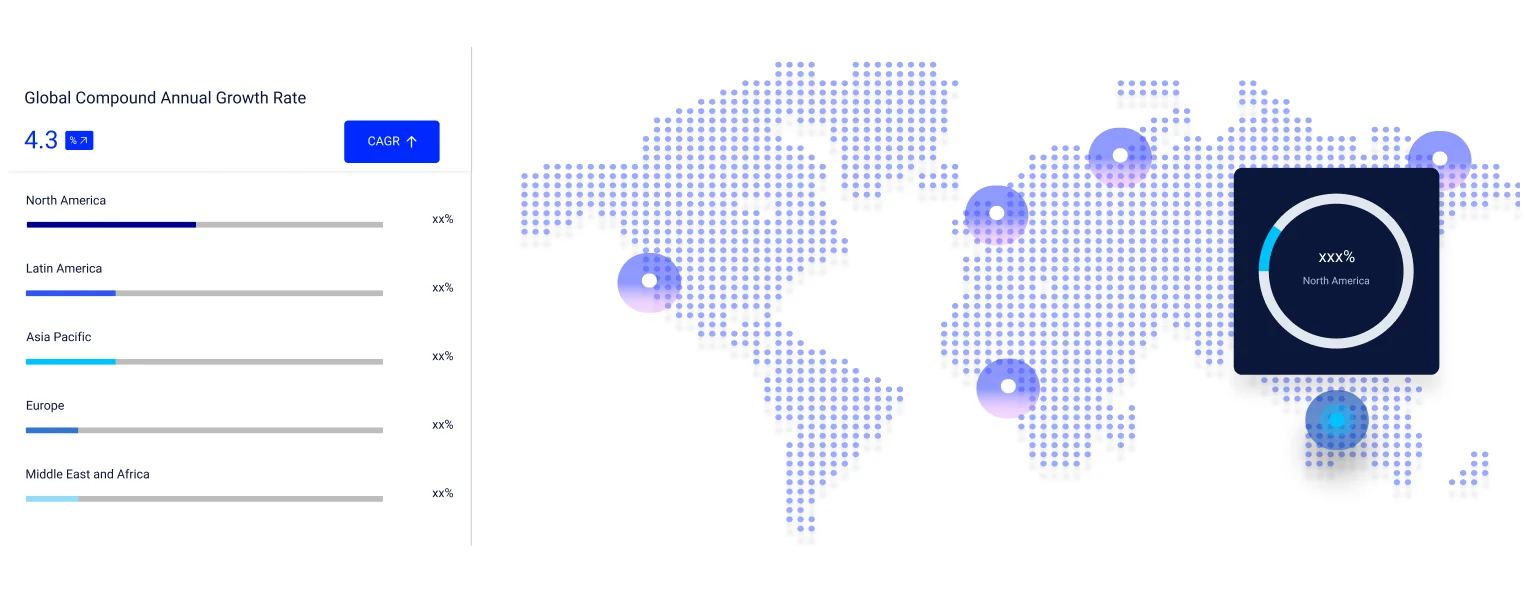
Compound Annual Growth Rate
5.3%
Value in USD Billion
2026-2035
Read more about this report - REQUEST FREE SAMPLE COPY IN PDF
| Global Commercial Refrigeration Equipment Market Report Summary | Description | Value |
| Base Year | USD Billion | 2025 |
| Historical Period | USD Billion | 2019-2025 |
| Forecast Period | USD Billion | 2026-2035 |
| Market Size 2025 | USD Billion | 47.50 |
| Market Size 2035 | USD Billion | 79.61 |
| CAGR 2019-2025 | Percentage | XX% |
| CAGR 2026-2035 | Percentage | 5.30% |
| CAGR 2026-2035 - Market by Region | Asia Pacific | 6.0% |
| CAGR 2026-2035 - Market by Country | India | 6.9% |
| CAGR 2026-2035 - Market by Country | Brazil | 6.1% |
| CAGR 2026-2035 - Market by System Type | Remotely Operated | 6.3% |
| CAGR 2026-2035 - Market by Application | Supermarkets and Hypermarkets | 5.9% |
| Market Share by Country 2025 | Australia | 4.5% |
Carrier Transicold launched [R]eCool, a 38.5 kilowatt hour battery system for trailer transport refrigeration units, on July 29, 2026, now commercially available across Europe for new installations and retrofits on electric or hybrid units serving the commercial refrigeration equipment market. Fleet operators adopting battery powered refrigeration can cut fuel and maintenance costs while meeting tightening emissions rules.
Hoshizaki America was honored with a Kitchen Innovation Award for its PR67B-Z pizza prep table at the 2026 National Restaurant Association Show, held May 16 to 19 in Chicago, reflecting broader innovation activity in the commercial refrigeration equipment market. Operators adopting designs like the PR67B-Z can benefit from faster prep workflows and lower staffing pressure during peak hours.
Zero Zone introduced the Genesys CO2 Edge Compact, a transcritical CO2 condensing unit for the commercial refrigeration equipment market, at IIAR 2026, built around a Copeland scroll compressor with a capacity range of 3 to 12 tons. Operators adopting compact CO2 units like this can lower long term refrigerant compliance costs and gain a smaller footprint option for retrofits.
Liebherr USA introduced new beverage refrigerators and a double drawer refrigerator to its undercounter lineup on February 10, 2026, adding independent temperature zones and remote connectivity. Smaller commercial kitchens and hospitality operators adopting compact undercounter formats can reduce installation costs and free up floor space compared with larger centralized systems.
Compressor efficiency remains one of the most active areas of development in the commercial refrigeration equipment market, since compressors account for a large share of a refrigeration system's total energy use. Manufacturers are redesigning scroll and reciprocating compressor lines to work with lower GWP refrigerants while cutting electricity consumption for supermarkets, cold storage, and industrial cold chain operators. On June 16, 2026, Danfoss launched a new series of energy saving scroll compressors for commercial refrigeration applications targeting supermarkets, cold chain logistics, and industrial cold storage, citing roughly 15 percent lower energy consumption than earlier compressor models.
Major European retail and refrigeration trade fairs have become a key venue for equipment makers to introduce new display case and cold room technologies to food retailers ahead of the peak store renovation season, with exhibitors increasingly using a single stand to represent multiple regional brands rather than showing each one separately. Samsung Electronics presented a joint display of products from FläktGroup, the European HVAC company it had acquired the previous year, at MCE 2026 in Milan in March, positioning the combined lineup as part of its broader commercial refrigeration and HVAC portfolio for retail and building customers.
Smaller supermarkets and convenience formats are driving demand for compact condensing units that use natural refrigerants without the footprint of a full centralized rack system, since these operators typically lack the back of house space needed for larger remote systems in the commercial refrigeration equipment. Arneg presented its PRISMA line of trans critical CO2 condensing units for mini markets and small retail stores at EuroShop 2026 in February, with the company reporting 21 units produced in the second half of 2025 and orders for 34 more units already booked for the first half of 2026, alongside a separate Faro line of R-290 plug-in cabinets.
Localizing compressor production is becoming central to supply chain resilience within the market as manufacturers look to shorten lead times and reduce exposure to cross border tariffs and shipping delays, particularly for customers in fast growing cold chain and food retail markets in the commercial refrigeration equipment across South Asia. On January 15, 2026, Copeland, the compression technologies brand of Emerson Electric Co., completed the first phase of a INR 500 crore investment at its Atit, India, manufacturing facility, delivering the company's first India built scroll compressors and adding condensing unit and heat pump production lines at the same site.
Refrigerant compliance deadlines are pushing display case manufacturers to requalify entire product lines rather than introduce isolated model updates, since a single merchandiser platform often needs to be validated across several refrigerant options before it can be sold nationally. On February 19, 2025, Hussmann updated its Evolve Technologies self-contained merchandiser lineup to operate on R-290 and R-454C refrigerants, helping food retailers comply with AIM Act requirements taking effect in 2026 and 2027 while maintaining consistent case dimensions and energy performance across the updated range.
Read more about this report - REQUEST FREE SAMPLE COPY IN PDF
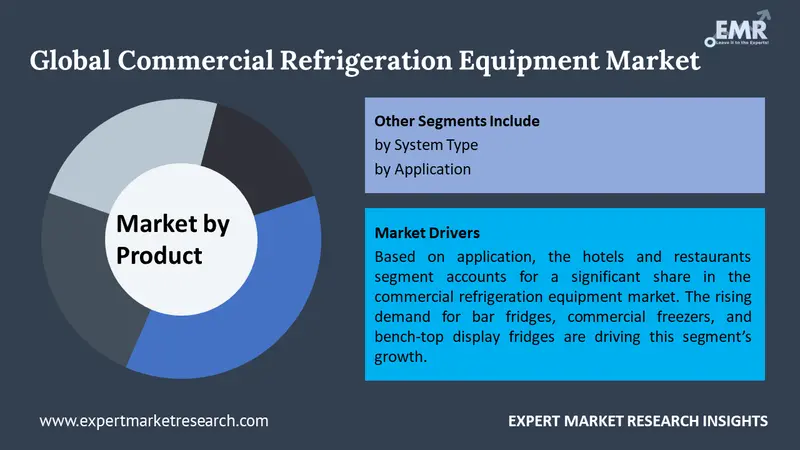
This Expert Market Research’s report titled "Global Commercial Refrigeration Equipment Market Report and Forecast 2026-2035" offers a detailed analysis of the market based on the following segments:
Market Breakup by Product
Key Insight: Refrigerator and freezer units lead the product breakup given their essential role in food storage and preservation across retail, foodservice, and processing environments. Refrigerated display cases and beverage refrigeration are gaining share as retailers prioritize merchandising, while transportation refrigeration benefits from cold chain and e-commerce grocery growth. Ice merchandisers and ice vending equipment remain a smaller share of the mix, with demand concentrated in convenience stores and fuel stations rather than the broader retail base driving the larger categories. Polartemp launched a compact smart ice merchandiser for supermarkets in 2025, reporting a 22 percent lift in impulse ice sales for retailers using the unit.
Market Breakup by System Type
Key Insight: Self-contained systems are favoured in smaller stores and convenience formats for their plug in simplicity and lower installation cost, while remotely operated systems dominate large format supermarkets and hypermarkets that require centralized racks. Suppliers continue to expand self-contained lineups for smaller footprint retailers, with Kysor Warren introducing Opera T, a semi-vertical plug-in refrigerated open cabinet, on November 17, 2025, aimed at convenience stores and hypermarkets seeking sustainable, low-GWP self-contained cooling without a centralized rack system.
Market Breakup by Application
Key Insight: Supermarkets and hypermarkets account for the largest application share owing to their reliance on extensive refrigerated and frozen product displays, while convenience stores are expanding their refrigeration footprint as chains push further into fresh and prepared food. Hotels and restaurants and bakeries maintain steady demand tied to foodservice preparation and display needs, illustrated by Atlantic Restaurant and Supermarket Equipment expanding its nationwide walk-in cooler support on July 9, 2026, to serve restaurants, supermarkets, bakeries, and cafes undertaking refrigeration upgrades and new store openings across the United States.
Market Breakup by Region
Key Insight: North America leads regional demand on the back of an established food retail base and early adoption of low GWP refrigerant rules, with roughly 5,120 supermarkets across the United States and Canada operating trans critical CO2 refrigeration systems in 2025, up nearly 75 percent from 2023, according to industry tracking published in 2026. Asia Pacific is expanding fastest as urbanization and organized retail investment accelerate cold chain build out, while Europe continues to shift toward natural refrigerants under its own regulatory timeline and Latin America and the Middle East and Africa see steady growth tied to retail modernization.
By product, refrigerator and freezer units lead the market owing to their essential role in food storage and preservation
Refrigerator and freezer units hold the largest commercial refrigeration equipment market share as they remain indispensable across supermarkets, restaurants, and food processing facilities that require consistent temperature control for perishable goods. Demand is further supported by a large installed base of aging units that operators are gradually replacing to meet current refrigerant and energy efficiency standards, illustrated by Chef's Deal Restaurant Equipment expanding its portfolio on November 28, 2025, with Complete Refrigeration Systems built around rack systems and temperature-zoned cold rooms for supermarkets, grocery chains, and food distribution facilities.
Transportation refrigeration is the fastest growing product category, supported by expanding cold chain logistics and e-commerce grocery delivery that require reliable temperature control from warehouse to storefront. Fleet operators are also under growing pressure to cut emissions from diesel powered units, prompting a shift toward electrified and hybrid trailer and truck refrigeration units, alongside continued growth in beverage refrigeration and ice merchandising equipment tied to convenience and foodservice channels.
By system type, remotely operated systems lead the market as large format retailers depend on centralized racks for extensive store layouts
Remotely operated systems hold the largest share of the commercial refrigeration equipment market by system type, as large format supermarkets and hypermarkets favour centralized racks that separate condensing units from display cases, lowering in store heat load and supporting scalability across extensive store layouts. Suppliers of remote CO2 condensing units are reporting steady order growth, with Kysor Warren Epta US selling 250 units of its ECO2Mini remote condensing unit since the start of 2026 as more North American supermarkets adopt trans critical CO2 racks.
Self-contained systems are the fastest growing system type as independent grocers, convenience stores, and smaller footprint operators favor plug in units that require minimal infrastructure investment and can be relocated as store layouts change, a shift reinforced by upcoming refrigerant compliance deadlines. Their simpler installation process also makes them attractive for retailers renovating existing space rather than building new stores from the ground up.
By application, supermarkets and hypermarkets dominate the market through extensive refrigerated and frozen product displays
Supermarkets and hypermarkets account for the largest application share of the commercial refrigeration equipment market because of their dependence on wide refrigerated and frozen product assortments across meat, dairy, produce, and beverage categories. Large format retailers also tend to operate the most complex remotely operated rack systems, sustaining steady demand for controls and service contracts, exemplified by Food Lion's late-2025 remodel program in the Charlotte, North Carolina, region, which added CO2-based cooling systems to select stores as part of a broader store renewal effort.
Convenience stores represent the fastest growing application as chains expand fresh and prepared food offerings that depend on additional refrigerated and open-air case capacity. In April 2026, Seven & i Holdings, parent company of 7-Eleven, outlined plans to remodel more than 7,000 North American convenience stores by 2030, including reinventing the open-air refrigerated case as part of a broader push into fresh and made to order food.
Read more about this report - REQUEST FREE SAMPLE COPY IN PDF
North America accounts for the largest regional share, supported by an established food retail base and early refrigerant regulation
North America leads the global market as a mature food retail and foodservice sector, combined with early adoption of low GWP refrigerant standards, drives continuous equipment replacement. Manufacturers are responding to an aging installed base of refrigerated display cases across United States supermarkets, most of which predate 2018, by expanding low-GWP retrofit lineups that meet updated federal energy conservation standards ahead of anticipated refurbishment cycles through 2030. Hillphoenix introduced a new line of natural refrigerant multideck cases in 2025, letting chains swap out older R-404A units without reconfiguring existing store layouts.
Asia Pacific is the fastest growing region as urbanization, rising incomes, and the expansion of organized food retail accelerate cold chain infrastructure build out across China, India, Japan, and Southeast Asia. India's cold chain market, which underpins much of the region's refrigeration equipment demand, was valued at INR 2,535.87 billion in 2025 and is projected to expand at a 10.43 percent CAGR through 2034, driven by organized food retail growth and government-backed cold storage infrastructure programs.
The global industry is becoming increasingly innovation oriented as major commercial refrigeration equipment companies invest in natural refrigerant technology, remote diagnostics, and regional manufacturing capacity to defend their market positions. Manufacturers are prioritizing compressor efficiency improvements, controls integration, and store level connectivity to differentiate their offerings in a market where refrigerant compliance timelines are increasingly standardized across regions. Strategic emphasis on localized production is allowing companies to serve growing Asia Pacific and Latin American demand while managing logistics costs and refrigerant availability.
Major commercial refrigeration equipment market players are also focusing on sustainability credentials, pursuing low GWP refrigerant portfolios, energy efficiency certifications, and end of life recycling programs to align with tightening environmental regulation in North America and Europe. Opportunities are emerging in self-contained merchandiser retrofits and transportation refrigeration electrification, as well as in expanding manufacturing capacity across India and Southeast Asia. Companies that successfully combine natural refrigerant expertise with regional manufacturing footprints and reliable aftermarket service networks are expected to strengthen their competitive position over the coming years.
Founded in 1933 and headquartered in Nordborg, Denmark, Danfoss manufactures compressors, controls, and condensing units for commercial and industrial refrigeration, alongside a broader portfolio spanning climate and energy solutions. Its ADAP KOOL and Optyma product lines supply controllers, sensors, and condensing units used across supermarket, cold storage, and food service applications in both self-contained and remotely operated systems. The company operates manufacturing and application development facilities across Europe, North America, and Asia, producing compressors and components compatible with natural and low GWP refrigerants for food retail and cold chain customers in more than 100 countries.
Founded in 1890 and headquartered in St. Louis, Missouri, United States, Emerson Electric Co. manufactures compressors, condensing units, and controls for commercial refrigeration through its Copeland brand. Copeland's product range spans scroll, reciprocating, and screw compressors used in supermarket racks, cold storage facilities, and transport refrigeration units, alongside electronic controls and monitoring systems for retail and industrial customers. The business operates manufacturing plants across North America, Europe, and Asia, supplying compressor technology compatible with a range of refrigerants to original equipment manufacturers and food retail operators worldwide.
Founded in 1885 and headquartered in Cork, Ireland, Johnson Controls manufactures industrial and commercial refrigeration systems, including compressors and chillers, under its Sabroe, Frick, and York brands. Sabroe and Frick supply ammonia, CO2, and other natural refrigerant based screw and reciprocating compressors for food and beverage processing, cold storage, and industrial cooling applications, while the company's building technologies portfolio adds controls, security, and fire detection systems. Johnson Controls operates manufacturing and service facilities across Europe, North America, and Asia serving industrial refrigeration customers worldwide.
Established in 1972 and headquartered in Ostend, Belgium, Daikin Europe N.V. manufactures refrigeration and air conditioning equipment for the European, Middle Eastern, and African markets under brands including AHT, Zanotti, Hubbard, and Tewis. The company's refrigeration portfolio spans plug-in and remote display cases, cold rooms, and integrated store refrigeration systems for supermarkets and foodservice customers, alongside its wider heating, ventilation, and air conditioning offering as the regional subsidiary of Daikin Industries. Daikin Europe operates manufacturing sites across several European countries supplying retail and industrial customers throughout the region.
Other key players include Ali Group North America, Electrolux Professional AB, Dover Corporation, Hussmann Corporation, and Excellence Industries, among others.
*Please note that this is only a partial list; the complete list of key players is available in the full report. Additionally, the list of key players can be customized to better suit your needs.*
Unlock the latest insights with our commercial refrigeration equipment market trends 2026 report. Discover regional growth patterns, refrigerant technology shifts, and key industry players. Stay ahead of competition with trusted data and expert analysis. Download your free sample report today and drive informed decisions in the market.


Upto 15% Off
USD
$2499 $2249
$3999 $3599
$4999 $4249
$5999 $5099


*While we strive to always give you current and accurate information, the numbers depicted on the website are indicative and may differ from the actual numbers in the main report. At Expert Market Research, we aim to bring you the latest insights and trends in the market. Using our analyses and forecasts, stakeholders can understand the market dynamics, navigate challenges, and capitalize on opportunities to make data-driven strategic decisions.*
In 2025, the market reached an approximate value of USD 47.50 Billion.
The market is projected to grow at a CAGR of 5.30% between 2026 and 2035.
The market is estimated to witness a healthy growth in the forecast period of 2026-2035 to reach a value of USD 79.61 Billion by 2035.
Expanding low GWP and natural refrigerant product lines, investing in smart and connected refrigeration controls, localizing manufacturing to shorten delivery times and meet regional refrigerant rules, strengthening aftermarket service networks, and pursuing acquisitions in adjacent thermal management and data center cooling technologies.
The key trends in the commercial refrigeration equipment market include technological innovations by the major market players aimed towards producing eco-friendly refrigerators and use of commercial refrigeration equipment for display and promotion of frozen food products.
Refrigerator and freezer, refrigerated display case, transportation refrigeration, beverage refrigeration, and ice merchandisers and ice vending equipment, among others, are the different products included in the market.
Self-contained and remotely operated are the segments of the market based on system type.
Hotels and restaurants, supermarkets and hypermarkets, convenience stores, and bakeries, among others, are the different applications included in the market.
The major components used in commercial refrigeration equipment include compressor, condenser, evaporator, and expansion devices, among others.
The key players in the market include Danfoss, Emerson Electric Co., Johnson Controls, Ali Group North America, Electrolux Professional AB, Daikin Europe N.V., Dover Corporation, Hussmann Corporation, and Excellence Industries, among others.
Companies face rising raw material and compressor costs, complex refrigerant transition timelines, high equipment replacement expenses, servicing and maintenance demands across large store networks, and intense competition among established global manufacturers and regional specialists offering lower cost alternatives.
Explore our key highlights of the report and gain a concise overview of key findings, trends, and actionable insights that will empower your strategic decisions.
| REPORT FEATURES | DETAILS |
| Base Year | 2025 |
| Historical Period | 2019-2025 |
| Forecast Period | 2026-2035 |
| Scope of the Report |
Historical and Forecast Trends, Industry Drivers and Constraints, Historical and Forecast Market Analysis by Segment:
|
| Breakup by Product |
|
| Breakup by System Type |
|
| Breakup by Application |
|
| Breakup by Region |
|
| Market Dynamics |
|
| Competitive Landscape |
|
| Companies Covered |
|
Datasheet
One User
USD 2,499
USD 2,249
tax inclusive*
Single User License
One User
USD 3,999
USD 3,599
tax inclusive*
Five User License
Five User
USD 4,999
USD 4,249
tax inclusive*
Corporate License
Unlimited Users
USD 5,999
USD 5,099
tax inclusive*
*Please note that the prices mentioned below are starting prices for each bundle type. Kindly contact our team for further details.*
Flash Bundle
Small Business Bundle
Growth Bundle
Enterprise Bundle
*Please note that the prices mentioned below are starting prices for each bundle type. Kindly contact our team for further details.*
Flash Bundle
Number of Reports: 3
20%
tax inclusive*
Small Business Bundle
Number of Reports: 5
25%
tax inclusive*
Growth Bundle
Number of Reports: 8
30%
tax inclusive*
Enterprise Bundle
Number of Reports: 10
35%
tax inclusive*
How To Order

Select License Type
Choose the right license for your needs and access rights.

Click on ‘Buy Now’
Add the report to your cart with one click and proceed to register.

Select Mode of Payment
Choose a payment option for a secure checkout. You will be redirected accordingly.
Strategic Solutions for Informed Decision-Making
Gain insights to stay ahead and seize opportunities.

Get insights & trends for a competitive edge.

Track prices with detailed trend reports.

Analyse trade data for supply chain insights.

Leverage cost reports for smart savings

Enhance supply chain with partnerships.

Connect For More Information
Our expert team of analysts will offer full support and resolve any queries regarding the report, before and after the purchase.
Our expert team of analysts will offer full support and resolve any queries regarding the report, before and after the purchase.
We employ meticulous research methods, blending advanced analytics and expert insights to deliver accurate, actionable industry intelligence, staying ahead of competitors.
Our skilled analysts offer unparalleled competitive advantage with detailed insights on current and emerging markets, ensuring your strategic edge.
We offer an in-depth yet simplified presentation of industry insights and analysis to meet your specific requirements effectively.




