

Consumer Insights
Uncover trends and behaviors shaping consumer choices today
Procurement Insights
Optimize your sourcing strategy with key market data
Industry Stats
Stay ahead with the latest trends and market analysis.
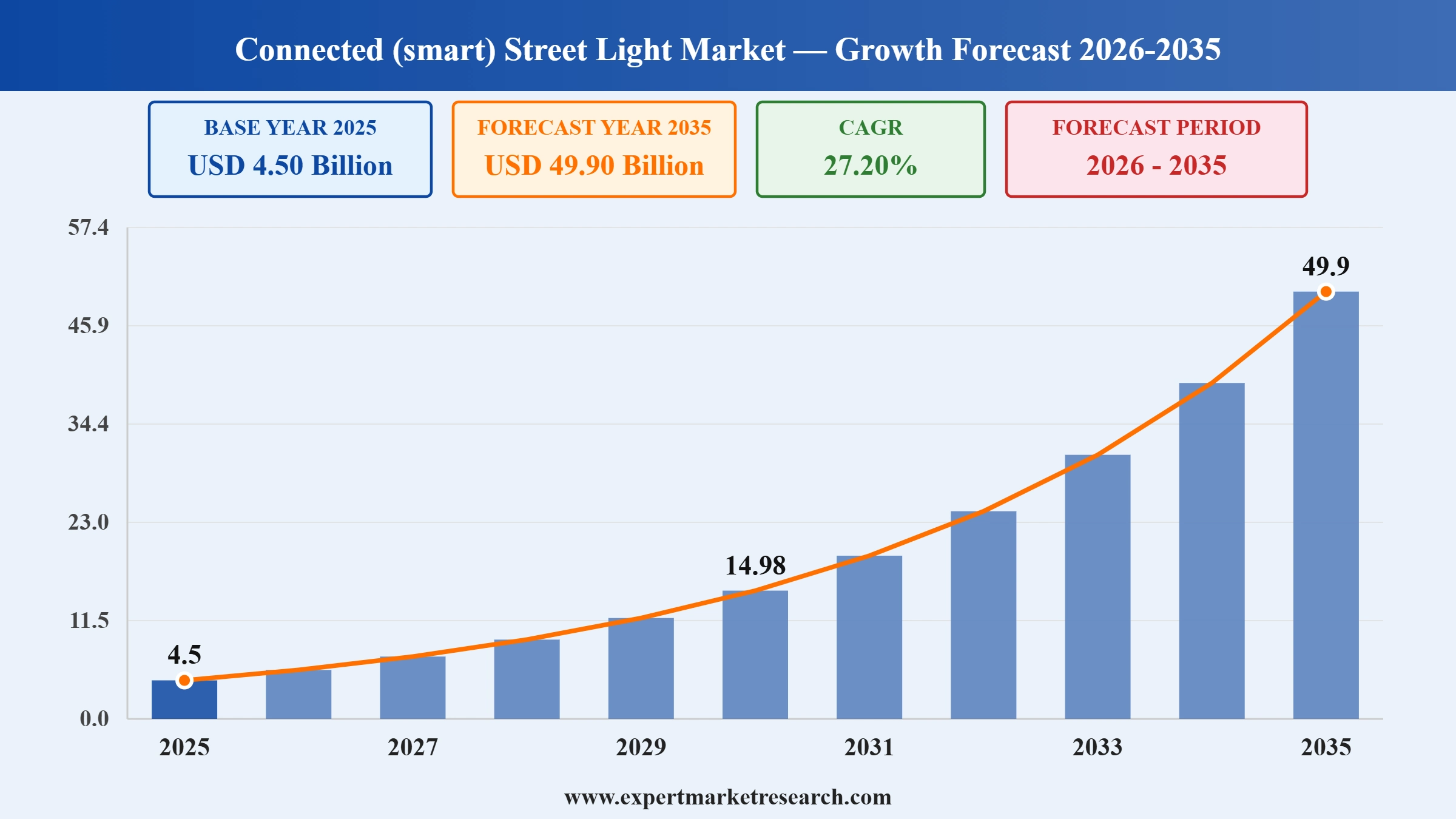
The global connected smart street light market was valued at USD 4.50 Billion in 2025. The market is expected to grow at a CAGR of 27.20% during the forecast period of 2026-2035 to reach a value of USD 49.90 Billion by 2035. Factors like growing smart-city initiatives, rising demand for energy-efficient public lighting, and increasing deployment of IoT-enabled infrastructure are driving growth in the market. Connected street lights enable remote monitoring, adaptive lighting, fault detection, and energy management, helping municipalities reduce operating costs. Integration with traffic management, environmental monitoring, and public safety systems is further expanding their functionality.
There are two reasons resulting in an increasing demand in the connected (smart) street light market. The first reason is related to the fact that government agencies are issuing regulations on energy efficiency standards and environmental sustainability objectives. This creates a strong requirement for replacing outdated lighting solutions with remotely operated and efficient smart solutions that will help to cut down maintenance expenses. Another reason relates to the rise in deployment of 5G technology. As a result, street lighting solutions are being designed for communication and surveillance purposes.
The connected (smart) street light market is experiencing swift changes as city planners abandon traditional LED retrofitting solutions for advanced urban lighting solutions based on the analysis of data. Signify took a step in the right direction by improving its Interact City system in March 2026, so that it could help city administrations unite streetlights and environmental sensors, traffic management systems, and public security initiatives via one management platform. This reflects the growing trend of multifunctional urban infrastructure, as municipal street lighting accounts for a significant share of a city's overall electricity consumption, driving the need for smarter and more efficient systems.
In addition, the connected (smart) street light market experiences positive changes associated with increasing amounts of investments into smart city initiatives, transportation infrastructure modernization projects, and intelligent urban lighting networks. Advanced communication solutions, edge computing capacities, and cloud-based street lighting management systems are becoming popular among top vendors as the new way of promoting streetlight technologies. For example, in November 2024, Ubicquia launched an AI-powered smart lighting controller delivering real-time diagnostics, enhanced visibility, energy savings, and proactive streetlight management.
Read more about this report - REQUEST FREE SAMPLE COPY IN PDF
In India, the government of Delhi gave permission for changing almost 96,000 streetlights into modern LED lights with adaptive lights, remote monitoring, and centralized management. This is expected to decrease energy usage and save about INR 25 crores annually. Companies can therefore build their own centralized management systems for lighting and adaptive lighting along with predictive maintenance systems.
Andhra Pradesh implemented Phase II of its Smart LED Street Lighting Program, deploying 750,000 streetlights integrated with IoT-based management systems that enable real-time monitoring, automated operations, fault detection, and improved energy efficiency. Companies can provide IoT connectivity solutions and lighting management solutions through cloud computing, boosting the connected (smart) street light market value.
Itron collaborated with Current Lighting to provide integrated smart lighting solutions by offering remote asset management, fault management, energy optimization, and sensor-based smart city applications. Firms can therefore develop their own sensor-based ecosystems and smart urban services to leverage the streetlight network for multi-functional smart cities.
Türkiye deployed its smart streetlights that include LED lighting, EV and wheelchair charging stations, Wi-Fi capability, CCTV camera systems, USB charging points, and digital signage facilities. Companies in the connected (smart) street light market can leverage lighting towers for mobility, connectivity, and safety to generate revenue from smart cities.
The connected (smart) street light market continues to see significant growth owing to government investment in smart city infrastructures. Connected street lighting manufacturers are increasingly incorporating other features such as traffic monitoring, environmental monitoring, security cameras, and emergency response systems. Several cities across Europe and Asia are making investments in the deployment of smart streetlights as part of broader digitization initiatives focused on making their urban spaces safer, energy efficient, and better managed. In addition, the European Commission is funding projects related to smart cities through sustainable and digital initiatives to encourage urban interoperability. Aligning with this trend, in April 2025, Flashnet surpassed one million connected smart streetlights globally through its interoperable inteliLIGHT platform.
Several cities are adopting adaptive lighting systems capable of adjusting lighting depending on traffic levels, pedestrians' presence, weather changes, and time of the day. Such lighting systems allow municipalities to improve energy efficiency as well as safety of roads at nighttime. The connected (smart) street light market is observing increasing interest among companies in developing adaptive lighting using artificial intelligence (AI) systems and edge computing to enable better decision-making and management processes in lighting nodes. For example, in November 2024, Itron and Cielis extended Paris smart streetlight management, enhancing efficiency, sustainability, and IoT-driven operations.
The emergence of streetlights that can accommodate telecommunication equipment is leading to more opportunities for infrastructure sharing. Smart poles that incorporate lighting, small-cell antenna devices, cameras, and sensors are becoming vital components of urban network infrastructure. With government initiatives aimed at the rapid rollout of broadband and 5G services, cities are encouraged to use their existing street assets to deploy new network components. Leading companies in the connected (smart) street light market are partnering with telecommunications firms to develop smart poles that make the most of infrastructure while reducing implementation costs and visual pollution. For example, in May 2025, O₂ Telefónica and 5G Synergiewerk launched nationwide 5G streetlight expansion, boosting urban network capacity across Germany's largest cities.
Nations and municipal administrations are making more efforts to minimize energy consumption and greenhouse gas emissions by public infrastructure. Connected street lighting solutions provide a means of monitoring energy consumption in real-time, scheduling dimming operations, and optimizing routine maintenance procedures. Urban sustainability programs are fostering the switch from traditional high-pressure sodium-vapor lighting systems to intelligent lighting networks, redefining the connected (smart) street light market dynamics and trends. Manufacturers are introducing advanced smart lighting solutions that offer energy analytics capabilities to help city managers meet their environmental goals. Aligning with this trend, in April 2026, Trinseo and Signify recycled discarded streetlight components into new lampshades containing 75% recycled polycarbonate material.
Smart street lighting systems are developing into urban intelligence solutions that are able to gather and transmit vital information about cities. Modern sensor-connected streetlights can include sensors for measuring pollution levels, sound monitoring systems, weather stations, parking management systems, and various security systems. Several cities across the world are expanding their efforts to utilize sensors within their smart streetlight systems, thus gaining greater capacity for environmental surveillance and urban planning. Increasing needs for information related to cities is expected to prompt many light manufacturers to promote their solutions within smart cities. Aligning with this trend in the connected (smart) street light market, in January 2024, Itron and Lightwell deployed smart streetlighting solutions for Fluvius, improving efficiency across Belgian municipalities.
The EMR’s report titled “Global Connected (Smart) Street Light Market Report and Forecast 2026-2035” offers a detailed analysis of the market based on the following segments:
Market Breakup by Connectivity
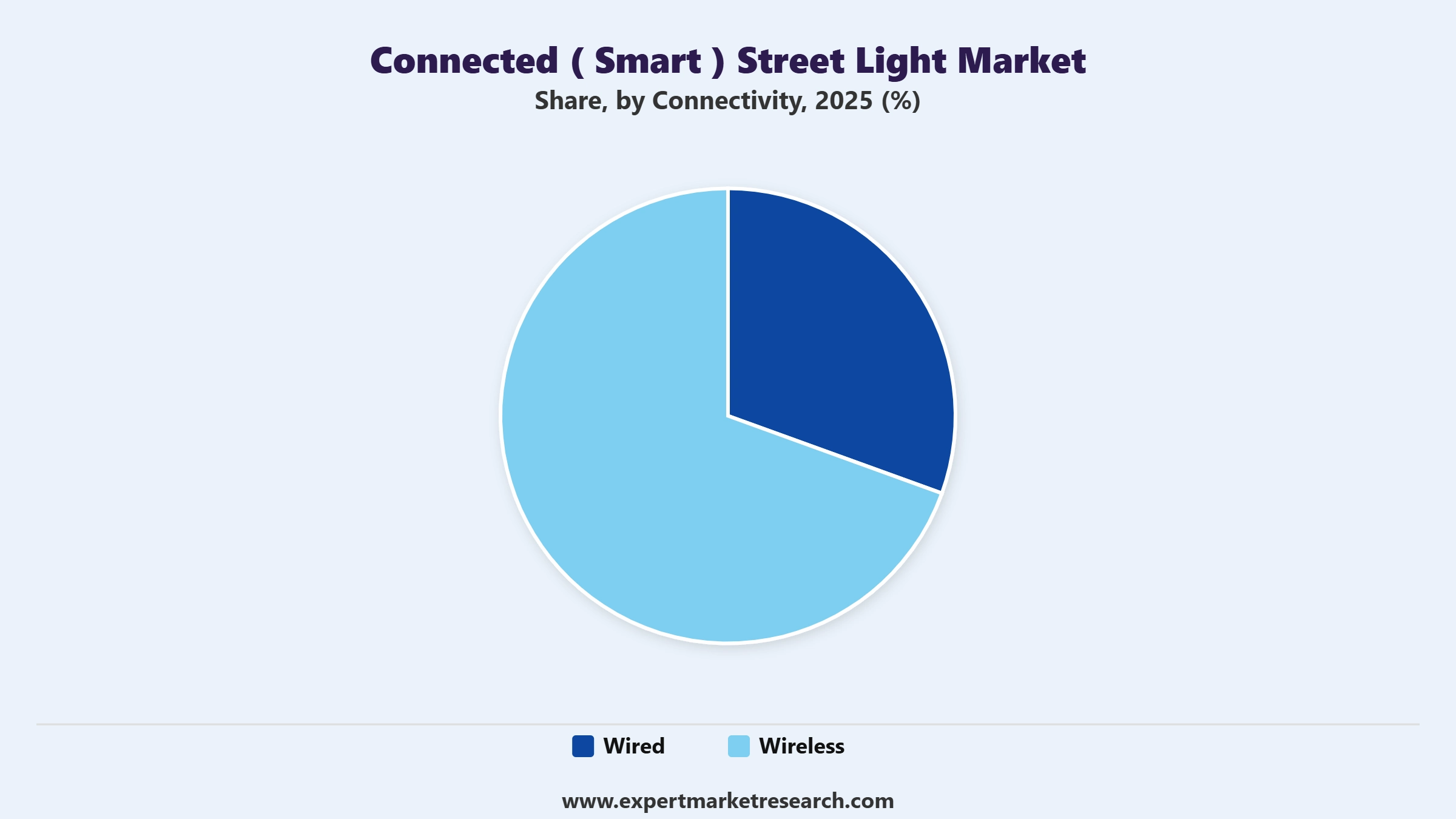
Key Insight: The connected (smart) street light market landscape is influenced by different priorities that are present within each municipality and infrastructure provider. Wireless connectivity continues to dominate the market owing to its easy implementation and ability to expand the network extensively, as well as integrate various smart city applications on one platform. On the other hand, wired networks are becoming increasingly popular through initiatives that require continuous communication, superior cybersecurity, and stability of the whole system for a considerable period of time. Both approaches continue to develop in order to be able to manage data-intense operations and predictive maintenance of assets.
Market Breakup by Component
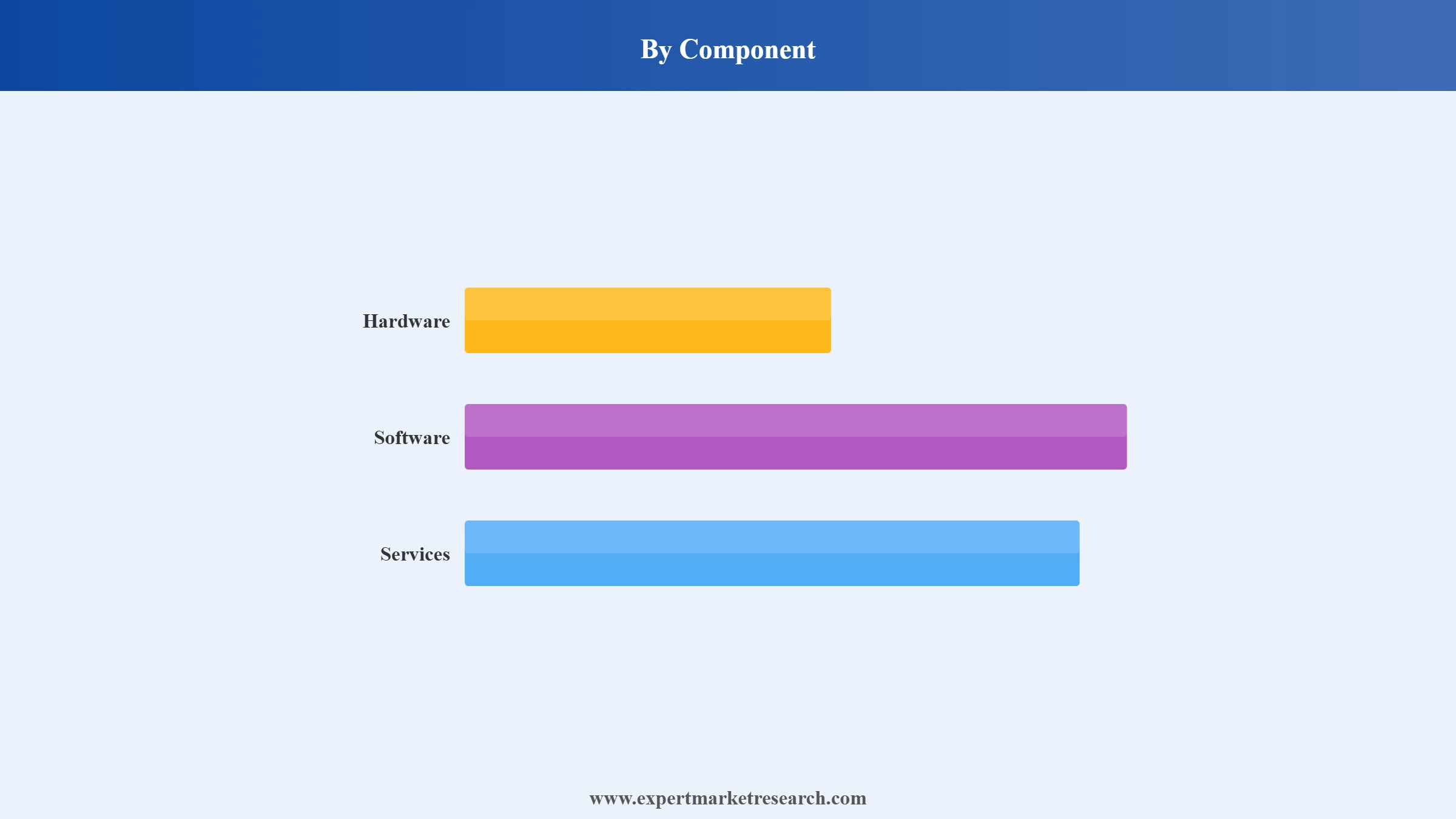
Key Insight: The need for more advanced technology in the connected lighting ecosystem drives component demand in the connected (smart) street light market. The hardware segment continues to dominate the market with the implementation of light sources, drivers and ballasts, sensors, switches, controllers, and various other devices that are connected. The software segment is expected to witness faster growth, driven by increasing demand for advanced management, automation, monitoring, and data analytics solutions that enhance operational efficiency and decision-making. Service offerings are also becoming integral for helping with integration, system optimization, consulting, and maintenance services. Overall, the combined ecosystem is expected to help improve energy management and operational efficiency through its components.
Market Breakup by Region
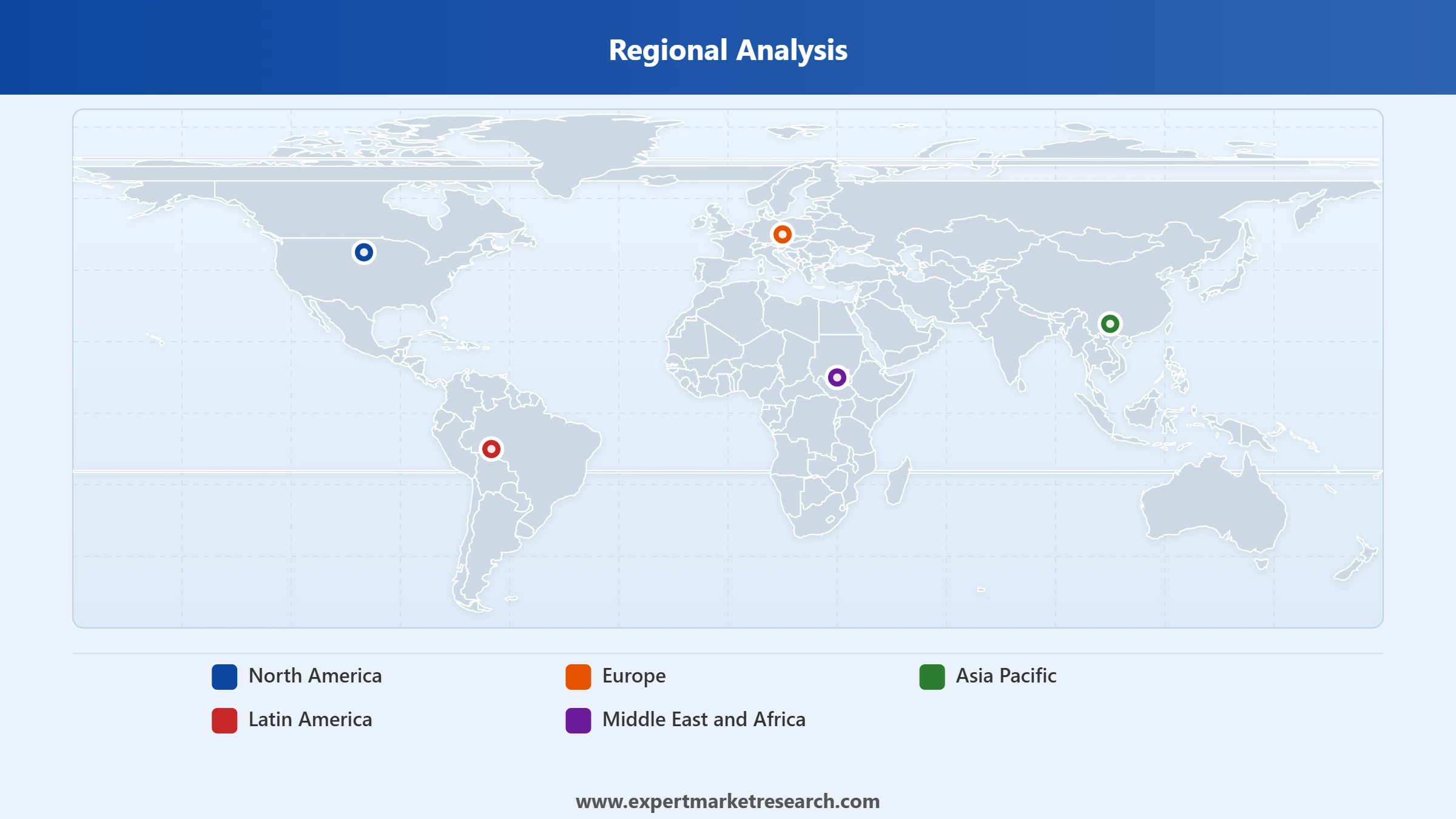
Key Insight: The regional growth strategies of cities vary based on priorities in infrastructure development and digitalization in urban environments. In North America, cities benefit from technology use, existing communication systems, and continued infrastructure upgrades. For Europe, the main driving factors behind the connected (smart) street light market development include sustainable practices, energy-efficient policies, and smart city projects. The Asia Pacific region experiences an accelerated growth pace because of its fast urbanization and huge investments in infrastructure development. Latin American cities, on the other hand, are slowly but steadily improving in terms of adoption of new technologies through modernization and energy efficiency programs.
Read more about this report - REQUEST FREE SAMPLE COPY IN PDF
Wireless connectivity registers the largest share of the market due to scalability and remote management capabilities
Wireless connectivity captures the dominant share of the connected (smart) street light market due to cities' growing focus on quick deployment, less complex installation process, and scalable network capability. Wireless technology allows remote monitoring and control of lighting assets without the need for any cable infrastructure improvements. The use of wireless networks for the connection of streetlights is especially appealing to large urban areas. Current trends indicate that wireless solution providers will develop wireless technology by integrating mesh networking, cloud-based software, and real-time diagnostics features. In September 2023, Oxfordshire announced a trial of smart street lamps equipped with EV charging capabilities, 5G connectivity, and public Wi-Fi, supporting the development of connected and sustainable urban infrastructure.
Read more about this report - REQUEST FREE SAMPLE COPY IN PDF
As per the connected (smart) street light market report, the demand for wired connectivity solutions keeps growing, with many cities looking for high levels of reliability and security of communication networks for mission-critical applications such as streetlighting networks. Municipal authorities in charge of transport corridors, tunnels, airport runways, and industrial areas tend to opt for wired connectivity since it offers reliable operation and reduced susceptibility to electromagnetic interference. Manufacturers are also introducing cutting-edge Ethernet-based lighting control systems along with the latest fiber communications architecture capable of fast information exchange. For example, in December 2025, Flashnet launched FRCM v5 controller, enabling smarter, automated, and highly responsive street lighting grid management.
Hardware components account for the largest share of the market due to infrastructure deployment requirements
Hardware dominates the component segment of the connected (smart) street light market since all connected street lighting projects require substantial spending on hardware components. Light sources, drivers and ballasts, sensors, switches, controllers, and other devices play a vital role in creating a network of connected street lights. The trend toward multifunctional hardware able to support environmental monitoring, traffic analysis, and public security is becoming more prevalent among vendors. This is especially true concerning the increased need for advanced sensors and intelligent controllers which help optimize operations of existing street lighting systems and achieve maximum potential of their investments.
Read more about this report - REQUEST FREE SAMPLE COPY IN PDF
Software components observe fastest growth in the connected (smart) street light market due to increased recognition by urban communities of the importance of centralized management and analysis of lighting system performance. Modern software solutions include capabilities such as remote monitoring, lighting control systems, predictive maintenance, and performance analytics. The development of cloud-native software, cybersecurity measures, and AI-based solutions are becoming increasingly prevalent within the industry. In February 2025, Ameresco secured a smart LED streetlighting pilot in New Orleans, enhancing efficiency, safety, and analytics.
North America accounts for the largest share of the market due to modernization initiatives
North America continues to lead in the global connected (smart) street light market, due to the presence of various infrastructural modernization initiatives, heavy investment in smart cities, and wide implementation of digital public services. Local authorities are adopting innovative lighting solutions to increase efficiency, ensure improved public safety, and pursue sustainability goals. The presence of major technology players and strong communication networks in the region also fuels market expansion. Moreover, emphasis on integrated city management by regional government agencies are expected to drive the need for the adoption of integrated connected street light networks to deliver diverse services through one infrastructure.
Asia Pacific emerges to be the fastest growing regional connected (smart) street light market due to rising urbanization, infrastructure development, and implementation of advanced public lighting systems. Countries in the region are heavily investing in smart cities and efficient transport systems, and have started focusing on energy efficient urban infrastructure. Rapid growth in digital connectivity networks in addition to a rise in the need for increased efficiency among local municipalities are expected to drive the market over the coming years. In June 2026, VES Solutions unveiled an AI-powered smart streetlight system in Telangana, enhancing energy efficiency and urban infrastructure.
Read more about this report - REQUEST FREE SAMPLE COPY IN PDF
Leading connected (smart) street light companies are transitioning from offering energy efficient lighting solutions to providing intelligent infrastructure solutions. Firms are concentrating on offering solutions that include artificial intelligence, edge computing, environment sensing, traffic analysis, and cloud-based control and management software systems. They are also investing in security and communication protocol standards, which offer 5G technology solutions, security cameras, and Wi-Fi hotspots.
Connected (smart) street light market players can further leverage opportunities with smart cities, improvements in transportation corridors, and sustainability projects within municipalities. Vendors are increasingly entering into service agreements, subscriptions, and managed infrastructure agreements, as opposed to hardware sale agreements alone. Collaboration among lighting providers, telecommunications companies, and software developers is accelerating the development of intelligent urban infrastructure solutions that enhance connectivity, efficiency, and smart city operations.
Founded in 2014, and based in the United States, EnGoPlanet Energy Solutions focuses on producing smart street lights that are powered by renewable energy sources. The technology offered by the firm consists of smart street light systems featuring solar power generation, kinetic energy collection, battery storage, and lighting control technology. This firm aims at providing solutions for resilient urban infrastructure along with offering low reliance on power grid electricity systems.
Founded in 1892, and based out of Boston, Massachusetts, United States, General Electric has been a longstanding player in the fields of smart infrastructure and connected lightings. General Electric offers solutions via its advanced lighting controls, digital asset management capabilities, and Industrial Internet of Things (IoT) products.
Founded in 2016 and with headquarters located in Eindhoven, Netherlands, Signify stands out as one of the major players in the connected (smart) street light market. The company's Interact City platform allows for the management of lighting equipment, sensor integration, energy consumption tracking, and implementation of other applications for use in smart cities. Signify continues to develop the scope of its operations by concentrating on interoperable urban infrastructures.
Founded in 2007 and with headquarters in Nova Scotia, Canada, LED Roadway Lighting provides innovative lighting equipment for municipal and roadway applications. This organization specializes in the production of lighting control technology, networking solutions, and LED technology.
Other key players in the market include LonMark International Inc., Signify Holding B.V., Cisco Systems, Inc., DimOnOff Inc., Citelum S.A., and Echelon, among others.
*Please note that this is only a partial list; the complete list of key players is available in the full report. Additionally, the list of key players can be customized to better suit your needs.*
Unlock the latest insights with our connected (smart) light market trends 2026 report. Discover regional growth patterns, consumer preferences, and key industry players. Stay ahead of competition with trusted data and expert analysis. Download your free sample report today and drive informed decisions in the market.


Upto 15% Off
USD
$2499 $2249
$3999 $3599
$4999 $4249
$5999 $5099


*While we strive to always give you current and accurate information, the numbers depicted on the website are indicative and may differ from the actual numbers in the main report. At Expert Market Research, we aim to bring you the latest insights and trends in the market. Using our analyses and forecasts, stakeholders can understand the market dynamics, navigate challenges, and capitalize on opportunities to make data-driven strategic decisions.*
The global connected (smart) street light market is expected to grow at a CAGR of about 27.20% in the forecast period of 2026-2035.
The major drivers of the market such as increasing population, increasing demand for intelligent connected appliances, including intelligent road lamps, growth of sensors and wireless systems in smart lighting, rise in the demand for greener strategies, introduction of new wireless technologies, and rapidly rising trend of street lighting systems and lighting in commercial setups are expected to aid the industry growth.
The rising number of smart cities and increasing awareness of energy conservation and effective lighting methods are the key trends trends affecting the development of the connected (smart) street light industry.
North America, Latin America, Middle East and Africa, Europe, and Asia Pacific are the major regions in the market.
The major connectivity segments in the market are wired and wireless.
The major types of components for the market are hardware, software, and services. Hardware can be further divided into the light source, drivers and ballast, sensor, switches, and controllers, among others. The light source can be subdivided into LED lamps, and sodium vapour lamps, among others.
The major players in the market are EnGoPlanet Energy Solutions LLC, General Electric Company (NYSE: GE), Philips Lighting (Signify Holding), LED Roadway Lighting Ltd., LonMark International Inc., Signify Holding B.V., Cisco Systems, Inc. , DimOnoff Inc., Citelum S.A., Echelon, Others.
In 2025, the global connected (smart) street light market reached an approximate value of USD 4.50 Billion.
The market is expected to attain approximately USD 49.90 Billion by 2035.
Explore our key highlights of the report and gain a concise overview of key findings, trends, and actionable insights that will empower your strategic decisions.
| REPORT FEATURES | DETAILS |
| Base Year | 2025 |
| Historical Period | 2019-2025 |
| Forecast Period | 2026-2035 |
| Scope of the Report |
Historical and Forecast Trends, Industry Drivers and Constraints, Historical and Forecast Market Analysis by Segment:
|
| Breakup by Connectivity |
|
| Breakup by Component |
|
| Breakup by Region |
|
| Market Dynamics |
|
| Competitive Landscape |
|
| Companies Covered |
|
| Report Price and Purchase Option | Explore our purchase options that are best suited to your resources and industry needs. |
| Delivery Format | Delivered as an attached PDF and Excel through email, with an option of receiving an editable PPT, according to the purchase option. |
Datasheet
One User
USD 2,499
USD 2,249
tax inclusive*
Single User License
One User
USD 3,999
USD 3,599
tax inclusive*
Five User License
Five User
USD 4,999
USD 4,249
tax inclusive*
Corporate License
Unlimited Users
USD 5,999
USD 5,099
tax inclusive*
*Please note that the prices mentioned below are starting prices for each bundle type. Kindly contact our team for further details.*
Flash Bundle
Small Business Bundle
Growth Bundle
Enterprise Bundle
*Please note that the prices mentioned below are starting prices for each bundle type. Kindly contact our team for further details.*
Flash Bundle
Number of Reports: 3
20%
tax inclusive*
Small Business Bundle
Number of Reports: 5
25%
tax inclusive*
Growth Bundle
Number of Reports: 8
30%
tax inclusive*
Enterprise Bundle
Number of Reports: 10
35%
tax inclusive*
How To Order

Select License Type
Choose the right license for your needs and access rights.

Click on ‘Buy Now’
Add the report to your cart with one click and proceed to register.

Select Mode of Payment
Choose a payment option for a secure checkout. You will be redirected accordingly.
Strategic Solutions for Informed Decision-Making
Gain insights to stay ahead and seize opportunities.

Get insights & trends for a competitive edge.

Track prices with detailed trend reports.

Analyse trade data for supply chain insights.

Leverage cost reports for smart savings

Enhance supply chain with partnerships.

Connect For More Information
Our expert team of analysts will offer full support and resolve any queries regarding the report, before and after the purchase.
Our expert team of analysts will offer full support and resolve any queries regarding the report, before and after the purchase.
We employ meticulous research methods, blending advanced analytics and expert insights to deliver accurate, actionable industry intelligence, staying ahead of competitors.
Our skilled analysts offer unparalleled competitive advantage with detailed insights on current and emerging markets, ensuring your strategic edge.
We offer an in-depth yet simplified presentation of industry insights and analysis to meet your specific requirements effectively.




