

Consumer Insights
Uncover trends and behaviors shaping consumer choices today
Procurement Insights
Optimize your sourcing strategy with key market data
Industry Stats
Stay ahead with the latest trends and market analysis.
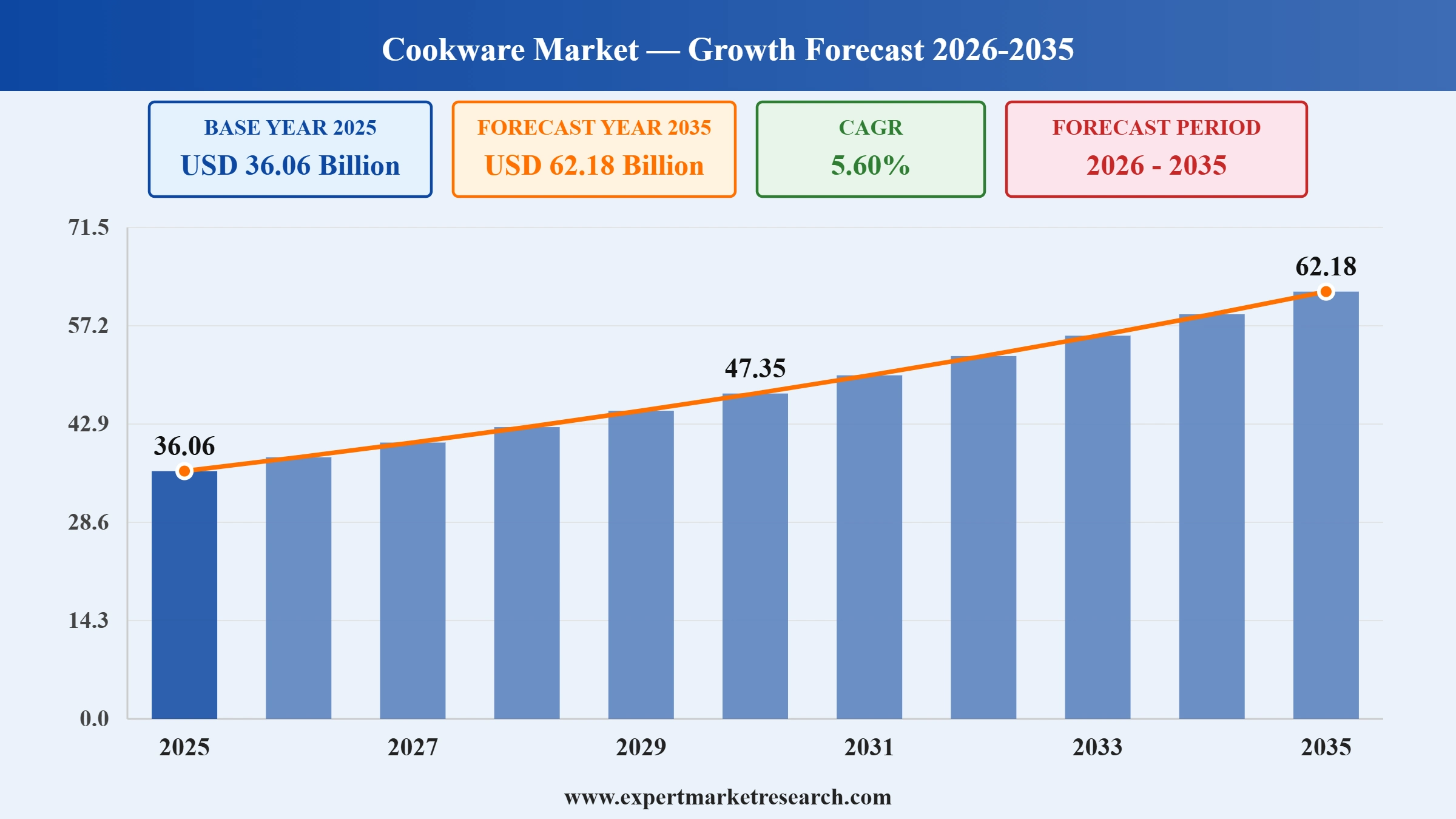
The cookware market attained a value of USD 36.06 Billion in 2025 and is projected to expand at a CAGR of 5.60% through 2035. The market is further expected to achieve USD 62.18 Billion by 2035. Coatings without PFAS, hybrid surfaces, and induction-capable constructions foster differentiation among cookware brands in terms of durability, multifunctionality, thermal management, and verifiable material properties, rather than simply offering variety of products.
Two factors are particularly enhancing demand in the cookware market. More widespread use of induction cookers will increase the necessity of magnetic, heat-conductive pan constructions, whereas increased scrutiny of PFAS lead to faster development of ceramic and other kinds of coatings. Those companies that address the issues related to durability of such constructions enjoy better placement in stores and premium positioning.
Innovations in the cookware market are progressing from traditional nonstick varieties to hybrid products which allow performing multiple cooking functions in one piece of equipment. For example, in July 2026, Lakeland launched the Tri-Ply Only Pan Pro, a 10-in-1 pan made of tri-ply stainless steel and featuring a nonstick ceramic interior without per- and polyfluoroalkyl substances (PFAS), which shows a trend towards compact design and induction-compatibility.
In addition, high-end brands in the cookware market are targeting hybrid functionality rather than being based on just one material. For instance, in April 2026, HexClad launched hybrid cookware by adding deep sauté pans, roasting pans, grill toppers, and pizza steel among its products. According to the brand, hybrid technology means combining stainless-steel searing with nonstick food release properties, which allows for replacing several cooking pieces by a single one. Such innovations give companies additional opportunities to increase prices on their products.
Read more about this report - REQUEST FREE SAMPLE COPY IN PDF
|
Global Cookware Market Report Summary |
Description |
Value |
|
Base Year |
USD Billion |
2025 |
|
Historical Period |
USD Billion |
2019-2025 |
|
Forecast Period |
USD Billion |
2026-2035 |
|
Market Size 2025 |
USD Billion |
36.06 |
|
Market Size 2035 |
USD Billion |
62.18 |
|
CAGR 2019-2025 |
Percentage |
XX% |
| CAGR 2026-2035 | Percentage | 5.60% |
|
CAGR 2026-2035- Market by Region |
Asia Pacific |
5.9% |
|
CAGR 2026-2035- Market by Country |
India |
6.8% |
|
CAGR 2026-2035 - Market by Country |
Brazil |
6.0% |
|
CAGR 2026-2035 - Market by Material |
Stainless Steel |
6.1% |
|
CAGR 2026-2035 - Market by Distribution Channel |
Online |
8.1% |
|
Market Share by Country 2025 |
UK |
1.5% |
Bleu Riviera Range from Le Creuset made its way into India, offering the collection of cookware with a blue-green color inspired by the Mediterranean with a premium look and feel. Premium color, premium finish, and collections based on lifestyle can be used by manufacturers to distinguish themselves, capitalizing on such developments in the cookware market.
Fackelmann launched a Triply Pressure Cooker collection in India, offering its premium range of cookware with superior thermal performance and durability. Multi-layer cookware with premium appeal is another strategy that manufacturers can use to offer high-end cookware to customers.
Tefal launched its new ceramic, stainless steel triply, and titanium-coated cookware by blending localization, durability, and technology-based elements for Indian homes. Brands may develop localized design, material, and cooking options along with adding premium lines in response to changing household needs.
PAL introduced ZEN cookware line with 100% recycled post consumer aluminum, packaging with sustainability certification, and low impact non-stick coating. Companies in the cookware market can therefore incorporate recycled metals, low impact coatings, and packaging with certification to appeal to eco-friendly consumers.
As retailers and institutions increasingly focus on transparency and chemical compliance in their product lines, cookware market players are hastening efforts towards PFAS-free coating production. The recent release of Tri-Ply Only Pan Pro by Lakeland involves the production of a multifunctional pan with no conventional fluoropolymer coating, which includes a ceramic nonstick interior in stainless steel cookware. On the other hand, in March 2026, Vinod launched Ceravit, a toxin-free ceramic cookware range featuring PFAS-free coatings, induction compatibility, scratch resistance, and mineral-based technology. The FDA is continuing to differentiate between PFAS applications for cookware versus all other food contact uses, while the EPA expands PFAS reporting requirements for 206 PFAS substances under TRI reporting 2026.
Induction compatibility is an important consideration when developing cookware as appliance ownership impacts the cookware renewal cycle. According to the cookware market analysis, induction cooking technology transfers as much as 85% of its heating energy into the pot, unlike the roughly one-third efficiency of gas cooking technology, according to Consumer Reports, which showed induction cooking is able to heat water 20-40% faster than both gas and standard electric cooking. In March 2026, Frigidaire introduced MatteGuard, reducing visible scratches fivefold while combining durability, modern design, faster cooking, and precise temperature control.
Brands within the cookware market are now designing products that can fulfill multiple roles within one vessel in an effort to appeal to smaller kitchen operators, hospitality industry, and even end-users who are looking for fewer products. Brands are also offering a steaming basket, lid and silicone turner; this provides additional options for manufacturers to capitalize on accessory attachment and collection sales. Aligning with such trends, in July 2026, Dash launched Stacks, a 16-piece ceramic cookware system with built-in electric power, saving up to 40% of cabinet space.
Manufacturers of premium cookware are now investing in hybrid and multilayer construction in order to fill the performance gap between stainless steel cookware and non-stick cookware. HexClad, for example, continues the trend of hybrid cookware production by offering non-stick food release along with the durability of stainless steel, while also expanding its range of products into such categories as sauté pans, roasting pans, grill accessories, and pizza cookware. Demonstrating such shifts in the cookware market, in May 2025, GreenPan launched hybrid cookware combining PFAS-free ceramic nonstick technology with etched stainless steel for durability, searing, and versatile cooking performance.
Material traceability and responsibly sourced metals are becoming crucial considerations in balancing the sustainability of cooking utensils with food contact requirements, accelerating demand in the cookware market. While aluminum and steel are favored due to their lightweight properties and good thermal conductivity, it is becoming necessary for the source materials and the manufacturing process to be controlled. According to the EPA's ReCon tool, aluminum ingot and steel are some of the raw materials considered in determining the recycling content in consumer durable goods. In August 2026, Kroslo secured INR 5 crore in seed funding to strengthen manufacturing, drive product innovation, and expand its premium cookware portfolio.
The Expert Market Research's report titled “Cookware Market Report and Forecast 2026-2035” offers a detailed analysis of the market based on the following segments:
Market Breakup by Type
Key Insight: In terms of types, the standard as well as uncoated cookware caters to buyers looking for something easy-to-build and durable while being versatile in its application, thereby propelling the cookware market growth. The non-stick cookware products as well as coated variety caters to buyers looking for convenience and easy cleaning with controlled food release and thus forms an integral part of daily cookware line-up. The Teflon or PTFE coated variety continues to be relevant in those instances where there is an emphasis on smooth food release and experience in manufacturing. The ceramic coated cookware appeals to those who are looking for alternative coating technology and PFAS-free features.
Market Breakup by Material
Key Insight: According to the cookware market report, stainless steel continues to be popular among buyers looking for long-lasting materials with excellent rust resistance and professional performance especially within premium and foodservice lines. On the other hand, aluminum provides benefits of weightiness, quick reaction to heat and ease of manufacturing processes, hence is preferred for mass-produced consumer products. In May 2026, Teslon focused on aluminum non-stick cookware as demand for lightweight, durable, and convenient kitchen products continues growing. Other types of materials include cast iron, copper, carbon steel, and hard-anodized materials.
Market Breakup by Application
Key Insight: From an application perspective, the ongoing dominance of the residential segment in the cookware market is characterized by the need for replacement within homes, multi-tasking, ease of storage, and the need for compatibility with kitchen appliances. Commercial cookware is influenced by requirements such as repeated use, standard sizing, easy washing, and thermal performance in restaurants, hotels, catering, and institutions. Consumers in residential settings prefer combinations of convenience, beauty, and economy, thereby compelling manufacturers to develop sets with different utilities. Buyers in commercial environments, on the other hand, focus more on durability, efficiency in use, and purchasing considerations.
Market Breakup by Distribution Channel
Key Insight: Offline sales, by distribution channels, boast greater significance in the cookware market as physical stores give buyers an opportunity to assess the weight, balance, finish, handle, and build of the cookware items. The online distribution channels are becoming increasingly popular due to their wide selection, detailed product specifications, reviews, price comparison, and personal communication with the brands. Offline distribution channels offer manufacturers benefits such as merchandising, demonstration, bundling and selling of products, which work well especially for luxury line cookware items. Online channels allow faster product testing, wider selection of niche items, and reaching customers from geographically distant places.
Market Breakup by Region
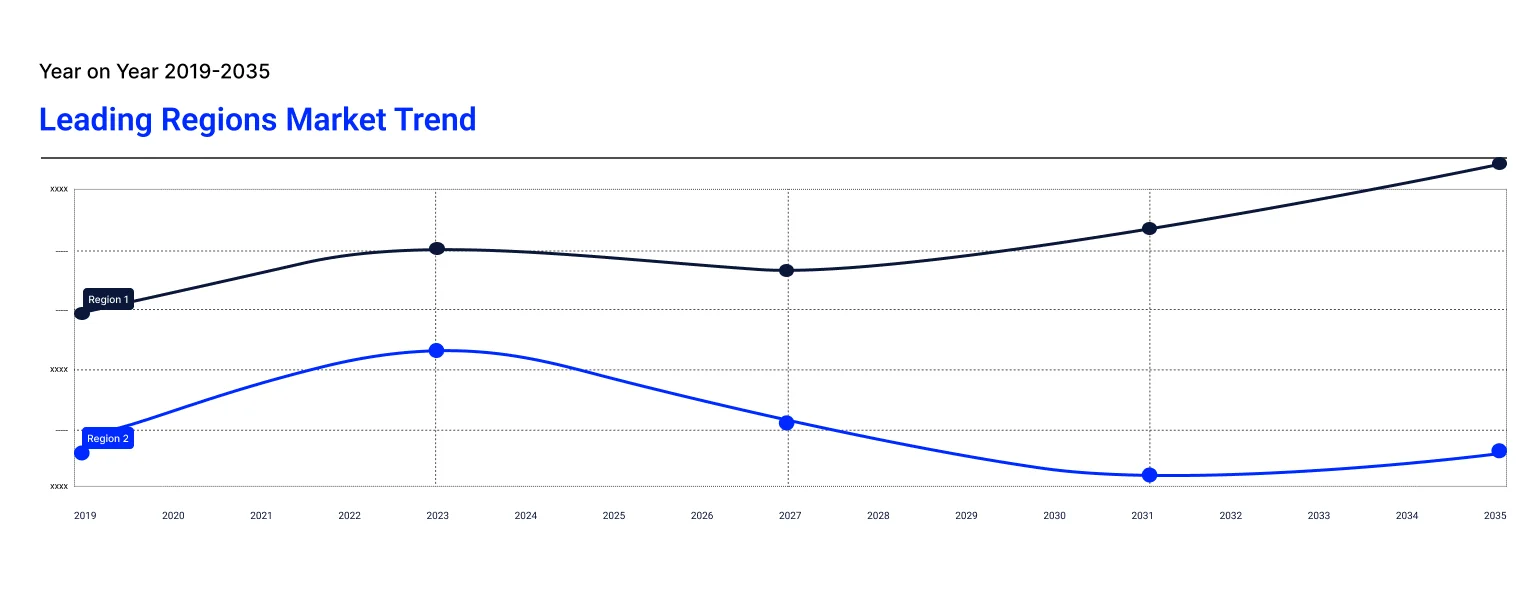
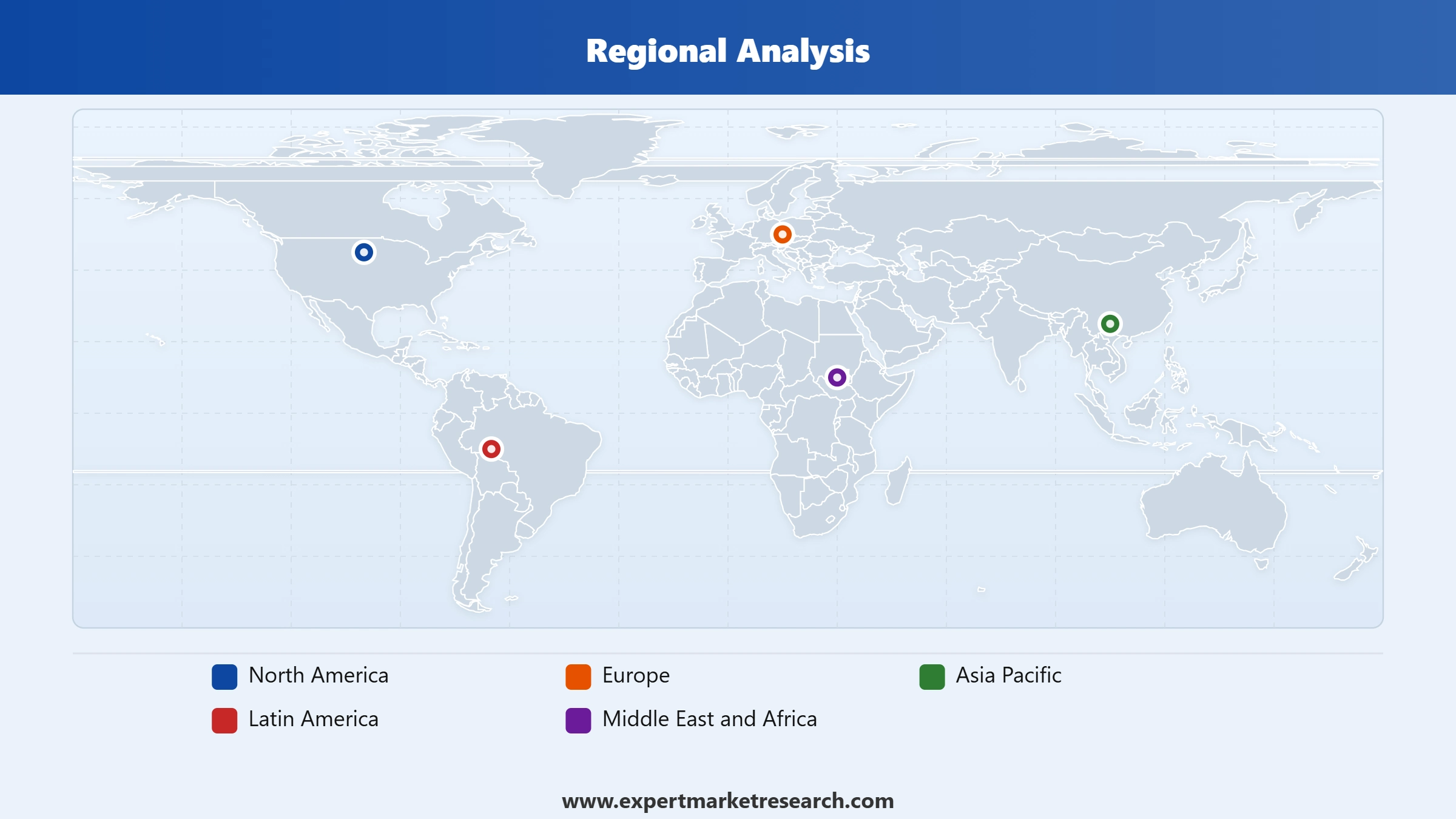
Key Insight: North America features premium cookware brands that have already established themselves in the global cookware market, a mature retail infrastructure, replacement demand, and a high interest in engineered surfaces and cookware designed for induction heating. Europe focuses on longevity, material composition, efficient energy cooking compatibility, and design, thus favoring premium and sustainable collections. The Asia Pacific market’s driving factors include urbanization, household modernization, rising middle class, and varied cooking practices that make product adaptation necessary. The opportunities in Latin America are related to growing organized retail, household upgrading, and affordable premiumization. Middle East and Africa feature stable demand driven by hospitality development, professional kitchen needs, premium household items, and distributors of durable cookware.
Read more about this report - REQUEST FREE SAMPLE COPY IN PDF
By type, non-stick cookware leads demand through convenience, food release, and cleaning
Non-stick and coated pots dominate the cookware market due to the need for food release ease, easy cleaning, and reliability in cooking performance. Coating manufacturers are upgrading coatings to make them more durable, scratch-resistant, and induction-compatible to overcome replacement challenges. The segment offers good opportunities for differentiation across all categories such as frying pans, saucepans, Dutch ovens, and cookware sets. Buyers see coating quality as an important factor in product positioning on different price levels, and operators need easy cleaning. For example, in November 2025, Stahl launched Artisan Schild, a scratch-resistant non-stick range reinforced with PEEK technology, targeting safer, durable cooking performance.
Ceramic-coated pots are expanding their share in the cookware industry due to manufacturers' efforts to meet demands for PFAS-free positioning and alternative coating materials. Manufacturers are working on making ceramic coating more heat-resistant, releasing food easily, increasing coating adherence, and stain resistance. The segment appeals to premium brands due to its differentiated material properties. Retailers have the opportunity to highlight coating innovation as a unique feature in cookware lines, and manufacturers can revamp surfaces, bases, and handles. Further development of durable ceramic coating is leading to increased adoption of health-conscious households and specialty retailers.
By material, stainless steel dominates the market through durability, induction compatibility, and professional appeal
Stainless steel continues to dominate the cookware market due to the consumer's expectation for longevity, durability, and compatibility with extreme cooking conditions. The multilayering aspect of stainless cookware makes it easy to incorporate other metals such as aluminum or copper core for enhanced heat conduction. Stainless pots and pans are preferred in professional kitchens since they are resistant to constant scrubbing and high temperatures. Induction capability adds to the relevance of stainless due to the emerging electromagnetic technology. In July 2026, Vinod Intelligent Cookware expanded its portfolio with Platinum Triply, Mini Series, and Letten stainless-steel cookware, targeting diverse cooking needs.
Aluminum exhibits the highest growth potential in the cookware market because of its lightweight, thermal conductivity, and manufacturing capabilities to produce mass market cookware. Aluminum can be shaped into cookware and combined with other coating materials such as nonstick, ceramic, or hard anodization for specific cooking purposes. Thermal conductivity helps to design thin cookware that does not compromise on heating performance. From the perspective of the retailer, aluminum cookware offers various options in terms of pricing, whereas food service buyers appreciate easier handling during preparation.
By application, the residential segment dominates the market through replacement cycles, home cooking, and multifunctionality
Residential application largely contributes to the cookware market value since home kitchens need versatile kitchenware to meet various preparation requirements. Manufacturers cater to these requirements by introducing sets of stackable items, handles that can be removed, cookware that can go into the oven, and cookware compatible with induction cookers. In addition, replacement is driven by wear of coatings, upgraded handles, and consumers’ preference for materials that are safer or stronger. In September 2024, GreenPan launched an exclusive Stanley Tucci cookware collection through Williams Sonoma, combining PFAS-free ceramic non-stick technology with premium design.
Commercial application is the segment which grows faster as restaurants, hotels, and caterers are in need of kitchenware that is able to stand up to intensive usage. Durability, ease of cleaning, stacking, and induction are considered for the selection of commercial cookware. Manufacturers create heavy gauge products and stronger elements to lower downtime and replacement rates. This segment offers great potential for suppliers providing bulk purchasing, replacement services, customization, and technical support.
By distribution channel, offline channels capture a substantial share of the market through tactile evaluation, retailer expertise, and availability
The offline distribution channel is the most common channel of distribution that is propelling growth in the cookware industry since cookware is a tangible product which requires buyers to feel its weight, balance, finish, and structure. The retailer gives the brand an opportunity to showcase the product features and make coordinated displays of the whole cookware collection. Store employees can clarify all the questions related to coating technology, material difference, induction compatibility, and maintenance, which would help to support premium positioning. In this way, physical retail provides opportunities for merchandising and promotion for the manufacturer. In July 2026, Ruhe planned major offline expansion across India, targeting INR 500 crore revenue within three years through an expanded retail network.
The online channel is the fastest growing channel that is boosting the cookware market revenue growth due to the wider variety of assortments, specifications, reviews and comparison offered by digital retailers as well as the delivery service. Cookware brands can test new products in niche markets without any necessity to allocate big physical shelf space for that purpose. Digital retailers help brands to introduce new coatings, shapes, and multifunctional items. In June 2026, The Indus Valley raised USD 1.7 million to expand its toxin-free cookware range, strengthen manufacturing, and accelerate the market expansion.
Read more about this report - REQUEST FREE SAMPLE COPY IN PDF
North America leads the global market growth owing to adoption, replacement demand, and retail networks
North America continues to be the most prominent regional cookware market due to the presence of established brands, retailers, and replacement demands. Consumers continue to prefer hybrid surfaces, induction bases, stainless materials, and multifunctional vessels. Thus, manufacturers try to compete by engineering better products than others. Suppliers can compete through superior materials, warranties, and claims. The foodservice segment might help develop more durable products for various consumer and foodservice categories with existing distribution and premium retailing channels. In October 2025, Fissler heir launched a new United States cookware brand, combining European heritage, premium materials, and modern design for American consumers.
Asia Pacific remains the fastest growing regional cookware market due to urban housing, increasing household purchasing power, and kitchen remodeling driving demand. Manufacturers are focusing on developing multifunctional and stackable cookware for small apartments that optimize available space in preparation and storage areas. In addition, the growing induction appliances drive suppliers to focus on magnetic bases and multilayer construction of cookware. Local brands can compete through affordable premium products, localized vessels, and digital first distribution models.
Innovations increasingly drive the global industry as cookware market players strive to compete through advanced coatings, multiple layers, induction readiness, multi-functionality and use of premium materials. The top players are extending their product offerings through acquisitions, brand extensions and localization to address unique consumer and food service needs.
Cookware companies are also expanding their portfolios via multi-brands, luxury product offerings, and specialized products aimed at catering to different customer requirements. Market leaders are concentrating on offering engineered cookware, induction-friendly cookware, durable material cookware, and unique nonstick solutions in order to meet evolving cooking needs. Business organizations are also offering luxury and lifestyle ranges in cookware along with using their existing brands to target different consumer segments. Other important opportunities include designing light weight, toxin-free and energy-efficient cookware as customers are becoming increasingly conscious about their health.
Founded in 1841 and headquartered in Neuss, Germany, Wilh. Werhahn KG competes in the cookware market through its ZWILLING Kitchen portfolio. Its cookware strategy spans brands such as ZWILLING, STAUB, Demeyere, and Ballarini, covering premium stainless steel, cast iron, and nonstick cookware.
Founded in 1857 and based out of Écully, France, Groupe SEB offers cookware through its Tefal, SEB, and SUPOR ranges. Nonstick cookware, appliances, and international manufacturing capabilities characterize this organization’s popularity. Global strategy of Groupe SEB is focused on innovations and affordability while its broad brand range allows it to target consumer and professional kitchens strategically.
Founded in 1981 and based in Vallejo, California, United States, Meyer Corporation designs and markets cookware using Hestan, Anolon, Circulon, Farberware, and many more brands. Meyer specializes in material science, nonstick technology, hard anodizing technology, and high-quality stainless steel products. With its network of manufacturing facilities and diverse brands, Meyer is able to cater to multiple pricing segments and cooking needs.
Founded in 1955 and based in Chennai, India, TTK Prestige designs cookware along with pressure cookers, induction cooktops, and other kitchen appliances. Affordability combined with premiumization and localization are key components of the firm’s strategy.
Other key players in the market include Fissler GmbH, The Vollrath Co., L.L.C., Sunbeam Products, Inc., Hawkins Cookers Limited, Wonderchef Home Appliances Pvt. Ltd., and Target Brands, Inc., among others.
*Please note that this is only a partial list; the complete list of key players is available in the full report. Additionally, the list of key players can be customized to better suit your needs.*
Unlock the latest insights with our cookware market trends 2026 report. Discover regional growth patterns, consumer preferences, and key industry players. Stay ahead of competition with trusted data and expert analysis. Download your free sample report today and drive informed decisions in the market.


Upto 15% Off
USD
$3999 $3599
$2499 $2249
$4999 $4249
$5999 $5099


*While we strive to always give you current and accurate information, the numbers depicted on the website are indicative and may differ from the actual numbers in the main report. At Expert Market Research, we aim to bring you the latest insights and trends in the market. Using our analyses and forecasts, stakeholders can understand the market dynamics, navigate challenges, and capitalize on opportunities to make data-driven strategic decisions.*
In 2025, the market reached an approximate value of USD 36.06 Billion.
The market is projected to grow at a CAGR of 5.60% between 2026 and 2035.
The market is estimated to witness healthy growth in the forecast period of 2026-2035 to reach a value of around USD 62.18 Billion by 2035.
The different regions considered in the market report include North America, Europe, the Asia Pacific, Latin America, and the Middle East and Africa.
The different distribution channels for cookware include online and offline.
The different materials used for making cookware include stainless steel, aluminium, and glass, among others.
The different applications of cookware include residential and commercial.
Key players in the market are Wilh. Werhahn KG, Groupe SEB, Meyer Corporation, TTK Prestige Ltd., Fissler GmbH, The Vollrath Co., L.L.C., Sunbeam Products, Inc, Hawkins Cookers Limited, Wonderchef Home Appliances Pvt. Ltd, and Target Brands, Inc., among others.
Companies face volatile aluminum and steel costs, coating durability concerns, PFAS scrutiny, intense private-label competition, supply-chain complexity, counterfeit products, and pressure to deliver premium performance without excessive price increases.
Manufacturers are developing durable PFAS-free surfaces, retailers are expanding hybrid collections, suppliers are improving material traceability, and distributors are strengthening omnichannel partnerships and commercial procurement programs.
Explore our key highlights of the report and gain a concise overview of key findings, trends, and actionable insights that will empower your strategic decisions.
| REPORT FEATURES | DETAILS |
| Base Year | 2025 |
| Historical Period | 2019-2025 |
| Forecast Period | 2026-2035 |
| Scope of the Report |
Historical and Forecast Trends, Industry Drivers and Constraints, Historical and Forecast Market Analysis by Segment:
|
| Breakup by Type |
|
| Breakup by Material |
|
| Breakup by Application |
|
| Breakup by Distribution Channel |
|
| Breakup by Region |
|
| Market Dynamics |
|
| Competitive Landscape |
|
| Companies Covered |
|
Single User License
One User
USD 3,999
USD 3,599
tax inclusive*
Datasheet
One User
USD 2,499
USD 2,249
tax inclusive*
Five User License
Five User
USD 4,999
USD 4,249
tax inclusive*
Corporate License
Unlimited Users
USD 5,999
USD 5,099
tax inclusive*
*Please note that the prices mentioned below are starting prices for each bundle type. Kindly contact our team for further details.*
Flash Bundle
Small Business Bundle
Growth Bundle
Enterprise Bundle
*Please note that the prices mentioned below are starting prices for each bundle type. Kindly contact our team for further details.*
Flash Bundle
Number of Reports: 3
20%
tax inclusive*
Small Business Bundle
Number of Reports: 5
25%
tax inclusive*
Growth Bundle
Number of Reports: 8
30%
tax inclusive*
Enterprise Bundle
Number of Reports: 10
35%
tax inclusive*
How To Order

Select License Type
Choose the right license for your needs and access rights.

Click on ‘Buy Now’
Add the report to your cart with one click and proceed to register.

Select Mode of Payment
Choose a payment option for a secure checkout. You will be redirected accordingly.
Strategic Solutions for Informed Decision-Making
Gain insights to stay ahead and seize opportunities.

Get insights & trends for a competitive edge.

Track prices with detailed trend reports.

Analyse trade data for supply chain insights.

Leverage cost reports for smart savings

Enhance supply chain with partnerships.

Connect For More Information
Our expert team of analysts will offer full support and resolve any queries regarding the report, before and after the purchase.
Our expert team of analysts will offer full support and resolve any queries regarding the report, before and after the purchase.
We employ meticulous research methods, blending advanced analytics and expert insights to deliver accurate, actionable industry intelligence, staying ahead of competitors.
Our skilled analysts offer unparalleled competitive advantage with detailed insights on current and emerging markets, ensuring your strategic edge.
We offer an in-depth yet simplified presentation of industry insights and analysis to meet your specific requirements effectively.




