

Consumer Insights
Uncover trends and behaviors shaping consumer choices today
Procurement Insights
Optimize your sourcing strategy with key market data
Industry Stats
Stay ahead with the latest trends and market analysis.
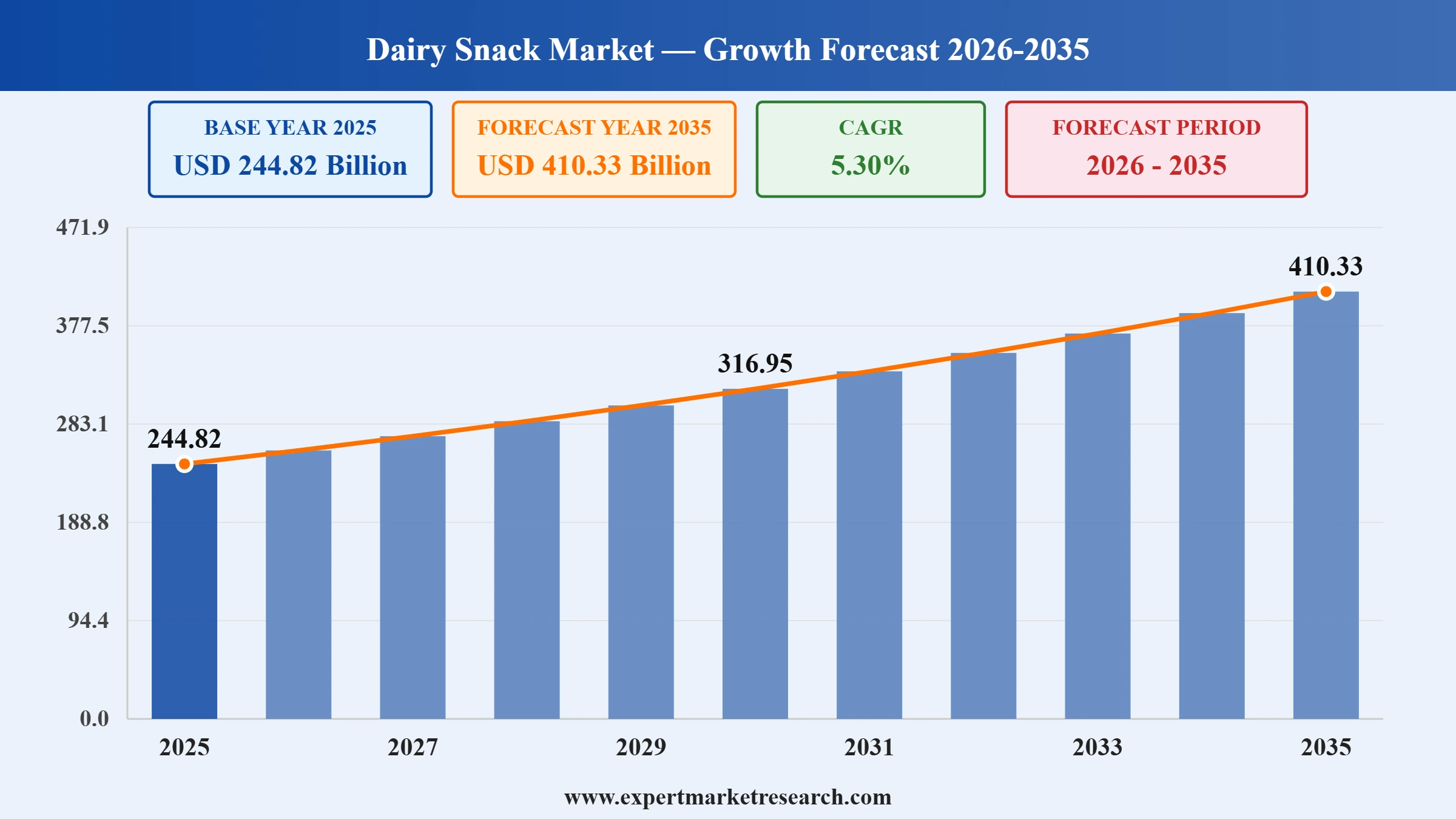
The global dairy snack market attained a value of USD 244.82 Billion in 2025 and is projected to expand at a CAGR of 5.30% through 2035. The market is further expected to achieve USD 410.33 Billion by 2035. A growth motivator is the demand for snacks positioned as mini-meal replacements, as busy professionals lean toward nutrient-dense formats that fit tight work routines and unpredictable commuting patterns.
Leading brands are focusing on high-protein, indulgent-on-the-go formats backed by faster formulation cycles, while expanding their footprints through major investments. One notable development came in December 2025, when FrieslandCampina acquired Wisconsin Whey Protein, expanding its presence in the North American dairy snack market. On the other hand, in January 2024, FrieslandCampina opened a new production and distribution center in Cikarang, Indonesia, for the production of sweetened condensed milk for Indonesia and other Southeast Asian countries. Several mid-size processors are also exploring their own high-protein curd bar and protein-yogurt hybrids, hoping to capture overflow demand in retail and foodservice channels.
Manufacturers are also experimenting with structured dairy-matrix technologies that help stabilize texture during chilled distribution. In September 2024, DairyX achieved a significant breakthrough by creating casein proteins, fundamental to the texture and taste of dairy products, entirely without cows. Another emerging dairy snack market trend is the blending of dairy with fruit fibers, nuts, grains, and functional cultures to improve nutrient claims without inflating cost. Firms like Mondelez International and select Korean processors are assessing hybrid formulations that extend shelf-life while keeping a familiar mouthfeel.
Read more about this report - REQUEST FREE SAMPLE COPY IN PDF
Sasko launched its innovative “snack bun” product aimed at busy commuters and snack lovers in South Africa. This launch expands dairy-snack pairing opportunities as bakery-led formats increasingly integrate cheese spreads, cultured fillings, and on-the-go dairy components targeting commuters.
Israeli company Remilk teamed up with the family-run dairy business Gad Dairies to introduce New Milk, a low-sugar, lactose-free milk that contains recombinant dairy proteins produced in fermentation tanks instead of being sourced from cows. This dairy snack market development accelerates innovation by enabling formulators to use stable, lactose-free recombinant proteins ideal for bars, yoghurts, and hybrid dairy snacks.
Danone introduced a high-protein variant of its Silk brand as the food company seeks to “spark renewed interest” in plant-based dairy by addressing what it sees as a gap in the market. Danone’s move strengthens the high-protein snacking trend, pushing dairy-snack producers to develop protein-forward blends and introduce plant-dairy hybrid formats in functional categories.
Mondelez India introduced 'Milkinis' chocolate under the Cadbury Dairy Milk brand. This innovative item, with a milk crème filling, aims to meet changing consumer snacking behaviors and is a significant entry in the fast-moving consumer goods (FMCG) sector. Milkinis reinforces demand for indulgent dairy-centered snacks, prompting manufacturers to explore layered crème systems and milk-forward fillings aligned with evolving global snacking habits.
Regulatory alignment and food safety standards are encouraging dairy-snack makers to upgrade formulations and traceability systems. Companies such as Yili and Maeil are investing in batch-level traceability and rapid microbial testing to keep launch timelines intact. These investments reduce recall risk and help firms win private-label contracts with convenience chains that demand documented safety protocols. In November 2025, Tetra Pak's 'Startups Challenge' winner, ZUMI, launched lactose-free, no-refined-sugar milkshakes, boosting the overall demand in the dairy snack market. Regulatory pressure thus converts into competitive advantage for players who can demonstrate certified supply chains and faster compliance-driven product cycles.
Protein fortification and functional claims drive growth as many consumers seek nutrient-dense snacks for busy lives. South Korea’s public health guidance is also encouraging sufficient protein for older adults supports reformulation. In December 2025, Laki Laki launched probiotic yoghurt with granola as the ultimate breakfast innovation. Each 105g cup provides balanced protein and probiotics. These dairy snack market trends enable premium pricing while meeting retailer needs for proven nutrition claims. Regulatory updates on nutrient declaration push companies to invest in lab-backed substantiation and small clinical or shelf studies, and improve market access.
Packaging and cold-chain resilience are critical for dairy snacks combining fresh ingredients with shelf stability. Korea’s Ministry of SMEs and Startups program has been offering logistics grants, and several APAC governments have funded cold-chain pilots to improve last-mile reliability. Manufacturers adopt higher-barrier films, vacuum trays, and oxygen scavengers to protect quality, reshaping the dairy snack market trends and dynamics. For example, in August 2025, Burts Snacks unveiled its most environmentally friendly crisp packaging, made with 55% recycled plastic. Retailers penalize SKUs with high shrink and sensory failures, so producers invest in insulation, improved sealing, and temperature logging. These steps reduce returns and preserve brand trust in dense urban retail environments, reducing operational losses.
Co-development between ingredient suppliers and retailers accelerates dairy snack launches and reduces commercial risk. Retailers like GS Retail and CU run incubators and fast-track tenders for private-label lines, offering shelf tests and merchandising support. Ingredient houses such as Ingredia supply pre-qualified blends and pilot-scale batching to shorten validation. In December 2025, DairyPure, the brand run by farmers from Dairy Farmers of America (DFA), launched a new seasonal pint called Santa’s Milk, a whole-milk seasonal SKU in Walmart. These partnerships share development cost and retail insights, letting manufacturers iterate and secure better placement, accelerating the overall dairy snack market growth.
Flavor innovation and regional adaptation support export growth and product differentiation in the dairy snacks sector. Companies such as Mondelez and Korean exporters design hybrid flavors such as kimchi-spice crisps and soy-marinated curd bites, tested in Vietnam and the Philippines. In October 2025, I.T.S launched a new ‘crossbreed fruit’ flavor line, tapping into the hybrid fruit trend amid rising interest in new twists on classic favorites in the dairy segment of the F&B industry, surging the overall dairy snack market value. Producers also tailor pack sizes and shelf-life claims to match retail formats and local consumption habits and support sustained international expansion.
The EMR’s report titled “Global Dairy Snack Market Report and Forecast 2026-2035” offers a detailed analysis of the market based on the following segments:
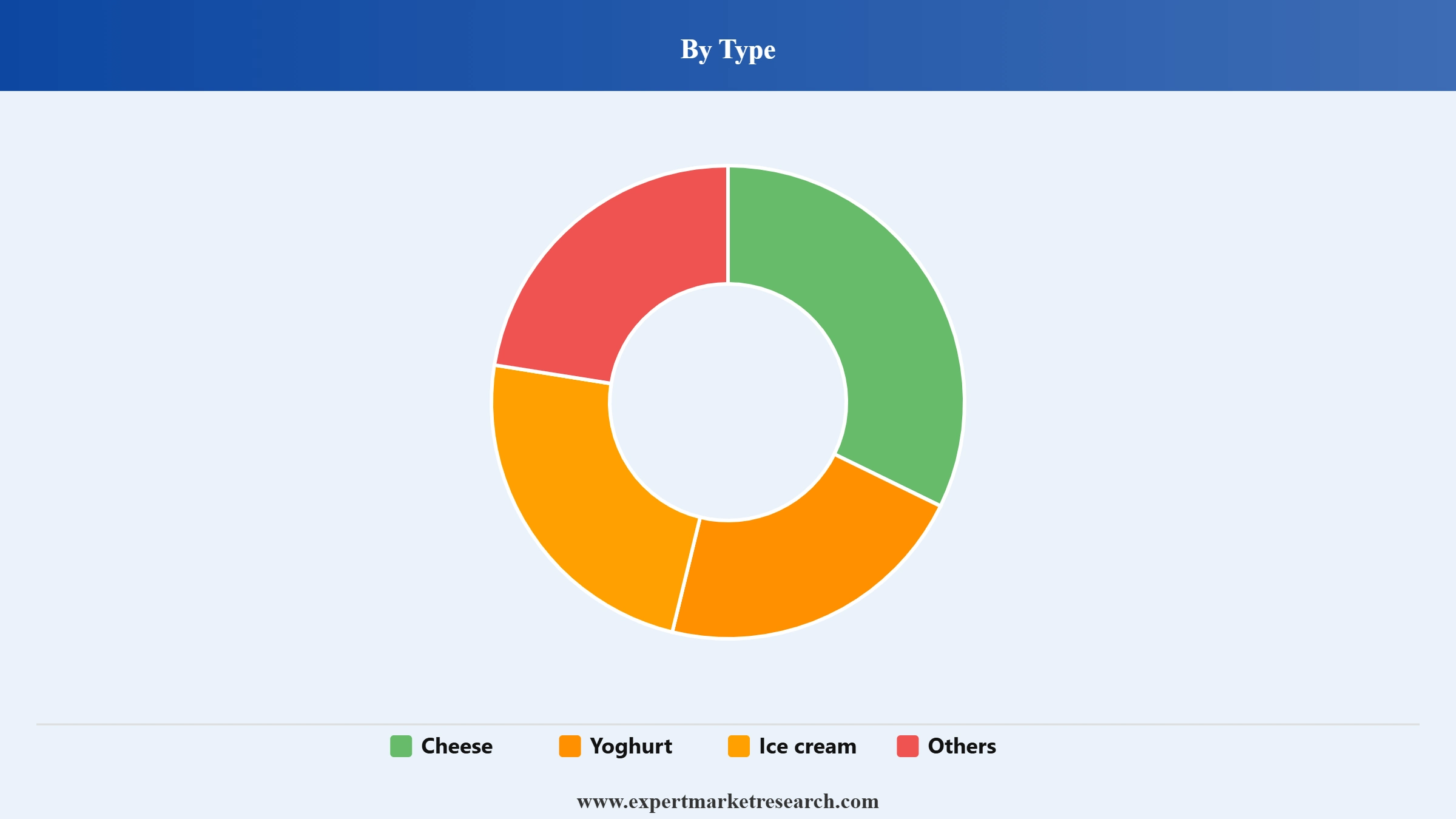
Market Breakup by Type
Key Insight: While cheese expands its share in the dairy snack market revenue owing to protein demand and portion control, spoonable yoghurt relies on premium textures and functional inclusions and drinkable formats scale through aseptic packaging and probiotic claims. Ice cream-snack hybrid products depend on innovation tied to low-sugar recipes. Traditional yoghurt benefits from reformulation for cleaner labels and reduced lactose, and 'others' such as cheese crisps or milk-based bars gain traction via export-adapted formats.
The yoghurt segment is divided into spoonable yoghurt and drinkable yoghurt.
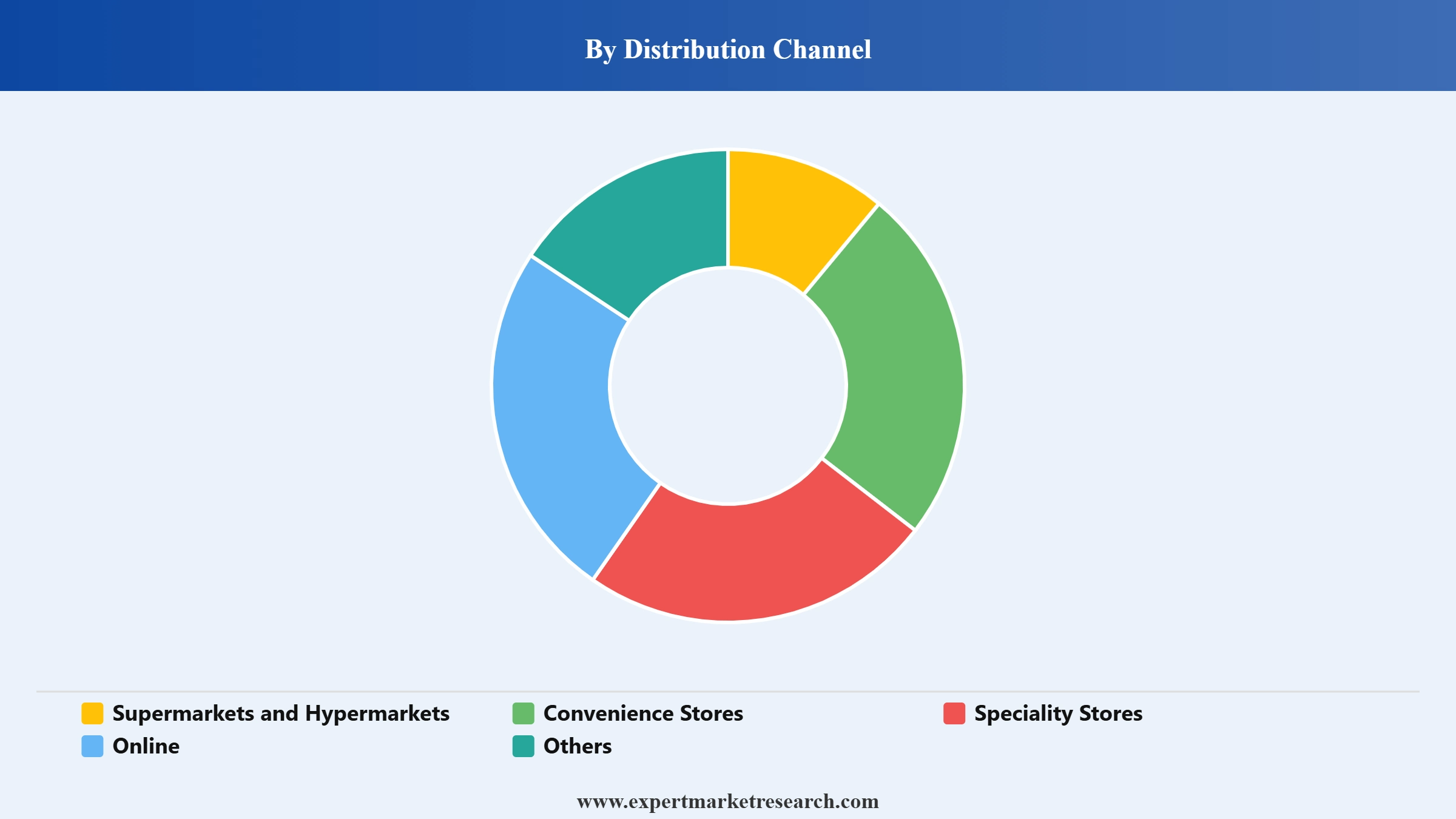
Market Breakup by Distribution Channel
Key Insight: According to the dairy snack market report, supermarkets expand private-label scale and promotional reach, convenience stores fuel impulse purchases and trial through compact single-serve SKUs, and specialty stores elevate premium cheese and artisanal dairy ranges. Online channels open subscription and curated snack-box models, requiring strong shelf-life performance and dependable cold-chain support. Other outlets, including foodservice and vending, act as testing grounds for spinoff formats and smaller pack runs.
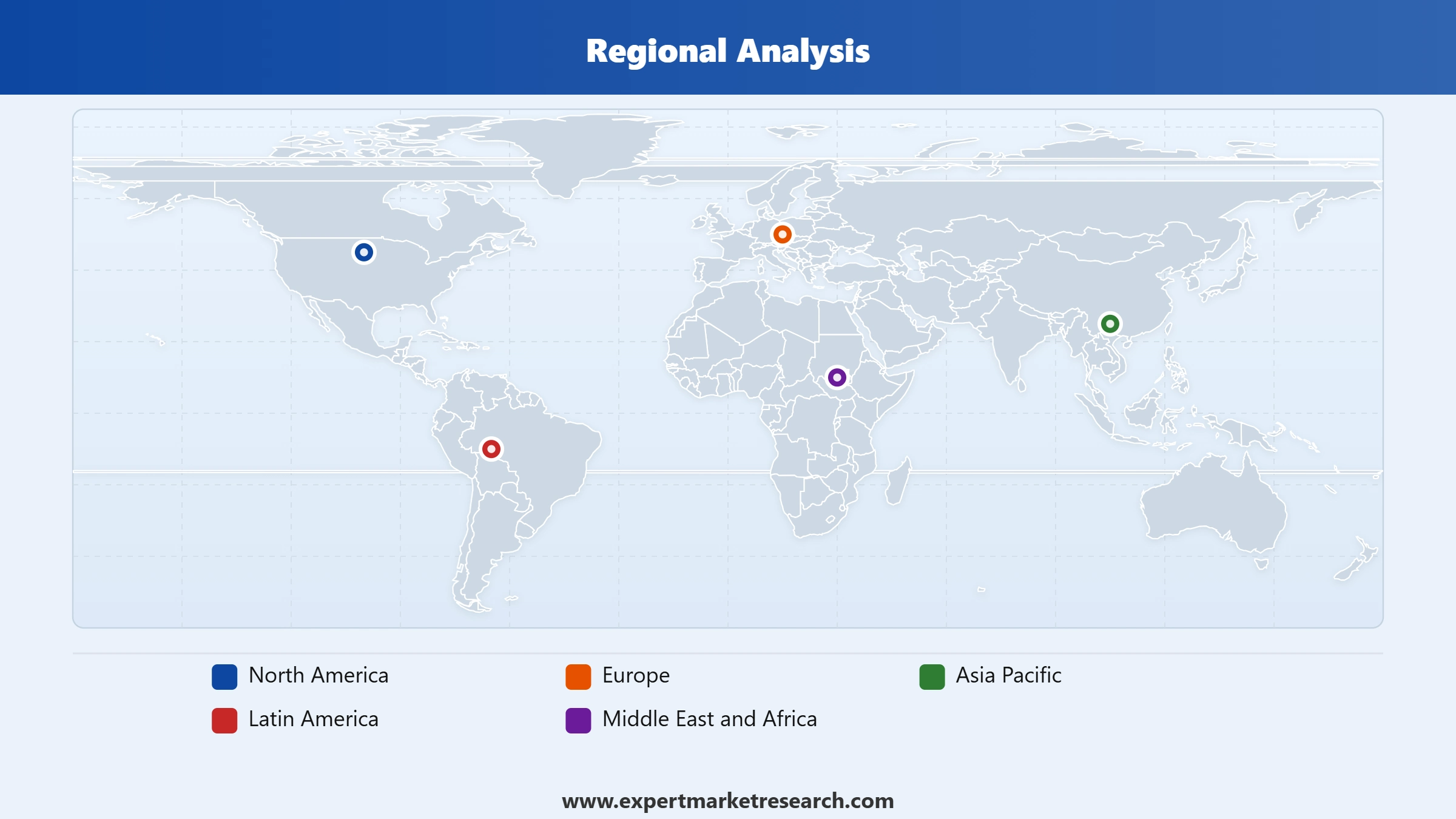
Market Breakup by Region
Key Insight: Asia Pacific drives volume through urban convenience and rapid SKU turnover, North America boasts premium and functional innovations, Europe prioritizes sustainability and clean-label sourcing, the dairy snack market in Latin America focuses on cost-efficient formats for broad reach, while Middle East and Africa test chilled dairy snacks in urban coastal cities. Manufacturers tailor formulations, packaging, and logistics to regional constraints and retailer demand.
Read more about this report - REQUEST FREE SAMPLE COPY IN PDF
By type, cheese snacks account for the largest share of the market owing to the growing demand for on-the-go snacking options
Cheese significantly boosts the dairy snack market value as companies push portion-controlled formats and shelf-stable innovations to meet on-the-go food demand. Leading firms such as Bel and regional processors accelerated launches of wax-coated mini cheeses and aseptic cheese tubes, which allow ambient display away from chilled counters. In December 2025, Millbrook Dairy unveiled a new Shirgar Cheese Sticks range, available exclusively in England and Scotland. Made in Wales from premium Welsh milk, the new lines include Shirgar Mature Cheddar, Shirgar Mild Cheddar, and Shirgar Red Leicester.
Read more about this report - REQUEST FREE SAMPLE COPY IN PDF
Drinkable yoghurt, driven by improved UHT processing, probiotic diversification and convenience packaging, is rapidly gaining momentum in the dairy snack market. Companies like Yakult and local dairy aggregators are expanding their aseptic bottle lines to reach non-chilled channels, enabling impulse placements in transit hubs. In May 2025, Meiji added a new product to its portfolio called Bulgaria Drinkable Yogurt Salt Lemon. This drink, inspired by Bulgaria's traditional yogurt beverage 'Ayran,' aims to meet growing consumer demand for refreshing and hydrating options during the hot summer months.
By distribution channel, supermarkets occupy substantial market share, driven by scale, private-labels, and promotions network
Supermarkets and hypermarkets remain the dominant channel due to private-label leverage and long-term promotional calendars. Major retailers demand thermal validation data, category-level turnover forecasts, and supplier-level rebate commitments. This compels manufacturers to build predictable production runs and offer multipack formats that improve cart share. Product teams therefore design SKU cycles with premium, mainstream, and value-based products to fit promotion cycles while protecting margins.
Read more about this report - REQUEST FREE SAMPLE COPY IN PDF
Convenience stores experience growth in the dairy snack market because of high transaction frequency and impulse purchase behavior. C-store buyers prefer compact SKUs, single-serve formats and clear on-pack nutrition claims, pressuring producers to adapt pack sizes and thermal stability. Chains often co-develop exclusive SKUs with manufacturers, providing quick POS feedback and piloting new formats in select urban stores. This reduces concept risk and helps suppliers refine fill-line speeds.
By region, Asia Pacific leads regional sales, driven by urbanization and distribution
Asia Pacific dominates dairy-snack volumes because urban density and convenience culture accelerate trial and repeat purchases. Regional processors invest in fast-turn production cells and modular packaging lines to match frequent SKU rotations. Retailers in APAC also actively participate in private-label programs that help local producers scale regionally. Product teams focus on flavor localization including miso-, kimchi- and mango-infused dairy bars to match cross-border tastes.
Read more about this report - REQUEST FREE SAMPLE COPY IN PDF
The dairy snack industry in North America is expanding its share rapidly, driven by functional claims, higher per-capita snacking, and retailer willingness to pay for innovation. Leading suppliers test premium SKUs with probiotics, adaptogens, and dairy blends that mimic plant-based textures. Co-packers in the United States are expanding aseptic and chilled capacities to serve smaller-batch premium lines, enabling rapid regional roll-outs. Regulatory clarity on health claims and allergen labelling helps brands scale confidently. Manufacturers focus on transparent sourcing and traceable protein claims to justify premium pricing.
Dairy snack companies are competing to improve texture stability, expand high-protein lines, and refine hybrid dairy food formats for cross-border expansion. Major players are investing in rapid pilot plants, smarter fermentation controls, and micro-layered packaging systems that hold structure during long chilled distribution. Many brands are also building export-ready SKUs tailored for hotter climates, driving demand for barrier coatings and oxygen-scavenging films. Partnerships with retailers, co-packers, and cold-chain providers are becoming essential for fast commercial validation.
Dairy snack market players see clear opportunities in premium indulgent bars, reduced-lactose formats, and functional blends designed for consumers who want nutrient-dense snacks without complex labels. Another emerging opportunity lies in AI-assisted shelf simulations that help producers predict flavor performance under varying humidity and temperature ranges, reducing reformulation cycles and improving hit rates for new launches.
Fonterra, established in 2001 and headquartered in Auckland, New Zealand, focuses on advanced protein ingredients and functional dairy matrices for snacks. The company develops heat-stable isolates and micro-structured milk proteins used in bars and portable yoghurt formats. Its innovation teams work closely with global processors to refine melt behavior, improve mouthfeel, and boost stability under warm-climate logistics.
Danone, founded in 1919 and headquartered in Spain, has been piloting micro-layered dairy bar technologies and next-gen probiotic strains designed for durable chilled distribution. The company is investing in smart fermentation tools that help maintain culture viability in high-protein yoghurts and drinkable snacks.
Amul, established in 1946 and headquartered in Gujrat, India, is expanding dairy snack innovation through hybrid cheese-yoghurt bites, heat-tolerant bars, and flavored curd formats tailored for tropical regions. The cooperative leverages its broad procurement network to run experimental batches at scale, allowing rapid test marketing.
Nestlé, founded in 1866 and headquartered in Vevey, Switzerland, advances the category through structured dairy composites, controlled crystallization techniques and proprietary flavor-infusion systems for indulgent dairy bars. The company invests in digital twins to simulate product behavior under thermal stress, trimming development cycles for global launches.
*Please note that this is only a partial list; the complete list of key players is available in the full report. Additionally, the list of key players can be customized to better suit your needs.*
Other key players in the market include Arla Foods Amba, and Dairy Farmers of America Inc., among others.
Unlock the latest insights with our dairy snack market trends 2026 report. Discover regional growth patterns, consumer preferences, and key industry players. Stay ahead of competition with trusted data and expert analysis. Download your free sample report today and drive informed decisions in the market.


Upto 15% Off
USD
$2499 $2249
$3999 $3599
$4999 $4249
$5999 $5099


*While we strive to always give you current and accurate information, the numbers depicted on the website are indicative and may differ from the actual numbers in the main report. At Expert Market Research, we aim to bring you the latest insights and trends in the market. Using our analyses and forecasts, stakeholders can understand the market dynamics, navigate challenges, and capitalize on opportunities to make data-driven strategic decisions.*
The market is projected to grow at a CAGR of 5.30% between 2026 and 2035.
Manufacturers are upgrading fermentation systems, forming retailer co-development loops, expanding climate-ready packaging, investing in rapid pilot plants, and strengthening cold-chain analytics to improve launch reliability and secure premium placement.
The easy availability of dairy snacks through an extensive distribution channel, busy lifestyles, and the flourishing e-commerce industry are augmenting the growth of the market.
The major regional markets for dairy snack are North America, Latin America, the Asia Pacific, Europe, and the Middle East and Africa.
The different types of dairy snacks are cheese, yoghurt, and ice creams, among others.
The major distribution channels of dairy snacks are supermarkets and hypermarkets, convenience stores, speciality stores, and online, among others.
The key players in the market include Fonterra Co-operative Group Limited, Danone SA, Gujarat Cooperative Milk Marketing Federation Ltd (Amul), Nestle SA, Arla Foods Amba, and Dairy Farmers of America Inc., among others.
In 2025, the market reached an approximate value of USD 244.82 Billion.
Companies struggle with cold-chain variability, rising ingredient volatility, strict probiotic stability demands, and faster retailer assortment resets that pressure R&D teams to innovate quicker while safeguarding texture, safety, and sensory consistency.
Explore our key highlights of the report and gain a concise overview of key findings, trends, and actionable insights that will empower your strategic decisions.
| REPORT FEATURES | DETAILS |
| Base Year | 2025 |
| Historical Period | 2019-2025 |
| Forecast Period | 2026-2035 |
| Scope of the Report |
Historical and Forecast Trends, Industry Drivers and Constraints, Historical and Forecast Market Analysis by Segment:
|
| Breakup by Type |
|
| Breakup by Distribution Channel |
|
| Breakup by Region |
|
| Market Dynamics |
|
| Competitive Landscape |
|
| Companies Covered |
|
| Report Price and Purchase Option | Explore our purchase options that are best suited to your resources and industry needs. |
| Delivery Format | Delivered as an attached PDF and Excel through email, with an option of receiving an editable PPT, according to the purchase option. |
Datasheet
One User
USD 2,499
USD 2,249
tax inclusive*
Single User License
One User
USD 3,999
USD 3,599
tax inclusive*
Five User License
Five User
USD 4,999
USD 4,249
tax inclusive*
Corporate License
Unlimited Users
USD 5,999
USD 5,099
tax inclusive*
*Please note that the prices mentioned below are starting prices for each bundle type. Kindly contact our team for further details.*
Flash Bundle
Small Business Bundle
Growth Bundle
Enterprise Bundle
*Please note that the prices mentioned below are starting prices for each bundle type. Kindly contact our team for further details.*
Flash Bundle
Number of Reports: 3
20%
tax inclusive*
Small Business Bundle
Number of Reports: 5
25%
tax inclusive*
Growth Bundle
Number of Reports: 8
30%
tax inclusive*
Enterprise Bundle
Number of Reports: 10
35%
tax inclusive*
How To Order

Select License Type
Choose the right license for your needs and access rights.

Click on ‘Buy Now’
Add the report to your cart with one click and proceed to register.

Select Mode of Payment
Choose a payment option for a secure checkout. You will be redirected accordingly.
Strategic Solutions for Informed Decision-Making
Gain insights to stay ahead and seize opportunities.

Get insights & trends for a competitive edge.

Track prices with detailed trend reports.

Analyse trade data for supply chain insights.

Leverage cost reports for smart savings

Enhance supply chain with partnerships.

Connect For More Information
Our expert team of analysts will offer full support and resolve any queries regarding the report, before and after the purchase.
Our expert team of analysts will offer full support and resolve any queries regarding the report, before and after the purchase.
We employ meticulous research methods, blending advanced analytics and expert insights to deliver accurate, actionable industry intelligence, staying ahead of competitors.
Our skilled analysts offer unparalleled competitive advantage with detailed insights on current and emerging markets, ensuring your strategic edge.
We offer an in-depth yet simplified presentation of industry insights and analysis to meet your specific requirements effectively.




