

Consumer Insights
Uncover trends and behaviors shaping consumer choices today
Procurement Insights
Optimize your sourcing strategy with key market data
Industry Stats
Stay ahead with the latest trends and market analysis.
The global digital twin in manufacturing market size was valued at USD 7.76 Billion in 2025. The industry is expected to grow at a CAGR of 32.90% during the forecast period of 2026-2035 to reach a value of USD 133.39 Billion by 2035. Expanding utilization of highly interactive and collaborative digital twin environments to plan factories and carry out remote operations is opening new opportunities in the digital twin in manufacturing market by facilitating better decisions and coordination across different sites.
Ongoing incorporation of predictive analytics in digital twins, which enables manufacturers to predict machinery breakdowns and plan maintenance activities more effectively, is boosting the demand for digital twin in manufacturing. Additionally, the increasing use of virtual commissioning allows businesses to digitally simulate and verify their production lines before the actual physical installation, consequently minimizing mistakes and shortening the time to market. All these small-scale trends in the digital twin in manufacturing market, together contribute to the enhancement of operational efficiency and the creation of more robust, data-driven manufacturing ecosystems.
Strategic collaborations between technology providers and manufacturers are enabling enterprise-wide adoption of digital twin solutions in different ways. These partnerships help to reduce the risks of integration, standardize best practices, and accelerate the large-scale deployment of the solutions. A major application of digital twins that help manufacturers is by simulating and predicting bottlenecks, improving resource utilization, and overall efficiency. Moreover, these collaborations allow for the enhanced integration of AI and IoT analytics, thus making the manufacturing ecosystems more agile, thereby supporting the digital twin in manufacturing market growth. For example, in January 2026, PepsiCo teamed up with Siemens and NVIDIA to implement AI-powered digital twins across its manufacturing and warehouse networks, thereby optimizing throughput prior to physical execution.
Compound Annual Growth Rate
32.9%
Value in USD Billion
2026-2035
|
Global Digital Twin in Manufacturing Market Report Summary |
Description |
Value |
|
Base Year |
USD Billion |
2025 |
|
Historical Period |
USD Billion |
2019-2025 |
|
Forecast Period |
USD Billion |
2026-2035 |
|
Market Size 2025 |
USD Billion |
7.76 |
|
Market Size 2035 |
USD Billion |
133.39 |
|
CAGR 2019-2025 |
Percentage |
XX% |
|
CAGR 2026-2035 |
Percentage |
32.90% |
|
CAGR 2026-2035- Market by Region |
North America |
35.4% |
|
CAGR 2026-2035 - Market by Country |
India |
38.4% |
|
CAGR 2026-2035 - Market by Country |
Canada |
37.8% |
|
CAGR 2026-2035 - Market by Application |
Predictive Maintenance |
37.3% |
|
CAGR 2026-2035 - Market by Enterprise Size |
Large Enterprises |
34.8% |
|
Market Share by Country 2025 |
Germany |
5.6% |
Delta Electronics, a renowned global leader in smart green technologies and power management, unveiled its latest Digital Twin Solution at SEMICON Southeast Asia 2025, the foremost regional semiconductor technology event. The company's presentation demonstrates Delta's vision of smart, connected, and sustainable manufacturing, which is tailored for the changing industrial landscape in Southeast Asia.
ETAP and Schneider Electric unveiled an innovative digital twin that can accurately simulate the power needs of AI factories. This advancement facilitates pinpoint power modelling, which is a vital facilitator for energy-efficient and high-performance manufacturing environments.
The Digital Twin Consortium (DTC) launched its innovative Digital Twin Testbed program, which allows members to showcase their ingenuity in the creation of digital twins. DTC members can leverage the program's cooperative, holistic approach to design, test, validate, and verify digital twin systems and develop enabling technologies, thereby accelerating the overall digital twin in manufacturing market development.
Top electric two-wheeler manufacturer Ola Electric revealed its advanced Ola Digital Twin platform, which is expected to transform and streamline its product development and manufacturing processes. The unveiling of the Digital Twin platform by Ola Electric is a testament to the adoption of virtual simulation for smart production in the automotive industry, leading to enhanced product development and manufacturing efficiency.
Digital twin platforms are being developed further to integrate AI analytics, 3D visualization, and real-time operational data, thus enabling manufacturers to virtually simulate and optimize entire factories. Such solutions help to minimize design errors, speed up production planning, and facilitate collaboration among worldwide teams. Through the provision of immersive Industrial Metaverse environments, manufacturers can execute different scenarios and make decisions swiftly. For example, Siemens established the Digital Twin Composer in January 2026, thus creating Industrial Metaverse environments for real-time factory decision-making and operational efficiency improvement.
Alliances between industrial technology providers facilitate the integration of AI in digital twin workflows for augmenting predictive maintenance, simulation, and operating optimization. These ecosystems make the journey to adoption faster by mitigating the challenges of implementation and thereby ensuring a quicker ROI. Manufacturers get to have advanced insights enabling them to run smarter, data-driven operations at their plants, thereby boosting demand in digital twin in manufacturing market. For example, in January 2026, Siemens and NVIDIA enhanced their partnership on the Industrial AI Operating System, enabling lifecycle innovation and integration of AI with digital twins from design to production.
Long-term collaborations embed digital twin technologies into the core manufacturing processes, thus standardizing tools and methods for multi-site operations. They help to speed up the adoption, optimize the workflow, and lower the integration risks. Manufacturers in the digital twin in manufacturing market can use these collaborations as a lever to scale up innovations and operational improvements very efficiently. For example, in June 2025, Schaeffler teamed up with NVIDIA to use digital twins and simulation, the first AI for its global manufacturing operations, thus increasing productivity and operational accuracy.
Reuse of digital twin templates and reference architectures enables manufacturers to implement AI-driven solutions more quickly while guaranteeing consistency across different production lines. Such frameworks lessen the technical challenges, speed up the deployment, and facilitate simulation and optimization in real time. For instance, in October 2025, NVIDIA released the Omniverse DSX Blueprint, an AI-enabled factory reference architecture that is scalable and standardizes operations in the digital twin in manufacturing market.
Industry consortiums and collaborative testbeds serve as a platform for co-development and co-validation of next-generation digital twin technologies. These efforts help to lower the risks from the adoption of new technologies, standardize, and facilitate innovation across different manufacturing sectors. For example, in September 2025, the Digital Twin Consortium extended its Testbed Program, enabling members to work together on the design, simulation, and optimization of digital twin solutions for industrial applications.
The EMR’s report titled “Global Digital Twin in Manufacturing Market Report and Forecast 2026-2035” offers a detailed analysis of the market based on the following segments:
Market Breakup by Solution
Key Insights: By solution, the digital twin in manufacturing market comprises component, process, and system digital twins, which cater to different production needs. Component twins target the single assets. For example, Honeywell and Rockwell Automation facilitate real-time equipment monitoring and predictive maintenance of the machines. Siemens and SAP, leading process twins, reproduce the workflows to help increase the production and reduce the inefficiencies. System-level twins combine various components and processes into one interactive factory model, thus allowing companies such as Dassault Systems to help with enterprise-wide planning, cross-functional visibility, and end-to-end operational optimization.
Market Breakup by Enterprise Size
Key Insights: Large enterprises account for a substantial share of the digital twin in manufacturing market due to their complex operations and multi-site manufacturing footprints, e.g., Unilever, Intel, and Bosch. These companies are leveraging digital twins to help achieve production standardization, minimize downtime, and enhance asset utilization. Besides, small and medium enterprises (SMEs) are becoming the users of cloud-based and modular digital twin solutions from companies like PTC and Microsoft for their affordability and practicality. Such platforms give SMEs the chance to better their operational visibility, make data-driven decisions with the help of analytics, and gradually adjust the scale of digital twin utilization without large capital investments.
Market Breakup by Application
Key Insights: By application, the digital twin in manufacturing market scope comprises predictive maintenance, performance monitoring, product design and development, and business optimization. predictive maintenance usage eliminates the need for sudden breakdowns by predicting equipment faults from the data collected in real time, while performance monitoring helps to increase production efficiency and quality control. Manufacturers can verify production lines in a virtual world in product design and development to launch products faster. Business optimization leverages digital twins even further through scenario planning and cost control. In June 2024, the BMW Group leveraged NVIDIA Omniverse more widely to simulate automotive plant operations around the world, thereby amplifying their virtual planning skills.
Market Breakup by Region
Key Insights: North America leads the growth of the digital twin in manufacturing market because of the early technology adoption, strong cloud infrastructure, and the active involvement of companies such as Microsoft, AWS, and IBM. Europe follows closely as it can thrive as the continent that hosts automotive and industrial manufacturing giants such as Bosch, BMW, and Siemens, who are leading the way in integrating digital twins in their smart factory projects. Asia Pacific is the region with the fastest growth rate, as manufacturers from China, Japan, and South Korea are heavily investing in AI-enabled production. Latin America, the Middle East, and Africa have been displaying slow adoption in the areas of operational efficiency and industrial modernization.
By solution, component solutions witness high demand driven by smart factory operations
Manufacturers invest more in component digital twin solutions to get very detailed asset insights and real-time performance monitoring. Critical Manufacturing collaborated with Twinzo to incorporate real-time 3D digital twin visualization into its MES. With this production lines, overall equipment effectiveness (OEE), and KPI dashboards can be tracked live. Additionally, these solutions enhance decision velocity and shop floor transparency, further fueling the digital twin in manufacturing market. For instance, in April 2025, Critical Manufacturing and Twinzo unveiled a real-time 3D factory visualization integration to boost smart factory operations.
Manufacturers are using process digital twins to try and refine production workflows for efficiency improvements and decreased cycle times. Dematic presented an AI-powered intralogistics digital twin that imitates material flows and control logic, which is used for scenario testing and real-time optimization of warehouse operations. These features lead to better throughput and resource allocation. For instance, in March 2025, Dematic presented their AI-generated digital twin simulation for full-scale intralogistics at the GTC AI Conference in California.
By enterprise size, large enterprises show significant growth driven by multi-site digital twin standardization
Large enterprises contribute significantly to the digital twin in manufacturing market revenue owing to the increasing adoption of digital twin technology to integrate their operations at different plants, eliminate the variations in production processes and increase the efficiency of the latter. Companies such as Unilever, Intel, and Bosch are leaders in incorporating digital twin analytics into enterprise systems for consolidating performance monitoring and benchmarking across sites. At the same time, these firms link their digital twins to sustainability targets and energy optimization platforms, thus providing the executive teams with a tool for tracking the performance of manufacturing globally and making the investment decisions consistent with the strategic goals.
Small and Medium Enterprises (SMEs) usually choose modular, cloud-native digital twin solutions to reduce IT costs and shorten the time the business needs to start benefiting from the solutions. PTC (ThingWorx) and Microsoft (Azure Digital Twins), among others, provide SMEs with scalable subscription packages designed to enhance shop and floor visibility, process analytics, and remote monitoring. Moreover, industry collaborations allow for twin modules that can be easily plugged in and are designed for common manufacturing scenarios, thus decreasing the deployment challenge for firms with limited resources propelling growth in the digital twin in manufacturing market.
By application, predictive maintenance gains traction for AI-enabled failure forecasting
Manufacturers are mostly focusing on deploying predictive maintenance apps that leverage digital twin technologies combined with AI and sensor analytics to predict equipment breakdowns, thus lowering unplanned downtime and maintenance costs. Industry leaders like Schneider Electric, Honeywell, and GE Vernova utilize ML algorithms along with twin platforms for spotting deviations in the systems, thus preventing operational disruptions. Synopsys, in November 2025, showcased a digital twin structure that enables real-time process optimization and facilitates predictive maintenance decisions on very fast assembly lines, raising both uptime and safety.
Performance monitoring software witnesses high demand in the global digital twin in manufacturing market owing to its increasing demand among manufacturing companies to get live data about their processes, equipment condition, and operational KPIs at the same time. With sensor data, AI analytics, and digital twins put together, the manufacturers can spot faults, make their operations smoother, and get more output per asset. Thus, Hitachi, in December 2025, embraced its HMAX Industry solutions with intelligent agents for factory equipment operations that not only give instant diagnostics but also predict maintenance, thus saving downtime and making operations run very efficiently. These are some ways by which manufacturing industries leverage data, analytics, and AI to keep their operations efficient and make decisions immediately.
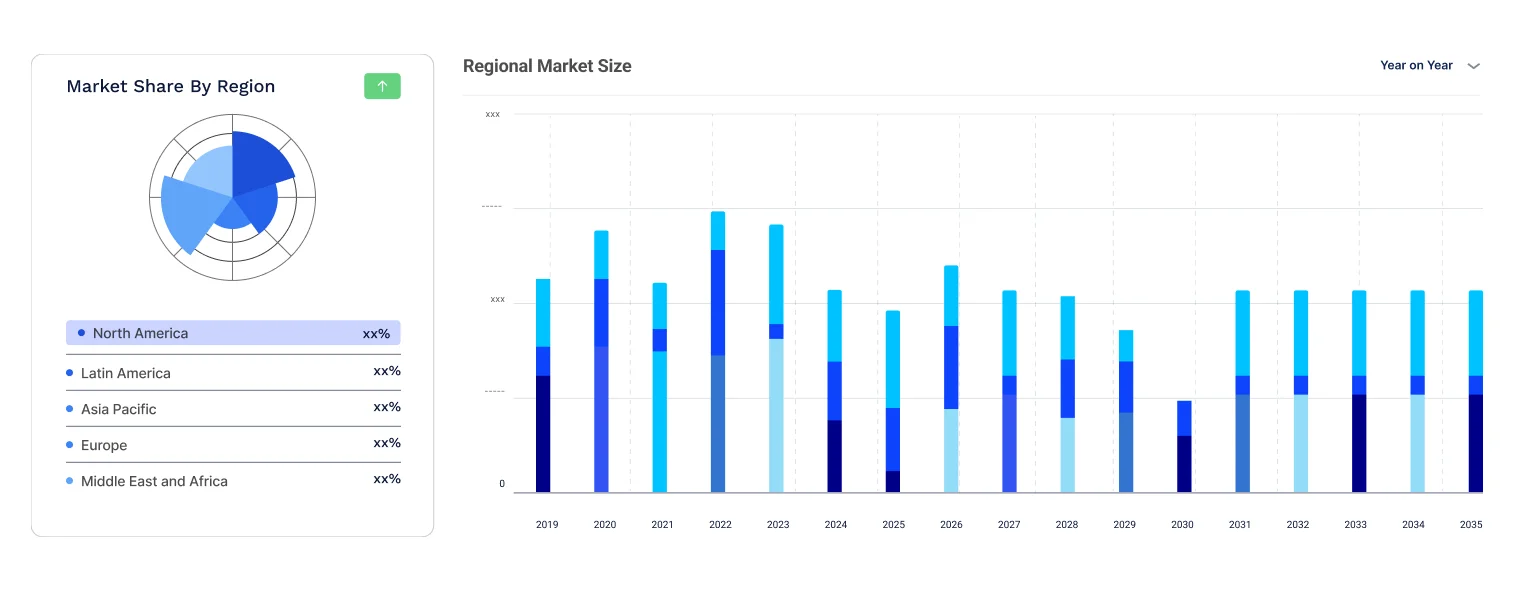
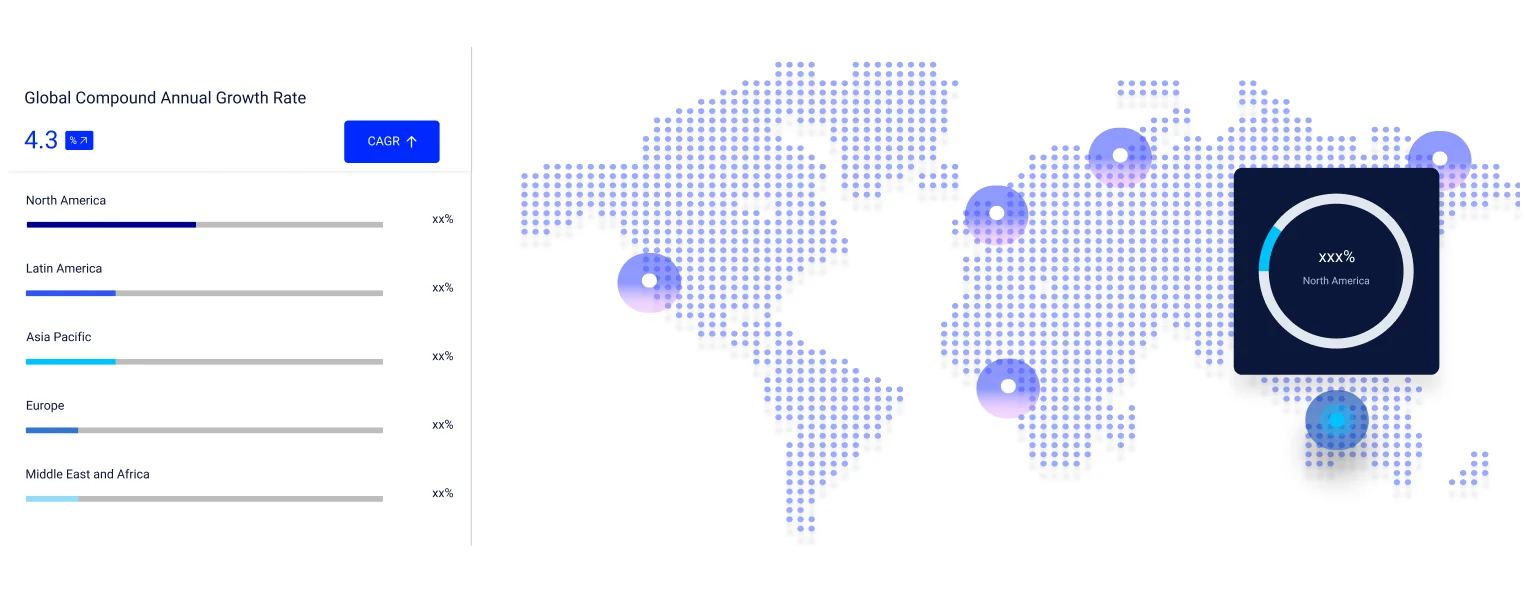
By region, North America leads the market growth through increased twin adoption through strategic innovation and partnerships
North America dominates the implementation of digital twins, with manufacturers and technology companies making heavy investments in advanced simulation and analytics. Local companies, such as the SAS Institute, are coming up with strategic alliances to strengthen the manufacturing digital twin capabilities by means of AI and immersive visualization. As an example, SAS in May 2025 collaborated with Epic Games to embed the Unreal Engine for the creation of high-tech digital twin simulations for clients like Georgia and Pacific, thereby improving the operational forecasting and performance of virtual testing. Thus, this partnership facilitates the acceleration of twin adoption in the paper, automotive, and heavy industries.
Asia Pacific has emerged to be the fastest growing region in the global digital twin in manufacturing market, mainly driven by the transformation of smart factories and favorable government policies. Manufacturing companies in China, Japan, and South Korea are using digital twins in conjunction with robotics and automation to increase their efficiency and quality. The government and private sector together are propelling the adoption of twins to keep their footing in the global market. For example, in April 2025, the Digital Twin Consortium featured a Digital Twin Enabled Microfactory together with NTT Data, which is a demonstration of the scalable twin applications in manufacturing, predictive maintenance, and real-time operational control.
|
CAGR 2026-2035- Market by |
Region |
|
North America |
35.4% |
|
Latin America |
29.8% |
|
Europe |
XX% |
|
Asia Pacific |
XX% |
|
Middle East and Africa |
XX% |
Global digital twin in manufacturing market players are entirely focused on industry-specific customization, cloud scalability, and AI integration. Key areas of innovation include low-code twin modeling, real-time simulation at the edge, and autonomous feedback loops. Opportunities lie in sectors such as EV manufacturing, pharmaceutical cleanrooms, and semiconductor fabs, where precision and virtual validation are critical.
Digital twins in manufacturing companies are also exploring integration with cybersecurity frameworks, given the increasing frequency of data breaches in connected factories. As manufacturers seek full-stack twin solutions, software giants are teaming up with niche tech firms to offer end-to-end platforms. Additionally, regional customization, especially for mid-market enterprises in Asia-Pacific and Latin America, is becoming a key priority. The market is also witnessing the rise of digital twin-as-a-service (DTaaS) models, which enable firms to deploy and scale simulations without heavy upfront investments. This flexibility is becoming a strong differentiator in vendor strategies moving forward, thereby boosting the digital twin in manufacturing market growth.
Amazon Web Services (AWS) was established in 2006 and is headquartered in Seattle, Washington, USA. It offers scalable twin solutions via its AWS IoT TwinMaker. AWS allows manufacturers to combine sensor data, 3D models, and enterprise systems into one live simulation environment. It helps industrial companies to use predictive analytics, remote operations, and sustainability visualizations by a cloud-native architecture.
IBM, Inc., is a prominent company established in 1911 and has its headquarters in Armonk, New York, United States of America. By means of the Maximo Application Suite, IBM is one of the key players serving digital twins for the manufacturing industry market. IBM concentrates on the flight and oil & gas industries, developing AI-driven twins to monitor equipment and manage its lifecycle efficiently. It offers clients interactive operation dashboards, tools for predictive maintenance, and compatibility with solutions offered in the digital twin in manufacturing market.
Microsoft was established in the year 1975 and has its main office in New Mexico. Microsoft facilitates manufacturing transformation by the use of Azure Digital Twins. The platform allows for the digital representation of the whole production environment with real-time data from IoT, ERP, and CRM systems. The advantage Microsoft has is its ecosystem connectivity, thus allowing smooth integration with Dynamics 365, Power BI, and HoloLens for spatial visualization.
Established in 1972, SAP is a German company that provides digital twin solutions through SAP Digital Manufacturing Cloud. The company is committed to connecting digital twins with supply chain and MES platforms to enhance traceability and compliance. SAP primarily serves process-heavy industries like chemicals, pharmaceuticals, and food processing that significantly impact the total demand for digital twins in the manufacturing market. Their twin architecture allows on-the-fly process validation and preparation for regulatory audits.
*Please note that this is only a partial list; the complete list of key players is available in the full report. Additionally, the list of key players can be customized to better suit your needs.*
Other players in the market include Dassault Systèmes, Robert Bosch GmbH, Siemens AG, TIBCO Software Inc., Rockwell Automation Inc., and Hexagon AB, among others.
Explore the latest trends shaping the Global Digital Twin in Manufacturing Market 2026-2035 with our in-depth report. Gain strategic insights, future forecasts, and key market developments that can help you stay competitive. Download a free sample report or contact our team for a customized consultation on global digital twin in manufacturing market trends 2026.


Upto 15% Off
USD
$2499 $2249
$3999 $3599
$4999 $4249
$5999 $5099


*While we strive to always give you current and accurate information, the numbers depicted on the website are indicative and may differ from the actual numbers in the main report. At Expert Market Research, we aim to bring you the latest insights and trends in the market. Using our analyses and forecasts, stakeholders can understand the market dynamics, navigate challenges, and capitalize on opportunities to make data-driven strategic decisions.*
In 2025, the global digital twin in manufacturing market reached an approximate value of USD 7.76 Billion.
The market is projected to grow at a CAGR of 32.90% between 2026 and 2035.
The key players in the market includes Amazon Web Services, Inc., IBM Corp., Microsoft Corp., SAP SE, Dassault Systèmes, Robert Bosch GmbH, Siemens AG, TIBCO Software Inc., Rockwell Automation Inc., Hexagon AB, among others.
Key strategies driving the market include strategic partnerships, AI and IoT integration for predictive maintenance, scalable twin frameworks, digital twin-as-a-service models for SMEs, and industry consortiums to accelerate innovation and reduce adoption risks. Companies like Siemens, NVIDIA, Schneider Electric, and PepsiCo lead these initiatives through joint deployments and enterprise-wide twin solutions.
Major challenges include high costs and complex integration, data security concerns, skill shortages, lack of standardization, and scaling twins across multi-site operations while maintaining real-time accuracy.
Explore our key highlights of the report and gain a concise overview of key findings, trends, and actionable insights that will empower your strategic decisions.
| REPORT FEATURES | DETAILS |
| Base Year | 2025 |
| Historical Period | 2019-2025 |
| Forecast Period | 2026-2035 |
| Scope of the Report |
Historical and Forecast Trends, Industry Drivers and Constraints, Historical and Forecast Market Analysis by Segment:
|
| Breakup by Solution |
|
| Breakup by Enterprise Size |
|
| Breakup by Application |
|
| Breakup by Region |
|
| Market Dynamics |
|
| Competitive Landscape |
|
| Companies Covered |
|
Datasheet
One User
USD 2,499
USD 2,249
tax inclusive*
Single User License
One User
USD 3,999
USD 3,599
tax inclusive*
Five User License
Five User
USD 4,999
USD 4,249
tax inclusive*
Corporate License
Unlimited Users
USD 5,999
USD 5,099
tax inclusive*
*Please note that the prices mentioned below are starting prices for each bundle type. Kindly contact our team for further details.*
Flash Bundle
Small Business Bundle
Growth Bundle
Enterprise Bundle
*Please note that the prices mentioned below are starting prices for each bundle type. Kindly contact our team for further details.*
Flash Bundle
Number of Reports: 3
20%
tax inclusive*
Small Business Bundle
Number of Reports: 5
25%
tax inclusive*
Growth Bundle
Number of Reports: 8
30%
tax inclusive*
Enterprise Bundle
Number of Reports: 10
35%
tax inclusive*
How To Order

Select License Type
Choose the right license for your needs and access rights.

Click on ‘Buy Now’
Add the report to your cart with one click and proceed to register.

Select Mode of Payment
Choose a payment option for a secure checkout. You will be redirected accordingly.
Strategic Solutions for Informed Decision-Making
Gain insights to stay ahead and seize opportunities.

Get insights & trends for a competitive edge.

Track prices with detailed trend reports.

Analyse trade data for supply chain insights.

Leverage cost reports for smart savings

Enhance supply chain with partnerships.

Connect For More Information
Our expert team of analysts will offer full support and resolve any queries regarding the report, before and after the purchase.
Our expert team of analysts will offer full support and resolve any queries regarding the report, before and after the purchase.
We employ meticulous research methods, blending advanced analytics and expert insights to deliver accurate, actionable industry intelligence, staying ahead of competitors.
Our skilled analysts offer unparalleled competitive advantage with detailed insights on current and emerging markets, ensuring your strategic edge.
We offer an in-depth yet simplified presentation of industry insights and analysis to meet your specific requirements effectively.




