

Consumer Insights
Uncover trends and behaviors shaping consumer choices today
Procurement Insights
Optimize your sourcing strategy with key market data
Industry Stats
Stay ahead with the latest trends and market analysis.
The global electric powertrain market attained a value of USD 129.84 Billion in 2025 and is projected to expand at a CAGR of 14.40% through 2035. The market is further expected to achieve USD 498.50 Billion by 2035. Tightening vehicle emissions regulations, expanding EV production capacity, and continued government incentives for electrified transport are encouraging component suppliers to scale battery, motor, and power electronics manufacturing.
Rising global electric vehicle production, combined with stringent emissions regulations across major automotive markets, continues to anchor steady demand across the electric powertrain market. Component suppliers are also investing in silicon carbide and gallium nitride power electronics to improve conversion efficiency, extend vehicle range, and shorten charging times for increasingly cost-sensitive automakers; in May 2026, Robert Bosch GmbH secured a major electric motor supply order from Mercedes-Benz, with the awarded motors achieving up to 98 percent efficiency through new winding technology and rotor oil cooling as Bosch plans to produce more than seven million electric drive components in 2026.
The electric powertrain market is witnessing further developments as automakers reassess manufacturing flexibility between electric and combustion powertrain production amid uneven regional EV demand. In April 2026, Volkswagen ended ID.4 electric vehicle assembly at its Chattanooga, Tennessee plant, transitioning the flexible production line, which had run both the MQB combustion-based Atlas and MEB electric ID.4 platforms simultaneously, to build the second-generation Atlas starting summer 2026. Established suppliers continue to prioritise purpose-built electric motor lines over retrofitted combustion-engine component facilities, reflecting the different precision winding and tooling requirements that traction motor production demands.
In addition, electric powertrain suppliers are restructuring legacy combustion-focused divisions to compete more effectively on electrified content, consolidating overlapping business units rather than operating separate electric and combustion powertrain organisations. Such consolidation is reshaping competitive positioning across the wider electric powertrain market as legacy suppliers compete for a shrinking pool of profitable electrification programmes, favouring those able to demonstrate clear near-term returns on their electrification investment.
Compound Annual Growth Rate
14.4%
Value in USD Billion
2026-2035
Read more about this report - REQUEST FREE SAMPLE COPY IN PDF
| Global Electric Powertrain Market Report Summary | Description | Value |
| Base Year | USD Billion | 2025 |
| Historical Period | USD Billion | 2019-2025 |
| Forecast Period | USD Billion | 2026-2035 |
| Market Size 2025 | USD Billion | 129.84 |
| Market Size 2035 | USD Billion | 498.50 |
| CAGR 2019-2025 | Percentage | XX% |
| CAGR 2026-2035 | Percentage | 14.40% |
| CAGR 2026-2035 - Market by Region | Asia Pacific | 15.8% |
| CAGR 2026-2035 - Market by Country | India | 16.1% |
| CAGR 2026-2035 - Market by Country | Brazil | 15.9% |
| CAGR 2026-2035 - Market by Vehicle Type | Passenger Car | 16.3% |
| CAGR 2026-2035 - Market by Vehicle Drive Type | All Wheel Drive | 15.7% |
| Market Share by Country 2025 | Mexico | 2.1% |
Valeo announced the commercial launch of its 48V 2-Speed eAxle with Smart Dog-Clutch, selected by Dacia for its new Hybrid-G 150 powertrain across the Duster, Bigster, and upcoming Striker models. Companies can pursue joint ventures for compact drive system development to share the substantial engineering costs of miniaturising electric powertrain components.
Jing-Jin Electric Technologies announced a strategic partnership with a major Southeast Asian automotive group to jointly develop localised electric motor and integrated e-axle solutions for emerging electric vehicle markets across Thailand, Vietnam, and Indonesia. Companies can localise e-axle development with regional automotive groups to accelerate market entry into fast-growing but technically distinct Southeast Asian EV markets.
Panasonic Energy officially opened its new cylindrical lithium-ion battery factory in De Soto, Kansas, targeting an annual production capacity of approximately 32 gigawatt hours and representing one of the largest single capital investments in the company's history. Companies can expand battery cell capacity ahead of confirmed automaker demand to secure preferred-supplier status as EV production volumes scale.
Nidec Corporation continued expanding its global E-Axle product portfolio and manufacturing network, pursuing aggressive growth in automotive traction motors to meet rising demand from electric vehicle manufacturers worldwide. Companies can expand E-Axle manufacturing footprint across multiple regions to reduce shipping costs and lead times for geographically dispersed automaker customers.
Component suppliers are increasingly building dedicated, purpose-built electric motor manufacturing campuses rather than converting existing combustion-engine component facilities, reflecting the different tooling and precision winding equipment electric motor production requires. In February 2026, Schaeffler AG inaugurated a dedicated electric motor manufacturing campus in Rzeszów, Poland, supported by a 250-million-euro investment in automated hairpin winding technology, significantly expanding its production capacity for permanent magnet synchronous motors serving European electric vehicle manufacturers across the electric powertrain market. The facility specifically targets the precision winding processes that differentiate high-efficiency traction motors from less demanding industrial motor applications.
Established automotive component suppliers are restructuring their electrification business units as the pace of EV adoption diverges from earlier growth projections, consolidating overlapping divisions rather than maintaining separate organisational structures for combustion and electric powertrain products. In March 2026, ZF Friedrichshafen reported 2025 group sales of 38.8 billion euros, down from 41.4 billion euros in 2024, alongside continued restructuring of its Electrified Powertrain Technology division and the early termination of several non-profitable electric mobility projects under newly appointed chief executive Mathias Miedreich. The restructuring reflects a broader industry recalibration toward electrification programmes with clearer near-term profitability.
Robert Bosch GmbH, headquartered in Gerlingen, Germany, continues to expand its portfolio of high-efficiency traction motors and integrated electric drive systems, strengthening vertical integration across power electronics, software, and thermal management. The company is investing in next-generation permanent magnet synchronous motors, silicon carbide-based drive technologies, and scalable e-axle platforms, emphasising localised manufacturing and strategic OEM collaborations. Bosch's diversified industrial and consumer goods businesses continue to support sustained research investment even during periods of slower automotive electrification spending.
Component suppliers are increasingly pursuing electrification and advanced driver assistance system content simultaneously, treating both as complementary revenue streams within the same vehicle platforms rather than competing investment priorities. Magna International continues to expand its manufacturing footprint across Michigan, Tennessee, Ontario, and Slovakia to support electric vehicle programme launches through 2027, while separately scaling multi-year radar and camera programmes to increase sensor content per vehicle. Such combined investment reflects how component suppliers are positioning themselves across multiple growth vectors within the same automaker relationships.
Regional and specialist powertrain component suppliers continue to compete alongside the largest global players by drawing on motorsport-derived engineering expertise to differentiate their electric drivetrain offerings. ZF Friedrichshafen, headquartered in Friedrichshafen, Germany, continues to leverage its gearbox and clutch system heritage from motorsports applications to inform the features and high-performance materials used in its production electric drivetrain components. Such technology transfer from racing applications continues to differentiate established mechanical engineering suppliers from newer entrants lacking comparable motorsports research programmes.
This Expert Market Report titled "Global Electric Powertrain Market Report and Forecast 2026-2035" offers a detailed analysis of the market based on the following segments:
Market Breakup by Component
Key Insight: The battery segment accounts for the largest share of the electric powertrain market, serving as the primary power source and largest single cost contributor within electric and hybrid vehicles. The motor/generator segment is growing at the fastest pace as automakers pursue higher power density and integrated e-axle architectures that combine motor, gearbox, and power electronics within a single compact housing. Power electric controllers and converters continue to see steady investment as suppliers adopt silicon carbide and gallium nitride semiconductors to improve efficiency; in December 2025, Honda announced plans to acquire an additional 21 percent stake in component supplier Astemo from Hitachi, illustrating how automakers are deepening ownership ties with key electrification suppliers. Transmission and on-board charger components round out the remaining supporting hardware.
Market Breakup by Vehicle Type
Key Insight: Passenger cars account for the largest share of the electric powertrain market, reflecting the scale of global passenger EV production across mass-market and premium segments alike. Commercial vehicles are growing at a fast pace as fleet operators face tightening emissions targets and total cost of ownership advantages from electrification on predictable, high-mileage delivery and logistics routes; in June 2026, Orange EV announced a record 600-truck order for its electric terminal trucks, the largest single order in the company's history, with deployment already underway across customer yard networks.
Market Breakup by Vehicle Drive Type
Key Insight: Front wheel drive continues to account for a considerable share of the electric powertrain market, remaining the most cost-effective configuration for compact and mid-size passenger EVs. All wheel drive is growing at the fastest pace as dual-motor architectures become increasingly common in premium and performance-oriented electric vehicles, offering improved traction and instant torque distribution. Rear wheel drive continues to serve performance-focused and larger vehicle platforms where a single rear-mounted motor delivers an efficient balance of cost and driving dynamics.
Market Breakup by Application
Key Insight: Battery electric vehicles account for the largest share of the electric powertrain market, reflecting the rapid scale-up of pure-electric vehicle production across all major automotive markets. Plug-in hybrid electric vehicles are growing at a fast pace as automakers use them as a transitional offering for consumers not yet ready to fully commit to battery electric ownership. Fuel cell electric vehicles remain a smaller niche, concentrated in commercial and heavy-duty applications where rapid refuelling outweighs the benefits of plug-in charging.
Market Breakup by Region
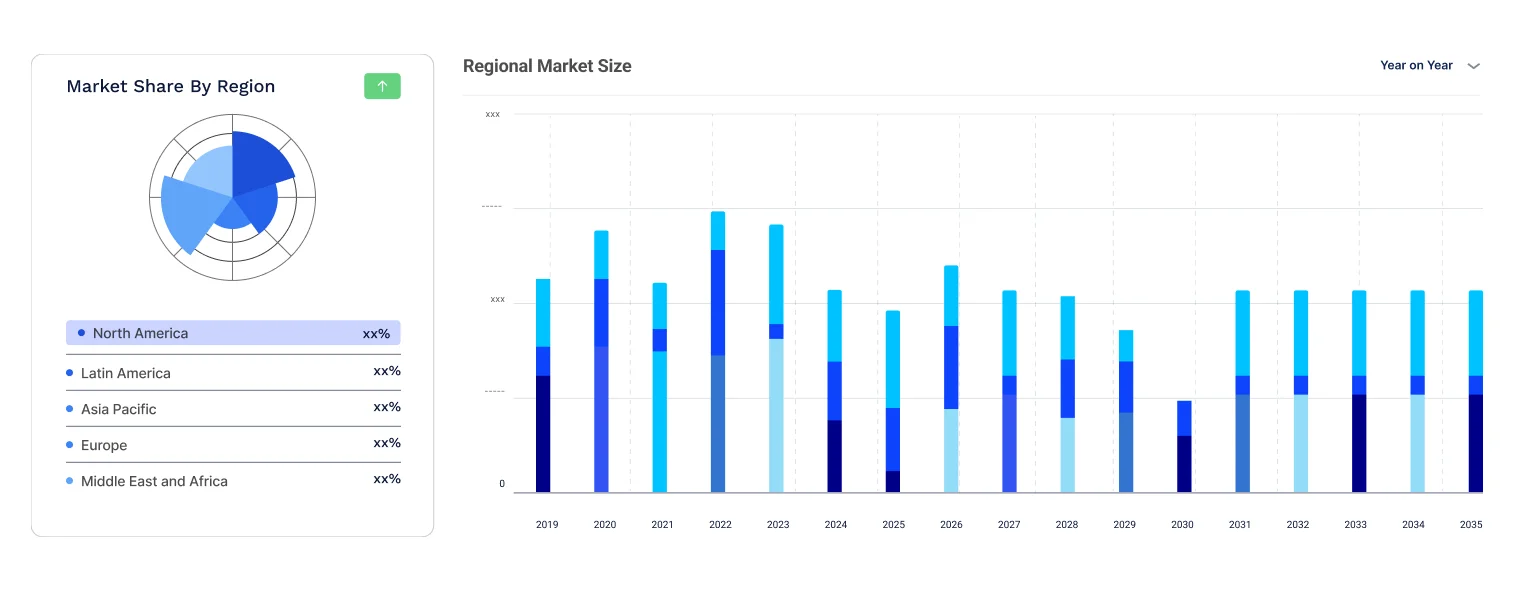
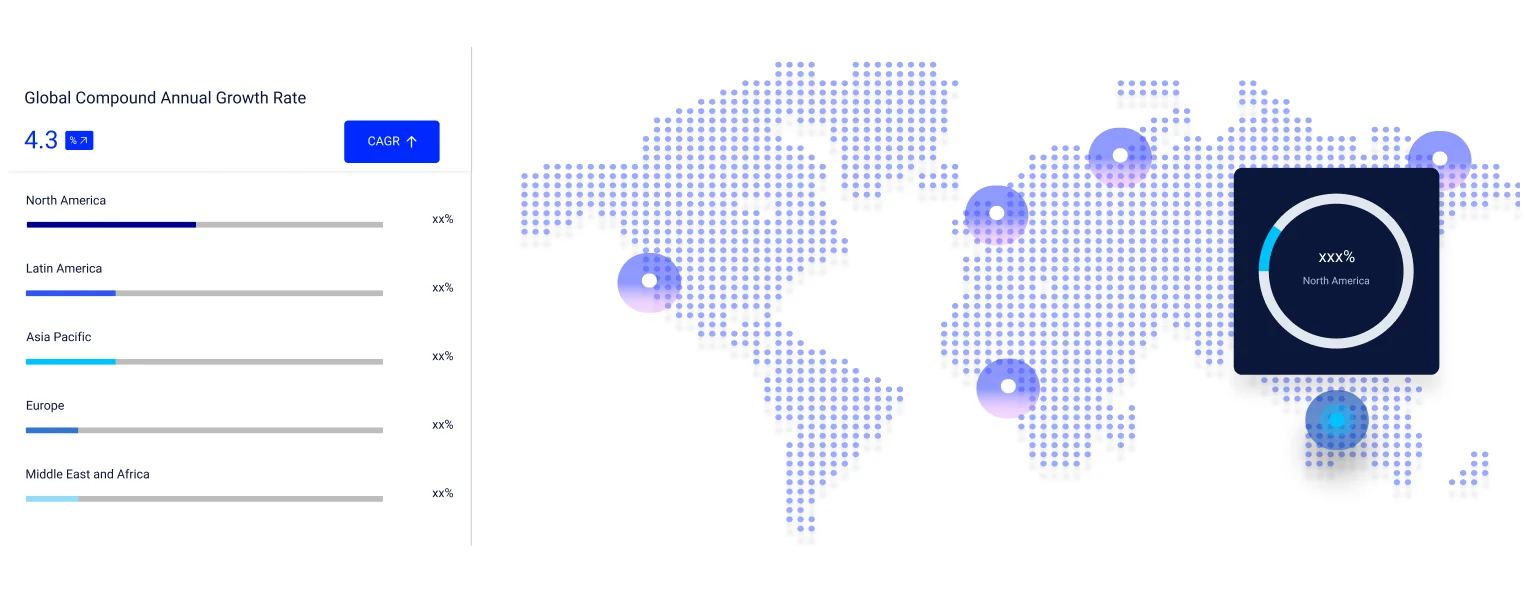
Key Insight: Asia Pacific accounts for the largest share of the electric powertrain market, driven by China's, Japan's, and South Korea's combination of large-scale EV production and deep domestic component supply chains. North America is expected to grow at the fastest pace as federal and state incentives continue to support new EV and battery manufacturing capacity across the United States and Canada. Europe continues to see steady demand from stringent regional emissions regulations, while Latin America and the Middle East and Africa are gradually scaling adoption alongside expanding vehicle electrification infrastructure.
By component, battery leads the market as the primary power source and largest single cost contributor
The battery segment continues to account for the largest share of the market, serving as the primary power source within electric and hybrid vehicles and typically representing the single largest cost component of the overall powertrain. Continued innovation in lithium-ion and emerging solid-state battery chemistries continues to anchor steady replacement and upgrade demand as automakers pursue higher energy density and faster charging capability across successive vehicle platform generations. Battery cell manufacturers are also investing in domestic gigafactory capacity to reduce reliance on imported cells and qualify for regional manufacturing incentives.
The motor/generator segment is growing at the fastest pace across the electric powertrain market as automakers pursue higher power density and efficiency to extend vehicle range without increasing battery pack size. Suppliers are increasingly consolidating motor, gearbox, and power electronics into integrated e-axle assemblies, reducing the packaging space and wiring complexity that separately sourced components typically require. Suppliers are also simplifying the assembly process for automakers transitioning production lines from combustion to electric architectures, reducing retooling costs during platform conversion.
By vehicle type, passenger car leads the market given the scale of global passenger EV production
Passenger cars continue to account for the largest share of the market, reflecting the scale of global passenger EV production across mass-market and premium segments alike. Established passenger EV platforms continue to anchor steady component replacement demand as automakers introduce successive vehicle generations built on dedicated electric architectures rather than combustion platforms retrofitted for electric drivetrains, a distinction that increasingly influences component sourcing and supplier qualification decisions. Suppliers with proven track records on dedicated EV platforms typically retain preferred status for subsequent model generations.
Commercial vehicles are growing at a fast pace as fleet operators face tightening emissions targets and total cost of ownership advantages from electrification on predictable, high-mileage routes; in April 2026, Amazon expanded its zero-emission freight operations by adding 75 Class 8 electric trucks from Einride to move orders between its fulfilment centres, sort centres, and delivery stations, part of a broader industry shift toward predictable, depot-based routes that suit current battery range limitations better than long-haul freight applications.
By vehicle drive type, front wheel drive leads the market as the most cost-effective configuration for compact EVs
Front wheel drive continues to account for a considerable share of the market, remaining the most cost-effective configuration for compact and mid-size passenger EVs where a single front-mounted motor keeps component and manufacturing costs low, particularly important for automakers targeting price-sensitive entry-level EV segments where every component cost reduction affects overall vehicle affordability. Suppliers serving this segment increasingly compete on manufacturing efficiency and component simplification rather than premium feature differentiation.
All wheel drive is growing at the fastest pace as dual-motor architectures become increasingly standard rather than a premium option; the 2026 Subaru Trailseeker, for example, ships with standard dual-motor all-wheel drive delivering 375 horsepower, reflecting how automakers are positioning all-wheel drive as a mainstream electric SUV expectation rather than a performance upgrade, with dual-motor architectures increasingly offered as standard equipment even on volume-oriented model trims previously reserved for single-motor configurations. This shift is pushing component suppliers to scale dual-motor manufacturing capacity well beyond what premium-tier demand alone would justify.
By application, BEV leads the market given the rapid scale-up of pure-electric vehicle production worldwide
Battery electric vehicles continue to account for the largest application share, reflecting the rapid scale-up of pure-electric vehicle production across all major automotive markets and consumer segments. Established BEV platforms continue to anchor steady component replacement and upgrade demand as automakers introduce successive vehicle generations built on dedicated electric architectures rather than adapted combustion platforms, with component suppliers increasingly co-designing powertrain systems alongside vehicle architecture from the earliest platform development stages, deepening supplier-automaker technical collaboration well beyond the traditional arm's-length component procurement relationship.
Plug-in hybrid electric vehicles are growing at a fast pace across the electric powertrain market as automakers position them as a transitional offering for consumers not yet ready to fully commit to battery electric ownership, particularly in markets with less mature public charging infrastructure than leading EV adoption regions. Several automakers have extended PHEV model lifecycles beyond originally planned phase-out dates as regional demand for fully electric vehicles has grown more slowly than earlier projections anticipated.
Read more about this report - REQUEST FREE SAMPLE COPY IN PDF
Asia Pacific commands the largest share of the market through large-scale EV production and deep component supply chains
Asia Pacific holds the largest share of the electric powertrain market, driven by China's, Japan's, and South Korea's combination of large-scale EV production and deep domestic component supply chains. In December 2025, DENSO Corporation announced an investment of approximately 150 billion yen to expand electric motor and power electronics manufacturing across its Japanese facilities, reinforcing the region's concentrated component manufacturing base. China's dominant position in battery cell production continues to give regional automakers a cost advantage that suppliers elsewhere are still working to replicate.
North America is expected to grow at the fastest pace as federal and state incentives continue to support new EV and battery manufacturing capacity across the United States and Canada. Component suppliers are increasingly localising production within North America to qualify for domestic content incentives and reduce exposure to cross-border tariff and supply chain risk affecting imported powertrain components. Recent federal manufacturing tax credits tied to domestic battery and motor content have further accelerated this localisation trend, with several suppliers announcing new North American production facilities timed to qualify before eligibility criteria potentially tighten.
The global industry is moderately consolidated, with electric powertrain companies ranging from diversified automotive suppliers spanning multiple vehicle systems to specialist electric motor and power electronics manufacturers competing across component, vehicle type, and application segments. Established players operate across the full electric powertrain value chain, from battery and motor manufacturing through power electronics and integrated e-axle assembly for global automaker customers.
Competitive dynamics among electric powertrain players are increasingly shaped by the pace of legacy combustion-focused division restructuring, silicon carbide and gallium nitride semiconductor adoption, and the race to secure long-term supply agreements with major automakers transitioning entire vehicle platforms to electric architectures. Manufacturers are investing in dedicated electric motor manufacturing capacity, vertically integrated power electronics, and regional localisation to differentiate their offering and defend market position.
Founded in 1915 and headquartered in Friedrichshafen, Germany, ZF Friedrichshafen supplies powertrain systems, chassis technology, and electric mobility components spanning vehicle motion control, integrated safety, and automated driving domains. The company traces its origins to gearbox manufacturing for airships before expanding into automotive transmissions and, more recently, electrified drivetrain systems. ZF's broader safety technology and automated driving businesses provide additional revenue diversification beyond its core electric powertrain component supply.
Founded in 1886 and headquartered in Gerlingen, Germany, Robert Bosch GmbH supplies high-efficiency traction motors, integrated electric drive systems, and power electronics for automotive customers worldwide. The company operates as one of the world's largest automotive suppliers across multiple vehicle systems beyond powertrain, including safety, infotainment, and industrial technology divisions. This diversified industrial base gives Bosch substantial in-house research capacity to support continued electrification investment.
Founded in 1949 and headquartered in Kariya, Japan, Denso Corporation supplies electric motors, power electronics, and thermal management systems for electric and hybrid vehicles, originally established as a spin-off from Toyota Motor Corporation. The company's historical ties to Toyota continue to anchor a substantial share of its automotive component business, while its diversified sensor and semiconductor operations extend its manufacturing expertise beyond pure powertrain applications.
Founded in 1946 and headquartered in Herzogenaurach, Germany, Schaeffler AG supplies electric motors, e-axles, and power electronics following its merger with Vitesco Technologies, expanding its electrification product portfolio considerably. The company's E-Mobility division spans the full spectrum of electrification solutions, while its motorsports heritage in bearing and clutch technology continues to inform the engineering approach behind its production electric drivetrain components.
Other key players in the electric powertrain market include Dana Incorporated, Hitachi Automotive, Magna International Inc., Marelli Holdings Co., Ltd., Panasonic Holdings Corporation, and Valeo Group, among others.
*Please note that this is only a partial list; the complete list of key players is available in the full report. Additionally, the list of key players can be customized to better suit your needs.*
Unlock the latest insights with our electric powertrain market trends 2026 report. Discover regional growth patterns, component and application trends, and key industry players. Stay ahead of competition with trusted data and expert analysis. Download your free sample report today and drive informed decisions in the market.


Upto 15% Off
USD
$2499 $2249
$3999 $3599
$4999 $4249
$5999 $5099


*While we strive to always give you current and accurate information, the numbers depicted on the website are indicative and may differ from the actual numbers in the main report. At Expert Market Research, we aim to bring you the latest insights and trends in the market. Using our analyses and forecasts, stakeholders can understand the market dynamics, navigate challenges, and capitalize on opportunities to make data-driven strategic decisions.*
In 2025, the market reached an approximate value of USD 129.84 Billion.
The market is projected to grow at a CAGR of 14.40% between 2026 and 2035.
The market is estimated to reach a value of around USD 498.50 Billion by 2035.
Expanding dedicated electric motor manufacturing capacity, adopting silicon carbide and gallium nitride power electronics to improve efficiency, and restructuring legacy combustion-focused business units to compete more effectively on electrified vehicle content.
The introduction of favourable government initiatives aimed at boosting the manufacturing and sales of electric vehicles and advancements in battery technology are the key trends guiding the market growth.
The major regions in the market include North America, Europe, the Asia Pacific, Latin America, and the Middle East and Africa.
The various components of electric powertrain include battery, power electric controller, motor/generator, converter, transmission, and onboard charger.
The significant sivehicle types considered in the market report include passenger car and commercial vehicle.
The major vehicle drive types considered in the market report include front wheel drive, rear wheel drive, and all wheel drive.
The different applications of electric powertrains are BEV, PHEV, and FCEV.
The key players in the market include ZF Friedrichshafen AG, Robert Bosch GmbH, Denso Corporation, Schaeffler AG, Dana Incorporated, Hitachi Automotive, Magna International Inc., Marelli Holdings Co., Ltd., Panasonic Holdings Corporation, and Valeo Group, among others.
Component suppliers face high capital requirements for dedicated electric motor and battery manufacturing capacity, volatile raw material costs for battery-grade minerals, and the technical complexity of restructuring legacy combustion-focused divisions without disrupting existing revenue streams.
Explore our key highlights of the report and gain a concise overview of key findings, trends, and actionable insights that will empower your strategic decisions.
| REPORT FEATURES | DETAILS |
| Base Year | 2025 |
| Historical Period | 2019-2025 |
| Forecast Period | 2026-2035 |
| Scope of the Report |
Historical and Forecast Trends, Industry Drivers and Constraints, Historical and Forecast Market Analysis by Segment:
|
| Breakup by Component |
|
| Breakup by Vehicle Type |
|
| Breakup by Vehicle Drive Type |
|
| Breakup by Application |
|
| Breakup by Region |
|
| Market Dynamics |
|
| Competitive Landscape |
|
| Companies Covered |
|
Datasheet
One User
USD 2,499
USD 2,249
tax inclusive*
Single User License
One User
USD 3,999
USD 3,599
tax inclusive*
Five User License
Five User
USD 4,999
USD 4,249
tax inclusive*
Corporate License
Unlimited Users
USD 5,999
USD 5,099
tax inclusive*
*Please note that the prices mentioned below are starting prices for each bundle type. Kindly contact our team for further details.*
Flash Bundle
Small Business Bundle
Growth Bundle
Enterprise Bundle
*Please note that the prices mentioned below are starting prices for each bundle type. Kindly contact our team for further details.*
Flash Bundle
Number of Reports: 3
20%
tax inclusive*
Small Business Bundle
Number of Reports: 5
25%
tax inclusive*
Growth Bundle
Number of Reports: 8
30%
tax inclusive*
Enterprise Bundle
Number of Reports: 10
35%
tax inclusive*
How To Order

Select License Type
Choose the right license for your needs and access rights.

Click on ‘Buy Now’
Add the report to your cart with one click and proceed to register.

Select Mode of Payment
Choose a payment option for a secure checkout. You will be redirected accordingly.
Strategic Solutions for Informed Decision-Making
Gain insights to stay ahead and seize opportunities.

Get insights & trends for a competitive edge.

Track prices with detailed trend reports.

Analyse trade data for supply chain insights.

Leverage cost reports for smart savings

Enhance supply chain with partnerships.

Connect For More Information
Our expert team of analysts will offer full support and resolve any queries regarding the report, before and after the purchase.
Our expert team of analysts will offer full support and resolve any queries regarding the report, before and after the purchase.
We employ meticulous research methods, blending advanced analytics and expert insights to deliver accurate, actionable industry intelligence, staying ahead of competitors.
Our skilled analysts offer unparalleled competitive advantage with detailed insights on current and emerging markets, ensuring your strategic edge.
We offer an in-depth yet simplified presentation of industry insights and analysis to meet your specific requirements effectively.




