

Consumer Insights
Uncover trends and behaviors shaping consumer choices today
Procurement Insights
Optimize your sourcing strategy with key market data
Industry Stats
Stay ahead with the latest trends and market analysis.
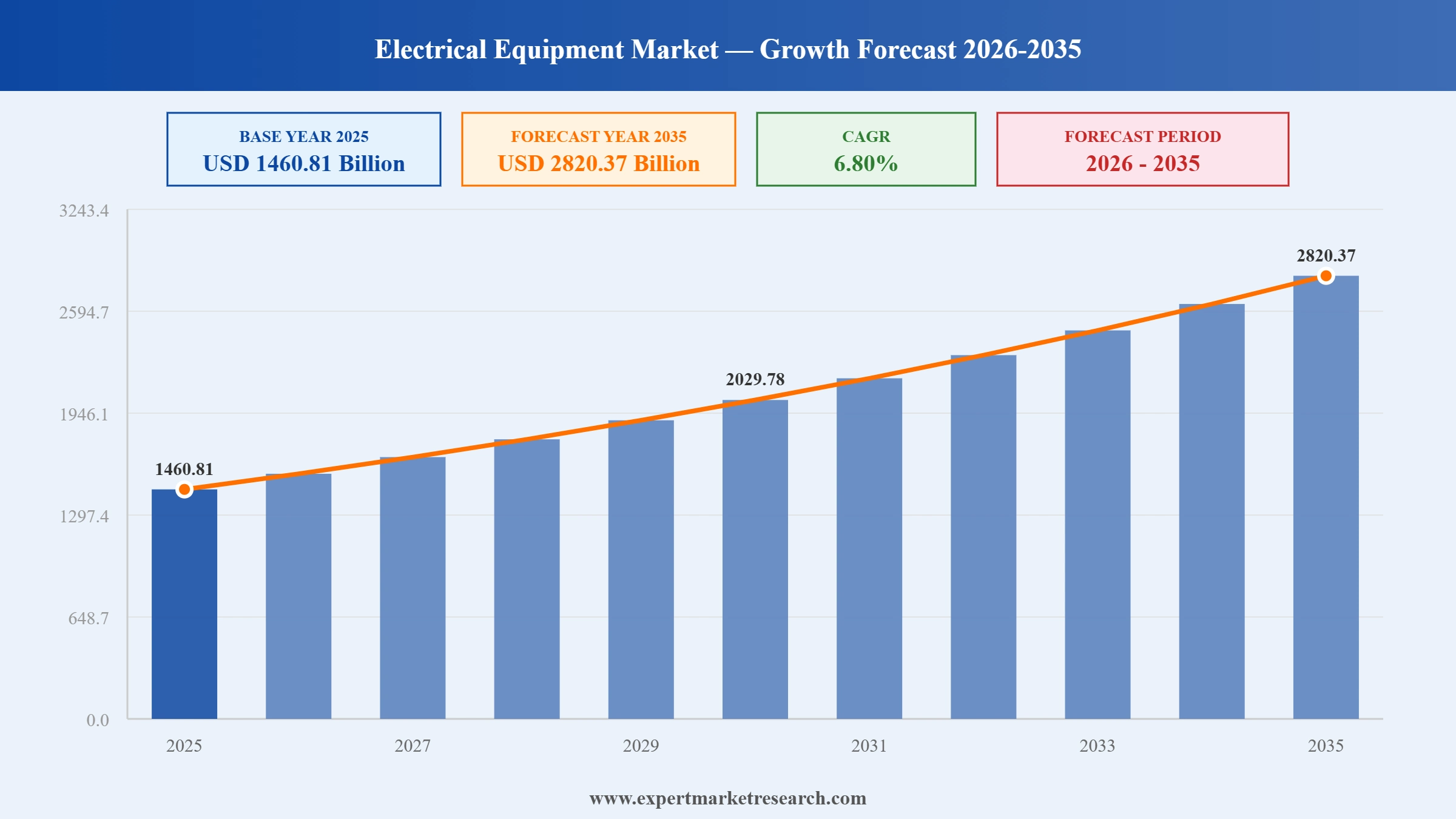
The Global Electrical Equipment Market reached a value of USD 1460.81 Billion at 2025 and is projected to expand at a CAGR of around 6.80% during the forecast period of 2026-2035. With surging EV battery adoption, expanding residential smart home systems, robust government investment in clean energy infrastructure exceeding USD 2 trillion annually, and the rapid industrialisation of Asia Pacific economies, the market is expected to reach USD 2820.37 Billion by 2035.
Read more about this report - REQUEST FREE SAMPLE COPY IN PDF
|
Global Electrical Equipment Market Report Summary |
Description |
Value |
|
Base Year |
USD Billion |
2025 |
|
Historical Period |
USD Billion |
2019-2025 |
|
Forecast Period |
USD Billion |
2026-2035 |
|
Market Size 2025 |
USD Billion |
1460.81 |
|
Market Size 2035 |
USD Billion |
2820.37 |
|
CAGR 2019-2025 |
Percentage |
XX% |
|
CAGR 2026-2035 |
Percentage |
6.80% |
|
CAGR 2026-2035- Market by Region |
Asia Pacific |
7.6% |
|
CAGR 2026-2035 - Market by Country |
India |
7.8% |
|
CAGR 2026-2035 - Market by Country |
China |
7.5% |
|
CAGR 2026-2035 - Market by Type |
Batteries |
14.6% |
|
CAGR 2026-2035 - Market by Application |
Residential |
8.1% |
|
Market Share by Country 2025 |
UK |
3.9% |
Electrical equipment market is navigating a structural shift driven by the energy transition, digitisation of homes and industries, and the electrification of transportation. These forces are simultaneously expanding demand volumes and reshaping which segments within the market are growing fastest, creating meaningful divergence in opportunities across product categories and regions.
Lauritz Knudsen Electrical and Automation introduced its enConnect smart home platform in June 2025, designed to convert conventional homes into fully interconnected intelligent living environments. The platform integrates lighting, climate control, energy monitoring, and security systems through a single user-friendly interface, addressing the growing consumer appetite for energy-efficient and connected home solutions. This launch reflects a broader industry movement toward embedded automation in residential electrical infrastructure, where manufacturers are competing to become the operating layer of the smart home rather than simply supplying individual components.
Schneider Electric upgraded its Wiser 2.0 smart home automation product range in May 2025, incorporating advanced energy management capabilities and scalable automation features aimed at both new builds and retrofit applications. The upgrade positions Wiser 2.0 as a comprehensive platform for homebuilders, architects, and consumers seeking to reduce energy consumption while gaining granular control over residential electrical systems. The release aligns with the growing policy momentum in major markets including the EU, UK, Australia, and the US, where governments are implementing demand-side flexibility requirements for appliances and building energy systems.
General Motors revealed its upcoming lithium manganese-rich (LMR) battery cells in May 2025, offering a combination of premium driving range and improved performance at a lower cost than current lithium-ion configurations. The announcement reflects the intensifying race among automotive OEMs and battery manufacturers to develop next-generation cells that broaden EV affordability while improving energy density. This development is directly relevant to the global electrical equipment market's battery segment, which is projected to grow at 14.6% CAGR through 2035, as innovations like LMR are expected to accelerate fleet electrification and boost demand for high-performance battery systems across passenger and commercial vehicle categories.
AE Industrial Partners joined forces with United Building Solutions, a major HVAC services provider in the US, in February 2025 to develop a comprehensive commercial HVAC services platform. The partnership is designed to deliver complex HVAC engineering, installation, and maintenance services for large commercial buildings, addressing the growing demand for energy-efficient climate control systems in the US commercial property sector. This collaboration reflects a broader trend of consolidation and platform building in the commercial electrical and mechanical systems space, as investors and operators seek to scale integrated energy services to institutional and corporate building owners.
Legrand launched 25 new Zip stores across its target markets in June 2024 as part of a deliberate expansion strategy to provide customers with a structured, immersive offline shopping experience for its electrical products. The stores are designed to offer a comprehensive browsing environment where contractors, electricians, and end consumers can evaluate wiring devices, home automation systems, and electrical accessories in person. This initiative reflects the continued relevance of offline distribution for high-value electrical products, where the ability to physically inspect and compare products remains a critical purchase driver, particularly for professional buyers and installers handling commercial and residential projects.
The International Energy Agency's estimate that approximately USD 2 trillion of global energy investment was allocated to clean energy technologies and infrastructure in 2024 is one of the most significant demand catalysts the global electrical equipment market growth has seen in decades. This capital flows directly into demand for batteries, inverters, transformers, power distribution equipment, and transmission infrastructure at scale. The battery segment is growing at 14.6% CAGR through 2035 as EV adoption accelerates and grid-scale energy storage for renewable power plants expands, driving both OEM investment and aftermarket demand. Government mandates across the EU, US, and China are ensuring that the pipeline of clean energy projects remains robust for the foreseeable future, underpinning long-term demand visibility for electrical equipment manufacturers.
The integration of smart home technology into mainstream residential construction is expanding the addressable market for electrical equipment beyond traditional wiring, switches, and appliances into a new layer of connected, software-managed systems. Residential applications are growing at 8.1% CAGR through 2035 as homeowners and builders increasingly specify smart thermostats, automated lighting, energy management platforms, and home security systems that all require specialised electrical components and connectivity infrastructure. In January 2025, policy changes in multiple key markets, including the EU's demand-side flexibility requirements and US energy efficiency standards for appliances, are creating regulatory pressure that is reinforcing the commercial case for smart home electrical upgrades even in cost-sensitive segments.
Asia Pacific's dominance in global electrical equipment at a projected 7.6% CAGR through 2035 reflects the convergence of multiple structural advantages: China's "Made in China 2025" programme accelerating domestic high-tech manufacturing, India's electronics production growth trajectory toward USD 300 billion by 2026 under the "Make in India" initiative, and the growing industrial and residential electrification needs of ASEAN's rapidly urbanising economies. In January 2025, India was projected to grow its electrical equipment market at 7.5% CAGR through 2035, making it one of the fastest-growing national-level markets in the global electrical equipment industry. The region's combination of manufacturing scale, policy support, and rapidly growing domestic demand is creating both a production and consumption powerhouse that is increasingly defining global market dynamics.
The integration of Internet of Things sensors, digital controls, and cloud-based management platforms into electrical equipment is transforming the value proposition of products across nearly every category, from smart meters and connected circuit breakers to IoT-enabled industrial motors and AI-driven energy management systems. In May 2025, Schneider Electric's Wiser 2.0 upgrade exemplified how incumbent electrical equipment manufacturers are pivoting from hardware-centric to platform-centric business models, embedding software intelligence into physical products to offer ongoing subscriptions, predictive maintenance, and energy optimisation services. This trend is raising average product values, improving manufacturer margins, and creating switching costs that are strengthening long-term customer relationships in both residential and commercial segments.
The Expert Market Research's report "Global Electrical Equipment Market Report and Forecast 2026 to 2035" offers a detailed analysis of the market based on the following segments:
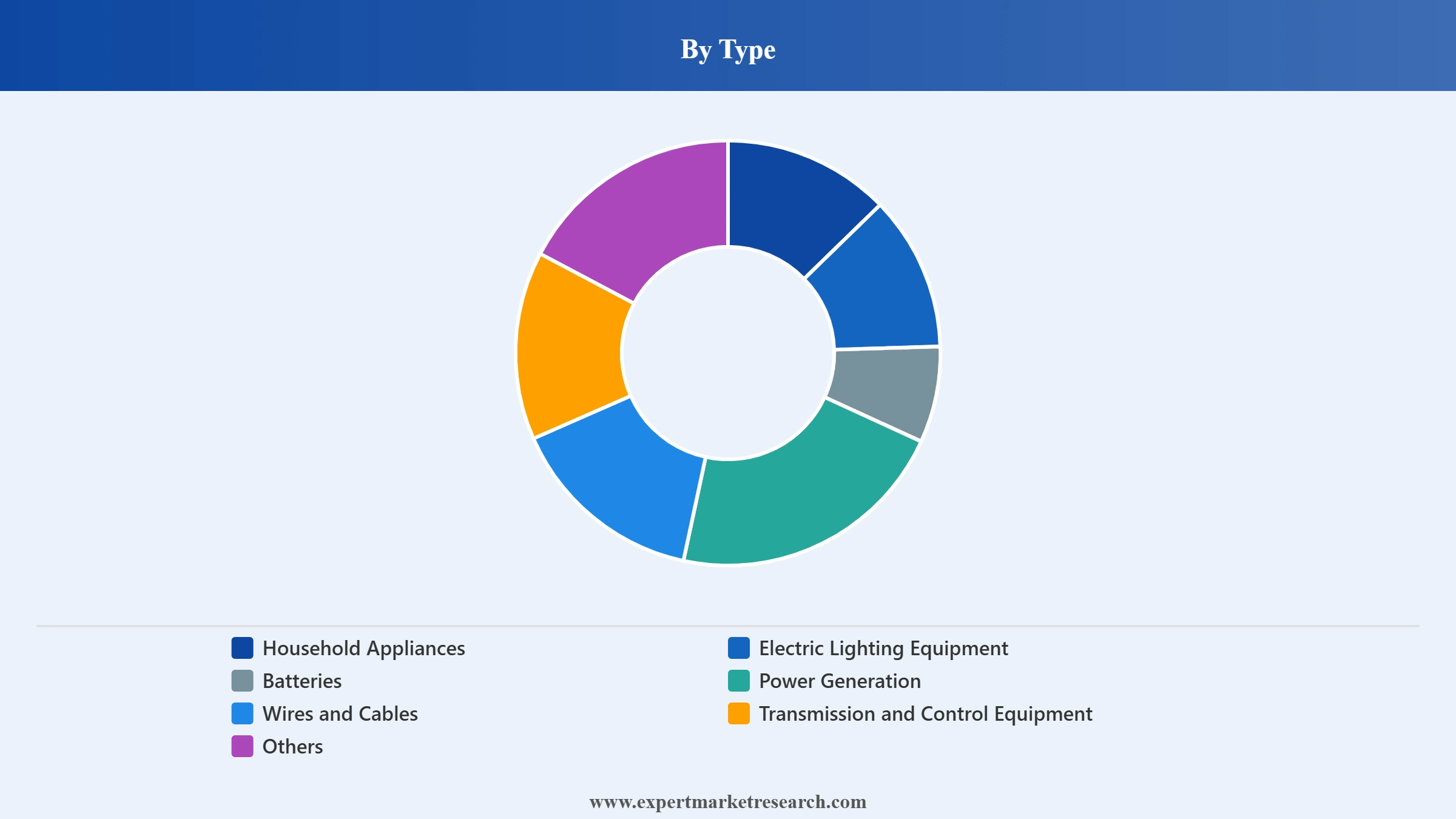
Market Breakup by Type
Key Insight: Batteries represent the fastest-growing type segment at a projected CAGR of 14.6% through 2035, driven by the dual forces of EV adoption and large-scale renewable energy storage deployment. The sustained investment by major automotive and battery manufacturers in next-generation chemistries such as lithium manganese-rich and solid-state cells is expected to maintain strong demand growth throughout the forecast period. Household appliances are growing at 7.4% CAGR, supported by rising ownership rates in emerging markets and the premiumisation trend in mature markets driven by energy efficiency upgrades and smart appliance adoption. Power generation and transmission and control equipment are benefiting directly from the clean energy infrastructure investment cycle, while wires and cables are growing steadily alongside urbanisation and industrial expansion globally.
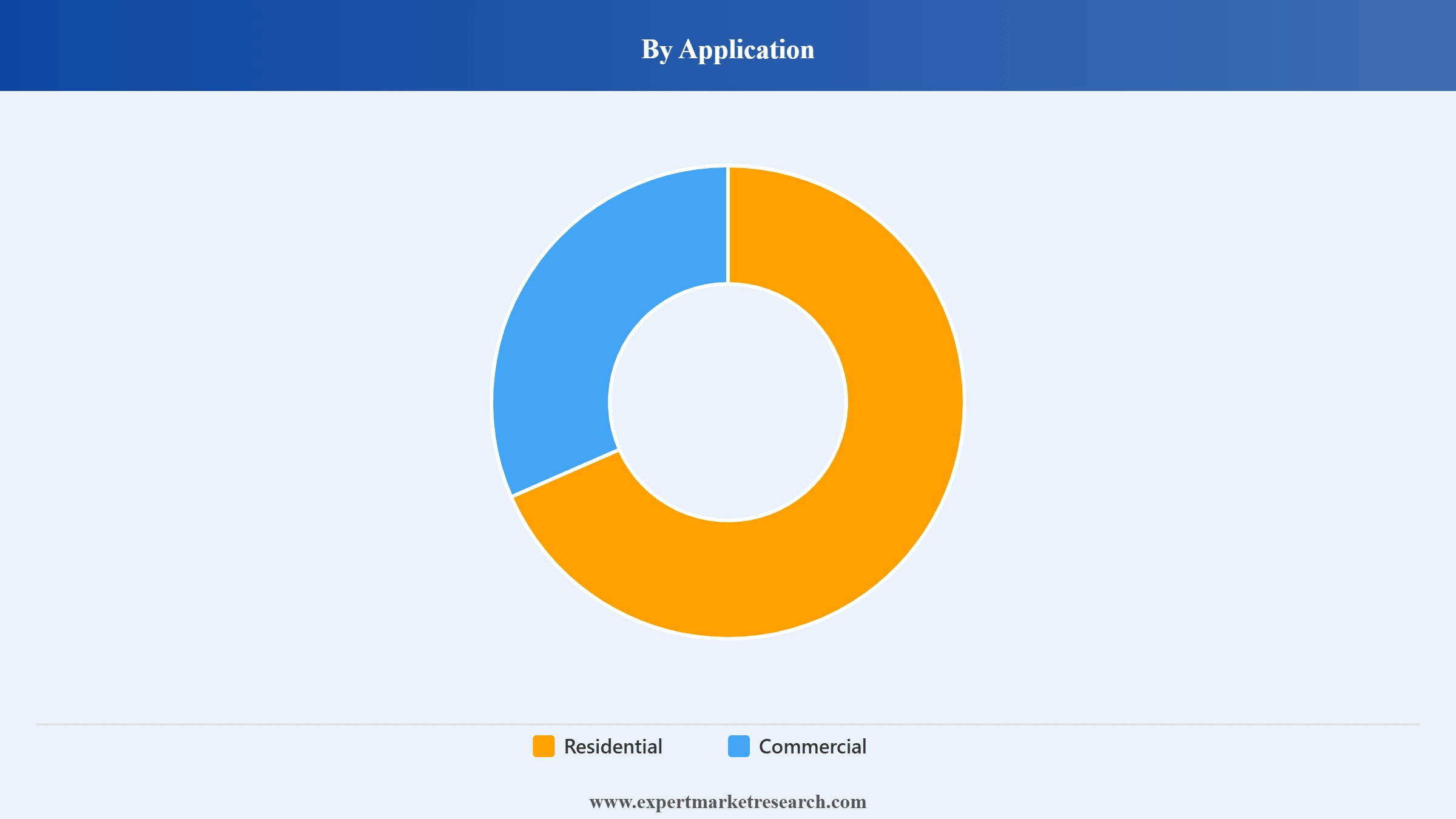
Market Breakup by Application
Key Insight: Residential applications account for the largest revenue share and are growing at 8.1% CAGR through 2035, reflecting the global residential upgrade cycle driven by smart home adoption, energy efficiency mandates, and the expanding middle class in emerging markets. The commercial segment demonstrates steady growth driven by demand from healthcare facilities, which require reliable power backup solutions, as well as from data centres, office complexes, and industrial facilities transitioning to more energy-efficient and IoT-connected electrical systems. The rise of distributed energy resources in commercial buildings, including rooftop solar, battery storage, and smart energy management, is adding a new dimension of demand for power conversion and management equipment.
Market Breakup by Distribution Channel
Key Insight: The offline distribution channel maintains the dominant revenue share in the global electrical equipment market, reflecting the importance of physical inspection and professional purchasing processes for high-value products such as switchgear, transformers, and industrial control systems. Offline channels also remain the primary route to market in rural and semi-urban regions across emerging markets where digital infrastructure is still developing. Online distribution is growing rapidly, particularly for standardised, lower-complexity products such as household appliances, wiring devices, and smart home accessories, where price comparison platforms and doorstep delivery are increasingly preferred by both professional and consumer buyers.
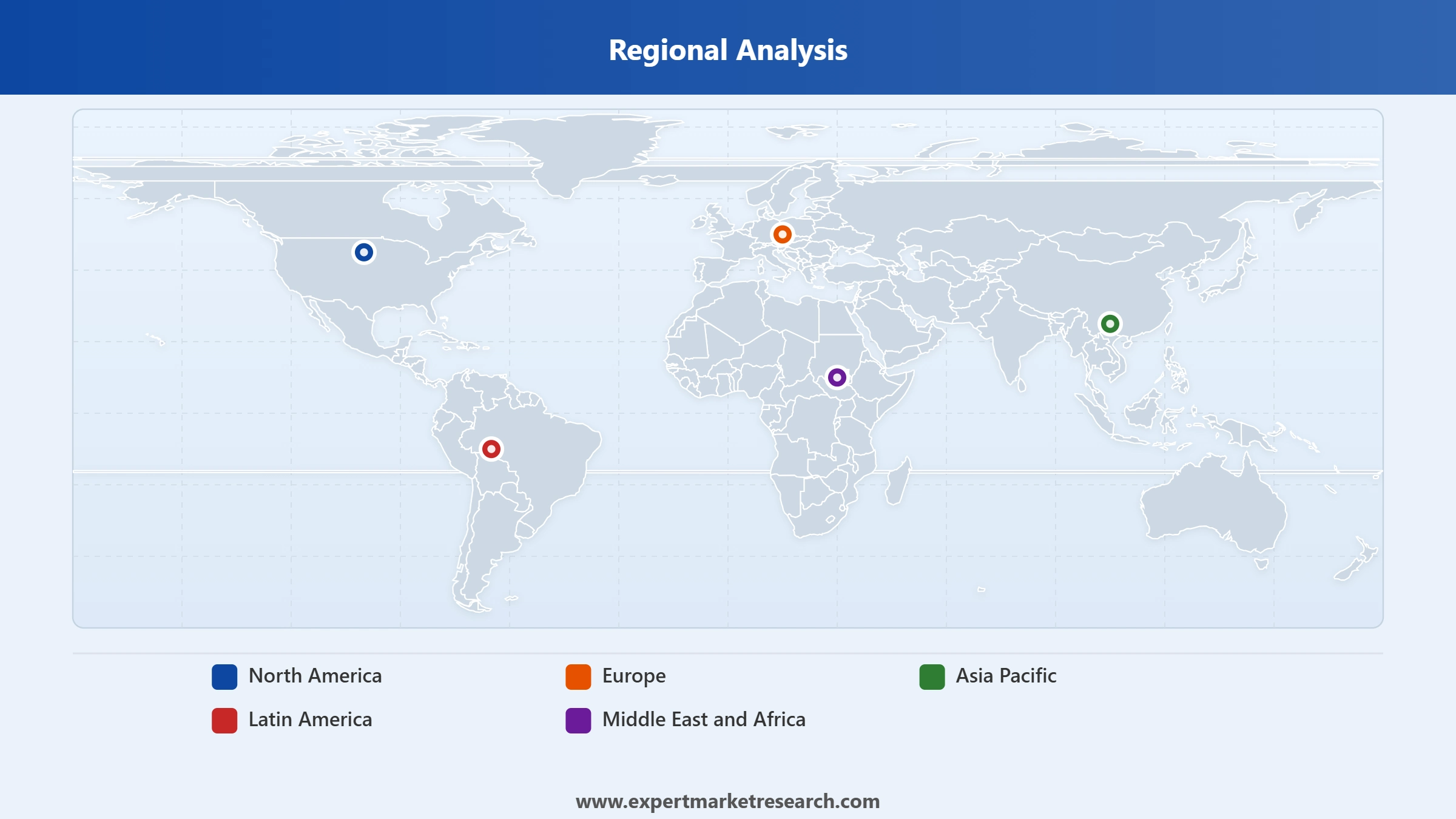
Market Breakup by Region
Key Insight: Asia Pacific holds the largest share of the global electrical equipment market and is projected to grow at 7.6% CAGR through 2035, driven by China's industrial manufacturing scale, India's electronics production expansion, and the infrastructure development needs of ASEAN economies. North America maintains a strong market position supported by its large installed base of industrial and commercial electrical infrastructure and the significant investment flowing into EV charging networks, grid modernisation, and data centres. Europe is investing heavily in clean energy transition infrastructure, driving demand for power generation, transmission, and smart grid equipment. The Middle East and Africa region presents strong long-term growth potential linked to infrastructure construction programmes and urbanisation trends, particularly in Saudi Arabia, UAE, and Nigeria.




Read more about this report - REQUEST FREE SAMPLE COPY IN PDF
Batteries hold the fastest-growing share among product types, propelled by the global push toward clean transportation and grid-scale energy storage. Major battery manufacturers and automotive OEMs are investing billions in next-generation cell development, with General Motors' LMR battery announcement in May 2025 exemplifying how cost and performance improvements are bringing batteries closer to mainstream adoption at unprecedented scale. Household appliances command a significant overall market value share, underpinned by global demand in both emerging markets where appliance ownership is rising with income levels and in developed markets where energy efficiency upgrades and smart home integration are driving replacement purchasing cycles.
Read more about this report - REQUEST FREE SAMPLE COPY IN PDF
Application: Residential applications represent the largest single application segment, built on the universal need for electrical infrastructure in homes and the accelerating retrofit of existing residential buildings with smart systems, energy management platforms, and EV home chargers. The commercial segment is gaining ground as data centre expansion, healthcare facility upgrades, and industrial automation investments drive sustained demand for power distribution and control equipment. Schneider Electric's Wiser 2.0 upgrade in May 2025 and Legrand's Zip store expansions in June 2024 both reflect the competitive priority that leading players are placing on the residential-commercial boundary, where integrated energy and automation solutions are becoming a key battleground.
Read more about this report - REQUEST FREE SAMPLE COPY IN PDF
Asia Pacific is the dominant global region for electrical equipment, and its continued leadership through 2035 is well-supported by multiple structural drivers. China remains the world's largest producer and consumer of electrical equipment, with its "Made in China 2025" policy targeting domestic content increases in high-tech segments including power electronics, smart grid components, and EV batteries. India's Ministry of Electronics and IT has set a USD 300 billion electronics production target for 2026, and the country's electrical equipment market is growing at 7.5% CAGR, making it one of the most important growth markets globally for electrical equipment manufacturers seeking to reduce China-concentration in their supply chains. ASEAN economies including Vietnam, Indonesia, and Thailand are attracting increasing manufacturing investment as companies diversify their production footprints across the region.
North America represents a mature but dynamically evolving market for global electrical equipment, where the intersection of grid modernisation, EV adoption, and data centre expansion is creating sustained capital investment in electrical infrastructure. The US Inflation Reduction Act committed substantial long-term incentives for clean energy manufacturing and deployment, directly supporting demand for batteries, power generation equipment, and transmission and control systems. Europe's market is being reshaped by the European Green Deal, which is driving investment in smart grids, cross-border power infrastructure, and energy efficiency upgrades across both the residential and commercial sectors. The Middle East and Africa is emerging as the most dynamic long-term growth opportunity, with Saudi Arabia's Vision 2030 and UAE's infrastructure expansion creating significant demand for electrical systems across new cities, industrial zones, and renewable energy projects.
Read more about this report - REQUEST FREE SAMPLE COPY IN PDF
Electrical equipment market is served by a highly diversified competitive landscape spanning industrial conglomerates, specialised manufacturers, and vertically integrated technology companies. At the top tier, companies like ABB, Siemens, Schneider Electric, and Eaton compete across a broad portfolio of product categories and geographies, leveraging deep R&D capabilities, global service networks, and long-standing institutional relationships. Further down the competitive hierarchy, regional and category specialists compete on price, customisation, and proximity to local customer needs.
Strategic priorities for leading players include accelerating IoT and digital platform integration into physical products, geographic expansion into high-growth emerging markets in Asia Pacific and the Middle East and Africa, and investment in sustainable and energy-efficient product lines that align with customers' net-zero and energy cost reduction objectives. Acquisitions and partnerships are common tools for capability expansion, as the breadth of technologies required to serve the evolving market exceeds what most single companies can develop organically.
These efforts are not only meeting evolving consumer and industrial needs but also setting new standards in sustainability, automation, and smart infrastructure development across the sector. Recent developments in the market include the introduction of smart switchgear systems that enhance grid responsiveness and reduce operational downtime. On the industrial front, the adoption of automation equipment like intelligent sensors and control units is transforming production processes and improving efficiency. These advancements collectively contribute to the market’s robust and sustained growth.
Founded in 1988 through the merger of ASEA and BBC Brown Boveri and headquartered in Zurich, Switzerland, ABB is one of the world's leading companies in electrification and automation technologies. ABB serves utilities, industries, transportation, and building markets globally with products spanning robotics, power distribution, motors, and smart grid solutions. The company has a strong track record of technology leadership, including its development of ultra-premium energy efficiency IE5+ SynRM motors, and it operates across more than 100 countries with a diversified revenue base that provides resilience against regional economic fluctuations.
Founded in 1911 and headquartered in Dublin, Ireland, Eaton Corporation is a diversified power management company with a broad portfolio covering electrical systems, hydraulics, aerospace, and vehicle components. Eaton's electrical segment addresses power quality, distribution, and automation needs across data centres, utilities, residential buildings, and industrial facilities. The company is particularly active in the US commercial and industrial market, where growing data centre investment and grid modernisation programmes are creating strong demand for its switchgear, circuit breakers, and energy storage systems. Eaton's emphasis on energy transition products and digital connectivity positions it well in the fastest-growing segments of the global electrical equipment market.
Founded in 1886 and headquartered in Gerlingen, Germany, Robert Bosch GmbH is a diversified technology and engineering company with major operations in mobility solutions, industrial technology, consumer goods, and energy and building technology. In the electrical equipment space, Bosch competes in household appliances, smart home systems, power tools, and industrial automation, leveraging its engineering heritage and global manufacturing infrastructure. Bosch has invested significantly in IoT integration and smart connectivity across its appliance and building technology product lines, positioning itself as a key player in the growing smart home and smart building segment. Its scale allows it to serve markets from mass-market household appliances to sophisticated building automation systems.
Founded in 1984 and headquartered in Qingdao, China, Haier Group is the world's largest household appliances company by retail volume, with a portfolio that includes GE Appliances, Candy, and Fisher and Paykel alongside its flagship Haier brand. Haier competes primarily in household appliances, smart home ecosystems, and consumer electronics, with a growing presence in commercial refrigeration and HVAC. The company's global strategy is built around its COSMOPlat industrial internet platform, which integrates manufacturing, supply chain, and user interaction in a single connected ecosystem. Haier's combination of Chinese manufacturing scale, multi-brand global distribution, and platform-led innovation strategy makes it one of the most consequential players in shaping how household electrical equipment is developed, manufactured, and sold globally.
Other key players in the market are Sumitomo Electric Industries Ltd, Nexans SA, Grand Tech Group Ltd, AB Electrolux, Hi-Mix Electronics Inc, YAGEO Group, and Others.
*Please note that this is only a partial list; the complete list of key players is available in the full report. Additionally, the list of key players can be customized to better suit your needs.*
The global electrical equipment market is at the centre of three of the most powerful long-cycle trends in the world economy: the clean energy transition, the rise of smart and connected infrastructure, and the electrification of transportation. Whether you are a manufacturer planning capacity investments, an investor evaluating sector exposure, or a procurement leader benchmarking suppliers, our comprehensive 2026 to 2035 market report delivers the intelligence you need to act with confidence. From battery segment dynamics to country-level forecasts across 14 geographies, the depth is all here. Download your free sample today and start building a clearer view of where this market is heading.


Upto 15% Off
USD
$2499 $2249
$3999 $3599
$4999 $4249
$5999 $5099


*While we strive to always give you current and accurate information, the numbers depicted on the website are indicative and may differ from the actual numbers in the main report. At Expert Market Research, we aim to bring you the latest insights and trends in the market. Using our analyses and forecasts, stakeholders can understand the market dynamics, navigate challenges, and capitalize on opportunities to make data-driven strategic decisions.*
In 2025, the electrical equipment market reached an approximate value of USD 1460.81 Billion.
The market is projected to grow at a CAGR of 6.80% between 2026 and 2035.
The key players in the market include ABB Ltd., Sumitomo Electric Industries Ltd, Eaton Corporation PLC, Nexans SA, Grand Tech Group Ltd, Haier Group, AB Electrolux, Hi-Mix Electronics Inc, Robert Bosch GmbH, and YAGEO Group, among Others.
Key strategies driving the market include technological innovation, strategic acquisitions, expansion into emerging markets, investment in R&D and sustainable product development.
Major factors boosting market growth in APAC are the government-led manufacturing initiatives, rising energy demand, and rapid infrastructure development.
Explore our key highlights of the report and gain a concise overview of key findings, trends, and actionable insights that will empower your strategic decisions.
| REPORT FEATURES | DETAILS |
| Base Year | 2025 |
| Historical Period | 2019-2025 |
| Forecast Period | 2026-2035 |
| Scope of the Report |
Historical and Forecast Trends, Industry Drivers and Constraints, Historical and Forecast Market Analysis by Segment:
|
| Breakup by Type |
|
| Breakup by Application |
|
| Breakup by Distribution Channel |
|
| Breakup by Region |
|
| Market Dynamics |
|
| Competitive Landscape |
|
| Companies Covered |
|
Datasheet
One User
USD 2,499
USD 2,249
tax inclusive*
Single User License
One User
USD 3,999
USD 3,599
tax inclusive*
Five User License
Five User
USD 4,999
USD 4,249
tax inclusive*
Corporate License
Unlimited Users
USD 5,999
USD 5,099
tax inclusive*
*Please note that the prices mentioned below are starting prices for each bundle type. Kindly contact our team for further details.*
Flash Bundle
Small Business Bundle
Growth Bundle
Enterprise Bundle
*Please note that the prices mentioned below are starting prices for each bundle type. Kindly contact our team for further details.*
Flash Bundle
Number of Reports: 3
20%
tax inclusive*
Small Business Bundle
Number of Reports: 5
25%
tax inclusive*
Growth Bundle
Number of Reports: 8
30%
tax inclusive*
Enterprise Bundle
Number of Reports: 10
35%
tax inclusive*
How To Order

Select License Type
Choose the right license for your needs and access rights.

Click on ‘Buy Now’
Add the report to your cart with one click and proceed to register.

Select Mode of Payment
Choose a payment option for a secure checkout. You will be redirected accordingly.
Strategic Solutions for Informed Decision-Making
Gain insights to stay ahead and seize opportunities.

Get insights & trends for a competitive edge.

Track prices with detailed trend reports.

Analyse trade data for supply chain insights.

Leverage cost reports for smart savings

Enhance supply chain with partnerships.

Connect For More Information
Our expert team of analysts will offer full support and resolve any queries regarding the report, before and after the purchase.
Our expert team of analysts will offer full support and resolve any queries regarding the report, before and after the purchase.
We employ meticulous research methods, blending advanced analytics and expert insights to deliver accurate, actionable industry intelligence, staying ahead of competitors.
Our skilled analysts offer unparalleled competitive advantage with detailed insights on current and emerging markets, ensuring your strategic edge.
We offer an in-depth yet simplified presentation of industry insights and analysis to meet your specific requirements effectively.




