

Consumer Insights
Uncover trends and behaviors shaping consumer choices today
Procurement Insights
Optimize your sourcing strategy with key market data
Industry Stats
Stay ahead with the latest trends and market analysis.

The global enterprise mobility market was valued at USD 70.12 Billion in 2025. Adoption of AI-integrated mobile security protocols is propelling demand for context-aware enterprise mobility solutions. As a result, the market is expected to grow at a CAGR of 28.90% during the forecast period of 2026-2035 to reach a value of USD 887.91 Billion by 2035.
The market is rapidly evolving as remote workforces and digital-first operations become the new norm across industries. A key driving factor powering this transformation is the growing demand for unified endpoint management (UEM) that enables secure handling of BYOD and corporate-owned devices. According to the enterprise mobility market analysis, over 65% of enterprises in the Asia Pacific region have adopted some form of mobile-enabled remote work policy, as regulatory pressure and remote workforce expansion intensified. The trend has gained momentum with the European Union’s Digital Decade policy, which pushed organisations to enhance digital infrastructure, workforce mobility, and data sovereignty.
Government-led digital inclusion programmes across Asia-Pacific and Africa are also bolstering adoption. India’s Digital India mission, for example has created new business mandates for mobile-centric enterprise platforms. Even in regions with stricter regulatory landscapes, like the United Kingdom and Germany, large enterprises are now investing in mobile-first workforce enablement solutions, often layered with AI and edge-based data protection.
Innovation is playing a critical role in shaping the enterprise mobility market dynamics. With the rise of context-aware access control and AI-enabled device behaviour analytics, businesses are reshaping workplace productivity and risk postures in real-time. As workforce decentralisation grows and device proliferation expands, mobility solutions that combine compliance, control, and flexibility will form the competitive edge enterprises need to thrive in an unpredictable digital economy.
Base Year
Historical Period
Forecast Period
Compound Annual Growth Rate
28.9%
Value in USD Billion
2026-2035
*this image is indicative*
Enterprise mobility is increasingly leveraging AI for real-time risk detection. Vendors like IBM and Microsoft are integrating AI/ML to enable context-aware access, adjusting security policies dynamically based on user behaviour, location, or device posture. Firms like Vodafone are introducing AI-enhanced mobile workplace solutions for critical industries, reducing data breaches to a significant extent. This aligns with NIST’s zero-trust architecture guidelines, boosting growth in the enterprise mobility market.
Highly regulated sectors like healthcare and finance are rethinking Bring Your Own Device (BYOD) strategies. In August 2023, NHS England approved a framework allowing BYOD use under strict MDM protocols. These initiatives have pushed enterprise-grade mobile solutions into high compliance zones. According to the enterprise mobility market analysis, over 85% of global institutions are now piloting secure BYOD programmes, highlighting the balancing act between user flexibility and corporate data control.
Enterprise mobility tools are reinventing how field teams operate. In the construction and logistics sectors, ruggedised device ecosystems and app-based workflow management platforms have become mission-critical. The UK Construction Leadership Council (CLC) endorsed mobile operations as essential to meeting 2025 Net Zero benchmarks, by streamlining on-site reporting and asset tracking. As enterprise fieldwork gets digitally transformed, mobile-enabled service operations have become core to infrastructure requirements.
Edge computing integration into enterprise mobility platforms is growing rapidly. Firms like Cisco are launching mobility-edge convergence platforms enabling real-time AI processing directly on edge nodes for low-latency scenarios, especially in manufacturing and retail sectors, boosting further demand in the enterprise mobility market. This enables predictive maintenance, local decision-making, and network autonomy. National digital transformation projects, like Germany’s GAIA-X, are backing decentralised architectures, signalling the rise of sovereign edge-driven mobility systems.
Vendors are developing mobility platforms tailored to specific verticals. For example, SAP’s Fieldglass Mobile platform is used within the energy sector for carbon tracking capabilities. Similarly, Honeywell’s mobile logistics suite now supports real-time pallet geo-tagging. These tailored solutions address industry-specific compliance, operational bottlenecks, and real-time reporting needs, ensuring faster ROI and deeper integration. In sectors like retail, BFSI, and public services, vertical-centric platforms are becoming essential for delivering context-aware workflows and automation at scale.
Read more about this report - REQUEST FREE SAMPLE COPY IN PDF
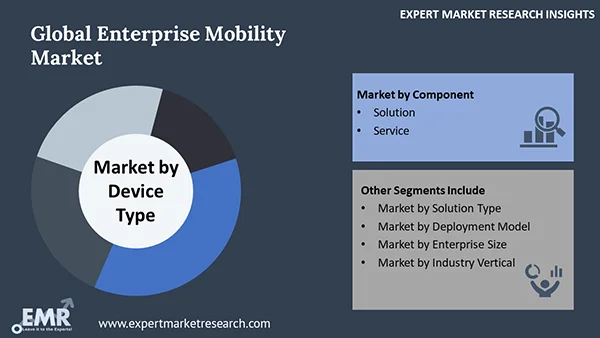
The EMR’s report titled “Global Enterprise Mobility Market Report and Forecast 2026-2035” offers a detailed analysis of the market based on the following segments:
Market Breakup by Component
Key Insight: Solutions largely contribute to the enterprise mobility demand growth, particularly for centralised policy control and secure device enablement. Unified endpoint management and mobile content security platforms are most preferred option in the market. Meanwhile, the services category is gaining pace as enterprises seek efficiency, outsourcing everything from device lifecycle management to mobility analytics.
Market Breakup by Solution Type
Key Insight: Mobile Device Management continues to dominate the global enterprise mobility industry, as enterprises tackle compliance risks at the hardware level. It is mostly observed as foundational, especially in regulated industries. On the other hand, the growing emphasis on user-centric design and remote app functionality has boosted demand for Mobile Application Management. As apps evolve into full-fledged productivity hubs, MAM enables secure, containerised usage without locking down entire devices.
Market Breakup by Deployment Model
Key Insight: Cloud deployment boasts significant enterprise mobility market opportunities due to its adaptability, low cost, and global access capabilities. It allows organisations to rapidly scale and support mobile-first workflows. On-premise solutions, however, are prevalent among firms that need total control over data, especially in compliance-heavy sectors. While cloud serves dynamic industries seeking speed and elasticity, on-premise suits those prioritising regulatory alignment and risk mitigation.
Market Breakup by Enterprise Size
Key Insight: Large enterprises dominate the market due to their complex infrastructure and need for tailored mobility solutions. Their investments focus on custom security, regulatory alignment, and operational efficiency at scale. Meanwhile, SMEs are witnessing faster adoption, driven by cost-efficient SaaS platforms that offer enterprise-level features without the associated complexity. The availability of cloud-based plug-and-play tools has democratised mobility access.
Market Breakup by Device Type
Key Insight: Smartphones dominate enterprise mobility adoption, given their widespread availability, powerful features, and central role in remote operations. These are used across verticals for communication, productivity, and data tracking. Tablets, on the other hand, are growing fast, carving a niche in field services and hybrid work models. Their ability to serve as flexible computing tools without the bulk of laptops has accelerated adoption in various sectors. Laptops, though still critical in traditional office roles, face displacement in mobility-heavy use cases.
Market Breakup by Industry Vertical
Key Insight: BFSI holds the leading position in the global enterprise mobility market, mainly due to its demand for secure, real-time mobile capabilities across diverse financial functions. Healthcare is catching up swiftly, fuelled by patient-centric care models and remote health technology. Other key sectors like retail, energy, and government are adopting mobility to enhance workforce agility, customer experience, and field operations. IT & Telecom, meanwhile, continues to lead in early adoption and innovation.
Market Breakup by Region
Key Insight: North America continues to be the market leader, supported by digital maturity and a strong innovation pipeline. Asia Pacific is rapidly catching up, owing to mobile-centric policies and explosive tech adoption, fuelling overall enterprise mobility demand. Europe is prioritising data sovereignty and compliance, making hybrid deployments more popular. Latin America sees rising adoption among SMEs, driven by affordable cloud-based tools. The Middle East and Africa, while still emerging, are witnessing enterprise mobility growth through government smart city initiatives and infrastructure development.
Solution Components Dominate the Market Due to Demand for Unified Endpoint Management Platforms
The solutions category commands the largest market share, as enterprises implement cohesive endpoint and content management tools across sprawling device landscapes. The growing need to support diverse operating systems, ensure zero-trust compliance, and centralise mobile policy enforcement has steered demand toward integrated enterprise mobility suites. Companies like Ivanti and VMware are expanding their UEM platforms with AI-analytics, making them indispensable for sectors like defence and pharma.
Services are also gaining rapid traction in the enterprise mobility market, especially as enterprises outsource mobile infrastructure management to specialist vendors. Managed Mobility Services (MMS) providers are addressing key gaps, ranging from device procurement to app provisioning and 24x7 remote support. Firms like Accenture, TCS, and Capgemini have all expanded MMS offerings targeting government and BFSI clients across Europe.
By Solution Type, Mobile Device Management Leads the Industry Due to Its Core Role in Compliance Enforcement
Mobile Device Management (MDM) has emerged as the key motivator for enterprise mobility market revenue, especially through sectors dealing with sensitive data like banking, government, and healthcare. It offers real-time remote wipe, encryption, and geo-fencing features critical to meeting data residency laws. With rising enforcement of GDPR and regional equivalents like India’s DPDP Act 2023, device-level security has become non-negotiable.
Mobile Application Management (MAM) represents the fastest growing category in the market, driven by the increasing decoupling of data and device ownership. MAM allows secure app-level containerisation, offering flexible yet controlled mobile experiences for remote employees. It has become vital for contract-heavy sectors like consulting and gig-economy firms where BYOD rules dominate. Companies like SAP and Citrix have released MAM solutions focused on app analytics and usage control, enabling performance benchmarking without infringing on personal device privacy.
Cloud Deployment Hold the Maximum Share of the Market Due to Scalable and Flexible Infrastructure Needs
Cloud deployment continues to dominate the enterprise mobility market value due to its flexibility, scalability, and quick deployment models. Enterprises prefer cloud mobility platforms as they eliminate upfront hardware costs and simplify software updates. With workforce decentralisation growing and global teams operating across multiple time zones, cloud-based solutions ensure seamless access, real-time synchronisation, and enhanced productivity.
Despite the surge in cloud-based deployments, on-premise solutions are experiencing a resurgence, in the enterprise mobility industry, particularly in sectors prioritising data sovereignty and tight regulatory compliance. These systems offer enterprises full control over infrastructure, storage, and data governance, essential for industries handling sensitive information, such as defence, finance, and healthcare. In many European and Asian jurisdictions, strict data localisation laws make on-premises deployment a non-negotiable standard.
Large Enterprises Clock in the Majority of the Market Share Due to Complex Infrastructure and Custom Security Demands
Large enterprises account for a significant share of the market due to their extensive mobile workforce, complex infrastructure needs, and higher focus on endpoint security. These organisations operate across multiple geographies, requiring mobility solutions that integrate seamlessly with legacy systems while offering multi-device support and compliance control. They also adopt mobile platforms to streamline operations, empower remote staff, and ensure workforce agility.
SMEs are emerging as the fastest adopters, boosting demand in the enterprise mobility market, primarily fuelled by affordable SaaS-based mobility platforms and increased digital maturity. Mobile-first workplace models help SMEs unlock productivity without heavy IT overheads. Cloud-based mobility tools level the playing field, offering advanced features, like device control, file sharing, and workforce analytics, at a fraction of the enterprise cost.
By Device Type, Smartphones Capture the Largest Share Due to High Penetration Across Workforce
Smartphones remain the dominant device category in the enterprise mobility market shares due to their ubiquity, portability, and increasing processing capabilities. Organisations across sectors, from logistics to consulting, are using smartphones for communication, data capture, GPS tracking, mobile CRM, and cloud access. With device manufacturers now offering enterprise-ready models featuring biometric security, containerised apps, and ruggedised builds, smartphones have become indispensable to mobile-first workflows.
Tablets are also gaining significant momentum, especially in industries where mobility meets presentation or point-of-service functions. Field teams in sectors like energy, pharmaceuticals, and real estate prefer tablets for their screen size, versatility, and battery life. These devices strike a balance between smartphone portability and laptop functionality, making them ideal for remote data collection, customer interactions, and real-time reporting, propelling the enterprise mobility market scope.
By Industry Vertical, the BFSI Sector Dominates the Market Due to Strict Compliance and Secure Mobile Transactions Needs
The BFSI sector is at the forefront of the enterprise mobility market dynamics, owing to its need for secure, real-time data access and robust regulatory compliance. Financial institutions use mobility tools for encrypted communication, digital signatures, biometric identity verification, and real-time portfolio tracking. The rise of FinTechs has also disrupted traditional workflows, pushing legacy players to embrace mobile transformation more aggressively.
Healthcare is emerging as the fastest-growing vertical in enterprise mobility adoption, driven by the rise in telemedicine, e-prescriptions, and remote monitoring. Hospitals, clinics, and even local health departments are leveraging mobile solutions for better patient engagement, real-time diagnostics, and seamless data entry. The integration of mobility with Electronic Health Records (EHR) and wearable device monitoring systems has opened new frontiers in preventive care.
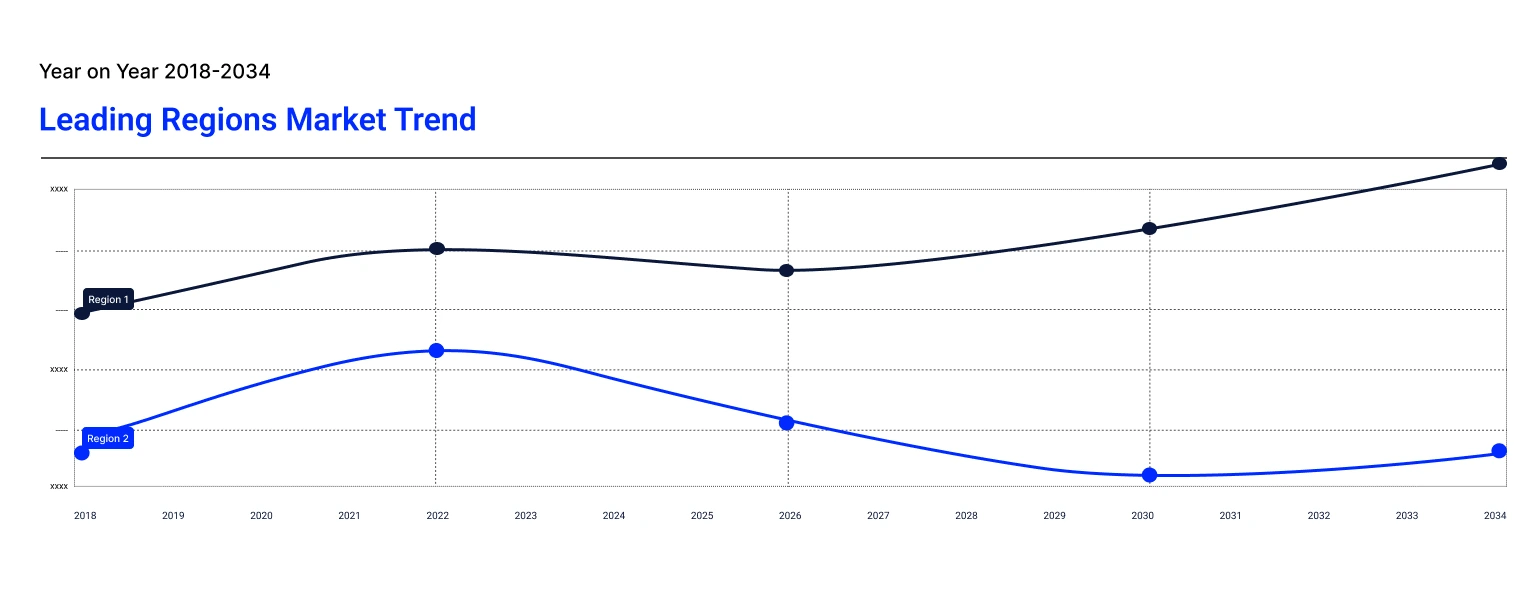
North America Leads the Market with a Substantial Revenue Share Due to High Digital Workforce Penetration
North America leads the global enterprise mobility market, owing to its robust IT infrastructure, high BYOD penetration, and mature cloud adoption. Enterprises in the United States and Canada are early adopters of advanced UEM platforms, AI-driven mobile analytics, and integrated security tools. The region also benefits from the presence of global tech giants, startups, and managed mobility providers offering cutting-edge solutions. Vertical-specific innovations, especially in BFSI, healthcare, and telecom, continue to fuel demand.
The ongoing growth of the Asia Pacific enterprise mobility market is driven by rapid urbanisation, expanding mobile penetration, and ambitious government digitalisation plans. Countries like India, China, and Indonesia are investing in smart infrastructure and workplace modernisation, making mobile-first strategies critical across public and private sectors. Enterprises are embracing SaaS mobility tools for workforce enablement, especially among SMEs.
Majority of the leading enterprise mobility market players are focusing on AI-powered security, device behaviour analytics, and hybrid deployment models. As data security and remote work continue to reshape the digital workplace, companies are investing in adaptive mobile platforms and context-aware tools. Key opportunities can be observed in vertical-specific solutions, especially in healthcare, finance, and logistics.
Enterprise mobility companies are also exploring edge-based processing and smart device integration to offer real-time insights and lower latency. There is a visible shift towards developing low-code mobility platforms to empower business teams with quick customisation options. Moreover, partnerships with telecom providers and system integrators are growing, aimed at expanding market reach and improving mobile network optimisation. Players are not only enhancing their technical offerings but are also focusing on compliance automation and sovereign data control, an increasingly critical requirement for public and regulated sectors.
Ventraq Corporation, established in 1967 and headquartered in the United States, provides real-time analytics platforms tailored to telecom and digital service providers. Their mobility solutions integrate data orchestration with behavioural analytics to enable personalised mobile service delivery.
BlackBerry Limited, founded in 1984 and based in Waterloo, Canada, has redefined itself from handset maker to enterprise mobility security leader. Its UEM platform integrates AI-based threat detection, identity management, and secure communications. BlackBerry also offers secure document access and mobile app control across both corporate and BYOD ecosystems.
Citrix Systems, Inc., established in 1989 with headquarters in the United States, delivers digital workspace solutions that centralise application and desktop delivery through virtual environments. Citrix’s enterprise mobility strategy centres around secure remote access, adaptive authentication, and context-aware policy enforcement.
IBM Corporation, founded in 1911 and headquartered in Armonk, New York, offers AI-integrated mobility platforms under its MaaS360 suite. IBM focuses on unified endpoint management, secure app distribution, and predictive compliance enforcement using Watson AI.
*Please note that this is only a partial list; the complete list of key players is available in the full report. Additionally, the list of key players can be customized to better suit your needs.*
Other key players in the market are Infosys Limited, SAP SE, SOPHOS LTD, Cloud Software Group, Inc., Cisco Systems, Inc., Broadcom Inc., and Microsoft Corporation, among others.
Explore the latest trends shaping the enterprise mobility market 2026-2035 with our in-depth report. Gain strategic insights, future forecasts, and key market developments that can help you stay competitive. Download a free sample report or contact our team for customized consultation on enterprise mobility market trends 2026.


Upto 15% Off
USD
$3999 $3599
$2499 $2249
$4999 $4249
$5999 $5099


*While we strive to always give you current and accurate information, the numbers depicted on the website are indicative and may differ from the actual numbers in the main report. At Expert Market Research, we aim to bring you the latest insights and trends in the market. Using our analyses and forecasts, stakeholders can understand the market dynamics, navigate challenges, and capitalize on opportunities to make data-driven strategic decisions.*
Get in touch with us for a customized solution tailored to your unique requirements and save upto 35%!
In 2025, the enterprise mobility market reached an approximate value of USD 70.12 Billion.
The market is projected to grow at a CAGR of 28.90% between 2026 and 2035.
The market is estimated to witness a healthy growth in the forecast period of 2026-2035 to reach USD 887.91 Billion by 2035.
Firms are customising mobile solutions for specific industries, adopting hybrid deployment models, integrating edge-AI, strengthening compliance automation, and building ecosystem partnerships.
Key trends aiding market expansion include rapid digitalisation, increased penetration of IoT, growing emphasis on data security and management, and the increasing deployment of digital solutions in business operations.
Major regions in the market are North America, Latin America, the Middle East and Africa, Europe, and the Asia Pacific.
The important solution types include mobile content management, mobile application management, mobile device management, and mobile identity management, among others.
The various industry verticals in the market are healthcare, energy and utilities, BFSI, retail, government and public sector, IT and telecom, and education, among others.
The significant device types include laptop, tablet, and smartphones.
Key players in the market are Ventraq Corporation, BlackBerry Limited, Citrix Systems, Inc., IBM Corporation, Infosys Limited, SAP SE, SOPHOS LTD, Cloud Software Group, Inc., Cisco Systems, Inc., Broadcom Inc., and Microsoft Corporation, among others.
Companies in the enterprise mobility market face rising security threats, complex regulatory compliance, multi-device integration issues, and workforce resistance to new tools, especially in sectors requiring high data control and zero-trust architecture adoption.
Explore our key highlights of the report and gain a concise overview of key findings, trends, and actionable insights that will empower your strategic decisions.
| REPORT FEATURES | DETAILS |
| Base Year | 2025 |
| Historical Period | 2019-2025 |
| Forecast Period | 2026-2035 |
| Scope of the Report |
Historical and Forecast Trends, Industry Drivers and Constraints, Historical and Forecast Market Analysis by Segment:
|
| Breakup by Component |
|
| Breakup by Solution Type |
|
| Breakup by Deployment Model |
|
| Breakup by Enterprise Size |
|
| Breakup by Device Type |
|
| Breakup by Industry Vertical |
|
| Breakup by Region |
|
| Market Dynamics |
|
| Competitive Landscape |
|
| Companies Covered |
|
Single User License
One User
USD 3,999
USD 3,599
tax inclusive*
Datasheet
One User
USD 2,499
USD 2,249
tax inclusive*
Five User License
Five User
USD 4,999
USD 4,249
tax inclusive*
Corporate License
Unlimited Users
USD 5,999
USD 5,099
tax inclusive*
*Please note that the prices mentioned below are starting prices for each bundle type. Kindly contact our team for further details.*
Flash Bundle
Small Business Bundle
Growth Bundle
Enterprise Bundle
*Please note that the prices mentioned below are starting prices for each bundle type. Kindly contact our team for further details.*
Flash Bundle
Number of Reports: 3
20%
tax inclusive*
Small Business Bundle
Number of Reports: 5
25%
tax inclusive*
Growth Bundle
Number of Reports: 8
30%
tax inclusive*
Enterprise Bundle
Number of Reports: 10
35%
tax inclusive*
How To Order

Select License Type
Choose the right license for your needs and access rights.

Click on ‘Buy Now’
Add the report to your cart with one click and proceed to register.

Select Mode of Payment
Choose a payment option for a secure checkout. You will be redirected accordingly.
Gain insights to stay ahead and seize opportunities.

Get insights & trends for a competitive edge.

Track prices with detailed trend reports.

Analyse trade data for supply chain insights.

Leverage cost reports for smart savings

Enhance supply chain with partnerships.

Connect For More Information
Our expert team of analysts will offer full support and resolve any queries regarding the report, before and after the purchase.
Our expert team of analysts will offer full support and resolve any queries regarding the report, before and after the purchase.
We employ meticulous research methods, blending advanced analytics and expert insights to deliver accurate, actionable industry intelligence, staying ahead of competitors.
Our skilled analysts offer unparalleled competitive advantage with detailed insights on current and emerging markets, ensuring your strategic edge.
We offer an in-depth yet simplified presentation of industry insights and analysis to meet your specific requirements effectively.





Share