

Consumer Insights
Uncover trends and behaviors shaping consumer choices today
Procurement Insights
Optimize your sourcing strategy with key market data
Industry Stats
Stay ahead with the latest trends and market analysis.
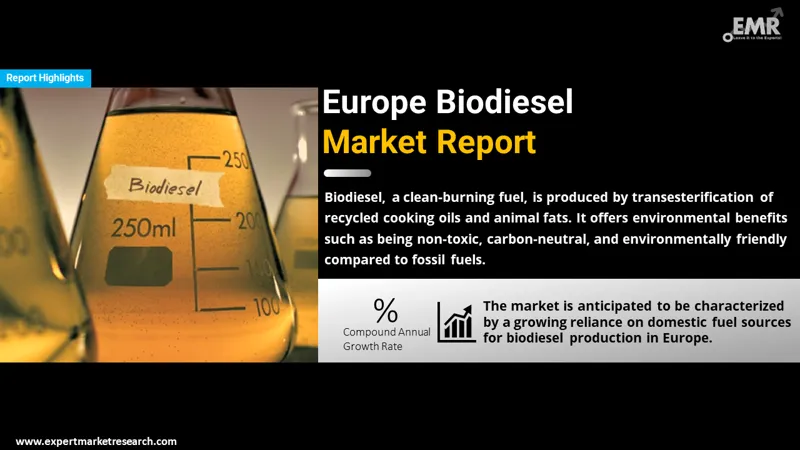
The Europe biodiesel market attained a volume of 17.00 Billion Liters in 2025. The industry is expected to grow at a CAGR of 3.30% during the forecast period of 2026-2035 to reach a volume of 23.52 Billion Liters by 2035. The market growth is attributed to the strengthened regulatory framework under the revised Renewable Energy Directive (RED III), adopted in 2023.
The directive substantially increases renewable transport fuel targets for member states and sets mandatory minimum shares for advanced biofuels and renewable fuels of non-biological origin (RFNBOs) by 2030. This creates a predictable demand trajectory for biodiesel producers, giving the sector long-term stability and investment confidence. For instance, the Netherlands has already translated RED III requirements into its draft regulation, setting targets of 5.5% advanced biofuels and 1% RFNBOs in the fuel mix by 2030.
In addition to regulatory moves, supportive national actions are reinforcing this trend. In 2024, France approved the sale of 100% renewable diesel at fuel stations, enabling wider consumer adoption and aligning with RED III’s objectives. This combination of EU-wide mandates and country-specific initiatives strengthens demand and ensures continued growth of the Europe biodiesel market.
Compound Annual Growth Rate
3.3%
Value in Billion Liters
2026-2035
EWABA, in collaboration with Bioledger, launched the second pilot of the EU Union Database for Biofuels (UDB) to enhance traceability and test the Proof of Sustainability system. The month-long pilot addresses technical and administrative challenges, supporting compliance with RED III. This initiative strengthens transparency and confidence in waste-based and advanced biodiesel across EU transport and maritime sectors.
BP introduced bp bioenergy HVO in Spain for heavy-duty road transport, available at selected service stations in Madrid, Valencia, and Navarre. The renewable diesel acts as a low-carbon substitute for conventional diesel in compatible vehicles. Following successful launches in the United Kingdom, Austria, Germany, and the Netherlands, BP plans to explore expanding HVO availability to more stations in Spain in 2025, offering fleet customers a sustainable fuel option.
Argent Energy launched Europe’s largest facility producing bio-based, technical-grade glycerine at its Port of Amsterdam site. The move strengthens the company’s position as a leading European biofuels manufacturer. This facility aims to serve the chemical market with sustainable glycerin solutions.
Be8 launched BeVant, a biofuel usable up to 100% in diesel engines for public transport, cargo, and maritime sectors. It cuts emissions without engine modifications or new infrastructure. Produced at Be8’s Passo Fundo plant, BeVant is priced nearly 50% lower than conventional Green Diesel (HVO), offering an affordable, high-performance renewable fuel solution.
The Europe biodiesel industry is transitioning from conventional fatty acid methyl ester (FAME) biodiesel toward hydrotreated vegetable oil (HVO), also known as renewable diesel. This “drop-in” fuel is chemically similar to petroleum diesel and fully compatible with existing engines, making it attractive for heavy transport. European HVO capacity is projected to nearly double between 2024 and 2026. Neste, a leading producer, is expanding supply through partnerships, such as its Neste MY Renewable Diesel™ deal with Biofuel Express in Denmark, enabling wider fleet adoption.
Strategic alliances between producers and distributors are strengthening biodiesel’s role in decarbonizing transport. Partnerships ensure supply stability, distribution scale, and improved market penetration. For instance, in mid-2023, Neste and Biofuel Express expanded their collaboration to secure Neste MY Renewable Diesel™ supply for Danish customers. This move supports fleet operators seeking lower-emission alternatives while helping both companies broaden their reach in the Nordics. Such partnerships illustrate how collaboration across the value chain accelerates adoption and aligns with Europe’s climate commitments.
Private companies are committing substantial investments to scale up waste-based biodiesel, reflecting confidence in long-term demand, which, in turn, is propelling the Europe biodiesel market. For instance, Galp, Portugal’s largest energy company, announced a EUR 400 million joint venture with Japan’s Mitsui to build a new HVO facility at the Sines refinery. Expected to start operations in 2026, the plant will process used cooking oil and other residues into renewable diesel and SAF, with a capacity of 270,000 tons annually. Such large-scale projects showcase growing private sector momentum.
The shipping and logistics sectors are increasingly securing advanced biodiesel offtake agreements to decarbonize operations. Citing a prime instance, Varo Energy partnered with Höegh Autoliners in February 2024, to provide 100 % advanced biofuels for vessels operating in Northern Europe. By locking in renewable fuel supply, Höegh reduces its fleet emissions while ensuring compliance with tightening EU maritime climate policies. For producers, these long-term contracts de-risk investments and ensure steady revenue streams, strengthening the commercial case for biodiesel expansion across Europe.
Clear sustainability rules are vital for scaling the biodiesel market share in Europe, where only certified low-carbon fuels can count toward renewable targets. The European Commission issued a positive technical assessment of ISCC EU’s forestry biomass criteria under RED III in May 2023. This reinforces ISCC’s role as a trusted certification scheme for verifying compliance with EU sustainability requirements. By giving producers, a robust framework for sourcing feedstocks and demonstrating lifecycle emission reductions, certification builds confidence among investors and customers.
Read more about this report - REQUEST FREE SAMPLE COPY IN PDF
The EMR’s report titled “Europe Biodiesel Market Report and Forecast 2026-2035” offers a detailed analysis of the market based on the following segments:
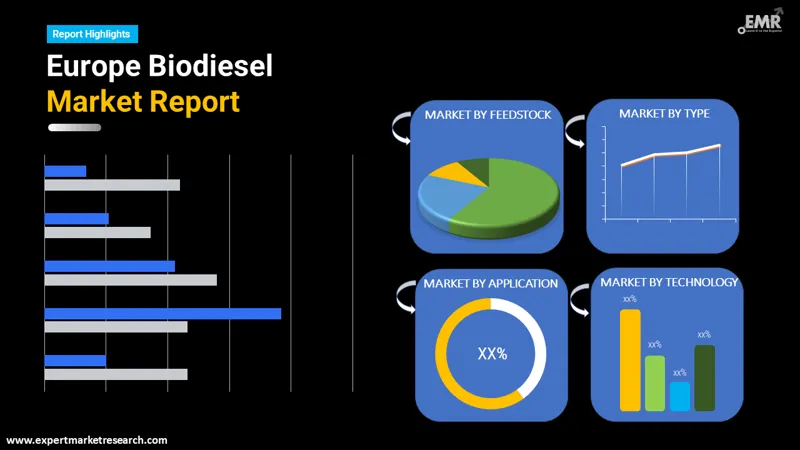
Market Breakup by Feedstock
Key Insight: Vegetable oil feedstock dominates the market, with rapeseed serving as the primary raw material due to its high oil yield and widespread cultivation in countries, such as Germany and France. This consistent availability ensures stable production and established infrastructure. However, the “Others” category, which includes used cooking oil and animal fats, is expanding at the fastest pace. Encouraged by RED III regulations and sustainability goals, producers are increasingly investing in waste-derived feedstocks to promote circular economy practices.
Market Breakup by Type
Key Insight: B100 dominates the type segment of the Europe biodiesel market, as industries and fleet operators prefer pure biodiesel for maximum emission reductions and alignment with decarbonization targets. B20 is the fastest-growing blend, offering lower emissions while maintaining engine compatibility, with rapid adoption in logistics and transport fleets across Italy and the Netherlands. B5 and B2 blends are favored for partial substitution in conventional fuels, balancing performance and cost. The “Others” category, including specialized blends and niche fuels, is supported by innovation and regulatory incentives promoting sustainable fuel use.
Market Breakup by Technology
Key Insight: Conventional alcohol transesterification remains the most widely applied technology in the Europe biodiesel market, valued for its efficiency, lower cost, and proven role in converting vegetable oils into biodiesel at scale. Its extensive use across Europe secures its dominance in production. Yet hydro heating is the fastest-growing technology, producing hydrotreated vegetable oil (HVO), a cleaner and high-quality renewable diesel fully compatible with modern engines. Investments by companies such as Neste and Eni illustrate the region’s growing preference for advanced biodiesel technologies.
Market Breakup by Application
Key Insight: Fuel is the leading application segment, with biodiesel extensively blended with petroleum diesel for road transport, agriculture machinery, and logistics. Blending mandates across European nations maintain its position as the dominant application. Meanwhile, biodiesel use in power generation is advancing as the fastest-growing segment. It is increasingly applied in backup generators and off-grid energy systems, particularly in Italy and the United Kingdom, where companies and energy providers are adopting biodiesel to reduce carbon intensity in electricity supply.
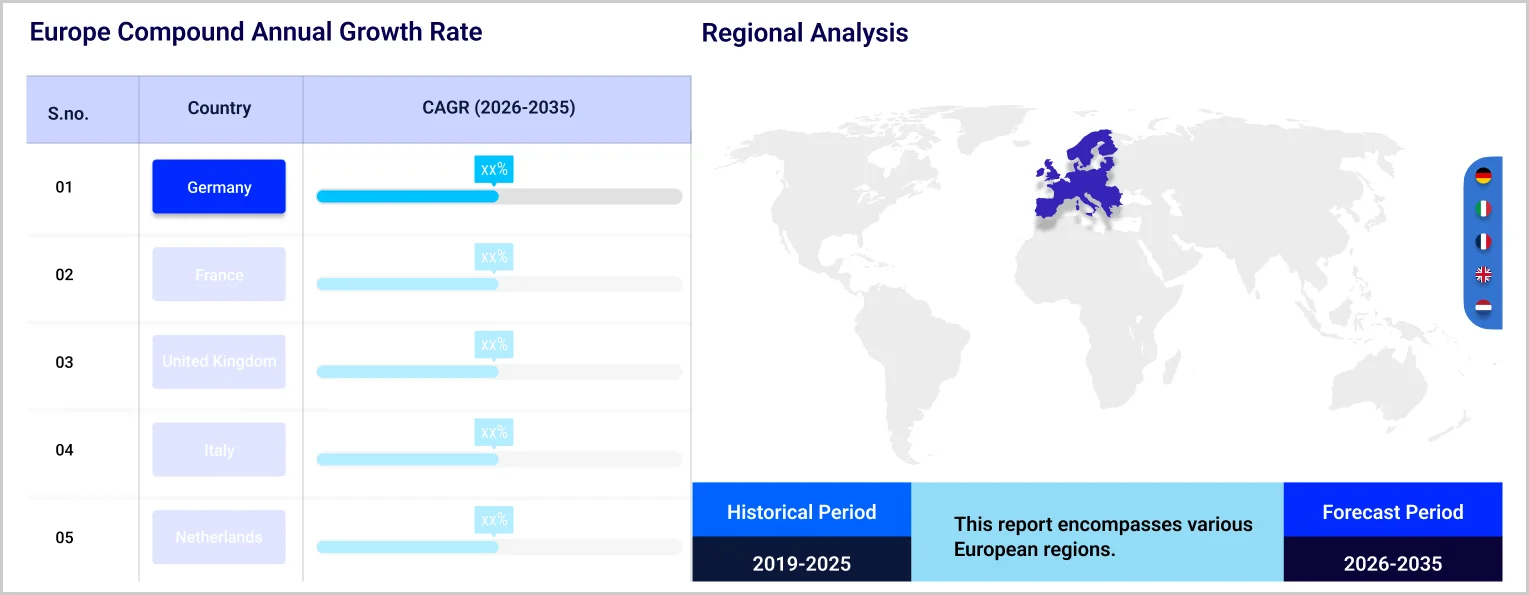
Market Breakup by Region
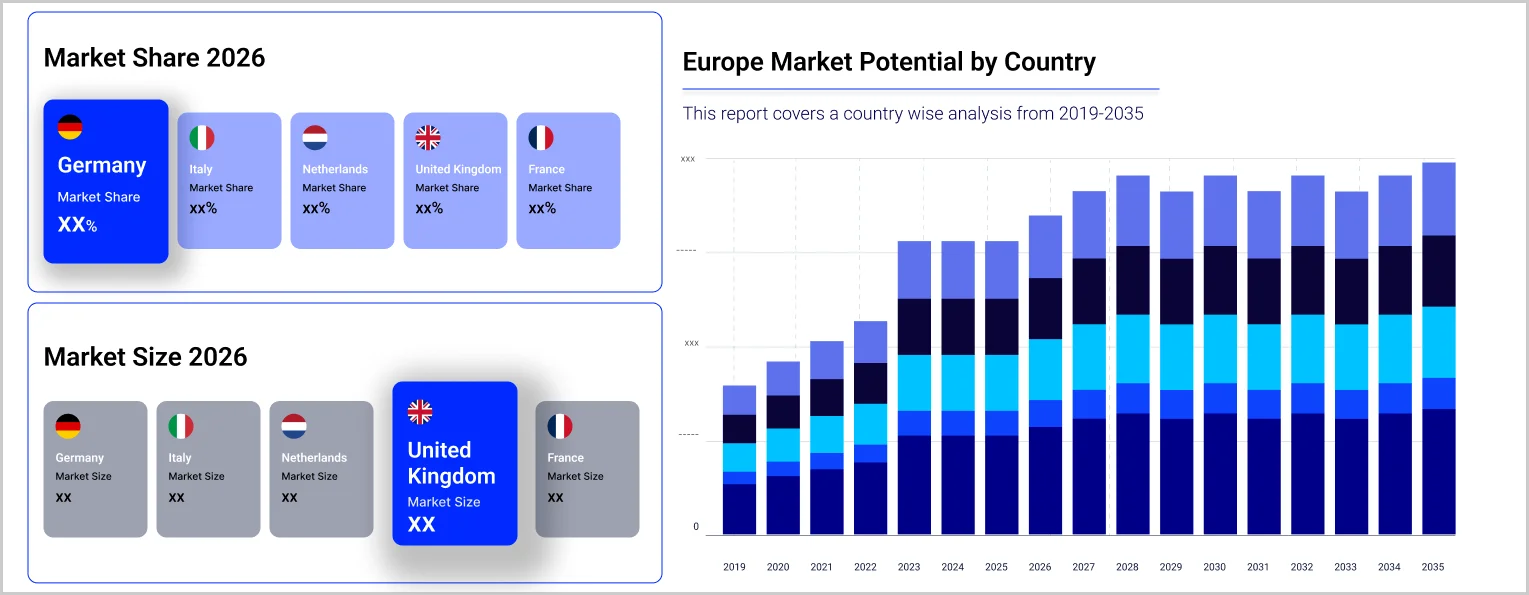
Key Insight: Germany dominates the regional segment of the Europe biodiesel market, benefiting from robust rapeseed production, advanced blending infrastructure, and strong government mandates promoting biodiesel use. France and Italy further strengthen the region’s production capacity, aided by favorable biofuel policies. In contrast, the United Kingdom represents the fastest-growing market, fueled by updates to the Renewable Transport Fuel Obligation (RTFO), which prioritizes waste-based biofuels. These regulatory measures are accelerating adoption across transport and aviation, positioning the United Kingdom as a rising leader in biodiesel growth.
Read more about this report - REQUEST FREE SAMPLE COPY IN PDF
By feedstock, vegetable oil to represent the biggest portion of the market
Vegetable oil holds the largest market share as a feedstock, with rapeseed-based vegetable oil leading production and supply. Rapeseed remains the dominant raw material for vegetable oil used in biodiesel production in Germany, the largest producer in the Europe biodiesel market. In 2024, over 3.6 million tonnes of biodiesel were produced, with rapeseed vegetable oil contributing 53.1% of total output. Strong demand for vegetable oil supports domestic rapeseed cultivation and reinforces the feedstock value chain, including rapeseed meal for livestock feed. Policy incentives, robust infrastructure, and established processing networks ensure vegetable oil continues to provide stability.
Animal fats are a rapidly expanding feedstock in the market, driven by rising demand for sustainable aviation fuels (SAFs) and biodiesel. Use of animal fat-based biodiesel has doubled over the past decade and is now 40 times higher than in 2006, with Europe already consuming 46% of all animal fat feedstocks for transport fuels . Fuel suppliers are investing heavily in processing facilities to convert animal fats into biodiesel and SAFs, and demand is projected to triple by 2030, supporting circular economy practices while promoting renewable fuel adoption.
By type, B100 biodiesel to witness high demand
The B100 biodiesel segment in the Europe biodiesel market is gaining traction as companies adopt fully renewable fuel solutions. For instance, Berge Bulk and BHP recently completed pioneering iron ore voyages powered entirely by B100 biodiesel, achieving up to 84% lower well-to-wake greenhouse gas emissions compared to conventional fuels. By utilizing vegetable oils, animal fats, and waste cooking oils, these initiatives demonstrate how leading industry players are driving adoption of pure biodiesel in shipping and heavy transport, reinforcing B100’s role as a sustainable, high-impact fuel.
Meanwhile, B20 biodiesel is the fastest-growing blend, favored for its combination of lower emissions and engine compatibility. The inclusion of maritime shipping in the EU Emissions Trading Scheme (ETS) from 2024 boosted demand for B20 biodiesel in Rotterdam, where bunker sales more than doubled to 791,653 tonnes in 2022. Supported by government subsidies and blending mandates, B20 provides a flexible and cost-effective solution for transport and shipping fleets, driving growth while advancing EU decarbonization and renewable fuel goals.
By technology, conventional alcohol transesterification to hold substantial market share
Conventional alcohol transesterification technology records higher preference in the Europe biodiesel market due to its efficiency, scalability, and cost-effectiveness in converting vegetable oils into biodiesel. Its established infrastructure across countries like Germany and France ensures consistent production, supporting industrial and domestic demand. This technology forms the backbone of biodiesel manufacturing, enabling the market to meet renewable fuel mandates and sustainability targets. Its reliability and extensive adoption maintain the feedstock value chain, particularly for vegetable oils, while providing stability and long-term growth opportunities.
On the other hand, hydro heating technology, producing hydrotreated vegetable oil (HVO), is picking up pace in the market as HVO delivers high-quality renewable diesel compatible with modern engines and offers lower emissions. Investments by companies such as Neste and Eni underscore the industry’s shift toward advanced biodiesel solutions. Growing decarbonization targets, regulatory support, and rising demand for sustainable fuels in transport and industrial sectors drive HVO adoption, positioning it as a high-growth, future-ready technology for the market.
By application, fuel to generate highest revenue
Fuel dominates as the largest application in the Europe biodiesel market, driven by the increasing demand for low-carbon, renewable alternatives in road transport, agriculture, and logistics. Governments across Europe maintain blending mandates and incentives, encouraging fleet operators to switch from conventional diesel to biodiesel blends. This advances sustainability and short-term decarbonization. In May 2025, Volvo Trucks expanded B100-compatible models, allowing medium- and heavy-duty trucks to cut CO2 emissions by up to 70%, highlighting how technology and regulations bolster biodiesel’s role in transport fuels.
Power generation is the fastest-growing application in the market, as industries increasingly deploy biodiesel in backup generators, off-grid systems, and remote energy solutions. Countries like Italy and the United Kingdom are leading adoption, with energy providers and companies prioritizing lower-carbon electricity supply. Rising awareness of sustainability, coupled with supportive regulatory frameworks, is accelerating biodiesel integration in power generation, positioning it as a strategic alternative to conventional fuels.
By Region, Germany to dominate the market growth
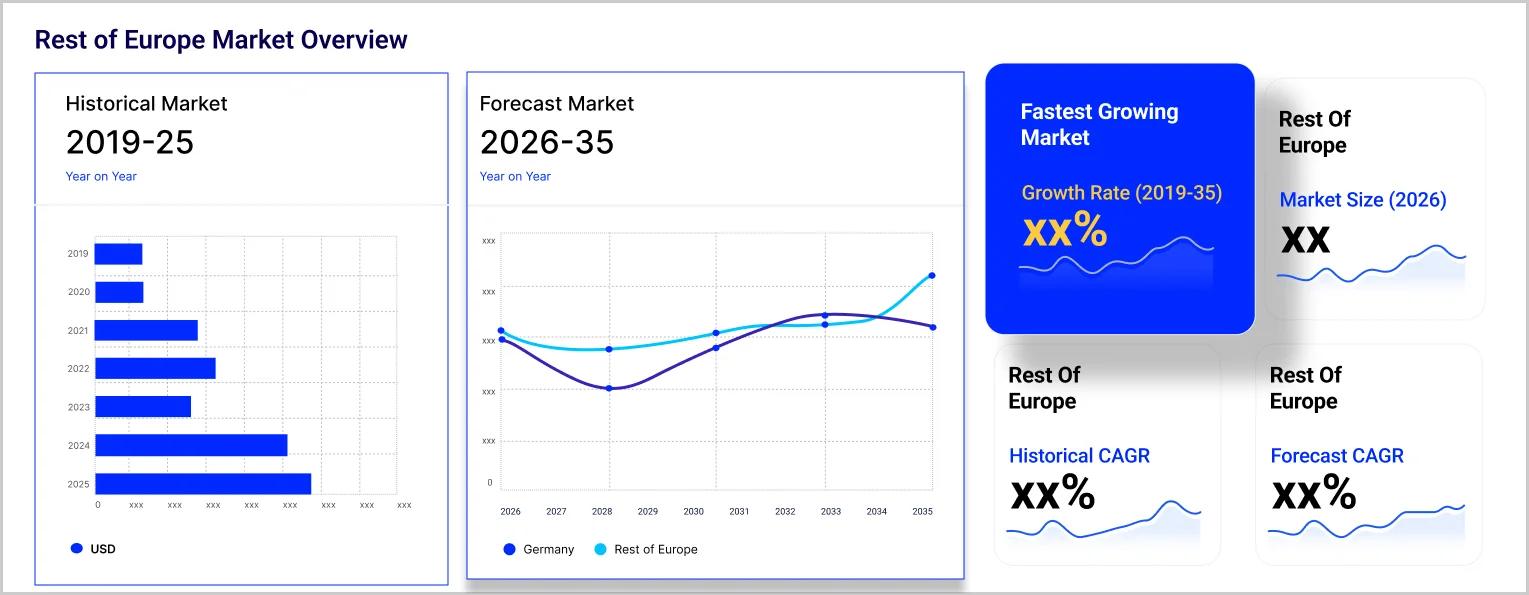
Germany leads the Europe biodiesel market growth due to the growing adoption of advanced biodiesel technologies that provide higher emission reductions while remaining compatible with existing engines. Regulatory mandates, decarbonization targets, and sustainability goals are encouraging producers and fleet operators to transition toward second-generation biofuels, including hydrotreated vegetable oils (HVO). For example, the ORLEN Group launched HVO100 at stations in Boizenburg and Achim, Germany in October 2024. Made from vegetable oils and waste oils, it cuts greenhouse gas emissions by up to 90% and works in standard diesel engines, highlighting how advanced biodiesel adoption strengthens Germany’s market leadership.
Meanwhile, in United Kingdom, is emerging as a fast-growing market driven by updates to the Renewable Transport Fuel Obligation (RTFO) that prioritize waste-based biofuels. These regulatory measures encourage adoption in transport and aviation, particularly for fleets seeking low-carbon fuel alternatives. Strong government incentives, infrastructure development, and increasing demand for sustainable fuels are accelerating growth, positioning the United Kingdom as a rising leader in biodiesel consumption while promoting circular economy practices and supporting advanced feedstock utilization.
Market players in the Europe biodiesel market are increasingly focusing on expanding production capacities to meet rising renewable fuel mandates and sustainability goals. Investments are directed toward building advanced biorefineries and upgrading existing facilities to produce second-generation biodiesel from waste and residue feedstocks. Companies are also integrating digital technologies, process optimization, and energy-efficient systems to enhance operational efficiency, reduce emissions, and ensure a consistent, high-quality supply of renewable fuels across multiple European markets.
To strengthen their competitive position, market participants are diversifying feedstock sources and developing partnerships across the supply chain. Strategic initiatives include long-term agreements for waste oils and agricultural residues, investments in research and development to improve conversion technologies, and exploring innovative blends for transport and power generation. By aligning production strategies with evolving regulatory frameworks, players aim to secure demand, improve sustainability, and drive adoption of biodiesel in both conventional and hard-to-electrify sectors.
Novozymes A/S, founded in 2000 and headquartered in Bagsværd, Denmark, is widely known for its enzyme technologies that improve biodiesel production efficiency. By offering sustainable solutions for feedstock processing, the company plays a crucial role in optimizing yields across European plants.
Louis Dreyfus Company B.V., with origins tracing back to 1851 and headquartered in Rotterdam, Netherlands, operates as one of the world’s leading commodity traders. In Europe, it has been steadily expanding its biodiesel operations, supported by its integrated supply chains in oilseeds and vegetable oils.
Envien Group, established in 2004 and based in Slovakia, is a major Central European biodiesel producer with multiple facilities across the region. The company focuses on using locally sourced rapeseed oil, contributing to energy independence and regional decarbonization goals.
GBF German Biofuels GmbH, headquartered in Leipzig, Germany, has been part of the market since 2000. The company specializes in producing biodiesel from rapeseed and other vegetable oils, supplying both domestic and international markets with high-quality renewable fuel.
*Please note that this is only a partial list; the complete list of key players is available in the full report. Additionally, the list of key players can be customized to better suit your needs.*
Other players in the Europe biodiesel market include BASF SE, among others.
Explore the latest trends shaping the Europe Biodiesel Market 2026-2035 with our in-depth report. Gain strategic insights, future forecasts, and key market developments that can help you stay competitive. Download a free sample report or contact our team for customized consultation on Europe biodiesel market trends 2026.


Upto 15% Off
USD
$2499 $2249
$3999 $3599
$4999 $4249
$5999 $5099


*While we strive to always give you current and accurate information, the numbers depicted on the website are indicative and may differ from the actual numbers in the main report. At Expert Market Research, we aim to bring you the latest insights and trends in the market. Using our analyses and forecasts, stakeholders can understand the market dynamics, navigate challenges, and capitalize on opportunities to make data-driven strategic decisions.*
The market is projected to grow at a CAGR of 3.30% between 2026 and 2035.
Key strategies driving the market include waste-based feedstocks, renewable diesel (HVO), and decarbonization initiatives across transport and power generation sectors.
The market is expected to be defined by increased dependency on domestic fuel for the production of biodiesel in Europe.
The major regional markets for biodiesel are North America, Latin America, the Asia Pacific, Europe, and the Middle East and Africa.
The different feedstocks of biodiesel include vegetable oil and animal oil, among others.
The major types of biodiesel are B100, B20, B5, and B2, among others.
The significant technologies of biodiesel include pyrolysis, hydro heating, and conventional alcohol transesterification, among others.
The various applications of biodiesel are fuel and power generation.
The key players in the market include Novozymes A/S, Louis Dreyfus Company B.V., Envien Group, GBF German Biofuels GmbH, and BASF SE, among others, each contributing through enzyme technologies, feedstock processing, renewable fuel production, and integrated supply chain operations.
In 2025, the market reached an approximate volume of 17.00 Billion Liters.
Germany holds the largest share of the market, driven by robust rapeseed production, advanced blending infrastructure, and supportive government mandates promoting biodiesel adoption across transport and industrial sectors.
Explore our key highlights of the report and gain a concise overview of key findings, trends, and actionable insights that will empower your strategic decisions.
| REPORT FEATURES | DETAILS |
| Base Year | 2025 |
| Historical Period | 2019-2025 |
| Forecast Period | 2026-2035 |
| Scope of the Report |
Historical and Forecast Trends, Industry Drivers and Constraints, Historical and Forecast Market Analysis by Segment:
|
| Breakup by Feedstock |
|
| Breakup by Type |
|
| Breakup by Technology |
|
| Breakup by Application |
|
| Breakup by Region |
|
| Market Dynamics |
|
| Competitive Landscape |
|
| Companies Covered |
|
| Report Price and Purchase Option | Explore our purchase options that are best suited to your resources and industry needs. |
| Delivery Format | Delivered as an attached PDF and Excel through email, with an option of receiving an editable PPT, according to the purchase option. |
Datasheet
One User
USD 2,499
USD 2,249
tax inclusive*
Single User License
One User
USD 3,999
USD 3,599
tax inclusive*
Five User License
Five User
USD 4,999
USD 4,249
tax inclusive*
Corporate License
Unlimited Users
USD 5,999
USD 5,099
tax inclusive*
*Please note that the prices mentioned below are starting prices for each bundle type. Kindly contact our team for further details.*
Flash Bundle
Small Business Bundle
Growth Bundle
Enterprise Bundle
*Please note that the prices mentioned below are starting prices for each bundle type. Kindly contact our team for further details.*
Flash Bundle
Number of Reports: 3
20%
tax inclusive*
Small Business Bundle
Number of Reports: 5
25%
tax inclusive*
Growth Bundle
Number of Reports: 8
30%
tax inclusive*
Enterprise Bundle
Number of Reports: 10
35%
tax inclusive*
How To Order

Select License Type
Choose the right license for your needs and access rights.

Click on ‘Buy Now’
Add the report to your cart with one click and proceed to register.

Select Mode of Payment
Choose a payment option for a secure checkout. You will be redirected accordingly.
Strategic Solutions for Informed Decision-Making
Gain insights to stay ahead and seize opportunities.

Get insights & trends for a competitive edge.

Track prices with detailed trend reports.

Analyse trade data for supply chain insights.

Leverage cost reports for smart savings

Enhance supply chain with partnerships.

Connect For More Information
Our expert team of analysts will offer full support and resolve any queries regarding the report, before and after the purchase.
Our expert team of analysts will offer full support and resolve any queries regarding the report, before and after the purchase.
We employ meticulous research methods, blending advanced analytics and expert insights to deliver accurate, actionable industry intelligence, staying ahead of competitors.
Our skilled analysts offer unparalleled competitive advantage with detailed insights on current and emerging markets, ensuring your strategic edge.
We offer an in-depth yet simplified presentation of industry insights and analysis to meet your specific requirements effectively.




