

Consumer Insights
Uncover trends and behaviors shaping consumer choices today
Procurement Insights
Optimize your sourcing strategy with key market data
Industry Stats
Stay ahead with the latest trends and market analysis.
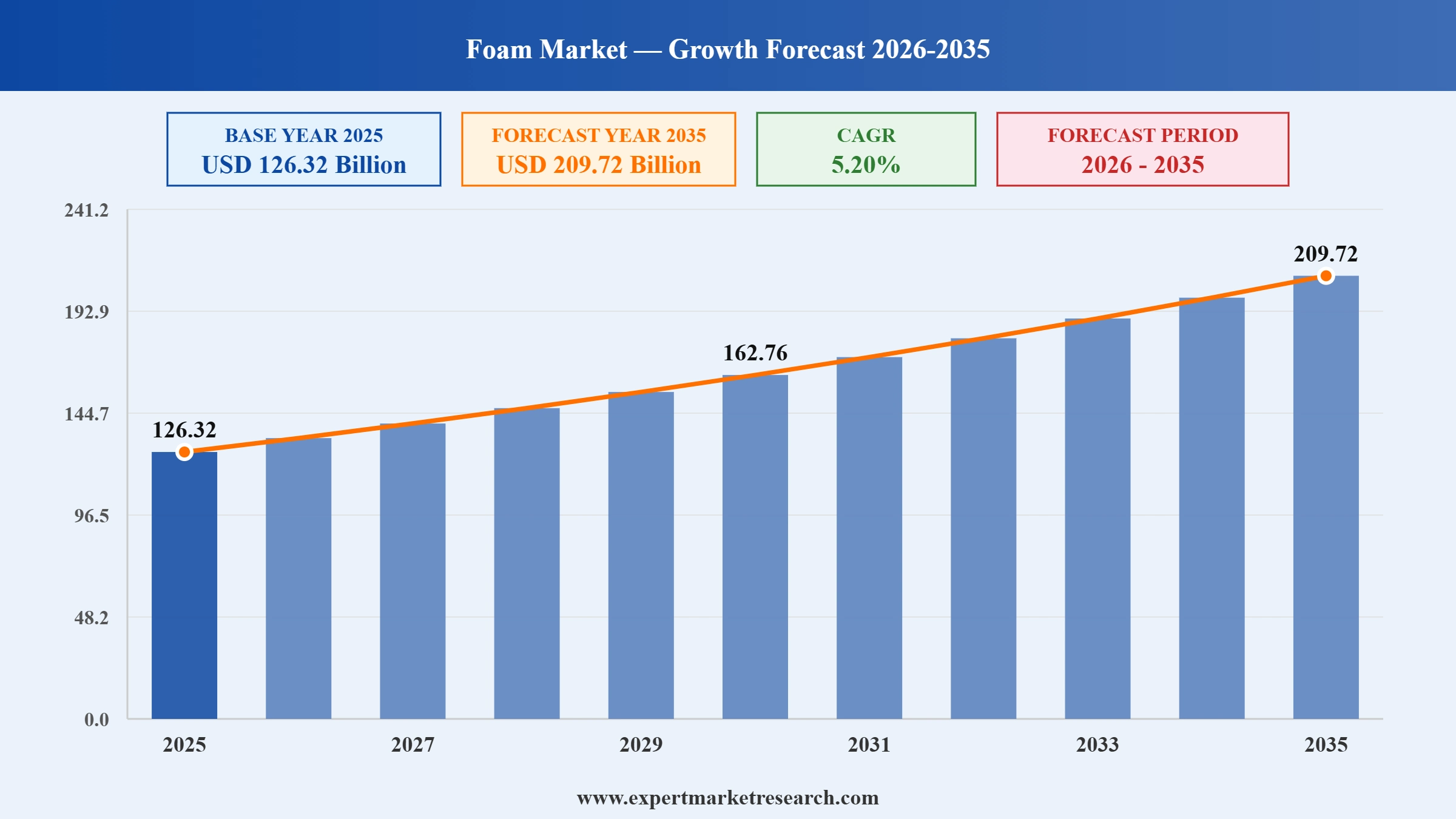
The global foam market size reached around USD 126.32 Billion in 2025. The market is projected to grow at a CAGR of 5.20% between 2026 and 2035 to reach nearly USD 209.72 Billion by 2035. Growth is supported by rising demand from construction, automotive, packaging, furniture, and bedding applications. Increasing use of lightweight insulation materials in buildings and vehicles is also strengthening consumption. Expanding e-commerce activity is boosting demand for protective foam packaging, while advances in recyclable and bio-based foam products are creating new growth opportunities.
The foam market covers cellular polymer materials produced by dispersing gas through a liquid or molten polymer so that the finished solid contains a controlled structure of voids. Foams divide into flexible grades, which recover their shape after compression and suit cushioning and comfort applications, and rigid grades, which hold form under load and are used mainly for thermal insulation and structural support. Cell structure separates the material further into open cell foams that allow air and moisture movement and closed cell foams that resist both and deliver higher insulation value.
Material chemistry defines most of the commercial segmentation, with polyurethane, polystyrene, polyolefin, phenolic and PET foams each occupying distinct performance and cost positions. Demand originates in building and construction, protective and transit packaging, automotive interiors and acoustic components, furniture and bedding, and footwear and sports equipment. Buyers select on density, thermal conductivity, compression set, fire performance and cost per unit volume, and specification is increasingly shaped by building energy codes, flammability standards and packaging waste rules in the destination market.
Read more about this report - REQUEST FREE SAMPLE COPY IN PDF
| Global Foam Market Report Summary | Description | Value |
| Base Year | USD Billion | 2025 |
| Historical Period | USD Billion | 2019-2025 |
| Forecast Period | USD Billion | 2026-2035 |
| Market Size 2025 | USD Billion | 126.32 |
| Market Size 2035 | USD Billion | 209.72 |
| CAGR 2019-2025 | Percentage | XX% |
| CAGR 2026-2035 | Percentage | 5.20% |
| CAGR 2026-2035 - Market by Region | Asia Pacific | 5.9% |
| CAGR 2026-2035 - Market by Country | India | 6.7% |
| CAGR 2026-2035 - Market by Country | China | 5.7% |
| CAGR 2026-2035 - Market by End User | Building and Construction | 6.0% |
| CAGR 2026-2035 - Market by Type | Flexible | 5.6% |
| Market Share by Country 2025 | France | 3.4% |
In 2023, retail e-commerce sales globally soared to USD 4.4 trillion in 2023. This suggests that around 20% of overall retail sales occur online. By 2028, retail e-commerce sales globally are expected to rise to USD 6.8 trillion and account for 24% of global retail sales. As a substantial portion of consumers retain their preference for brick-and-mortar stores, they are expected to record USD 21.9 trillion worth of retail sales by 2028. This can directly impact the demand for effective packaging solutions, leading to the foam market development over the forecast period.
Polyurethane foam is a lightweight construction material. It provides strong reinforcement to building walls and floors, thereby facilitating the construction of lightweight structures. It can also provide a high degree of fire resistance to buildings if formulated with fire retardants. It is also extensively used for soundproofing walls, floors, and ceilings in commercial buildings. Over the forecast period, the growth of the construction industry is expected to drive the foam market expansion, especially expanding foam, which can be utilised to fill gaps and joints in windows and other housing openings.
Construction activity and building energy performance requirements
Rigid polyurethane and polyisocyanurate foams deliver among the lowest thermal conductivity per unit thickness of any mainstream insulation, which makes them the practical choice where wall build-up is constrained and energy codes are tightening. The same materials reinforce walls and floors in lightweight structures, provide fire resistance when formulated with retardants, and are used for soundproofing in commercial buildings. Expanding foam fills gaps and joints around windows and other openings, addressing the air leakage that undermines insulation performance in practice. EMR forecasts building and construction as the fastest growing end user segment at a 5.20% CAGR between 2026 and 2035.
E-commerce growth and protective packaging demand
Online retail moves goods through more handling stages than store distribution, and each transfer raises the probability of impact damage, which places a premium on protective packaging that is light enough to keep shipping cost down. Foam serves that requirement through moulded inserts, sheet and plank cushioning and void fill, absorbing shock while adding little weight. Regulatory attention on packaging waste is reshaping specifications rather than reducing volume, pushing converters towards recyclable single-material formats and higher recycled content.
Circular chemistry and lower carbon raw materials
Foam producers are moving beyond mechanical rebonding towards chemical routes that recover monomers from end-of-life material. Covestro and Fraunhofer UMSICHT contracted a smart pyrolysis pilot in March 2026 to convert rigid PUR and PIR insulation waste into re-aniline at around 99 percent purity for MDI production, at a capacity of 2 kilotonnes a year from mid-2028, enough insulation for roughly 200,000 refrigerators. Feedstock is changing in parallel, with Econic Technologies and Changhua Chemical starting the first commercial plant for CO2-based polycarbonate ether polyols at Lianyungang in March 2026, delivering a 30 percent lower carbon footprint than conventional polyols.
Rising toy production in India; increasing demand for polyurethane foam; shift towards sustainability; and rising demand for bedding are the major factors favouring the foam market growth
Zotefoams reported first half 2026 revenue of GBP 95.2 million, up 23 percent, with adjusted operating profit rising 34 percent to GBP 16.3 million. The company attributed the result to expansion into non-footwear markets and the first full six month contribution from its OKC acquisition, with revenue in Asia more than doubling.
Zotefoams completed a USD 13.8 million expansion at its Walton, Kentucky headquarters, adding a low pressure autoclave and washer line so the entire foam production process can be completed on one site. A further USD 2.8 million extrusion line is planned, serving aerospace, automotive, defence, medical and packaging customers.
Econic Technologies and Changhua Chemical launched the first commercial plant for polycarbonate ether polyols made from captured carbon dioxide at Lianyungang in Jiangsu province, China. Output of the Carnol product is targeted at around 80,000 tonnes in 2026, scaling towards more than one million tonnes, with a 30 percent lower carbon footprint than conventional polyols.
Covestro and Fraunhofer UMSICHT signed a contract to develop and operate a smart pyrolysis pilot facility converting end-of-life rigid PUR and PIR insulation waste into re-aniline at around 99 percent purity for MDI production. The 2 kilotonne per year plant is due to start mid-2028 and the resulting MDI offers up to a 40 percent improved carbon footprint.
In the past decade, toy exports from India surged by 239% and imports declined by nearly 52%. Popular brands including Spin Master, Hasbro, and Mattel have shifted to India for toy production. Foam offers impact resistance and cushioning properties and boasts a flexible and soft nature, making it indispensable in toy production.
The rising demand for polyurethane foam can be attributed to the growing demand for thermal insulation materials in the construction industry, which can maintain indoor temperatures by minimising heat transfer through roofs, floors, and walls.
The development of new recycling processes for thermosets is expected to play a crucial role in reducing greenhouse emissions, saving energy and decreasing landfill use. This is expected to favourably impact the foam market outlook.
The rising demand for bedding, attributed to increased consumer awareness regarding the importance of quality sleep, is prompting market players to use innovative technologies for producing foam mattresses.
The Expert Market Research's report titled “Global Foam Market Report and Forecast 2026-2035” offers a detailed analysis of the market based on the following segments:
Market Breakup by Type
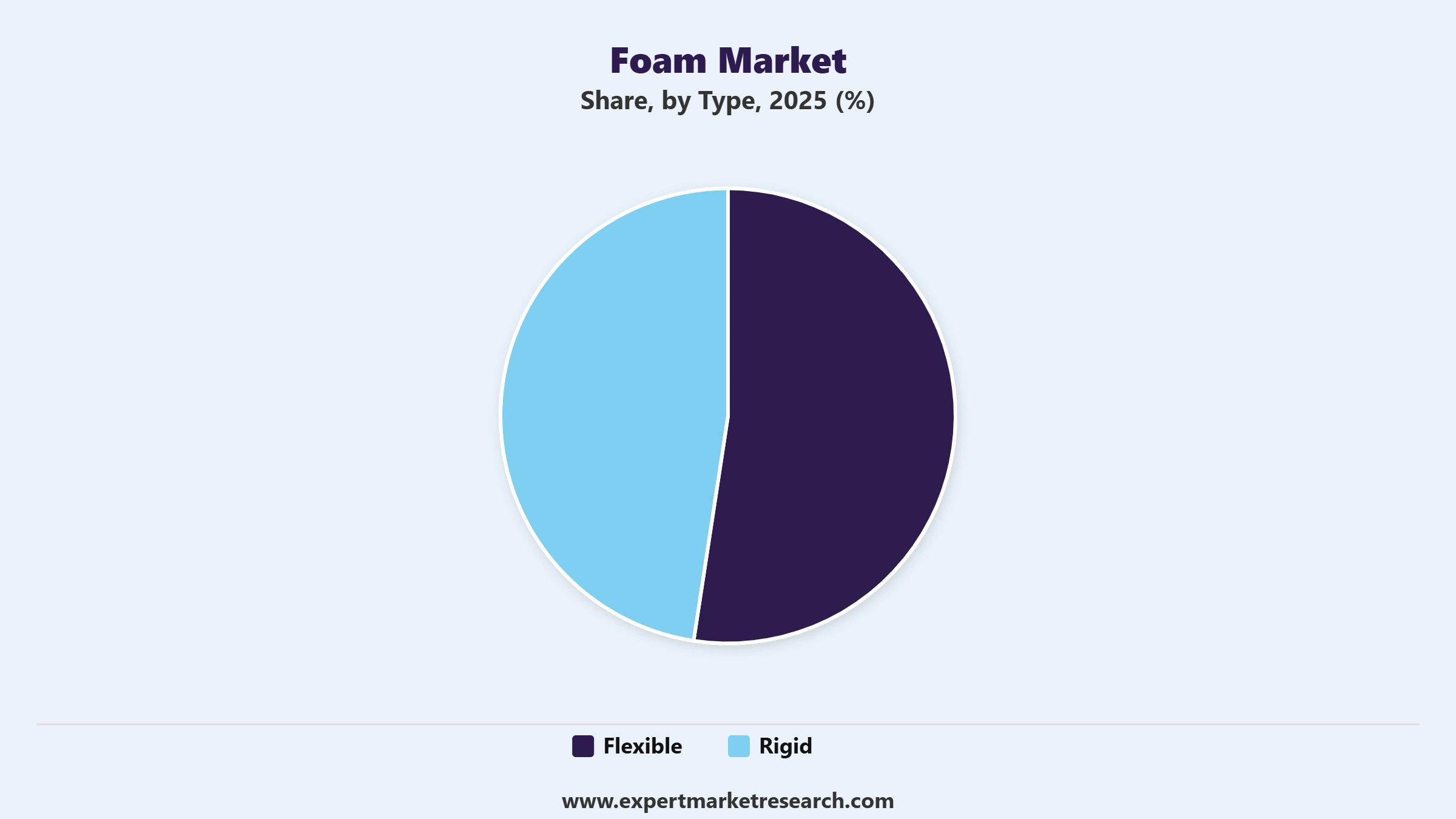
Key Insight: Flexible foam holds the larger share and is forecast to grow at a 5.6% CAGR between 2026 and 2035. Its position rests on the breadth of applications that require recoverable compression, covering mattresses and upholstery, automotive seating and acoustic trim, footwear midsoles and protective packaging inserts. Comfort and durability requirements are pushing formulators towards higher resilience grades, and the bedding channel in particular is absorbing innovation as consumer awareness of sleep quality rises. Sustainability pressure is reaching the segment through CO2-based polyols, which Econic and Changhua Chemical report deliver enhanced load-bearing and tensile strength in flexible foams.
Market Breakup by Foam Material
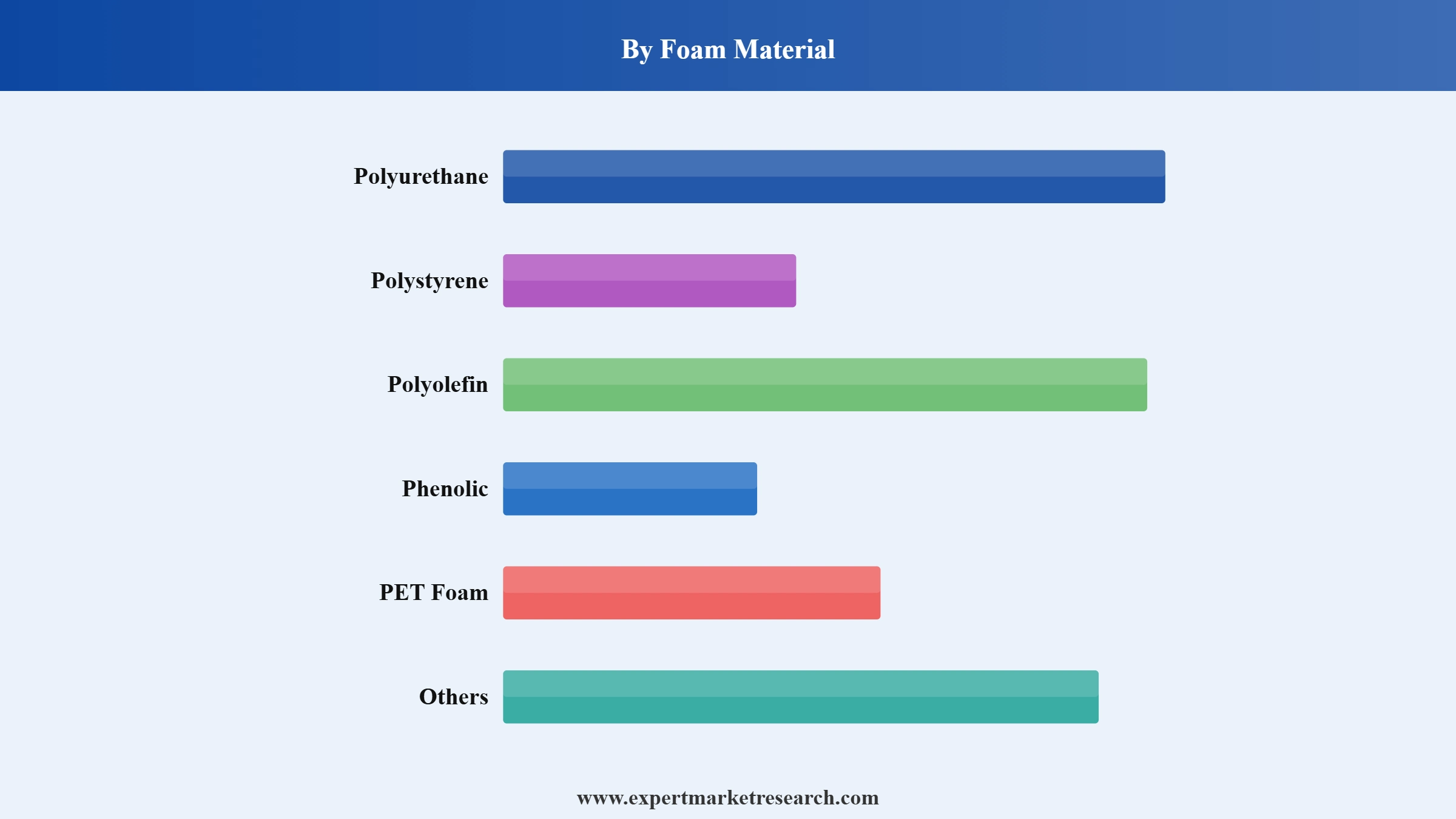
Key Insight: Polyurethane accounts for the largest share of the material segment because a single chemistry spans both flexible and rigid grades and can be tuned across a wide density and performance range. Rigid polyurethane dominates high performance thermal insulation in construction and appliances, while flexible polyurethane leads bedding, furniture and automotive seating. The chemistry is also where circularity work is concentrated, since recovering polyol and aniline from used foam displaces virgin isocyanate production, and Covestro's smart pyrolysis route targets MDI with up to a 40 percent improved carbon footprint.
Market Breakup by End User
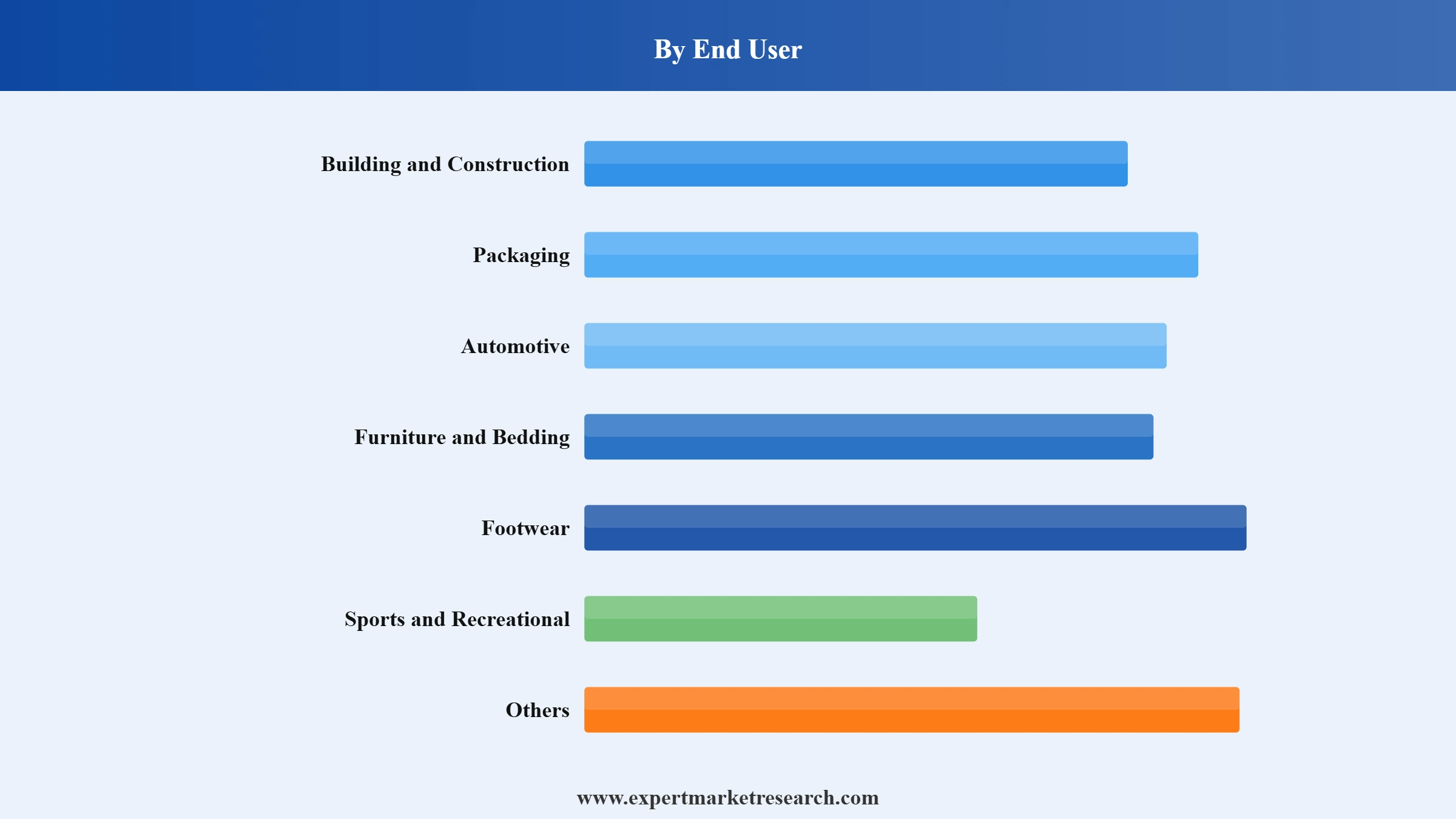
Key Insight: Building and construction is the fastest expanding end user segment at a 6.0% CAGR through 2035, supported by tightening energy performance requirements and continued infrastructure investment in developing economies. Foam serves the sector across insulation boards, spray applied systems, sandwich panel cores, expanding gap fillers and acoustic treatments, which gives it exposure to both new build and retrofit activity. Retrofit is the more durable driver in mature markets, since the existing building stock is large relative to annual completions and energy upgrade programmes are policy backed.
Market Breakup by Region
Read more about this report - REQUEST FREE SAMPLE COPY IN PDF
Rigid Foam to Gain Share on Insulation Demand
Rigid foam holds a substantial and growing share because building energy codes reward materials that achieve a given thermal resistance in the least thickness. Polyurethane and polyisocyanurate boards, spray applied systems and sandwich panel cores all sit in this category, alongside appliance insulation where cabinet wall thickness directly constrains internal volume. Recycling economics are improving fastest here as well, since rigid PUR and PIR waste streams from appliance dismantling and construction demolition are relatively clean and concentrated, which is what makes pyrolysis routes viable.
Read more about this report - REQUEST FREE SAMPLE COPY IN PDF
Polystyrene, Polyolefin, Phenolic and PET Positions
Polystyrene foam retains a large share through expanded and extruded grades used in construction insulation, cold chain packaging and protective moulding, where low cost per unit volume outweighs the thermal performance gap against polyurethane. Polyolefin foams serve automotive, sports and medical applications that need chemical resistance, cleanliness and consistent closed cell structure.
Phenolic foam occupies a specialist position where fire performance and low smoke generation are the governing requirements, particularly in ducting and high rise construction. PET foam has grown as a structural core material in wind turbine blades, marine hulls and transport panels, helped by its recyclability and by supply that can draw on recycled bottle feedstock.
Read more about this report - REQUEST FREE SAMPLE COPY IN PDF
Packaging, Automotive and Furniture Positions
Packaging remains one of the largest end uses, sustained by e-commerce parcel volumes and by cold chain distribution of food and pharmaceuticals. Specification pressure is moving towards recyclable mono-material constructions and reduced pack weight rather than away from foam itself.
Automotive uses foam in seating, headliners, instrument panels, acoustic barriers and energy absorbing structures, and electrification has raised the value of weight reduction and cabin quietness because there is no engine noise to mask road and wind sound. Furniture and bedding demand tracks housing turnover and replacement cycles, with mattress producers competing on comfort layers that depend directly on foam formulation.
Footwear, sports and recreational applications favour lightweight closed cell foams where energy return and durability matter, and this is the segment where high performance suppliers concentrate their innovation spending. Zotefoams, whose customers include Boeing, Nike and Airbus, opened a Footwear Innovation Centre in South Korea during 2026 while shifting its Croydon operation towards higher value non-footwear work.
Read more about this report - REQUEST FREE SAMPLE COPY IN PDF
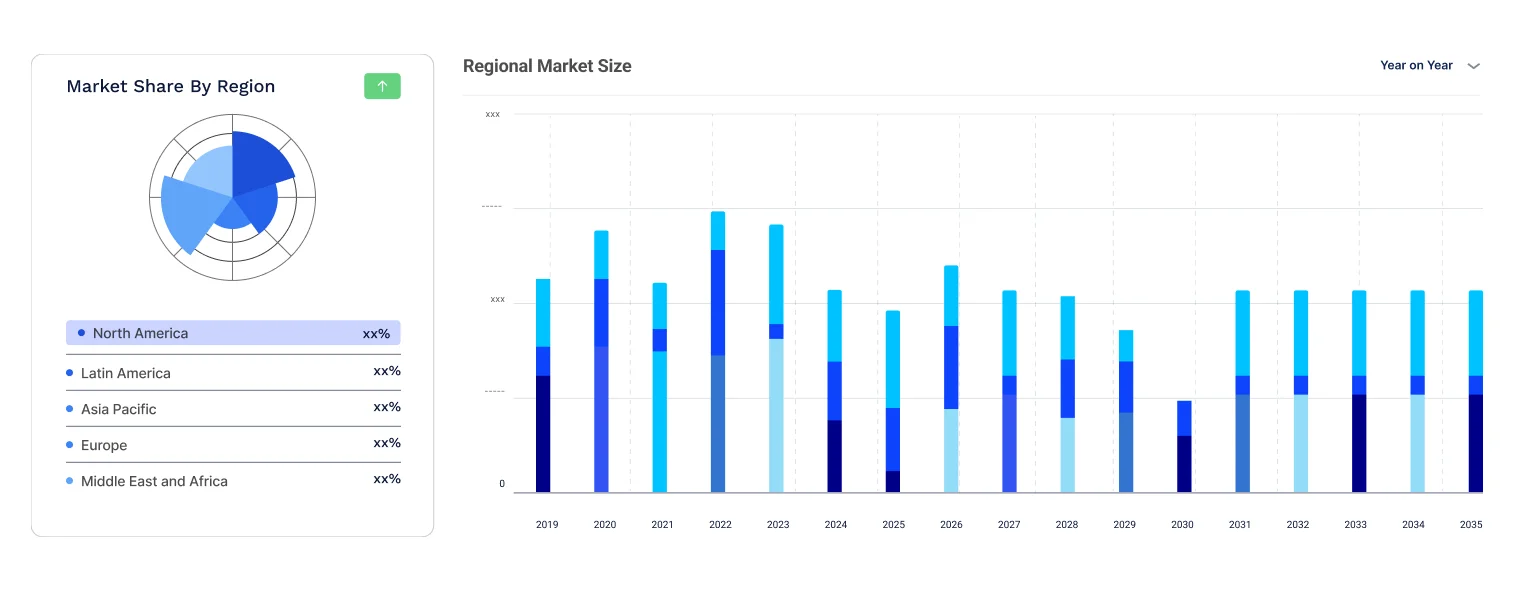
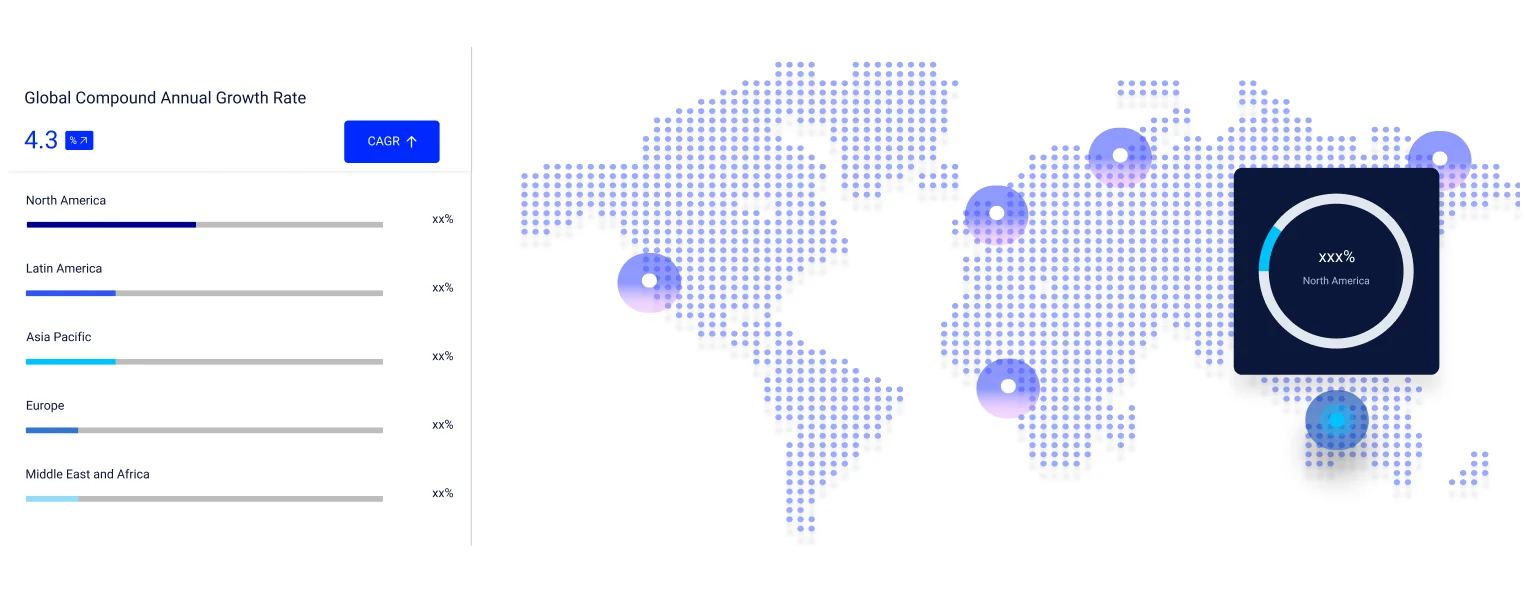
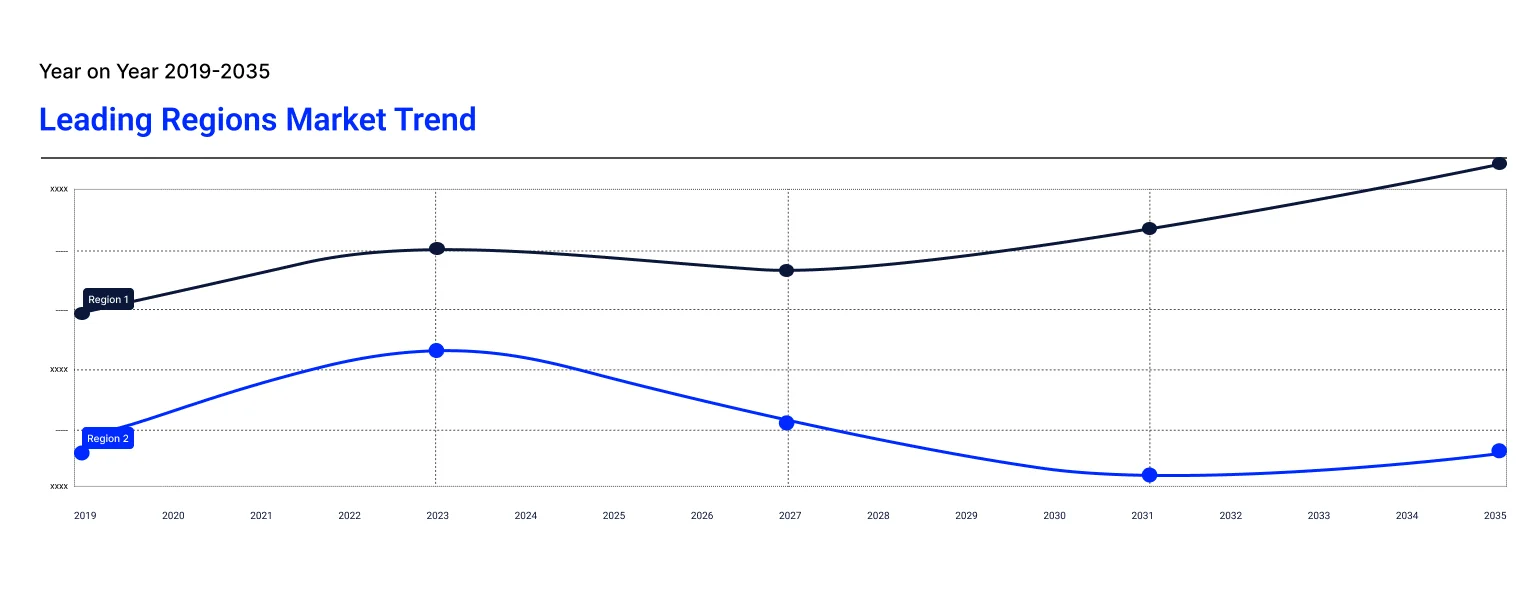
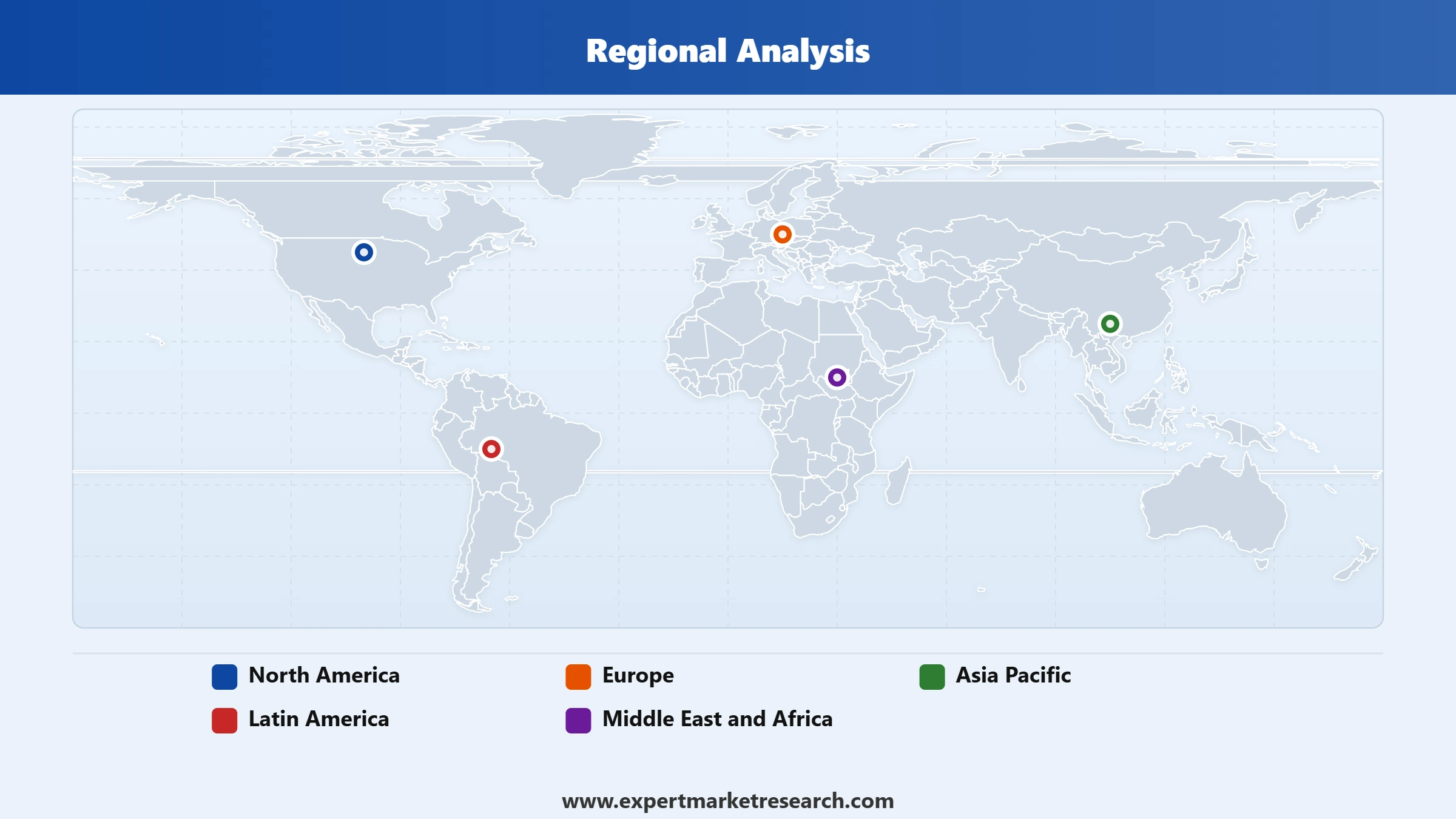
Asia Pacific is the fastest growing region at a 5.9% CAGR through 2035, driven by demand for foam-based packaging from the e-commerce industry and by rapid infrastructure development. India leads the country forecasts at a 6.7% CAGR with China at 5.7%, reflecting construction activity, appliance manufacturing and expanding domestic consumption. The region is also becoming a production centre for next generation materials, with the first commercial CO2-based polyols plant starting at Lianyungang in Jiangsu province in March 2026. France accounted for 3.4% of the global market in 2025.
North America holds a substantial share supported by construction activity, appliance manufacturing and a large protective packaging base, and producers are investing in domestic capacity, illustrated by Zotefoams completing a USD 13.8 million expansion at Walton, Kentucky in July 2026 that consolidates its full production process on one site.
Europe combines mature construction demand with the strictest circularity requirements, which is why the region hosts much of the chemical recycling development work including the Covestro and Fraunhofer UMSICHT pyrolysis pilot contracted in March 2026. Germany is forecast at a 4.4% CAGR and Italy at 4.0%. Latin America is growing steadily with Mexico at a 5.2% CAGR, supported by construction and nearshored manufacturing. The Middle East and Africa expands from a smaller base, concentrated in construction insulation for hot climates and in packaging for growing retail sectors.
Read more about this report - REQUEST FREE SAMPLE COPY IN PDF
Major players are partnering with research institutions to discover innovative methods of recycling foam, which is increasing the foam market value.
Armacell International S.A. was founded in 2000 and is headquartered in Luxembourg. It specialises in the production of technical foams, PET foams, advanced insulation equipment, and engineered systems.
Rogers Foam Corporation was founded in 1947 and is headquartered in Massachusetts, United States. It is a leading flexible materials fabricator and owns 11 manufacturing plants across the USA and Mexico.
Foamcraft, Inc. was founded in 1952 and is headquartered in Indianapolis, United States. It is a leading regional foam fabrication company which operates five full capability plants across
Zotefoams plc was founded in 1921 and is headquartered in Surrey, United Kingdom. It is engaged in producing lightweight foams for diversified global markets, such as sports and leisure, automotive, healthcare, and aviation, among others.
Other players included in the foam market report are BASF SE, Covestro AG, The Dow Chemical Company, Recticel Engineered Foams Belgium BV, Sealed Air Corporation, and Kaneka Corporation, among others.
*Please note that this is only a partial list; the complete list of key players is available in the full report. Additionally, the list of key players can be customized to better suit your needs.*
Raw material exposure is the persistent challenge. Polyol and isocyanate prices track upstream petrochemical feedstocks, and margin compresses quickly when producers cannot pass increases through to construction and bedding customers who buy on price. Fire performance regulation adds technical difficulty, since retardant packages must meet tightening standards without degrading insulation value or triggering separate chemical restrictions. End-of-life handling remains largely unsolved at scale, because thermoset foams cannot be remelted and mechanical rebonding yields a lower value product.
Regulation restrains the market from several directions at once. Packaging waste rules push converters away from difficult-to-recycle formats, blowing agent restrictions have forced successive reformulations of rigid foam systems, and chemical registration requirements raise the cost of introducing new grades. Demand is also cyclical, since construction, automotive and furniture all move with interest rates and housing activity.
The clearest opportunities sit in circular and low carbon chemistry. Covestro and Fraunhofer UMSICHT contracted a 2 kilotonne per year smart pyrolysis pilot in March 2026 to recover re-aniline for MDI, and Econic Technologies and Changhua Chemical started commercial CO2-based polyol production the same month with a 30 percent lower carbon footprint. Building retrofit programmes and Asia Pacific construction offer the largest volume growth.


Upto 15% Off
USD
$2499 $2249
$3999 $3599
$4999 $4249
$5999 $5099


*While we strive to always give you current and accurate information, the numbers depicted on the website are indicative and may differ from the actual numbers in the main report. At Expert Market Research, we aim to bring you the latest insights and trends in the market. Using our analyses and forecasts, stakeholders can understand the market dynamics, navigate challenges, and capitalize on opportunities to make data-driven strategic decisions.*
In 2025, the market reached an approximate value of USD 126.32 Billion.
The market is projected to grow at a CAGR of 5.20% between 2026 and 2035.
The market is estimated to witness healthy growth in the forecast period of 2026-2035 to reach a value of around USD 209.72 Billion by 2035.
The different regions considered in the market report include North America, Europe, the Asia Pacific, Latin America, and the Middle East and Africa.
The different types of foam are flexible and rigid.
The different foam materials in the market are polyurethane, polystyrene, polyolefin, phenolic, and pet foam, among others.
The different end users in the market are building and construction, packaging, automotive, furniture and bedding, and footwear, sports and recreational, among others.
Key players in the market are Armacell International S.A., BASF SE, Covestro AG, The Dow Chemical Company, Recticel Engineered Foams Belgium BV, Rogers Foam Corporation, Sealed Air Corporation, Zotefoams plc, Foamcraft, Inc., and Kaneka Corporation, among others.
Explore our key highlights of the report and gain a concise overview of key findings, trends, and actionable insights that will empower your strategic decisions.
| REPORT FEATURES | DETAILS |
| Base Year | 2025 |
| Historical Period | 2019-2025 |
| Forecast Period | 2026-2035 |
| Scope of the Report |
Historical and Forecast Trends, Industry Drivers and Constraints, Historical and Forecast Market Analysis by Segment:
|
| Breakup by Type |
|
| Breakup by Foam Material |
|
| Breakup by End User |
|
| Breakup by Region |
|
| Market Dynamics |
|
| Competitive Landscape |
|
| Companies Covered |
|
Datasheet
One User
USD 2,499
USD 2,249
tax inclusive*
Single User License
One User
USD 3,999
USD 3,599
tax inclusive*
Five User License
Five User
USD 4,999
USD 4,249
tax inclusive*
Corporate License
Unlimited Users
USD 5,999
USD 5,099
tax inclusive*
*Please note that the prices mentioned below are starting prices for each bundle type. Kindly contact our team for further details.*
Flash Bundle
Small Business Bundle
Growth Bundle
Enterprise Bundle
*Please note that the prices mentioned below are starting prices for each bundle type. Kindly contact our team for further details.*
Flash Bundle
Number of Reports: 3
20%
tax inclusive*
Small Business Bundle
Number of Reports: 5
25%
tax inclusive*
Growth Bundle
Number of Reports: 8
30%
tax inclusive*
Enterprise Bundle
Number of Reports: 10
35%
tax inclusive*
How To Order

Select License Type
Choose the right license for your needs and access rights.

Click on ‘Buy Now’
Add the report to your cart with one click and proceed to register.

Select Mode of Payment
Choose a payment option for a secure checkout. You will be redirected accordingly.
Strategic Solutions for Informed Decision-Making
Gain insights to stay ahead and seize opportunities.

Get insights & trends for a competitive edge.

Track prices with detailed trend reports.

Analyse trade data for supply chain insights.

Leverage cost reports for smart savings

Enhance supply chain with partnerships.

Connect For More Information
Our expert team of analysts will offer full support and resolve any queries regarding the report, before and after the purchase.
Our expert team of analysts will offer full support and resolve any queries regarding the report, before and after the purchase.
We employ meticulous research methods, blending advanced analytics and expert insights to deliver accurate, actionable industry intelligence, staying ahead of competitors.
Our skilled analysts offer unparalleled competitive advantage with detailed insights on current and emerging markets, ensuring your strategic edge.
We offer an in-depth yet simplified presentation of industry insights and analysis to meet your specific requirements effectively.




