

Consumer Insights
Uncover trends and behaviors shaping consumer choices today
Procurement Insights
Optimize your sourcing strategy with key market data
Industry Stats
Stay ahead with the latest trends and market analysis.
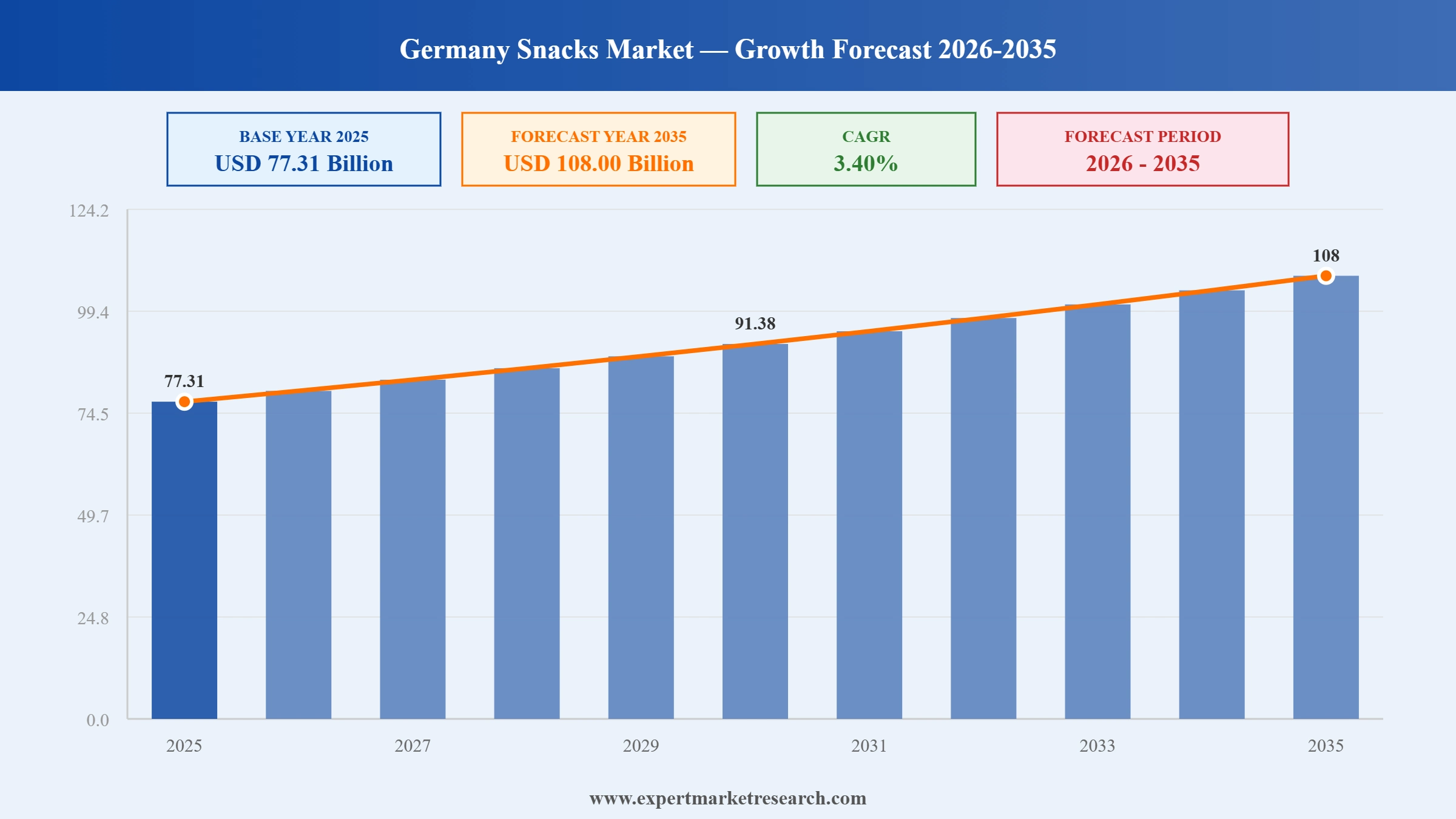
The Germany Snacks Market reached a value of USD 77.31 Billion at 2025 and is projected to expand at a CAGR of around 3.40% during the forecast period of 2026-2035. With rising health consciousness among German consumers, growing demand for convenient on-the-go snacking formats, increasing adoption of sustainable and eco-friendly packaging practices, and the rapid expansion of online snack distribution, the market is expected to reach USD 108.00 Billion by 2035.
Read more about this report - REQUEST FREE SAMPLE COPY IN PDF
| Germany Snacks Market Report Summary | Description | Value |
| Base Year | USD Billion | 2025 |
| Historical Period | USD Billion | 2019-2025 |
| Forecast Period | USD Billion | 2026-2035 |
| Market Size 2025 | USD Billion | 77.31 |
| Market Size 2035 | USD Billion | 108.00 |
| CAGR 2019-2025 | Percentage | XX% |
| CAGR 2026-2035 | Percentage | 3.40% |
| CAGR 2026-2035 - Market by Region | Bavaria | 3.8% |
| CAGR 2026-2035 - Market by Region | North Rhine-Westphalia | 3.6% |
| CAGR 2026-2035 - Market by Type | Fruit Snacks | 3.9% |
| CAGR 2026-2035 - Market by Distribution Channel | Online Channels | 5.4% |
| 2025 Market Share by Region | Bavaria | 28.7% |
Germany's snacks sector is being reshaped by health-driven consumer preferences, the pull of digital retail, mounting sustainability expectations, and the kind of bold M&A activity that tends to signal where the real growth opportunities lie. Here are the four trends defining the market right now.
In April 2025, Mondelez International announced a USD 79 million investment to upgrade and modernise its Toblerone production facility in Bern, Switzerland, alongside the creation of a global innovation hub dedicated to advancing chocolate manufacturing techniques and flavour development. Germany is one of Mondelez's most significant markets in Europe for confectionery and snack products, with brands including Milka, Oreo, Ritz, and Toblerone commanding strong retail presence across German hypermarkets, supermarkets, and convenience stores. The investment signals Mondelez's long-term strategic commitment to strengthening its European supply base.
In 2025, Intersnack Group, one of Europe's largest snack manufacturers and headquartered in Cologne, Germany, advanced its transition to fully recyclable plastic packaging across its product portfolio, aligning with European Union packaging and packaging waste regulations. The initiative positions Intersnack as a frontrunner in sustainable snack production within its home market of Germany. Consumer demand for environmentally responsible snack packaging in Germany has been rising steadily, and Intersnack's move is expected to strengthen brand loyalty among eco-conscious German shoppers while also reinforcing the company's standing with major retail partners in the region.
In September 2024, One Rock Capital Partners announced the acquisition of Europe Snacks, a leading private-label snack manufacturer with production facilities across continental Europe, including Germany. The deal is expected to bolster One Rock Capital's presence in the European private-label snack segment, with Germany identified as a priority market. Private-label snack products have been gaining traction among German consumers who seek strong value-for-money propositions without compromising on taste or ingredient quality, a trend that the newly acquired entity is well-placed to serve.
In August 2024, Mars Incorporated finalised its acquisition of Kellanova for approximately USD 35.9 billion, creating one of the world's largest snack food companies. The deal brought widely distributed brands such as Pringles, Pop-Tarts, and Cheez-It into Mars' portfolio. With both companies maintaining strong distribution infrastructure across Germany, the combined entity is positioned to further strengthen its foothold in the German snacks market, particularly within the salty snacks and bakery snacks categories. The transaction is expected to accelerate innovation and marketing investment in Germany through combined resources.
In mid-2024, Confetti Snacks expanded its distribution to nearly 1,000 TJ Maxx and HomeSense retail locations across Germany, the Netherlands, Austria, the United Kingdom, and Poland. The move brought a curated selection of gourmet, nutrient-rich, and sustainably sourced snack products to German consumers through accessible, high-footfall retail formats. The expansion reflects growing German consumer appetite for premium and artisanal snacking alternatives sold outside traditional grocery channels, and highlights how niche snack brands are increasingly finding scale through non-traditional retail partnerships in the region.
Germany's shift toward health-conscious eating is one of the most consistent demand signals in the snacks market. Federal dietary guidelines from the German Ministry of Food and Agriculture (BMEL) recommend that 75% of daily intake be plant-based, creating a strong policy backdrop for functional and vegan snack products. In January 2025, around 41% of Germans identified as flexitarians, while approximately 57% reported regular moderate to vigorous physical activity according to WHO data, driving demand for high-protein, low-sugar, and energy-sustaining snacks. This Germany snacks market growth driver is actively reshaping product development and shelf allocation priorities for leading snack manufacturers.
Online retail has crossed from a supplementary to a structural distribution channel for snacks in Germany, supported by growing consumer comfort with digital grocery shopping and a maturing e-commerce infrastructure. By February 2025, Germany's online consumer base had surpassed 68 million, up from 62.4 million in 2020 according to International Trade Administration estimates. This surge has prompted major snack brands to invest in direct-to-consumer platforms and subscription snack models. Retail giants like Kaufland and Edeka have integrated app-linked loyalty programmes and home delivery systems in 2025, embedding snack purchasing into broader digital retail ecosystems.
In Germany, one of Europe's most environmentally aware consumer markets, sustainability in packaging has moved well beyond a nice-to-have. Regulatory pressure from EU packaging directives, combined with vocal consumer expectations, is pushing snack manufacturers to transition to recyclable mono-material packaging and reduce single-use plastics. In March 2025, Cologne-based Intersnack Group pushed forward with its commitment to fully recyclable plastic packaging across its snack range, a move that aligns with both EU compliance requirements and shifting retail buyer policies. Brands unable to demonstrate credible sustainability credentials are increasingly finding it harder to secure premium shelf space in German supermarkets and discounters.
German consumers have shown a clear and growing willingness to pay more for snacks that offer distinct flavours, artisanal credentials, or functional health benefits. Bold flavour concepts, limited-edition seasonal lines, and clean-label reformulations are driving category excitement across confectionery and salty snacks. In August 2024, the USD 35.9 billion acquisition of Kellanova by Mars Incorporated brought premium salty snack brands including Pringles and Pop-Tarts under consolidated ownership, signalling the scale of strategic value major players see in building broad, premium snack portfolios for markets like Germany where consumer sophistication continues to rise.
The Expert Market Research's report titled “Germany Snacks Market Report and Forecast 2026-2035” offers a detailed analysis of the market based on the following segments:
Market Breakup by Type
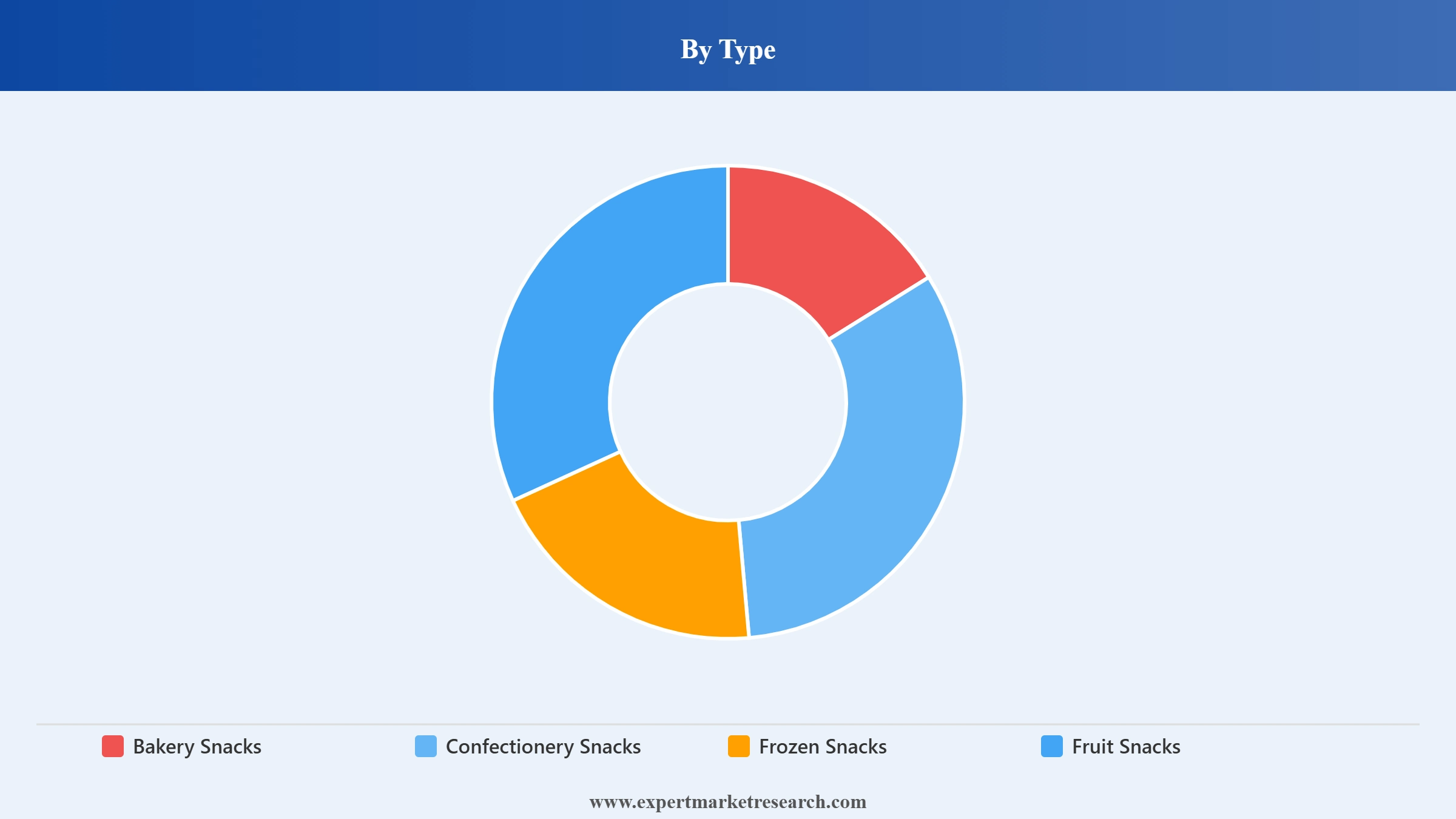
Key Insight: Confectionery snacks are among the largest and most resilient segments in Germany's snacks market, anchored by the country's deep-rooted chocolate culture and one of the highest per-capita chocolate consumption rates in Europe. Ferrero, Mondelez, and Mars collectively account for a dominant share of this category through brands like Kinder, Milka, and M&M's. Bakery snacks, including crackers, baked crisps, and pretzels, rank as the second-largest type segment, benefiting from strong everyday demand and the better-for-you trend. Frozen snacks are gaining ground as hybrid work lifestyles create more at-home meal occasions, while fruit snacks are growing steadily, particularly among health-conscious younger demographics seeking natural and minimally processed alternatives.
Market Breakup by Distribution Channel
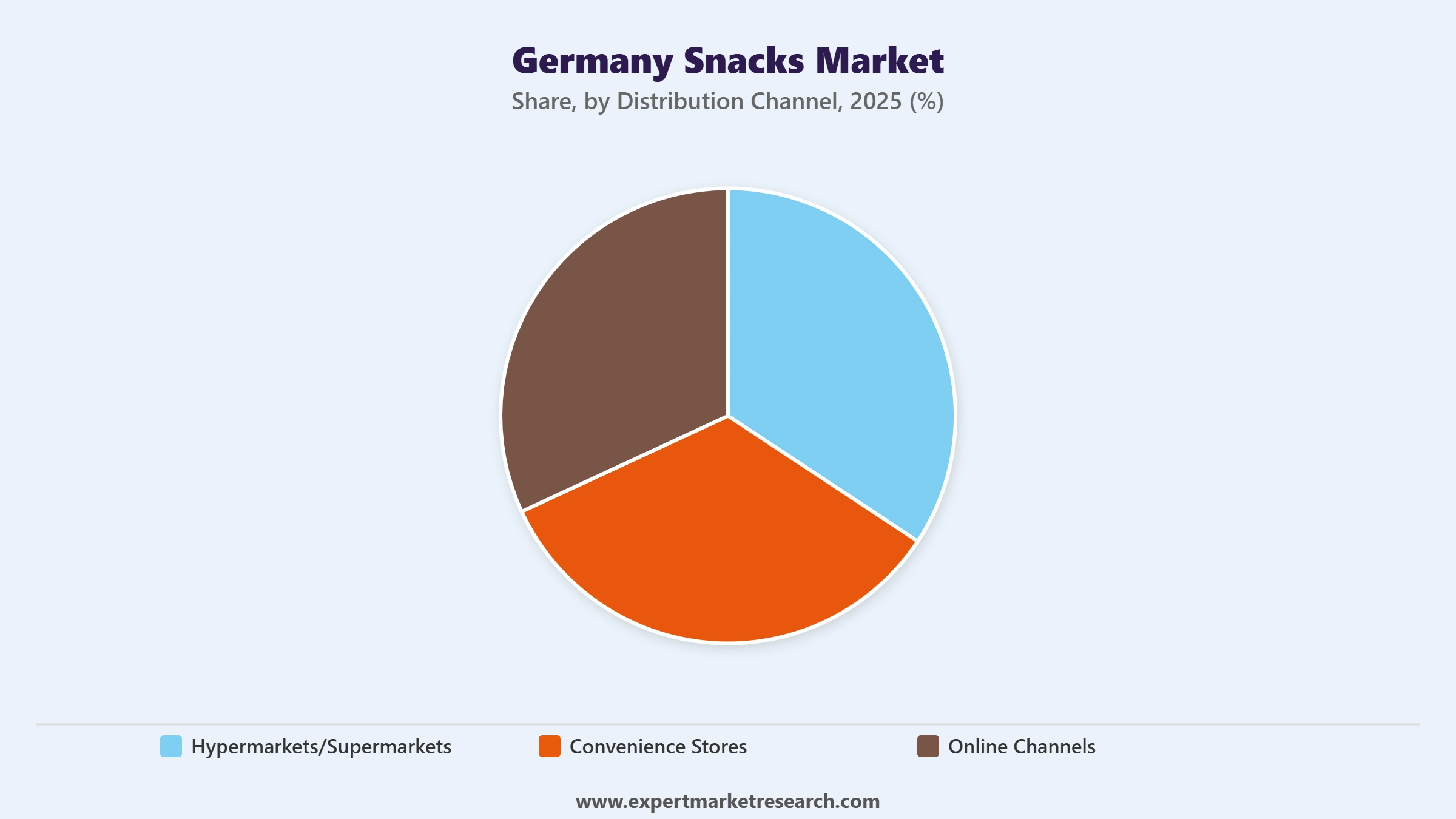
Key Insight: Hypermarkets and supermarkets remain the backbone of snack sales in Germany, supported by a powerful discounter network where Aldi and Lidl alone accounted for approximately 23% of grocery market share by end of 2024. Their everyday low-price model and expanding premium private-label tiers keep snack basket penetration consistently high. Convenience stores serve an important on-the-go segment, particularly in urban transit zones, while online channels are the fastest-growing distribution format. Germany's online grocery consumer base exceeded 68 million in 2025, and major retailers including Edeka and Kaufland invested in app-linked delivery and loyalty integration that year, embedding snack purchasing into broader digital shopping habits.
Market Breakup by Region
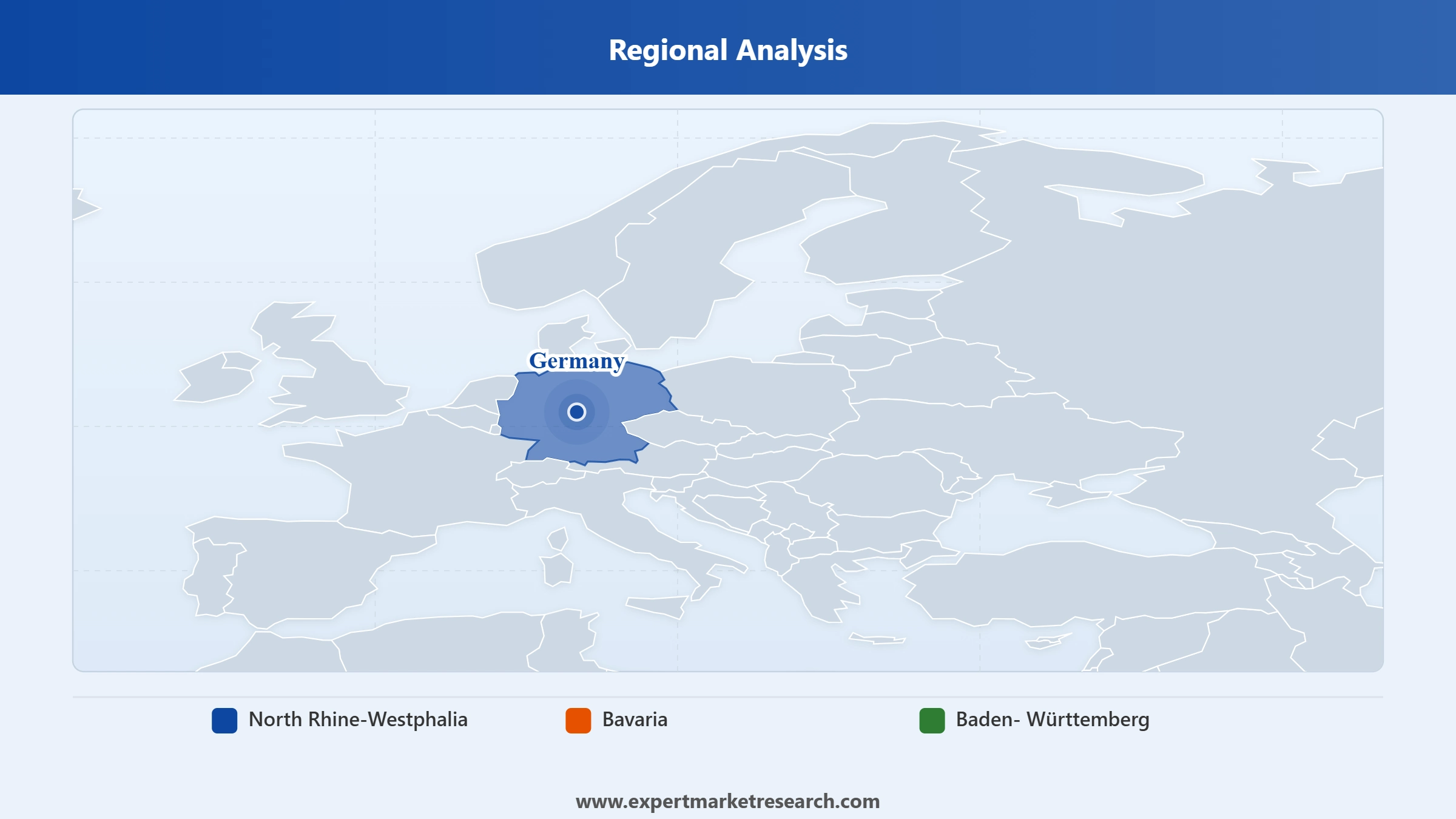
Key Insight: Bavaria leads the three key snack-consuming regions within Germany, holding approximately 29% of the overall market share and projecting the fastest CAGR of 3.8% through the forecast period. The region's performance is driven by government-backed plant-based food investment initiatives and a health-oriented consumer culture centred around Munich's premium food retail ecosystem. North Rhine-Westphalia, Germany's most populous state with over 18 million residents, represents the highest-volume demand zone, where dense urban populations in cities like Cologne, Dusseldorf, and Dortmund sustain strong year-round snack consumption across all categories. Baden-Württemberg attracts premium and functional snack brands thanks to its above-average household incomes and sophisticated consumer base.
Read more about this report - REQUEST FREE SAMPLE COPY IN PDF
By Type
Confectionery snacks hold the dominant position within the Germany snacks market by product type, a standing built on Germany's status as one of Europe's foremost chocolate-consuming markets. Sustained demand from adult consumers for indulgent yet premium chocolate-based products, combined with ongoing brand investment from Ferrero, Mondelez, and Mars, keeps the segment firmly at the top. Limited-edition seasonal launches and cross-category brand stretching - such as Nutella-branded snack bars - help confectionery snack brands command both shelf space and consumer loyalty year-round. Bakery snacks rank second, with baked crisps, crackers, and sweet biscuits benefiting from the broader clean-label and better-for-you trend that has made lower-fat baked formats increasingly attractive to German consumers seeking indulgent yet relatively guilt-free options.
Read more about this report - REQUEST FREE SAMPLE COPY IN PDF
By Distribution Channel
By distribution channel, hypermarkets and supermarkets account for the majority of snack sales in Germany. The combined Aldi and Lidl discounter network captured roughly 23% of grocery market share in Germany by end of 2024, and the broader hypermarket and supermarket category - including Edeka (revenue of approximately EUR 75 billion in 2024) and REWE - gives this channel commanding reach across German households. Private-label snack ranges offered by these chains have grown substantially in both quality and variety, making them genuine competitors to branded lines. Online channels, though still smaller in absolute volume, are the fastest-growing segment of snack distribution and represent the most dynamic commercial opportunity through the forecast period to 2035.
Read more about this report - REQUEST FREE SAMPLE COPY IN PDF
North Rhine-Westphalia
North Rhine-Westphalia (NRW) is Germany's most populous state, home to more than 18 million residents, and represents the largest single consumer market for snack products in the country. The region's dense urban centres - Cologne, Dusseldorf, Dortmund, and Essen among them - generate high and sustained snack consumption across all product types and distribution formats. NRW's central geographic position and excellent logistics infrastructure have made it the preferred location for snack distribution hubs serving both national and continental European supply chains. Discounters hold particularly strong market positions in NRW, with Aldi and Lidl operating dense store networks that account for a significant share of snack basket purchases. Intersnack Group, one of Germany's and Europe's largest snack manufacturers, is headquartered in Cologne, reflecting NRW's importance as an operational base for leading players in the market.
Read more about this report - REQUEST FREE SAMPLE COPY IN PDF
Bavaria
Bavaria stands as the fastest-growing regional snack market in Germany, projected to expand at a CAGR of 3.8% through the forecast period, outpacing both North Rhine-Westphalia and Baden-Württemberg. Munich, Bavaria's state capital, hosts a concentration of premium food retailers, health food specialists, and organic grocery outlets that drive above-average demand for plant-based, functional, and low-sugar snack products. According to data published on the Expert Market Research platform, Bavaria accounts for approximately 29% of the overall Germany snacks market by share, reflecting both its economic weight and the strong per-capita spending power of its population. The Bavarian state government's investment in plant-based food production infrastructure and its promotion of regional food innovation create a favourable environment for snack brands positioned in the health and sustainability space. Emerging food-tech start-ups in Bavaria are also developing sustainable snacking alternatives, adding further depth to a regional market that already punches above its weight in premium and health-oriented snack demand.
The Germany snacks market presents a moderately consolidated competitive landscape, with a handful of global multinationals holding the largest brand portfolios and distribution scale while operating alongside well-established European regional manufacturers. Companies such as PepsiCo, Mondelez, and the newly enlarged Mars (post-Kellanova acquisition) dominate the salty snacks and confectionery categories through extensive retail distribution and consistent advertising investment. Regional players like Intersnack and KP Snacks hold important positions in baked and salty snacks, leveraging proximity to German consumers and an agile approach to local product trends.
The competitive agenda has shifted meaningfully in recent years, with health credentials, sustainable sourcing, and packaging innovation emerging as key differentiators alongside price and flavour. M&A activity has been significant: Mars' USD 35.9 billion acquisition of Kellanova in August 2024 and One Rock Capital's purchase of Europe Snacks in September 2024 illustrate how aggressively larger players are moving to consolidate premium and private-label positions. At the same time, direct-to-consumer snack start-ups and health-focused niche brands are carving out meaningful audience segments, particularly in functional and organic categories, that the largest players are still working to address at scale.
Founded in 1965 and headquartered in Purchase, New York, USA, PepsiCo operates one of the world's most recognisable snack portfolios through its Frito-Lay division. In Germany, the company sells a wide range of salty snacks including Lay's, Doritos, Ruffles, and Cheetos, distributed through a well-developed pan-European supply chain. PepsiCo's strength in Germany lies in its deep retail penetration across hypermarkets and supermarkets, backed by regular product reformulations and reduced-salt or baked variants designed to align with Germany's growing health-conscious consumer base.
Established in 2012 following the spinoff from Kraft Foods and headquartered in Chicago, Illinois, USA, Mondelez International is one of the most prominent players in Germany's snacks market. The company's brand portfolio - Milka, Toblerone, Oreo, Ritz, and belVita among others - spans multiple snack categories and commands strong consumer loyalty in Germany. Mondelez's investment of USD 79 million in its Swiss Toblerone production facility in April 2025, combined with a dedicated innovation hub for European product development, underscores the company's sustained commitment to delivering differentiated snack products to the German market.
Originally spun off from WK Kellogg Co. in 2023 and headquartered in Chicago, Illinois, USA, Kellanova was acquired by Mars Incorporated in a landmark USD 35.9 billion transaction completed in August 2024. Its portfolio - Pringles, Pop-Tarts, Cheez-It, and Rice Krispies Treats among others - carries meaningful brand recognition across Germany's salty and sweet snack categories. The integration into Mars is expected to amplify Kellanova's German distribution reach through combined logistics capabilities and consolidated retail negotiation leverage, accelerating the combined entity's growth in a competitive and price-sensitive market.
Founded in 1856 and headquartered in Golden Valley, Minnesota, USA, General Mills serves Germany's snacks market through its health-oriented snack bar and cereal-based product lines, including Nature Valley, Fiber One, and Larabar. The company's positioning is distinctly centred on the functional and wellness snacking space, targeting German consumers seeking nutritious, minimally processed alternatives to conventional snack formats. Its globally integrated research and development capabilities allow General Mills to adapt products to the specific nutritional preferences and clean-label expectations of the German market with consistency.
Other key players in the market are Nestle S.A., KP Snacks Limited, Grupo Bimbo S.A.B. de C.V., The J.M. Smucker Company, Tyson Foods, Inc., Mars Incorporated, Inc., and Others.
*Please note that this is only a partial list; the complete list of key players is available in the full report. Additionally, the list of key players can be customized to better suit your needs.*
Discover what is really driving Germany's snacks market with our comprehensive report for 2026. From the health and wellness shift reshaping product development to the distribution channels generating the strongest growth, the report gives you a clear, data-backed picture of where the market is heading. Whether you are planning to enter the Germany snacks space, launch a new product line, or identify the right partnership opportunities, this report delivers the clarity to move forward with confidence. Download your free sample today and explore the key opportunities shaping Germany's evolving snacking landscape.


Upto 15% Off
USD
$2499 $2249
$3999 $3599
$4999 $4249
$5999 $5099


*While we strive to always give you current and accurate information, the numbers depicted on the website are indicative and may differ from the actual numbers in the main report. At Expert Market Research, we aim to bring you the latest insights and trends in the market. Using our analyses and forecasts, stakeholders can understand the market dynamics, navigate challenges, and capitalize on opportunities to make data-driven strategic decisions.*
In 2025, the market reached an approximate value of USD 77.31 Billion.
The market is projected to grow at a CAGR of 3.40% between 2026 and 2035.
The market is estimated to witness healthy growth in the forecast period of 2026-2035 to reach a value of around USD 108.00 Billion by 2035.
Key trends aiding the market expansion are introduction of low sugared snacks, increasing demand for baked snacks, and overall rising consumption of various snacks across Germany.
The regions covered in the market include the North Rhine-Westphalia, Bavaria, and Baden- Württemberg.
The different types of snacks in the Germany snacks market are bakery snacks, confectionery snacks, frozen snacks, and fruit snacks, among others.
The different distribution channels in the market are hypermarkets/supermarkets, convenience stores, and online channels, among others.
The key market players are Pepsico, Inc., Mondelez International Inc., Kellanova, General Mills, Inc., Nestle S.A., KP Snacks Limited, Grupo Bimbo S.A.B. de C.V., The J.M. Smucker Company, Tyson Foods, Inc., and Mars Incorporated, Inc., among others.
Explore our key highlights of the report and gain a concise overview of key findings, trends, and actionable insights that will empower your strategic decisions.
| REPORT FEATURES | DETAILS |
| Base Year | 2025 |
| Historical Period | 2019-2025 |
| Forecast Period | 2026-2035 |
| Scope of the Report |
Historical and Forecast Trends, Industry Drivers and Constraints, Historical and Forecast Market Analysis by Segment:
|
| Breakup by Type |
|
| Breakup by Distribution Channel |
|
| Breakup by Region |
|
| Market Dynamics |
|
| Competitive Landscape |
|
| Companies Covered |
|
Datasheet
One User
USD 2,499
USD 2,249
tax inclusive*
Single User License
One User
USD 3,999
USD 3,599
tax inclusive*
Five User License
Five User
USD 4,999
USD 4,249
tax inclusive*
Corporate License
Unlimited Users
USD 5,999
USD 5,099
tax inclusive*
*Please note that the prices mentioned below are starting prices for each bundle type. Kindly contact our team for further details.*
Flash Bundle
Small Business Bundle
Growth Bundle
Enterprise Bundle
*Please note that the prices mentioned below are starting prices for each bundle type. Kindly contact our team for further details.*
Flash Bundle
Number of Reports: 3
20%
tax inclusive*
Small Business Bundle
Number of Reports: 5
25%
tax inclusive*
Growth Bundle
Number of Reports: 8
30%
tax inclusive*
Enterprise Bundle
Number of Reports: 10
35%
tax inclusive*
How To Order

Select License Type
Choose the right license for your needs and access rights.

Click on ‘Buy Now’
Add the report to your cart with one click and proceed to register.

Select Mode of Payment
Choose a payment option for a secure checkout. You will be redirected accordingly.
Strategic Solutions for Informed Decision-Making
Gain insights to stay ahead and seize opportunities.

Get insights & trends for a competitive edge.

Track prices with detailed trend reports.

Analyse trade data for supply chain insights.

Leverage cost reports for smart savings

Enhance supply chain with partnerships.

Connect For More Information
Our expert team of analysts will offer full support and resolve any queries regarding the report, before and after the purchase.
Our expert team of analysts will offer full support and resolve any queries regarding the report, before and after the purchase.
We employ meticulous research methods, blending advanced analytics and expert insights to deliver accurate, actionable industry intelligence, staying ahead of competitors.
Our skilled analysts offer unparalleled competitive advantage with detailed insights on current and emerging markets, ensuring your strategic edge.
We offer an in-depth yet simplified presentation of industry insights and analysis to meet your specific requirements effectively.




