

Consumer Insights
Uncover trends and behaviors shaping consumer choices today
Procurement Insights
Optimize your sourcing strategy with key market data
Industry Stats
Stay ahead with the latest trends and market analysis.
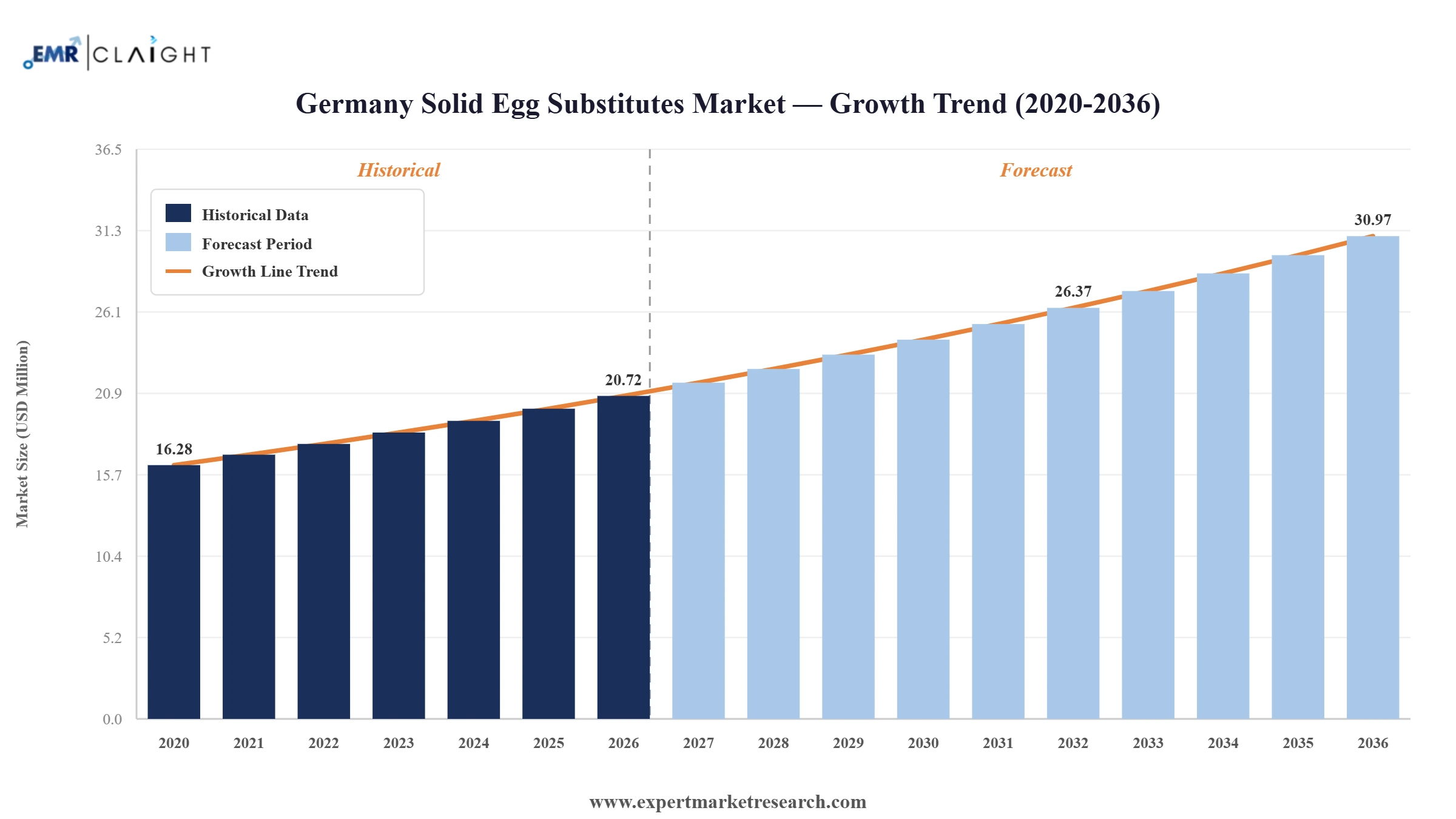
The Germany solid egg substitutes market attained a value of USD 19.90 Million in 2025 and is projected to expand at a CAGR of 4.10% through 2035. The market is further expected to achieve USD 29.74 Million by 2035. Germany's imported poultry and egg prices were 15.2% higher year-on-year in January 2026, according to Destatis, increasing procurement pressure for food manufacturers using eggs as functional ingredients. At the same time, Germany consumed 252 eggs per person in 2025, up four from 2024. This combination creates a B2B opportunity for shelf-stable solid egg substitutes that can provide predictable binding, emulsification, or structure without direct exposure to fresh-egg price movements.
Higher egg prices are encouraging German food manufacturers, bakeries, caterers, and commercial kitchens to examine shelf-stable substitutes that can reduce dependence on fresh-egg procurement. This is particularly relevant where large-volume users require predictable ingredient availability and standardized preparation. Germany’s egg market has also experienced notable price pressure, increasing the commercial relevance of alternative formulations. The expansion of plant-based egg alternatives into institutional catering is creating another market opportunity. EIPRO specifically positions its nøgg range for bakeries, hotels, restaurants, canteens, institutional catering, and food manufacturers, indicating that substitutes are moving beyond household use into professional applications. EIPRO reports serving customers across 20 countries and having 200 employees, while its plant-based portfolio is designed for recipes including scrambled eggs, quiches, carbonara, and baked products, thereby boosting the Germany solid egg substitutes market value.
Innovations are moving away from powdered replacers to those that mimic the structure and behavior of whole eggs. Neggst, based out of Germany, has innovated on plant-based egg options that use pea protein, fava beans, and sweet potatoes in a range of poached, patty, bites, and scrambled forms. In 2025, three of its convenience plant-based egg products were launched in the German foodservice sector, and it obtained a 26-tonnes contract with a leading restaurant chain, as stated by Germany’s Rentenbank. Its technology is also being applied towards a plant-based raw egg, which mimics the performance of yolk and white eggs.
A key restraint is the cost of developing solid egg substitutes that can replicate the binding, emulsifying, foaming, and texture properties of conventional eggs. Manufacturers often require combinations of plant proteins, starches, fibers, and hydrocolloids, increasing formulation complexity and ingredient costs. This can limit adoption among price-sensitive bakeries, foodservice operators, and food manufacturers, particularly where conventional eggs remain readily available. The challenge is greater for products designed to deliver multiple functions in a single formulation, as achieving comparable performance can require more sophisticated processing and quality control. Consequently, suppliers need to balance functional performance with competitive pricing to expand solid egg substitute use beyond niche vegan and specialty applications, thereby restricting the Germany solid egg substitutes market developments.
Read more about this report - REQUEST FREE SAMPLE COPY IN PDF
Greenforce Future Food acquired German plant-based egg developer Neggst, combining Neggst's specialized egg-alternative technology with Greenforce's broader plant-based food portfolio. The transaction is relevant to Germany's egg-substitute market because it brings specialized formulation and product-development capabilities under a larger alternative-food platform. It may support wider commercialization, technology development and distribution of plant-based egg products across German and European food channels.
Eat Just launched JUST Egg in Germany through REWE, initially reaching approximately 280 stores in Berlin, Frankfurt, Mainz and other regions. The product is produced in Lüneburg, Germany, and uses mung beans as its principal ingredient. The launch represents a significant expansion of the German plant-based egg category into mainstream grocery retail and provides competing suppliers with additional opportunities to develop differentiated egg-alternative formulations.
JUST Egg's German rollout progressed through REWE following its initial January 14 availability. The product was subsequently reported across more than 200 REWE outlets, providing broader exposure to a plant-based egg alternative designed for applications such as scrambled eggs. The expansion strengthens the retail distribution infrastructure for egg alternatives and demonstrates the willingness of mainstream German grocery operators to test new plant-based egg formats alongside conventional products.
German egg specialist EIPRO continued developing its nøgg plant-based range for professional foodservice applications, targeting uses including scrambled eggs, carbonara and quiche. The development broadens the functional positioning of egg alternatives beyond household vegan cooking and into commercial kitchens. EIPRO's established presence in egg products and foodservice gives the plant-based range access to professional buyers seeking standardized formulations, operational consistency and alternatives suitable for catering and institutional food preparation.
Germany's pulse cultivation area exceeded 300,000 hectares in 2025, increasing by 6% from 2024, according to the German federal government's 2025 harvest report. Field peas remained the country's leading grain legume, while soybean and sweet-lupin cultivation also expanded. This provides a broader domestic and European raw-material base for manufacturers developing solid egg substitutes from pea, lupin, soy and other legumes. For B2B suppliers, the development is relevant to procurement diversification, traceability and formulation localization. Increasing availability of protein crops can also support manufacturers seeking to reduce dependence on imported specialty ingredients while developing formulations aligned with German and European sourcing requirements. This creates opportunities for suppliers offering standardized protein-starch blends for bakery, prepared-food and foodservice applications.
The egg availability in Germany is still partially reliant on importation, resulting in a sourcing factor for the manufacture of food products in the industry. Destatis has stated that Germany imported 5.4 billion fresh chicken eggs in 2025, while egg production in Germany stood at 13.7 billion eggs. The Netherlands provided 3.7 billion imported eggs, constituting 68.7% of all fresh egg imports, while Poland provided 15.9%. Although imports declined 3.8% year-on-year, the concentration of external sourcing highlights the importance of supply diversification. For industrial users, solid egg substitutes can provide a shelf-stable formulation input that reduces exposure to fluctuations in fresh-egg procurement. Suppliers capable of delivering consistent binding, emulsification and structure can therefore position substitutes around manufacturing continuity rather than vegan consumption alone.
The production of egg substitute products in Germany appears to be concentrating on creating functional properties instead of just developing alternatives to animal-sourced materials. According to a 2025 review by researchers from Leibniz University Hannover, foaming and emulsifying are some of the functional aspects of chickpea aquafaba, with modified starches and hydrocolloids being some other forms of alternative techniques. This is especially the case in industrial baked food producers, where egg helps provide structural and emulsification among other properties. Consequently, suppliers are developing multi-component systems rather than relying on a single protein source. For B2B customers, formulation performance across mixing, baking and storage can become a stronger purchasing criterion than the basic vegan positioning of the ingredient.
The distribution channel in Germany is increasingly exposing consumers to substitutes for eggs and opening up more shelf space for manufacturers. There are currently 11 egg substitutes available in the range at REWE, comprising REWE Bio plant egg substitute, BIOVEGAN egg replacements, Biozentrale, GREENFORCE, and Hammermühle. The range includes both powder and liquid varieties, with BIOVEGAN featured in all egg replacement varieties. For manufacturers, this breadth indicates that egg substitutes can be merchandised according to distinct usage occasions rather than being confined to a specialist vegan section. Retail penetration also provides valuable product-validation opportunities before suppliers pursue larger foodservice, bakery or industrial contracts.
German alternative-protein development is extending beyond conventional soy and starch formulations toward algae, fungi, legumes and other novel sources. The technology opportunity was reinforced by a 2026 Food Chemistry study investigating Spirulina-residue-derived protein-polysaccharide complexes as egg-white foam alternatives. The researchers reported a 6.91 L/L foam overrun, exceeding the egg-white and other plant-protein comparators tested, while sponge cakes prepared using the material showed comparable color and texture. Although the research was conducted in China rather than Germany, it is relevant to German suppliers evaluating next-generation ingredients because it demonstrates the potential of algae-derived materials for foaming applications. Such technologies could eventually support premium bakery, dessert and plant-based food formulations where conventional starch systems have functional limitations.
The Expert Market Research’s report titled "Germany Solid Egg Substitutes Market Report and Forecast 2026-2035” offers a detailed analysis of the market based on the following segments:
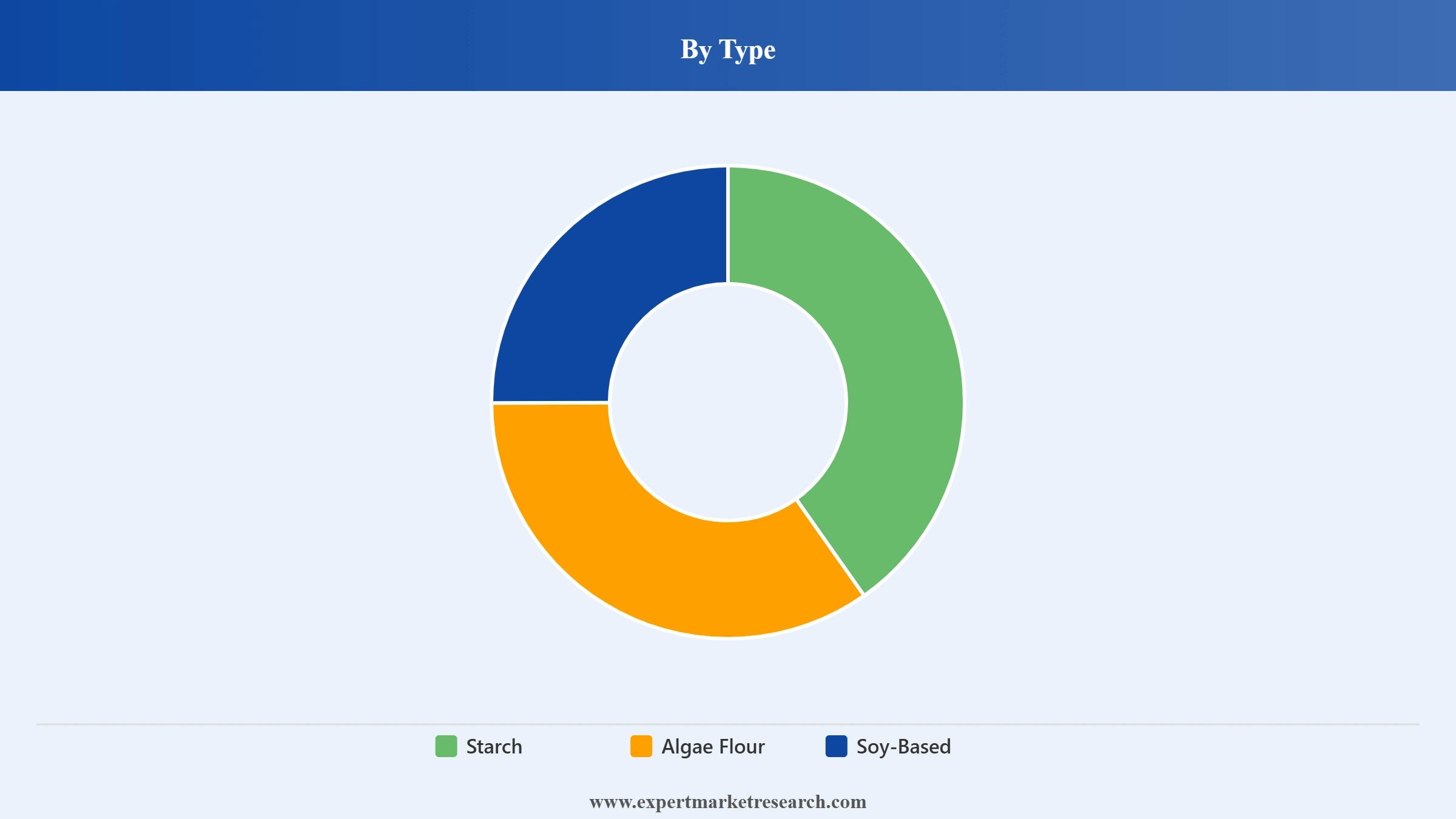
Market Breakup by Type
Key Insight: In Germany’s solid egg substitutes market, starch-based products are gaining traction because starches provide binding, thickening, moisture retention, and structure, making them suitable for bakery and processed-food applications. Algae flour-based substitutes are attracting interest as manufacturers explore novel plant-based ingredients with functional and nutritional properties, although their adoption remains comparatively niche. Soy-based alternatives benefit from soy’s established use in Germany’s plant-based food sector, strong protein content, and functional performance in applications requiring emulsification and binding. The others category, including potato, pea, chickpea, and blended formulations, is gaining momentum as companies seek to improve taste, texture, nutritional value, and allergen flexibility. Growing demand for vegan and plant-based foods is encouraging food manufacturers to combine different starches, proteins, and fibres to achieve egg-like functionality while meeting clean-label and formulation requirements, thus boosting the Germany solid egg substitutes market growth.
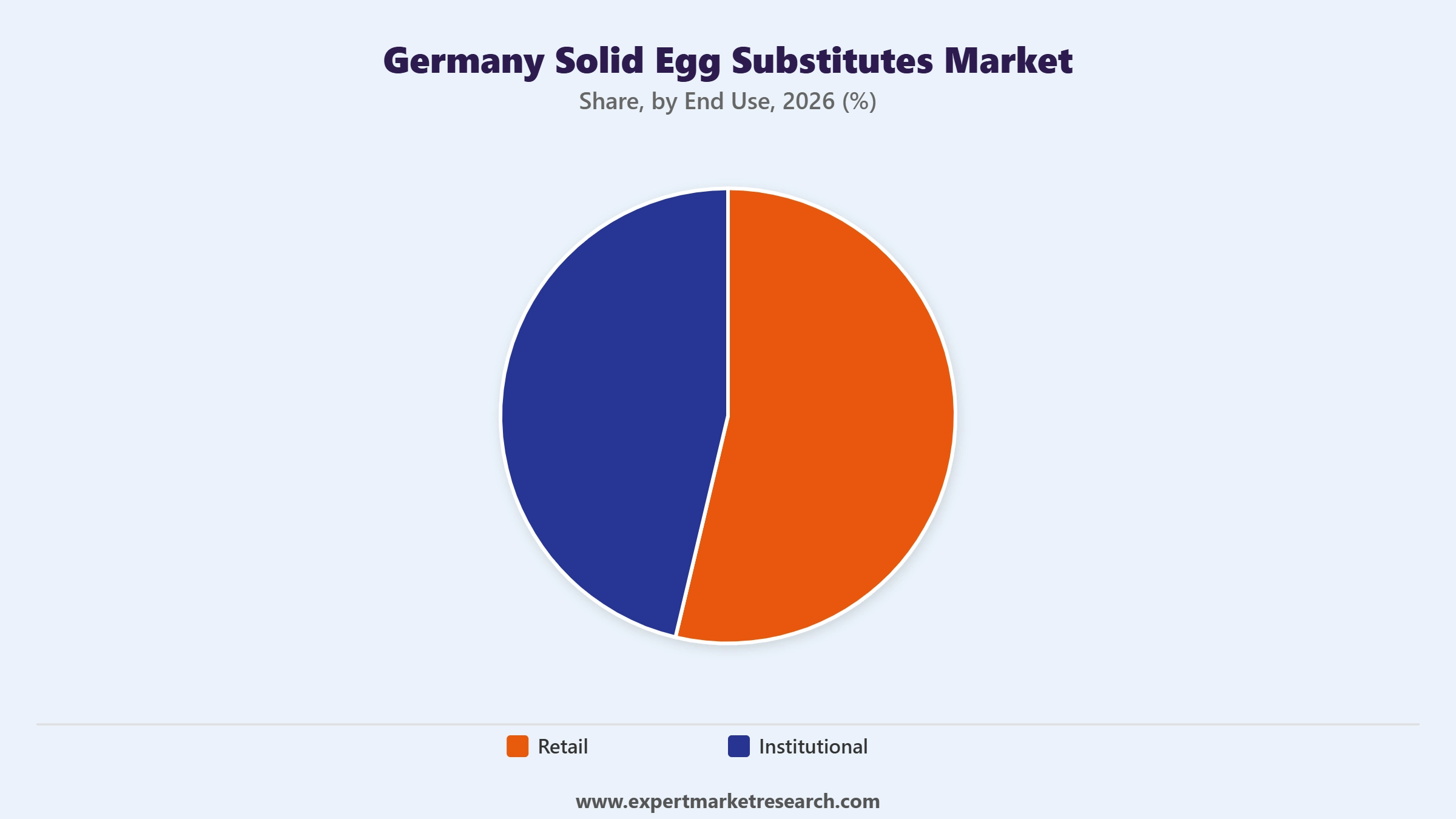
Market Breakup by End Use
Key Insight: In Germany’s solid egg substitutes market, retail is gaining traction as supermarkets, organic retailers, and online platforms expand their plant-based and vegan product offerings. Growing consumer interest in meat- and animal-free diets is encouraging manufacturers to introduce convenient egg-replacement products for household baking and cooking. Institutional demand is also increasing, particularly among bakeries, restaurants, hotels, caterers, schools, hospitals, and food manufacturers. These users value solid egg substitutes for their consistent functionality, easier storage, longer shelf life, and suitability for large-scale food preparation. Germany’s foodservice sector provides a significant commercial base, with around 1.9 million people employed in food and beverage service activities in 2024, according to Eurostat. Institutional buyers are increasingly seeking reliable alternatives that can support vegan menu development while maintaining consistent texture, binding, and processing performance across high-volume applications.
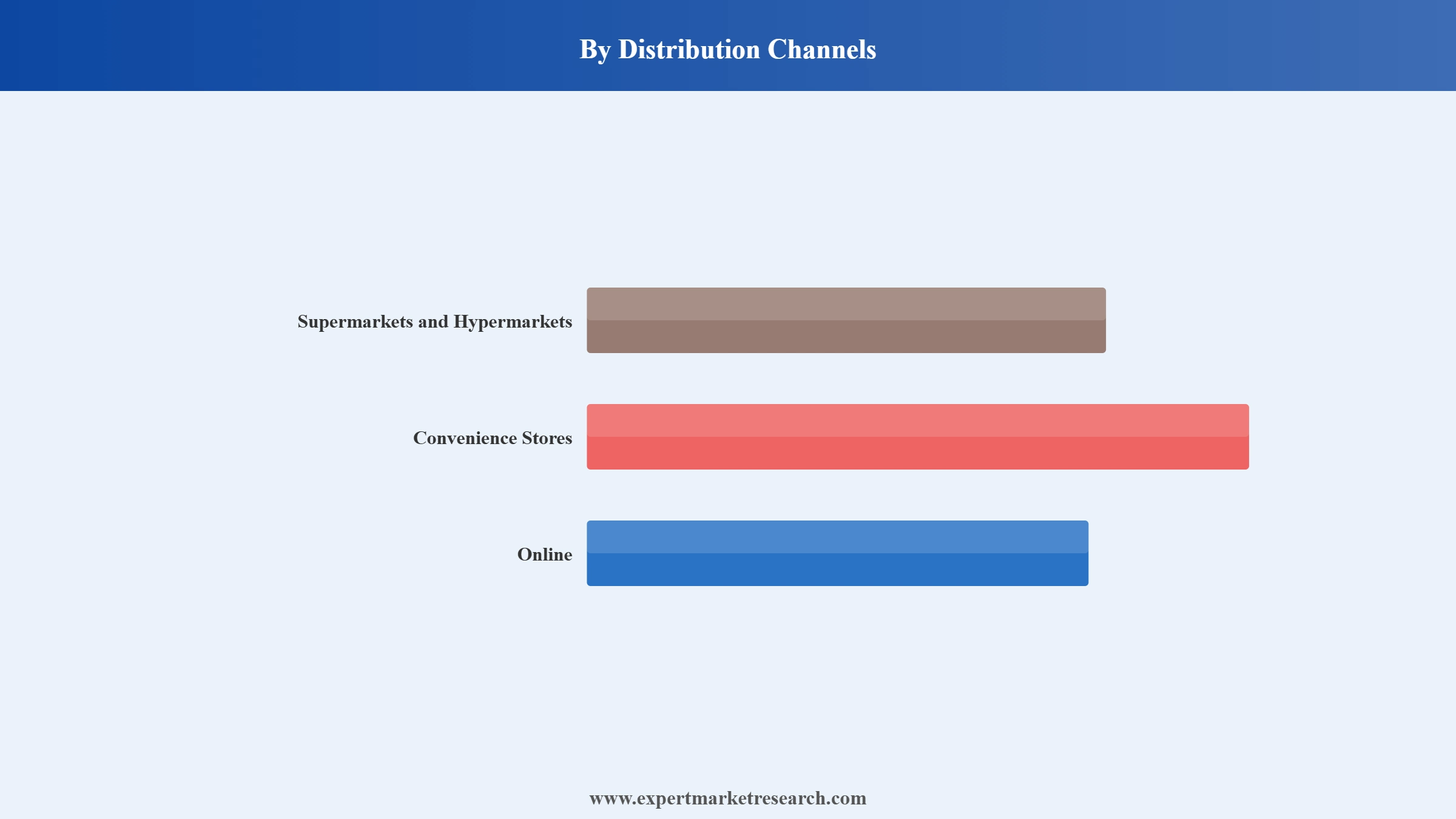
Market Breakup by Distribution Channel
Key Insight: Supermarkets and hypermarkets are gaining traction as Germany’s established retail network provides broad access to plant-based and alternative food products. GFI Europe reports that German plant-based retail sales across six categories reached €1.71 billion in 2025, with private-label products accounting for €560 million, highlighting the growing role of retailer brands. Convenience stores are benefiting from demand for convenient food solutions, while online channels offer broader product variety and easier access to specialist products. Other channels, including organic retailers, specialty stores, foodservice distributors, and direct B2B sales, are important for reaching vegan consumers, bakeries, restaurants, and food manufacturers.
By type, starch is anticipated to dominate due to reliable, cost-efficient functional performance
Starch is the strongest established type because dry starch systems are technically simple, cost-efficient and well suited to bakery applications. German products provide direct evidence: Loprofin's egg replacer combines potato and tapioca starch, while KoRo's German-produced formula contains 63% corn starch. The wide applicability of starch to binding and moisture management gives it a broad addressable base among bakery and prepared-food manufacturers. Its principal advantage is not consumer novelty but formulation reliability and compatibility with existing processing lines. Such developments will thus boost Germany solid egg substitutes market trends in the long run.
Read more about this report - REQUEST FREE SAMPLE COPY IN PDF
The others segment has the strongest innovation runway because manufacturers are experimenting with chickpea, pea, faba-bean, aquafaba and multi-component systems. GREENFORCE's dry chickpea-based egg alternative illustrates the commercial shift toward protein-led formulations, while 2025 research identified legume proteins and hydrocolloids as important routes for replicating egg functionality. The opportunity is particularly strong for suppliers that can improve foaming, emulsification and texture while maintaining a short and understandable ingredient list.
By end use, retail dominates, while institutional demand offers stronger recurring-volume expansion opportunities
Retail has the strongest established presence because consumers can access egg-replacement powders through mainstream grocery and specialist channels without professional equipment. REWE currently lists 11 egg-substitute products, including multiple dry formats, illustrating the breadth of retail assortment. Retail products also benefit from long storage potential and simple consumer preparation. The channel is particularly important for baking applications, where shoppers can replace eggs without requiring an exact sensory match to fried or scrambled eggs, thereby bolstering the Germany solid egg substitutes demand.
Read more about this report - REQUEST FREE SAMPLE COPY IN PDF
Institutional demand is positioned for strong expansion as professional kitchens seek standardized plant-based recipes. EIPRO explicitly supplies its plant-based egg alternatives to canteens, hotels, restaurants and industrial kitchens, while Germany's Food and Nutrition Strategy calls for improved plant-based choices in mass catering. Institutional buyers can also convert individual product trials into recurring procurement contracts, making volume growth more scalable than one-off household purchases.
By distribution channel, supermarkets lead, while online channels offer scalable product discovery and niche expansion
Large grocery retailers remain the most important distribution route because they combine high consumer traffic with category visibility. The existing selection of egg alternatives on the part of REWE indicates that supermarket retailers have started stocking several competing brands rather than viewing alternative products as one specialist item. The channel also enables manufacturers to employ promotional techniques and adjacency to regular eggs and baking goods. For solid products, the ability to operate without refrigerated logistics further strengthens the suitability of large-format grocery distribution.
Read more about this report - REQUEST FREE SAMPLE COPY IN PDF
Online distribution offers strong expansion potential because dry egg substitutes are relatively logistics-friendly and can be marketed through recipe content, technical instructions and larger pack sizes. KoRo offers more than 1,000 items and delivers to 14 countries in Europe, and shows how the digital food business model can expand across multiple markets without being confined to just one physical market. Suppliers of egg substitutes could use the internet to experiment with various blends, larger packaging, and specialized diets.
Read more about this report - REQUEST FREE SAMPLE COPY IN PDF
North Rhine-Westphalia offers Germany’s largest consumer base and strongest regional opportunity
Germany's regional opportunity is concentrated around populous western and southern states, with North Rhine-Westphalia providing the largest consumer base. Destatis recorded a population of approximately 17.99 million in North Rhine-Westphalia at the end of 2025, compared with 13.25 million in Bavaria and 11.24 million in Baden-Württemberg. These markets combine large consumer pools with extensive food manufacturing, hospitality and retail infrastructure, making them important targets for suppliers seeking both retail and institutional customers, thereby directly boosting the Germany solid egg substitutes market regional growth.
Northern Germany also has a strategic role because Lower Saxony combines substantial food-production activity with Germany's largest concentration of egg production. In 2025, Lower Saxony accounted for 45.0% of Germany's free-range egg production and 45.3% of organic egg production, making it a major center of egg-industry expertise as well as a potential market for industrial substitution technologies. Berlin represents an important emerging demand center for innovative plant-based products. Its population exceeded 3.7 million in 2025, and its foreign-population share was 22.5%, supporting a diverse foodservice and retail environment. The January 2026 rollout of JUST Egg through REWE initially included Berlin alongside Frankfurt and Mainz, providing direct evidence of the capital region's importance to new-category launches.
Germany solid egg substitutes market players are primarily aiming to strengthen their product portfolios by developing functional, convenient, and cost-effective alternatives to conventional eggs. Companies are focusing on improving the binding, emulsification, foaming, texture, and cooking performance of solid egg substitutes so they can be used effectively in bakery products, confectionery, ready meals, sauces, and other processed foods. They are also investing in plant-based formulations using ingredients such as potato, pea, soy, and other proteins and starches to address growing demand for vegan and flexitarian food options. Clean-label positioning, improved nutritional profiles, and easier handling are also becoming important areas of product development.
Germany solid egg substitutes companies are seeking to expand their presence across Germany by strengthening partnerships with food manufacturers, bakeries, foodservice operators, and distributors. They aim to increase awareness of egg substitute solutions among commercial users by demonstrating cost, storage, consistency, and supply-chain benefits. Companies are also pursuing innovation, production-scale improvements, and sustainability initiatives to differentiate their offerings and capture opportunities created by changing dietary preferences and demand for reliable food ingredients.
Established in 1986 as a bio-vegan food pioneer, BIOVEGAN GmbH is headquartered in Bonefeld, Germany. The company offers several solid egg-substitute solutions, including BIOVEGAN Mein Ei-Ersatz, a dry organic and vegan powder based on sweet lupin flour, corn starch, corn flour, locust bean gum, flax and sunflower proteins. Its formulation is designed for baking and savory applications such as pancakes, waffles, cakes, casseroles and breading. BIOVEGAN also offers dedicated dry mixes for scrambled-egg and omelet applications, broadening its functionality across plant-based food preparation.
Founded in 2020 and headquartered in Munich, Germany, GREENFORCE Future Food AG develops plant-based alternatives across meat, egg and dairy categories. Its solid egg-substitute portfolio includes Easy To Mix Veganes Ei, a dry mix designed for scrambled eggs and omelets. Its formulations use plant proteins and functional ingredients, with current products incorporating ingredients such as fava-bean flour, chickpea flour, corn flour, methylcellulose, carrageenan and gellan gum. GREENFORCE distributes its egg alternatives through German retail and online channels and also addresses professional foodservice applications.
Founded in 1984, Alnatura Produktions- und Handels GmbH is headquartered in Darmstadt, Germany, and operates as a major German organic-food company and retailer. Its Alnatura Ei-Ersatz is a solid, organic, vegan powder based primarily on 52% sweet lupin flour, supplemented with corn flour, guar gum, partially defatted flaxseed flour and sunflower-seed flour. The product is positioned for cooking and baking, with one 15-g sachet replacing approximately three eggs. This gives Alnatura a clean-label, organic offering within Germany's solid egg-substitute category.
REWE Markt GmbH, headquartered at Domstraße 20, Cologne, Germany, traces its business history to 1927 and operates the REWE supermarket network in Germany. Rather than manufacturing a single proprietary formulation, REWE provides a significant retail route for solid egg substitutes. Its current online assortment includes REWE Bio pflanzlich Eiersatz 15 g, a powder based on sweet lupin flour, corn flour, guar gum, flaxseed and sunflower-seed flour, alongside BIOVEGAN, GREENFORCE and other egg-replacement products. This broad assortment makes REWE an important distribution platform for Germany's solid egg-substitute market.
Other key players in the market include Hammermühle GmbH, among others.
*Please note that this is only a partial list; the complete list of key players is available in the full report. Additionally, the list of key players can be customized to better suit your needs.*
Explore the latest Germany Solid Egg Substitutes Market trends 2026 and understand the factors shaping product development, sourcing, distribution and competitive positioning. The report provides structured insights into the Germany Solid Egg Substitutes Market Size, segment dynamics and strategic opportunities across the value chain. Download the sample to assess the Germany Solid Egg Substitutes Market forecast 2026-2035, competitive landscape and emerging opportunities for manufacturers, investors and food-industry stakeholders.


Upto 15% Off
USD
$2499 $2249
$3999 $3599
$4999 $4249
$5999 $5099


*While we strive to always give you current and accurate information, the numbers depicted on the website are indicative and may differ from the actual numbers in the main report. At Expert Market Research, we aim to bring you the latest insights and trends in the market. Using our analyses and forecasts, stakeholders can understand the market dynamics, navigate challenges, and capitalize on opportunities to make data-driven strategic decisions.*
The market is projected to grow at a CAGR of 4.10% between 2026 and 2035.
Key strategies include developing cost-effective formulations, improving taste and texture, expanding plant-based product portfolios, investing in research and development, strengthening partnerships with food manufacturers, promoting clean-label ingredients, enhancing distribution networks, and increasing consumer awareness through targeted marketing and product innovation.
The key market trends guiding the growth of the industry include the changing consumer dietary trends and the increased adoption of egg substitutes in products by the leading food companies.
The significant types include starch, algae flour, soy-based, and others.
The different end uses include retail and institutional.
The major distribution channels include supermarkets and hypermarkets, convenience stores, online, and others.
In 2025, the market reached an approximate value of USD 19.90 Million.
The market is projected to maintain consistent growth and achieve a value of USD 29.74 Million by 2035.
The major players in the market are BIOVEGAN GmbH, GREENFORCE Future Food AG, Alnatura Produktions- und Handels GmbH, REWE Markt GmbH, and Hammermühle GmbH, among others.
Key challenges include high product costs, fluctuations in raw material prices, consumer preference for conventional eggs, difficulties in replicating egg functionality, formulation complexities, regulatory compliance, and limited awareness of solid egg substitutes among German food manufacturers and consumers.
Explore our key highlights of the report and gain a concise overview of key findings, trends, and actionable insights that will empower your strategic decisions.
| REPORT FEATURES | DETAILS |
| Base Year | 2025 |
| Historical Period | 2019-2025 |
| Forecast Period | 2026-2035 |
| Scope of the Report |
Historical and Forecast Trends, Industry Drivers and Constraints, Historical and Forecast Market Analysis by Segment:
|
| Breakup by Type |
|
| Breakup by End Use |
|
| Breakup by Distribution Channels |
|
| Market Dynamics |
|
| Competitive Landscape |
|
| Report Price and Purchase Option | Explore our purchase options that are best suited to your resources and industry needs. |
| Delivery Format | Delivered as an attached PDF and Excel through email, with an option of receiving an editable PPT, according to the purchase option. |
Datasheet
One User
USD 2,499
USD 2,249
tax inclusive*
Single User License
One User
USD 3,999
USD 3,599
tax inclusive*
Five User License
Five User
USD 4,999
USD 4,249
tax inclusive*
Corporate License
Unlimited Users
USD 5,999
USD 5,099
tax inclusive*
*Please note that the prices mentioned below are starting prices for each bundle type. Kindly contact our team for further details.*
Flash Bundle
Small Business Bundle
Growth Bundle
Enterprise Bundle
*Please note that the prices mentioned below are starting prices for each bundle type. Kindly contact our team for further details.*
Flash Bundle
Number of Reports: 3
20%
tax inclusive*
Small Business Bundle
Number of Reports: 5
25%
tax inclusive*
Growth Bundle
Number of Reports: 8
30%
tax inclusive*
Enterprise Bundle
Number of Reports: 10
35%
tax inclusive*
How To Order

Select License Type
Choose the right license for your needs and access rights.

Click on ‘Buy Now’
Add the report to your cart with one click and proceed to register.

Select Mode of Payment
Choose a payment option for a secure checkout. You will be redirected accordingly.
Strategic Solutions for Informed Decision-Making
Gain insights to stay ahead and seize opportunities.

Get insights & trends for a competitive edge.

Track prices with detailed trend reports.

Analyse trade data for supply chain insights.

Leverage cost reports for smart savings

Enhance supply chain with partnerships.

Connect For More Information
Our expert team of analysts will offer full support and resolve any queries regarding the report, before and after the purchase.
Our expert team of analysts will offer full support and resolve any queries regarding the report, before and after the purchase.
We employ meticulous research methods, blending advanced analytics and expert insights to deliver accurate, actionable industry intelligence, staying ahead of competitors.
Our skilled analysts offer unparalleled competitive advantage with detailed insights on current and emerging markets, ensuring your strategic edge.
We offer an in-depth yet simplified presentation of industry insights and analysis to meet your specific requirements effectively.




