

Consumer Insights
Uncover trends and behaviors shaping consumer choices today
Procurement Insights
Optimize your sourcing strategy with key market data
Industry Stats
Stay ahead with the latest trends and market analysis.
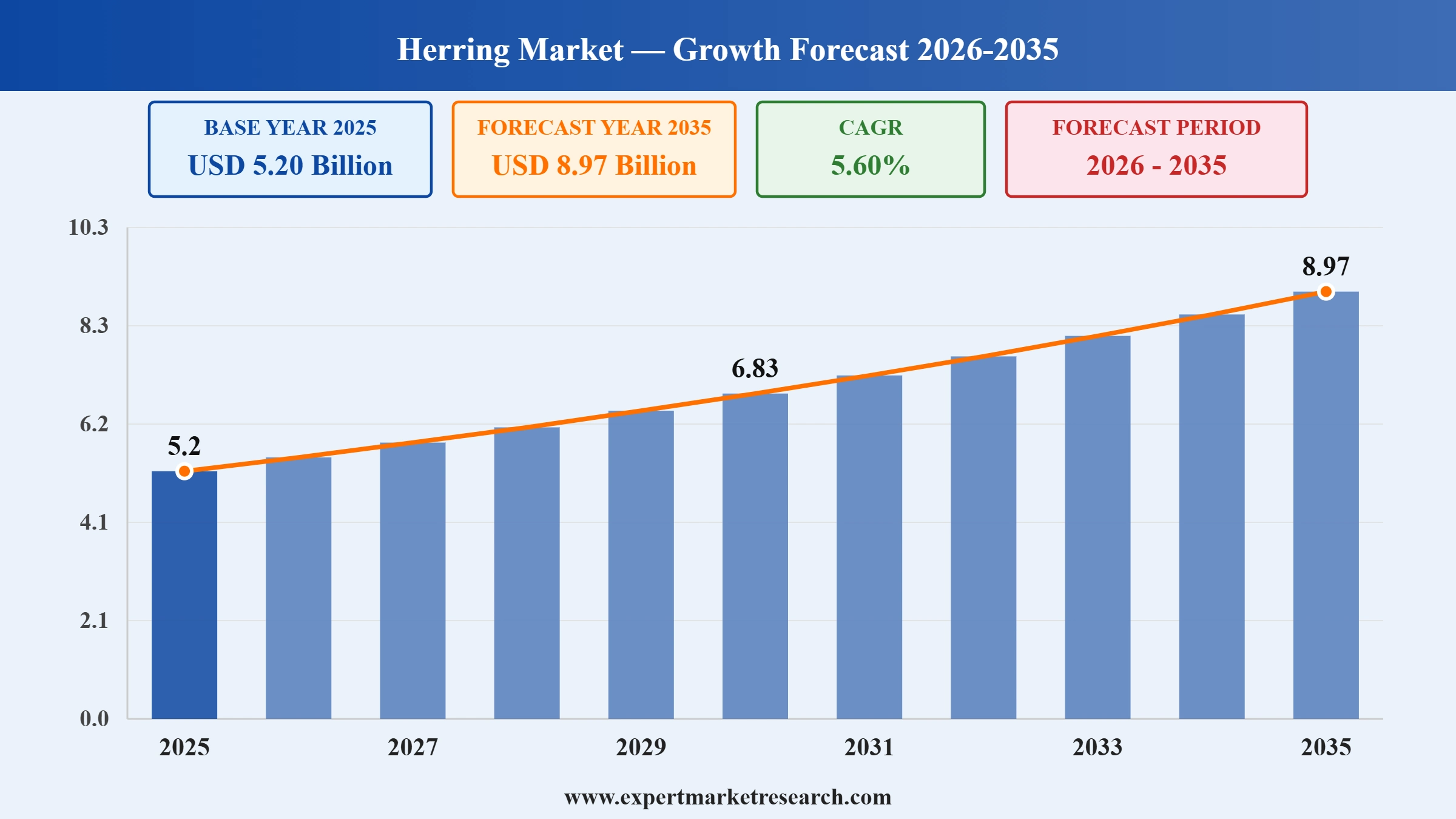
The global herring market was valued at USD 5.20 Billion in 2025. The market is expected to grow at a CAGR of 5.60% during the forecast period of 2026-2035 to reach a value of USD 8.97 Billion by 2035. The market is experiencing sustained growth driven by significant investments in processing infrastructure and modernization of seafood supply chains.
The growth dynamics of the global herring market are driven by several niche yet significant factors. On the one hand, herring's increased use as an ingredient for functional nutrition products and nutraceuticals is stimulating its demand beyond the traditional applications in food. This is because of its nutritional profile, high in omega fatty acids. On the other hand, the growing efficiency of fisheries' data analysis is making fish population monitoring more accurate, hence ensuring the sustainability of production processes.
Additionally, there is a rising trend amongst market participants towards improving the efficiency of the cold chain, minimizing post-harvest waste, and boosting product quality to cater to increased overseas demand for processed and frozen herring products. The structural change is further boosted by improvements in bulk storage facilities, environment-friendly processing methods, and logistics systems, all of which enhance supply reliability and exports.
Moreover, companies are expanding capacities considering the increased herring consumption in value-added herring formats across major countries of Asia, Europe and other emerging importer countries. This leads to further growth opportunities in the herring industry. It also improves the use of pelagic fish stocks and increases profitability from processed products. For example, in March 2023, Denholm Seafoods launched a project worth GBP 30 million to build a new facility in the United Kingdom to produce mackerel and herring through efficient production and storage and reduced environmental footprint.
Read more about this report - REQUEST FREE SAMPLE COPY IN PDF
Furness launched Atlantic Pearl smoked herring and increased the value chain for its processed seafood category, thus keeping up with growing demand for ready-to-consume fish products. This launch has strengthened the value chain for processed seafood consumption within the herring market.
The FAO conducted a comprehensive assessment of the state of the world’s global marine fish stocks, identifying evolving quota pressures on global fisheries and sustainability issues within various pelagic species, such as herring. Scientific and policy frameworks were put in place to ensure stable supply for the foreseeable future.
The fishery improvement projects for mackerel and herring enhanced sustainable certification and traceability criteria in leading fishing regions. The advancements contributed to more responsible sourcing strategies and increased buyer assurance, leading to gradual growth and high-end positioning within the herring industry.
The management measures of the Atlantic herring fishery were extended to balance environmental conservation objectives with harvesting access opportunities. The regulations aided in stabilizing the catches and enhancing resource reliability, resulting in consistent supply conditions in the global market.
The herring industry growth is significantly driven by optimizing the use of by-products from the processing of herring in order to maximize value creation from their nutrients. Processors are harvesting omega-rich products from herring in order to increase profit margins by minimizing wastage. This is not only improving efficiencies along the herring supply chain but is also fueling revenue streams outside traditional seafood. For example, Grøntvedt launched its marine omega-rich oil program in February 2023.
The herring market is observing a rising trend of seafood consumption in prepackaged form. This trend is spurring innovations in herring processing products. There is a growing focus on producing processed herring products that offer greater convenience for consumers while meeting the rising demands of modern retail channels. Research and development activities further facilitate fast innovation of these processed seafoods. For example, Maruha Nichiro partnered with a university in Japan in June 2024 to produce herring and sardine convenience products.
New types of seafood substitutes based on plants are fostering competition diversification while stimulating category engagement. Such novelties are prompting traditional seafood providers to enhance their offerings from a point of view of differentiation by taste and nutrition. Despite remaining niche products, seafood substitutes are shaping priorities for innovation in the seafood industry. In this regard, Steakholder Foods entered a partnership in June 2024 aimed at producing plant-based “herring-style” gourmet items, indicating growth of the herring market along with other alternative proteins.
Consistent seasonal harvesting in key northern fisheries ensures more predictable supply and enhances downstream processing activities. Better coordination among fishing fleets and consistent access to stocks ensure a predictable supply of raw materials to both export and domestic markets. At the same time, such an approach positively affects logistics arrangements and reduces supply volatility for the whole seafood industry chain, thereby expanding the herring market scope. For example, in February 2025, the Scottish fleet began the Atlanto-Scandian herring season.
Growing emphasis on sustainability is leading to increased adoption of certifications, traceability measures, and sustainable sourcing systems across the herring value chain. Through such a process, increased transparency is facilitated, leading to a situation whereby the buyers have more confidence in the environmentally friendly fish. For example, in April 2025, the successful implementation of Fishery Improvement Projects (FIPs) for mackerel and herring enhanced sustainability standards and strengthened traceability frameworks. Such processes are expected to ensure long-term supply stability and support premium positioning in the global market.
The Expert Market Research's report titled “Global Herring Market Report and Forecast 2026-2035” offers a detailed analysis of the market based on the following segments:
Market Breakup by Type
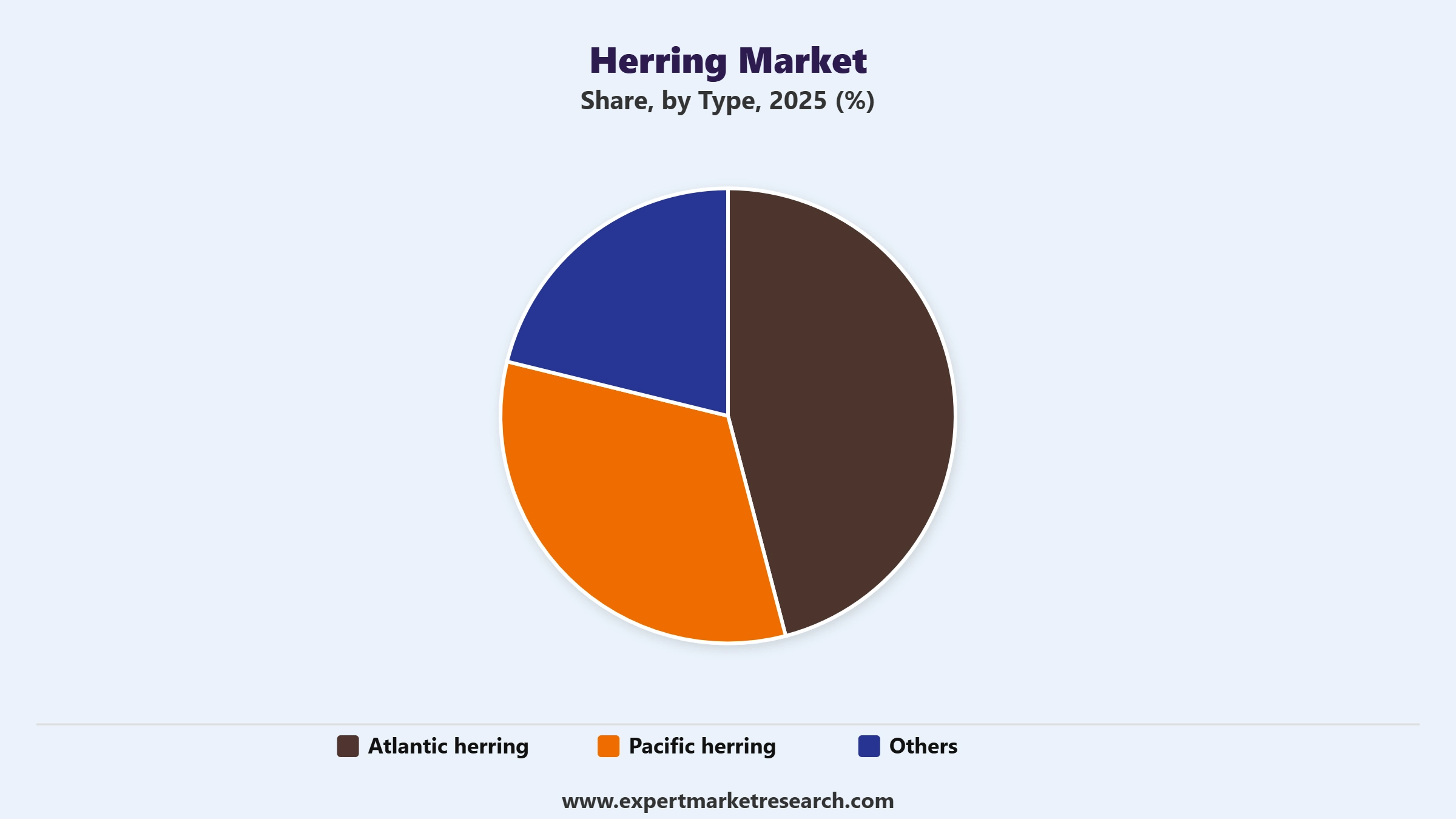
Key Insight: The global herring industry scope comprises Atlantic herring, Pacific herring, and other minor regional species, each contributing differently to global supply, processing, and trade flows. Atlantic herring dominates commercial volumes, supported by large-scale harvesting and processing operations led by companies such as Pelagia and Denholm Seafoods, which focus on frozen exports and value-added seafood products. Pacific herring is primarily driven by fisheries and processors like Ocean Beauty Seafoods, serving both food and bait industries. The “others” segment includes localized coastal species used in niche artisanal and regional processing applications across smaller markets.
Market Breakup by Region
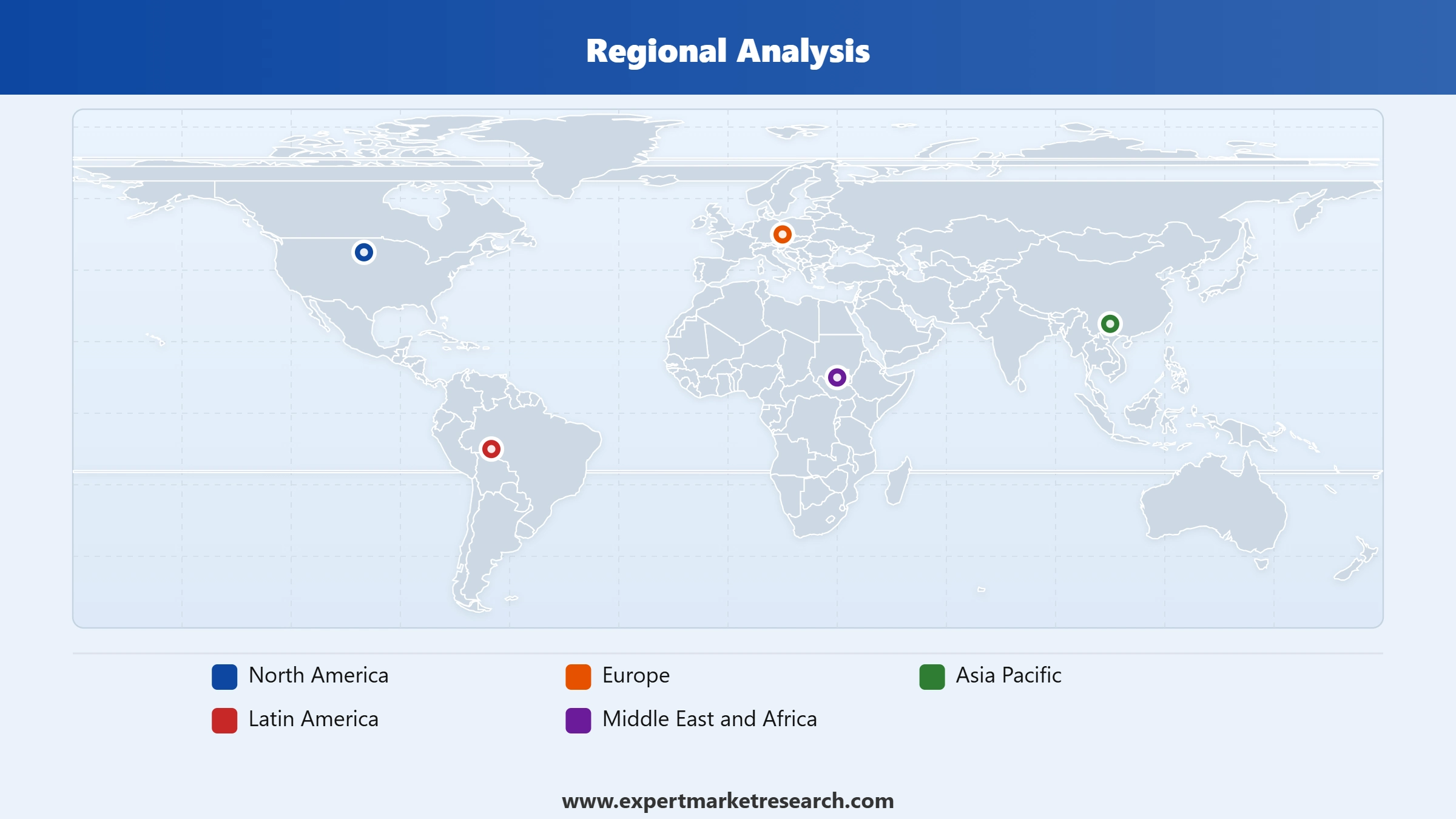
Key Insight: The global herring market landscape shows strong regional diversification, with Europe leading due to high consumption and advanced processing infrastructure supported by companies such as Grøntvedt, and Nissui, which specialize in large-scale harvesting and export-oriented production. The market in North America is driven by fisheries and processors like Ocean Beauty Seafoods, focusing on Pacific herring utilization for food and bait markets. The Asia Pacific market is expanding rapidly through major seafood companies such as Maruha Nichiro and Thai Union, strengthening value-added seafood innovation. Latin America and the Middle East & Africa remain emerging import-dependent regions, supported by global distributors enhancing supply chain connectivity.
Read more about this report - REQUEST FREE SAMPLE COPY IN PDF
By type, Pacific type witnesses high demand attributed to the strengthened stock monitoring and ecosystem tracking
The increasing focus on timely ecological monitoring and data-driven fishery management is further strengthening the sustainability prospects of the Pacific herring segment. Growing attention to spawning monitoring and population dynamics enables more efficient stock estimation and planning, better predictions of the fish stock harvestability, as well as long-term sustainability and resource restoration. These initiatives also allow reducing supply uncertainty in the segment, thus positively influencing the processors downstream. For example, the Washington Department of Fish and Wildlife released a herring spawn reporting tool in March 2025 to monitor the spawning processes in Puget Sound, promoting sustainable resource management, thereby supporting the growth of the herring market.
Read more about this report - REQUEST FREE SAMPLE COPY IN PDF
On the other hand, the Atlantic herring market segment operates under a more regulated framework involving quota management, large scale industrial harvesting, and high demand from Europe and other export markets. Strong regulation ensures the maintenance of sustainable harvesting rates, while processing integration helps maintain a stable output and ensures resource sustainability. This trend enables steady trade flows from the segment in question. Moreover, leading seafood companies active in the North Atlantic use innovative freezing, filleting, and export processing technology solutions in their activities.
By region, Asia pacific dominates the market driven by added seafood processing and export expansion
Asia Pacific accounts for a significant share of the herring market and is experiencing continuous growth, backed by the increasing consumption of processed, frozen, and ready-to-eat seafood. Rapid urbanization and changing dietary patterns are pushing producers to develop more convenient products and cold chain logistics. The local seafood companies are also innovating new products and exploring international export opportunities for added value herring products. This trend is augmented by the expanding retail distribution and foodservice growth in target markets.
Read more about this report - REQUEST FREE SAMPLE COPY IN PDF
Meanwhile, Europe contributes significantly to the herring market revenue owing to its high per capita consumption rate, well-established fishing traditions, and up-to-date processing infrastructure. With an effective distribution channel network that covers Scandinavia and western Europe, the market boasts successful harvests, production, and exportation of herring goods. Companies operating in this market are increasingly focusing on sustainable practices and high-quality products to meet regulatory standards and evolving consumer demands.
Herring market players are significantly strengthening value chain integration. They are making significant investments in modern processing plants, improving cold chain logistics, and implementing various means of preserving the products so as to reduce any wastage in the process and increase exports. Many companies are also adopting sustainable fishing practices and certification to meet the regulatory trends in the market. This is leading to increased stability in the supply chain, efficient utilization of raw materials, and even improved access to premium seafood markets.
Another important factor that is increasing in prevalence in the industry is product diversification through added-value products in areas such as smoking, marination and producing ready-to-eat seafood products. Herring companies are increasingly focusing on innovations in packaging, nutrition, and functional food utilizing seafood ingredients. Collaboration among different stages of the process and distribution channels are also being prioritized.
Barry Group Inc. is a company that deals with the distribution and processing of seafood products. The company was established in 1984 and has headquarters in Newfoundland and Labrador, Canada. Barry Group is active in sourcing, processing and exporting a variety of seafood products, mostly from North Atlantic fisheries.
Cornelis Vrolijk B.V. is a seafood company in the Netherlands that was established in 1880. The headquarters of this company are located in IJmuiden, Netherlands, and it is involved in fishing, processing, and trading of seafood products. Cornelis Vrolijk B.V. plays an important role in pelagic fisheries, mainly in the herring industry.
Iceland Seafood International hf is a seafood processing and selling company that was established in 1932. The headquarters of this company are situated in Reykjavík, Iceland. The company sources, processes and exports its products worldwide by capitalizing on the country's extensive fisheries.
Nergård AS is a seafood company that was founded in 1947. The headquarters of the company are situated in Tromsø, Norway. This company engages in fishing, processing and exporting seafood from the pelagic fish species such as herring.
*Please note that this is only a partial list; the complete list of key players is available in the full report. Additionally, the list of key players can be customized to better suit your needs.*
Explore the latest trends shaping the global herring market 2026-2035 with our in-depth report. Gain strategic insights, future forecasts, and key market developments that can help you stay competitive. Download a free sample report or contact our team for customized consultation on global herring market trends 2026.


Upto 15% Off
USD
$2499 $2249
$3999 $3599
$4999 $4249
$5999 $5099


*While we strive to always give you current and accurate information, the numbers depicted on the website are indicative and may differ from the actual numbers in the main report. At Expert Market Research, we aim to bring you the latest insights and trends in the market. Using our analyses and forecasts, stakeholders can understand the market dynamics, navigate challenges, and capitalize on opportunities to make data-driven strategic decisions.*
The market is projected to grow at a CAGR of 5.60% between 2026 and 2035.
The major drivers of the market are growing demand for processed fish, increasing popularity of cured herring fish among consumers, rise in health awareness, increase in usage of pickled or smoked herring, and increase in usage of herring to avoid heart disease, diabetes, and other inflammatory diseases.
Key trends include sustainable strategies including the promotion of micronutrient-rich consumption of small pelagic fish and the rising demand for fish in non-coastal locations.
The major regions in the industry are North America, Europe, Asia Pacific, Latin America, and Middle East and Africa.
The types of herring in the industry are atlantic herring and pacific herring, among others.
The key players in the market include Barry Group Inc., Cornelis Vrolijk B.V., Iceland Seafood International hf, and Nergård AS, among others.
In 2025, the global herring market reached an approximate value of USD 5.20 Billion.
Explore our key highlights of the report and gain a concise overview of key findings, trends, and actionable insights that will empower your strategic decisions.
| REPORT FEATURES | DETAILS |
| Base Year | 2025 |
| Historical Period | 2019-2025 |
| Forecast Period | 2026-2035 |
| Scope of the Report |
Historical and Forecast Trends, Industry Drivers and Constraints, Historical and Forecast Market Analysis by Segment:
|
| Breakup by Type |
|
| Breakup by Region |
|
| Market Dynamics |
|
| Competitive Landscape |
|
| Companies Covered |
|
| Report Price and Purchase Option | Explore our purchase options that are best suited to your resources and industry needs. |
| Delivery Format | Delivered as an attached PDF and Excel through email, with an option of receiving an editable PPT, according to the purchase option. |
Datasheet
One User
USD 2,499
USD 2,249
tax inclusive*
Single User License
One User
USD 3,999
USD 3,599
tax inclusive*
Five User License
Five User
USD 4,999
USD 4,249
tax inclusive*
Corporate License
Unlimited Users
USD 5,999
USD 5,099
tax inclusive*
*Please note that the prices mentioned below are starting prices for each bundle type. Kindly contact our team for further details.*
Flash Bundle
Small Business Bundle
Growth Bundle
Enterprise Bundle
*Please note that the prices mentioned below are starting prices for each bundle type. Kindly contact our team for further details.*
Flash Bundle
Number of Reports: 3
20%
tax inclusive*
Small Business Bundle
Number of Reports: 5
25%
tax inclusive*
Growth Bundle
Number of Reports: 8
30%
tax inclusive*
Enterprise Bundle
Number of Reports: 10
35%
tax inclusive*
How To Order

Select License Type
Choose the right license for your needs and access rights.

Click on ‘Buy Now’
Add the report to your cart with one click and proceed to register.

Select Mode of Payment
Choose a payment option for a secure checkout. You will be redirected accordingly.
Strategic Solutions for Informed Decision-Making
Gain insights to stay ahead and seize opportunities.

Get insights & trends for a competitive edge.

Track prices with detailed trend reports.

Analyse trade data for supply chain insights.

Leverage cost reports for smart savings

Enhance supply chain with partnerships.

Connect For More Information
Our expert team of analysts will offer full support and resolve any queries regarding the report, before and after the purchase.
Our expert team of analysts will offer full support and resolve any queries regarding the report, before and after the purchase.
We employ meticulous research methods, blending advanced analytics and expert insights to deliver accurate, actionable industry intelligence, staying ahead of competitors.
Our skilled analysts offer unparalleled competitive advantage with detailed insights on current and emerging markets, ensuring your strategic edge.
We offer an in-depth yet simplified presentation of industry insights and analysis to meet your specific requirements effectively.




